
风电

Search documents
奋进五载结硕果 聚势赋能新陇南——“十四五”期间招商引资为陇南高质量发展注入强劲动能
Xin Lang Cai Jing· 2026-02-03 12:53
Core Viewpoint - The article highlights the significant progress made in Longnan's investment attraction and economic development during the "14th Five-Year Plan" period, emphasizing the establishment of a robust investment environment and the successful implementation of various projects that contribute to high-quality growth [2][27]. Investment Attraction Mechanism - Longnan has positioned investment attraction as a key strategy for high-quality development, implementing actions to attract major and strong enterprises while continuously improving the investment mechanism [27][29]. - The local government has established a "1+N" investment work system, ensuring efficient operation through dynamic management of intended projects and regular updates [30]. Achievements in Investment - Over the past five years, Longnan has successfully attracted 85 projects from "three hundred strong" and listed companies, with 472 key projects exceeding 100 million yuan in funding [26][27]. - The investment attraction results are evident, with a significant increase in signed projects from 59 in 2021 to 298 in 2025, and the total signed investment amount rising from 11.754 billion yuan to 57.641 billion yuan [34]. Industrial Upgrading - Longnan has focused on upgrading its industrial structure by developing 16 advantageous industrial chains, including renewable energy, non-ferrous metallurgy, and modern logistics, thereby transitioning from a resource-rich area to an industrial hub [35][36]. - The establishment of industrial parks and agricultural parks has facilitated the growth of various sectors, with 41 projects introduced during the "14th Five-Year Plan" period, amounting to an investment of 13.924 billion yuan [41]. Innovative Investment Strategies - The city has developed a comprehensive and multi-dimensional investment network, shifting from broad-based to targeted investment strategies, and has successfully hosted high-profile investment events to attract businesses [38][39]. - Longnan has also implemented a "smart investment platform" to streamline the investment process and enhance the efficiency of project management [43]. Future Development Plans - Looking ahead, Longnan aims to build a modern industrial system and enhance its investment environment by focusing on specific agricultural products and advanced manufacturing sectors [45][46]. - The city plans to continue improving its investment services and create a favorable ecosystem for investors, ensuring a steady flow of quality projects [49].

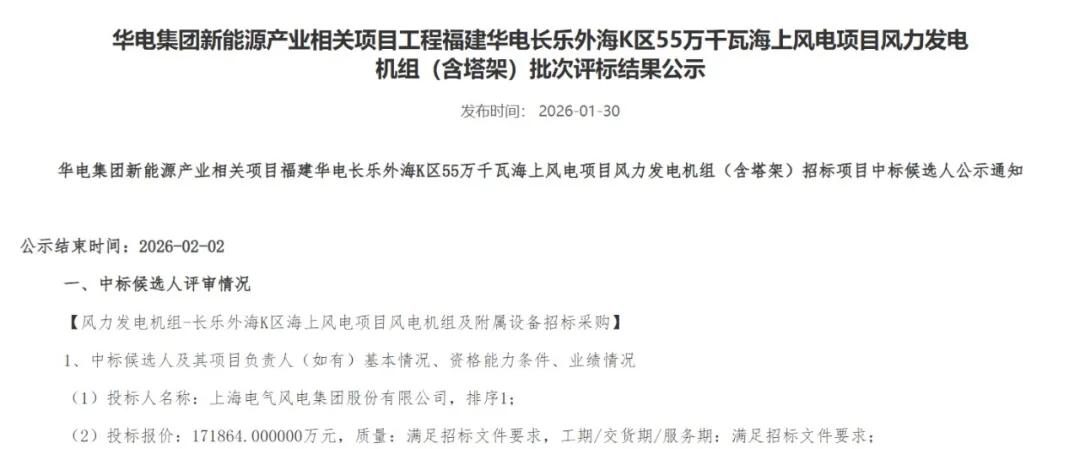
开年海风单体最大!这家风电整机斩获55万千瓦订单!
Xin Lang Cai Jing· 2026-02-03 12:46
Core Insights - The article highlights the successful bid by Electric Wind Power for the Fujian Huadian Changle Offshore K Zone 550,000 kW offshore wind power project, marking a significant collaboration with Huadian Group in 2026 [1][4] Group 1: Project Details - Electric Wind Power will supply 31 units of the Haishen platform 18MW turbines for the project [1][4] - This order represents the largest single-unit capacity order among the offshore wind projects that have been bid for in 2026, showcasing Electric Wind Power's competitiveness in the large-capacity offshore wind equipment sector [3][6] Group 2: Strategic Partnership - The successful bid is a result of a long-term strategic partnership between Electric Wind Power and Huadian Group, which began with onshore wind projects and has expanded to offshore wind [3][6] - The collaboration has built a solid foundation of mutual trust through various projects across the country, paving the way for deeper future cooperation [3][6] Group 3: Industry Impact - Electric Wind Power has over a decade of experience in the offshore wind sector, achieving approximately 13GW of installed capacity in Chinese waters [3][6] - The Haishen platform 18MW turbine incorporates advanced half-direct drive technology and large-capacity turbine development, aligning with the trend towards large-scale and deep-sea offshore wind development in China [3][6] Group 4: Future Commitment - Electric Wind Power aims to continue creating core value for customers with reliable turbines and customized solutions, striving to develop more benchmark projects and contribute to the high-quality development of the offshore wind industry [3][6] - The company is committed to supporting the national "dual carbon" goals through its initiatives [3][6]

贵州300MW风电项目取得核准
Xin Lang Cai Jing· 2026-02-03 12:46
Core Viewpoint - The approval of three wind power projects by Jingneng International in Guizhou is a significant step towards enhancing green energy production and supporting regional economic development while contributing to carbon reduction goals [2][4] Group 1: Project Details - Jingneng International has received approval for three wind power projects in Panxian, Guizhou, each with a capacity of 100 megawatts, totaling 300 megawatts [2][4] - These projects are part of the larger 1-gigawatt wind power project cluster in Panxian [2][4] Group 2: Environmental Impact - Upon completion, the projects are expected to generate approximately 573 million kilowatt-hours of green electricity annually [2][4] - The projects will save around 177,600 tons of standard coal each year and reduce carbon dioxide emissions by 472,400 tons [2][4] Group 3: Economic and Structural Benefits - The implementation of these projects will optimize the local energy structure and promote green economic development in the region [2][4] - The projects are aligned with Guizhou Province's goals for achieving carbon neutrality [2][4]
2026,风电行业规模扩张与价值回归并进
中国能源报· 2026-02-03 12:21
Core Viewpoint - The Chinese wind power industry is expected to experience explosive growth during the "14th Five-Year Plan" period, with significant challenges such as turbine large-scale development, price competition, and accelerated overseas expansion emerging behind this prosperity [2][4]. Group 1: Industry Growth Projections - In 2026, China's new wind power installed capacity is projected to reach approximately 120 million kilowatts, with 85.13 million kilowatts expected from provinces that have completed price bidding [4]. - The wind power industry exceeded its target of 50 million kilowatts of new installed capacity annually during the "13th Five-Year Plan" period, achieving a significant increase from 267,900 kilowatts in 2019 to nearly 800,000 kilowatts in 2023 [6][5]. Group 2: Industry Dynamics and Challenges - The industry is at a critical juncture where the focus will shift from "scale" to "quality," as issues such as frequent accidents and a lack of trust among supply chain participants emerge [9][10]. - Developers are increasingly setting stringent quality requirements in bidding processes due to concerns over profitability, leading to a cycle of mutual distrust between manufacturers and clients [9]. Group 3: External Factors Affecting Development - The wind power sector faces external challenges including land acquisition difficulties, regulatory hurdles, and the need to optimize policies for wind power development on permanent farmland [12][13]. - The industry must adapt to a market environment where guaranteed pricing is no longer a norm, increasing the uncertainty of project returns [12]. Group 4: Future Outlook and Strategic Directions - The industry is encouraged to innovate in technology and quality management to address uncertainties and enhance reliability in new energy systems [7][8]. - The integration of green electricity with high-energy industries and data centers is seen as a strategic direction to enhance the value of wind power and improve its market position [13].
光大理财“阳光红新能源主题A”去年四季度净赎回比例超过36%
2 1 Shi Ji Jing Ji Bao Dao· 2026-02-03 10:16
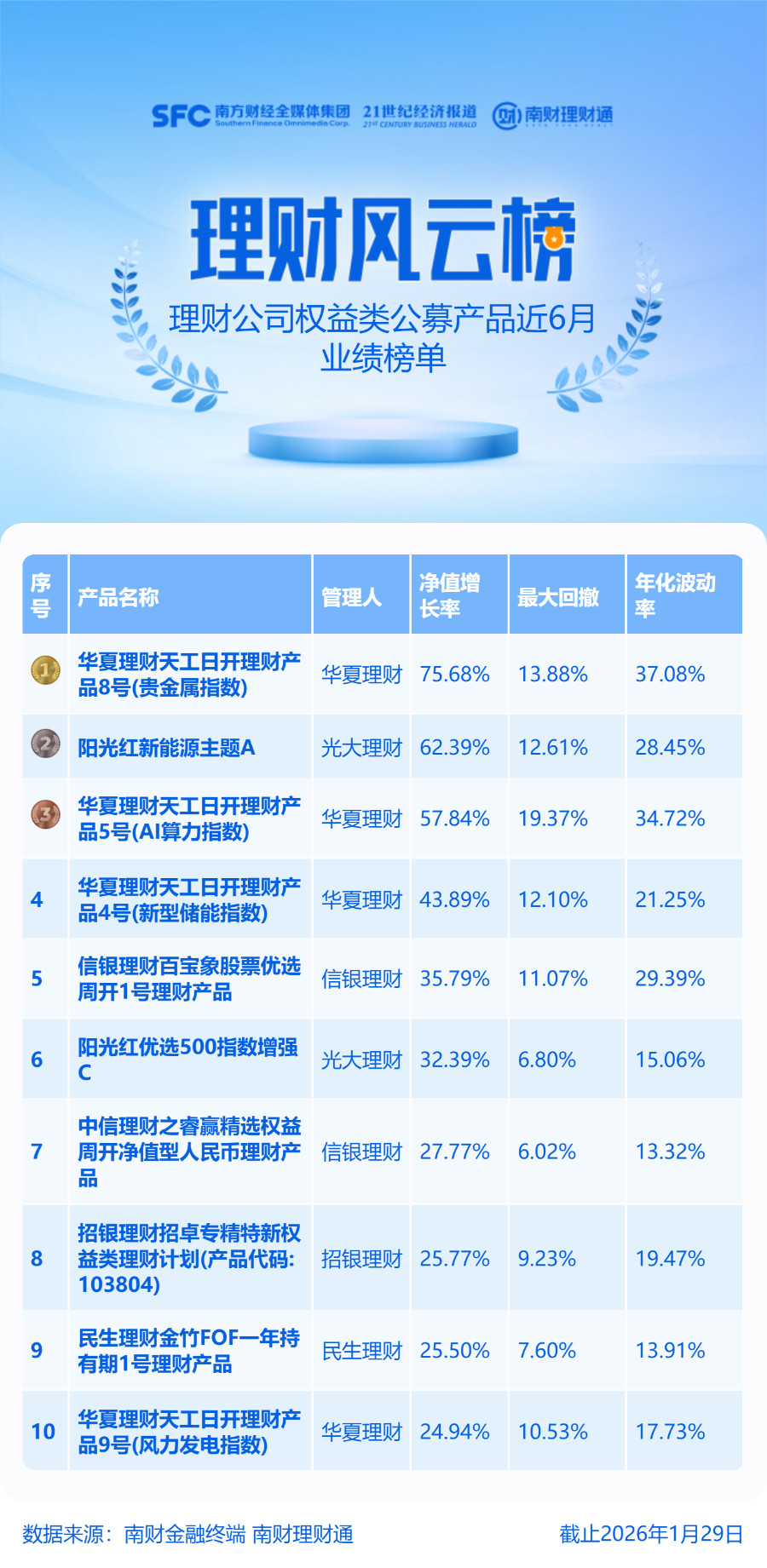
Core Insights - The article discusses the performance of equity-based public financial products in China, highlighting significant growth in net value over the past six months, with an average increase of 19.40% across sampled products [5][6]. Group 1: Product Performance - The top-performing products include: - 华夏理财天工日开理财产品8号 (贵金属指数) with a net value growth rate of 75.68% [6]. - 阳光红新能源主题A from 光大理财 with a growth rate of 62.39% [6]. - 华夏理财天工日开理财产品5号 (AI算力指数) with a growth rate of 57.84% [6]. - 华夏理财天工日开理财产品4号 (新型储能指数) with a growth rate of 43.89% [6]. - 信银理财营宝象股票优选周开1号 with a growth rate of 35.79% [3]. Group 2: Market Trends - In January 2026, A-shares continued a strong performance from the previous year, with total trading volume reaching 60 trillion yuan, and the Shanghai and Shenzhen markets seeing 20 consecutive trading days with volumes exceeding 2.5 trillion yuan [5]. - The three major indices, 上证指数, 深证成指, and 创业板指, recorded increases of 15.19%, 26.67%, and 37.31% respectively over the past six months [5]. Group 3: Company Insights - The report indicates that 5 financial companies made it to the ranking, with 华夏理财 featuring 4 products, while 光大理财 and 信银理财 each had 2, and 民生理财 and 招银理财 each had 1 [5]. - The average net value growth rate for the top 10 products in the ranking was 41.2%, with industry and thematic products leading the performance [6].
了不起的中国风电,登上顶尖期刊《科学》杂志
Zhong Guo Neng Yuan Wang· 2026-02-03 09:52
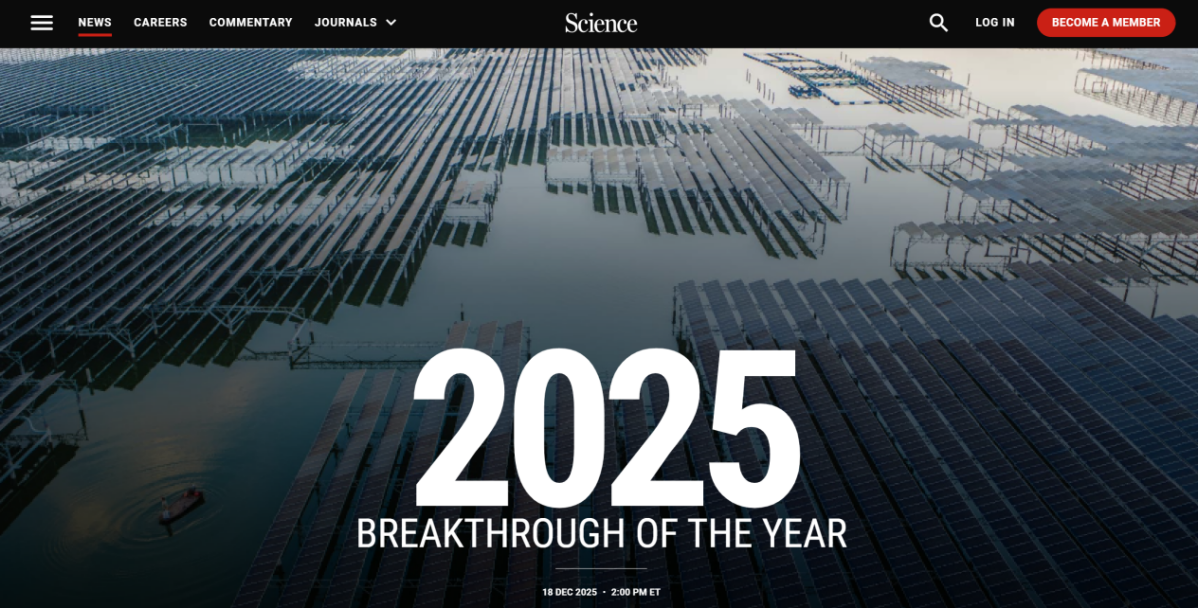
Group 1 - The core viewpoint of the articles highlights that "China-led renewable energy development" has been recognized as the top scientific breakthrough for 2025 by the journal Science, with a similar acknowledgment from Nature [1][5] - The development of China's wind power industry is prominently featured, showcasing its significant achievements and contributions to the global energy landscape [1][3] - The total installed capacity of solar and wind power in China is now sufficient to meet the entire electricity demand of the United States, indicating the scale of China's renewable energy capabilities [3] Group 2 - The SANY Shaoshan blade factory, recognized as the world's first "lighthouse factory" in the wind power sector, is highlighted in a special report by Science, illustrating the advanced manufacturing processes in China's wind energy production [3] - China produces two-thirds of the world's wind turbines, with a growing number of international orders, reflecting the increasing global demand for Chinese wind energy technology [3] - The articles emphasize China's journey from having minimal wind power capabilities to becoming the world's leader in installed wind power capacity for 15 consecutive years, establishing a complete wind power industry chain [5]
《草原上崛起的“风能巨人”》——内蒙古能源集团:以风电巨擘之力 崛起草原风电新标杆
Zhong Guo Neng Yuan Wang· 2026-02-03 09:52
0:00 / 2:30 内蒙古能源集团150万千瓦风电项目,拥有150台全国陆上最大10兆瓦风机,轮毂高达125米,叶片展开足有113米——每一台都在风中舞动着6个标准足球场 大小的"圆规"。它不仅为区域电网注入强劲绿色动能,为服务国家能源安全、推动跨区域清洁能源合作,贡献坚实的"蒙能力量"。 内蒙古能源集团"150万千瓦风电项目"从开工到发电只用了不到一年时间,每年带来约43亿度清洁电力。它通过智慧大脑实现远程操控,像指挥一支绿色舰 队。这些风机不仅每年能省下135万吨煤,减少405万吨碳排放,用草原的风点亮更多灯火,守护我们的能源未来。 ...
太空应用强化美国光伏自主可控诉求,海风与电网设备迎重大催化 | 投研报告
Zhong Guo Neng Yuan Wang· 2026-02-03 09:50
Core Viewpoint - The report highlights the significant advancements in the space photovoltaic industry, emphasizing the high barriers to entry and the advantages of China's photovoltaic supply chain in accelerating market growth [1][2]. Sub-industry Weekly Core Views Photovoltaics & Energy Storage - There is a resonance between the demand for ground data centers and space computing, with the U.S. demand for "self-controlled" photovoltaic systems intensifying, benefiting core enterprises in the photovoltaic sector [2]. - Major companies in the photovoltaic supply chain are releasing annual performance forecasts, confirming a "performance bottom" in Q4, alongside improved asset quality, positioning them well for a recovery in 2026 [1][2]. Wind Power - The UK government announced the results of the AR7 offshore wind auction, totaling 8.4 GW, exceeding market expectations of 6-7 GW, which strengthens the outlook for domestic supply chain exports amid capacity shortages in Europe [2][4]. Power Grid - The State Grid's investment plan for the 14th Five-Year Plan is set at 4 trillion yuan, a 40% increase from the previous plan, establishing a strong foundation for long-term domestic market growth [3]. - Recent incidents in North America, such as transformer explosions, highlight the ongoing need for infrastructure upgrades, reinforcing the demand for new power grid solutions [3]. Lithium Batteries - New regulations on battery recycling will take effect on April 1, 2026, emphasizing a "vehicle-battery integrated scrapping" system and establishing a digital identity for batteries [3]. - Fulin Precision plans to raise 3.175 billion yuan to enhance its production of lithium iron phosphate and advance its strategic positioning in the industry [3]. Hydrogen and Fuel Cells - Inner Mongolia has optimized the economic viability of green hydrogen projects, with significant sales expected in the hydrogen vehicle market by 2025 [3][5]. - The government is actively supporting the hydrogen industry, indicating an imminent surge in development [3][5]. Recent Significant Industry Events - JunDa Co. has officially launched investments in space photovoltaic projects, expanding its product offerings [4]. - Strategic collaborations have been established between companies like Dongfang Risen and Shanghai Port for advanced photovoltaic technologies [4]. - The results of the UK AR7 offshore wind auction have been announced, with a total capacity of 8.4 GW, surpassing expectations [4].
20MW海上风电机组成功吊装,刷新全球纪录
Zhong Guo Neng Yuan Wang· 2026-02-03 09:50
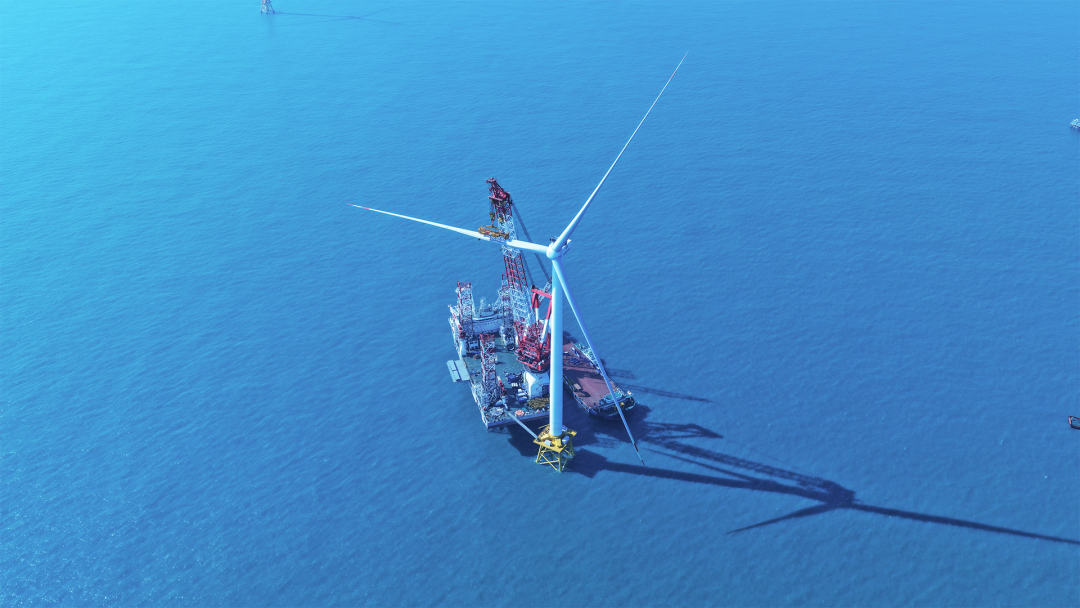
Core Viewpoint - The successful installation of the 20MW offshore wind turbine by Goldwind Technology and the Three Gorges Group marks a significant advancement in offshore wind energy technology, achieving 100% localization of key components and setting new records in capacity and rotor diameter. Group 1: Technological Achievements - The 20MW turbine features a rotor diameter of 300 meters and a swept area exceeding 70,000 square meters, equivalent to 10 standard football fields, making it the largest installed offshore turbine in terms of capacity and rotor size in real marine environments [1] - The turbine can generate 20,000 kilowatt-hours at full capacity, with an estimated annual output exceeding 80 million kilowatt-hours, sufficient to meet the annual electricity needs of approximately 44,000 households [1] Group 2: Reliability and Testing - Goldwind Technology has leveraged its experience from over 1,000 offshore wind installations to develop the 20MW turbine, addressing reliability and economic challenges in deep-sea wind energy [3] - The turbine underwent over 4,000 condition simulations using the self-developed GTSim simulation platform and completed more than 2,000 tests at experimental platforms, ensuring a robust reliability baseline [3] - The turbine is designed to withstand extreme wind conditions, with experimental data showing it can endure instantaneous wind speeds of 80 m/s, equivalent to typhoon levels above 17 [3] Group 3: Design and Efficiency - The 20MW turbine is designed to be "deep-sea friendly," enhancing installation efficiency by 15% compared to previous models, while also adapting to existing marine engineering capabilities [5] - It incorporates Goldwind's direct current coupling technology, enabling stable grid operation even in extreme weak grid environments, thus supporting the safe and reliable operation of large-scale offshore wind farms [5] Group 4: Economic Impact - The 20MW turbine can reduce the number of required installation points by 25% compared to 16MW turbines, thereby saving space and lowering development costs, facilitating the economic viability of deep-sea wind energy [6] - The GW147 blades, made from high-modulus carbon fiber, improve aerodynamic efficiency and, combined with an intelligent control system, enhance energy generation efficiency by 5%, reducing the cost per kilowatt-hour by 5-8% [6] - The blades are the first high-performance, ultra-long flexible blades to pass all type tests in one go, ensuring their aerodynamic efficiency through rigorous wind tunnel testing [6]
多角度实拍韩国80米高风力涡轮机塔筒断裂
Xin Jing Bao· 2026-02-03 08:49
Core Viewpoint - A wind turbine in Gyeongsangbuk-do, South Korea, collapsed due to strong winds, despite wind conditions being below the construction company's shutdown standards on that day [1] Group 1: Incident Details - The wind turbine was 80 meters tall and was reported to have broken, with parts falling onto the road, resulting in debris scattered around [1] - The turbine was commissioned in 2005 and had a designed lifespan of only 20 years [1] - A safety inspection conducted in June 2025 did not reveal any significant abnormalities [1] Group 2: Impact and Investigation - The incident did not result in any injuries, and an investigation into the cause of the collapse is currently underway [1]