
芯片设计

Search documents
中颖电子20251023
2025-10-23 15:20
Summary of Zhongying Electronics Conference Call Company Overview - **Company**: Zhongying Electronics - **Date**: October 23, 2025 Key Points Financial Performance - **Revenue**: In Q3 2025, Zhongying Electronics reported sales revenue of 314.46 million yuan, a year-on-year decrease of approximately 3% [3] - **Net Profit**: Net profit attributable to shareholders was 57.05 million yuan, down 36.6% year-on-year [3] - **Gross Margin**: Gross margin decreased by 1.37%, impacting profits by approximately 17 million yuan [3] - **Depreciation and Taxes**: New depreciation and property tax from the Hefei building added nearly 9 million yuan to costs [3] - **Inventory**: Inventory levels are expected to decrease to around 180 days by Q4 2025 [2][3] Shareholder Changes - **Major Shareholder Change**: Weilang International Group transferred shares to Intelligent Power Supply, which became the largest shareholder and effectively controls the company [2][5] - **Board Restructuring**: The board has been restructured to align with the new controlling shareholder's strategy [5] Business Segment Performance - **Home Appliance Segment**: Slightly weaker performance noted [2][6] - **Lithium Battery Management Chips**: Benefiting from growth in power applications, expected to account for 64% of revenue by year-end [17] - **Mobile Phone Business**: Sales were sluggish but showed slight growth; recovery is anticipated in 2026 [18][19] Market Position and Competition - **White Goods Market**: Zhongying Electronics maintains a leading position, with major competitors being Renesas and NEC, holding about 30-40% market share [7] - **Domestic IC Proportion**: The proportion of domestic ICs is expected to continue increasing due to high reliability requirements in the white goods market [7] Future Outlook - **Cost Reduction**: Anticipated reduction in wafer procurement costs in 2026, expected to gradually improve profitability [8] - **MCU Market Expansion**: Plans to continue expanding in the international MCU market, with expected sales exceeding 10 million USD in 2026 [4][15] - **Product Development**: Launch of a 1.5K display driver chip planned for H1 2026 to meet market demand for higher resolution screens [4][11] Strategic Initiatives - **Acquisitions**: Intelligent Power Supply is expected to support horizontal mergers and acquisitions to enhance influence in chip design [2][5] - **R&D Investments**: R&D spending increased by 3.5% year-on-year, amounting to nearly 8 million yuan [3] Challenges and Risks - **Profit Pressure**: Profitability has been pressured by increased operational costs related to the Hefei building [13][14] - **Market Competition**: The specialized MCU market is experiencing intense competition, but the company believes the market will stabilize over time [24] Additional Insights - **Seasonal Trends**: Noted seasonal patterns in sales, with Q4 typically being stronger for white goods and Q2 for small appliances [12] - **International Market Dynamics**: The company is adapting to changes in the international market, particularly in response to geopolitical tensions affecting chip procurement [22] This summary encapsulates the key insights from the conference call, highlighting Zhongying Electronics' current performance, strategic direction, and market positioning.

软银重启海外发债引擎 直追AI大浪潮! 加速推进孙正义的“AI宏图”
Zhi Tong Cai Jing· 2025-10-22 07:16
Core Insights - SoftBank Group, led by Masayoshi Son, is aggressively pursuing AI investments, including a significant commitment to OpenAI and the "Stargate" AI infrastructure project, marking its second return to the overseas bond market this year [1][2] - The company plans to raise approximately $15 billion to $20 billion in the dollar bond market and around €500 million (approximately $580 million) in euro-denominated notes [1] - SoftBank has raised at least $24 billion through loans and bond markets this year, marking one of its largest financing efforts in history [2] Investment Plans - SoftBank aims to invest up to $300 billion in OpenAI, with no specific timeline provided for the investment [2][4] - The "Stargate" project, which involves a $500 billion investment in AI infrastructure, is a key focus for SoftBank, alongside significant stakes in companies like NVIDIA and TSMC [4][5] Market Trends - The global demand for AI computing power is expected to drive a massive investment wave, potentially reaching $2 trillion to $3 trillion [3] - NVIDIA's CEO predicts that AI infrastructure spending could reach $3 trillion to $4 trillion by 2030, indicating substantial growth opportunities for companies in this sector [3] Stock Performance - SoftBank's stock has surged by 160% in the Japanese market this year, with its ADR in the U.S. also seeing an increase of 180% [6]

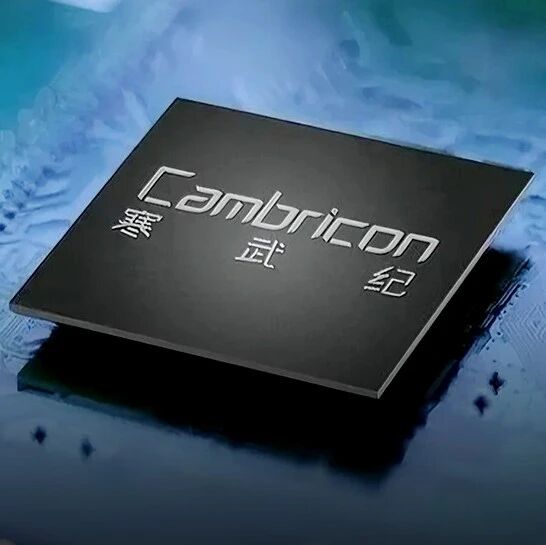
英伟达归零,寒武纪狂飙超20倍!中国半导体正在迎来替代时刻!
市值风云· 2025-10-21 10:07
Core Viewpoint - The article highlights the significant growth of domestic semiconductor companies in China, particularly in the context of Nvidia's exit from the Chinese market, creating a unique opportunity for local firms to fill the gap left behind [3][7]. Financial Performance of Cambrian - Cambrian reported a third-quarter revenue of 1.727 billion yuan, marking a year-on-year increase of 1332.52%, and a net profit of 567 million yuan, achieving profitability for four consecutive quarters [5][6]. - For the first three quarters of 2025, Cambrian's total revenue reached 4.607 billion yuan, a staggering increase of 2386.38% compared to the same period last year [10]. - The gross margin for the third quarter was 54%, which, despite a slight decrease, is considered stable given the increased shipment of high-end chips [11]. R&D Investment - Cambrian invested 260 million yuan in R&D during the third quarter, a year-on-year increase of 22.1%, with R&D intensity nearing 15% [8][9]. Industry Trends - The exit of Nvidia has opened a valuable development window for Chinese semiconductor companies, allowing them to accelerate their growth and establish a self-sufficient ecosystem [8][18]. - Other semiconductor companies, such as Haiguang Information and Ruixinwei, also reported strong financial performances in the first three quarters, indicating a broader positive trend across the industry [15][16]. Investment Opportunities - The semiconductor sector is experiencing a multi-faceted upturn due to Nvidia's exit, improved supply-demand dynamics, and accelerated domestic substitution, suggesting a sustained increase in industry prosperity [18]. - Investors are encouraged to consider a diversified investment strategy in the semiconductor sector, focusing on high-growth areas such as AI and robotics [19][20].


加仓“寒王”,出击三花,顶级游资章盟主在转型?
Guo Ji Jin Rong Bao· 2025-10-21 09:09
Core Insights - Han's performance in the first three quarters of 2025 shows significant growth, with revenue reaching 4.607 billion yuan, a year-on-year increase of 2386.38%, and a net profit of 1.605 billion yuan, indicating a strong turnaround from a loss of 722.5 million yuan in the same period last year [2] - The top circulating shareholder list reveals that prominent investor Zhang Jianping increased his stake in Han from 1.46% to 1.53%, acquiring an additional 320,000 shares, positioning him as the fifth-largest circulating shareholder [2] - Zhang's recent investment activities in Sanhua Intelligent Control have also attracted attention, with a notable purchase of 681 million yuan, reflecting a trend of significant capital movement in the market [2] Company Performance - Han achieved a remarkable revenue of 1.727 billion yuan in Q3 2025, marking a year-on-year growth of 1332.52%, alongside a net profit of 567 million yuan [2] - The company's status as a leading player in the AI chip sector positions it favorably within the context of the global AI wave triggered by ChatGPT, enhancing its prospects for domestic substitution and core technology independence [4] Investment Trends - Zhang's investment strategy appears to be evolving towards a combination of short-term momentum trading and medium-term trend investing, indicating a shift from purely speculative approaches to those grounded in fundamental analysis [3][5] - The current market environment is pushing top-tier investors to focus on companies with solid industry positions and fundamental support, as regulatory pressures increase and traditional speculative trading methods become less viable [5] - The trend of integrating thematic investments with industry trends is becoming more pronounced among top investors, suggesting a potential shift in investment strategies within the A-share market [5]



加仓“寒王”,出击三花,顶级游资章盟主在转型?
IPO日报· 2025-10-21 06:45
Core Viewpoint - The article discusses the recent investment activities of top speculator Zhang Mengzhu (Zhang Jianping), particularly his increased stake in "Hanwang" (Cambricon) and his entry into Sanhua Intelligent Control, highlighting a shift in investment strategy towards combining short-term momentum with long-term trends [2][4][5]. Group 1: Cambricon's Performance - Cambricon reported a revenue of 4.607 billion yuan for the first three quarters of 2025, a year-on-year increase of 2386.38%, and a net profit of 1.605 billion yuan, with Q3 revenue reaching 1.727 billion yuan, up 1332.52% year-on-year [3]. - The company transitioned from a loss of 725 million yuan in the same period last year to significant profitability, indicating a fundamental change in its business performance [3][5]. Group 2: Zhang Mengzhu's Investment Strategy - Zhang Mengzhu increased his stake in Cambricon from 1.46% at the end of Q2 to 1.53%, acquiring an additional 320,000 shares, making him the fifth-largest shareholder [3]. - His investment in Sanhua Intelligent Control, which saw a surge in stock price, reflects a traditional speculative approach, capitalizing on the automotive parts sector's popularity and the resurgence of robotics concepts [5][6]. Group 3: Market Trends and Investment Evolution - The article notes a shift in the investment landscape, where top speculators are increasingly favoring stocks with solid fundamentals and industry positioning, moving away from purely speculative plays [6][7]. - The tightening regulatory environment and the need for larger liquidity have led top speculators to seek out stocks like Cambricon and Sanhua Intelligent Control, which are backed by institutional support and have strong performance metrics [6][7].

盛景微股价涨5.59%,大成基金旗下1只基金位居十大流通股东,持有41.77万股浮盈赚取94.39万元
Xin Lang Cai Jing· 2025-10-21 05:53
Group 1 - The core viewpoint of the news is that Shengjing Microelectronics has shown a slight increase in stock price, with a current trading price of 42.66 yuan per share and a total market capitalization of 4.294 billion yuan [1] - Shengjing Microelectronics, established on April 8, 2016, is located in Wuxi, Jiangsu Province, and specializes in high-performance, ultra-low power chip design [1] - The company's main business revenue composition includes: electronic control modules (80.16%), amplifiers (7.24%), and other categories [1] Group 2 - Among the top circulating shareholders of Shengjing Microelectronics, a fund under Dacheng Fund ranks as a significant holder, with 417,700 shares, representing 0.77% of circulating shares [2] - The Dacheng CSI 360 Internet + Index A fund has achieved a year-to-date return of 31.72% and a one-year return of 47.33% [2] - The fund manager, Xia Gao, has a tenure of over 10 years, with the fund's best return during this period being 204.96% [3]
计算机相关毕业生不够用了!山大首场秋招,“研发岗”需求井喷
Qi Lu Wan Bao Wang· 2025-10-21 03:40
Group 1 - The job market for computer-related positions is experiencing a significant increase in demand, with many companies struggling to find qualified candidates [2][3] - Salaries for research and development positions are notably high, with master's degree holders typically earning between 250,000 to 400,000 yuan annually [2] - There is a structural divide in the job market, where well-known companies attract many applicants, while lesser-known firms face challenges in attracting talent [3][4] Group 2 - Some companies are adapting their hiring strategies by considering candidates from related fields, such as materials science, to fill technical roles [5][6] - Employers emphasize the importance of academic performance for technical positions, indicating that a strong academic record is a key criterion for evaluation [7] - Continuous learning and practical experience are highlighted as essential attributes for graduates to remain competitive in the evolving job market [7]

第一创业晨会纪要-20251020
First Capital Securities· 2025-10-20 05:18
Core Insights - The report highlights a gradual recovery in national public fiscal revenue, with a year-on-year increase of 0.5% for the first nine months of 2025, marking a continuous rise for three consecutive months [5] - Government fund income showed a decline of 0.5% year-on-year, while government fund expenditure increased by 23.9%, indicating a significant disparity between revenue and expenditure growth rates [5] - Tax revenue growth improved, with a year-on-year increase of 0.7% for the first nine months, driven by a substantial rise in securities stamp duty revenue, which surged by 103.4% [6][7] Macroeconomic Group - The report notes a potential easing of the US-China trade tensions, which could stabilize the domestic capital market [10] - The company "思特威" (SITW) expects a revenue of 61 to 65 billion yuan for the first three quarters of 2025, reflecting a growth of 45% to 54% year-on-year [10] - "思源电气" (Siyuan Electric) reported a total revenue of 138.27 billion yuan for the first three quarters, up 32.86% year-on-year, supported by high domestic grid investment levels [11] Advanced Manufacturing Group - "石大胜华" (Shida Shenghua) anticipates a net profit loss of 49 to 75 million yuan for the first three quarters, a significant decline compared to the previous year's profit [13] - "华友钴业" (Huayou Cobalt) reported a revenue of 217.44 billion yuan for Q3, a year-on-year increase of 40.85%, driven by rising cobalt prices [14][15] Consumer Group - The report indicates a clear price differentiation in the liquor market during the holiday season, with high-end liquor sales dropping by approximately 27% while low-end liquor sales saw a decline of less than 10% [17] - Overall, the consumer market is under pressure, with a 12.3% year-on-year decline in offline sales for food, beverages, and daily necessities in Q3 2025 [17] Bond Research Group - The bond market experienced a recovery with a general decline in yields, influenced by easing US-China trade tensions and stable economic data [19]
联芸科技10月17日获融资买入6863.78万元,融资余额4.14亿元
Xin Lang Cai Jing· 2025-10-20 01:37
Core Insights - On October 17, Lianyun Technology experienced a decline of 3.35% with a trading volume of 386 million yuan [1] - The company reported a financing buy-in amount of 68.64 million yuan and a net financing buy-in of 29.46 million yuan on the same day [1] - As of October 17, the total financing and securities lending balance for Lianyun Technology was 414 million yuan, representing 10.36% of its market capitalization [1] Financial Performance - For the period from January to September 2025, Lianyun Technology achieved a revenue of 921 million yuan, reflecting a year-on-year growth of 11.59% [2] - The net profit attributable to the parent company was 90.06 million yuan, marking a year-on-year increase of 23.05% [2] Shareholder Information - As of October 10, the number of shareholders for Lianyun Technology was 14,700, a decrease of 5.32% from the previous period [2] - The average number of circulating shares per shareholder increased by 5.62% to 4,767 shares [2] - Notable new institutional shareholders include the Jiashi Shanghai Stock Exchange Science and Technology Innovation Board Chip ETF and several mixed funds [2]
科创板首批三季报出炉,前沿赛道企业引领增长
Di Yi Cai Jing· 2025-10-19 12:27
Core Insights - The performance of several companies listed on the Sci-Tech Innovation Board has shown significant growth, particularly in emerging industries such as AI computing chips and optical communication, highlighting the board's role in fostering strategic emerging and future industries [1] Group 1: AI and Chip Design - The domestic ecosystem in chip design is becoming increasingly robust, with AI commercialization accelerating [2] - Haiguang Information reported a total revenue of 9.49 billion yuan for the first three quarters, a year-on-year increase of 54.65%, and a net profit of 1.961 billion yuan, up 28.56% [2] - Cambrian, a leading AI chip company, achieved a staggering revenue of 4.607 billion yuan, a year-on-year increase of 2300%, and a net profit of 1.605 billion yuan, up 321.49% [2] Group 2: Optical Communication - Optical communication is identified as a key infrastructure for future information industries, with optical chip technology being crucial for high-speed information transmission [3] - Shijia Photon reported a revenue of 1.56 billion yuan for the first three quarters, a year-on-year increase of 113.96%, and a net profit of 299 million yuan, up 727.74% [3] - Tengjing Technology achieved a revenue of 425 million yuan, a year-on-year increase of 28.11%, and a net profit of 64 million yuan, up 15.00% [3] Group 3: Frontier Technologies - Companies are strategically positioning themselves in frontier technologies, with significant growth in quantum technology and future energy sectors [4] - GuoDun Quantum reported a revenue of 190 million yuan, a year-on-year increase of 90.27%, and a net loss of 26 million yuan, a reduction of 51.98% [4] - The company successfully mass-produced the world's first engineering-grade four-channel ultra-low noise semiconductor single-photon detector, marking a significant achievement in single-photon detection technology [4] Group 4: Next-Generation Energy Materials - Rongbai Technology announced advancements in solid-state battery materials, becoming a primary supplier for several leading solid-state battery companies [5] - The company has achieved ten-ton level shipments of high-nickel and ultra-high-nickel solid-state cathode materials, serving major domestic and international battery manufacturers [5] - The performance of sulfide electrolyte materials is leading in the industry, with plans for pilot line construction expected to commence production in the first half of 2026 [5]
