
商业火箭

Search documents
揭秘商业火箭降本关键——可复用技术
财联社· 2026-01-17 01:50
Core Viewpoint - 2026 is expected to be a pivotal year for the commercial space industry, with reusable rocket technology playing a crucial role in advancing China's space capabilities [1] Group 1: Domestic Developments - China Aerospace Science and Technology Corporation emphasizes the need to break through reusable rocket technology and accelerate the construction of a strong space nation by 2026 [1] - Multiple commercial rocket launch plans are set for the first quarter, including Deep Blue Aerospace's "Star Cloud No. 1," which aims to validate a full process of orbital launch and vertical recovery [2] - The Kuaizhou-2 rocket from China Aerospace Science and Industry Corporation is expected to have its maiden flight soon, with plans for iterative development towards a reusable model [3] Group 2: International Comparisons - SpaceX aims to produce 10,000 Starships annually, with a projected launch frequency exceeding once per hour within three years, showcasing the value of reusable rockets [5] - The Falcon 9 rocket's first stage has been reused 15 times, reducing the cost per launch from $100 million to $20 million, highlighting the economic benefits of reusability [5] - In 2025, the U.S. is projected to have 187 commercial rocket launches, with SpaceX responsible for 167 of those, indicating a significant market share [5] Group 3: Technical Insights - Reusable rockets consist of three main components: propulsion systems, airframe structures, and control systems, with propulsion systems accounting for 50% of manufacturing costs [6] - The three recovery methods for rockets include parachute recovery, flight recovery, and vertical landing, with vertical landing being the most mainstream due to its precision and low impact [6] - The use of 3D printing technology in rocket engine manufacturing is gaining traction, offering advantages such as speed, cost-effectiveness, and high precision [7] Group 4: Investment Perspectives - In the early stages of reusable rocket development, demand for rocket manufacturing is expected to rise, benefiting propulsion systems, airframe structures, and control systems [7] - As reusable technology matures, liquid rocket engines are anticipated to be gradually recovered, with ongoing benefits for airframe structures and control systems [7] - Leading companies in the commercial rocket sector are actively adopting 3D printing technology for critical components, enhancing efficiency and reducing costs [7]

商业航天2026年“首飞” 谷神星一号成功发射
Zheng Quan Shi Bao Wang· 2026-01-16 06:44
Core Viewpoint - The successful launch of the Ceres-1 sea-launched rocket marks a significant milestone for China's commercial space sector, enhancing the capabilities of the Tianqi satellite constellation and expanding its applications across various industries [1][4]. Group 1: Company Overview - Ceres-1 is a core solid launch vehicle developed by Beijing Xinghe Power Aerospace Technology Co., Ltd., representing the company's commercialized model [2]. - Founded in February 2018, Xinghe Power is the first private commercial rocket enterprise in China to achieve mass production and high-frequency launches [2]. - The Ceres-1 rocket has a length of approximately 20 meters and a takeoff weight of 33 tons, with payload capacities of 300 kg to a 500 km sun-synchronous orbit and 270 kg to a 700 km orbit [2]. Group 2: Launch and Performance - The recent launch successfully deployed four satellites into a near-Earth orbit, contributing to the global networking of the Tianqi satellite constellation [1][4]. - Since its first flight in September 2023, the Ceres-1 sea-launched rocket has achieved a 100% success rate across six launches [2]. - The sea-launch model offers flexibility in selecting optimal launch points, improving orbital accuracy and reducing safety risks [4]. Group 3: Market and Financial Insights - The commercial space sector has attracted significant capital, with Xinghe Power raising 2 billion yuan in A-round financing in 2020 and 2.4 billion yuan in D-round financing in September 2025, achieving a post-investment valuation of 15-16 billion yuan [3]. - The company is expected to complete its IPO counseling process within 3 to 12 months, with optimistic projections for filing its prospectus in the second quarter of 2026 [3]. - The demand for low-orbit satellite networking is increasing, providing a broad market space for commercial rocket enterprises with high reliability and low costs [4].

适者生存 中国商业火箭产业涉入“深水区”
Ke Ji Ri Bao· 2026-01-15 01:22
Core Insights - The Chinese commercial space industry is experiencing significant growth, with multiple technological paths and business models being explored, and reusable rockets entering a new phase of scale-up [1][2] - The industry has transitioned from a "technology validation phase" to a "scale-up phase" focused on frequency, delivery, and efficiency [2] - The competition is intensifying due to the strategic value of space resources, with companies needing to demonstrate clear profit paths and scalable revenue [2][4] Industry Development - As of December 2025, China has launched 65 commercial satellite constellation plans and applied for frequency and orbital resources for 203,000 satellites [3] - The demand for low-cost, high-frequency launches is pushing the commercial rocket industry into a critical growth phase, with a focus on engineering capabilities and supply chain resilience [1][3] Technological Challenges - The transition from technology validation to large-scale application is fraught with challenges, as evidenced by recent failures in rocket recovery attempts [6][7] - The industry is characterized by a low tolerance for error, particularly in critical recovery processes, where even minor deviations can lead to significant risks [6][7] Market Dynamics - The market is driven by a dual demand-supply dynamic, with a complete domestic industrial system on the supply side and a vast market on the demand side, particularly for low Earth orbit satellite internet [8] - However, key technologies for low-cost, high-reliability, and reusable rockets have yet to be fully validated for engineering applications [8][9] Competitive Landscape - The Chinese commercial rocket sector is exploring multiple technological paths, with companies like Blue Arrow Aerospace focusing on reusable rockets and solid-fuel options [10][11] - The industry is expected to evolve from a project-driven model to a platform-based space transportation service, with a significant shift in competitive focus anticipated by 2026 [12][13] Policy and Infrastructure - There is a need for a regulatory framework that supports frequent launches and efficient management of airspace and frequency applications [12] - The establishment of a standardized process for rocket recovery and maintenance is crucial for achieving large-scale production and operational efficiency [12]
商业火箭企业IPO迎利好 中大型复用火箭成“硬条件”
Zhong Guo Zheng Quan Bao· 2026-01-10 05:08
Core Viewpoint - The recent issuance of the Shanghai Stock Exchange's guidelines for commercial rocket companies marks a significant regulatory milestone, clarifying the path for these companies to go public and emphasizing the importance of reusable rocket technology in the industry [1][3]. Group 1: Regulatory Guidelines - The guidelines consist of 14 articles that detail the specific requirements for commercial rocket companies applying for the fifth set of listing standards on the Sci-Tech Innovation Board [1]. - A key requirement is that applicants must demonstrate successful orbital insertion of payloads using medium to large reusable rockets as a prerequisite for listing [3][7]. - The guidelines aim to signal a strong emphasis on technological innovation and the commercialization of space technology [1][3]. Group 2: Industry Trends - The global commercial space industry is transitioning from state-led initiatives to commercialization, focusing on high-frequency, low-cost launches [3]. - By 2025, private rocket companies in China are expected to execute 23 launch missions, successfully placing 324 satellites into orbit, highlighting the rapid growth of the sector [3]. - The establishment of clear listing standards is expected to accelerate the pace of IPOs among commercial rocket companies, with several firms already in the process [4][5]. Group 3: Company Developments - Blue Arrow Aerospace's IPO application was accepted by the Shanghai Stock Exchange, indicating a significant step in the commercialization of the industry [4]. - Other leading companies, such as Star Glory and Tianbing Technology, are also actively pursuing IPOs, with Star Glory having initiated its preparations as early as 2020 [5]. - The competitive landscape is characterized by diverse technological paths, with companies like Blue Arrow and Star Glory focusing on achieving full-chain breakthroughs from successful launches to reliable recovery [10][11]. Group 4: Technical Challenges - The guidelines do not mandate the completion of recovery technology validation before application, but they emphasize the importance of reusable technology as a competitive edge in the industry [7]. - Achieving reliable rocket recovery remains a significant technical challenge, with complexities in design and engineering that require a systematic approach [8][10]. - The successful implementation of reusable technology is crucial for meeting the increasing demand for high-frequency, large-capacity, and low-cost launches in the future [7][10]. Group 5: Future Outlook - The year 2026 is anticipated to be a pivotal year for commercial space launches in China, with several companies preparing for significant milestones in their launch capabilities [12]. - The guidelines are expected to direct capital and resources toward companies that have clear models and core technologies, fostering a competitive environment focused on engineering realization and reliability enhancement [12].
商业火箭企业IPO迎利好,中大型复用火箭成“硬条件”
Zhong Guo Zheng Quan Bao· 2026-01-10 04:35
Core Viewpoint - The recent issuance of the Shanghai Stock Exchange's guidelines for commercial rocket companies marks a significant step in clarifying the listing path for the industry, emphasizing the importance of reusable technology and successful orbital launches as prerequisites for IPOs [1][2]. Group 1: Listing Guidelines - The guidelines specify that companies must achieve "successful orbital launch of payloads using medium to large reusable rockets" as a hard requirement for listing on the Sci-Tech Innovation Board [2][6]. - The guidelines consist of 14 articles that detail the specific requirements for commercial rocket enterprises, providing a clear roadmap for those aiming for an IPO [1][2]. - The policy aims to signal the importance of technological innovation and directs resources towards companies that possess core technologies and engineering capabilities [2][6]. Group 2: Industry Trends - The commercial space industry is transitioning from state-led initiatives to a market-driven model, focusing on high-frequency, low-cost launches [2][10]. - By 2025, private rocket companies in China are expected to execute 23 launch missions, successfully sending 324 satellites into space, highlighting the rapid growth of the sector [2][10]. - The establishment of clear listing standards is expected to accelerate the capital market entry of commercial rocket companies, injecting strong momentum into the industry for the next decade [4][10]. Group 3: Technological Challenges - While the guidelines do not mandate the completion of rocket recovery technology validation prior to application, they emphasize the adoption of reusable technology as a key competitive factor in the future [6][7]. - The complexity of achieving reliable rocket recovery poses significant challenges, with multiple technical constraints that must be met during the return phase [6][7]. - Successful recovery is seen as critical for meeting the high-frequency, large-capacity, and low-cost launch demands of future satellite internet applications [6][7]. Group 4: Company Developments - Blue Arrow Aerospace and iSpace are leading the charge in developing medium to large liquid rockets, focusing on achieving both successful orbital launches and reliable recovery [8][9]. - iSpace's SQX-3 rocket aims for an integrated goal of achieving orbital launch and sea recovery, marking a significant step in the industry [8][9]. - The upcoming year of 2026 is anticipated to be a pivotal year for commercial space launches in China, with multiple companies preparing for significant milestones [10].
错失上纬新材,押中蓝箭航天 千亿金风科技背后的投资逻辑
2 1 Shi Ji Jing Ji Bao Dao· 2026-01-09 23:30
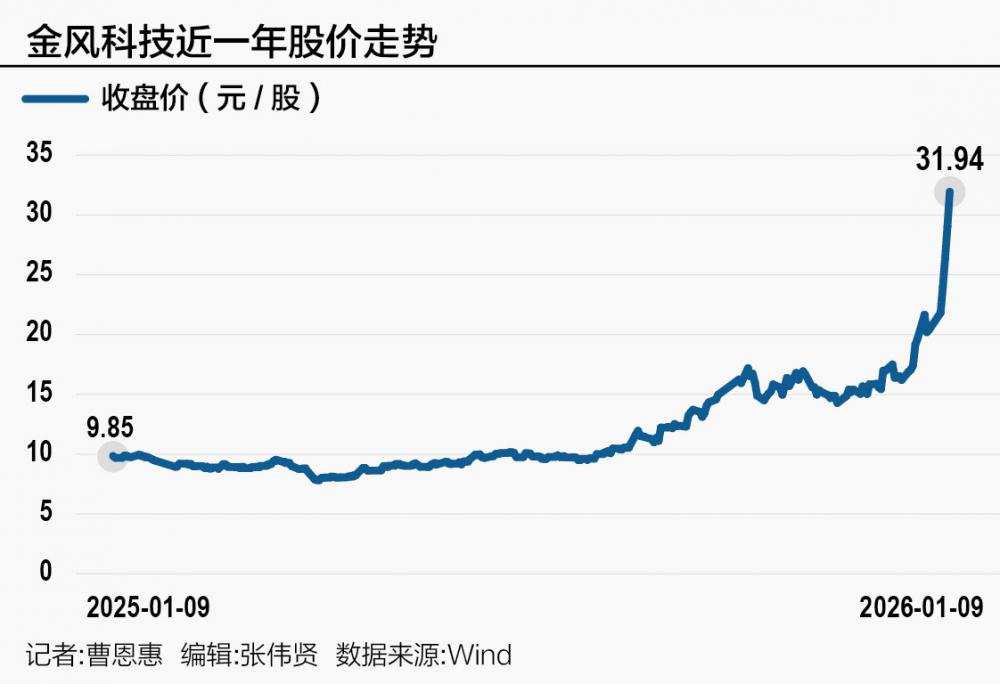
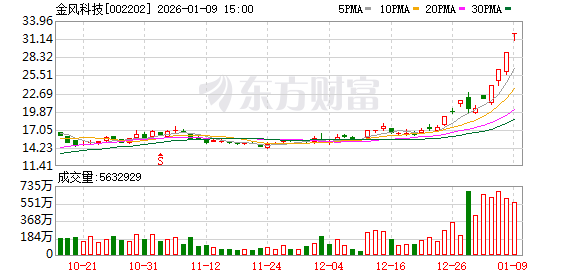
Core Viewpoint - Goldwind Technology has entered the A-share trillion market value club due to its strategic investments, particularly in the commercial aerospace sector, rather than solely from its wind power business [1][2][13]. Group 1: Stock Performance and Market Reaction - On January 9, Goldwind Technology's A-share stock price reached a record high of 31.94 yuan, with a market capitalization of 134.9 billion yuan, marking a cumulative increase of over 56% since the beginning of 2026 and over 100% in the last month [1]. - The surge in stock price is primarily driven by expectations of potential investment returns from its indirect investment in the commercial aerospace company Blue Arrow Aerospace [2][13]. Group 2: Investment in Blue Arrow Aerospace - Blue Arrow Aerospace has filed for an IPO on the Sci-Tech Innovation Board, which has sparked a capital frenzy for Goldwind Technology, positioning it as a significant strategic shareholder with a 4.14% stake through its subsidiary Jianghan Assets [6][7]. - Goldwind's investment in Blue Arrow Aerospace began eight years ago, with initial funding of 200 million yuan in a B-round financing in December 2017, followed by an additional 300 million yuan in a B+ round in November 2018 [7][10]. Group 3: Broader Investment Strategy - Goldwind Technology has established a comprehensive investment ecosystem that extends beyond wind power to include energy storage, hydrogen energy, and commercial aerospace, reflecting a shift from a single-point investment strategy to a more diversified, fund-like operational model [3][10]. - As of now, Goldwind Investment directly holds shares in 21 companies and has invested in a total of 454 companies, including notable firms like Haicheng Energy Storage and Delijia [10]. Group 4: Financial Performance and Future Outlook - Goldwind Technology has demonstrated strong investment performance, with an average annual net investment income of approximately 2.2 billion yuan from 2022 to 2024 [11]. - The company has strategically invested in key suppliers within the wind power industry to secure supply chain safety and enhance competitiveness, exemplified by its early investment in Jinli Permanent Magnet [11]. Group 5: Market Valuation and Analyst Opinions - The recent valuation of Goldwind Technology has led to differing opinions among analysts, with some upgrading their ratings based on the potential returns from Blue Arrow Aerospace, while others caution that the current stock price may reflect overly optimistic expectations [13][15]. - The market's recognition of Goldwind's diversified layout and industrial synergy value is evident, but the sustainability of its trillion market value remains to be tested [15][17].


错失上纬新材,押中蓝箭航天!千亿金风科技背后的投资逻辑
2 1 Shi Ji Jing Ji Bao Dao· 2026-01-09 13:00
Core Viewpoint - Goldwind Technology has entered the A-share trillion market value club due to its strategic investments, particularly in the commercial aerospace sector, rather than solely its wind power business [2][3]. Group 1: Stock Performance and Market Reaction - On January 9, Goldwind Technology's A-share stock price hit a record high of 31.94 yuan, with a market capitalization reaching 134.9 billion yuan, marking a cumulative increase of over 56% since the beginning of 2026 and over 100% in the last month [2]. - The surge in stock price is primarily driven by expectations of potential investment returns from its indirect investment in the commercial aerospace company Blue Arrow Aerospace [3][4]. Group 2: Investment Strategy and Portfolio - Goldwind Technology has established a diverse investment ecosystem that extends beyond wind power manufacturing to include sectors like energy storage, hydrogen energy, and commercial aerospace [3][4]. - The company has invested in Blue Arrow Aerospace, holding a 4.14% stake through its subsidiary Jianghan Assets, positioning itself as a significant strategic shareholder [5]. - Goldwind's investment approach has evolved from small, early-stage investments to a more systematic, fund-like operation, currently holding stakes in 21 companies and having invested in 454 companies overall [7]. Group 3: Historical Context and Future Prospects - Goldwind's investment in Blue Arrow Aerospace dates back to 2017, when it participated in a 200 million yuan B-round financing, followed by an additional 300 million yuan in a B+ round [5][6]. - The rapid progress of Blue Arrow Aerospace's IPO process has contributed to the excitement surrounding Goldwind's stock, although uncertainties remain regarding the IPO's success [6]. - Goldwind's average annual investment net income from 2022 to 2024 is approximately 2.2 billion yuan, indicating its strong investment capabilities [7]. Group 4: Industry Position and Competitive Strategy - Goldwind's investments in key suppliers, such as its early investment in Jinli Permanent Magnet, have helped secure its supply chain and enhance competitiveness in the wind power industry [8]. - The company is also focusing on emerging energy sectors, including energy storage and hydrogen energy, to mitigate supply chain risks and capitalize on technological synergies [9]. - Despite its successful investment strategy, there are concerns about the sustainability of its current market valuation, with differing opinions on whether the stock price reflects overly optimistic expectations [10][11][12].
天使融资一千万谈何造火箭?起底蓝箭航天十年融资路
证券时报· 2026-01-09 03:20
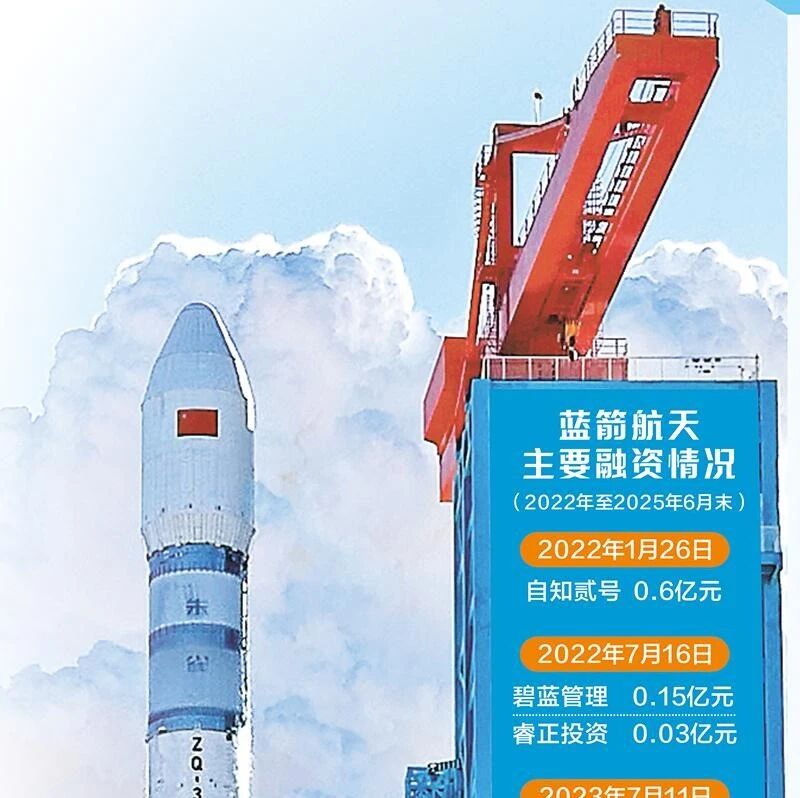
2025年最后一天,蓝箭航天科创板IPO申请获上交所受理,拟募资75亿元,正式向科创板"商业火箭第 一股"发起冲刺。此时距离这家头顶"中国版SpaceX"光环的民营商业火箭公司成立已逾10年。 2015年,金融从业者张昌武(蓝箭航天董事长、总经理)联合两位航天领域专家,设立蓝箭航天。彼时, 民营商业航天尚处于起步阶段,蓝箭航天三人团队提出要融资1000万元去造火箭时,业内普遍觉得不靠 谱,甚至质疑为"骗局"。 一位刚接触天使投资的航天爱好者牛旼,在交流后感觉还很靠谱,于是投出其第一笔商业航天投资,这即 是蓝箭航天的天使轮融资。 从天使轮1000万元到IPO拟募资75亿元,伴随着10年融资路,蓝箭航天也成长为中国商业航天的拓荒者。 2023年7月11日 亦庄产业基金 1.5亿元 中深新创 0.5亿元 2023年12月27日 | 无锡产发 10亿元 | | --- | | 央视融媒体 1亿元 | | .. | | 东瑞投资 0.5亿元 | | .. | | 稳盈壹号 0.5亿元 | | .. | | 斯瑞新材 0.2亿元 | 2024年1月31日 国家产业投资基金(SS) 4.5亿元 2024年4月29日 智慧互 ...
航空航天ETF(159227)涨超2.5%,蓝箭航天已与中国星网、垣信卫星签署正式发射服务合同
Xin Lang Cai Jing· 2026-01-09 02:37
Group 1 - The aerospace industry index (CN5082) has seen a strong increase of 2.98%, with key stocks such as Huayin Technology (688281) rising by 15.12%, Aerospace Electronics (600879) by 10.01%, and Guoke Military Industry (688543) by 8.04% [1] - Blue Arrow Aerospace has signed a formal launch service contract with China Star Network and Yuanxin Satellite, aiming to provide batch launch services, indicating promising commercial prospects [1] - The "GW Constellation" and "Qianfan Constellation" are two major satellite internet projects in China, with GW Constellation planning to launch approximately 12,992 satellites and having completed 17 network launches with 136 satellites in orbit [1] Group 2 - The construction of satellite internet in China is accelerating, with the GW Constellation entering the batch launch phase since December 2024, and a total of 13 groups of low Earth orbit satellites planned for launch [2] - The demand for commercial rockets is surging due to satellite internet construction, with a total of 44,816 satellites planned for launch across various projects, leading to an estimated need for 150 rocket launches per year [2] - Current policies are supporting the development of the commercial rocket industry, with several companies like Blue Arrow Aerospace and Star Glory initiating IPO processes [2] Group 3 - The Aerospace ETF (159227) closely tracks the aerospace index and covers key industry segments such as aerospace equipment, satellite navigation, and new materials, with a high weight of 70% in commercial aerospace concepts [3] - The top ten holdings in the ETF include industry leaders such as Aerospace Development, China Satellite, and Aerospace Electronics [3]
天使融资一千万谈何造火箭?起底蓝箭航天十年融资路
Zheng Quan Shi Bao· 2026-01-08 17:59
2025年最后一天,蓝箭航天科创板IPO申请获上交所受理,拟募资75亿元,正式向科创板"商业火箭第 一股"发起冲刺。此时距离这家头顶"中国版SpaceX"光环的民营商业火箭公司成立已逾10年。 高光时刻后获资本追捧 2015年,金融从业者张昌武(蓝箭航天董事长、总经理)联合两位航天领域专家,设立蓝箭航天。彼时, 民营商业航天尚处于起步阶段,蓝箭航天三人团队提出要融资1000万元去造火箭时,业内普遍觉得不靠 谱,甚至质疑为"骗局"。 一位刚接触天使投资的航天爱好者牛旼,在交流后感觉还很靠谱,于是投出其第一笔商业航天投资,这 即是蓝箭航天的天使轮融资。 从天使轮1000万元到IPO拟募资75亿元,伴随着10年融资路,蓝箭航天也成长为中国商业航天的拓荒 者。 早期投资机构的忐忑 2016年,蓝箭航天核心团队在北京和上海寻求融资。领中资本管理合伙人黄岩接待了蓝箭航天团队。在 尽职调查阶段,不少人曾规劝他放弃投资,理由是民营公司涉足火箭发射,连发射场资源都不具备,但 他最终还是决定参与蓝箭航天A轮融资。 黄岩此前在接受记者采访时,谈及此次投资的三条理由:"民营航天虽属新兴赛道,但市场空间明确 ——'国家队'主攻高轨、重 ...