
数据要素

Search documents
视频丨北京打造国家数据要素综合试验区
Yang Shi Xin Wen Ke Hu Duan· 2025-11-09 01:59
Core Viewpoint - Beijing is advancing the construction of a comprehensive data element pilot zone to deepen the market-oriented allocation reform of data elements, aiming to establish itself as a national hub for data management, resources, and circulation [1][3]. Group 1: Implementation Framework - The pilot zone construction follows a "243" framework, focusing on two foundational aspects: solidifying data infrastructure and institutional frameworks, while addressing four key processes: supply, circulation, application, and security of data [3]. - The initiative aims to build three major systems: data technology innovation, element services, and industrial development, creating a collaborative and efficient data ecosystem across Beijing [3]. Group 2: Future Goals - By 2027, the goal is to achieve a positive interaction between data institutional construction and practical exploration, completing the pilot tasks for the national data element comprehensive trial zone [6]. - By 2029, the aim is for data elements to flow smoothly and be efficiently allocated, positioning data as a new competitive advantage for Beijing and effectively empowering high-quality economic and social development [6].


北京前三季度数字经济增加值增速达9%
Yang Shi Xin Wen· 2025-11-07 08:37
Core Insights - The digital economy in Beijing has shown a growth rate of 9% in the first three quarters of this year, with the core digital economy industries growing at 10.7% [1][5] - The implementation opinions released aim to establish a comprehensive data factor pilot zone, focusing on market-oriented data allocation reforms while ensuring data development and security [1][5] Summary by Sections - **Digital Economy Growth** - Beijing's digital economy increased by 9% in the first three quarters of the year [1] - The core industries within the digital economy experienced a growth rate of 10.7% [1] - **Implementation Opinions** - The document outlines plans to build a national data management center, resource center, and circulation transaction center [1] - By 2027, the goal is to achieve a positive interaction between data infrastructure construction and practical exploration, with pilot tasks completed in Beijing [5] - By 2029, the aim is for data factors to flow smoothly and be efficiently allocated, becoming a new competitive advantage for the city [5] - **"243" Framework for Pilot Zone Construction** - The framework includes two foundations: data infrastructure and data systems [5] - It aims to connect four aspects: data supply, circulation, application, and security [5] - The goal is to create three systems: data technology innovation, factor services, and industrial development [5]

2025年中国数据要素行业发展研究报告——卓越者、典型案例与专家之声
艾瑞咨询· 2025-10-26 00:05
Core Insights - Data is recognized as the fifth production factor, characterized by non-competition, replicability, and unlimited growth potential, making its value extraction process more complex than traditional production factors [1] - The development of the data factor market relies heavily on a clear policy framework and implementation pathways, with local data trading institutions and data merchants emerging as key drivers [1] - The establishment of a robust supply and demand ecosystem is essential to achieve the goals of effective data utilization and security [1] Group 1: Industry Overview - The data factor market is currently in a critical phase driven by policies and practical explorations, with the establishment of the National Data Bureau marking a significant step towards a unified national data market [19][20] - By 2025, the market size is projected to exceed 200 billion, with a compound annual growth rate of over 25% [23] - The construction of a complete national data circulation system is planned over the next five years, aiming to facilitate the integration of data into the real economy and break data monopolies [27] Group 2: Evaluation of Service Providers - The selection of "Outstanding Service Providers in the Data Factor Industry" is based on comprehensive evaluations by iResearch and industry experts, focusing on the capabilities of data developers, operators, and IT technology providers [2][4] - The evaluation model includes four core dimensions: industry depth, product and technology capabilities, service capabilities, and ecosystem capabilities [4] - The top 30 data factor service providers are categorized into four types, reflecting their competitive strengths in various aspects [7] Group 3: Case Studies and Applications - Neusoft's City Data Value Empowerment Platform integrates data to enhance urban services in health, employment, and smart governance, creating a comprehensive service ecosystem [11][12] - The "Fujian Health Public Service Operation Platform" aims to provide a full lifecycle service system, while the "City Human Resources Development Platform" connects various stakeholders to promote employment and training [15] - The focus on high-quality data sets and specialized intelligent entities is expected to become mainstream, with ecosystem co-construction and scenario-building capabilities as core competitive advantages [20]


2025年中国数据要素行业发展研究报告
艾瑞咨询· 2025-10-26 00:05
Core Insights - Data is recognized as the fifth production factor, with its value extraction process being more complex than traditional production factors due to its non-competitive, replicable, and infinite growth characteristics [1] - The development of a market for data elements is increasingly reliant on a clear policy framework and implementation pathways, with local data trading institutions and data merchants becoming central to this evolution [1][2] - The domestic data element market is expected to grow at a compound annual growth rate (CAGR) of approximately 20.26%, surpassing 300 billion yuan by 2028 [6] Current Status of the Data Element Industry - The data element market system is gradually improving, driven by policy guidance and industrial construction, focusing on data, technology, and infrastructure [2] - The digital economy's core industries are becoming significant drivers of the overall economic system, with the digital economy scale growing from 27.2 trillion yuan in 2017 to 53.9 trillion yuan in 2023, doubling in six years [6] Policy Analysis - The improvement of the policy framework for the data industry value chain and the establishment of local data systems are crucial for the circulation of data element value [4] - The introduction of the "Data Twenty Articles" policy has initiated the gradual improvement of the data element rights system, which is essential for efficient data value circulation [11] Market Size Estimation - The domestic data element industry is projected to reach approximately 200 billion yuan by 2025 and exceed 300 billion yuan by 2028, with data processing and analysis being the largest segment [6] Data Value Chain Circulation - The establishment of a data value circulation system is supported by advanced technology capabilities and regulatory compliance [8] - The data asset registration process is critical for ensuring the rights and interests of data participants, with a focus on public data as a core resource [13] Data Asset Capitalization - The entry of data assets into financial statements marks a significant step in the capitalization of data elements, with the implementation of relevant regulations starting in 2024 [19] - The market for data asset transactions is characterized by a "cold inside, hot outside" distribution pattern, with off-market transactions dominating due to their flexibility and customization [21] Industry Practices - The financial sector is expected to see a CAGR of approximately 19.06%, reaching over 100 billion yuan by 2028, driven by the integration of data elements [31] - The industrial manufacturing sector is projected to grow at a CAGR of about 24.22%, with a focus on high-quality data sets and trusted data spaces [34] Trends - The construction of high-quality data sets is becoming a key factor in advancing the artificial intelligence industry, with a focus on systematic data collection and processing [39] - The establishment of trusted data spaces is essential for ensuring the safe circulation and high-value application of data elements, with plans for over 100 such spaces by 2028 [42]

从2700到3900,还有哪些赛道有补涨需求?
Mei Ri Jing Ji Xin Wen· 2025-10-24 01:49
Market Overview - The Shanghai Composite Index has risen from 2700 points to over 3800 points in the past 13 months, with total market capitalization surpassing 100 trillion yuan, and over 1500 stocks have doubled in price during this period [1] - Growth sectors have shown outstanding performance, driven by favorable factors such as the overseas expansion of innovative drugs and domestic substitution in the semiconductor industry, with multiple growth indices like the North Star 50, Sci-Tech 50, and ChiNext Index achieving direct returns of 100% [1] Sector Performance - The technology and digital economy sectors have significantly outperformed, with the artificial intelligence industry chain averaging over 120% increase this year, semiconductor equipment and materials exceeding 90%, and other digital economy segments like industrial internet and data elements also surpassing 80% [1] - In contrast, traditional cyclical sectors such as coal, steel, and real estate have shown moderate growth, typically between 10% and 20% [1] - The food and beverage sector has remained sluggish, particularly the liquor segment, but extreme pessimism has created opportunities for a rebound, as the sector is currently characterized by low expectations, low valuations, and low crowding [1] Investment Trends - The food and beverage ETF (515170) has attracted significant capital, with over 1.8 billion yuan raised in October alone, indicating strong investor interest [2] - The valuation of the food and beverage sector remains low, suggesting it may be a favorable time for allocation [2]
RDA价值是创新且合规商业模式的体现——兼谈RWA模式
Sou Hu Cai Jing· 2025-10-12 16:22
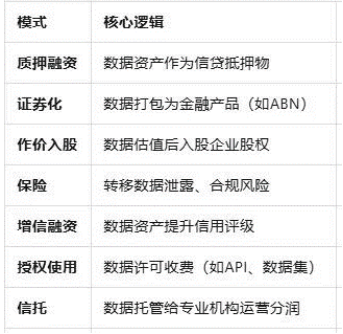
Core Insights - RDA (Real Data Assets) emphasizes the integration of data with physical assets, recognizing data as a new production factor in the digital economy, which can be measured, traded, and monetized as a strategic resource [1] Part 1: RDA Capitalization - Incorporating data resources into financial statements allows companies to understand the scale, quality, and value of their RDA, leading to better management strategies and value realization [2] - Conditions for RDA to be included in financial statements include legal ownership, expected future economic benefits, and reliable measurement of cost or value [2] Part 2: Legal Basis and Practical Cases for RDA Investment - The Chinese government has initiated policies to explore new models for RDA inclusion in financial statements, with a focus on data-intensive industries like transportation and fintech [4] - New laws allow shareholders to use data and virtual assets as capital contributions, facilitating innovative financing models for digital economy development [4] Part 3: RDA Financing - RDA financing is a financial realization stage for data value, with various models including RDA-linked loans and RDA pledge financing [11][12] - The first RDA-linked loan was issued in September 2024, demonstrating the innovative financial products tied to RDA value [12] Part 4: RDA Insurance - The first RDA loss insurance was issued in June 2024, marking a significant step in protecting data assets [15] - Various insurance products have been developed to cover data security and compliance risks [15] Part 5: RDA Securitization - RDA can be packaged into securities for capital market circulation, with the first RDA-backed asset-backed securities (ABS) issued in June 2025 [16][17] Part 6: RDA Trust - Data trust is an emerging asset management model that allows RDA to be managed by professional institutions, ensuring specialized management and value development [19] - The first data trust project was launched in April 2023, showcasing the potential for professional management of RDA [19] Part 7: Exploration of Overseas RWA Models - RDA is a key subset of RWA (Real World Assets), focusing on valuing and trading data as independent assets [21] - The RDA layer is essential for the subsequent technological transformation and value circulation in RWA [23] Part 8: Conclusion - The integration of technology, institutional innovation, and market dynamics is reshaping the competitive landscape of the digital economy, with RDA serving as a core resource for businesses [31]
广东推进“数据要素×”:加快数据条例立法,打造可信数据空间
2 1 Shi Ji Jing Ji Bao Dao· 2025-09-29 10:02
Core Viewpoint - The "Data Element ×" initiative is being actively implemented across various provinces in China, with Guangdong leading the way in integrating data resources to enhance the digital economy and support the real economy's development [1][2]. Group 1: Implementation and Policy Support - Over ten provinces have developed comprehensive or specific work plans for the "Data Element ×" initiative, supported by financial policies [1]. - Guangdong is focusing on the deep integration of real numbers, providing public data, multi-source data, and industry data, along with policies for data security and infrastructure [1][2]. - The province has introduced several policy documents to promote digital economy and public data utilization, accelerating the legislative process for the "Guangdong Data Regulations" [3]. Group 2: Data Resource Development - Guangdong has established the "One Network Sharing" platform, serving 2342 departments with 260,000 data requests, and has opened over 27 billion public data records to society [2]. - The province is developing high-quality data sets in various sectors, including biomedicine and green finance, with several projects recognized by the National Data Bureau [2][3]. Group 3: Ecosystem and Talent Development - Guangdong is enhancing the digital economy ecosystem by promoting effective supply-demand matching and developing data industry clusters [3]. - The province has implemented talent development initiatives, including a professional title evaluation standard for big data engineering and vocational training subsidies, with 1416 individuals obtaining big data professional certificates [3]. Group 4: Data Element Competition - The first "Data Element ×" competition saw over 22,000 teams participating, with more than 900 projects selected for the national finals [4]. - The Guangdong competition showcased increased participation, with a 30% rise in entries compared to the previous year, highlighting regional collaboration within the Guangdong-Hong Kong-Macao Greater Bay Area [5]. - Innovative projects in healthcare and industrial manufacturing demonstrated significant improvements in data processing accuracy and operational efficiency [5][6].
多地公共数据共享应用取得新进展;上海元宇宙相关产业规模突破3000亿元|数智早参
Mei Ri Jing Ji Xin Wen· 2025-09-28 23:22
Group 1 - Multiple regions in China have made significant progress in public data sharing applications, with Jiangsu launching a unified public data authorization platform and developing 86 public data products across various sectors [1] - Shandong has conducted over 52 billion data sharing instances and created over 90 high-quality datasets focused on AI development in industrial manufacturing and transportation [1] - Guangdong has opened over 27 billion public data records to the public, supporting efficient service delivery [1] Group 2 - Lexiang Technology has completed a 200 million yuan financing round, led by Zhongding Capital, with existing investor IDG Capital also participating [2] - The funds will be used for R&D of core components, development of robotic body and motion control technology, and iteration of consciousness bionic models, aiming to accelerate the commercialization of consumer-grade intelligent products [2] - This financing indicates strong market confidence in the consumer robotics sector, although high R&D costs and technical bottlenecks may impact profitability [2] Group 3 - The scale of the metaverse-related industries in Shanghai has surpassed 300 billion yuan, with over 30 XR terminal manufacturing companies and a significant share of core component production [3] - Future initiatives will focus on technological breakthroughs in AI, spatial computing, and digital content, as well as promoting large-scale applications in various sectors [3] - Local government support for emerging industries is expected to facilitate the transition of the metaverse from concept to tangible economic impact, attracting more capital and enhancing company valuations [3]
国家数据局:将继续支持地方深化实数融合 释放数据要素乘数效应
Xin Jing Bao· 2025-09-28 10:47
Core Insights - The National Data Bureau is committed to supporting local governments in deepening the integration of data elements, aiming to unleash the multiplier effect of data elements [1][2][3] Group 1: Policy Support and Implementation - Effective support policies have been established, ensuring better implementation of the "Data Elements ×" action plan, with over 10 provinces and cities, including Shandong, having developed comprehensive or specific work plans [1] - Local governments are creating "Four Libraries" (Project Library, Scenario Library, Case Library, Expert Library) to implement tailored strategies for enterprises, enhancing investment and problem-solving [1] Group 2: Grassroots Exploration and Value Release - Localities are exploring diverse paths for releasing the value of data elements through pilot projects, competitions, and case promotions, with a focus on optimizing supply chain collaboration and innovating with external data [2] - Public data is being utilized to improve government governance and public service levels, leading to new applications in urban governance and emergency response [2] Group 3: Deep Integration of Data Elements - Regions are accelerating the deep integration of data elements, leveraging their resource advantages to enhance traditional industries and foster the growth of emerging sectors [3] - The "Data Elements ×" competition has seen over 22,000 teams registered, with more than 900 projects selected for the national finals, scheduled for mid to late October in Beijing and Shanghai [3]
国家数据局:900多个项目入围“数据要素×”大赛总决赛
Zhong Guo Xin Wen Wang· 2025-09-28 08:27
Core Insights - The "Data Element ×" competition has successfully completed the local preliminary rounds, with over 22,000 teams registered nationwide and more than 900 projects selected for the national finals [1][2] - The national finals will take place in mid to late October in Beijing and Shanghai, with an awards ceremony scheduled for November in Shanghai [1] Group 1: Competition Overview - The "Data Element ×" competition is part of a three-year action plan aimed at enhancing data utilization across various sectors [2] - Local governments have developed policies to support the initiative, with over ten provinces and cities, including Shandong, issuing comprehensive or specific work plans [1][2] Group 2: Value Realization - The competition has highlighted the effective use of internal data by companies to reduce costs and improve efficiency, as well as the optimization of supply chain collaboration through data sharing [2] - Public data is being leveraged to enhance government governance and public service levels, with new applications emerging from the integration of various data sources [2] Group 3: Future Directions - The government plans to continue supporting local initiatives and will issue guidelines to activate the value of data elements further [2]