
水运

Search documents
三峡水运新通道项目有最新进展!
Zheng Quan Ri Bao Wang· 2026-01-05 07:36
Core Insights - The development of the Yangtze River Economic Belt has shown significant progress over the past decade, with improvements in waterway infrastructure, cargo throughput, and environmental quality [1][2][3][4] Group 1: Infrastructure and Economic Growth - The length of high-grade waterways in the Yangtze River has increased from 8,000 kilometers to 11,000 kilometers, and cargo throughput at major ports has grown by 71% to reach 4.2 billion tons, maintaining the world's leading position in inland river transport [1] - The GDP of the Yangtze River Economic Belt has more than doubled, increasing its share of the national economy from 42.2% to 47.3% [1] - By 2025, it is expected that cargo throughput at major ports will reach 4.2 billion tons, with the number of large ports increasing to 18 and the average tonnage of cargo ships exceeding 2,300 tons, representing growth of 71%, 50%, and 67% respectively since 2015 [1] Group 2: Environmental Protection and Sustainable Development - The proportion of good water quality in the Yangtze River Economic Belt has improved from 67% to 96.5%, indicating significant advancements in environmental protection [1] - The "Three-Year Action Plan for Further Strengthening the Protection of the Yangtze River" outlines key tasks in water pollution control and ecological restoration from 2025 to 2027, with noticeable progress already made [2] - The region is focusing on green and low-carbon transformation of industries, with the establishment of 24 national carbon peak pilot cities and parks, and 14 zero-carbon parks [4] Group 3: Innovation and Industrial Upgrading - The Yangtze River Economic Belt has become a hub for innovation, with the establishment of three technology innovation centers and eight national laboratories, leading to breakthroughs in key technologies in various fields [3] - The region has nurtured 41 national-level advanced manufacturing clusters and 30 strategic emerging industry clusters, accounting for 51% and 45% of the national totals respectively [3] - The automotive industry is undergoing significant transformation, with projections indicating that by 2025, the production of new energy vehicles in several provinces will exceed one million units, forming a comprehensive supply chain across the entire river basin [3]
交通运输部:大力实施水运基础设施更新和数智化改造,推动长江经济带高质量发展
Jin Rong Jie· 2026-01-05 03:37
Core Viewpoint - The Ministry of Transport plans to enhance the development of the Yangtze River Economic Belt through infrastructure upgrades and digital transformation initiatives [1] Group 1: Infrastructure Development - The implementation of trunk channel capacity expansion and upgrading projects will be prioritized [1] - There will be a focus on accelerating the construction of high-grade tributary channels to eliminate bottlenecks in water transport [1] Group 2: Port and Logistics Enhancement - Efforts will continue to improve the capabilities of port hubs, aiming to create a well-structured and efficient multi-level port system [1] Group 3: Digital Transformation - A significant push will be made for the renewal of water transport infrastructure and its digital transformation to promote high-quality development in the Yangtze River Economic Belt [1]
【安康】加快建设全国性综合交通枢纽城市
Shan Xi Ri Bao· 2026-01-05 00:28
Core Viewpoint - The development of transportation infrastructure in Ankang City is transforming its geographical limitations into opportunities for economic growth and connectivity, enhancing the region's integration into national and international logistics networks [2][6]. Transportation Infrastructure Development - The construction of the Xikang High-Speed Railway, part of the national "eight vertical and eight horizontal" high-speed rail network, is set to significantly reduce travel time between Xi'an and Ankang from approximately 3 hours to under 1 hour [2]. - Ankang's total road mileage has reached 26,800 kilometers, with a per capita road network density ranking first in the province [4]. - The city has completed the construction of key highway projects, including the Ning-Shi Expressway and several other significant routes, enhancing connectivity [3]. Multi-Modal Transportation - Ankang is the only city in the province equipped with all four modes of transportation: water, land, air, and rail, which supports a comprehensive modern transportation system [3]. - The airport in Ankang has seen a significant increase in passenger throughput, surpassing 400,000 annually, and has expanded its reach to major cities like Beijing and Shanghai [3]. Economic Impact - The improved transportation infrastructure is expected to boost rural revitalization and economic development in the region, facilitating the movement of agricultural products and enhancing local industries [5]. - The logistics sector in Ankang is evolving, with a notable increase in air cargo throughput, which grew by 77.6% year-on-year, indicating a robust demand for logistics services [6]. International Connectivity - The establishment of the China-Europe Railway Express has enhanced Ankang's role in the international logistics network, with plans for regular operations of return trains from Moscow to Ankang, further integrating the city into the global supply chain [7].
中山交出“十四五”发展答卷 预计2025年GDP将突破4200亿元
Xin Lang Cai Jing· 2026-01-01 00:18
Core Insights - The "14th Five-Year Plan" period has seen significant economic and social development in Zhongshan, with GDP expected to exceed 420 billion yuan by 2025, and a total of 740,000 business entities, marking a 60% increase over five years [2][3] - Zhongshan is actively integrating into the Guangdong-Hong Kong-Macao Greater Bay Area, enhancing its strategic advantages and infrastructure [3][4] Economic Development - Zhongshan's GDP has crossed the thresholds of 350 billion and 400 billion yuan, with a projected growth to over 420 billion yuan by 2025 [2] - The number of business entities has increased to 740,000, reflecting a 60% growth over five years [2] - The total scale of the ten major industrial clusters has surpassed 700 billion yuan, with industrial investment expected to double by 2024 compared to 2021 [2] Infrastructure and Transportation - The completion of the Shenzhen-Zhongshan Link has resulted in an average daily traffic of 88,000 vehicles and over 200,000 passengers, facilitating regional connectivity [4] - Zhongshan has established five new air and cross-city bus routes, serving over 4.8 million passengers [4] - The city has constructed seven expressways and 21 trunk roads, achieving a road network density of over 18 kilometers per 100 square kilometers, ranking among the top in the province [4] Industrial Transformation - Zhongshan has launched 87 new policies since 2022 to address land inefficiencies, resulting in the reclamation of over 52,000 acres of low-efficiency industrial land [5] - The city has built over 23 million square meters of factory space, with a utilization rate exceeding 83%, and attracted investments exceeding 200 billion yuan [5] - R&D expenditure has consistently exceeded 10 billion yuan for three consecutive years, with a growth rate of over 20% for two years [6] Social Development - Zhongshan has implemented the "High-Quality Development Project" to enhance urban-rural coordination, with 12 towns ranked among the top 500 in national economic performance [7] - The income disparity between urban and rural areas has narrowed to a ratio of 1.4:1, maintaining the best record in the province for 11 consecutive years [7] - The city has improved living conditions by renovating over 60,000 rural houses and achieving 100% compliance with provincial standards for beautiful and livable villages [7] Public Services and Safety - Zhongshan has developed a comprehensive social governance system, successfully creating a modernized city governance model [8] - The city has added 289,000 urban jobs and introduced the "Mom Job" employment model, which has been promoted nationwide [8] - Educational and healthcare services have been enhanced, with the addition of 120,000 public school places and several new hospitals [8]

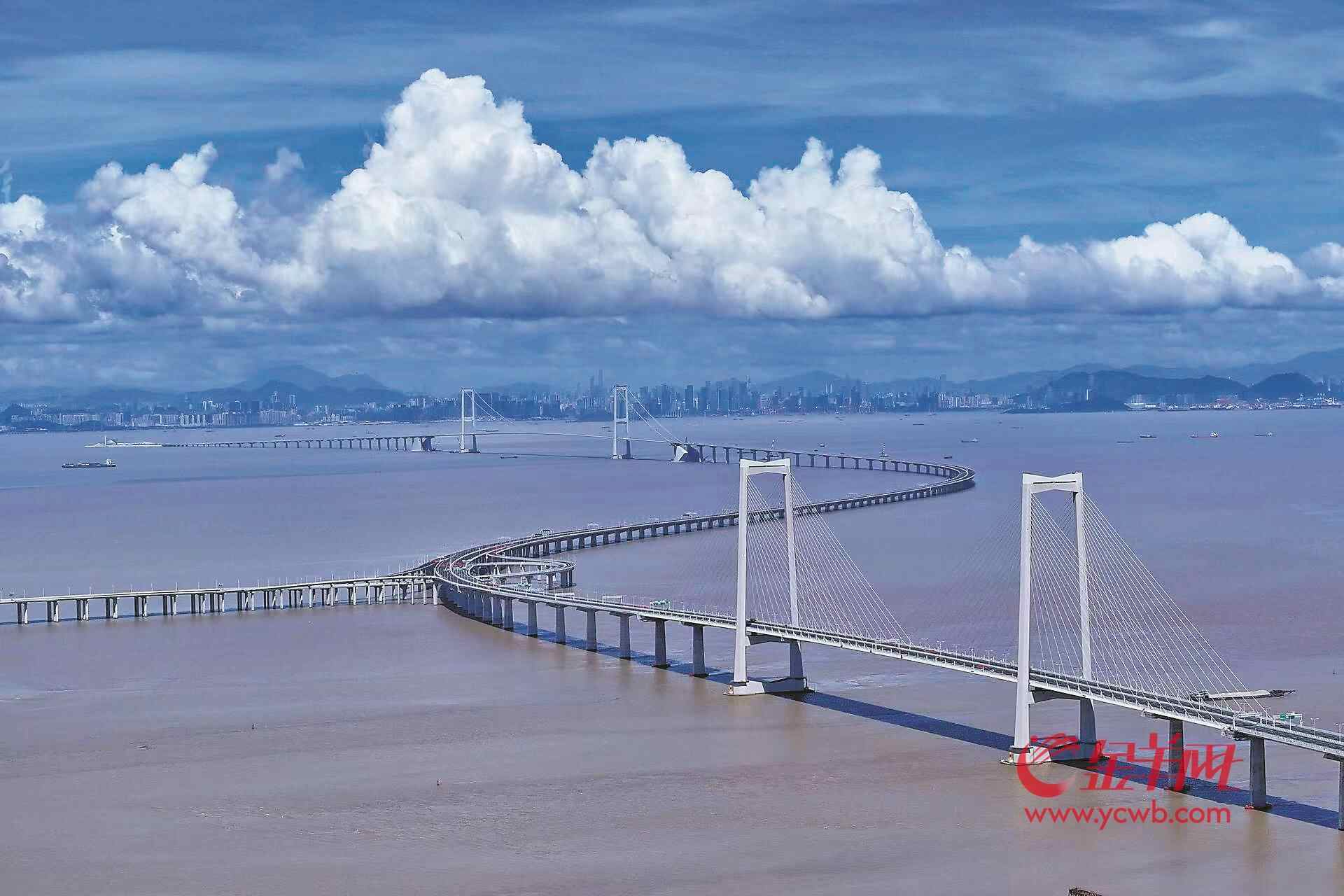
2025年珠江水运发展主要指标保持稳定
Zhong Guo Xin Wen Wang· 2025-12-31 10:24
Core Insights - The Pearl River waterway development has achieved solid results in the "14th Five-Year Plan" period, with major indicators remaining stable and high-quality development making significant progress [1] Group 1: Key Performance Indicators - By 2025, the Pearl River waterway is expected to complete a cargo transport volume of 1.57 billion tons, a year-on-year increase of 0.7%, and a passenger transport volume of 45.25 million [1] - The total cargo throughput at Pearl River ports is projected to reach 2.1 billion tons, with foreign trade cargo throughput at 640 million tons and container throughput at 79.01 million TEU, representing year-on-year growth of 2.8%, 4.5%, and 4.8% respectively [1] Group 2: Infrastructure and Investment - During the "14th Five-Year Plan" period, the Pearl River waterway infrastructure has improved significantly, with an expected addition and improvement of 800 kilometers of high-grade waterways, bringing the total to 2,509 kilometers, a 41.2% increase from the end of the "13th Five-Year Plan" [1] - Fixed asset investment in water transport is expected to exceed 100 billion yuan, three times that of the "13th Five-Year Plan" period [1] Group 3: Major Projects and Developments - Key projects such as the Xijiang Canal project and the construction of navigation facilities at Longtan Hydropower Station have made significant progress, with investments of approximately 65.05 billion yuan and 3.79 billion yuan respectively [2] - The Qiongzhou Strait roll-on/roll-off transport service has enhanced its capacity to support the operation of Hainan Free Trade Port through various measures [2] Group 4: Technological Advancements - The Pearl River shipping sector has made notable achievements in smart and green development, with the launch of the national comprehensive transportation information platform, which promotes regional shipping governance [2] - Intelligent joint scheduling has been implemented for 20 locks on the Xijiang trunk line and 21 locks on the Beijiang [2] Group 5: Future Development Goals - The "15th Five-Year Plan" period will focus on overcoming bottlenecks in inland waterways, expanding transportation patterns, and promoting high-quality development [3] - The Pearl River Navigation Bureau aims to establish a modernized shipping system characterized by networked facilities, organized transport, intelligent navigation, and high-quality services [3]
前11个月全国社会物流总额同比增长5.0%
Zheng Quan Ri Bao· 2025-12-30 16:08
Core Insights - The total social logistics volume in China reached 331.2 trillion yuan in the first 11 months, with a year-on-year growth of 5.0%, slightly down by 0.1 percentage points from the previous 10 months [1] - In November, the growth rate was 4.5%, a decrease of 0.3 percentage points compared to October [1] Group 1: Industrial Sector - The logistics volume of industrial products grew by 5.2% year-on-year in the first 11 months, with a slight decline of 0.1 percentage points from the previous 10 months [2] - In November, the growth rate for industrial logistics was 4.7%, down by 0.2 percentage points month-on-month [2] - Traditional industries like coal and chemicals are seeing a logistics demand rebound due to upgrades, with growth rates exceeding 6% [2] - High-tech manufacturing logistics demand grew over 9%, with specific sectors like integrated circuit manufacturing and electronic materials exceeding 30% growth [2] Group 2: Consumer Sector - The logistics volume for units and residential goods increased by 5.8% year-on-year in the first 11 months, although this was a decline of 0.6 percentage points from the previous 10 months [2] - This growth rate remains above the average for total social logistics, aligning with the overall consumer market trends [2] Group 3: Import Sector - The logistics volume for imported goods decreased by 0.2% year-on-year in the first 11 months, but the decline was narrower by 0.3 percentage points compared to the previous 10 months [2] - In November, the import logistics volume grew by 3.0%, although this was a slight decrease of 0.4 percentage points from October [2] - Imports from countries involved in the Belt and Road Initiative increased by 6% year-on-year in the first 11 months [2] Group 4: Logistics Industry Performance - The total revenue of the logistics industry reached 13.1 trillion yuan, with a year-on-year growth of 4.6%, marking a 0.1 percentage point increase from the previous 10 months [3] - The logistics industry prosperity index averaged 50.7%, indicating expansion, with November's index at 50.9%, up by 0.2 percentage points [3] - Warehouse logistics turnover efficiency has improved, with the sales rate of industrial products rising to 96.5% in November [3] - The logistics pricing in various sectors, including maritime and road transport, has shown an upward trend due to seasonal demand [3] Group 5: Future Outlook - The business activity expectation index for logistics companies remains high at 54.9%, supported by ongoing policies aimed at reducing logistics costs and improving quality [4]
一闸一港重启涪江“黄金水道”,预计年降物流成本超30%
Si Chuan Ri Bao· 2025-12-30 10:08
Core Viewpoint - The construction of the Sanxing Ship Lock and the Dasha Dam operation area in Suining marks a significant step in revitalizing the Fuxi River as a key waterway, which is expected to reduce logistics costs by over 30% annually for the region [3][4]. Group 1: Project Overview - The Sanxing Ship Lock project has officially commenced, alongside the first phase of the Dasha Dam operation area, facilitating the revival of the Fuxi River for navigation [3]. - The Sanxing Ship Lock will include the construction of a new three-level lock and the improvement of approximately 10 kilometers of downstream waterways, designed for 1,000-ton dry bulk carriers with an annual throughput capacity of 14.67 million tons [3][4]. Group 2: Economic Impact - Suining, a significant industrial city in Sichuan, relies heavily on traditional road transport for its substantial cargo volumes, including lithium concentrate, metal salts, and fertilizers [4]. - The revival of the Fuxi River is projected to lower logistics costs by over 30% annually, enhancing the efficiency of cargo transport compared to the current reliance on road transport to Chongqing's Guoyuan Port [4]. Group 3: Future Developments - The Fuxi River will integrate with the Jialing River to form an efficient "Y"-shaped waterway network, significantly improving the overall transportation capacity of the region [5]. - The Dasha Dam operation area will feature three new 1,000-ton berths with an annual throughput capacity of 2.1 million tons, and it will be designed to accommodate future rail connections, enhancing the intermodal transport capabilities [5].
武汉至重庆“水运高速”贯通,5000吨级货轮常年直达重庆
Chang Jiang Ri Bao· 2025-12-30 00:52
Core Viewpoint - The completion of the 4.5-meter deep waterway from Wuhan to Chongqing significantly enhances the shipping capacity, allowing 5,000-ton vessels to reach Chongqing year-round, which is expected to boost economic development along the Yangtze River [1][2]. Group 1: Waterway Improvements - The Wuhan to Chongqing waterway, measuring 1,277.5 kilometers, is a crucial part of the national comprehensive transportation network [1]. - The water depth increase from previous levels (ranging from 2.8 to 4.2 meters) to 4.5 meters allows for greater cargo capacity, with each 0.1-meter increase enabling an additional 200 tons of cargo and reducing logistics costs by approximately 14% [1]. - The project is part of the "14th Five-Year Plan," with systematic dredging and channel improvement efforts aimed at enhancing waterway conditions [2]. Group 2: Economic Impact - The completion of the 4.5-meter deep waterway is projected to generate direct economic benefits of approximately 1.6 billion yuan and indirect benefits of around 15.9 billion yuan annually [2]. - The enhanced waterway capacity is expected to lower social logistics costs and promote high-quality economic development in the region [2].
四川将新增一条千吨级出川水运通道 涪江复航重大“卡点”攻坚工程开工
Si Chuan Ri Bao· 2025-12-30 00:13
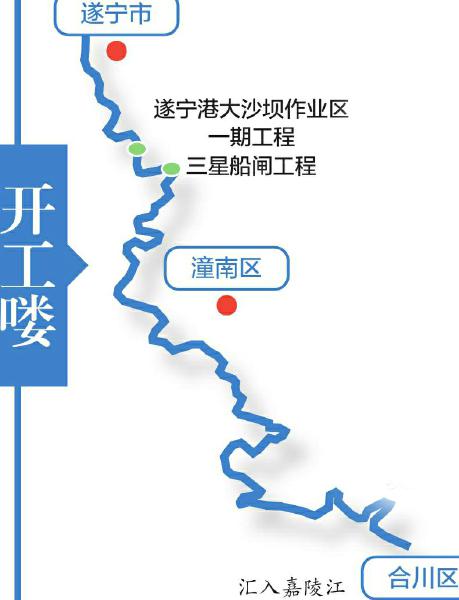
目前,涪江重庆段126公里航道整治工程已开工,重庆市渭沱、富金坝、安居3座船闸扩能升级改造 工程将陆续开工建设。以上工程以及涪江三星船闸工程、遂宁港大沙坝作业区项目建成后,涪江遂宁— 重庆合川段可实现全面通行。预计到2028年,涪江遂宁城区以下将达到复航条件,到2030年实现1000吨 级船舶通航,四川将新增一条出川水运通道。 "十五五"期间,遂宁还将启动过军渡船闸、吴家街枢纽等工程项目研究论证,畅通遂宁至绵阳的上 游航道,推进涪江全线通航。(刘作鹏 记者 阚莹莹 寇敏芳) 涪江是嘉陵江右岸最大的支流,是四川六大水系之一,曾是主要航运通道之一。省政府于11月印发 的《"畅通一条江"航运振兴发展集中攻坚三年行动方案(2025—2027年)》中,位于遂宁市蓬溪县、船 山区和重庆市潼南区交界处的三星电站被列为重大"卡点"。 为打通这一"卡点"、畅通涪江航运,涪江遂宁段复航(一期)工程启动。 项目建设内容包括涪江 三星船闸工程、遂宁港大沙坝作业区一期工程,计划于2028年建成。其中,三星船闸工程将在既有三星 电站左岸新建1座三级船闸,整治下游约10公里航道,配套建设航标工程、公用工程、过鱼设施工程及 其他工程,设计代 ...
交通运输业当好发展先行官 服务保障能力不断提升
Jing Ji Ri Bao· 2025-12-29 01:40
Core Insights - The transportation sector in China is projected to see fixed asset investment exceed 3.6 trillion yuan, with cross-regional passenger flow surpassing 66 billion trips and freight volume exceeding 58 billion tons, all reflecting a year-on-year growth of approximately 3.5% [1] - The overall operation of the transportation sector has been stable and progressive, successfully meeting annual targets [1] Investment and Infrastructure Development - Major transportation infrastructure projects are progressing smoothly, with a total investment of 18.8 trillion yuan during the 14th Five-Year Plan period [3] - The national comprehensive transportation network has been largely completed, connecting over 80% of county-level administrative regions and serving about 90% of the country's economic and population totals [3] Service Improvement and Capacity Enhancement - The transportation sector has significantly improved service quality, with urban rail transit operating over 11,000 kilometers and serving more than 90 million passengers daily [3] - The opening of new high-speed rail lines, such as the Baotou-Yinchuan and Wuhan-Yichang sections, has reduced travel times and enhanced regional connectivity [2] Artificial Intelligence Integration - The integration of artificial intelligence in transportation is being accelerated, with initiatives to develop smart construction systems and enhance operational safety [5][6] - The Ministry of Transport plans to implement AI across various transportation modes, aiming to create a comprehensive data and intelligence platform [6] Consumer Trends and New Opportunities - The transportation sector is expanding consumer scenarios, particularly in self-driving travel and cruise tourism, with cruise passenger transport volume increasing by 27.8% year-on-year [7][8] - The small and micro car rental market is expected to grow significantly, with a projected annual growth rate of around 15% during the 14th Five-Year Plan period [8]