珠宝销售

Search documents
古装剧相对放开了,影视投资会变多吗?丨消费参考
2 1 Shi Ji Jing Ji Bao Dao· 2025-08-20 01:31
Industry Insights - The National Radio and Television Administration has implemented measures to enhance content supply for television, emphasizing the need for quality content and innovation in programming [1][2] - The new policies will allow for more flexible broadcasting measures for historical dramas, increasing the total number of episodes allowed during prime time from 15% to 30% of the annual total [2] - Historical dramas are identified as a competitive advantage for the Chinese film and television industry, with recent successes like "Ling Jiang Xian" achieving significant advertising metrics [3] Company Performance - Tencent's video platform has seen a decline in paid subscribers, dropping by 3 million to 114 million as of Q2 2025, indicating challenges in the long video content sector [4] - iQIYI reported a 9% year-on-year revenue decline to 7.19 billion yuan in Q1 2025, highlighting a trend of audience loss in long video content over the past few years [5][6] - Despite the new regulations, the overall impact on the film and television industry may be limited, although companies excelling in historical dramas could benefit [7] Market Trends - The broadcasting and television service industry reported a total revenue of 688.41 billion yuan in the first half of 2025, reflecting a year-on-year growth of 5.24% [33]
官方通报:4人被控制,直播间被关闭!
Zheng Quan Shi Bao· 2025-08-18 10:46
Core Viewpoint - The report highlights the rampant fraud in the jade market of Zhenping County, Henan Province, where some merchants deceive consumers into purchasing counterfeit Hetian jade through illegal means [2][3][4]. Group 1: Investigation and Response - Following a media report on August 17, Zhenping County established a joint investigation team to address the issues raised, leading to the detention of four live-streaming hosts and individuals involved in producing fake certificates [2][3]. - The county plans to continue regulatory actions to standardize the jade market and encourages public supervision of their efforts [3][4]. Group 2: Fraudulent Practices - Merchants are using low-quality jade materials, such as Qinghai jade and Han jade, to create counterfeit Hetian jade, which is sold at significantly lower prices [4][5]. - A detailed process for creating fake Hetian jade involves using chemical agents for dyeing and polishing lower-end jade materials, which are then marketed as high-end products [4][5]. Group 3: Live Streaming and Sales Tactics - The rise of live-streaming e-commerce has led to a unique "walking broadcast" ecosystem in the jade market, where hosts promote jade products while often engaging in deceptive practices [6][7]. - Some live-streaming hosts stage interactions with merchants to create a false sense of competition and urgency, manipulating prices and consumer perceptions [6][7][8]. Group 4: Misleading Claims and Marketing - The jade products are often marketed with exaggerated claims of miraculous health benefits, targeting specific demographics such as older adults [10][11]. - The use of fabricated narratives and theatrical performances in live-streaming sessions has proven lucrative for companies involved in jade sales, leading to substantial profits [11].
官方通报:4人被控制,直播间被关闭!
证券时报· 2025-08-18 10:26
Core Viewpoint - The article highlights the rampant fraud in the jade market of Zhenping County, Henan Province, particularly concerning the sale of counterfeit Hetian jade, leading to immediate government intervention and investigations [1][2][3]. Group 1: Fraudulent Practices - Some merchants are using illegal methods to deceive consumers into purchasing fake Hetian jade, which disrupts the normal market order [2][3]. - The investigation revealed that low-quality jade materials are being dyed and treated to resemble high-end Hetian jade, with some merchants openly admitting to these practices [10][12][14]. - Counterfeit jade is often sold at significantly lower prices, making it attractive to consumers who are unaware of the quality differences [10][16]. Group 2: Live Streaming and Sales Tactics - The rise of live streaming e-commerce has created a unique "walking broadcast" ecosystem in the jade market, where hosts promote products aggressively [26][27]. - Some hosts engage in deceptive practices, such as pretending to negotiate prices with merchants while actually selling their own products [29][35]. - The article describes how scripted performances are used to manipulate consumer perceptions and drive sales, including the portrayal of fake foreign merchants [39][44]. Group 3: Regulatory Response - In response to the media reports, Zhenping County established a joint investigation team to address the fraudulent activities, resulting in the detention of several individuals involved in the scams [2][3]. - The local government plans to continue regulatory actions to standardize the jade market and welcomes public supervision of their efforts [3].


央视曝光直播间卖和田玉骗局 成本仅十几元?直播间招演员、商家上科技与狠活儿
Qi Lu Wan Bao· 2025-08-18 01:50
Group 1 - The article highlights the prevalence of fraudulent practices in the Hetian jade market, where unscrupulous merchants exploit consumers' lack of knowledge to deceive them and disrupt market order [1][6][21] - In Nanyang's Shifo Town, a major processing and trading hub for Hetian jade, low-quality jade materials are being disguised as high-end Hetian jade through chemical treatments and dyeing processes [3][8][10] - The article details how fake Hetian jade is sold with counterfeit certification, including a rapid production of fake certificates for Afghan jade, which is sold at inflated prices [16][19][21] Group 2 - The rise of live-streaming e-commerce has created a unique "walking broadcast" ecosystem in Shifo Town, where hosts perform scripted sales tactics to promote jade products [23][30] - Merchants and live-streamers collaborate in staged performances to create a sense of urgency and exclusivity, often manipulating prices and product origins to mislead consumers [25][32] - The article reveals that some live-streaming companies employ actors and use exaggerated claims about the health benefits of their jade products to enhance sales, leading to significant profits [40]
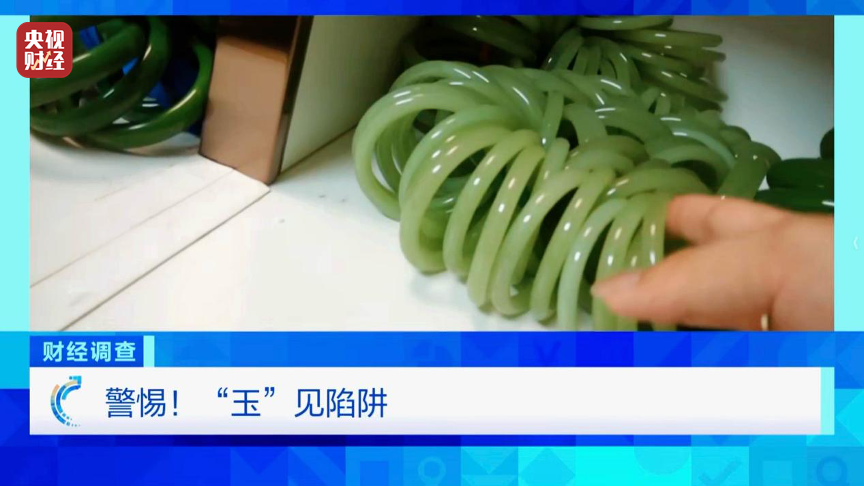
财经调查丨全是演的!和田玉线下造假线上销售,直播间主播、市场摊主联袂出演砍价大戏→
Sou Hu Cai Jing· 2025-08-17 12:45
Group 1 - The article highlights the emergence of a unique "walking broadcast" ecosystem in the market, driven by the live e-commerce trend, where live streamers are frequently encountered [1] - Investigative reporting reveals deceptive practices in live streaming, such as pre-arranged dialogues and predetermined pricing, aimed at misleading consumers [1] - The article captures a scene where a streamer and a vendor engage in a seemingly heated argument over pricing, while secretly signaling a product's bottom price of 200 yuan [1]
低端玉料加“科技与狠活儿”变成上等和田玉?总台《财经调查》曝光玉石造假→
Sou Hu Cai Jing· 2025-08-17 12:14
Core Viewpoint - The article highlights the prevalence of fraudulent practices in the sale of Hetian jade, where unscrupulous merchants deceive consumers by misrepresenting low-quality jade as high-quality Hetian jade, disrupting the market order [1][6][14]. Group 1: Fraudulent Practices - In Nanyang's Shifo Town, a major processing and trading hub for Hetian jade, various low-quality jade materials are being disguised as premium Hetian jade through chemical treatments and dyeing [3][8]. - Merchants are using inferior jade materials, such as Afghan jade and Qinghai jade, and selling them at significantly lower prices while falsely labeling them as Hetian jade [6][16]. - Fake identification certificates for these low-quality jades can be quickly produced, further misleading consumers [18][21]. Group 2: Live Streaming and Marketing Tactics - The rise of live streaming e-commerce has created a unique "walking broadcast" ecosystem in Shifo Town, where hosts perform scripted acts to sell jade products, often inflating their value [23][24]. - Hosts engage in staged negotiations with vendors, creating an illusion of competition and urgency to encourage purchases from viewers [30][24]. - Some live streaming accounts employ exaggerated claims about the health benefits of their jade products, using misleading marketing tactics to attract consumers [45][49]. Group 3: Industry Impact - The prevalence of these deceptive practices not only harms consumers but also undermines the integrity of the jade market, leading to a loss of trust among buyers [1][14]. - The article suggests that the combination of low-quality products and aggressive marketing strategies has resulted in significant profits for these fraudulent businesses, raising concerns about the long-term sustainability of the industry [51].
新华视点|99克拉进口钻石只要22元?——部分电商平台假钻石泛滥现象调查
Xin Hua She· 2025-08-16 10:54
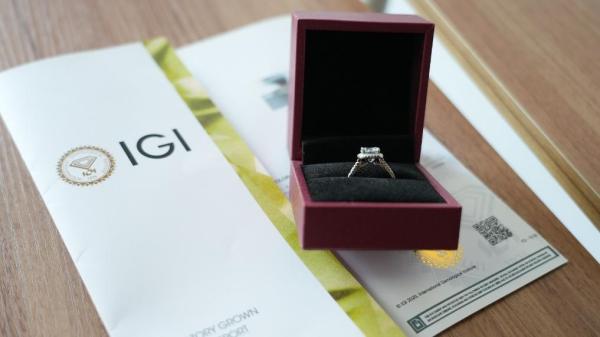
Core Viewpoint - The investigation reveals that low-priced diamonds sold on e-commerce platforms are often fake, highlighting the need for better regulation and consumer awareness [1][5]. Group 1: E-commerce Market Insights - E-commerce platforms offer diamonds at significantly lower prices, such as a 2-carat lab-grown diamond ring for 153 yuan and a 99-carat imported diamond for 22 yuan, contrasting sharply with traditional retail prices that can exceed tens of thousands of yuan [1][3]. - The investigation conducted by Xinhua News found that these low-priced diamonds are not genuine, with the 99-carat diamond being glass and the 2-carat lab-grown diamond being synthetic cubic zirconia [5]. Group 2: Regulatory Recommendations - Experts suggest enhancing multi-department collaboration to establish a comprehensive regulatory system from production to sales [8]. - Online platforms should strengthen their vetting processes for merchants to ensure they have legal operating qualifications and professional appraisal capabilities, along with implementing strict quality control and after-sales service systems to protect consumer rights [8].
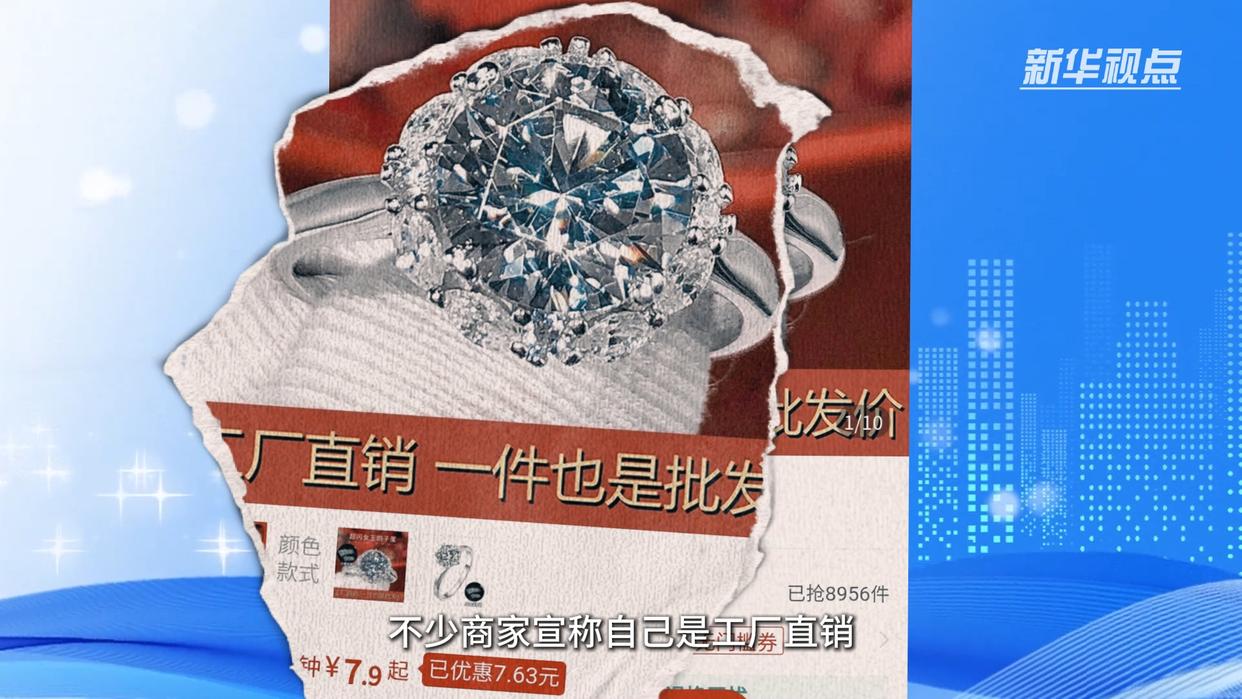
99克拉进口钻石只要22元?部分电商平台假钻石泛滥现象调查
Xin Hua She· 2025-08-15 12:44
Group 1 - The article highlights the prevalence of "bargain-priced" diamonds on e-commerce platforms, with prices for lab-grown diamonds as low as 153 yuan for 2 carats and 22 yuan for 99 carats of imported diamonds, contrasting sharply with traditional retail prices that often exceed tens of thousands of yuan [1][2] - Investigations reveal that many of these low-cost diamonds are actually fake, with consumers reporting experiences of being sold cubic zirconia instead of genuine lab-grown diamonds [2][5] - The cost of producing a 1-carat lab-grown diamond ranges from 2,000 to 3,000 yuan, while a 2-carat diamond typically costs around 4,500 yuan, indicating that the extremely low prices of these diamonds are unsustainable and likely fraudulent [6] Group 2 - Many sellers on e-commerce platforms exploit consumer ignorance by labeling fake diamonds as "lab-grown," leading to confusion between natural and lab-grown diamonds [7][8] - Fake diamonds often come with counterfeit certificates, making it difficult for consumers to distinguish between genuine and fake products [8][9] - The article emphasizes the need for improved regulatory oversight in the diamond industry, particularly regarding the sale of lab-grown diamonds online, to protect consumers and ensure product authenticity [10][11][12]

半年涨了30%,价格创13年新高!白银为何那么热?
Sou Hu Cai Jing· 2025-08-06 09:53
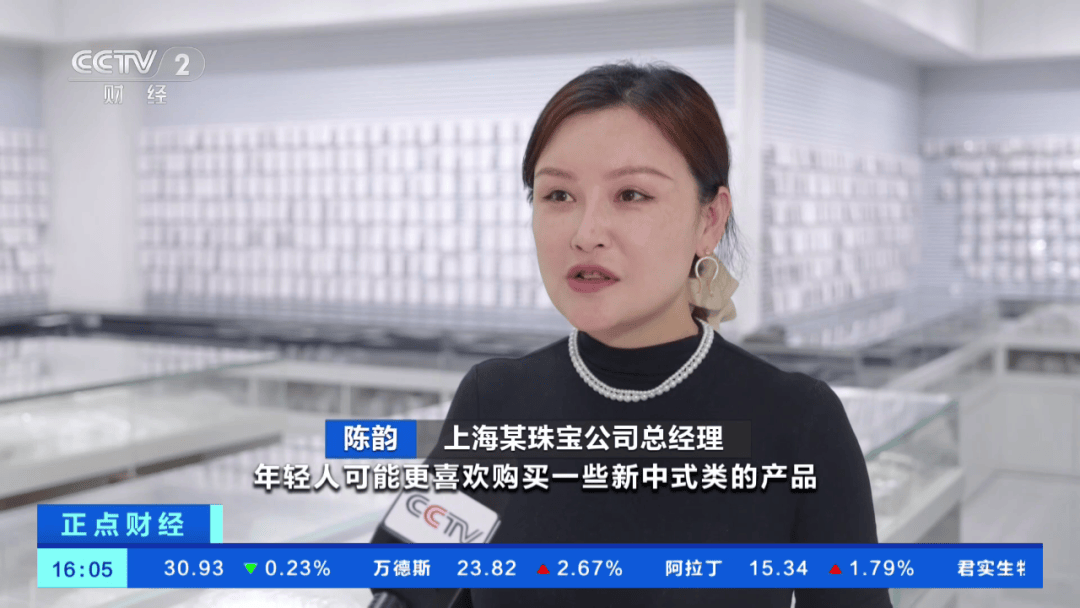
Group 1 - Silver prices have surged this year, with London spot silver prices exceeding $39 per ounce, marking a nearly 13-year high [1] - The demand for silver-related products has increased significantly, with a reported 30% rise in silver prices since the beginning of the year [1] - In Shanghai, a silver jewelry wholesale store noted a monthly shipment of over 10,000 pieces, particularly favoring "small weight" and "new Chinese style" silver products [1] Group 2 - Young consumers are showing a preference for new Chinese-style products, including necklaces and bracelets, with various material options available [3] - In Hunan's Yongxing County, which accounts for a quarter of the national silver output, a "cultural tourism + silver" consumption model is being developed, boosting local silver consumption [5] - The influx of tourists has led to a daily foot traffic of 500 to 800 people at local silver sales enterprises, with investment and decorative silver products seeing over 20% year-on-year sales growth [7] Group 3 - The industrial demand for silver is on the rise, particularly in the photovoltaic, electric vehicle, and consumer electronics sectors, prompting silver processing companies to ramp up production [9] - A silver processing company in Hunan reported a production of 7.8 tons of standard silver daily, with zero inventory due to high demand from downstream orders [9] - The first half of the year saw a silver output of 1,000 tons and a sales revenue of 8 billion yuan, reflecting a 40% increase compared to the same period last year [11] Group 4 - Analysts predict that global silver demand in the photovoltaic sector will grow by 3%-8% by 2025, while the electric vehicle sector is expected to see an 8%-15% increase [13] - There is a long-term supply shortage of silver, with a cumulative inventory reduction of 796 million ounces projected from 2021 to 2025, maintaining a phase of short supply [13] - The current rise in silver prices is attributed to the increase in gold prices and the growing industrial demand, indicating a sustained high level of market activity in the silver industry [11][13]
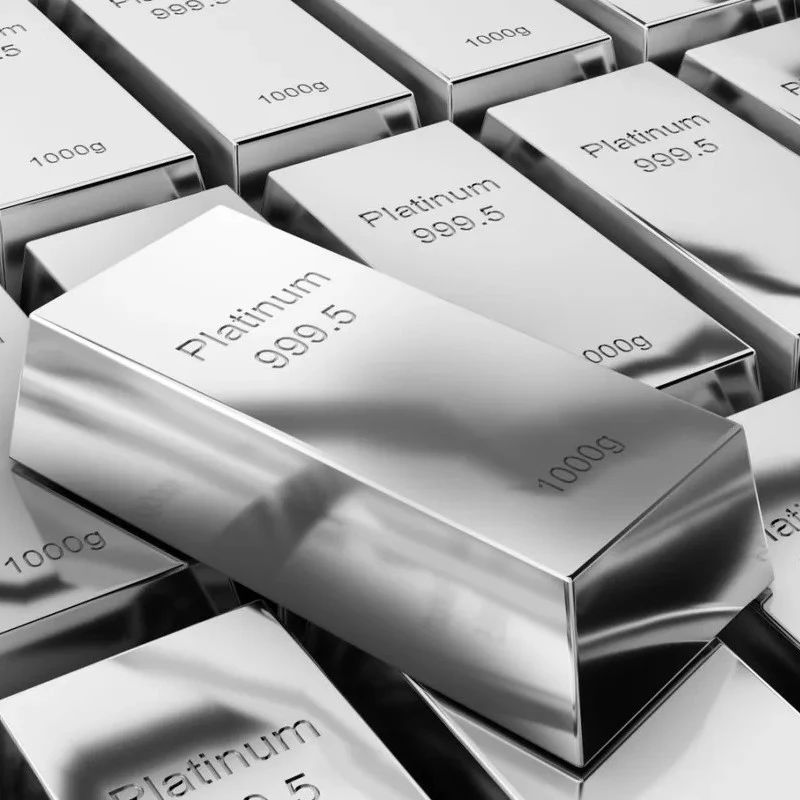
黄金平替,比黄金涨得还猛
首席商业评论· 2025-07-24 03:54
Core Viewpoint - Platinum has experienced a significant price surge, outperforming gold and silver, driven by supply-demand imbalances and heightened investment interest [3][6][24]. Group 1: Price Surge and Market Dynamics - As of July 18, platinum prices exceeded $1480.00 per ounce, marking a year-to-date increase of over 57%, making it the best-performing asset class globally [3]. - The surge in platinum prices is attributed to a decline in supply, particularly from South Africa, the largest producer, where production has decreased due to seasonal factors [6][9]. - Demand for platinum is on the rise, especially in the automotive sector, where it is used extensively in catalytic converters, accounting for over 48% of total demand [7][8]. Group 2: Impact on Companies - Companies involved in platinum jewelry and recycling have seen significant stock price increases. For instance, Mingpai Jewelry's stock rose over 21% during the price surge [9]. - Haotong Technology, a leader in recycling platinum, reported a 129.46% year-on-year increase in revenue for Q1, benefiting from the rising platinum prices and expanding its recycling capacity [11][12]. Group 3: Future Demand and Market Trends - Despite the rise of electric vehicles, which do not use platinum in the same way as traditional fuel vehicles, the overall demand for platinum remains strong due to regulatory pressures for cleaner emissions [15][20]. - The automotive industry is expected to continue driving platinum demand, with stricter emissions standards leading to increased use of platinum in catalytic converters [20][23]. - The demand for platinum bars in China surged by 140% in Q1, indicating a growing interest among investors [24]. Group 4: Investment Considerations - Platinum is being viewed as an alternative investment to gold, especially in light of its recent performance and the ongoing global push for green policies [25][26]. - Investors are advised to adopt a cautious approach, focusing on physical platinum or ETFs rather than high-leverage instruments, due to the volatility of platinum prices [26][28].