
电动两轮车

Search documents
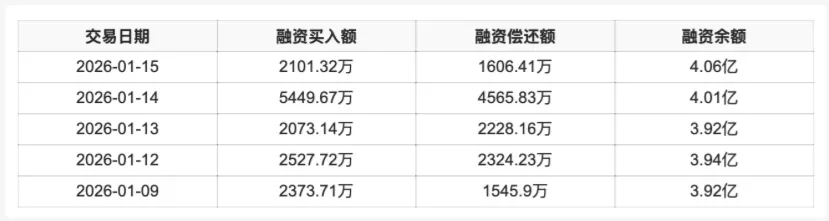
爱玛科技1月15日获融资买入2101.32万元
Cai Jing Wang· 2026-01-17 13:30
Core Viewpoint - Aima Technology is experiencing a mixed performance with ongoing challenges in international expansion and increased competition in the electric two-wheeler market, while also undergoing internal adjustments such as layoffs in certain departments [3][9][10]. Financing and Market Activity - On January 15, Aima Technology's stock rose by 0.33% with a trading volume of 152 million yuan. The financing data shows a net buying amount of 4.9491 million yuan for that day [1][2]. - As of January 15, the total financing and margin trading balance for Aima Technology reached 409 million yuan [2]. Business Operations and Layoffs - Aima Technology has confirmed that it is not undergoing significant layoffs exceeding 50%, but is optimizing its workforce to align with business needs. Departments affected include the international division and the high-end brand "Zero" [3][9]. - The company’s international business has not shown significant growth, with revenue from international operations remaining around 1% of total revenue from 2022 to 2024 [3][10]. Financial Performance - For the first half of 2025, Aima reported revenue of 13.031 billion yuan, a year-on-year increase of 23.04%, and a net profit of 1.212 billion yuan, up 26.14% [9][10]. - However, Aima's growth is lagging behind competitors like Yadea and Ninebot, which reported higher revenue and profit growth rates during the same period [9][10]. Market Competition - Aima faces intense competition from leading brands like Yadea and emerging players in the electric two-wheeler market. The company’s revenue heavily relies on electric two-wheeler sales, which account for over 95% of total revenue [10][11]. - The introduction of new national standards for electric bicycles is expected to increase production costs and potentially suppress market demand, further intensifying competition [11][14]. Product Development - Aima launched its high-end electric motorcycle brand "Zero" in July 2025, with plans to release its first model in the first quarter of 2026 [4][5][7]. - The "Zero" brand aims to create a new growth trajectory for Aima, although it faces stiff competition in the high-end market segment [7][9].


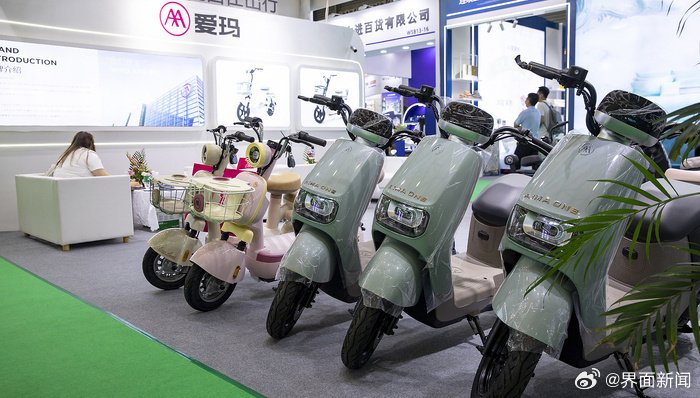
爱玛科技否认裁员超50%,称仅零星减员不影响经营
Cai Jing Wang· 2026-01-08 11:32
Core Viewpoint - Aima Technology denies rumors of significant layoffs exceeding 50%, stating that the personnel adjustments are minimal and part of normal business operations [1] Group 1: Company Response - Aima Technology's spokesperson clarified that the recent personnel adjustments are normal year-end human resource changes, with only a few individuals affected, contrary to exaggerated online reports [1] - The company confirmed that its high-end brand "Lingji" and international division are operating normally and that there is no impact on overall company performance [1] Group 2: Market Context - Reports indicated that the layoffs were the largest in recent years, particularly affecting the "Lingji" brand and international department, with some employees receiving only one month’s salary as severance [1] - Aima Technology representatives emphasized that personnel optimization is a standard adjustment in the course of business development, aligning with the company's operational needs [1]
中金:维持九号公司“跑赢行业”评级,目标价81元
Jin Rong Jie· 2026-01-08 08:05
Core Viewpoint - The recent stock price correction of Ninebot Company is primarily due to market concerns over sluggish sales growth in the electric two-wheeler industry and the EU's anti-dumping investigation into electric lawn mowers [1] Group 1: Market Outlook - The company's current market capitalization corresponds to a 2026E P/E ratio of 15.8x, indicating limited downside risk and promising growth prospects from diversified business operations [1] - It is expected that policy support in 2026 will mitigate the downside risk for electric two-wheeler sales [1] Group 2: Competitive Position - The company maintains a relative lead in the smart two-wheeler sector, supported by contributions from new channels and products, as well as the electric motorcycle category [1] - The company's electric two-wheeler sales are anticipated to continue demonstrating alpha performance in 2026 [1] Group 3: Technological and Market Expansion - The company is actively building core technological capabilities and has rich operational experience in overseas markets, which may become a second growth curve [1] - Emerging business areas, such as lawn mowing robots, are gaining traction, and the company is exploring incremental opportunities in the E-bike segment [1] Group 4: Organizational Dynamics - The company's diversified business layout is entering a harvest phase, and its organizational structure is releasing innovative momentum [1] - The company maintains an "outperform the industry" rating with a target price of 81 yuan [1]
无锡老板卖两轮车,暴赚29亿多
2 1 Shi Ji Jing Ji Bao Dao· 2026-01-08 05:53
Core Viewpoint - Yadea Holdings is experiencing a significant rebound in business, with projected net profit for 2025 expected to reach at least 2.9 billion yuan, a substantial increase from 1.27 billion yuan in the previous year, driven by increased electric two-wheeler sales and optimized product structure [2][3]. Group 1: Financial Performance - In the first half of 2025, Yadea sold a total of 8.7935 million electric scooters and bicycles, an increase of approximately 2.4 million units compared to the same period last year, resulting in a main business revenue of 19.186 billion yuan, a surge of about 33.1% [4]. - The company faced a profit decline in 2024 due to decreased sales and lower inventory prices, but has since turned around to achieve a new profit peak [3]. Group 2: Strategic Initiatives - Yadea has adopted a youth-oriented strategy, launching the "Modern Series" specifically for female riders, emphasizing retro and luxury aesthetics, and introducing the "Crown T35" model inspired by robotics to attract young riders seeking stylish design and performance [5]. - The company has also engaged Wang Hedi as a brand ambassador since the end of 2024, which has significantly contributed to enhancing brand awareness and engagement [5]. Group 3: Regulatory and Market Environment - The favorable policy environment, including trade-in programs, new national standards, and the "white list" policy, has benefited leading two-wheeler companies [4]. - Yadea has issued an apology for design oversights in its "Maodou" series, addressing issues such as child safety and storage space, and has launched 68 models compliant with new national standards to cater to various daily commuting scenarios [6]. Group 4: Expansion and Innovation - Yadea is strengthening its focus on smart technology and international expansion, having established a presence in 100 countries and set up ten major smart production and research bases in regions including China, Vietnam, Indonesia, and Thailand [9]. - The company showcased its new electric motorcycle flagship at the Milan International Two-Wheeler Exhibition, featuring a long-range version with a range of 170 kilometers, specifically targeting European users [10]. - Yadea has introduced a comprehensive energy replenishment ecosystem covering various scenarios, including 24-hour self-service battery swap stations and solar energy systems, along with a rapid charging solution [10].

港股异动 | 雅迪控股(01585)盘中涨超3% 预计2025年纯利超29亿元 盈利增速有望持续强劲
智通财经网· 2026-01-08 04:01
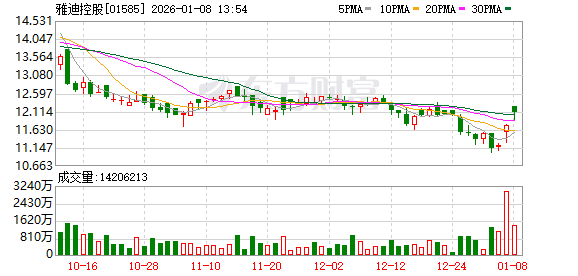
Group 1 - Yadea Holdings (01585) experienced a stock price increase of over 3%, currently trading at HKD 12.07 with a transaction volume of HKD 152 million [1] - The company anticipates a net profit of no less than RMB 2.9 billion for the fiscal year ending December 31, 2025, compared to a net profit of RMB 1.27 billion for the same period in 2024 [1] - The expected increase in net profit is primarily attributed to the rise in electric two-wheeler sales and optimization of product structure [1] Group 2 - Citigroup believes that industry consolidation may accelerate, with Yadea positioned as a major beneficiary due to its leadership in the market [1] - The company's current price-to-earnings ratio stands at 10.9 times, and it offers a dividend yield of 4.6% [1] - With the advancement of new standards and an increase in high-end product sales, the profit growth is expected to remain strong, making Yadea an attractive investment target within the industry [1]
研报掘金|华泰证券:维持雅迪控股“买入”评级 2026年单车净利润有望继续提升
Ge Long Hui A P P· 2026-01-08 02:57
Core Viewpoint - Huatai Securities maintains a "Buy" rating on Yadea Group, setting a target price of HKD 18.63, anticipating a significant profit increase driven by electric two-wheeler sales growth and product structure optimization [1] Financial Projections - The company expects a net profit of no less than RMB 2.9 billion by 2025, representing an annual growth of over 128% [1] - Projected sales of electric two-wheelers are expected to exceed 16.2 million units in 2025, with net profit per unit anticipated to increase by over 80% to more than RMB 180 [1] Market Strategy - The company is focusing on high-margin products and enhancing its market presence with the GuanNeng and Modern brands in the mid-to-high-end market [1] - An increase in the self-supply ratio of batteries is expected to further strengthen profitability [1] Growth Potential - The company is poised to benefit from the trend of transitioning from oil to electric, with the release of overseas production capacity and the improvement of its distribution network [1] - This transition is expected to open a second growth curve for the company [1]

2026 CES 观察:九号公司携 E-bike、割草机器人等新品参展
Huan Qiu Wang· 2026-01-07 04:35
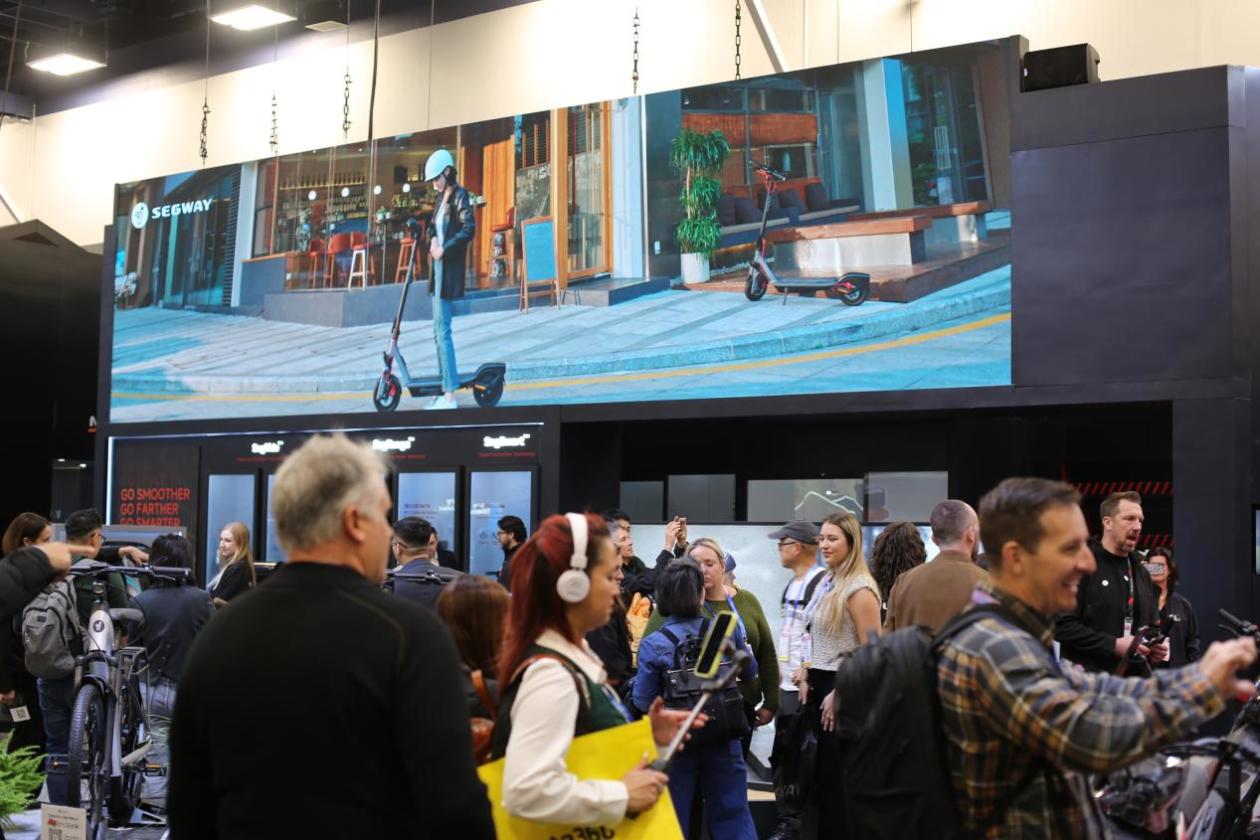
Core Viewpoint - The 2026 International Consumer Electronics Show (CES) showcased the innovative advancements of Ninebot, a leader in personal transportation and service robotics, highlighting its new products and technologies in E-bikes, electric motorcycles, electric scooters, and robotic lawn mowers [1][3][12] Group 1: Product Innovations - Ninebot introduced two new E-bike models, Segway E-bike Myon and Segway E-bike Muxi, featuring advanced smart technology and the Segway smart driving system, achieving a significant technological leap in the industry [3][5] - The Segway E-bike Myon received the prestigious 2025 IF Design Award, underscoring its design excellence [3] - Ninebot showcased the Segway Xaber 300, an electric off-road motorcycle, demonstrating its innovative capabilities in the electric two-wheeler sector [5][10] Group 2: Market Position and Growth - Ninebot has consistently participated in CES since its debut in 2014, evolving from a startup to an industry leader, with a focus on "innovative short-distance transportation" and "service robots" [3][8] - The global E-bike market is projected to grow from $35 billion in 2024 to $62.25 billion by 2030, presenting significant opportunities for Ninebot [5] - Ninebot's electric scooters ranked first globally in sales, with over 15 million units shipped by 2025 [7] Group 3: Research and Development - Ninebot invested 872 million yuan in R&D in the first three quarters of 2025, a 59% increase year-on-year, reflecting its commitment to innovation [8] - The company holds 5,982 global patents and has led or participated in over 110 domestic and international technical standards [8] - The Segway technology system enhances the stability, safety, and smart interaction of electric scooters, contributing to user value [8][10] Group 4: Service Robotics - Ninebot's subsidiary, Navimow, introduced the boundary-less smart lawn mower, addressing industry challenges such as complex wiring and high labor costs [12] - The Navimow lawn mower has gained over 400,000 household users by the end of 2025, indicating strong market acceptance [12] - Ninebot's continuous innovation in service robots positions it as a key player in the global market for smart lawn care solutions [12]


雅迪控股盈喜后高开逾3% 预计2025年度纯利不少于29亿元
Zhi Tong Cai Jing· 2026-01-07 01:33
雅迪控股(01585)盈喜后高开逾3%,截至发稿,涨3.03%,报11.56港元,成交额529.89万港元。 消息面上,1月6日,雅迪控股发布公告,集团预期于截至2025年12月31日止年度录得的纯利不少于人民 币29亿元,而2024年同期录得的纯利则为人民币12.7亿元。预期纯利增加乃主要由于电动两轮车销售增 加及优化产品结构所致。 ...
港股异动 | 雅迪控股(01585)盈喜后高开逾3% 预计2025年度纯利不少于29亿元
智通财经网· 2026-01-07 01:33
消息面上,1月6日,雅迪控股发布公告,集团预期于截至2025年12月31日止年度录得的纯利不少于人民 币29亿元,而2024年同期录得的纯利则为人民币12.7亿元。预期纯利增加乃主要由于电动两轮车销售增 加及优化产品结构所致。 智通财经APP获悉,雅迪控股(01585)盈喜后高开逾3%,截至发稿,涨3.03%,报11.56港元,成交额 529.89万港元。 ...
港股开盘:恒指跌0.41%、科指跌0.28%,芯片及有色金属概念股走高,科技股走势分化,保险及券商股走低
Jin Rong Jie· 2026-01-07 01:28
Market Overview - US stock market saw significant gains with the Dow Jones and S&P 500 indices reaching historical highs, while the Hong Kong stock market opened lower with the Hang Seng Index down 0.41% to 26,601.83 points [1] - Major technology stocks mostly declined, with Alibaba down 2.45% and Tencent down 0.79%, while JD.com and NetEase saw slight increases [1] - Semiconductor stocks opened higher, with Hua Hong Semiconductor rising over 2%, and the non-ferrous metals sector continued its upward trend [1] Company News - Yadea Holdings (01585.HK) expects net profit for 2025 to be no less than RMB 2.9 billion, up from RMB 1.27 billion in the previous year, driven by increased sales of electric two-wheelers and optimized product structure [2] - Poly Property Group (00119.HK) anticipates a cumulative contract sales amount of approximately RMB 50.2 billion for 2025, a decrease of 7.38% year-on-year [2] - Sunac China (01918.HK) projects a cumulative contract sales amount of about RMB 36.84 billion for 2025, down 21.85% year-on-year [3] - Gemdale Corporation (00535.HK) expects a cumulative contract sales total of approximately RMB 10.696 billion for 2025, a decrease of 47.33% year-on-year [4] - Greentown Management Holdings (09979.HK) estimates new project management fees for 2025 to be RMB 9.35 billion, a year-on-year increase of about 0.4% [5] Strategic Developments - Jiufang Zhitu Holdings (09636.HK) completed the acquisition of 100% of JF Financial and its core information systems [6] - Weimob Group (02013.HK) is collaborating with Taobao Flash Sale to create an integrated local retail solution supported by Taobao's technology and marketing [6] - Dali Pu Holdings (01921.HK) has officially become a qualified supplier for Saudi Aramco [7] - Chiyu Technology (00182.HK) successfully completed a secondary listing on the Singapore Stock Exchange [8] - Bokan Vision Cloud-B (02592.HK) submitted a clinical trial application for the new drug CBT-009 to the drug evaluation center [9] Institutional Insights - China Merchants Securities International suggests that the 2026 "opening red" sets a positive tone for Hong Kong stocks, supported by government policies and liquidity in financial markets [10] - Fubon Bank indicates that China's stable economy and expectations of leading in AI could drive tech stocks, with the Hang Seng Index having a potential upside of 15% to 20% [10] - Nomura Securities forecasts that the current storage supercycle will last until at least 2027, recommending investors to focus on leading storage companies [10] Commodity Insights - Zhonghui Futures reports that the recent surge in nickel prices is primarily driven by significant policy changes in the supply side, particularly Indonesia's reduction of nickel production targets by 34% [11]