
氢能

Search documents
商业化制氢取得新进展 氢能产业应用场景更多元
Jing Ji Ri Bao· 2025-12-31 00:44
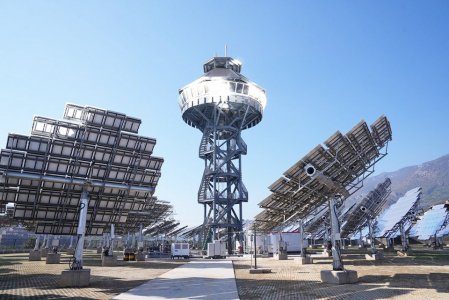
Core Viewpoint - The launch of China's first commercial hydrogen production project based on "photoelectrochemical water splitting" technology and the first civilian liquid hydrogen refueling station marks a significant breakthrough in the hydrogen energy industry chain in China [1][2]. Group 1: Hydrogen Production - The commercial hydrogen production project utilizes advanced "polyhedral strontium titanate concentrating quantum hydrogen-oxygen thermal integration technology" with 144 heliostats and 24 concentrating hydrogen production reactors [2]. - The project aims for a hydrogen production cost of 21 yuan per kilogram, with potential reductions to 16 yuan per kilogram as the project scales up and achieves a light-hydrogen conversion efficiency exceeding 20% [2]. Group 2: Hydrogen Storage and Transportation - Hydrogen storage and transportation account for 30% to 40% of total costs in the hydrogen supply chain, with pipeline transportation being a key focus for reducing unit distribution costs [2]. - The newly launched liquid hydrogen refueling station, with an investment of 83 million yuan, aims to facilitate the entire hydrogen supply chain and provide diverse application scenarios for low-temperature liquid hydrogen [3]. Group 3: Hydrogen Applications - The introduction of liquid hydrogen refueling stations enables the use of liquid hydrogen heavy-duty trucks, which can achieve a range exceeding 800 kilometers, nearly doubling the range of traditional gaseous hydrogen trucks [3]. - The National Energy Administration has announced support for 41 projects and 9 regions to promote the transition of the hydrogen industry from demonstration to large-scale application [3]. - Hydrogen applications in sectors like hydrogen metallurgy are gaining traction, with a focus on developing carbon "zero emissions" technologies in iron production [3][4]. Group 4: Market Potential - There is a strong demand for hydrogen energy in industries such as heavy-duty trucks, metallurgy, and chemicals in the Panzhihua region, which is still an untapped market [4]. - Panzhihua is accelerating the establishment of an application ecosystem combining "three-dimensional transportation + green hydrogen metallurgy + electric hydrogen" to provide a testing ground for hydrogen energy promotion [4].
氢能领域首个温室气体自愿减排项目方法学发布
Ke Ji Ri Bao· 2025-12-31 00:32
Core Viewpoint - The release of the "Renewable Energy Electrolytic Hydrogen Methodology" marks China's first voluntary greenhouse gas emission reduction (CCER) project methodology in the hydrogen energy sector, aiming to unlock significant emission reduction potential for green hydrogen [1][2]. Group 1: Industry Overview - China is the world's largest hydrogen producer, accounting for 24% of global hydrogen production, with a consumption scale exceeding 36.5 million tons [1]. - The current hydrogen production in China is characterized by high carbon emissions, with fossil fuel-based hydrogen accounting for 98% of production, while renewable energy electrolytic hydrogen represents only about 1% [1]. Group 2: Economic Viability - The renewable energy electrolytic hydrogen projects are currently facing economic challenges, with all 26 existing projects in China operating at a loss due to high costs, which are typically 2-3 times that of fossil fuel-based hydrogen [2]. - Participation in the CCER market to obtain emission reduction credits is identified as the most effective means to enhance the economic viability of green hydrogen projects [2]. Group 3: Market Impact - The methodology will benefit a wide range of stakeholders, including green hydrogen project owners in resource-rich regions and renewable energy power plants, by expanding market demand and alleviating challenges related to renewable energy consumption [2]. - The methodology is expected to stimulate the release of green hydrogen production capacity, providing stable green hydrogen sources for downstream industries such as steel, synthetic ammonia, and refining, thereby supporting deep decarbonization in these sectors [2].
「十五五」时期重点产业前瞻与发展路径研究丨36氪研究院
36氪· 2025-12-31 00:14
Core Insights - The "14th Five-Year Plan" period prioritizes the construction of a modern industrial system, marking a strategic shift from single-point technological breakthroughs to systematic industrial upgrades [6][19]. - The new energy industry is transitioning from a focus on installed capacity to building a "source-grid-load-storage" collaborative system, emphasizing dynamic balance between production and consumption [7]. - The aerospace sector is developing a dual-driven model of national engineering and commercial space, with large aircraft industrialization and commercial space driving the scale and capability of the industry chain [8]. - Future industries such as 6G and quantum technology place China in the global leading tier of R&D, aiming to seize the high ground in technology standards and industrial ecosystems through forward-looking layouts [9]. - The transformation of traditional industries emphasizes not only greening and intelligentization but also explicitly promotes "service-oriented manufacturing," guiding the manufacturing sector to extend services throughout the product lifecycle [10]. Group 1: Modern Industrial System - The construction of a modern industrial system is the primary task of the "14th Five-Year Plan," highlighting its core position as a foundation for new era development [19][20]. - The modern industrial system consists of three parts: upgrading traditional industries, developing emerging pillar industries, and strategically laying out future industries [20]. Group 2: Emerging Pillar Industries - The cultivation of emerging pillar industries is positioned as the strategic core of the modern industrial system, providing a strong new growth engine for high-quality development [23]. - Key emerging pillar industries include new energy, new materials, aerospace, and low-altitude economy, which are expected to drive explosive growth in multiple trillion-level markets [23]. Group 3: New Energy - The new energy sector has evolved into a comprehensive ecosystem encompassing "production, storage, transmission, and application," with a strategic significance in ensuring national energy security and achieving carbon neutrality [24]. - As of the end of 2024, China's cumulative installed capacity of new energy reached 1.41 billion kilowatts, maintaining a global leading position [25]. - The annual new installed capacity during the "14th Five-Year Plan" period is expected to remain around 30 million kilowatts [25]. Group 4: New Materials - The new materials industry in China has rapidly grown, with total output value exceeding 8 trillion yuan in 2024, but still faces structural challenges with about 30% of key high-end materials relying on imports [34]. - Significant breakthroughs are being made in various fields, including third-generation semiconductor materials and high-end alloys for aerospace applications [39]. Group 5: Aerospace - The aerospace sector has formed a dual-driven model of national major projects and commercial markets, with the C919 large aircraft and commercial space rapidly developing [42]. - The market size of China's aerospace manufacturing industry is expected to reach 601.7 billion yuan by 2025, with a compound annual growth rate of approximately 14.05% [42]. Group 6: Low-altitude Economy - The low-altitude economy, driven by various manned and unmanned aerial vehicles, is expected to reach a scale of 505.95 billion yuan in 2023, with a year-on-year growth of 33.8% [50]. - The market is projected to exceed 1 trillion yuan by 2026, with a compound annual growth rate of approximately 29.6% from 2021 to 2026 [50]. Group 7: Future Industries - Future industries represent cutting-edge technological and industrial development directions, including quantum technology, biomanufacturing, hydrogen energy, and brain-computer interfaces [61]. - The quantum technology sector is expected to grow significantly, with the industry scale projected to reach approximately 80 billion USD by 2024 and potentially near 1 trillion USD by 2035 [64].


商业化制氢取得新进展
Jing Ji Ri Bao· 2025-12-30 22:21
Core Insights - The first commercial hydrogen production project based on "photoelectrochemical water splitting" technology and the first civilian liquid hydrogen refueling station have been launched in Panzhihua, Sichuan Province, marking a significant breakthrough in China's hydrogen energy industry chain [1][2] Hydrogen Production - The commercial hydrogen production project utilizes advanced "polyhedral strontium titanate concentrating quantum hydrogen-oxygen thermal integration technology" with 144 heliostat mirrors and 24 concentrating hydrogen production reactors [2] - The designed hydrogen production cost is 21 yuan per kilogram, with potential reductions to 16 yuan per kilogram as the project scales up and achieves a light-hydrogen conversion efficiency exceeding 20% [2] Hydrogen Storage and Transportation - Hydrogen storage and transportation account for 30% to 40% of the total cost in the hydrogen industry chain, with pipeline transportation being a key focus for reducing unit distribution costs [2] - New pure hydrogen pipelines and the blending of hydrogen into existing natural gas pipelines are considered primary methods for hydrogen transportation [2] Hydrogen Applications - The newly launched liquid hydrogen refueling station, with an investment of 83 million yuan, aims to facilitate the entire hydrogen production, storage, transportation, and application chain [3] - Liquid hydrogen offers advantages such as high energy density, low storage pressure, and high purity, making it suitable for large-scale and long-distance hydrogen energy storage and efficient utilization [3] - The National Energy Administration has announced support for 41 projects and 9 regions to promote the transition of the hydrogen industry from demonstration to large-scale application [3][4] Market Potential - There is a strong demand for hydrogen energy in sectors such as heavy trucks, metallurgy, and chemicals in Panzhihua and surrounding areas, which have not yet been fully tapped [4] - Panzhihua is accelerating the construction of a "three-dimensional transportation + green hydrogen metallurgy + electric-hydrogen multi-energy" application ecosystem to provide a testing ground for hydrogen energy promotion [4]
兴燃科技联合长春绿动入围全球最大离网制氢设备订单
Xin Lang Cai Jing· 2025-12-30 19:09
Core Insights - The project is the largest PEM off-grid hydrogen production project globally and the only off-grid hydrogen project reported by Inner Mongolia as a national demonstration project [1] - The project utilizes 50 MW of wind power connected to 36 PEM electrolyzers, addressing high-cost issues in the hydrogen industry and providing new development paths for regions with high wind and solar energy abandonment rates [1] Company and Industry Summary - The project is a key component of Inner Mongolia's first large-scale off-grid hydrogen experimental base, featuring 36 sets of 250 Nm3/h PEM electrolyzers, achieving a rated hydrogen production capacity of 9,000 Nm3/h and a maximum capacity of 10,800 Nm3/h [2] - The green hydrogen produced will be directed to supply Beijing and Zhangjiakou in Hebei, supporting the green energy transition in the Beijing-Tianjin-Hebei region [2] - Xiangran Technology has gained industry recognition for its technical strength and market competitiveness in PEM hydrogen production equipment, laying a foundation for deeper involvement in the green hydrogen industry [2] - The company focuses on core technology research in hydrogen energy and aims to provide efficient, reliable, and low-cost green hydrogen solutions, having established a joint hydrogen energy laboratory with North China Electric Power University [2] - Xiangran Technology has built Asia's largest intelligent factory to offer reliable and cost-effective hydrogen production solutions for various applications, including wind-solar hydrogen production and industrial hydrogen [3]
在四川,太阳还能“晒”出氢能源
Xin Lang Cai Jing· 2025-12-30 18:07
Core Viewpoint - The article discusses the launch of the world's first commercial project for hydrogen production through solar energy, located in Panzhihua, China, utilizing a unique technology that integrates multiple facets of strontium titanate for efficient hydrogen generation [5][10]. Group 1: Project Overview - The Panzhihua multi-faceted strontium titanate solar hydrogen production pilot base is the first of its kind globally [6][10]. - The project employs "multi-faceted strontium titanate concentrated quantum hydrogen production technology," achieving water splitting for hydrogen generation [7][10]. - The facility features 144 polygonal heliostats that reflect sunlight to a central reaction tower, where hydrogen and oxygen are produced [6][9]. Group 2: Technological Innovation - The core catalyst used in the project is multi-faceted strontium titanate, which has 26 faces, enhancing its ability to convert solar photons into electrons [8][10]. - The hydrogen produced has a purity of 99.8%, while the oxygen purity reaches 98.6% [9]. - The project has demonstrated a cost-effective hydrogen production method, with costs around 21 yuan per kilogram, significantly lower than traditional electrolysis methods [10][12]. Group 3: Economic Impact - The first phase of the project occupies 33 acres and is expected to produce approximately 200 tons of hydrogen annually, generating an estimated annual output value of 7 million yuan [13]. - The project aims to develop a large-scale hydrogen production base, with a target of producing 12,000 tons of green hydrogen within three years [13][14]. - The anticipated reduction in hydrogen production costs to 16 yuan per kilogram upon full operation will further enhance the project's economic viability [13]. Group 4: Environmental Benefits - The project is expected to reduce carbon dioxide emissions by 48,000 tons annually once fully operational [13]. - Hydrogen produced through this method is considered green hydrogen, as it is generated without carbon emissions, utilizing renewable energy sources [14]. - The technology allows for hydrogen production in various environments, including high-altitude, desert, and marine areas, solely relying on sunlight [14].
氢能商用车爆出超300辆大单!
第一商用车网· 2025-12-30 16:03
Core Viewpoint - Guangdong Yuntai Hydrogen Energy Technology Co., Ltd. has successfully delivered and signed contracts for a total of 319 hydrogen commercial vehicles, marking a significant step towards the large-scale promotion of hydrogen commercial vehicles in the Baiyun District [1][6]. Group 1: Vehicle Delivery and Applications - The delivered hydrogen commercial vehicles include 18-ton hydrogen fuel cell wing logistics vehicles, 4.5-ton hydrogen fuel cell refrigerated trucks, hydrogen tractors, and 31-ton hydrogen fuel cell concrete mixers, which will be used in high-intensity transport scenarios such as coal transportation, port operations, cold chain logistics, and urban distribution [3][6]. - The vehicles are designed to address operational pain points, significantly improving loading and unloading efficiency and achieving precise temperature control with zero carbon emissions for refrigerated transport [6]. Group 2: Cost Savings and Technological Integration - The delivered vehicles are estimated to save operating companies hundreds of thousands of yuan in fuel costs annually, enhancing the economic competitiveness of green transportation [6]. - The integration of AI technology allows for effective solutions to operational challenges such as "difficulty in finding cargo and refueling," through intelligent scheduling, route planning, and hydrogen refueling optimization [6][8]. Group 3: Market Expansion and Strategic Partnerships - Yuntai Hydrogen Energy is accelerating market expansion, with recent orders including 200 hydrogen buses for public transport and 300 hydrogen refrigerated trucks for logistics [7]. - The signing of a contract for 118 vehicles with Guangzhou Jiaoneng Integration Company will enhance transportation capacity in the Guangzhou area, contributing to the construction of a hydrogen transportation network in the Pearl River Delta [7]. Group 4: Industry Position and Supportive Policies - Yuntai Hydrogen Energy has ranked first in the national hydrogen fuel cell enterprise installation capacity for 2025, demonstrating strong growth momentum [7]. - The Baiyun District government is actively supporting the hydrogen energy industry through policies that provide a comprehensive support system, including financial investments and infrastructure development [9].

大兴区“十五五”规划建议全文公布
Bei Jing Ri Bao Ke Hu Duan· 2025-12-30 14:37
Core Viewpoint - The Daxing District of Beijing aims to establish itself as a model for collaborative development and a new gateway for openness, focusing on high-quality economic and social development during the 15th Five-Year Plan period. Group 1: Achievements During the 14th Five-Year Plan - Daxing's GDP has surpassed 100 billion, with public budget revenue stabilizing above 10 billion, and fixed asset investment consistently ranking in the top five of the city [2] - The number of market entities has increased by 128% since 2020, with high-tech enterprises growing at an annual rate of 11.3% [2] - Daxing International Airport has handled 188 million passengers since its opening, with international passenger traffic expected to exceed 10% by 2025 [2] - The region has made significant progress in ecological improvements, with PM2.5 levels dropping to 33 micrograms per cubic meter [2] Group 2: Challenges Facing the 15th Five-Year Plan - Daxing must enhance the role of the international airport and strengthen its leading industries, as it still faces issues of small economic scale and structural weaknesses [4] - The district has a unique geographical advantage, being the closest plain city to the capital's core, and must leverage this for future growth [3] Group 3: Development Goals for the 15th Five-Year Plan - The plan emphasizes the need for high-quality development, focusing on six leading industries and a "6+5+3" industrial layout [6][17] - Key goals include enhancing the capital's functional service capabilities, improving economic strength, and achieving significant advancements in international openness [9][10] Group 4: Principles for Economic and Social Development - The development strategy will prioritize new quality productivity, high-level openness, and a people-centered approach [7][8] - Emphasis will be placed on green development and ensuring safety in economic activities [8] Group 5: Industrial Development Strategy - Daxing aims to create a modern industrial system with international competitiveness, focusing on six key industries including air transport, biomedicine, digital economy, future energy, commercial aerospace, and new agricultural technology [16][17] - The district plans to establish specialized industrial clusters and enhance the integration of various sectors [19][20] Group 6: Urban and Rural Development - The strategy includes a focus on urban renewal, improving infrastructure, and enhancing the quality of life in rural areas [31][34] - Daxing will promote the development of distinctive towns, each with unique characteristics and industries [35] Group 7: Cultural Development - The district aims to enhance its cultural identity and promote a diverse and innovative cultural environment [36][37] - Efforts will be made to integrate cultural resources with economic development, enhancing the overall quality of life for residents [36]
中国旭阳集团(01907):创新赋能厚植成长韧性综合用力扩张发展空间
智通财经网· 2025-12-30 10:07
Core Insights - In 2025, China Xuyang Group focuses on innovation-driven growth and service leadership, achieving significant advancements in core coking operations, chemical new materials, and high-purity hydrogen sales, while expanding its international business [1] Group 1: Business Expansion and Internationalization - The company launched its 3.2 million tons/year coking project in Indonesia in July 2023, establishing long-term strategic partnerships with major steel companies across Southeast Asia, South America, India, and Europe [2] - Xuyang's new subsidiary in Brazil, established on August 19, 2025, marks its first office in the Americas, enhancing its international presence and service capabilities across Latin America [3] - The company has set up 11 overseas subsidiaries and offices in regions including Hong Kong, Indonesia, Singapore, and Japan, covering 41 countries and regions [3] Group 2: Innovative Developments - Xuyang has successfully developed and launched a domestic first-of-its-kind industrialized production facility for amino alcohol, achieving a production capacity of 5,000 tons/year and breaking foreign technology monopolies [6][7] - The amino alcohol product has been recognized for its high purity and stability, gaining traction in various high-end applications, including renewable energy batteries and biomedicine [7] Group 3: Hydrogen Production and Sustainability - The company expects to achieve a record high sales volume of approximately 24 million standard cubic meters of high-purity hydrogen in 2025, solidifying its position as the second-largest supplier in China and the largest in the Beijing-Tianjin-Hebei region [8] - Xuyang's hydrogen production has met the highest global certification standards for clean hydrogen, with a carbon emission intensity of 0.49 kg CO₂e/kg H₂, significantly below the EU's limit [8] Group 4: Financial Performance and Market Recognition - In a significant milestone, Xuyang returned 100% of its net profit to investors in 2025, alongside substantial share buybacks and increases in holdings by executives and major shareholders [9] - The company has received multiple accolades for its sustainable development and investor relations, including recognition in the "Top 100 Chinese Brand Internationalization" list and various awards for ESG practices [9] Group 5: Future Development Plans - Xuyang has outlined a new five-year development plan (2026-2030) and a ten-year framework (2026-2035) to guide its strategic direction and maintain resilience in a complex environment [10]
首个纯氢燃气轮机实现发电,绿氢应用场景持续扩展
Jianghai Securities· 2025-12-30 05:33
Investment Rating - The industry rating is "Overweight" (maintained) [6] Core Insights - The global first 30MW pure hydrogen gas turbine has achieved significant breakthroughs, marking the successful transition from blueprint to reality, with potential applications in various energy scenarios [6] - Hydrogen energy production and consumption are steadily growing, with global hydrogen production and consumption expected to reach approximately 105 million tons by the end of 2024, reflecting a year-on-year growth of about 2.9% [6] - The green hydrogen industry is entering a fast track, with a total of 865 green hydrogen projects in China as of mid-2025, and a disclosed potential capacity of 11.0616 million tons per year [6] Summary by Sections Industry Performance - Over the past 12 months, the industry has shown an absolute return of 41.06% and a relative return of 24.52% compared to the CSI 300 index [3] Investment Highlights - The hydrogen energy sector is witnessing a surge in renewable energy hydrogen production projects, with over 250,000 tons/year of cumulative capacity established, and a 42% year-on-year increase in new capacity in 2024 [6] - Investment opportunities are identified in three main areas: hydrogen production equipment, fuel cells, and green methanol [6]