半导体材料

Search documents
有研硅:公司生产经营一切正常
Zheng Quan Ri Bao Wang· 2025-12-15 10:13
证券日报网讯12月15日,有研硅在互动平台回答投资者提问时表示,截至目前,公司生产经营一切正 常,控股股东所持股份不存在被强制转让、出售或没收的情形。 ...

三祥新材:部分产品已获下游半导体产业链客户认可及订单 并小批量供货
Ge Long Hui A P P· 2025-12-15 09:01
格隆汇12月15日|三祥新材在互动平台表示,半导体领域市场系公司重点布局和拓展方向之一,目前市 场进展较为顺利,公司部分产品已获下游半导体产业链客户认可及订单,并小批量供货,公司将持续加 快后续产能建设,并积极跟进下游客户需求。 ...

艾森股份(688720):先进制程占比提升,存储领域积极推进
China Post Securities· 2025-12-15 08:50
Investment Rating - The investment rating for the company is "Buy" and is maintained [1] Core Insights - The company has achieved significant advancements in semiconductor materials, particularly in electroplating solutions and photoresists, with stable mass production for 28nm and 5nm-14nm advanced processes [4][5] - The company is recognized for its high-performance materials, which have received consistent orders from leading global wafer manufacturers [4] - The company is positioned to benefit from the domestic substitution trend in the semiconductor industry, particularly in storage technologies like HBM and 3D NAND [6][7] Financial Projections - Revenue projections for the company are estimated at 600 million yuan in 2025, 790 million yuan in 2026, and 1.034 billion yuan in 2027, with corresponding net profits of 50 million yuan, 79 million yuan, and 119 million yuan [8][10] - The company is expected to maintain a strong growth trajectory, with revenue growth rates of 39.16% in 2025 and 31.16% in 2026 [10][13] - The earnings per share (EPS) is projected to increase from 0.57 yuan in 2025 to 1.35 yuan in 2027 [10][13] Company Overview - The latest closing price of the company's stock is 56.19 yuan, with a total market capitalization of 5 billion yuan [3] - The company has a low debt-to-asset ratio of 21.4% and a high price-to-earnings ratio of 147.87 [3]
超高纯材料助“中国芯”破局,同创普润启动IPO!
是说芯语· 2025-12-15 04:18
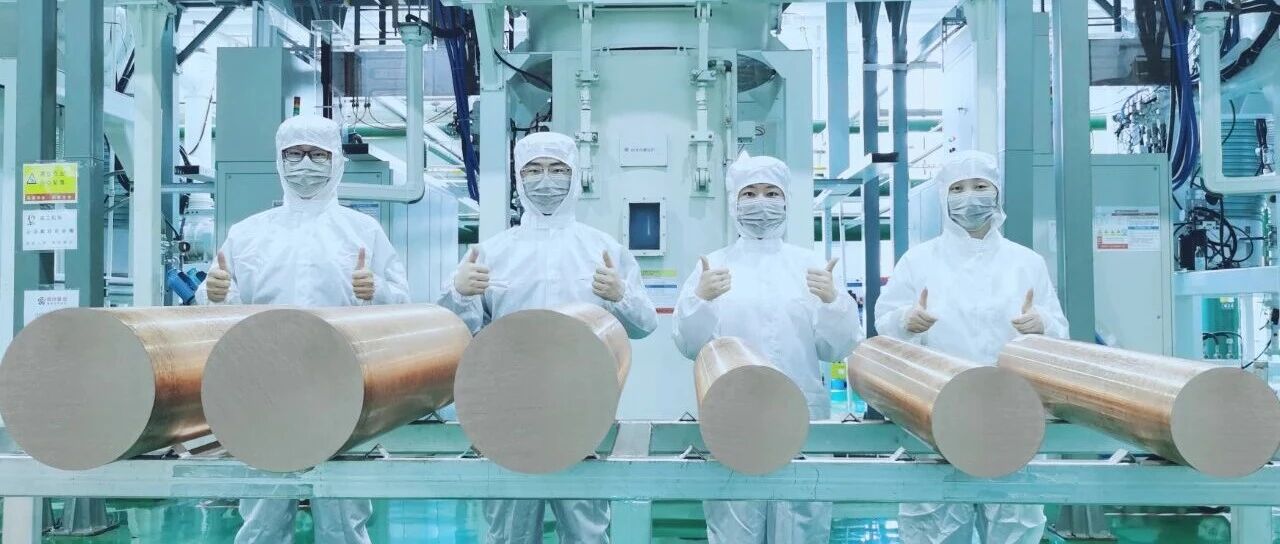
Core Viewpoint - The competition in the 3nm chip manufacturing process is intensifying, making ultra-pure metal materials a strategic focus in the global semiconductor industry. The IPO of Shanghai semiconductor ultra-pure metal material supplier Tongchuang Purun is a significant step in breaking the overseas monopoly in semiconductor materials in China [1]. Group 1: Company Overview - Tongchuang Purun, established just over four years ago, has received over 2 billion yuan in financing and is on a mission to break the overseas monopoly in semiconductor materials [1]. - The controlling shareholder of Tongchuang Purun is Yao Lijun, founder and CTO of Jiangfeng Electronics, who holds 17.61% of the company's shares. He has a history of breaking through foreign technology barriers in the semiconductor materials sector [2][3]. Group 2: Industry Context - The purity of materials directly affects chip performance, with ultra-pure metal materials needing to reach purity levels of 99.9995% (5N5) or even 99.9999% (6N) for advanced process chips. The impurity content for 3nm process ultra-pure manganese materials must be controlled at the level of parts per ten million [3]. - Historically, the technology for producing these core materials has been dominated by companies in the US and Japan, with over 80% of the high-end market in China relying on imports, which has been a bottleneck for the domestic chip industry [3]. Group 3: Financial and Market Insights - In August, Tongchuang Purun secured over 1 billion yuan in financing, followed by another over 1 billion yuan in Pre-IPO financing, indicating strong confidence from industry capital in the ultra-pure metal materials sector [5]. - The global semiconductor sputtering target market is expected to reach 25.11 billion yuan by 2027, with the market for ultra-pure metal materials also expanding. The demand for chips is increasing due to the growth of AI and electric vehicles, providing a broad platform for domestic companies [5]. Group 4: Strategic Positioning - Jiangfeng Electronics has achieved industrialization of sputtering targets from 6 inches to 18 inches, with advanced targets already used in 7nm chip manufacturing. Tongchuang Purun focuses on the R&D and production of ultra-pure metal raw materials, creating a self-sufficient industrial chain from raw materials to target manufacturing [6].

打破“卡脖子”困局 国产半导体材料企业同创普润启动IPO辅导
Ju Chao Zi Xun· 2025-12-14 14:48
Core Viewpoint - The China Securities Regulatory Commission has disclosed the IPO guidance report for Tongchuang Purun New Materials Co., Ltd., marking a significant step for the company in the semiconductor key materials sector as it seeks to enter the capital market for broader development opportunities [1] Company Overview - Tongchuang Purun was established in December 2012 by Dr. Yao Lijun, the founder and CTO of Jiangfeng Electronics, along with a team of high-level talents returning from overseas [3] - The company focuses on the research, development, and production of high-purity (5N, 6N, and above) metal materials used in integrated circuit manufacturing, having developed a fully autonomous core technology system [3] Technological Achievements - After over a decade of efforts, Tongchuang Purun has built a complete and controllable industrial chain from raw material purification to product application, with a modern advanced production line [3] - The product line includes ultra-high-purity aluminum, tantalum, copper, manganese, and various key alloy materials, achieving international advanced technical standards [3] - The company has broken the long-standing reliance on imports in the high-end high-purity metal materials sector in China and has become one of the few Chinese companies capable of providing key high-purity metal materials for the most advanced 3nm process chips globally [3] Market Position - High-purity metal materials are foundational for strategic emerging industries such as semiconductor chips, display panels, aerospace, and new energy, with high technical barriers historically dominated by a few US and Japanese companies [3] - Tongchuang Purun has transitioned from a follower to a peer and even a leader in certain areas due to its strong technical accumulation and continuous innovation investment [3] Strategic Partnerships - As an important partner and core supplier to Jiangfeng Electronics, Tongchuang Purun has successfully integrated several ultra-high-purity metal sputtering targets into the supply chains of top global wafer manufacturers, widely used in high-end electronic products like AI chips [4] - The collaboration has resulted in a global market share exceeding 40% for the jointly developed ultra-high-purity aluminum, copper, and manganese targets, ranking first in the world [4] Financial Developments - The company completed a Pre-IPO financing round exceeding 1 billion RMB in October, attracting notable industry investors such as Shangqi Capital and SAIC Capital, which will support further investment in core technology R&D, accelerate technological iteration and industrial upgrades, and expand market applications [4] - The founder, Dr. Yao Lijun, holds 17.61% of the company's shares, making him the controlling shareholder [4] IPO Significance - The initiation of the IPO guidance is a significant milestone in the development of Tongchuang Purun, especially against the backdrop of profound adjustments in the global semiconductor industry and the increasing demand for supply chain autonomy [4]
行业行深业度周报告:伊拉克恢复油田产量,原油供应过剩担忧较大-20251214
Ping An Securities· 2025-12-14 14:09
Investment Rating - The report maintains a "Strong Buy" rating for the oil and petrochemical sector [1]. Core Viewpoints - Iraq has restored production at the West Qurna 2 oil field, raising concerns about oversupply in the crude oil market. WTI crude futures fell by 4.33% and Brent crude futures by 4.13% during the specified period [6]. - Geopolitical tensions continue, particularly regarding the Russia-Ukraine situation and U.S.-Venezuela relations, which may impact oil prices [6]. - The U.S. Federal Reserve has lowered the federal funds rate target range by 25 basis points to between 3.50% and 3.75%, marking the third rate cut of the year [6]. - In the fluorochemical sector, the 2026 refrigerant quotas are expected to increase, with downstream demand in home appliances likely to continue due to government subsidies [6]. Summary by Sections Oil and Petrochemicals - Iraq's oil production has returned to approximately 460,000 barrels per day, and U.S. refinery utilization rates have increased following seasonal maintenance [6][7]. - The report suggests that domestic oil companies are diversifying their oil and gas sources to mitigate sensitivity to international oil price fluctuations [7]. Fluorochemicals - The 2026 HFC production quota has been announced, totaling 797,845 tons, which is an increase of 5,963 tons from the previous year. Notable increases include HFC-134a by 3,242 tons and HFC-245fa by 2,918 tons [6]. - The demand for refrigerants is expected to grow, supported by government policies and subsidies, particularly in the automotive sector [6][7]. Investment Recommendations - The report recommends focusing on the oil and petrochemical, fluorochemical, and semiconductor materials sectors. It highlights the resilience of major oil companies in the face of price volatility and suggests monitoring companies like China National Petroleum, Sinopec, and CNOOC [7]. - In the fluorochemical sector, companies leading in third-generation refrigerants and upstream fluorite resources are recommended for investment [7]. - The semiconductor materials sector is also highlighted for its upward cycle and potential for domestic substitution, with specific companies suggested for consideration [7].
有哪些新材料将会用于AI算力上?(附300+国产企业突围清单及投资指南)
材料汇· 2025-12-12 15:52
Core Viewpoint - The article emphasizes the critical role of material innovation in driving the next generation of AI computing power, highlighting the shift from traditional silicon-based materials to advanced materials that can support higher performance and efficiency in AI applications [2][52]. Group 1: Core Computing and Logic Chip Materials - Advanced channel materials are essential for semiconductor transistors, directly influencing the speed, power consumption, and integration of chips [4]. - AI chips require channel materials with high mobility, high switching ratio, high stability, low power consumption, low leakage current, and ultra-thin thickness [6]. - Various materials such as MoS₂, black phosphorus, InGaAs, germanium, carbon nanotubes, and high-mobility oxide semiconductors are being explored to meet these requirements [6][15]. Group 2: Gate and Dielectric Materials - Gate and dielectric materials are crucial for controlling the conduction of channel carriers and directly affect the switching speed, power consumption, and reliability of AI chips [16]. - HfO₂ and its doped variants are highlighted for their low leakage current and high dielectric constant, making them suitable for advanced logic chips [17][18]. Group 3: Substrate Materials - Substrate materials provide physical support and thermal management for semiconductor chips, impacting the performance and reliability of AI chips [21]. - Materials like silicon carbide (SiC) and gallium oxide (β-Ga₂O₃) are noted for their superior thermal conductivity and breakdown voltage, making them suitable for AI power modules [22][23]. Group 4: New Storage and Computing Materials - Non-volatile storage materials such as phase change materials and resistive switching materials are essential for AI applications, offering high speed and low power consumption [25]. - Neuromorphic computing materials, including memristor materials, are being developed to simulate neural networks and reduce inference energy consumption [26]. Group 5: Advanced Packaging and Integration Materials - Substrate and interconnect materials are critical for enhancing signal transmission speed and reducing power loss in AI chip packaging [29]. - Thermal management materials, such as diamond composites, are essential for effective heat dissipation in high-performance AI devices [30]. Group 6: New Computing Paradigm Hardware Materials - Photonic computing materials, like lithium niobate, offer significant advantages in speed and energy efficiency, positioning them as key technologies for future computing [34]. - Quantum computing materials, including superconductors and diamond nitrogen-vacancy centers, are crucial for developing quantum computing hardware [38]. Group 7: Perception, Sensing, and Connectivity Materials - Intelligent sensing materials are vital for AI sensors, enhancing detection accuracy and response speed [40]. - Wireless communication materials, such as high-frequency low-loss PCB materials, are essential for 5G and AI applications [43]. Group 8: Energy and Thermal Management Materials - Active thermal management materials can dynamically adjust thermal properties, improving the efficiency of AI devices [44]. - Energy materials, including GaN and SiC power devices, are critical for enhancing the efficiency of AI server power supplies [46]. Group 9: Investment Logic Analysis - Investment opportunities in AI materials focus on leveraging material innovation to surpass traditional silicon limitations, aligning with national strategies for semiconductor supply chain security [52]. - Key investment areas include advanced logic and storage materials, packaging and thermal management materials, and frontier materials for emerging computing paradigms [53]. Group 10: Summary - The article provides a comprehensive overview of the material innovations driving the AI computing revolution, emphasizing the importance of these advancements in achieving self-sufficiency in semiconductor technology and reshaping global competition [55].
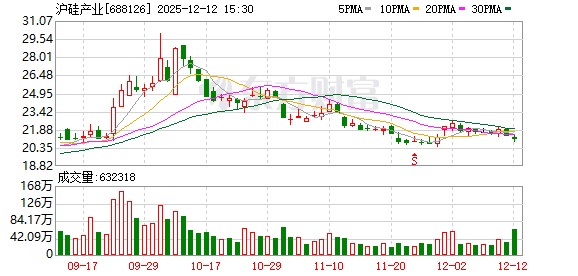
沪硅产业大宗交易成交8719.20万元,买方为机构专用席位
Zheng Quan Shi Bao Wang· 2025-12-12 15:47
沪硅产业12月12日大宗交易平台出现一笔成交,成交量420.00万股,成交金额8719.20万元,大宗交易成 交价为20.76元,相对今日收盘价折价1.52%。该笔交易的买方营业部为机构专用,卖方营业部为万和证 券股份有限公司上海分公司。 进一步统计,近3个月内该股累计发生13笔大宗交易,合计成交金额为6.32亿元。 | 成交量(万 | 成交金额(万 | 成交价格 | 相对当日收盘折溢价 | 买方营 | 卖方营业部 | | --- | --- | --- | --- | --- | --- | | 股) | 元) | (元) | (%) | 业部 | | | 420.00 | 8719.20 | 20.76 | -1.52 | 机构专 | 万和证券股份有限公司上 | | | | | | 用 | 海分公司 | (文章来源:证券时报网) 证券时报·数据宝统计显示,沪硅产业今日收盘价为21.08元,下跌1.22%,日换手率为2.31%,成交额为 13.32亿元,全天主力资金净流出3.00亿元,近5日该股累计下跌2.77%,近5日资金合计净流出4.36亿 元。 两融数据显示,该股最新融资余额为14.63亿元,近5日增 ...

鼎龙股份(300054) - 300054鼎龙股份投资者关系管理信息20251212
2025-12-12 13:58
Company Overview - Hubei Dinglong Holdings Co., Ltd. is a leading platform company in the field of core innovative materials, focusing on two main business segments: semiconductor materials and general printing consumables [2][3]. - The company emphasizes semiconductor innovation materials, covering CMP process materials, photoresists, and advanced packaging materials, establishing itself as a domestic leader in these areas [2][3]. Polishing Liquid Business - The company has achieved significant breakthroughs in polishing liquid technology, including a comprehensive product layout covering dielectric, metal, and polysilicon layers, with several high-barrier products already developed [3][4]. - R&D investment for the first three quarters of 2025 reached CNY 389 million, primarily directed towards semiconductor segments, ensuring robust funding for technological innovation [4][10]. - The polishing liquid products have gained recognition from major domestic wafer manufacturers, with successful orders for combined polishing and cleaning liquid solutions [4][5]. Advanced Photoresist Technology - The company has over 20 years of experience in the import substitution of key materials, establishing a strong technical barrier in high-end photoresist production [5][6]. - It has developed nearly 30 types of high-end photoresists, achieving industry-leading technical specifications and ensuring a stable supply of core raw materials through independent development [6][7]. OLED Display Materials - The core products for OLED display materials, such as yellow polyimide slurry (YPI) and photosensitive polyimide slurry (PSPI), have achieved stable supply and established a leading position in the domestic market [8][9]. - The PSPI product line has a production capacity of 1,000 tons per year, with ongoing development of new high-end display materials [8][9]. Future Product Expansion - The company plans to leverage its seven core technology platforms and four synchronization mechanisms to ensure smooth transitions from R&D to mass production in new product areas [9][10]. - Cumulative R&D investment over the past three years exceeds CNY 1.1 billion, maintaining a ratio of approximately 14% of revenue, which supports new technology development [10].

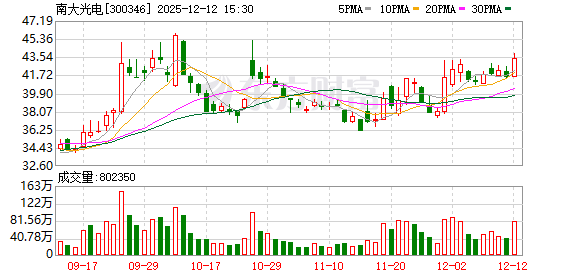
南大光电:公司产品纯度大于等于6N,可以实现MO源全系列配套供应及定制化产品服务
Mei Ri Jing Ji Xin Wen· 2025-12-12 12:52
(文章来源:每日经济新闻) 每经AI快讯,南大光电(300346.SZ)12月12日在投资者互动平台表示,公司是全球主要的MO源制造 商之一,在MO源的合成制备、纯化技术、分析检测、封装容器等方面已全面达到国际先进水平,产品 纯度大于等于6N,可以实现MO源全系列配套供应及定制化产品服务。 ...