投资银行

Search documents
高盛就外部律师事务所数据泄露向部分另类基金客户发出警告
Xin Lang Cai Jing· 2025-12-26 01:00
Core Viewpoint - Goldman Sachs has warned investors in some of its alternative investment funds about potential data breaches due to a cybersecurity incident at its external legal advisor, Fried Frank Harris Shriver & Jacobson LLP [1][2]. Group 1: Incident Details - On December 19, Goldman Sachs received notification from Fried Frank regarding a "cybersecurity event" that may have compromised data related to multiple alternative funds [1][2]. - Fried Frank has stated that they took swift action to control the incident and have engaged leading external data security experts to assist in addressing the situation [3]. Group 2: Response and Security Measures - Goldman Sachs confirmed that its own systems were not affected by the incident and remain secure, emphasizing its commitment to protecting client data [1][2]. - Fried Frank reported that the vulnerability leading to the data breach has been fixed and that any leaked data is "unlikely to be disseminated or misused" [2][3]. - Goldman Sachs is conducting an independent assessment of Fried Frank's security controls to verify the effectiveness of their remedial measures [2][3].

320亿!河钢重磅启动!
Xin Lang Cai Jing· 2025-12-25 14:41
Core Viewpoint - The establishment of the CICC Heibei Steel Development Equity Investment Fund, with a total scale of 32 billion yuan, aims to create an open, collaborative, and win-win industrial investment platform and a new model of integration between industry and finance [1][5]. Group 1: Fund Details - The fund has a total scale of 32 billion yuan and an operational period of 15 years [1][5]. - It adopts a "mother fund + direct investment" operational model, focusing on high-end materials, new energy, new generation information technology, energy conservation and environmental protection, and high-end manufacturing [5][12]. - The fund features distinct characteristics of "industry-finance collaboration, central-local cooperation, and cross-border linkage," aiming to build a new bridge for cooperation between local governments, cross-border capital, and industries [5][12]. Group 2: Strategic Importance - The collaboration between Heibei Steel Group and CICC Capital marks a milestone in their strategic partnership and is a key measure to deepen the integration of industry and finance while laying out strategic emerging industries [4][10]. - CICC aims to leverage its comprehensive financial service advantages to guide financial resources towards industrial innovation in Hebei, contributing to high-quality development [4][11]. Group 3: Key Stakeholders - Key figures present at the fund's establishment included Zhao Chenxing, the Executive Vice Governor of Hebei Province, Liu Jian, Chairman of Heibei Steel Group, and Chen Liang, Chairman of CICC [1][3]. - BlueFive Capital, an international investment institution, expressed its intention to collaborate with the fund, aiming to integrate long-term capital from the Middle East and resources from leading industries in China [4][11][14]. Group 4: Company Background - Heibei Steel Group is one of the largest steel material manufacturers globally and has been listed in the Fortune Global 500 for 17 consecutive years, focusing on high-end, intelligent, and green development [6][13]. - CICC is a leading investment bank in China, committed to serving national strategies and the real economy, with a comprehensive business structure that includes investment banking, asset management, and private equity [6][13].




商品暴走、股债逻辑再逆转!摩根士丹利预警2026年三大“变局”
Sou Hu Cai Jing· 2025-12-25 09:44
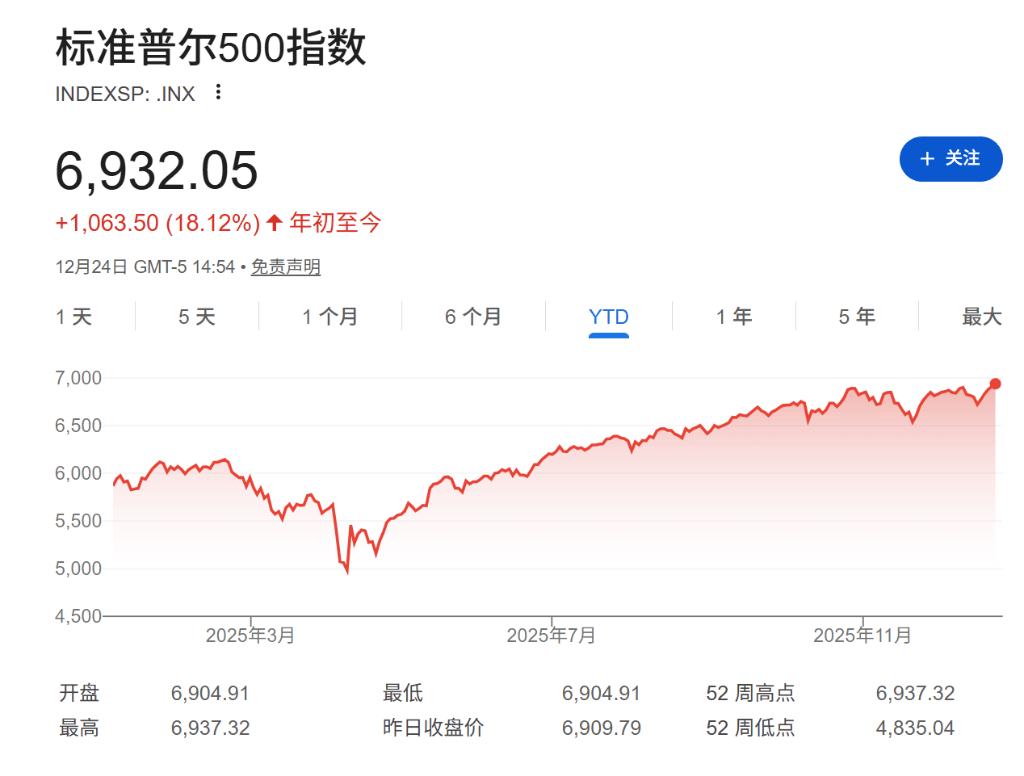
Group 1: Economic Outlook - Morgan Stanley's strategist team warns of a potential "no-employment productivity boom" in the U.S. economy, where weak labor markets suppress wage growth and inflation while accelerating productivity maintains steady economic growth [1][5] - The firm estimates that this trend could lead to core inflation falling below 2%, allowing the Federal Reserve to significantly cut interest rates without concerns of inflation rebounding [5] Group 2: Stock-Bond Relationship - The report indicates a fundamental shift in the correlation between stocks and bonds, predicting that the "bad news is good news" trading pattern may end, leading to increased sensitivity of risk assets to negative economic data [1][6] - As inflation expectations stabilize or face downward risks, U.S. Treasury bonds may regain their traditional role as a safe-haven asset and inflation hedge [6] Group 3: Commodity Prices - Morgan Stanley forecasts a potential surge in commodity and energy prices driven by a weaker dollar and recovering demand from major consumer countries, with gold prices recently breaking the $4,400 mark [2][7] - The firm maintains a baseline prediction of a 13% increase in the S&P 500 index for 2026, but emphasizes that these variables could lead to deviations from conventional market expectations [2]

河钢集团与中金资本联合 中金河钢(河北)发展股权投资基金成立
Zheng Quan Shi Bao Wang· 2025-12-25 07:12
Core Viewpoint - The establishment of the CICC Heibei Steel Development Equity Investment Fund, with a total scale of 32 billion yuan and a 15-year operation period, represents a strategic collaboration between Heibei Steel Group and CICC Capital aimed at fostering new growth drivers and enhancing industrial-financial integration in the Beijing-Tianjin-Hebei region [1][2]. Group 1: Fund Details - The fund has a total scale of 32 billion yuan and operates under a "mother fund + direct investment" model, focusing on high-end materials, new energy, next-generation information technology, energy conservation and environmental protection, and high-end manufacturing [1]. - The fund aims to create a new bridge for cooperation between local governments, cross-border capital, and industries, emphasizing characteristics such as industrial-financial synergy, central-local cooperation, and cross-border linkage [1]. Group 2: Strategic Importance - The collaboration between Heibei Steel and CICC Capital is seen as a milestone in their strategic partnership, crucial for deepening industrial-financial integration and laying out strategic emerging industries [2]. - CICC Capital intends to leverage its comprehensive financial service advantages to guide financial resources towards industrial innovation in Hebei, contributing to the construction of a modern industrial system [2]. Group 3: Company Background - Heibei Steel Group is one of the largest steel material manufacturers and comprehensive service providers globally, having been listed in the Fortune Global 500 for 17 consecutive years [4]. - The company focuses on high-end, intelligent, and green development, enhancing competitiveness in its core steel business while actively cultivating emerging industry clusters in financial services, digital technology, trade logistics, and equipment manufacturing [4]. Group 4: BlueFive Capital's Perspective - BlueFive Capital, an international investment platform managing assets of 8 billion USD, sees long-term potential in the Chinese market and opportunities for Heibei Steel in high-end manufacturing and new building materials [3][5]. - The firm aims to integrate long-term capital from the Middle East with leading Chinese industry resources to discover quality investment opportunities and enhance investment efficiency [3].
多家机构预期2026年美元资产吸引力减弱 金价继续上涨
Xin Hua Wang· 2025-12-25 06:38
Group 1 - Multiple international financial institutions predict a continued trend of using gold to hedge against risks associated with dollar-denominated assets, with gold prices expected to rise further by 2026 [1] - Schroders analyst Patrick Brenner highlights that the U.S. is facing "policy uncertainty, fiscal fragility, and increasing investor doubts about the long-term role of U.S. Treasuries and the dollar," making gold a preferred choice for asset diversification due to its safe-haven properties and low correlation with traditional assets [1] - Goldman Sachs forecasts that gold prices will reach approximately $4,900 per ounce by the end of 2026, driven by strong structural demand from central bank purchases and cyclical support from potential Federal Reserve rate cuts [1] - JPMorgan anticipates that gold prices could rise to $5,055 per ounce by Q4 2026, with the possibility of further increases to $6,000 per ounce, indicating a clear long-term trend of gold allocation by official reserves and investors [1] - Forbes notes that global trade tensions initiated by the U.S., the rise of "de-dollarization" transactions to avoid dollar depreciation, increased demand for gold from private investors and cryptocurrency funds, and ongoing central bank purchases are significant drivers for the upward movement of gold prices [1] Group 2 - The U.S. dollar index has declined by 9% since the beginning of 2025, potentially marking its worst annual performance in eight years [2] - The market widely expects that the new Federal Reserve chairman may lean towards a dovish monetary policy stance, which could further weaken the dollar and reduce the attractiveness of dollar-denominated assets for investors [2]
多家机构预期2026年美元资产吸引力减弱金价继续上涨
Xin Hua Wang· 2025-12-25 06:38
Group 1 - The core viewpoint of the articles indicates a sustained trend of using gold to hedge against risks associated with dollar-denominated assets, with expectations for gold prices to rise further by 2026 [1] - Analysts from Schroders highlight that the U.S. is facing "policy uncertainty, fiscal fragility, and increasing investor doubts about the long-term role of U.S. Treasuries and the dollar," making gold a preferred choice for asset diversification due to its safe-haven properties and low correlation with traditional assets [1] - Goldman Sachs predicts that by the end of 2026, gold prices will reach approximately $4,900 per ounce, driven by strong structural demand from central bank purchases and cyclical support from potential Federal Reserve rate cuts [1] - JPMorgan forecasts that gold prices could rise to $5,055 per ounce by the fourth quarter of 2026, with potential further increases up to $6,000 per ounce, citing a clear long-term trend of gold accumulation by official reserves and investors [1] - Forbes notes that global trade tensions initiated by the U.S., the rise of "de-dollarization" transactions to avoid dollar depreciation, increased demand for gold from private investors and cryptocurrency funds, and ongoing central bank purchases are significant drivers for the upward movement of gold prices [1] Group 2 - The U.S. dollar index has declined by 9% since the beginning of 2025, potentially marking its worst annual performance in eight years [2] - The market widely anticipates that the new Federal Reserve chair may adopt a dovish monetary policy stance, which could further weaken the dollar and reduce the attractiveness of dollar-denominated assets for investors [2]
多家机构预期2026年黄金价格或进一步上涨
Xin Hua She· 2025-12-25 06:37
Group 1 - Multiple international financial institutions predict a continued trend of using gold to hedge against risks associated with dollar-denominated assets, with gold prices expected to rise further by 2026 [1] - Schroders analyst Patrick Brenner highlights that the U.S. is facing "policy uncertainty, fiscal fragility, and increasing investor doubts about the long-term role of U.S. Treasury and the dollar," making gold a preferred choice for asset diversification due to its safe-haven properties and low correlation with traditional assets [1] - Goldman Sachs forecasts that gold prices will reach approximately $4,900 per ounce by the end of 2026, driven by strong structural demand from central bank purchases and cyclical support from potential Federal Reserve rate cuts [1] Group 2 - JPMorgan anticipates that gold prices could rise to $5,055 per ounce by Q4 2026, with potential further increases up to $6,000 per ounce, indicating a clear long-term trend of official reserves and investor allocations towards gold [1] - Forbes notes that global trade tensions initiated by the U.S., the rise of "de-dollarization" transactions to avoid dollar depreciation, increased demand for gold from private investors and cryptocurrency funds, along with ongoing central bank purchases, are significant drivers for the upward movement of gold prices [1] - The U.S. dollar index has declined by 9% since the beginning of 2025, potentially marking its worst annual performance in eight years, with expectations that the new Federal Reserve chair may adopt a dovish monetary policy stance, further weakening the dollar and reducing the attractiveness of dollar-denominated assets [2]
美企靠关税抗裁员潮纸黄金微调整
Jin Tou Wang· 2025-12-25 03:06
Group 1 - The current U.S. job market is facing challenges, with concerns about potential layoffs in 2026, but Morgan Stanley believes many companies can avoid large-scale layoffs [2] - The two major macro themes for the U.S. in 2025 are increasing layoffs and persistent inflation, influenced by tariff pressures that led companies to reduce hiring earlier this year [2] - Morgan Stanley's chief U.S. economist Michael Gapen's team suggests that companies need to continue raising prices in 2026 after raising them throughout 2025 to stabilize employment [2] Group 2 - The paper gold price is currently experiencing a downward trend, influenced by expectations of Federal Reserve policies and fluctuations in the U.S. dollar, facing short-term adjustment pressure [3] - Despite the short-term challenges, the medium to long-term outlook for paper gold remains supported by safe-haven demand, with the potential for upward movement if prices stabilize above key support levels [3] - The MACD indicator suggests caution regarding the strengthening of bearish forces in the paper gold market [3]
裁员潮明年将至?摩根士丹利:关税可能是美企的“救命稻草”
Jin Shi Shu Ju· 2025-12-25 02:24
Group 1 - The current job market in the U.S. is challenging, with concerns about potential layoffs in 2026, but Morgan Stanley suggests many companies may avoid significant workforce reductions [1] - Morgan Stanley's chief U.S. economist, Michael Gapen, indicates that avoiding large-scale layoffs in 2026 is contingent on companies continuing to raise prices after increasing them throughout 2025 [1] - The two major macro themes for the U.S. in 2025 are rising layoffs and persistent inflation, with companies initially reducing hiring and workforce to avoid price hikes due to tariff pressures [1] Group 2 - Morgan Stanley maintains its baseline view that existing tariffs will push core inflation to 3% by early 2026, with signs already visible in consumer goods costs [2] - The analysis reveals that companies have begun to recover some of the losses incurred in early 2025 due to tariffs, which is a positive development as many firms can raise prices while retaining most of their customer base [2] - The argument that higher prices can prevent layoffs in 2026 is valid only if customers continue to tolerate increased costs, with uncertainty about how high prices can rise before deterring shoppers [2]
港股全年IPO规模重返全球第一,再融资额接近过去三年总和
Huan Qiu Wang· 2025-12-25 01:36
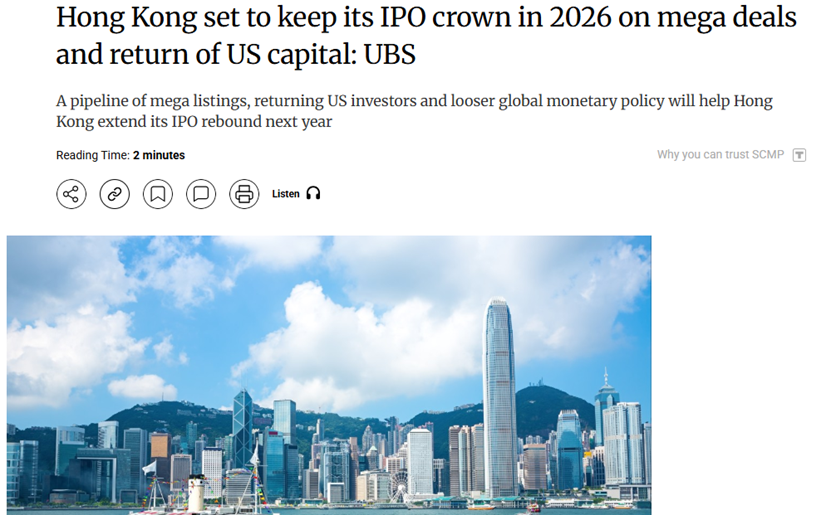
《南华早报》此前发文称,据瑞士投资银行瑞银预计,2026年香港首次公开募股(IPO)市场仍将保持全球最大筹资地的 地位,得益于巨额交易的管道和美国资本的回归。 【环球网财经综合报道】Wind数据显示,2025年港股全年IPO规模预计将达到2863亿港元,重返全球第一;港股再融 资规模则达到3166亿港元,远超2022年至2024年的规模,甚至接近过去三年的总和3181亿港元。 瑞银还预计,2026年香港将有150至200宗IPO融资超过3000亿港元(约3850亿美元),超越今年约2700亿港元的融资 额,使香港重新成为全球第一。 瑞银全球银行亚洲区覆盖部联席主管李长江(John Lee Chen-kwok)表示:"明年第一季度将有一些IPO筹集超过100亿 港元。"他还补充称,消费商品、高科技和人工智能等行业交易有望为市场带来强劲开局。 ...