
汽车电子

Search documents
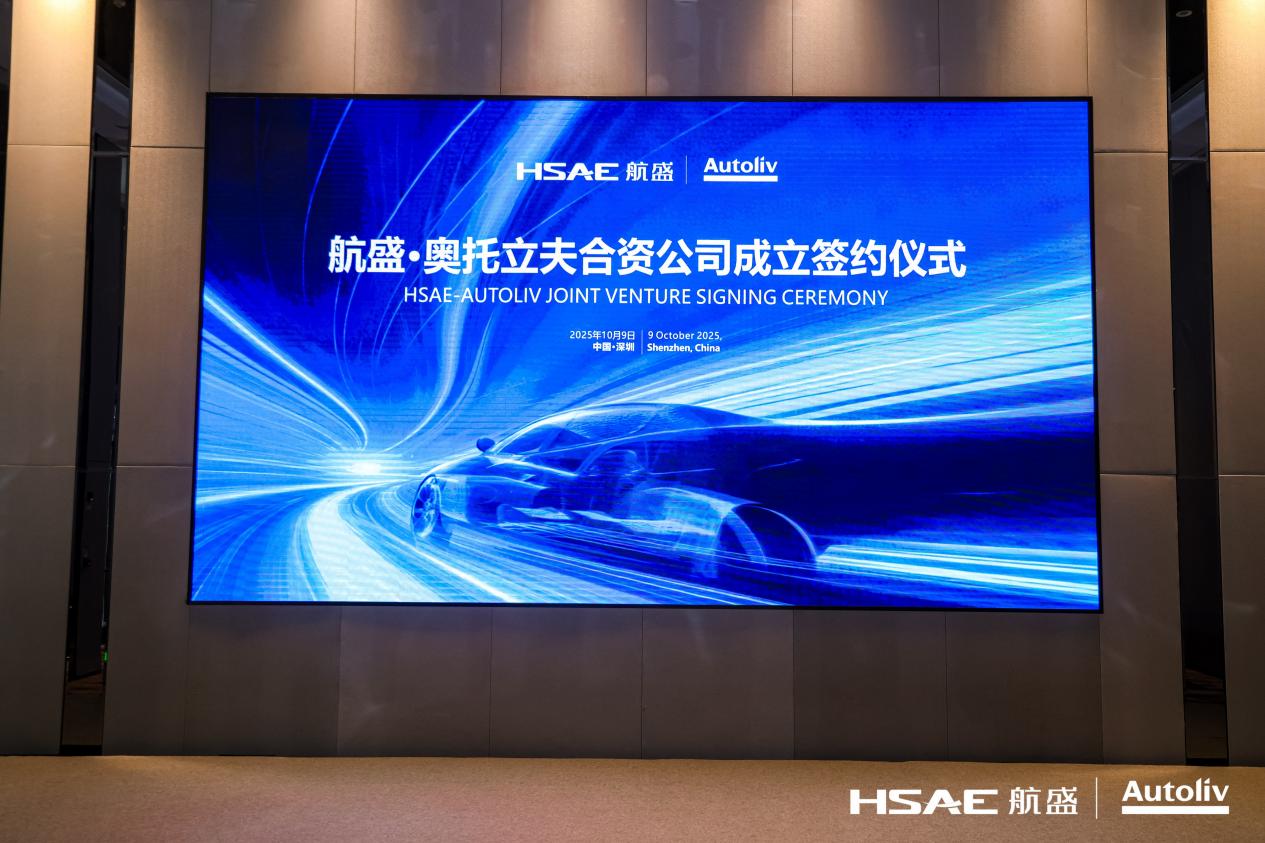
航盛电子与奥托立夫正式签约 共筑汽车电子安全领域新未来
Zhong Guo Qi Che Bao Wang· 2025-10-11 06:02
Core Insights - A strategic partnership focused on automotive electronic safety has been established between Shenzhen Hangseng Electronics and global safety systems leader Autoliv, marking a significant milestone in the integration of China's automotive electronics sector with global safety systems [1][3][4] Group 1: Partnership Details - The joint venture aims to develop and manufacture products in the automotive electronic safety field, with an expected establishment date in Q1 2026, located in the Yangtze River Delta region [3][4] - Initial focus areas for the new company include hands-free detection systems, pre-tensioner safety belt controllers, and electronic applications for safety belt systems [3][4] - This partnership is seen as a critical step in Hangseng's globalization strategy, enhancing Autoliv's ability to provide advanced safety solutions in the global market [3][4] Group 2: Historical Context - The collaboration follows a strategic memorandum signed in 2024, with the recent agreement being the fastest joint venture established by Autoliv in China in nearly 20 years, taking less than 12 months from negotiation to signing [4][5] - The rapid progress reflects a deep mutual trust and efficiency between the two companies [4][5] Group 3: Strategic Values - The partnership is characterized by three strategic values: acting as a bridge connecting global market resources with China's supply chain, fostering dual empowerment through cultural integration, and amplifying resources through technological collaboration [6][7] - The emphasis on quality and long-term sustainable development is a shared principle that underpins the partnership [5][9] Group 4: Innovation and Market Strategy - The joint venture aims to address the challenges of the automotive industry, particularly the need for innovation and quality amidst fierce competition [10][12] - The companies plan to explore global markets, including potential manufacturing and R&D centers in Europe, to leverage high-quality resources [10][12] - A focus on differentiated development is intended to avoid homogenization and low-price competition, enhancing value for customers [12]


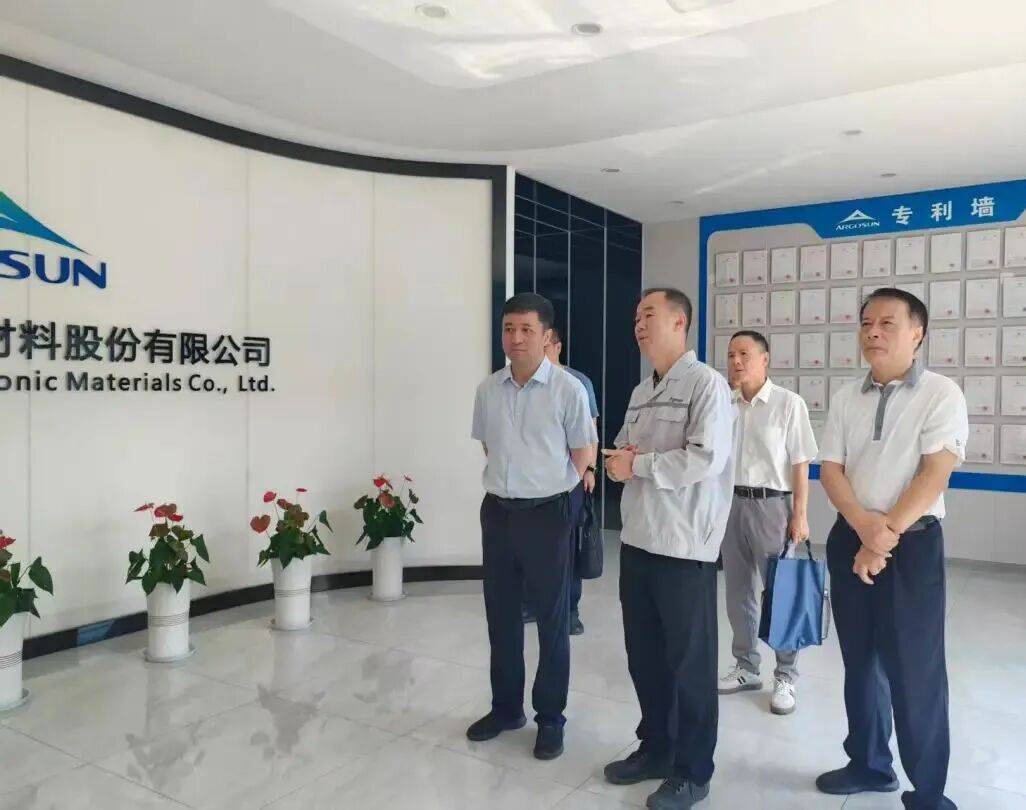
张东赴委员企业调研
Sou Hu Cai Jing· 2025-10-10 11:24
Core Viewpoint - The city’s political advisory body is actively engaging with local enterprises to understand their operational challenges and development needs, aiming to enhance the business environment and promote high-quality growth [1][3]. Group 1: Company Operations and Development - The city’s political advisory body, led by Zhang Dong, conducted on-site research at local enterprises to gather insights on their operational development, technological innovations, and business environment optimization [1]. - At Wuhu Hongjing Electronics Co., Ltd., Zhang Dong emphasized the importance of leveraging core competencies and adopting a scale-oriented approach to enhance efficiency, while discouraging repetitive development models [3]. - At Anhui Yagesheng Electronic New Materials Co., Ltd., Zhang Dong acknowledged the company’s strong growth and urged it to focus on industry trends, adopt new technologies, and improve production intelligence and management information systems [5]. Group 2: Industry Collaboration and Support - The political advisory body aims to facilitate a collaborative platform for enterprises to express their challenges and needs, thereby fostering a supportive business environment [5]. - The advisory body will play a role in coordinating efforts among various stakeholders to assist enterprises in upgrading their industries and contributing to local economic development [5].
海联金汇:新余智科碳氢新动能创业投资基金完成备案
Xin Lang Cai Jing· 2025-10-10 08:19
Core Viewpoint - The company has announced the establishment of a new venture capital fund focused on investing in high-quality enterprises in the fields of new energy (including hydrogen energy), new materials, and automotive electronics [1] Group 1: Fund Details - The new fund is named "Xinyu Zhike Carbon Hydrogen New Energy Venture Capital Fund Partnership (Limited Partnership)" and has completed the necessary registration [1] - The total committed capital for the partnership is RMB 92.1 million, with the company contributing RMB 20 million as a limited partner [1] - The partnership has completed registration procedures with the Asset Management Association of China, including details such as fund name, management name, custodian name, and registration date [1]

均胜电子股价跌5.08%,易方达基金旗下1只基金位居十大流通股东,持有846.63万股浮亏损失1473.14万元
Xin Lang Cai Jing· 2025-10-10 06:58
Group 1 - The core point of the news is that Junsheng Electronics experienced a decline of 5.08% in stock price, reaching 32.50 CNY per share, with a trading volume of 1.82 billion CNY and a turnover rate of 4.05%, resulting in a total market capitalization of 45.36 billion CNY [1] - Junsheng Electronics, established on August 7, 1992, and listed on December 6, 1993, is located in Ningbo, Zhejiang Province, and specializes in automotive electronics, new energy vehicles, industrial automation, robotics, and interior and exterior functional components [1] - The revenue composition of Junsheng Electronics includes automotive safety systems at 62.53%, automotive electronic systems at 27.53%, other segments at 9.44%, and supplementary revenue at 0.49% [1] Group 2 - Among the top ten circulating shareholders of Junsheng Electronics, E Fund's fund holds a position, specifically the E Fund CSI Artificial Intelligence Theme ETF (159819), which increased its holdings by 125,000 shares in the second quarter, totaling 8.4663 million shares, representing 0.62% of circulating shares [2] - The E Fund CSI Artificial Intelligence Theme ETF (159819) was established on July 27, 2020, with a current scale of 16.578 billion CNY, achieving a year-to-date return of 71.25%, ranking 215 out of 4220 in its category, and a one-year return of 74.31%, ranking 142 out of 3852 [2]

经纬恒润10月9日获融资买入8493.17万元,融资余额1.89亿元
Xin Lang Cai Jing· 2025-10-10 01:42
Core Insights - On October 9, Jingwei Hengrun's stock rose by 4.18%, with a trading volume of 497 million yuan [1] - The company recorded a net financing purchase of 35.29 million yuan on the same day, with a total financing and securities balance of 190 million yuan [1] Financing Overview - On October 9, Jingwei Hengrun had a financing purchase of 84.93 million yuan, with a current financing balance of 189 million yuan, accounting for 1.50% of its market capitalization [1] - The financing balance is above the 90th percentile of the past year, indicating a high level of financing activity [1] Securities Lending Overview - On October 9, the company repaid 1,000 shares in securities lending and sold 3,000 shares, amounting to 418,800 yuan based on the closing price [1] - The securities lending balance stands at 1.34 million yuan, also exceeding the 90th percentile of the past year [1] Company Profile - Beijing Jingwei Hengrun Technology Co., Ltd. was established on September 18, 2003, and went public on April 19, 2022 [1] - The company primarily provides electronic products, R&D services, and high-level intelligent driving solutions for sectors such as automotive, high-end equipment, and unmanned transportation [1] - Revenue composition includes 87.55% from electronic products, 12.21% from R&D services, and minimal contributions from other segments [1] Shareholder and Financial Performance - As of June 30, the number of shareholders decreased by 2.20% to 7,155, while the average circulating shares per person increased by 15.68% to 12,584 shares [2] - For the first half of 2025, the company achieved a revenue of 2.908 billion yuan, representing a year-on-year growth of 43.48%, but reported a net profit loss of 86.96 million yuan, an increase in loss of 73.91% year-on-year [2] - Among the top ten circulating shareholders, Changcheng Jiujia Innovation Growth Mixed A (004666) held 1.8 million shares, a decrease of 200,000 shares from the previous period [2]

德赛西威(002920.SZ):公司将持续开展机器人领域探索与研究
Ge Long Hui· 2025-10-09 09:53
Core Viewpoint - Desay SV Automotive is focusing on consolidating its core business while actively seizing market opportunities and strategically laying out new products and business areas [1] Group 1: Business Strategy - The company is leveraging its core technologies and systematic capabilities accumulated in the automotive electronics field [1] - Desay SV Automotive is committed to continuous exploration and research in the robotics sector [1] Group 2: Product Development - The company is developing in areas such as intelligent driving domain control products, sensors, and algorithms [1]
电广传媒:参股公司瑞立科密于深交所上市
Zhong Zheng Wang· 2025-10-09 02:41
Group 1 - The core point of the news is that Electric Broad Media's subsidiary, Dacheng Venture Capital, holds a stake in the newly listed company, Guangzhou Ruili Kemi Automotive Electronics Co., Ltd., which went public on September 30, 2023 [1] - Electric Broad Media holds 4.1288 million shares of Ruili Kemi, accounting for 3.0553% of its total shares before the IPO and 2.2915% after the issuance [1] - The listing of Ruili Kemi is expected to impact Electric Broad Media's net profit by approximately 111 million yuan in the third quarter of 2025, representing 115.51% of the audited net profit attributable to the parent company for the fiscal year 2024 [1] Group 2 - Ruili Kemi is a leading company in the active safety systems for commercial vehicles in China, having transitioned from an industry follower to a technology leader over the past 20 years [2] - The company has achieved the highest market share in core products such as ABS, ESC, and EBS for several consecutive years, promoting the localization and intelligent upgrade of commercial vehicle electronic control systems [2] - Dacheng Venture Capital has been an early investor in Ruili Kemi since 2005, demonstrating a long-term investment philosophy of "investing early, investing small, and investing in technology" [2]

华为鸿蒙+人形机器人:最正宗的8家公司(名单)
Sou Hu Cai Jing· 2025-10-09 01:39
Core Insights - The humanoid robot market in China is projected to reach 5.3 billion yuan by 2025 and exceed 38.7 billion yuan by 2028, with a compound annual growth rate (CAGR) of over 60% [1] - Huawei's HarmonyOS has become the third-largest mobile operating system globally, with over 1.19 billion devices and 7.2 million developers, facilitating the integration of robotics technology [1] Company Summaries - **Junsun Electronics**: Positioned as a "Tier 1" supplier in automotive and robotics, Junsun is transferring its sensor and AI technology to humanoid robots. It has secured over 1 billion yuan in smart driving orders for the first half of 2025 [4] - **Midea Group**: Entered the industrial robot sector through the acquisition of KUKA and focuses on home service robots integrated with HarmonyOS for multi-device collaboration [5][6] - **Zhiwei Intelligent**: Specializes in edge computing for robots, achieving a 35% revenue growth in edge computing devices, with 20% of orders related to robotics [8] - **Tuobang Co., Ltd.**: Holds over 30% market share in service robot motion control modules, with a 42% revenue increase in robot controllers in the first half of 2025 [9] - **Shengtong Co., Ltd.**: Launched a programming teaching robot compatible with HarmonyOS, expanding into 3,000 schools and achieving a gross margin of 35% in its tech education business [10][12] - **Zhongke Chuangda**: Developed the ROS2.0 system for multi-robot collaboration, with a 51% revenue increase in its robotics business in the first half of 2025 [11][12] - **Pingzhi Information**: Innovates with a "vehicle-road collaboration + robot" solution, with a 67% increase in 5G robot orders projected for 2025 [13][15] - **Softcom Power**: Acts as a core software supplier for the Harmony ecosystem, with a 45% revenue growth in software services and 15% of orders related to robotics [16][18]


湖南电广传媒股份有限公司关于参股公司首次公开发行股票并在主板上市的公告
Shang Hai Zheng Quan Bao· 2025-10-08 19:25
Group 1 - The core point of the announcement is that Hunan Electric Broad Media Co., Ltd.'s subsidiary, Shenzhen Dacheng Venture Capital Co., Ltd., has a stake in Guangzhou Ruili Kemi Automotive Electronics Co., Ltd., which was listed on the Shenzhen Stock Exchange on September 30, 2025, with an issue price of 42.28 yuan per share [1][2] - The company holds 4.1288 million shares of Ruili Kemi, representing 3.0553% of its total shares before the IPO and 2.2915% after the IPO, with a lock-up period of 12 months post-listing [1][2] - The listing of Ruili Kemi is expected to impact the company's net profit for the third quarter of 2025 by approximately 110.82 million yuan, accounting for 115.51% of the audited net profit attributable to the parent company for the fiscal year 2024 [2] Group 2 - The company classifies its shares in Ruili Kemi as "financial assets measured at fair value with changes recognized in profit or loss," which will be reported under "trading financial assets" [2] - The fair value of the shares held by the company will fluctuate with the market price of Ruili Kemi's stock, leading to uncertain impacts on the company's performance for 2025 and beyond [2]
电广传媒直投企业瑞立科密于深交所主板上市
Zheng Quan Ri Bao Wang· 2025-10-08 12:45
Core Viewpoint - Hunan Electric Broad Media Co., Ltd. announced that its wholly-owned subsidiary, Dacheng Venture Capital, holds shares in Guangzhou Ruili Kemi Automotive Electronics Co., Ltd., which was listed on the Shenzhen Stock Exchange on September 30, with an initial price of 42.28 yuan per share and a first-day opening price of 79.80 yuan, reflecting an increase of 88.74% [1] Group 1 - The total number of shares issued by Ruili Kemi was 45,044,546, raising a total of 1.904 billion yuan [2] - Ruili Kemi is a leading company in the active safety systems for commercial vehicles, having achieved the highest market share in core products such as ABS, ESC, and EBS for several consecutive years [2] - Dacheng Venture Capital has been an early investor in Ruili Kemi since 2005, supporting the company's growth and contributing to the domestic replacement of imported automotive electronic control systems [2] Group 2 - Electric Broad Media expects the impact of Ruili Kemi's listing on its net profit for the third quarter of 2025 to be approximately 111 million yuan, which represents about 115.51% of the audited net profit attributable to the parent company for the fiscal year 2024 [1] - The fair value of the shares held by Electric Broad Media in Ruili Kemi will fluctuate with the stock market, leading to uncertain impacts on the company's performance in 2025 and beyond [1]