油气

Search documents
媒体报道︱感知中国能源转型的澎湃动能
国家能源局· 2026-01-17 10:33
Core Viewpoint - The energy sector has demonstrated resilience and adaptability in the face of global energy restructuring, extreme weather challenges, and industrial transformation pressures, achieving significant progress in energy supply security and transitioning towards a greener, more innovative, and efficient energy system [13][14][17]. Group 1: Energy Supply Security - Energy security is a strategic issue that impacts national economic and social development, with a focus on ensuring stable energy supply as a priority for energy work [14]. - In 2025, the maximum electricity load reached 1.465 billion kilowatts, an increase of nearly 150 million kilowatts compared to the same period in 2024, with total electricity consumption exceeding 1 trillion kilowatt-hours for the first time globally [14][15]. - Coal production was maintained at over 4.8 billion tons, with imports around 470 million tons, ensuring a reasonable supply level and enhancing supply elasticity [15][16]. Group 2: Transition to Renewable Energy - The construction of a clean, low-carbon, safe, and efficient new energy system is accelerating, with significant investments in solar and wind energy, resulting in an additional 370 million kilowatts of installed capacity [17][18]. - Renewable energy sources accounted for approximately 22% of total electricity consumption, highlighting the rapid increase in their share within the energy mix [17][19]. - Policies promoting the integration and development of renewable energy have been implemented, leading to higher quality and more efficient energy production [17][19]. Group 3: Market Reforms and Innovations - The establishment of a unified national electricity market has been a key development, with market transactions reaching 6.6 trillion kilowatt-hours, accounting for 64% of total electricity consumption [24][25]. - The energy sector is undergoing a transformation from rigid supply to flexible demand response, with innovative mechanisms in place to manage peak electricity loads effectively [16][24]. - The introduction of new technologies and business models, such as virtual power plants and intelligent microgrids, is enhancing the adaptability of the electricity system to high proportions of renewable energy [17][21]. Group 4: Economic and Environmental Impact - The new energy system is expected to become a driving force for high-quality economic development, providing cheaper electricity and enhancing competitiveness in the face of international trade barriers [20][22]. - The focus on green development is not only improving air quality and energy management for consumers but also creating visible benefits from the transition to renewable energy [20][22]. - The integration of artificial intelligence in the energy sector is set to enhance operational efficiency and support the transition to a modern energy system [21][23].

委内瑞拉代总统宣布:已签署!
中国能源报· 2026-01-17 10:23
Group 1 - Venezuela has officially launched the export of liquefied petroleum gas (LPG) after signing commercialization contracts [3] - The announcement was made by interim President Delcy Rodríguez during a meeting of the National Productive Economic Council [3] - This achievement is directly related to the efforts made by Venezuela's national oil and gas industry to enhance production levels [3]

感知中国能源转型的澎湃动能
Jing Ji Ri Bao· 2026-01-17 01:37
Core Viewpoint - The energy sector has demonstrated resilience and adaptability in ensuring supply security, transitioning towards a green and innovative future, and supporting high-quality economic development by 2025 [1][2]. Group 1: Energy Supply Security - Energy security is a strategic issue for national economic and social development, with a focus on ensuring supply as a top priority [2]. - In 2025, the maximum national power load reached 1.465 billion kilowatts, an increase of nearly 150 million kilowatts compared to the same period in 2024, supporting high-quality economic development [2]. - Coal production remained stable, with over 4.8 billion tons produced and approximately 470 million tons imported, maintaining a reasonable supply level [3]. - The national electricity transmission capacity reached 340 million kilowatts, facilitating resource distribution across regions [3]. Group 2: Energy Transition and Innovation - The energy sector is accelerating its transition to a clean, low-carbon, safe, and efficient system, with significant advancements in renewable energy [5][6]. - In 2025, new wind and solar installations reached approximately 370 million kilowatts, accounting for 22% of total electricity consumption [6]. - The coal industry is transitioning towards greener practices, with over 6 billion cubic meters of coal mine gas utilized [7]. - The wind power sector is experiencing a positive trend, with companies shifting from price competition to value competition, leading to increased profitability [7][8]. Group 3: Technological Advancements - The energy sector is embracing new technologies such as artificial intelligence and advanced storage solutions, enhancing operational efficiency and safety [9][11]. - New energy storage installations surpassed 100 million kilowatts, accounting for over 40% of the global total, indicating a shift from luxury to necessity [10]. - The implementation of the Energy Law in 2025 aims to promote high-quality development of new energy storage [10]. Group 4: Market Reforms and Opportunities - The establishment of a unified national electricity market has improved resource allocation and addressed challenges in energy transition [12][13]. - In 2025, market-based electricity transactions reached 6.6 trillion kilowatt-hours, accounting for 64% of total electricity consumption [12]. - The government has introduced measures to support private enterprises in the energy sector, enhancing market participation and investment opportunities [14].
委内瑞拉正式启动液化石油气出口
Yang Shi Xin Wen Ke Hu Duan· 2026-01-16 22:56
Core Insights - Venezuela has officially launched the export of liquefied petroleum gas (LPG) by signing commercialization contracts [1] - The achievement is directly linked to the efforts made by Venezuela's national oil and gas industry to enhance production levels [1] Group 1 - The announcement was made by interim President Delcy Rodríguez during a meeting of the National Productive Economic Council [1] - The signing of the LPG contracts marks a significant step in Venezuela's energy resource management [1]
加拿大能源与自然资源部长:愿与中方进一步深化互利合作
Xin Lang Cai Jing· 2026-01-16 13:55
Core Viewpoint - The meeting between China's National Energy Administration head Wang Hongzhi and Canadian Minister of Natural Resources Tim Hochstein emphasizes the strong potential for cooperation in the energy sector between China and Canada, particularly in traditional and clean energy, as well as civil nuclear energy [1]. Group 1: Cooperation and Agreements - Canada has abundant oil and gas resources and is willing to deepen mutually beneficial cooperation with China [1]. - A memorandum of understanding was signed on January 15 to strengthen energy cooperation between the two countries, aiming to enhance dialogue and implement consensus [1]. - Both parties expressed a commitment to prepare for a dialogue between energy ministers to achieve practical results in energy cooperation [1]. Group 2: Clean Energy Development - Wang Hongzhi acknowledged the strong complementarity in the energy sectors of both countries and the broad space for cooperation [1]. - Hochstein praised China's achievements in clean energy development and welcomed Chinese enterprises to participate in cooperation in this area [1]. Group 3: Multilateral Cooperation - The discussion included cooperation under the Asia-Pacific Economic Cooperation (APEC) framework, supporting multilateralism and free trade [1]. - Both countries aim to contribute to global energy security and transition through collaborative efforts [1].
英国石油公司披露四季度净债务下降 同时计提数十亿美元能源转型相关减值损失
Xin Lang Cai Jing· 2026-01-16 07:37
Core Viewpoint - The company warns of weakened profit outlook for Q4 2025 due to weak oil and gas product prices, poor trading performance, and significant impairment losses related to energy transition [1][5] Group 1: Upstream Business Performance - The company expects upstream production to remain stable compared to the previous quarter, with oil production steady but declines in natural gas and low-carbon energy output offsetting this stability [1][5] - Actual prices for commodities in the upstream segments are expected to decline, negatively impacting core reset cost profits [1][5] - The decline in natural gas prices is projected to reduce core profits by $100 million to $300 million, while the oil production segment may see profit reductions of $200 million to $400 million due to price lag effects [1][6] Group 2: Downstream Business Performance - The downstream business shows mixed results, with consumer business sales expected to decline due to seasonal factors, while fuel margins are anticipated to remain stable [2][6] - Refining business profit margins have improved, contributing approximately $100 million in gains, but these gains will be offset by frequent maintenance activities and temporary capacity losses from a fire at a refinery [2][6] - Oil trading performance is expected to be weak [2][6] Group 3: Impairment Losses and Financial Health - The company anticipates recording after-tax adjusted charges of $4 billion to $5 billion in Q4, primarily related to energy transition businesses and equity-accounted joint ventures [2][6] - Despite profit pressures, the company's balance sheet has improved significantly, with net debt expected to decrease to $22 billion to $23 billion by the end of Q4, down from $26.1 billion at the end of Q3 [2][7] - The company achieved approximately $3.5 billion in asset sales during the quarter, leading to total asset sale proceeds of about $5.3 billion for the year, exceeding the previous target of over $4 billion [2][7] Group 4: Tax Guidance and Strategic Challenges - The company updated its annual tax guidance, projecting the effective tax rate to rise from approximately 40% to around 42%, influenced by changes in profit distribution [3][7] - The statement highlights the strategic dilemma faced by the company in balancing cash flows from traditional oil and gas operations with the capital-intensive and increasingly volatile energy transition strategy [3][7] - Despite stable upstream production and ongoing asset divestitures improving the balance sheet, the weak trading environment and substantial impairment losses indicate continued profit volatility during the company's portfolio restructuring process [3][7] Group 5: Upcoming Financial Reporting - The company is scheduled to release its complete Q4 2025 and annual performance report on February 10, 2026 [4][7]

A股三大指数收跌,沪指险守4100点
Guan Cha Zhe Wang· 2026-01-16 07:33
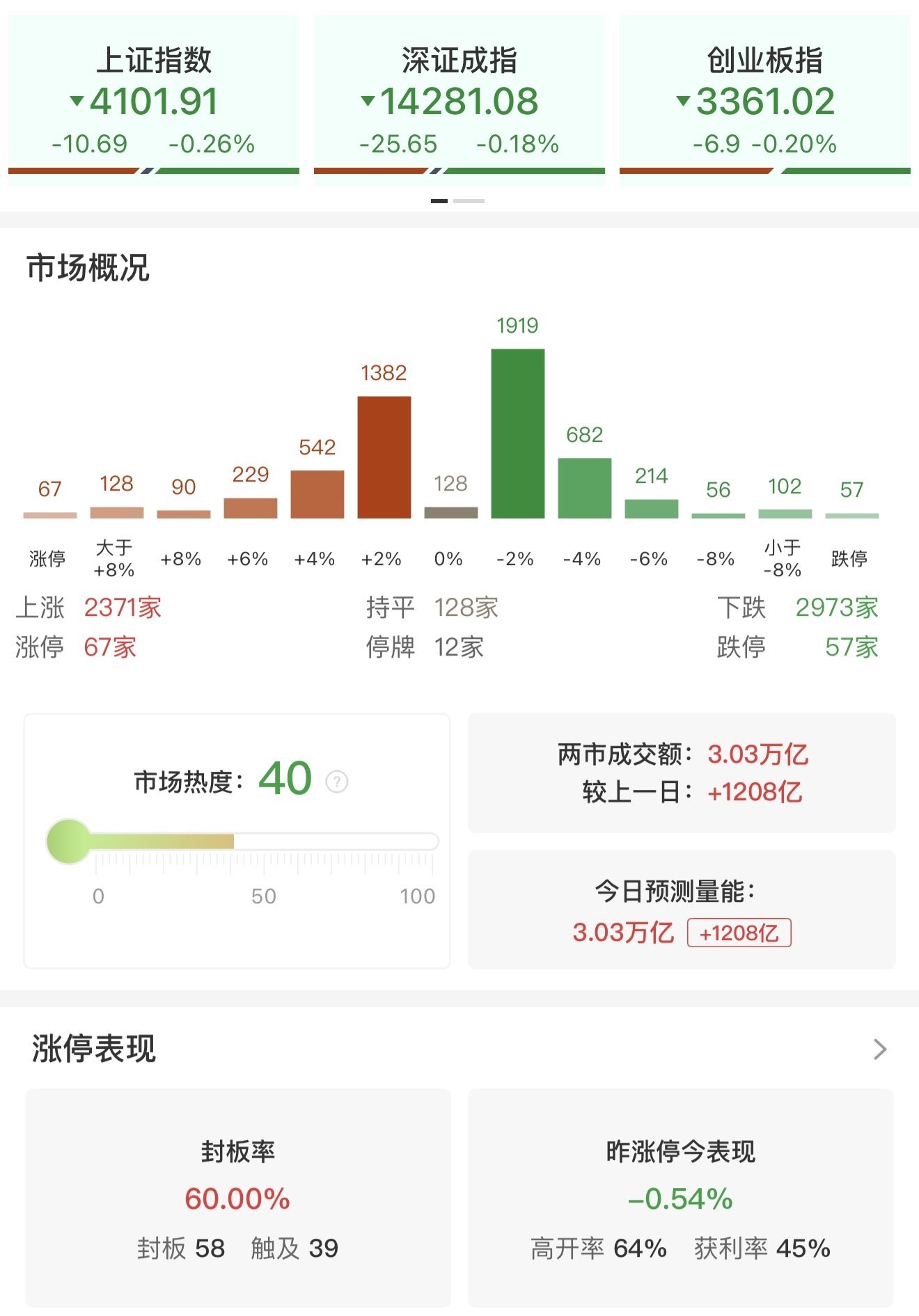
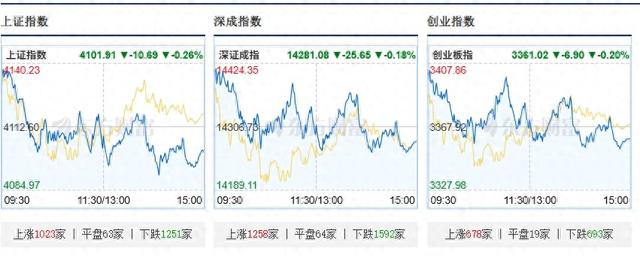
Market Performance - The A-share market opened high but closed lower, with the Shanghai Composite Index down by 0.26%, barely holding above the 4100-point mark [1] - The Shenzhen Component Index fell by 0.18%, closing at 14281.08 points, while the ChiNext Index decreased by 0.2%, ending at 3361.02 points [1] Sector Performance - Approximately 3000 stocks in the Shanghai and Shenzhen markets were in the red, with total trading volume reaching 3.06 trillion [3] - The semiconductor, robotics, electric grid equipment, and computing hardware sectors saw significant gains, with stocks like Tianyue Advanced and Tongfu Microelectronics hitting the daily limit [3] - Robotics concept stocks also performed well, with companies such as Wuzhou New Spring and Founder Electric reaching their daily limit [3] - The electric grid equipment sector surged, with stocks like Siyuan Electric and Jicheng Electronics also hitting the daily limit [3] - Conversely, sectors such as AI applications, oil and gas, pharmaceuticals, and digital currencies experienced declines, with AI application stocks facing a wave of limit-downs, including Xinhua Du and Tianxia Xiu [3]
A股收评 | 牛市节奏生变!多ETF巨量下跌
智通财经网· 2026-01-16 07:22
从个股看,两市上涨2371家,下跌2973家,128家涨幅持平。两市共67股涨停,共62股跌停。 截至收盘,沪指跌0.26%报4101.91点,成交13380亿元;深成指跌0.18%报14281.08点,成交16711亿 元。创业板指下跌0.20%,报3361.02点。 资金动向 今日主力资金重点抢筹半导体、消费电子、汽车零部件等板块,主力净流入居前的个股包括工业富联、 长电科技、三花智控等。 要闻回顾 今日市场宽幅震荡,截至收盘三大指数集体下跌。AI应用持续调整,商业航天获资金回流,半导体、 电力设备等板块全天强势。市场全天成交约3万亿,较上个交易日放量超千亿,两市下跌个股近3000 只。 值得关注的是,今日午后宽基ETF持续放量,其中沪深华夏沪深300ETF(510330)午后分时现放量下挫, 成交超220亿,创历史成交天量,嘉实沪深300ETF(159919)成交近100亿,富国中证1000ETF(159629)成 交额环比昨日增超10倍。 据券商中国,今天市场走弱可能系市场预期改变。第一,12月的M1增速回落,A股有"M1定买卖的传统 策略",市场担忧流动性传导仍不畅。第二,在昨天结构性"降息"之后, ...
半导体板块,逆势走强
财联社· 2026-01-16 07:15
Market Overview - The A-share market opened high but closed lower, with all three major indices declining. The Shanghai and Shenzhen markets had a total trading volume of 3.03 trillion, an increase of 120.8 billion compared to the previous trading day. Over 2900 stocks in the market fell [1][6]. Sector Performance - The semiconductor industry chain showed strong performance, with Changdian Technology hitting the daily limit and reaching a 5-year high. Other stocks like Meike Technology, Kangqiang Electronics, and Shenghui Integration also hit the daily limit. The storage chip concept continued to rise in the afternoon, with Bawei Storage and Jiangbolong reaching historical highs. The humanoid robot concept also saw gains, with stocks like Wuzhou Xinchun and Fangzheng Electric hitting the daily limit. The electric grid equipment sector was active, with Siyuan Electric and Guangdian Electric also hitting the daily limit [1]. Declining Sectors - The oil and gas and AI application sectors experienced significant declines, with the AI application sector facing a wave of limit-downs, including stocks like Xinhua Du, Tianxia Xiu, and Visual China [2]. Index Performance - By the close, the Shanghai Composite Index fell by 0.26%, the Shenzhen Component Index decreased by 0.18%, and the ChiNext Index dropped by 0.2% [3][4].




收评:沪指跌0.26%险守4100点,半导体产业链逆势走强
Feng Huang Wang Cai Jing· 2026-01-16 07:11
Market Overview - The market opened high but closed lower, with all three major indices experiencing declines [1] - The total trading volume in the Shanghai and Shenzhen markets reached 3.03 trillion yuan, an increase of 120.8 billion yuan compared to the previous trading day [1] - Over 2900 stocks in the market fell [1] Sector Performance - The semiconductor industry chain showed strong performance, with Longji Technology hitting the daily limit and reaching a 5-year high, along with other stocks like Meike Technology and Kangqiang Electronics also hitting the daily limit [1] - The storage chip concept saw continued gains in the afternoon, with stocks like Baiwei Storage and Jiangbolong reaching historical highs [1] - The humanoid robot concept rose, with stocks such as Wuzhou New Spring and Founder Electric hitting the daily limit [1] - The electric grid equipment sector was active, with stocks like Siyuan Electric and Guangdian Electric also hitting the daily limit [1] Declining Sectors - The oil and gas sector, along with AI applications, experienced significant declines, with the AI application sector facing a wave of limit-downs [1] - Stocks such as Xinhua Du, Tianxiao, and Visual China all hit the daily limit down [1] Index Performance - The Shanghai Composite Index fell by 0.26%, the Shenzhen Component Index decreased by 0.18%, and the ChiNext Index dropped by 0.2% [1]