
Smartphones

Search documents
2025年8月国内折叠屏智能手机UTG前盖使用量达1.1万㎡,同比增长51.2%
CINNO Research· 2025-09-29 08:33
Core Insights - The article highlights that the usage of UTG (Ultra-Thin Glass) front covers for foldable smartphones in China reached 11,000 square meters in August 2025, representing a year-on-year growth of 51.2% [2]. Group 1: Market Trends - The article provides an overview of the penetration rate changes for various front cover materials in the Chinese smartphone market from June 2024 to August 2025 [3]. - It details the usage trends of UTG and CPI (Cover Polyimide) front covers in foldable smartphones during the same period [3]. Group 2: Brand Analysis - The report analyzes the brand share of UTG front cover usage in foldable smartphones in China from June 2024 to August 2025 [3]. - It also examines the brand share of CPI front cover usage in foldable smartphones for the same timeframe [3]. Group 3: Specific Brand Performance - The article breaks down the sales and market share of front cover specifications for major smartphone brands in China, including Apple, Huawei, Honor, OPPO, Vivo, and Xiaomi, from June 2024 to August 2025 [3].

全球服务器 -推出 2027 年预期;随着 ASIC 渗透率上升,上调基于基板的 AI 服务器预期-Global Server_ 2027E estimates introduced; Raising baseboard-based AI servers with rising ASIC penetration
2025-09-28 14:57
Summary of Global Server Market and AI Server Insights Industry Overview - The report focuses on the global server market, particularly the AI server segment, with projections extending to 2027E. The analysis includes various types of servers such as ASIC AI servers, AI training servers, AI inferencing servers, general servers, and HPC servers [1][14]. Key Insights Market Projections - The global server market is projected to grow significantly, with total revenues expected to reach **US$359 billion**, **US$474 billion**, and **US$563 billion** in 2025E, 2026E, and 2027E respectively, reflecting year-over-year growth rates of **42%**, **32%**, and **19%** [14][30]. - AI server shipments are expected to increase, with **10 million**, **14 million**, and **17 million** AI chips required in 2025E, 2026E, and 2027E, respectively. The contribution of ASIC shipments is projected to rise from **38%** in 2025E to **45%** in 2027E [1][8]. AI Server Segment Growth - High power AI servers (powered by **500 TFlops+ ASIC and GPUs**) are forecasted to see a **21%** and **39%** increase in volume estimates for 2025E and 2026E, respectively. Inferencing AI servers are expected to grow by **3%** and **5%** in the same years [3][11]. - Full rack AI servers are estimated to ship **19,000** units in 2025E, increasing to **67,000** units by 2027E, with a total addressable market (TAM) of **US$54 billion**, **US$157 billion**, and **US$232 billion** for 2025E, 2026E, and 2027E respectively [11][30]. Cloud Service Provider (CSP) Capital Expenditure - Leading US CSPs are projected to increase their capital expenditure (capex) by **67%**, **23%**, and **15%** year-over-year from 2025E to 2027E. In contrast, leading Chinese CSPs are expected to grow their capex by **55%**, **8%**, and **6%** in the same period [8][24][27]. AI Chip Demand - The demand for AI chips is expected to reach **9,990 thousand**, **13,631 thousand**, and **16,551 thousand** units for training and inferencing combined in 2025E, 2026E, and 2027E, respectively. The mix of GPU and ASIC chips is projected to shift, with GPUs making up **62%** in 2025E and decreasing to **55%** by 2027E, while ASICs will increase from **38%** to **45%** [3][20]. Additional Insights Revenue Breakdown - The revenue breakdown for AI servers indicates that training servers will generate **US$189.6 billion**, **US$294.6 billion**, and **US$370.6 billion** in 2025E, 2026E, and 2027E, respectively. High power AI servers are expected to generate **US$135.9 billion**, **US$137.9 billion**, and **US$139 billion** in the same years [30]. - General servers are projected to see revenues of **US$133.7 billion**, **US$140.2 billion**, and **US$146.5 billion** from 2025E to 2027E, indicating a recovery in the general server market [30]. Market Dynamics - The growth in AI applications and increased cloud capex are driving the demand for AI servers. OpenAI's user base has quadrupled to **700 million** weekly active users, indicating a broader adoption of AI technologies [3][11]. Competitive Landscape - The report highlights key players in the AI server market, including ODMs like Wiwynn, Wistron, and Hon Hai, as well as companies involved in silicon photonics and liquid cooling technologies [2]. This comprehensive analysis provides a detailed outlook on the global server market, emphasizing the significant growth potential in the AI server segment driven by technological advancements and increased cloud investments.
小米集团-7 Pro 系列销售占比创纪录,高端化执行稳健;买入
2025-09-28 14:57
Summary of Xiaomi Corp. (1810.HK) Conference Call Company Overview - **Company**: Xiaomi Corp. (1810.HK) - **Industry**: Smartphone and Consumer Electronics Key Points and Arguments Sales Performance - The Xiaomi 17 series launched on September 27, 2025, with the Xiaomi 17 Pro Max accounting for over 50% of sales volume on the first day [1][2] - The Xiaomi 17 series broke the first-day sales volume and GMV record for domestic smartphone models in 2025 YTD within 5 minutes of launch [1] - The 17 Pro series is estimated to have accounted for over 80% of the Xiaomi 17 series sales volume on Day 1, with 33% for Pro and 54% for Pro Max [3][9] Pricing Strategy - The starting price for the 17 Pro is Rmb4,999, which is Rmb200-500 lower than previous versions, while the 17 Pro Max is 50% cheaper than the iPhone 17 Pro Max in China [1] - This competitive pricing strategy is expected to attract consumers from the base model and expand the consumer base [1] Market Dynamics - Xiaomi's share price experienced high volatility, dropping 8% on September 26 and rising 4% on September 25, attributed to high investor expectations and market concerns regarding sales volume of the base model [2] - The favorable sales mix of the 17 Pro/Pro Max is expected to reverse concerns about soft sales volume of the base model [2] Premiumization Strategy - The favorable sales mix could drive a mid-teen percentage increase in average selling price (ASP) compared to the previous generation [3] - Xiaomi's premiumization execution is supported by enhanced R&D investments, expanding retail channels, and an integrated "Human x Car x Home" ecosystem [3] Competitive Landscape - The iPhone 17 base model recorded the highest sales volume increase in its first week, indicating strong competition in the smartphone market [3][11] Long-term Outlook - Xiaomi is positioned as the world's 3 smartphone brand with a projected 13.8% of 2024 shipments and is in the early stages of a multi-year ecosystem expansion [13] - The company is expected to achieve revenue and EPS CAGRs of 26% and 37% respectively from 2024 to 2027 [13] - Xiaomi's robust balance sheet and capabilities in software-hardware integration are expected to enhance its competitiveness in the EV market [13] Price Target and Risks - The 12-month target price for Xiaomi is set at HK$66, representing an upside of 20.8% from the current price of HK$54.65 [16] - Key downside risks include intense competition, higher GPM pressure, execution risks in brand premiumization, geopolitical risks, and softer macroeconomic conditions [14] Additional Insights - The company is leveraging its interconnected consumer terminals to build one of the largest consumer physical intelligence ecosystems globally [13] - The sales volume mix may change based on pricing strategy and competitive landscape [3] This summary encapsulates the critical insights from the conference call regarding Xiaomi Corp.'s recent performance, market dynamics, and strategic outlook.

小米支持PPS,会成为厂商走出私有拥抱开放的开始吗?
Hu Xiu· 2025-09-28 11:35
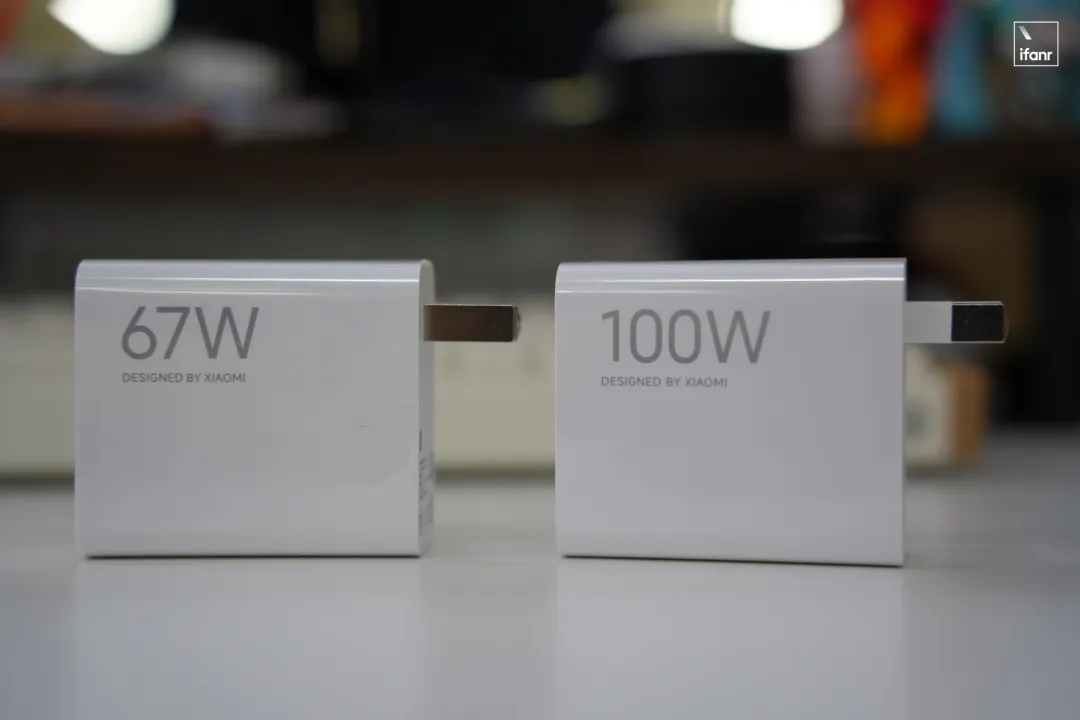
本文来自微信公众号:爱范儿 (ID:ifanr),作者:马扶摇,题图来自:AI生成 OPPO的超级闪充,vivo的超快闪充、华为的超级快充,以及小米的澎湃有线秒充等等,一片勃勃生机、万物竞发的景象。 然而快充协议五花八门、互不兼容的后果,最终其实还是由消费者承担的。 比如有些机型支持高功率快充、附赠的充电头却是低功率的款式,想要满血充电只有一句话——得加钱。又或者购买第三方品牌的多协议充电头,就得忍 受无法激活厂商私有协议带来的充电掉速、频繁断连问题。 除开改名对标,以及背后高原副屏,今年的小米其实还做了一件我们认为颇有格局的事情: 小米17系列全系兼容100W通用PPS协议,小米充电器、非小米充电器,都能疾速充电,通用性大幅提升。 长久以来,包括小米在内的主流国产手机厂商,虽然在电池技术和充电技术上遥遥领先于海外同行,但是在开放程度和兼容性上却始终不情不愿,并最终 造就了国内手机厂商各自为战的结果。 小米17系列的发布,填补了九月末"后苹果发布会时期"到国庆节之后国产新机潮之间的空虚。 这也是我们认为小米今年宣布兼容PPS协议是很有意义的原因: 长久以来,公有的充电协议始终都存在,但大多数(私有协议的)厂商 ...

AI普惠成手机“第二赛道”,荣耀公布无障碍领域AI方案
Nan Fang Du Shi Bao· 2025-09-28 07:51
Core Insights - The smartphone industry is witnessing a shift towards AI-driven "technology inclusivity" as a new competitive avenue for leading manufacturers [1] - Honor's recent announcement of AI applications in accessibility aims to enhance user experience and ESG values, marking a new phase in industry competition [1] Group 1: AI Accessibility Features - Honor's AI subtitle and call features are integrated at the Magic OS system level, allowing offline usage, which ensures stability and privacy for users [2] - As of the end of 2024, Honor's AI subtitle feature is projected to have nearly 1.2 million monthly active users, while the call subtitle feature is expected to reach around 190,000 monthly active users [2] Group 2: User Engagement Challenges - The main challenge for accessibility features lies not in technology development but in user discovery and engagement [2] - Many powerful accessibility features are often buried in complex system menus, leading to a lack of user awareness [2] Group 3: Retail Strategy - Honor is transforming retail stores into touchpoints for accessibility experiences, allowing hearing-impaired users to act as product advisors, which is more effective than written instructions [3] - The strategy aims to lower the barriers for special groups to learn and use new technologies through face-to-face interactions [3]
荣耀高通联手破局 端侧AI攻克算力与能效瓶颈
Zhong Guo Jing Ying Bao· 2025-09-27 01:08
Core Insights - Qualcomm's fifth-generation Snapdragon 8 Elite Gen5 processor was officially unveiled at the 2025 Snapdragon Summit, expected to power flagship models from major brands like Honor, Xiaomi, iQOO, and OnePlus in the second half of 2025 [1] - The smartphone market is entering a phase of stock competition, leading to a "deep integration" battle among processor chips, with manufacturers increasingly collaborating with Qualcomm for customized solutions [1][2] - Honor's collaboration with Qualcomm has achieved significant breakthroughs in edge AI, enhancing computational efficiency and energy consumption for large-scale AI models on devices [2][3] Industry Trends - The edge AI market in China is projected to exceed 250 billion yuan by 2025, growing nearly 30% from 193.9 billion yuan in 2023, with a potential to reach 1.2 trillion yuan by 2030 [3] - Smartphones are identified as the most viable platform for edge AI due to their widespread use, hardware capabilities, and mature ecosystems [3] Technological Innovations - Honor and Qualcomm's joint efforts have led to breakthroughs in edge AI model deployment, including a 30% reduction in storage space and a 15% increase in inference speed through low-bit quantization technology [4] - The new vector retrieval technology enhances retrieval performance by up to 400% by encoding data into dense vectors for efficient semantic indexing [4] Product Developments - Honor has introduced an AI-driven color tracking feature, allowing users to retrieve and process images with simple voice commands, showcasing the practical applications of their edge AI advancements [5] - Upcoming products, including the Honor Magic8 series and Honor MagicPad3 Pro, will be the first to feature the Snapdragon 8 Elite Gen5 platform, positioning them as advanced AI-native devices [7] Strategic Collaborations - Honor and Qualcomm have established a joint laboratory for chip-level innovations, achieving advancements in chip cache management and AI energy efficiency over the past three years [6] - The newly launched super fusion architecture integrates Honor's Turbo X performance engines with Qualcomm's Oryon architecture, optimizing resource management for enhanced performance [6] Competitive Landscape - The competition among smartphone manufacturers has shifted from hardware specifications to deep optimization of underlying technologies, with a focus on understanding user needs and creating differentiated application scenarios [8]

Tesla Pi phone: is Elon Musk’s rumored smartphone actually real?
The Economic Times· 2025-09-26 18:12
Core Viewpoint - The speculation surrounding a Tesla smartphone, often referred to as the "Tesla Pi phone," is largely unfounded and remains a fan theory without any official confirmation from Tesla or Elon Musk [1][3][8]. Group 1: Tesla's Position on Smartphones - Elon Musk has consistently stated that Tesla would only consider developing a smartphone if Apple or Google restricted Tesla's apps or services [2][8]. - Currently, Tesla's vehicles and energy products are compatible with iOS and Android, negating the need for a dedicated Tesla phone [2][8]. Group 2: Rumors and Speculations - The rumors about the Tesla Pi phone gained traction around 2021 and 2022, fueled by concept images that aligned with Tesla's futuristic branding [3][8]. - Alleged features of the Tesla Pi phone include direct Starlink connectivity, solar charging, Neuralink integration, and MarsCoin mining, but none of these have been confirmed by Tesla [9][10][11]. Group 3: Existing Products and Market Presence - There are rugged Android smartphones branded as Tesla phones available in Europe and Asia, such as the Tesla EXPLR 9, but these are produced by a different company under license and have no affiliation with Tesla, Inc. or Elon Musk [7][11]. - The focus of Tesla and SpaceX remains on electric vehicle production, battery storage, and energy solutions rather than entering the smartphone market [10][11].


一加发布全新一代风驰游戏内核,中国区总裁李杰:手机行业进入165超高帧时代
Xin Lang Ke Ji· 2025-09-26 11:47
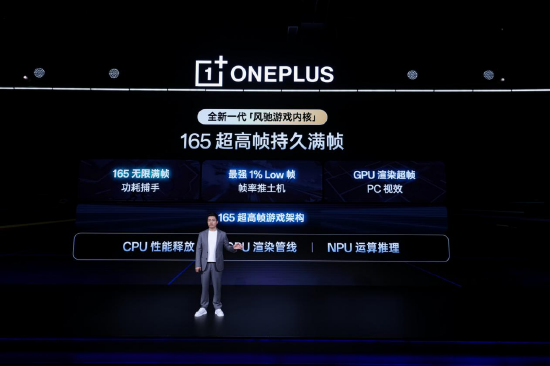
Core Insights - OnePlus is leading the mobile industry into the 165 ultra-high frame era, collaborating with several mobile games to establish a 165 ultra-high frame gaming ecosystem [1][2] - The new generation of OnePlus's Wind Chaser gaming kernel optimizes CPU, GPU, and NPU coordination, achieving a 29.8% efficiency improvement in the chip kernel scheduler [1][2] Group 1 - OnePlus announced the introduction of 165 ultra-high frame gaming experience, which provides 45 more frames per second compared to 120 frames, resulting in a 27% increase in single-frame display speed [2] - The 165 frames per second experience significantly enhances operational response speed and reduces end-to-end latency by 10ms, benefiting players in FPS games [2] - The new Wind Chaser gaming kernel will debut with the OnePlus 15, which is set to launch in October, and will also feature the fifth-generation Snapdragon 8 flagship platform [2] Group 2 - OnePlus is working with game developers to enhance the ultra-high frame gaming ecosystem, with support for various game genres including FPS, MOBA, fighting, racing, music, and strategy [2] - Major games such as "Delta Force," "League of Legends Mobile," "Honor of Kings," and "Peace Elite" will support the 165 frame ultra-high frame mode [2] - The new gaming kernel also delivers a 1% low frame experience, maintaining 119.5 frames in the 120 frame mode of "Honor of Kings" [1]
China's Xiaomi is planning a next-gen phone chip, but won't release one yearly like Apple
CNBC· 2025-09-26 10:18
Core Viewpoint - Xiaomi is set to launch its self-developed smartphone SoC, XRING 01, in late May, aiming to enhance its position in the high-end smartphone market, but it will not follow a yearly release schedule like Apple [1][5]. Group 1: Chip Development Strategy - Xiaomi plans to invest at least 50 billion yuan ($7 billion) over the next decade to develop its own chips, indicating a long-term commitment to semiconductor development [5]. - The company aims to produce 1 million units of the XRING 01 initially, but needs to reach 10 million units per chip release to break even, suggesting a cautious approach to scaling production [7][8]. - Xiaomi's strategy includes learning and planning for future chip generations, acknowledging the need for patience in achieving profitability [5][8]. Group 2: Competitive Landscape - Xiaomi's move to develop its own chips aligns with similar strategies from major competitors like Apple, Samsung, and Huawei, as it seeks to capture a larger share of the premium smartphone market [2]. - The company currently relies on Qualcomm and MediaTek for its smartphone chips but intends to continue this partnership while gradually introducing its own semiconductors [12][13]. Group 3: Technological Integration - The XRING 01 is based on a 3-nanometer manufacturing process, one of the most advanced technologies available, which positions Xiaomi competitively in the semiconductor space [3]. - Developing its own SoC allows Xiaomi to better integrate its hardware with its Android-based operating system, HyperOS, and its AI applications, HyperAI, enhancing user experience [9][11].
坚定技术立业!小米17系列手机等新品在京发布
Zhong Guo Zhi Liang Xin Wen Wang· 2025-09-26 08:08
Group 1 - The core message of the news is that Xiaomi is committed to a high-end strategy and continuous investment in core technology, as demonstrated by the launch of new flagship products and innovations in various fields [1][2] - Xiaomi has introduced the Xiaomi 17 series and Xiaomi Pad 8 series, showcasing innovations in smartphone interaction and personalized experiences, as well as custom services for its automotive offerings [1] - The company has achieved significant milestones, including becoming the first tech company to span across smartphones, automobiles, and home appliances, and has developed its first 3nm flagship processor, positioning itself among the top global tech firms [1][2] Group 2 - Xiaomi's revenue surpassed 200 billion yuan in 2020, marking the beginning of its high-end exploration, with a commitment to invest 100 billion yuan in core technology research over the next five years [2] - The company has maintained a leading market share in the domestic smartphone segment priced between 4,000 to 5,000 yuan and has surpassed Apple in market share in Europe during the second quarter of this year [2] - Xiaomi's founder expressed confidence in the increasing innovation capabilities of Chinese companies, particularly in chip-level and material-level innovations, which are enhancing domestic product competitiveness [2]