电池制造

Search documents
二线电池厂,活在巨头阴影下
首席商业评论· 2026-01-12 04:08
Core Viewpoint - The article discusses the financial and operational challenges faced by second-tier battery manufacturers in the context of a lawsuit involving XWANDA, highlighting the disparity in profitability and market power between leading companies and their competitors [5][13][22]. Group 1: Financial Challenges - XWANDA's subsidiary is facing a lawsuit from Geely's subsidiary, claiming 2.314 billion yuan due to alleged quality issues with battery cells, which could significantly impact XWANDA's financial health and market reputation [5][6]. - Despite XWANDA's annual revenue exceeding 50 billion yuan, its power battery segment has incurred losses exceeding 3.4 billion yuan over the past two years, indicating a reliance on consumer battery profits to sustain its operations [7][9]. - Other second-tier battery manufacturers, such as EVE Energy and Guoxuan High-Tech, are also struggling with profitability, with EVE's net profit declining by 11.7% despite a revenue increase of 32.2% [8][9]. Group 2: Market Dynamics - The current market structure is dominated by two major players, CATL and BYD, which together hold over 65% of the market share, leaving second-tier manufacturers to compete for a shrinking portion of the market [22][25]. - The profitability gap is stark, with CATL earning 0.09-0.12 yuan per watt-hour, while second-tier companies like EVE earn only 0.02 yuan per watt-hour, highlighting the challenges in pricing power and cost control [22][25]. - The article emphasizes that second-tier manufacturers are often forced to lower prices to maintain orders, which further erodes their profit margins and limits their ability to invest in research and development [19][20]. Group 3: Customer Relationships - Second-tier manufacturers often rely heavily on a few major clients, which can lead to a loss of bargaining power and increased vulnerability to market fluctuations [15][20]. - The strategy of binding to large clients can backfire, as seen with XWANDA's dependency on Geely, which has resulted in significant risks when quality issues arise [15][20]. - The trend of automakers increasingly developing their own battery technologies poses a threat to second-tier manufacturers, as they may lose market share and pricing power [20][29]. Group 4: Future Outlook - The article suggests that the future of the battery industry may only accommodate a few key players, with second-tier manufacturers needing to establish unique advantages in specific technologies or markets to survive [29]. - Potential strategies for second-tier manufacturers include focusing on niche technologies, expanding into international markets, or forming deeper partnerships with larger clients, though each comes with its own set of risks [28][29].


欣旺达电池问题事件继续发酵,沃尔沃EX30因电池问题多国召回
Ju Chao Zi Xun· 2026-01-12 03:33
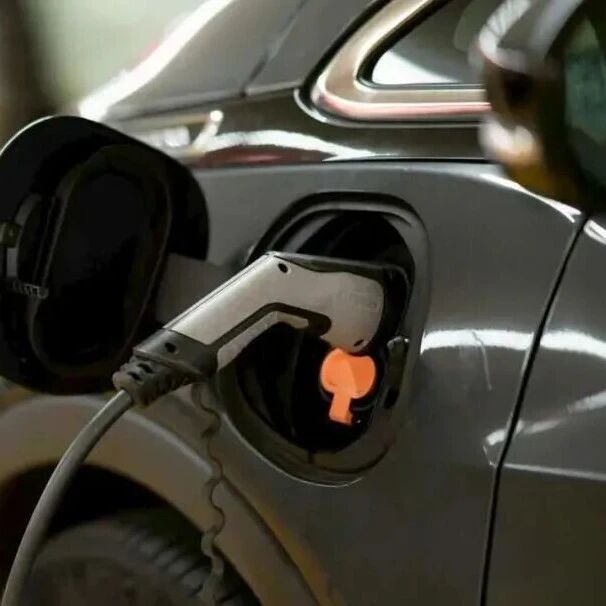
Group 1 - The core issue involves the recall of Volvo EX30 models in the US and Canada due to fire risks associated with batteries supplied by Sunwoda, affecting 10,440 vehicles in the UK [2] - Volvo's internal quality tracking system identified potential defects in the 69 kWh battery packs used in single-motor long-range and dual-motor high-performance versions of the EX30, covering models from 2024 to 2026 [2] - Volvo has advised UK EX30 owners to limit charging to 70% to mitigate the risk of thermal runaway, which has led to dissatisfaction among vehicle owners due to reduced practical range [2] Group 2 - Sunwoda is currently involved in a legal dispute with Geely-affiliated companies, with a lawsuit claiming quality issues in battery cells delivered between June 2021 and December 2023, seeking compensation of 2.314 billion yuan [3] - Financial data indicates that Sunwoda's revenue for 2024 is projected at 56.021 billion yuan, with a net profit of 1.605 billion yuan, making the lawsuit amount significant at 4.1% of its revenue and exceeding its annual profit [3] - Geely's subsidiary, Weirui Power, which initiated the lawsuit, has been a partner with Sunwoda since 2021, focusing on battery cell development for Geely's PMA platform, which is used across multiple brands [4] Group 3 - The lawsuit against Sunwoda has been accepted by the Ningbo Intermediate People's Court, and the company is currently unable to assess the impact of the lawsuit on its current and future profits [5] - Sunwoda is actively seeking a reasonable resolution to the lawsuit and is enhancing communication with relevant parties to expedite a solution [5]
宁德时代成交额达100亿元,现跌4.07%
Xin Lang Cai Jing· 2026-01-12 02:58
每经AI快讯,1月12日,宁德时代成交额达100亿元,现跌4.07%。 每经AI快讯,1月12日,宁德时代成交额达100亿元,现跌4.07%。 ...

宁德时代跌超4% 电池出口退税新政出台 碳酸锂价格继续飙涨
Zhi Tong Cai Jing· 2026-01-12 02:54
Core Viewpoint - The recent surge in lithium carbonate prices and changes in export tax policies for battery products are impacting the battery industry, particularly companies with established overseas production capacity [1] Group 1: Lithium Carbonate Price Surge - Lithium carbonate prices have rapidly increased, breaking through multiple thresholds, reaching 156,060 yuan/ton, a rise of over 150% from the low in June of the previous year [1] - The main futures contract for lithium carbonate has hit the upper limit, reflecting strong market demand [1] Group 2: Export Tax Policy Changes - The Ministry of Finance and the State Taxation Administration announced a reduction in the export tax rebate rate for battery products from 9% to 6% starting April 1, 2026, and the complete cancellation of the rebate from January 1, 2027 [1] - This adjustment is viewed as a staggered reduction, providing a buffer period for the lithium battery industry, with expectations of increased export activity before the changes take effect [1] Group 3: Market Outlook - Huatai Securities anticipates that the reduction in export tax rates will likely elevate overseas prices for corresponding products, benefiting companies with existing overseas production capacity [1] - The firm is optimistic about leading battery manufacturers that have established overseas operations, expecting them to enhance profitability due to the anticipated price increases [1]
宁德时代放弃AutoFlight融资的优先认购权
Cai Jing Wang· 2026-01-12 02:47
公司决定放弃本次融资的优先认购权,该行为构成关联交易。此次交易不会导致公司合并报表范围变 更,不会对公司正常生产经营和财务状况产生不利影响。 1月9日,宁德时代(300750)公告称,AutoFlight为公司全资子公司香港时代的参股公司,香港时代目 前持有其38.23%的股权。由于AutoFlight业务发展需要,拟新增发行3485.84万股股份,其中香港瑞华投 资有限公司出资1亿美元认购1742.92万股。 ...
彭博社:全球经济秩序重构背景下,美中资本流向出现逆转
彭博· 2026-01-12 01:41
Investment Rating - The report indicates a significant shift in global investment dynamics, with a focus on the electric vehicle and battery manufacturing sectors, particularly highlighting the contrasting fates of Ford and CATL in Germany [3][4][36]. Core Insights - The report emphasizes the reversal of capital flows between the US and China, with China increasingly investing in new manufacturing plants and data centers abroad, while the US seeks to attract foreign investment back to its shores [4][8][9]. - It highlights that by the first half of 2025, China's outbound investment is projected to exceed that of the US, accounting for 10% of global totals, while the US attracts a significant share of global inbound investment [8][9]. - The report notes that the trend of Chinese companies investing in new projects abroad is accelerating, with a record high expected in 2025, particularly in the electric vehicle sector [9][10]. Summary by Sections - **US-China Investment Dynamics**: The report discusses how the US is reshaping its economic relationships globally, pushing for foreign companies to establish manufacturing within the US, while China is filling the void by expanding its investments abroad, particularly in Europe [4][8][18]. - **Sector-Specific Trends**: It details the significant investments by Chinese firms in electric vehicle manufacturing and data centers, with notable projects like the $38 billion investment by ByteDance in Brazil and a $5.9 billion chemical plant in Indonesia [10][31]. - **Regional Investment Patterns**: The report outlines how countries in Southeast Asia and Africa are increasingly reliant on Chinese investments, with China focusing on building infrastructure and manufacturing capabilities in these regions [35][36]. - **European Market Dynamics**: The report highlights the competitive landscape in Europe, particularly in the electric vehicle sector, where companies like Ford are adapting their strategies in response to the influx of Chinese manufacturers [36][39][42].
鹏辉能源1月9日获融资买入1.31亿元,融资余额7.03亿元
Xin Lang Zheng Quan· 2026-01-12 01:25
Core Viewpoint - Penghui Energy has shown a mixed performance in terms of financing activities and stockholder dynamics, with significant growth in revenue and net profit year-on-year, indicating a strong operational performance despite fluctuations in stock trading activities [1][2]. Group 1: Financing Activities - On January 9, Penghui Energy's stock price increased by 0.38%, with a trading volume of 1.191 billion yuan [1]. - The financing buy-in amount for Penghui Energy on the same day was 131 million yuan, while the financing repayment was 132 million yuan, resulting in a net financing outflow of 413,800 yuan [1]. - As of January 9, the total balance of margin trading for Penghui Energy was 704 million yuan, with the financing balance accounting for 2.61% of the circulating market value, indicating a high level compared to the past year [1]. Group 2: Stockholder Dynamics - As of December 19, the number of shareholders for Penghui Energy was 52,200, a decrease of 3.32% from the previous period, while the average number of circulating shares per person increased by 3.43% to 7,746 shares [2]. - For the period from January to September 2025, Penghui Energy reported a revenue of 7.581 billion yuan, representing a year-on-year growth of 34.23%, and a net profit attributable to shareholders of 115 million yuan, which is an increase of 89.33% year-on-year [2]. - Since its A-share listing, Penghui Energy has distributed a total of 252 million yuan in dividends, with 99.247 million yuan distributed over the past three years [2].

六合区:重大项目投资完成率全市第一
Xin Hua Ri Bao· 2026-01-11 20:42
Economic Growth Projections - The district expects a GDP growth of around 6% by 2025, with public budget revenue increasing by 2.3% and industrial output value growing by approximately 10.2% [1] - The district's GDP growth rate has been among the top in the city for seven consecutive quarters, with a growth of 6.1% in the first three quarters of 2025, ranking first in the city [1] Investment and Project Development - The district has developed 11 investment attraction maps, including three characteristic industrial chains and two industrial clusters [1] - Approximately 150 projects have been signed and implemented, with total investments including 4 billion yuan for a battery manufacturing base and 2 billion yuan for a power project [1] - Major projects in the province, city, and district are expected to complete 120%, 155.6%, and 112.3% of their annual investment plans, respectively, with the city's major project investment completion rate being the highest in the city [1] Consumer and Tourism Development - The district aims to accelerate the cultivation of emerging economies, including the first-release economy and holiday economy, with plans to add 30 new regional flagship stores and 100 consumer scenarios [2] - The district will host around 100 themed events, including a special session of the Nanjing International Consumption Festival [2] - The district anticipates a 15% increase in annual tourist reception and total tourism revenue through the integration of agriculture, culture, tourism, and commerce [2] Administrative Efficiency and Financial Support - The district has conducted an action to identify and resolve 479 issues, with over 100,000 cases processed under the "efficiently complete one task" initiative [2] - A total of 2.85 billion yuan in combined tax and fee support has been provided, along with 350 million yuan in financing through intellectual property pledges [2]
嚷嚷了五年,钠电池这次要来真的了
远川研究所· 2026-01-11 13:07
Core Viewpoint - Sodium-ion batteries are gaining renewed attention in the industry, particularly due to their cost advantages and abundant raw materials, positioning them as a potential alternative to lithium-ion batteries in various applications [5][10][18]. Group 1: Market Context and Development - CATL's commitment to large-scale application of sodium-ion batteries by 2026 across multiple sectors, including passenger vehicles, commercial vehicles, battery swapping, and energy storage, signals a significant shift in the industry [8]. - The sodium-ion battery market has seen substantial investment, with over 100 billion yuan allocated to various projects, aiming for a production capacity nearing 500 GWh [11][14]. - The rapid fluctuation in lithium carbonate prices has historically influenced the interest in sodium-ion batteries, with a notable price drop in 2023 leading to decreased urgency in sodium battery development [11][14]. Group 2: Technical Advantages - Sodium-ion batteries boast a significantly lower raw material cost due to the abundance of sodium, which is approximately 400 times more plentiful than lithium in the Earth's crust, reducing supply chain risks [10]. - They exhibit excellent low-temperature performance, maintaining 90% capacity at -40°C, which addresses winter range issues for electric vehicles [14]. - The cost sensitivity of sodium-ion batteries is lower compared to lithium iron phosphate batteries, with a 10% increase in key mineral prices resulting in only a 0.8% cost increase for sodium batteries [10]. Group 3: Technical Challenges - Despite their advantages, sodium-ion batteries face a critical challenge with lower energy density, which is essential for vehicle range. The current energy density of sodium cells is around 160 Wh/kg, lagging behind lithium-ion alternatives [15][18]. - The energy density issue must be resolved for sodium batteries to achieve widespread adoption, especially as lithium prices stabilize [15][18]. - CATL's second-generation sodium battery has improved to 175 Wh/kg, approaching the performance of lithium iron phosphate batteries, but still requires further advancements to meet market demands [22]. Group 4: Future Outlook - CATL's strategic positioning suggests that sodium-ion batteries could potentially replace 20%-30% of lithium iron phosphate batteries in small vehicles, with projections indicating this could rise to 50% in the future [22]. - The ongoing development and investment in sodium-ion technology indicate a strong potential for market disruption, particularly as the technology matures and production scales up [22].

动力锂电:钠电团体标准正式发布,产业化加速推进
GUOTAI HAITONG SECURITIES· 2026-01-11 12:59
Investment Rating - The report assigns an "Accumulate" rating for the sodium-ion battery industry, indicating a positive outlook for investment opportunities in this sector [4]. Core Insights - The formal implementation of the "Technical Requirements for Sodium-ion Batteries for Energy Storage" group standard marks a new phase in the standardization of sodium-ion batteries in China, suggesting that the sodium battery industry chain has completed its initial setup and is expected to enter a period of scale expansion [2]. - Sodium batteries are anticipated to become an effective complement to lithium batteries, with cost advantages becoming more apparent as lithium carbonate prices rise. The comprehensive material costs of sodium batteries are projected to be 30%-40% lower than those of lithium batteries after industrialization [4]. - The sodium battery industry is expected to experience significant scale expansion, with companies like CATL launching new sodium-ion battery brands that can compete with lithium iron phosphate batteries in terms of energy density and performance [4]. Summary by Sections Industry Overview - The sodium-ion battery industry is entering a new stage of standardization with the approval of the group standard, which will take effect on February 1, 2026. This standard covers various aspects such as terminology, testing methods, and storage [4]. Investment Recommendations - The report suggests that companies involved in the sodium-ion battery supply chain are likely to benefit first from the industry's growth. Recommended stocks include CATL, Rongbai Technology, and Zhongwei Co., with related stocks such as Dingsheng New Materials and Zhenhua New Materials also highlighted [4]. Financial Projections - Financial forecasts for key companies in the sodium battery sector indicate positive earnings growth, with CATL expected to have an EPS of 19.29 yuan per share in 2026, and Rongbai Technology projected to reach an EPS of 1.02 yuan per share in the same year [5].