
养老服务

Search documents
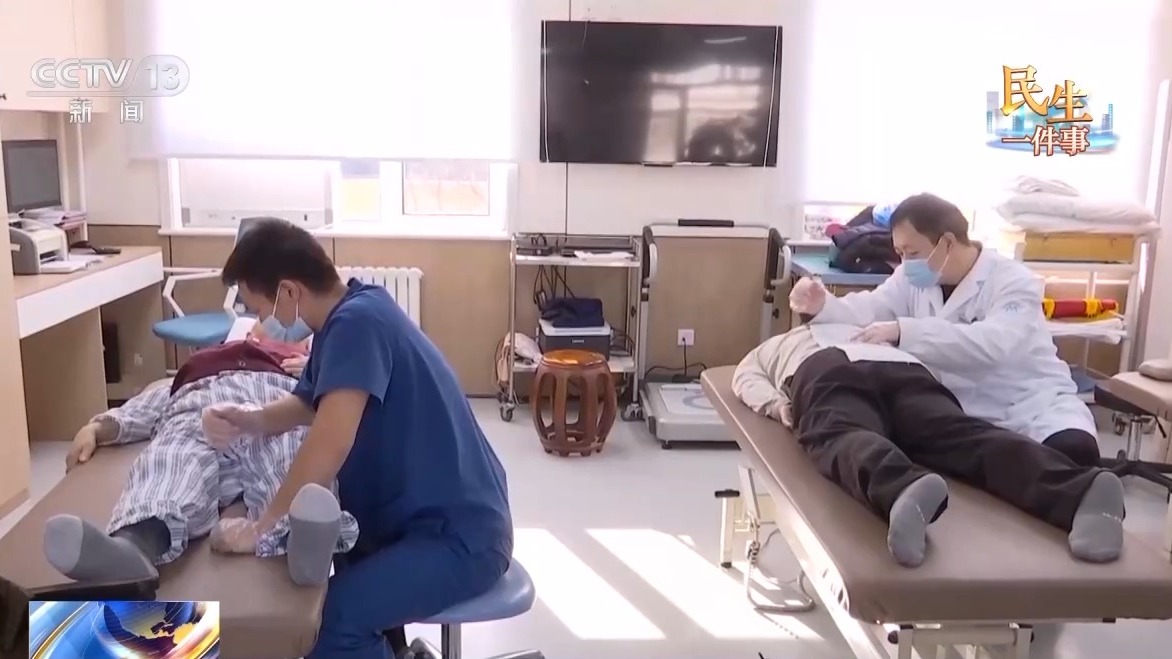
视频丨医保+机构+社区联动 “15分钟医养服务圈”让养老更安心
Yang Shi Xin Wen Ke Hu Duan· 2026-01-06 14:14
Core Insights - The aging population in China has reached 310 million people aged 60 and above, accounting for 22.0% of the total population, with 220 million aged 65 and above, representing 15.6% [1][3] - The government has launched the "Action Plan for Enhancing Elderly Care Service Capacity" to address the needs of elderly individuals, particularly those who are disabled or semi-disabled [3][5] Group 1: Demographics and Aging Population - China has entered a moderately aging society, with a significant number of elderly individuals requiring care, particularly those aged 80 and above [1][3] - Many younger caregivers, like Ms. Zhang from Beijing, find themselves overwhelmed with the responsibility of caring for elderly parents, leaving little time for personal interests [1][3] Group 2: Government Initiatives - The "Action Plan" mandates that qualified hospitals should establish geriatric departments and encourages the establishment of large-scale, chain nursing homes [3][5] - The plan aims to extend elderly care services into communities and homes, creating a comprehensive care system that includes acute care, rehabilitation, and palliative care [5] Group 3: Local Implementation - Cities like Beijing are developing a "15-minute elderly care service circle," allowing seniors to access care services within a short distance from their homes [5] - In Guangzhou, a comprehensive assessment method for elderly care needs has been implemented, enabling community nursing stations to provide essential care and access to long-term care insurance [7] - Shandong's Zibo city has integrated medical and elderly care resources to offer various services, including centralized care for vulnerable elderly individuals [7]

优化实施“两新”政策,撬动更多市场需求
2 1 Shi Ji Jing Ji Bao Dao· 2026-01-05 22:42
Core Insights - The Ministry of Commerce reports that by 2025, the sales volume of products related to the trade-in program will exceed 2.6 trillion yuan, benefiting over 360 million people [1] - The new "national subsidy" policy, effective from the New Year holiday in 2026, aims to stimulate the consumption market, particularly in smart electronic products, with sales of smart health devices and wearable devices expected to grow by over 20% and 15% respectively [1] Group 1: Equipment Update Policy - The 2026 policy expands and optimizes support for equipment updates, including traditional industries and new areas such as installing elevators in old residential communities and enhancing public safety infrastructure [2] - The policy shifts focus from solely improving manufacturing levels to balancing production and living standards, addressing public safety and consumer experience [2] - Specific adjustments in subsidy mechanisms aim to enhance precision and effectiveness, such as prioritizing the replacement of old operational trucks with new energy electric trucks [2][3] Group 2: Consumer Goods Trade-in Policy - The 2026 policy for consumer goods trade-in has undergone structural optimization, focusing on high-impact categories like automobiles and core home appliances [3][4] - The subsidy mechanism for automobiles has shifted from fixed amounts to a proportional subsidy linked to the new car sales price, aiming for more efficient use of fiscal resources [4] - New emerging consumer fields, such as smart glasses and age-friendly home products, have been included in the support scope, indicating a forward-looking approach to policy adjustments [4] Group 3: Service Consumption Shift - The consumption structure in China is transitioning from goods-led to service-led consumption, with service consumption becoming a key focus for boosting domestic demand [5] - The policy is expected to increase support in areas such as culture, tourism, sports, health, elderly care, and housekeeping services [5] - Further institutional innovation and quality enhancement are needed to unlock the potential of service consumption and promote economic structure optimization [5]
走好长护险进阶之路
Jing Ji Ri Bao· 2026-01-05 22:12
Core Insights - The long-term care insurance (LTCI) system in China, referred to as the "sixth insurance," aims to cover all citizens during the "14th Five-Year Plan" period, having already been piloted in 49 cities and benefiting approximately 330 million people [1][2] Group 1: Development and Impact - LTCI has been piloted for nearly 10 years, covering around 300 million people and providing services to over 3.3 million disabled individuals, with total fund expenditures exceeding 100 billion yuan [1] - The average annual financial relief for individuals has reached 12,000 yuan, facilitating access to various professional care services for severely disabled individuals [1] - The LTCI initiative has stimulated social capital investment exceeding 50 billion yuan in related industries during the "14th Five-Year Plan" period, with over 8,800 designated service institutions and a workforce of 300,000 care service personnel, both increasing by over 50% since the beginning of the "14th Five-Year Plan" [1] Group 2: Future Directions and Challenges - The LTCI system is set to transition from pilot programs to comprehensive establishment, aiming to cover all insured individuals while addressing regional disparities and cross-regional recognition of disability assessments [2] - The focus will be on accurately defining service scopes and assessing eligible populations to ensure that services reach those in genuine need while maintaining quality and preventing fund leakage [2] - Collaboration among various stakeholders will be essential to enhance system design, promote the development of the long-term care industry, and increase the training of care professionals [2]
市场规模或超6万亿 银发经济重构老年生活新图景
Sou Hu Cai Jing· 2026-01-05 22:03
Core Insights - A series of policies related to elderly services and the elderly industry have been continuously released in 2025, promoting the robust development of the silver economy [1] - The three core driving forces of silver consumption are elderly services, health consumption, and cultural and entertainment consumption [1] Industry Growth - In the first half of 2025, sales revenue for community elderly care services, institutional elderly care services, and home elderly care services increased by 30.4%, 22.6%, and 18.0% year-on-year, respectively [1] - The market size for elderly products in China has grown from 2.6 trillion yuan in 2014 to 5.4 trillion yuan in 2024, with a compound annual growth rate of 7.3% [1] - The market is expected to reach 6.1 trillion yuan by 2025, becoming a significant support for the silver economy [1] Technological Integration - New generation information technologies such as 5G, artificial intelligence, big data, and the Internet of Things are deeply integrated and applied in the silver industry, which will further stimulate new vitality in the silver economy [1]
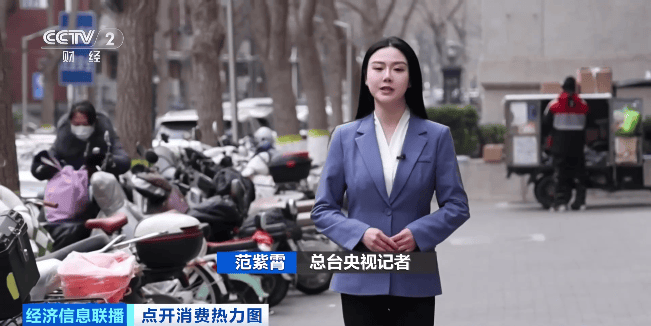
点开消费热力图丨适老化改造提升居家品质 撬动银发消费新需求
Sou Hu Cai Jing· 2026-01-05 15:11
Group 1 - The core viewpoint of the article highlights the significant growth of the silver economy in China, driven by an increasing elderly population and evolving consumer needs, transitioning from basic care to enhancing quality of life and social participation [1][30] - By the end of 2024, the population aged 60 and above in China is projected to reach 310 million, indicating a vast market potential for silver consumption [1] - The article emphasizes the shift in elderly care services from merely ensuring safety and care to promoting mental well-being and social engagement [1][30] Group 2 - Home modifications for elderly individuals are becoming increasingly important, as they seek greater convenience and safety in their living environments [3][5] - The article discusses the development of comprehensive "scene designs" for elderly home modifications, moving away from simple installations to holistic solutions that enhance living conditions [17] - Various health monitoring products are gaining popularity among the elderly, reflecting a growing demand for tailored solutions [11] Group 3 - Community initiatives, such as online shopping training and cultural courses, are enriching the lives of elderly individuals, promoting both social interaction and personal development [21] - Sports venues are catering to the elderly by providing spaces for exercise and socialization, with one venue attracting nearly 3,000 senior members [23] - In Yunnan, the introduction of "health and wellness + experience" travel options for seniors is creating new market opportunities, with nearly 90% of residents in local senior apartments being elderly [25][27] Group 4 - The article concludes that the silver economy is evolving from basic support to quality enhancement, with cities like Beijing focusing on home modifications, Nanjing on cultural consumption, and Pu'er on wellness tourism, all contributing to a shift from "elderly care" to "enjoying old age" [30]
山东规划到2027年发展家庭养老床位10万张以上
Xin Hua Cai Jing· 2026-01-05 08:08
Core Viewpoint - Shandong Province is implementing measures to promote high-quality development of home and community elderly care services, focusing on marketization, chain operation, integration, socialization, and smart technology [1][2]. Group 1: Development Goals - By 2027, Shandong aims to develop over 100,000 family elderly care beds and continue promoting home adaptation for the elderly [1]. - By the end of 2029, Shandong plans to establish regional elderly care service centers of over 600 square meters in town (street) levels, and community elderly care facilities of at least 300 square meters in urban areas [1]. Group 2: Service Supply Optimization - Shandong will enhance training for elderly care professionals, aiming to cultivate 600 community-based, embedded, and small-scale elderly care institutions by the end of 2029 [2]. - The province targets to have 1,200 service stations for the purchase, rental, and maintenance of rehabilitation aids, and establish 150 elderly-friendly communities for those with cognitive impairments by 2029 [1][2]. Group 3: Quality and Efficiency Improvement - Shandong is promoting an integrated operational model combining town (street) elderly care institutions, village (community) elderly care institutions, and family elderly care facilities, with a goal of achieving over 50% chain operation of street-level services by the end of 2029 [2].
中新武威观 | 天祝织密养老服务网 构建服务新格局
Xin Lang Cai Jing· 2026-01-05 06:23
Core Viewpoint - The article emphasizes the comprehensive development of a multi-faceted elderly care service network in Tianzhu County, aiming to enhance the quality and dignity of life for the elderly through a structured approach that includes a three-tier service network, diverse service models, medical and elderly care integration, and policy support [1] Group 1: Service Network Development - The county has established a three-tier elderly care service network consisting of a county-level institution, town comprehensive service centers, and village mutual aid happiness homes, achieving full coverage of urban and rural elderly care services [2] - Currently, there is one county-level public elderly care institution and one "public-private partnership" institution, accommodating 327 elderly residents, along with eight town service centers and 15 village mutual aid homes [2] - Over 3,868 elderly individuals have received meal assistance services totaling 32.41 million instances, addressing the issue of food access for rural elderly living alone [2] Group 2: Tailored Service Models - The county has implemented a "menu-style" elderly care service to meet the diverse needs of different elderly groups, including over ten home services such as health management and meal delivery [3] - A smart elderly care cloud platform has been established, providing 348 sets of smart wristbands and emergency call systems for elderly individuals, ensuring real-time monitoring of health data [3] - A total of 14.356 million yuan has been allocated for home modifications for 2,522 elderly households, significantly improving their living conditions [3] Group 3: Medical and Elderly Care Integration - The county has deepened the integration of medical and elderly care services, establishing a regular joint consultation mechanism between the elderly welfare service center and the Tibetan hospital's geriatric department [4] - More than 1,800 elderly individuals have been served through home visits by medical experts, promoting knowledge of elderly disease prevention and facilitating a green channel for referrals [4] - By 2025, health check-ups for 16,800 elderly individuals aged 65 and above are planned, aiming for comprehensive health screening of the elderly population [4] Group 4: Policy Support and Community Engagement - The county has reinforced policy support for elderly care, including the implementation of high-age subsidies for 3,530 individuals aged 80 and above, totaling 1.096 million yuan in subsidies with a 100% issuance rate [5] - A collaborative care system involving civil affairs, departmental coordination, and community participation has been established, with over 180 volunteer activities benefiting more than 5,000 elderly individuals [5] - The county has conducted 15 training sessions for elderly care workers, training 1,210 individuals with a 100% certification rate, enhancing the professionalism of the service workforce [5]
广东:深化广州市服务业扩大开放综合试点、深圳市增值电信业务扩大对外开放试点
Zheng Quan Shi Bao Wang· 2026-01-05 03:23
Core Viewpoint - The Guangdong Provincial Government has issued implementation opinions to promote high-quality development of digital trade and service trade through high-level openness, focusing on relaxing market access in the service trade sector [1] Group 1: Market Access and Open Policies - The implementation opinions propose to relax market access in the service trade sector [1] - The plan includes deepening the comprehensive pilot for expanding service industry openness in Guangzhou and expanding foreign investment access in Shenzhen's value-added telecommunications services [1] - Support is provided for Shenzhen to conduct a new round of comprehensive pilot projects for expanding service industry openness [1] Group 2: Foreign Investment and Sectoral Focus - The policy aims to accelerate the implementation of foreign investment access and operational policies in sectors such as healthcare, elderly care, tourism, telecommunications, and culture [1] - There is encouragement for foreign investors to establish both profit-making and non-profit elderly care institutions in Guangdong [1] - The plan supports the expansion of pilot projects in biotechnology within the Nansha, Qianhai, and Hengqin free trade zones [1] Group 3: Educational and Collaborative Initiatives - The implementation opinions emphasize strengthening cooperation between domestic and foreign universities, as well as the establishment of schools for foreign personnel's children and schools for Hong Kong and Macau students [1]
【二〇二六中国经济展望②】变民生蓝图为幸福实景
Jing Ji Ri Bao· 2026-01-05 03:19
Core Viewpoint - The article emphasizes the importance of improving people's livelihoods as a fundamental aspect of China's modernization, highlighting various initiatives aimed at enhancing social welfare and ensuring equitable development across different regions and demographics [1][2]. Group 1: Social Welfare Improvements - The average standard of urban and rural subsistence allowances has increased by 22.2% and 23.9% respectively since 2020, with 39.11 million people receiving regular subsistence support and 4.85 million individuals classified as extremely poor [2]. - Basic pension insurance now covers over 1.06 billion people, while the basic medical insurance participation rate remains above 95%, and nearly 300 million people are covered by long-term care insurance [2]. - Over 11 million units of various types of affordable housing have been constructed or renovated, benefiting more than 30 million people during the "14th Five-Year Plan" period [2]. Group 2: Education and Employment - The retention rate for compulsory education is stable at 95.9%, with the gross enrollment rate for higher education exceeding 60%, and the average years of education for the working-age population reaching 11.21 years [3]. - The article highlights the need for employment policies that guide labor towards high-value and innovative sectors, addressing structural employment challenges due to rapid technological advancements [5][6]. Group 3: Aging Population and Future Strategies - The next five years are critical for addressing significant demographic changes, particularly in response to an aging population, with a focus on building a comprehensive and accessible elderly care service system [7]. - The government plans to enhance human resource development, emphasizing the integration of investment in both physical and human capital to ensure high-quality employment and skills training [7][8].
珠海康傅理养老服务有限公司成立,注册资本200万人民币
Sou Hu Cai Jing· 2026-01-05 02:40
经营范围含养老服务;护理机构服务(不含医疗服务);健康咨询服务(不含诊疗服务);信息咨询服 务(不含许可类信息咨询服务);家政服务;医院管理;第一类医疗器械销售;第一类医疗设备租赁; 物业管理;第二类医疗器械销售;第二类医疗设备租赁;技术服务、技术开发、技术咨询、技术交流、 技术转让、技术推广;日用百货销售;个人卫生用品销售;软件开发;专业设计服务;日用品销售;互 联网销售(除销售需要许可的商品);会议及展览服务(出国办展须经相关部门审批);建筑材料销 售;远程健康管理服务;康复辅具适配服务;家具销售;家居用品销售;家用电器销售;劳务服务(不 含劳务派遣);家具零配件生产;家用电器安装服务;智能家庭消费设备销售;住宅水电安装维护服 务;卫生用品和一次性使用医疗用品销售;智能家庭消费设备制造。(除依法须经批准的项目外,凭营 业执照依法自主开展经营活动)许可项目:医疗服务;第三类医疗设备租赁;卫生用品和一次性使用医 疗用品生产;第一类增值电信业务;第二类增值电信业务。(依法须经批准的项目,经相关部门批准后 方可开展经营活动,具体经营项目以相关部门批准文件或许可证件为准) 企业名称珠海康傅理养老服务有限公司法定代表 ...