
电动自行车

Search documents
“国补”再注资690亿!10月第四批以旧换新资金即将下达,引爆下半年消费热潮
Sou Hu Cai Jing· 2025-08-02 07:00
Core Viewpoint - The "consumption upgrade battle" is entering its final sprint phase, with the full allocation of 300 billion yuan in special government bonds aimed at stimulating consumption, providing strong momentum for the market in the second half of the year [1][14]. Group 1: Economic Stimulus Plan - The unprecedented economic stimulus plan began in early 2025, with funds allocated in four batches, totaling 300 billion yuan, specifically targeting consumption enhancement [3]. - The first two batches of 162 billion yuan were completed in January and April, while the third batch of 69 billion yuan was fully allocated by the end of July [3]. - This phased funding approach helps avoid market volatility and resource waste, ensuring precise economic support [3]. Group 2: Consumption Data and Trends - As of July 16, the policy has significantly boosted sales in various sectors, with household appliance sales showing notable growth [5]. - Specific growth rates include a 24.1% increase in communication equipment, 25.4% in cultural and office supplies, and 22.9% in furniture, contributing to a 5% year-on-year increase in total retail sales of consumer goods [5]. - Approximately 30 yuan of every 100 yuan spent on household appliances is attributed to policy stimulation [5]. Group 3: Regional Implementation and Consumer Engagement - The implementation of the policy varies by region, with local authorities encouraged to optimize subsidy distribution and ensure equitable use of funds [5]. - Consumers are advised to stay informed about local announcements to take full advantage of policy benefits [5]. Group 4: Market Outlook and Consumer Behavior - The upcoming traditional promotional periods, such as "Golden September and Silver October," are expected to align with policy benefits, further driving consumption growth [5][12]. - There is a significant potential for demand in the home appliance sector, particularly for replacement purchases, as current sales volumes remain low compared to existing appliance stock [10]. - Companies in the home appliance sector are accelerating innovation and enhancing product features to meet rising consumer demand [8].

提振消费进行时丨广西全面恢复开展家电等以旧换新补贴活动
Guang Xi Ri Bao· 2025-08-02 02:07
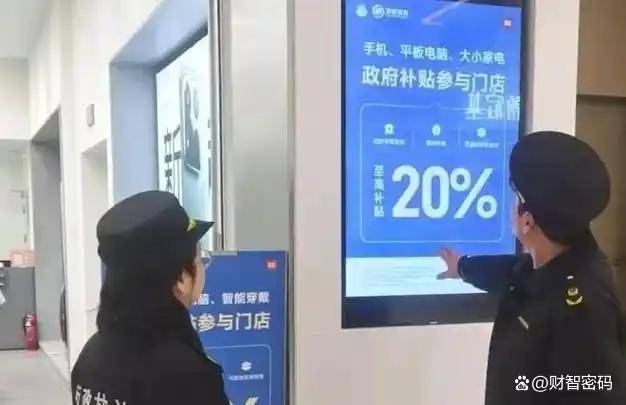
Core Viewpoint - Guangxi will fully resume the old-for-new subsidy program for home appliances, 3C digital products, electric bicycles, and home renovation starting from August 5, aiming to stimulate consumer spending and provide benefits from national subsidies [1][2]. Group 1: Subsidy Details - The subsidy standards remain unchanged, with maximum subsidies of 20% for home appliances (up to 2000 yuan), 15% for 3C digital products (up to 500 yuan), 600 yuan for electric bicycles, and 1000 yuan for each category of home renovation products [1]. - The total daily subsidy limits are set at 4 million yuan for home appliances, 1 million yuan for 3C digital products, 300,000 yuan for electric bicycles, and 700,000 yuan for home renovation [1]. Group 2: Application Process - Consumers can claim subsidy vouchers through the "Yunshanfu App" starting at 10 AM daily, and the vouchers can be used at participating offline stores [2]. - The program operates on a "first come, first served" basis, with each consumer eligible for one subsidy per category within the year 2025, and up to three times for air conditioning products [2]. Group 3: Market Impact - In the first half of the year, Guangxi's old-for-new policy generated over 33.3 billion yuan in sales, with a 63% increase in the disposal of old home appliances [3]. - Significant growth was observed in sales of home audio-visual equipment, smartwatches, and tablets, with year-on-year increases of 85.1%, 100%, and 3.8% respectively, indicating strong market response to the policy [3].
新国标落地在即 电动自行车经销商抢抓销售窗口期
Zhong Guo Jing Ying Bao· 2025-08-01 20:31
Group 1 - The new mandatory national standard for electric bicycles (GB 17761—2024) will be implemented in phases, with production starting on September 1, 2025, and sales on December 1, 2025, leading to a significant market demand for compliant vehicles [1][2] - The current electric bicycle ownership in China is approximately 380 million, indicating a strong market presence and consumer reliance on these vehicles for short-distance travel [1] - The new standard emphasizes higher safety requirements, including fire resistance and material specifications, prompting manufacturers to upgrade their products and production lines [2][3] Group 2 - Major companies like Yadea and Luyuan are actively preparing for the new standard, with Yadea already obtaining CCC certification for six models and planning to transition to new standard production by mid-August [3][4] - The transition period from September 1 to December 1, 2025, allows manufacturers to clear existing inventory of old standard vehicles, with many companies implementing promotional strategies to facilitate sales [4][5] - The new standard is expected to lead to a consolidation in the industry, as smaller brands may struggle to meet the new requirements, potentially increasing market share for leading companies [5][6] Group 3 - Companies are focusing on quality control and cost management to meet the new standards, with Luyuan optimizing production processes and investing in advanced inspection equipment [6][7] - The implementation of the new standard is seen as an opportunity for industry leaders to enhance their brand influence and market position through differentiation and innovation [5][6] - The overall market demand remains stable despite some consumer hesitation to purchase old standard models, as companies continue to promote their products and respond to consumer safety concerns [4][5]

工信部消费品工业司组织召开电动自行车新标准实施及新车型供应工作推进会
Zheng Quan Shi Bao Wang· 2025-08-01 10:34
Core Points - The Ministry of Industry and Information Technology held a meeting to discuss the implementation of new standards for electric bicycles and the supply of new models [1][2] - The meeting emphasized the importance and urgency of implementing the new standards, urging manufacturers to accelerate the development and market supply of new standard vehicles [2] Group 1: Implementation of New Standards - Electric bicycle manufacturers are required to fully understand the importance of the new standards and implement them without fail [2] - Companies must expedite the research and development of new models and ensure compliance with the new standards during the design and testing phases [2] - Manufacturers should coordinate with suppliers to develop compliant components and submit applications for testing and certification promptly after prototype completion [2] Group 2: Production and Supply Chain Management - Companies are advised to create a production schedule for new standard models and adjust production lines accordingly [2] - It is crucial to strengthen communication with upstream suppliers to ensure the availability of components that meet new production requirements [2] - Manufacturers should enhance collaboration with distributors to ensure adequate market supply of new models [2] Group 3: Training and Industry Self-Regulation - Training for end-channel distributors is essential to inform them about the new standards and encourage them to promote the advantages of new models to consumers [2] - Companies are urged to be cautious in ordering old standard vehicles to avoid excess inventory before the deadline of December 1 [2] - Industry associations are encouraged to play a pivotal role in guiding companies to comply with new standards and to address issues arising during implementation [2]
阳谷县打出一套“组合拳”挖掘消费潜力,激发消费活力
Qi Lu Wan Bao Wang· 2025-08-01 08:13
Group 1 - The core viewpoint of the news is that Yanggu County is actively promoting consumption through various initiatives, including the "old for new" policy for consumer goods, to stimulate economic growth and enhance consumer confidence [1] - The county's Business and Investment Promotion Bureau is focusing on implementing the "old for new" policy for home appliances, electric bicycles, and digital products, aiming to expand the benefits of these policies through extensive promotional activities [1] - During the 2025 Hero Yanggu Half Marathon, the county integrated local resources in catering, accommodation, and specialty products to create promotional activities that convert event traffic into consumer spending [1] Group 2 - The county plans to continue emphasizing consumption expansion and quality improvement, using the "old for new" policy as a key strategy to promote large-scale and festive consumption [2] - Efforts will be made to enhance the supply of living consumption by organizing local restaurants to apply for provincial recognition and promoting local brands, thereby increasing the influence of local culinary offerings [2] - The county encourages the upgrade of large commercial complexes and plans to organize a series of promotional activities around key holidays to inject new momentum into the local economy [2]
美股异动丨小牛电动盘前涨3% 新国标实施临近 机构指龙头企业弹性值得期待
Ge Long Hui· 2025-07-31 08:41
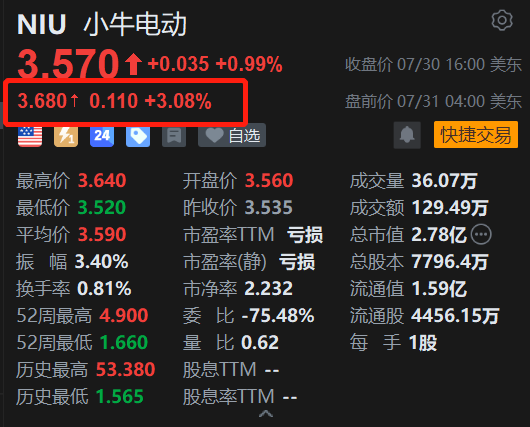
小牛电动(NIU.US)美股盘前涨3%。消息上,距离9月1日电动自行车新国标在生产端正式实施,仅剩1个 月的时间。长江证券指出,新国标正式落地符合市场预期,针对非经营性用途的电动自行车,不再强制 加装北斗定位模块,这有利于降低成本和车价,进而提升消费需求。同时,生产过渡期延长,预计2025 年电动自行车市场或以 "老车" 销售为主,"新车" 销售或在四季度后逐步起量。叠加以旧换新政策延 续,龙头企业弹性值得期待。(格隆汇) ...

提振消费进行时 | 广西恢复开展汽车置换更新补贴活动
Guang Xi Ri Bao· 2025-07-31 01:49
Core Points - Guangxi will resume the 2025 automobile replacement subsidy program starting July 31 to stimulate the automotive consumption market and ensure policy benefits reach consumers [1][2] - The subsidy standards for the program will remain unchanged from the first half of the year, with specific amounts allocated based on the price of the vehicles purchased [1] - The program will run from July 31 to December 31, 2025, and will include various promotional offers from local authorities and automotive sales enterprises [1] Subsidy Details - For new energy passenger vehicles, subsidies are as follows: 0.8 million for vehicles priced at or below 80,000, 1.3 million for those priced between 80,000 and 200,000, and 1.5 million for vehicles above 200,000 [1] - For fuel passenger vehicles, subsidies are: 0.7 million for vehicles priced at or below 80,000, 1.1 million for those priced between 80,000 and 200,000, and 1.3 million for vehicles above 200,000 [1] Consumer Engagement - Since the implementation of the policy, 582.5 million consumers have benefited from subsidies totaling 49.2 billion, leading to sales of 343.7 billion [2] - The new subsidy program will adopt a "buy first, then subsidize" model with daily limits on the subsidy amount to ensure more consumers can successfully apply [2] - Additional subsidy activities for home appliances, 3C digital products, electric bicycles, and home renovations will also be resumed in early August to maintain market momentum [2]
电动自行车加装强光灯“亮瞎眼” 上海警方近两周来已查处1500余起违法行为
Jie Fang Ri Bao· 2025-07-31 01:49
Core Viewpoint - The article highlights the increasing issue of electric bicycles equipped with excessively bright lights, which pose safety hazards to other road users, prompting local authorities to initiate a crackdown on illegal modifications [1][6][7]. Group 1: Incidents and Public Reactions - Many citizens have reported being disturbed by the bright lights from electric bicycles, particularly those modified with additional strong lights [1][2]. - Riders of electric bicycles have expressed concerns about visibility and safety, stating that the bright lights can cause temporary blindness, making it difficult to navigate the roads [2][3]. - The phenomenon of electric bicycles using strong lights is prevalent in various areas of the city, especially on poorly lit roads, leading to dangerous situations for both cyclists and drivers [2][3]. Group 2: Modification Practices - The bright lights on these electric bicycles are not factory-installed but are often added by the owners, with repair shops readily offering modification services [3][4]. - Prices for modifying lights can range from tens to hundreds of yuan, depending on the type and installation complexity [3][4]. - Online shopping platforms also facilitate the purchase of these bright lights, with many options available at low prices, contributing to the trend of modifications [4][5]. Group 3: Regulatory Response - The local police have initiated a special enforcement campaign against the illegal installation of bright lights on electric bicycles, resulting in over 1,500 violations being reported in a two-week period [6][7]. - According to local regulations, modifications that affect traffic safety are prohibited, and violators face fines and orders to restore their vehicles to original conditions [6][7]. - Authorities emphasize the potential dangers of these modifications, including the risk of accidents due to impaired visibility for other road users [7].
电动自行车有了新国标 多环节推进新标准落地
Jing Ji Ri Bao· 2025-07-30 23:48
Core Viewpoint - The implementation of the mandatory national standard "Safety Technical Specification for Electric Bicycles" will officially begin on September 1, 2023, with the aim of enhancing product quality and safety in the electric bicycle industry [1][2]. Group 1: New Standards and Implementation - The new standard sets two implementation timelines: production will start on September 1, 2023, and sales will commence on December 1, 2023 [1]. - The Ministry of Industry and Information Technology (MIIT) has issued an opinion to ensure a sufficient supply of products that comply with the new standards, focusing on production management, certification, sales supervision, and consumer protection [1][2]. - The new technical specifications include stricter fire resistance requirements, limiting the plastic weight ratio to below 5.5% of the total vehicle weight, and imposing restrictions on the maximum motor speed to prevent overspeeding [2][3]. Group 2: Transition and Market Readiness - The weight limit for lead-acid battery models has been adjusted from 55 kg to 63 kg, allowing for a range of 60 to 70 km, which reduces charging frequency [3]. - The new standards encourage the installation of safety features such as rearview mirrors and turn signals, enhancing overall vehicle safety [3]. - A smooth transition from old to new standards is emphasized, with a three-month sales grace period for vehicles produced under the old standards until December 1, 2023 [6]. Group 3: Industry Compliance and Self-Regulation - A "white list" system has been established to guide companies in compliance with the new standards, promoting self-regulation and discouraging illegal modifications [5][6]. - Major brands have proactively developed and certified new models that meet the new standards ahead of the transition period [6]. - The MIIT is working with designated certification bodies to ensure timely product testing and certification, facilitating the market entry of compliant electric bicycles [4][6]. Group 4: Battery Recycling and Safety - The MIIT has initiated guidelines for the health assessment and recycling of used lithium batteries, addressing safety concerns related to aging batteries [8][9]. - A comprehensive recycling system is being developed to ensure that old batteries are properly assessed and disposed of, reducing safety hazards [8][9]. - Consumers will have access to local health assessment and recycling service points for their electric bicycle batteries, promoting responsible disposal and recycling practices [9].
电动自行车有了新国标
Jing Ji Ri Bao· 2025-07-30 22:20
Core Viewpoint - The implementation of the mandatory national standard "Safety Technical Specifications for Electric Bicycles" will officially begin on September 1, with production and sales phases set for September and December respectively, aiming to enhance product quality and safety in the electric bicycle industry [1][2]. Group 1: New Standards Implementation - The new standard aims to improve the safety and quality of electric bicycles, with a focus on fire resistance, speed limitations, and anti-tampering measures for critical components [2][3]. - The weight limit for lead-acid battery models has been adjusted from 55 kg to 63 kg, allowing for a range of 60 to 70 km, thus reducing charging frequency and enhancing practicality [3]. - The standard encourages the installation of safety features such as rearview mirrors and turn signals to improve overall safety during operation [3]. Group 2: Industry Transition and Support - The Ministry of Industry and Information Technology (MIIT) has issued guidelines to ensure a smooth transition to the new standards, including regular updates on the progress of product development and certification [4]. - A "white list" system has been established to promote compliance among manufacturers, with leading brands already developing vehicles that meet the new standards [5][6]. - The new standards provide a three-month sales transition period for vehicles produced under the old standards, allowing for a gradual phase-out [6]. Group 3: Battery Recycling and Safety - The MIIT emphasizes the importance of establishing a recycling system for old lithium batteries, addressing safety concerns related to battery quality and usage conditions [8][9]. - Guidelines for health assessments and recycling of lithium batteries have been issued, with pilot programs initiated in several regions to evaluate battery conditions and facilitate proper disposal [8][9]. - Consumers will have access to local service points for battery health assessments, ensuring safe and efficient recycling processes [9].