
直播电商

Search documents
市场监管总局集中发布第四批直播电商领域典型案例
Yang Shi Wang· 2025-11-28 09:16
Core Viewpoint - The article discusses the release of typical cases in the live e-commerce sector by the State Administration for Market Regulation, highlighting various violations such as false advertising and price fraud by different companies in the industry [1] Group 1: Case Summaries - Shanxi Laoge Trading Co., Ltd. was penalized for false advertising and price fraud, resulting in a total fine of 5.6 million yuan for misleading consumers through exaggerated claims and unproven comparisons during live broadcasts [2] - Shenzhen Xiao'e Network Technology Co., Ltd. faced penalties for failing to conduct proper qualification reviews and safety guarantees, leading to false advertising on its platform, resulting in a fine of 360,000 yuan [3] - Dongying Rongcan Trading Co., Ltd. was fined 100,000 yuan for illegal advertising related to a health product, where misleading claims were made during a live broadcast [4] - A group of individuals involved in West Chong Media Co., Ltd. was penalized for artificially inflating follower counts for e-commerce operators, leading to a fine of 270,000 yuan [5] - Ningbo Hanyang E-commerce Co., Ltd. was fined 1.023 million yuan for trademark infringement and product quality violations, selling counterfeit shoes without proper labeling [6] - A live streamer named Cheng was penalized for facilitating the sale of counterfeit watches, resulting in a fine of 100,500 yuan for promoting infringing products [7] - Shanghai Lunen Food Store was fined 200,000 yuan for false advertising targeting elderly consumers, promoting health products with unsubstantiated claims about disease prevention and treatment [8]
TikTok公会招商:低投入 + 高回报,错过再等一年
Sou Hu Cai Jing· 2025-11-28 09:12
在短视频全球化浪潮席卷的2025年,TikTok以超22亿月活用户、覆盖150多个国家和地区的生态优势,成为品牌出海与个人创 作者掘金的核心战场。对于创业者而言,加入TikTok公会正成为低门槛、高回报的黄金赛道——无需行业经验,依托平台分成 政策与生态扶持,即可快速切入海外内容市场,分享全球化红利。 (入驻+v:hshs68618) 一、低投入:政策红利与资源扶持降低创业门槛 1. 资质门槛灵活,中小团队快速入局 TikTok公会入驻政策对中小团队极为友好。企业资质方面,东南亚市场允许注册资本下探至10万元,美区虽要求股东为美籍或 加籍,但新兴市场如拉美、非洲仅需本地公司注册(成本低至5000美元)。团队配置上,3人核心团队即可覆盖运营、策划、 数据分析职能,且跨平台经验(如YouTube、亚马逊直播)可替代部分行业经验。例如,巴西公会"Carioca Stars"通过"足球宝 贝选拔赛"模式,3个月签约500名素人主播,单月流水破50万美元,其团队仅由5名成员组成。 2. 平台工具与培训体系赋能运营 TikTok为公会提供全链路支持: 3. 资金压力可控,风险分散 相较于传统跨境业务,TikTok公会无需 ...


直播电商监管升级,市场监管总局将强化跨区域、穿透式监管
Xin Jing Bao· 2025-11-28 09:03
Core Viewpoint - The Market Supervision Administration is developing a new regulatory model to address the challenges posed by live-streaming e-commerce, focusing on enhancing governance capabilities through three main measures [1][2]. Group 1: Regulatory Measures - Strengthening tiered and graded regulatory enforcement to address the cross-regional nature of e-commerce platforms, with a focus on delineating regulatory responsibilities and enhancing law enforcement efforts [2]. - Enhancing cross-regional command and coordination to achieve comprehensive chain-wide enforcement, establishing an integrated regulatory mechanism that combines online detection with offline investigation [2]. - Exploring penetrating regulation to innovate regulatory models, conducting pilot programs in active platform economies to analyze complex legal relationships and manage associated risks effectively [2].
告别流量战,深耕价值场,“远行者”辛选集团的破局之路
Sou Hu Cai Jing· 2025-11-28 03:53
Core Insights - The fifth Live E-commerce Festival in Guangzhou highlighted the recognition of XinXuan Group's long-term commitment and value-driven approach in the live e-commerce industry [1][3] - XinXuan Group has achieved significant sales milestones, including over 30 million orders and 5 billion views during the recent Double 11 shopping festival, showcasing its strong market presence [3][4] - The industry is transitioning from a focus on scale to creating value, with XinXuan Group emphasizing the importance of deep-rooted trust and emotional connections with consumers [4][6] Company Developments - XinXuan Group has shifted its influencer collaboration model from a signing system to a partnership system, resulting in a 29% year-on-year sales increase for mid-tier influencers during Double 11 [4][5] - The company is nurturing new talents alongside established influencers, creating a diverse ecosystem referred to as the "Huangpu Military Academy of Influencers" [5] - XinXuan Group has launched an immersive live streaming model that incorporates multiple scenes and themes, enhancing emotional engagement with consumers [6] Consumer Focus - The company has adjusted its product offerings to cater to middle-aged female consumers, with jewelry sales accounting for 37% and personal care products for 21% during Double 11 [6] - XinXuan Group has introduced a special fund of 100 million yuan to address consumer after-sales issues, reinforcing its commitment to trust and customer satisfaction [6] Industry Context - The live e-commerce sector is entering a "post-competition era," where the focus is shifting from scale to value creation [4] - The Greater Bay Area is recognized as a hub for live e-commerce, supported by a robust supply chain and logistics system [7][9] - XinXuan Group plans to enhance its brand and channel strategies while leveraging data and technology to provide high-quality products [9] Global Expansion - The company is exploring international markets, achieving significant sales in overseas live streaming events, with notable figures such as 1 billion yuan in Russia and 8 billion yuan in Thailand [9] - XinXuan Group aims to create real value rather than relying solely on price advantages in its international endeavors [9]

东方甄选人均年薪曝光:83.96万元
Sou Hu Cai Jing· 2025-11-28 01:32
Core Insights - The average annual salary for employees at Dongfang Zhenxuan in the fiscal year 2025 is 839,600 yuan, which is 2.02 times higher than the salary at the live e-commerce company Jia Ge Pengyou Holdings for the fiscal year 2024 [1] - New Oriental faced significant challenges due to the "double reduction" policy implemented in July 2021, which severely impacted its K9 tutoring business that accounted for 60% of its revenue [1] - Following a reduction in employee numbers, the average salary at New Oriental and New Oriental Online increased significantly, with New Oriental's average management expenses reaching 234,300 yuan in fiscal year 2022 and New Oriental Online's average salary hitting 348,600 yuan [1] - In fiscal year 2023, Dongfang Zhenxuan's revenue surged to 4.51 billion yuan, leading to a collective salary increase, with the average annual salary reaching 375,000 yuan [1] - Despite a 32.7% year-on-year decline in revenue to 4.39 billion yuan in fiscal year 2025, the average salary increased to 839,600 yuan due to a reduction of nearly 500 employees [1] Company Specifics - Currently, only Yu Minhong from New Oriental receives an annual salary in the millions, which is approximately 87 times the average management expense per employee at New Oriental and nearly 13 times the average salary at Dongfang Zhenxuan [2] - Yu Minhong has been publicly criticized by Luo Yonghao for being overly frugal, to which he responded by emphasizing his responsibility to protect Dongfang Zhenxuan and its hosts [2]

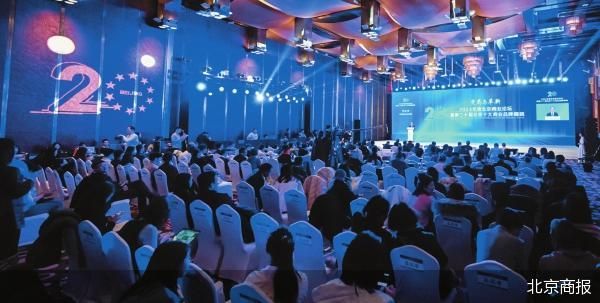
2025年度北京商业论坛即将举办
Bei Jing Shang Bao· 2025-11-27 16:13
Group 1 - The core theme of the 2025 Beijing Commercial Forum is "潮尚聚变·新需求与新供给," focusing on the transformation of consumer spending from goods to services, experiences, and technology [1][2] - The forum aims to provide insights for upgrading Beijing's commercial landscape and helping brands break through by discussing fashion consumption and trends [1][2] - The "十四五" plan emphasizes leading new supply with new demand, which is reflected in the growth of fashion and trend consumption over the past year [1][2] Group 2 - "潮尚" consumption seeks to expand the supply of quality goods and services, reshape product value through functional innovation, and activate the experience economy through emotional and social innovation [1][2] - The forum will feature discussions on popular topics such as fashion trends, pet economy, and live-streaming e-commerce, inviting leading companies and experts to share innovative experiences and analyze consumption trends [2] - The Beijing Commercial Forum has been held for eighteen consecutive years, becoming a significant platform for discussing industry trends and planning high-quality development in Beijing's commercial sector [2]
怀柔科学城、国际会都、中国影都,怀柔区擦亮三张名片
Xin Jing Bao· 2025-11-27 13:19
Core Viewpoint - Huairou District is accelerating the construction of an internationally first-class strategic technology integration development demonstration zone, focusing on creating highlands for strategic facilities, innovation ecology, technology achievement transformation, talent development, and international cooperation [1][2]. Industry Development - Huairou District is positioned as an important bearer of capital functions and an ecological conservation area, with an average annual GDP growth of 5.7% since the 14th Five-Year Plan, maintaining a high-quality development index among the top in the city [2][3]. - The district is enhancing its modern service industry, with technology and information service sectors achieving double-digit annual revenue growth, and modern service industries contributing over 80% to GDP growth in the first three quarters of the year [3][4]. Innovation Opportunities - Huairou Science City has become one of the most concentrated areas for major global scientific infrastructure, housing numerous high-level research institutions and attracting top-tier scientists for cutting-edge research [5][6]. - The district is implementing policies to create a favorable environment for young talents, with nearly 2,000 young talents benefiting from initiatives aimed at entrepreneurship, housing, and financing [6]. Cultural Industry - Huairou District has established a comprehensive mechanism for coordinating various sectors, aiming to develop a unique cultural tourism landscape, with an expected reception of 10.3 million tourists annually [8][9]. - The district is focusing on building a vibrant film and cultural industry cluster, with 1.3 million film-related enterprises and a significant share of national box office revenue [8][9]. Post-Disaster Reconstruction - Following severe flooding, Huairou District has completed repairs on 260 houses and is actively working on the reconstruction of damaged properties, ensuring that affected residents have safe and warm housing for the winter [10].
今年“黑五”海外消费者开始看直播带货 中国直播业忙出海
Di Yi Cai Jing· 2025-11-27 11:33
Core Insights - The article highlights the rapid growth of Chinese brands, particularly Pop Mart, in overseas markets through live streaming, especially during major sales events like Black Friday [1][2][4] Group 1: Live Streaming Impact - Live streaming has significantly boosted sales, with Pop Mart's official store on AliExpress seeing a 1500% increase in sales in October compared to the previous year [2] - During Black Friday, live streaming events for various brands, including Beisi and Tebu, were organized to enhance sales [2] - A specific live stream by the influencer Simplymandys achieved a GMV of $630,000 in 12 hours, surpassing the initial target of $500,000 [2] Group 2: Opportunities for Chinese Brands - Content platforms like TikTok present new opportunities for Chinese brands to integrate content and shopping, with significant growth potential in the European and American markets [3] - Brands are accumulating valuable content on TikTok, which is becoming an asset for marketing and sales [3] - UK retailer Marks & Spencer has entered TikTok Shop, indicating a trend of international brands exploring live streaming and content collaboration [3] Group 3: Market Maturity and Growth - The overseas live streaming market is still in its early stages but shows great potential, with platforms like AliExpress and TikTok actively promoting the "content + e-commerce" model [4][5] - Compared to last year, there has been noticeable progress in live streaming for overseas sales, with increased participation from influencers and brands [6] - The number of collaborations with influencers has grown significantly, with nearly 1,000 brands cooperating with the agency in the U.S. market this year [6] Group 4: Consumer Behavior and Trends - A Nielsen survey indicates that 46% of Gen Z and 38% of millennials use platforms like TikTok for gift inspiration, highlighting the importance of content in driving consumer behavior [7] - TikTok Shop's GMV reached $19 billion in Q3, with U.S. consumers contributing $4 to $4.5 billion, making it the largest market [7] Group 5: Competitive Landscape - Chinese live streaming agencies have a competitive advantage in the U.S. market, as local players lack the same level of expertise [8] - The majority of live streaming strategies from China can be effectively adapted to overseas markets, providing a competitive edge [8] - Successful brand expansion requires a focus on content development and localization to connect with local consumers [8]
解码未来消费风向,2025年度北京商业论坛即将举办!
Bei Jing Shang Bao· 2025-11-27 11:21
Core Insights - The transformation of consumer spending from goods to services, experiences, and technology is expected by 2025, with emotional value payments rising and service consumption increasing [1] - The 2025 Beijing Business Forum will focus on fashion consumption and trends, aiming to provide insights for upgrading Beijing's commercial landscape and brand breakthroughs [1][2] Group 1: Consumer Trends - The concept of "潮尚" consumption aims to expand the supply of quality consumer goods and services, creating new consumption scenarios through functional, emotional, and social innovations [1] - The rise of emotional value payments signifies a shift in consumer behavior, where consumers are willing to pay for recognition, love, and experiences [2] Group 2: Forum Details - The 2025 Beijing Business Forum will take place on January 16, 2026, and will gather experts from various sectors to discuss hot topics such as fashion trends, pet economy, and live e-commerce [2] - The forum will feature the release of the "2025 Beijing Commercial Development Blue Book," which will provide in-depth analysis and case studies on the growth trajectory of Beijing's commercial and fashion consumption [2] Group 3: Strategic Focus - The forum's theme, "潮尚聚变·新需求与新供给," emphasizes the importance of new demand leading to new supply and the creation of new demand through innovative supply [1][2] - The event aims to build a platform for dialogue among industry leaders to explore new trends and address emerging challenges in Beijing's commercial sector [2]
A股晚间热点 | 事关促消费 六部门印发重磅文件
智通财经网· 2025-11-26 16:05
Group 1 - The implementation plan aims to enhance the adaptability of supply and demand in consumer goods, with a target of optimizing the supply structure by 2027, creating three trillion-level consumption sectors and ten hundred-billion-level consumption hotspots [1] - The plan encourages the development of new business models such as live e-commerce, instant retail, and AI-driven product recommendations to stimulate consumer demand [1] Group 2 - Zhongji Xuchuang's stock price surged over 13%, reaching a historical high, with a total market value exceeding 600 billion yuan, driven by speculation of being a supplier for Google's TPU [2][5] - The company stated that the recent stock price increase is due to various factors, and specific details about cooperation with Google remain undisclosed [2] Group 3 - Guangdong Province has released a plan to support industrial chain integration and mergers, encouraging state-owned enterprises to utilize various financing tools for mergers and acquisitions [3] Group 4 - Industrial Fulian adjusted its share repurchase price limit to no more than 75 yuan per share, which is 150% of the average trading price over the previous 30 days [4] - The company has repurchased 7,697,400 shares, totaling approximately 147 million yuan, indicating a proactive approach to support its stock price amid market fluctuations [5] Group 5 - Morgan Stanley has joined the bullish camp for U.S. stocks, raising its S&P 500 target to 7,500 points by the end of 2026, citing strong corporate earnings as a key driver [7] Group 6 - The bond futures market experienced significant declines, with the 30-year contract dropping by 0.86%, attributed to various market factors, including a shift in risk appetite and profit-taking [8] Group 7 - The demand for storage chips is expected to rise due to the explosion of AI applications, with industry insiders predicting at least a 50% price increase compared to September [10] - The price increase trend is anticipated to continue into mid-next year, particularly for DDR5 chips, as major international manufacturers raise their product prices [10]
