核能

Search documents
影响市场重大事件:我国航空制造装备领域取得重大突破,世界最大蒙皮拉伸机通过验收; 我国钍基熔盐实验堆建成并首次实现堆内钍铀转化
Mei Ri Jing Ji Xin Wen· 2025-11-02 23:00
Group 1 - The world's largest skin stretching machine has passed acceptance, marking a significant breakthrough in China's aviation manufacturing and domestic production processes [1] - The machine utilizes digital technology for innovative transformation from laboratory to production line, achieving a forming precision of 0.1 mm, surpassing traditional equipment levels [1] - The equipment and its supporting multi-point forming devices have reached world-leading standards [1] Group 2 - China's thorium-based molten salt experimental reactor has been completed and has achieved in-reactor thorium-uranium conversion, proving the feasibility of utilizing thorium resources [2] - The reactor is the only operational molten salt reactor globally that has achieved thorium fuel insertion, with over 90% of its components being domestically produced [2] - Key core equipment for the reactor is 100% domestically sourced, ensuring a self-controlled supply chain [2] Group 3 - The Shenzhou 21 manned spacecraft successfully docked with the Tiangong space station, setting a record for the fastest docking process at approximately 3.5 hours [3] - Three astronauts will enter the space station following the docking, with preparations made by the Shenzhou 20 crew to welcome them [3] Group 4 - The "Low Altitude Economy Blue Book" predicts that commercial operations for low-altitude manned travel could be realized by 2030 [4] - The report outlines three stages of development for low-altitude travel and transportation industries [4] Group 5 - Baillie Gifford maintains a positive outlook on China, focusing on long-term investments and seeking quality growth enterprises in the region [5] - The firm aims to deepen collaboration with various clients and diversify its management scale and customer base [5] Group 6 - Elon Musk predicts that traditional smartphones and apps will disappear within the next 5-6 years, with AI-generated content becoming predominant [6] - He envisions a future where devices serve merely as interfaces for AI, eliminating the need for traditional operating systems and apps [6] Group 7 - Shanghai Suyuan Technology Co., Ltd. has initiated its listing guidance with CITIC Securities as the advisory institution [7] - The company is controlled by Zhao Lidong and Zhang Yalin, who hold a combined voting power of 28.14% [7] Group 8 - The world's first 5G-A humanoid robot torchbearer, "Kua Fu," made its debut at the 15th National Games torch relay [8] - The robot, developed by Leju Robotics, successfully completed a 100-meter relay task while carrying a load of 1.6 kg [8] Group 9 - The rapid increase in robot production is driven by strong demand from downstream manufacturing sectors, particularly in automotive, electronics, and new energy industries [9] - In September, China's industrial robot production reached 76,300 units, a year-on-year increase of 28.3% [9] - Cumulative production from January to September exceeded 595,000 units, surpassing the total production for the previous year [9] Group 10 - The thorium-based molten salt reactor developed by the Shanghai Institute of Applied Physics has achieved a breakthrough in thorium-uranium fuel conversion [10] - This reactor is the only one globally that has successfully operated with thorium fuel, providing important experimental data [10]
晚报 | 11月3日主题前瞻
Xuan Gu Bao· 2025-11-02 14:22
Nuclear Fuel - The Chinese Academy of Sciences confirmed the successful conversion of thorium-uranium nuclear fuel in a 2 MW liquid thorium salt experimental reactor, making it the only operational thorium fuel reactor globally [1] - The goal is to establish a 100 MW thorium-based molten salt reactor demonstration project by 2035, enhancing technology upgrades and engineering applications [1] - The safety features of thorium molten salt reactors are highlighted, as they operate at normal pressure, eliminating high-pressure explosion risks [1] Humanoid Robots - The "Kua Fu" humanoid robot independently completed a torch relay at the 15th National Games, marking the first time a humanoid robot has participated in such an event [2] - The global humanoid robot market is projected to grow from approximately 6.34 billion yuan in 2025 to 64.22 billion yuan by 2030, with a compound annual growth rate of 58.90% [2] Artificial Intelligence - NVIDIA has partnered with South Korean entities to provide over 260,000 AI chips to kickstart AI projects in Korea, aiming to accelerate digital transformation across various industries [3] - NVIDIA anticipates that the total shipment of Blackwell and Rubin GPUs will reach 20 million units by the end of 2026, generating $500 billion in sales [3] Intelligent Devices - Huawei's Mate 80 series is set to revolutionize mobile interaction by allowing users to complete tasks with voice commands, moving towards a more assistant-like role for smartphones [4] - The evolution of AI in smartphones is shifting from isolated functionalities to system-level intelligent collaboration, enhancing user experience [4] Smart Cities - The National Development and Reform Commission has issued a plan to advance smart city development, aiming for significant progress in data-driven urban economic and social development by the end of 2027 [5] - The plan includes establishing over 50 fully digital transformation cities and creating a new governance system for large cities by 2035 [5]

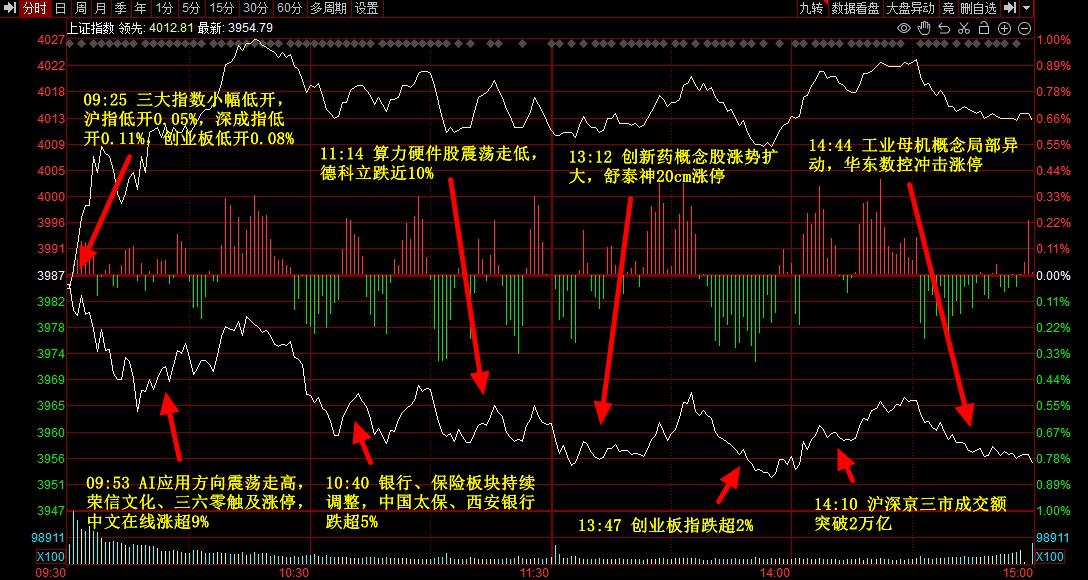
利好!热门赛道,新突破!美联储,降息大消息……周末,这些重要消息或将影响股市
证券时报· 2025-11-02 13:05
Key Points - The upcoming ADP employment report on November 5 and the potential delay of the official non-farm payroll data due to government shutdown indicate a significant slowdown in the U.S. job market, which may influence the Federal Reserve's future interest rate decisions [2][15] - The recent announcement from the Ministry of Finance and the State Taxation Administration regarding gold tax policies continues to favor transactions on exchanges, while imposing VAT on non-exchange channels, highlighting the tax advantages of exchange trading [5][6] - A breakthrough in nuclear energy technology was achieved with the successful conversion of thorium-uranium nuclear fuel based on molten salt reactors, providing a technological foundation for industrial applications in China and potentially transforming the nuclear energy landscape [3][10] - The latest financial report from Berkshire Hathaway shows a record cash reserve of $381.6 billion, with a third-quarter revenue of $94.972 billion and a net profit of $30.796 billion, indicating strong financial health and operational performance [11] - The recent meeting of the State Council emphasized the need for deepening reforms and expanding institutional openness, which is crucial for promoting a high-level open economy and enhancing market openness [4] - The release of new public offering guidelines by the China Securities Regulatory Commission aims to enhance the stability of public fund investment behaviors and improve investor experience [8] - The "national team" of investors has maintained its holdings in broad-based ETFs while showing some adjustments in sector-specific ETFs, with a significant increase in ETF scale and performance in the third quarter [9]

周末利好来袭!影响一周市场的十大消息
Zheng Quan Shi Bao· 2025-11-02 10:24
Group 1 - The State Council's executive meeting on October 31 emphasized deepening reforms in key areas and expanding institutional openness, aiming to enhance the level of market openness and optimize service market access rules [1] - The meeting highlighted the importance of aligning with international high-standard economic and trade rules and actively expanding autonomous openness [1] - The meeting also discussed leveraging high-level open platforms like free trade zones to explore replicable reform outcomes [1] Group 2 - On October 31, the China Securities Regulatory Commission (CSRC) released a draft guideline for public offering securities investment fund performance benchmarks, aiming to enhance stability in public fund investment behavior [2] - The guideline seeks to clarify the setting, changing, and disclosure of performance benchmarks, thereby improving internal control mechanisms [2] - This initiative is seen as a critical step towards standardizing public fund performance benchmarks and reinforcing investment management discipline [2] Group 3 - The Ministry of Finance announced tax policies regarding gold, stating that members or clients trading standard gold on the Shanghai Gold Exchange and Shanghai Futures Exchange will be exempt from value-added tax [3] - The announcement includes specific tax treatment for standard gold based on its investment or non-investment use, detailing the VAT refund process [3] - The document provides detailed calculations for tax standards related to gold delivery at the exchanges [3] Group 4 - A significant breakthrough in the nuclear energy sector was reported, with China achieving thorium-uranium fuel conversion based on molten salt reactors, marking a technological feasibility for utilizing thorium resources [4] - This development is expected to reduce reliance on uranium and enhance China's nuclear energy capabilities [4] - The A-share nuclear power sector has seen strong performance, with nearly 30 related stocks rising over 100% this year, and the total market capitalization exceeding 1.3 trillion yuan [4] Group 5 - The latest holdings of the "national team" in ETFs showed that their positions remained largely unchanged, with significant growth in ETF scale during the third quarter [5] - The average increase in the national team's ETF holdings exceeded 20% in the third quarter, with a single-quarter scale increase of over 200 billion yuan [5] Group 6 - The U.S. Treasury Secretary indicated that a U.S.-China trade agreement could be signed as early as next week, with the Chinese Foreign Ministry expressing a willingness to cooperate on economic issues [6] - The essence of U.S.-China economic relations is framed as mutually beneficial, with a focus on dialogue and cooperation to enhance stability [6] Group 7 - The Nasdaq China Golden Dragon Index rose by 0.53%, with notable movements in Chinese concept stocks, including NIO and XPeng Motors, which saw increases of over 3% and 2% respectively [7] - Alibaba and JD.com experienced declines of over 2% and nearly 1% respectively [7] Group 8 - Upcoming economic data releases include October's import and export figures on November 7, followed by CPI and PPI data on November 9 [8] Group 9 - The eighth China International Import Expo is scheduled from November 5 to 10, and the 2025 World Internet Conference will take place from November 6 to 9 in Wuzhen, Zhejiang [9] Group 10 - The CSRC approved IPO registrations for two companies, with new stock issuances scheduled for the week of November 3 to 7 [10] - Three new stocks are set to be issued, including Beikong Detection and Hengkun New Materials [10] Group 11 - A total of 36 companies will have their restricted shares unlocked this week, amounting to 1.168 billion shares with a total market value of approximately 20.546 billion yuan [11] - The companies with the highest unlock values include Huaxia Eye Hospital and Yunding Technology [11]
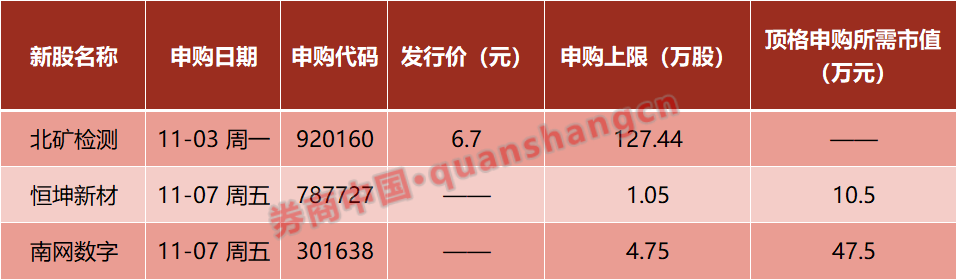
刚刚,利好来了!重大突破!
天天基金网· 2025-11-02 02:54
Core Viewpoint - The article highlights a significant breakthrough in China's nuclear energy sector with the successful conversion of thorium-uranium nuclear fuel using molten salt reactors, marking a shift from uranium dependency to utilizing abundant thorium resources [3][4][6]. Group 1: Technological Breakthrough - China's first successful conversion of thorium-uranium nuclear fuel in a molten salt reactor demonstrates the feasibility of utilizing thorium resources, providing a technological foundation for industrial applications of thorium-based molten salt reactors [3][4]. - The 2MWt liquid fuel thorium-based molten salt experimental reactor is the only one in the world to achieve thorium fuel incorporation, solidifying China's leading position in international molten salt reactor research [4][5]. Group 2: Economic and Resource Implications - China's rich thorium reserves, often found as by-products of rare earth mining, significantly reduce the cost of nuclear fuel acquisition, presenting a dual benefit of enhancing energy security while optimizing rare earth resource utilization [6][7]. - The shift to thorium-based molten salt reactors allows for flexible site selection, enabling nuclear power plants to be built in inland areas rather than being restricted to coastal regions [7]. Group 3: Market Performance - The nuclear energy sector in China's A-share market has shown strong performance, with nearly 30 related stocks increasing by over 100% this year, and the nuclear power sector's total market capitalization exceeding 1.3 trillion yuan [3][8]. - The nuclear energy index has risen approximately 52% since the beginning of the year, outperforming major A-share indices, indicating robust investor interest and confidence in the sector's future [8]. Group 4: Future Prospects - By 2030, China's operational nuclear power capacity is expected to become the largest in the world, with projections indicating a total installed capacity of 200 million kilowatts by 2040, contributing to about 10% of the country's electricity generation [8]. - The ongoing advancements in nuclear fusion technology, particularly the BEST project, are set to further enhance China's position in the global nuclear energy landscape, with the potential to demonstrate fusion power by 2027 [9][10].

世界唯一!我国新建成的这座核能系统技术优势明显
Yang Shi Xin Wen Ke Hu Duan· 2025-11-01 13:56
Core Viewpoint - The successful construction of China's thorium-based molten salt experimental reactor marks a significant advancement in nuclear energy technology, potentially reducing reliance on uranium and enhancing energy security through the utilization of abundant thorium resources [1][4][6]. Group 1: Project Overview - The thorium-based molten salt experimental reactor is the only operational molten salt reactor globally that has achieved thorium-uranium conversion [4][6]. - This reactor utilizes thorium as fuel and liquid fluoride salt as a coolant, offering inherent safety, no water cooling, atmospheric pressure operation, and high-temperature output [4][10]. Group 2: Technological Innovations - The project has successfully developed core technologies related to materials, instruments, equipment, and system integration, significantly reducing radioactive leakage risks and enhancing reactor safety [8][22]. - The reactor's design incorporates innovative safety features, including an integrated reactor core and coolant systems, which prevent radioactive material leakage [20][22]. Group 3: Environmental and Energy Implications - The thorium-based molten salt reactor is a clean and efficient energy system that can complement other renewable energy sources, contributing to a low-carbon chemical system [10][12]. - The reactor operates at a temperature of 700 degrees Celsius, enabling high-efficiency hydrogen production, which is considered a key energy source for the 21st century [28][30]. Group 4: Future Prospects - The successful demonstration of thorium resource utilization lays a solid foundation for future demonstration and commercial reactor construction [6][14]. - The reactor's ability to operate without large amounts of water allows for its deployment in arid regions, facilitating large-scale applications and addressing carbon neutrality goals [30][32].
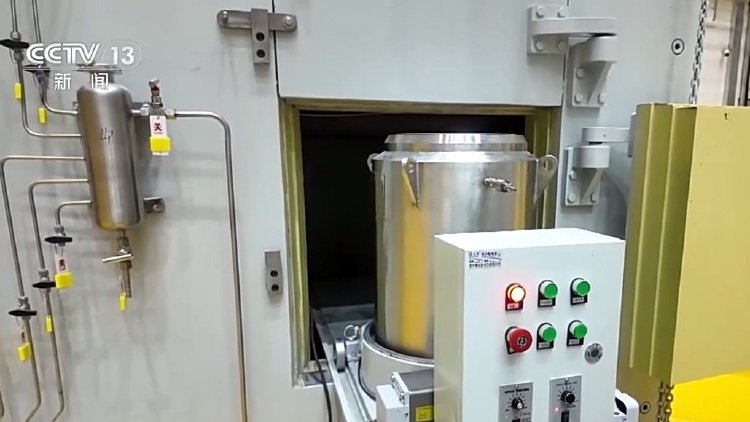
周末,利好来了!重大突破!
券商中国· 2025-11-01 12:46
Core Viewpoint - China has achieved a significant breakthrough in nuclear energy by successfully converting thorium-uranium nuclear fuel using a molten salt reactor, paving the way for industrial applications of thorium-based molten salt reactors in the country [1][2][4]. Group 1: Technological Breakthrough - The 2MWt liquid fuel thorium-based molten salt experimental reactor has successfully achieved thorium-uranium fuel conversion, becoming the only molten salt reactor in the world to operate with thorium fuel [2][3]. - This technology demonstrates the feasibility of utilizing thorium resources in nuclear energy systems, reinforcing China's leading position in international molten salt reactor research [2][3]. Group 2: Resource Advantages - China has abundant thorium reserves, which can replace the traditional reliance on uranium, thus providing a critical opportunity for the nuclear energy sector to "leapfrog" its development [1][4]. - The conversion of thorium into fissile uranium-233 through neutron bombardment is a key technological advancement, allowing for efficient energy production [4][5]. Group 3: Economic and Safety Benefits - The thorium resources are often by-products of rare earth mining, significantly reducing the cost of nuclear fuel acquisition while enhancing the value of rare earth extraction [5]. - The molten salt reactor operates at high temperatures (600-700°C) without the need for external water sources, fundamentally improving safety and allowing for flexible site selection, which can extend nuclear power capabilities into inland areas [5][6]. Group 4: Market Performance - The nuclear energy sector has seen strong performance in the stock market, with nearly 30 related stocks increasing by over 100% this year, and the nuclear energy index rising by approximately 52% [6]. - According to the China Nuclear Energy Development Report (2025), China's operational nuclear power capacity is expected to become the largest in the world by 2030, with projections of reaching 200 million kilowatts by 2040 [6].

里程碑式突破!我国自研,首次实现
中国能源报· 2025-11-01 02:57
Core Viewpoint - The successful construction and operation of China's thorium-based molten salt experimental reactor marks a significant advancement in utilizing thorium resources, laying a scientific foundation for future large-scale applications of thorium fuel [1][3]. Group 1: Reactor Development - The thorium-based molten salt experimental reactor is China's independently developed fourth-generation advanced fission nuclear energy system and is currently the only molten salt reactor in the world that has achieved thorium fuel operation [3]. - The reactor uses thorium as nuclear fuel and liquid fluoride salt as a coolant, offering advantages such as safety, no water cooling, operation at atmospheric pressure, and high-temperature output [3]. - Since the project's initiation in 2011, the research team has overcome key technologies related to materials, instruments, equipment development, and system integration [3]. - The reactor features an innovative integrated design that combines the core, fuel salt pump, heat exchanger, and other key components within the main reactor vessel, significantly reducing the risk of radioactive leakage and enhancing safety [3]. - The overall domestic production rate of the reactor exceeds 90%, with 100% of key core equipment being domestically produced, ensuring a controllable supply chain [3]. Group 2: Strategic Importance - The thorium-based molten salt reactor represents a clean and efficient energy system that can integrate with high-temperature molten salt energy storage, high-temperature hydrogen production, solar energy, wind energy, and coal gasification, forming a low-carbon complementary energy system and low-carbon chemical framework [5]. - China's abundant thorium resources and the establishment of thorium-based molten salt reactors can promote national energy independence, providing significant support for the country's energy security and sustainable development [5].

国际首次、目前唯一 中国建成钍基熔盐实验堆引领世界
Zhong Guo Xin Wen Wang· 2025-11-01 01:19
Core Insights - China has successfully built the world's first and only thorium-based molten salt experimental reactor (TMSR), demonstrating the feasibility of utilizing thorium resources in nuclear energy systems [2][3] Group 1: Technological Advancements - The TMSR, with a capacity of 2 megawatts, has achieved thorium-uranium fuel conversion and is the only molten salt reactor operating with thorium fuel globally, marking a significant milestone in thorium molten salt reactor development [2][4] - The molten salt reactor technology is recognized for its inherent safety, no water cooling, atmospheric operation, and high-temperature output, making it well-suited for thorium resource utilization [3][4] Group 2: Domestic Development and Collaboration - The project has achieved over 90% domestic production rate for the experimental reactor, with 100% of key core equipment being domestically sourced, establishing a self-controlled supply chain [6] - Nearly 100 domestic research institutions, universities, and industrial groups participated in the research and engineering construction, overcoming various technical challenges [6][4] Group 3: Future Plans and Goals - The project team aims to establish a 100-megawatt thorium molten salt reactor demonstration project by 2035, accelerating technology iteration and engineering transformation [9][7] - The successful operation of the TMSR lays a solid foundation for the three-step development strategy of experimental, research, and demonstration reactors [9][7]
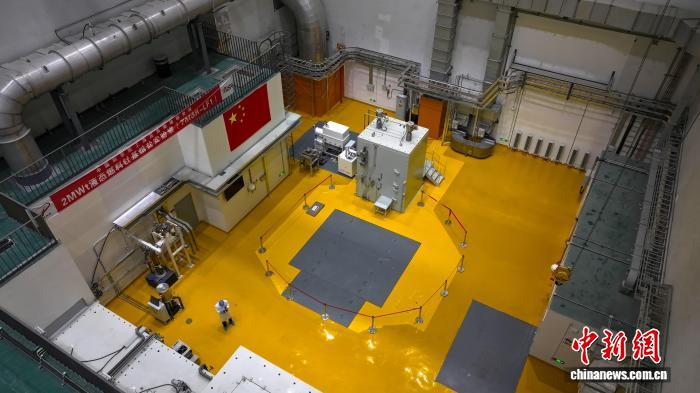
我国钍基熔盐实验堆建成并首次实现堆内钍铀转化
财联社· 2025-11-01 00:36
Core Viewpoint - The successful operation of the thorium molten salt experimental reactor in Gansu Province marks a significant advancement in the feasibility of utilizing thorium resources for nuclear energy generation [1] Group 1: Project Overview - The thorium molten salt experimental reactor is China's independently developed fourth-generation advanced fission nuclear energy system [1] - It is currently the only molten salt reactor in the world that has achieved the insertion of thorium fuel [1] Group 2: Technical Features - The reactor uses thorium as nuclear fuel and liquid fluoride salt as a coolant, offering advantages such as safety, no water cooling, operation at atmospheric pressure, and high-temperature output [1] - The overall domestic production rate of the reactor exceeds 90%, with 100% of key core equipment being domestically produced, ensuring a controllable supply chain [1]