
金融租赁

Search documents
中资美元债周报:一级市场发行量回升,二级市场小幅上涨-20250915
Guoyuan Securities2· 2025-09-15 09:28
1. Report Industry Investment Rating No industry investment rating information is provided in the report. 2. Core Viewpoints of the Report - Last week, the issuance volume in the primary market of Chinese offshore bonds rebounded, and the secondary market showed a slight increase. The yields of US Treasury bonds mostly fluctuated upwards. There were various macro - economic events globally, including inflation data, employment data, and central bank policies [1][2][4]. 3. Summary According to Relevant Catalogs 3.1 Primary Market - The issuance volume in the primary market of Chinese offshore bonds rebounded last week, with 11 new bonds issued, totaling approximately $3.02 billion. The largest issuance was an $800 million green bond issued by China Construction Bank Shipping and Aviation Financial Leasing [1][6][9]. 3.2 Secondary Market 3.2.1 Performance of Chinese USD Bond Indexes - The Bloomberg Barclays Chinese USD bond index rose 0.29% week - on - week, and the emerging market USD bond index rose 0.48%. The investment - grade index of Chinese USD bonds closed at 200.6015, with a weekly increase of 0.29%, and the high - yield index closed at 163.463, also with a weekly increase of 0.29%. - The Markit iBoxx Chinese USD bond return index rose 0.18% week - on - week. The investment - grade return index closed at 241.6623, with a weekly increase of 0.18%, and the high - yield return index closed at 245.3842, with a weekly increase of 0.20% [4][8][13]. 3.2.2 Performance of Various Industries of Chinese USD Bonds - The healthcare and materials sectors led the gains, while the consumer staples and real estate sectors led the losses. The yield of the healthcare sector decreased by 774.9 bps, and that of the materials sector decreased by 38.1 bps. The yield of the consumer staples sector increased by 927.5 bps, and that of the real estate sector increased by 43.5 bps [17]. 3.2.3 Performance of Different Ratings of Chinese USD Bonds - Investment - grade names generally rose. The yield of the A - rated bonds decreased by 15.2 bps weekly, and that of the BBB - rated bonds decreased by 2.5 bps. Most high - yield names rose. The yield of the BB - rated bonds decreased by 4.0 bps, and that of the DD+ to NR - rated bonds decreased by about 5.4 bps. The yield of non - rated names increased by 808.4 bps [19][20]. 3.2.4 Hot Events in the Bond Market Last Week - Fanhai Holding failed to repay RMB 32.865 billion in interest - bearing debts on schedule. - Zhengrong Real Estate had new progress in major enforcement information, with a target amount of RMB 614 million. - Longfor Group's overseas debt restructuring plan made significant progress, adding asset trust and convertible bond options [20][21][23]. 3.2.5 Rating Adjustments of Entities Last Week - There were multiple rating adjustments for companies such as Aomen Grand Lisboa, Huainan High - tech Holdings, Tencent Music, and others. The reasons for the adjustments included business performance, market position, and industry environment [25][27][28]. 3.3 US Treasury Bond Quotes - The report provides quotes for 30 US Treasury bonds with maturities over 6 months, sorted by yield to maturity from high to low [29]. 3.4 Macro Data Tracking - As of September 12, the yields of US Treasury bonds were as follows: 1 - year (T1) was 3.6507%, up 0.08 bps from last week; 2 - year (T2) was 3.5556%, up 4.64 bps; 5 - year (T5) was 3.6334%, up 5.17 bps; 10 - year (T10) was 4.0643%, down 0.99 bps [33]. 3.5 Macro News - US CPI in August was 2.9% year - on - year, in line with expectations. Initial jobless claims increased by 27,000 to 263,000, the highest since October 2021. - Trump criticized Fed Chairman Powell, stating that the US has "no inflation." - US PPI declined 0.1% month - on - month in August, against an expected increase of 0.3%. - US non - farm employment was revised down by 911,000 from March last year to March this year. - OPEC maintained its global crude oil demand growth forecast for 2025 and 2026. - The European Central Bank kept its three key interest rates unchanged. - Japan's Q2 real GDP was revised up to a 0.5% quarter - on - quarter increase and a 2.2% year - on - year increase. - China's CPI was flat month - on - month and down 0.4% year - on - year in August. The central bank announced that the cumulative increase in social financing scale in the first eight months of 2025 was RMB 26.56 trillion. - China's goods trade import and export value increased 3.5% year - on - year in August. - The growth rate of national enterprise sales revenue in August accelerated by 0.9 percentage points compared to July. - The comprehensive inventory coefficient of automobile dealers in August was 1.31, down 3% month - on - month and up 12.9% year - on - year. - China's automobile production and sales increased 13% and 16.4% year - on - year in August respectively. - After the "8·8" real estate policy in Beijing was implemented for a full month, the transaction volumes of new and second - hand houses increased [30][31][35][36][37][38][39][40][43][44][45][47][48].
四川天府金租10%股权遭司法拍卖,起拍价达1.26亿元
Zheng Quan Shi Bao Wang· 2025-09-15 06:49
人民财讯9月15日电,阿里司法拍卖平台信息显示,万腾实业集团有限公司持有的四川天府金租10%股 权将于10月中旬在该平台公开拍卖,起拍价达1.26亿元。天府金租由四川天府银行发起设立,于2016年 底正式开业,其中万腾实业持股10%。 ...
金融租赁行业总资产超4.5万亿元(财经短波)
Ren Min Ri Bao· 2025-09-14 22:34
Group 1 - The core viewpoint of the report indicates that the financial leasing industry in China is experiencing significant growth in both total assets and leasing asset balances, projected to reach 4.58 trillion yuan and 4.38 trillion yuan respectively by the end of 2024, with year-on-year growth rates of 9.56% and 10.24% [1] - The profitability of financial leasing companies has notably improved, with total profits expected to reach 76.244 billion yuan in 2024, reflecting a year-on-year increase of 13.36%, and net profits projected at 58.276 billion yuan, up 13.79% year-on-year [1] - Financial leasing companies are actively supporting national strategies and economic development, with aircraft and shipping businesses becoming key pillars; by the end of 2024, these companies are expected to be the largest holders of domestic aircraft orders, and domestic ships will account for the majority of new ship orders [1]
金融监管总局修订发布金融机构消费者权益保护监管评价办法
Xin Hua She· 2025-09-12 15:36
Core Viewpoint - The National Financial Regulatory Administration has revised the "Regulatory Evaluation Method for Consumer Rights Protection in Financial Institutions," aiming to enhance the protection of financial consumers' rights and interests through improved evaluation mechanisms and procedures [1] Group 1: Evaluation Scope and Elements - The evaluation now includes financial leasing companies and pension insurance companies, expanding the range of financial institutions subject to consumer rights protection evaluation [1] - The evaluation elements have been adjusted to include seven key areas: "system and mechanism," "suitability management," "marketing behavior management," "dispute resolution," "financial education," "consumer services," and "personal information protection," guiding institutions to strengthen governance in critical consumer protection areas [1] Group 2: Evaluation Procedures - The evaluation process has been further detailed into stages: information collection, initial evaluation, re-evaluation, and review, with specific requirements outlined for each stage to ensure rigor and seriousness in the evaluation work [1] - The evaluation will place greater emphasis on the quality and effectiveness of consumer protection work at grassroots financial institutions, increasing the weight of evaluation scores for primary branches [1] Group 3: Regulatory Measures - The regulatory authority will implement differentiated regulatory measures based on the evaluation results, providing positive incentives for institutions with good evaluations and taking appropriate regulatory actions against those with poor evaluations [1]
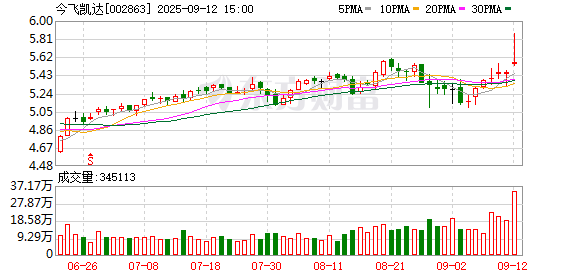
今飞凯达:关于申请增加综合授信额度的公告
Zheng Quan Ri Bao· 2025-09-12 14:13
Group 1 - The company, Jinfei Kaida, announced on September 12 that it will hold the 26th meeting of the fifth board of directors on September 12, 2025 [2] - The board approved a proposal to apply for an increase in the comprehensive credit limit, allowing the company and its subsidiaries to apply for an additional credit limit of up to 60 million RMB [2] - The types of credit facilities include but are not limited to bank loans, bank acceptance bills, letters of credit, export invoice financing, and bill pledges [2]


金融机构消保监管评价对象扩围 金融租赁、养老保险公司被纳入
Zheng Quan Shi Bao Wang· 2025-09-12 12:29
Core Points - The Financial Regulatory Bureau has revised and released the "Regulatory Evaluation Measures for Consumer Rights Protection of Financial Institutions," expanding the evaluation scope to include financial leasing companies and pension insurance companies [1][2] - The evaluation criteria have been adjusted from six to seven key elements, including "system mechanism," "suitability management," "marketing behavior management," "dispute resolution," "financial education," "consumer services," and "personal information protection" [1][2] - The evaluation process has been refined into distinct stages: information collection, initial evaluation, re-evaluation, and review, with an emphasis on collective research for the re-evaluation and review stages [1][2] Evaluation Weighting and Implementation - The evaluation score weight for primary branch institutions has increased from 40% to 50%, highlighting the importance of grassroots financial institutions in consumer protection work [2] - The Financial Regulatory Bureau's local agencies can adjust evaluation indicators based on the type, business model, scale, and customer demographics of financial institutions in their jurisdiction [2] - The evaluation results will lead to differentiated regulatory measures, providing positive incentives for institutions with good evaluation results and corresponding regulatory actions for those with poor results [2]
金融监管总局:将养老保险公司等纳入消费者权益保护监管评价范围
Bei Jing Shang Bao· 2025-09-12 11:49
Core Points - The Financial Regulatory Administration has released the "Regulatory Evaluation Method for Consumer Rights Protection of Financial Institutions" [1] - The evaluation targets financial institutions providing products and services to consumers within China, including financial leasing companies and pension insurance companies [1] - Institutions not engaged in personal business or with minimal personal business are excluded from the evaluation [1] Evaluation Elements - The evaluation consists of seven elements: "System Mechanism," "Suitability Management," "Marketing Behavior Management," "Dispute Resolution," "Financial Education," "Consumer Services," and "Personal Information Protection" [2] - Each element comprises several evaluation indicators, with the total weight of the elements summing to 100% [2] - Specific weight requirements include: System Mechanism (minimum 10%), Suitability Management (minimum 10%), Marketing Behavior Management (minimum 25%), Dispute Resolution (minimum 25%), Financial Education (minimum 10%), Consumer Services (minimum 5%), and Personal Information Protection (minimum 5%) [2]
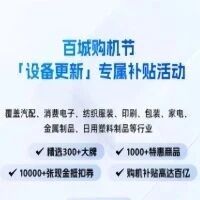
政策引领服务升级 永赢金租“设备之家”启动“百城购机节”
和讯· 2025-09-12 09:51
Core Insights - The article highlights the importance of upgrading equipment for manufacturing efficiency and competitiveness, showcasing the success story of a machining company that utilized the "Equipment Home" platform to overcome production challenges [1][2]. Group 1: Equipment Upgrade Challenges - A machining company faced significant delays in order fulfillment due to outdated equipment, which increased production time from 3 days to 5 days [1]. - The financial constraints of the company made it difficult to invest in new machinery, with quotes for new equipment exceeding 600,000 yuan and low offers for old machines [1]. Group 2: Solution through "Equipment Home" - The company discovered the "Equipment Home" platform, which provided a tailored solution involving an "old-for-new" exchange and installment leasing for a new high-speed horizontal machining center, improving precision and efficiency by 60% [2]. - The platform facilitated a quick sale of the old machine, yielding an 18% higher price than expected, and provided a 5,000 yuan coupon to reduce the upfront cost of the new equipment [2]. Group 3: Promotional Campaign and Benefits - The "Equipment Home" platform launched a "Hundred Cities Purchasing Festival" to help more manufacturing businesses upgrade their equipment affordably and efficiently, offering cash vouchers starting from 5,000 yuan [2][3]. - The platform features over 400 popular equipment models at discounted prices, with some items available at 60% off the market price, enhancing competitiveness for businesses [3]. Group 4: Additional Services and Support - The platform offers a comprehensive insurance policy covering equipment against various risks, potentially saving businesses up to 18,000 yuan in insurance premiums [3]. - Membership benefits include exclusive discounts on consumables, enhancing the overall purchasing experience for manufacturing companies [3]. Group 5: Industry Impact - "Equipment Home" has partnered with over 5,500 equipment manufacturers and dealers, serving more than 300,000 enterprise members and achieving a cumulative transaction amount exceeding 5.5 billion yuan [3].
兴业控股(00132.HK)附属与长沙榔梨自来水订立融资租赁
Ge Long Hui· 2025-09-12 09:39
Group 1 - The core point of the article is that Industrial Holdings (00132.HK) announced a financing lease agreement with Changsha Langli Water Supply Co., Ltd. for an amount of RMB 35 million [1] - The lease involves the acquisition of ownership of certain specified water production and transmission equipment and facilities located in Changsha, Hunan Province [1] - The lease term is set for three years, during which the assets will be leased back to the lessee for their use and possession [1]
永赢金租“设备之家”启动“百城购机节”
Zhong Guo Jing Ji Wang· 2025-09-12 09:06
Core Insights - The article highlights the challenges faced by small and medium-sized manufacturing enterprises, particularly in upgrading outdated equipment, and presents a solution through the "Equipment Home" platform by Yongying Jin Rental [1][2][3] Group 1: Equipment Upgrade Challenges - A manufacturing company, Jinggong Processing, struggles with outdated machinery, leading to delays in order fulfillment and customer complaints [1] - The cost of new equipment is prohibitive, with quotes starting at over 600,000 yuan, while selling old machines yields low offers and long wait times [1] Group 2: Solution Offered by "Equipment Home" - The "Equipment Home" platform provides a tailored "trade-in and installment leasing" plan, allowing companies to upgrade to new machinery with improved precision and efficiency [1][2] - The platform facilitated a quick sale of the old machine, providing five offers within two hours, resulting in a sale price 18% higher than expected [1] - The new equipment significantly improved production efficiency, allowing the company to fulfill backlogged orders and secure long-term contracts [1] Group 3: Promotional Campaign and Benefits - The "Hundred Cities Purchase Festival" runs from July 27 to September 28, aiming to help more manufacturing companies upgrade their equipment affordably and efficiently [1][3] - The platform offers cash vouchers starting from 5,000 yuan, which can be used to reduce the cost of new equipment, allowing companies to allocate savings towards other necessary tools [2] - A wide range of popular equipment is available at discounted prices, with some models offered at 60% off the market price [2] Group 4: Insurance and Membership Benefits - The platform provides free equipment insurance with coverage up to 5 billion yuan, protecting against losses from unforeseen events like fires and natural disasters [2] - Membership benefits include exclusive discounts on consumables, enhancing the overall value proposition for manufacturing companies [2][3] - The platform has partnered with over 5,500 equipment manufacturers and dealers, serving more than 300,000 enterprise members and achieving a cumulative transaction amount exceeding 5.5 billion yuan [3]