
文化产业

Search documents
把握中国经济的新变化与新机遇(评论员观察)
Ren Min Ri Bao· 2025-08-27 21:48
Core Insights - The central theme of the articles highlights the emerging opportunities in China's central and western regions, driven by structural economic adjustments and the activation of development potential in these areas [1][3][4]. Regional Development Opportunities - Chongqing has emerged as a leading consumer city, with a significant increase in inbound tourism, reflecting the region's growing importance in the national economy [1]. - Other central provinces, such as Henan and Hubei, are also showing strong consumer performance, with Henan's consumption growth exceeding the national average by 2.2 percentage points [2]. Industrial Upgrading Opportunities - The construction of a unified national market is facilitating resource flow and breaking down barriers, leading to more balanced regional development [3]. - Inland provinces are experiencing substantial export growth, with Henan's exports increasing by 38.8% and Hubei's by 38.5%, indicating resilience in their industrial structures [3][4]. Innovation as a Key Variable - Regions that are lagging can still gain competitive advantages by accelerating the development of new productive forces, as seen in Anhui's rise in the electric vehicle sector and Zhengzhou's cultural industry growth [4]. - The focus on innovation is crucial for reshaping existing economic patterns, with industries pursuing new models and dynamics [4]. Consumer Behavior Changes - There is a notable shift in consumer demand towards personalized and culturally rich products, with a rise in flexible manufacturing to meet diverse needs [5][6]. - The younger demographic, particularly those aged 14-35, is driving digital consumption, creating new market opportunities for businesses [6]. Conclusion - The articles emphasize that those who can identify and seize these new opportunities will gain a competitive edge in the evolving economic landscape of China [1][4][6].
英皇文化产业发盈警 预计年度净亏损将同比大幅收窄至不多于2亿港元
Zhi Tong Cai Jing· 2025-08-27 12:27
Group 1 - The company, Emperor Culture Industry (00491), expects a significant reduction in net loss for the fiscal year ending June 30, 2025, to not more than HKD 200 million, compared to HKD 715 million in 2024 [1] - The improvement in net loss is primarily attributed to a substantial decrease in impairment provisions for right-of-use assets and property, plant, and equipment, which are expected to be reduced to not more than HKD 70 million, down from HKD 428 million in 2024 [1]
英皇文化产业(00491)发盈警 预计年度净亏损将同比大幅收窄至不多于2亿港元
智通财经网· 2025-08-27 12:21
Group 1 - The core viewpoint of the article is that Emperor Culture Industry (00491) expects a significant reduction in net loss for the fiscal year ending June 30, 2025, to not more than HKD 200 million, compared to HKD 715 million in 2024 [1] - The improvement is primarily attributed to a substantial decrease in impairment provisions for right-of-use assets and property, machinery, and equipment, which are expected to be reduced to not more than HKD 70 million, down from HKD 428 million in 2024 [1]
云浮推出文化建设“政策包”,顺德加力掘金村域经济 | “百千万”周周见
Nan Fang Nong Cun Bao· 2025-08-27 11:02
Group 1 - Guangdong Province has introduced a "policy package" for cultural construction in Yunfu, focusing on developing the cultural industry and supporting cultural enterprises [10][50][55] - The policy package includes four major measures aimed at promoting artistic creation, film industry, digital culture, and internet content creation, with a total of 35 policy initiatives [54][59][60] - The initiatives emphasize the construction of vertical creative matrices in specialized fields, targeting industries such as metal manufacturing, green building materials, and modern agriculture [61][62] Group 2 - The "Hundred-Thousand-Ten Thousand Project" is being actively promoted in Shunde, with a focus on developing rural economies by utilizing idle resources identified during pandemic control efforts [15][90][91] - The project aims to enhance the economic vitality of rural areas, leveraging their unique advantages in industry, culture, and ecology to drive overall regional development [86][87] - Shunde's approach includes cleaning up thousands of acres of idle land and nearly 30,000 vacant houses to convert dormant assets into capital for rural economic growth [90][91] Group 3 - The "Media+" initiative is being implemented to empower the high-quality development of the Guangdong livestock industry, with a focus on brand building, market expansion, and technological upgrades [36][38][39] - The initiative sets ambitious goals for 2027, including the establishment of a regional public brand system and the creation of over 100 livestock brands with annual outputs exceeding 1 billion [40][41][42] - The plan also emphasizes the integration of livestock with cultural tourism, promoting new business models and enhancing the overall value of agricultural products [45][46]


旅橙文化发布中期业绩,股东应占亏损121.5万元 同比盈转亏
Zhi Tong Cai Jing· 2025-08-27 10:48
Core Viewpoint - The company reported a significant decline in revenue and incurred a loss in the latest financial period compared to the previous year [1] Financial Performance - The company achieved revenue of 5.072 million, representing a year-on-year decrease of 59.11% [1] - The loss attributable to the owners of the company was 1.215 million, whereas the same period last year showed a profit of 0.687 million [1] - The loss per share was 0.15 cents [1]
广东拟9月12日启动“金秋文旅消费季”惠民补贴活动 发放2000万元消费券
Nan Fang Ri Bao Wang Luo Ban· 2025-08-27 08:20
Group 1 - The Guangdong Cultural and Tourism Promotion Conference will take place from September 12 to 14, featuring multiple events including the Golden Autumn Cultural and Tourism Consumption Season and the Guangdong International Tourism Industry Expo [1][2] - The "Golden Autumn Cultural and Tourism Consumption Season" will launch with a special fund of 20 million yuan to distribute cultural and tourism consumption vouchers to local residents and visitors [1][4] - The International Tourism Expo will expand its international exhibition area, with participation from 26 countries and regions, including Saudi Arabia, which will showcase its tourism offerings for the first time [2][3] Group 2 - The conference will introduce new tourism consumption trends, including "Tourism + Performing Arts," "Tourism + Food," and "Tourism + Sports," along with AI applications in the cultural and tourism sectors [2][6] - A new inbound tourism exhibition area will be established to provide a comprehensive understanding of Guangdong's tourism offerings, along with a talent matchmaking event targeting various demographics [3][5] - The investment and financing matchmaking event will attract 120 investment and operation institutions, featuring 332 projects from 13 provinces and 32 projects for live presentations [5][6] Group 3 - The concurrent "2025 Guangdong-Hong Kong-Macao Greater Bay Area Old Brand Expo" will feature over 400 exhibitors and is expected to attract more than 100,000 visitors [7] - The Old Brand Expo aims to integrate traditional crafts with modern technology, enhancing the cultural tourism experience and making it more dynamic [7]
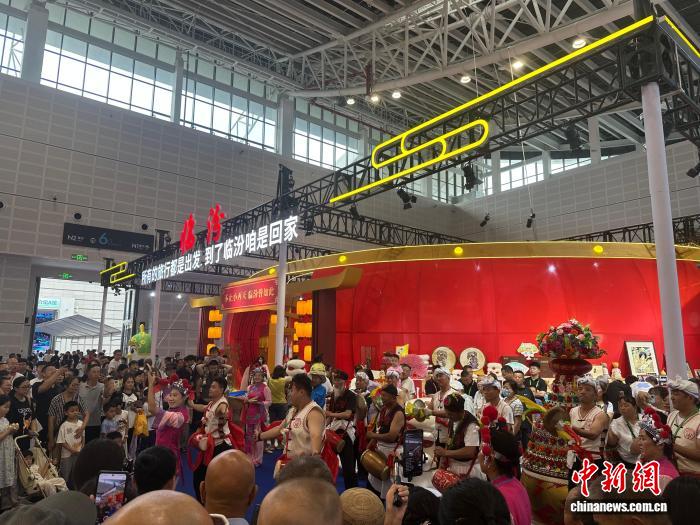
第七届山西文化产业博览交易会销售总额突破2.8亿元
Zhong Guo Xin Wen Wang· 2025-08-26 22:08
该展会通过打造集视觉、听觉、互动体验与交易功能于一体的文化展示空间,举办"山西文化地标""山 西文化科技融合发展""山西省文化传承发展"典型案例发布活动,全方位、立体式展现了三晋文化的独 特魅力。(完) 本届文博会由山西省委宣传部、山西省科技厅、山西省文旅厅、山西省广电局、山西省文物局联合主 办,采用"线下为主、线上同步"的方式举办,线下设置一个主会场和多个分会场。 主会场共设置7大主题展馆,包括文化产业综合馆、文化科技馆、文化专题馆、文化消费馆、文化贸易 馆、工美·非遗互动馆等,并在山西省多地设立分会场。其间,主会场共举办各类文化活动799场,全省 15个分会场也同步推出547场活动。 中新网太原8月26日电(记者李庭耀杨静)8月21日至25日,第七届山西文化产业博览交易会在山西潇河国 际会展中心举办,据不完全统计,现场交易和线上销售总额突破2.8亿元,达成合作意向66.1亿元。 (文章来源:中国新闻网) 山西文化产业博览交易会是山西省规模最大、影响最广的省级重点文化展会,自2013年创办以来每两年 举办一届,至今已成功举办七届。 本届展会展览面积为7万平方米,共有来自全国31个省(区、市)、港澳台地区以及 ...
珠海经济特区45岁生日 不收“礼”收“策略”
2 1 Shi Ji Jing Ji Bao Dao· 2025-08-26 16:17
Core Viewpoint - Zhuhai is positioning itself for future industrial breakthroughs and urban enhancement, focusing on industrial upgrades and regional cooperation as key development themes [1][2]. Group 1: Industrial Development - Zhuhai is accelerating the construction of a modern industrial system, targeting emerging sectors such as artificial intelligence, low-altitude economy, and marine economy [2]. - The city has attracted over 40 artificial intelligence enterprises, with the core AI industry generating over 20 billion yuan in output [2]. - Initiatives like "Cloud Smart City" and "Sky City" are being developed to enhance technological capabilities and infrastructure for low-altitude traffic management [2]. Group 2: Regional Cooperation - Zhuhai is redefining its role within the Guangdong-Hong Kong-Macau Greater Bay Area, acting as a key node for collaborative development [5][6]. - The city is encouraged to deepen cooperation with Macau and other Bay Area cities, focusing on institutional innovation and cross-border integration in various sectors [6][7]. - Strategies include forming industry alliances, enhancing government collaboration, and leveraging legislative powers for coordinated innovation [7]. Group 3: Cultural and Tourism Development - Experts suggest developing cultural industry parks and enhancing infrastructure to foster cultural enterprise clusters [4]. - Zhuhai is advised to create premium tourism routes targeting visitors from Hong Kong and Macau, integrating various tourism resources into cohesive packages [8]. - The city aims to enhance its digital service trade, which currently accounts for 25% of its service trade total, by strengthening capabilities in financial services and new technologies [8].
珠海经济特区45岁生日,不收“礼”收“策略”
2 1 Shi Ji Jing Ji Bao Dao· 2025-08-26 14:17
Core Insights - Zhuhai is positioning itself for future industrial upgrades and urban enhancement, focusing on technology innovation and regional cooperation as key development themes [1][2][3] Group 1: Industrial Development - Zhuhai is actively promoting the integration of technology and industry, targeting sectors such as artificial intelligence, low-altitude economy, and marine economy to build a modern industrial system [2] - The city has seen the emergence of over 40 artificial intelligence enterprises, with the core AI industry generating more than 20 billion yuan in output [2] - Initiatives like the "Cloud City" and "Sky City" are being developed to enhance its technological capabilities and infrastructure for low-altitude traffic management [2][4] Group 2: Regional Cooperation - Zhuhai is redefining its role within the Guangdong-Hong Kong-Macao Greater Bay Area, acting as a critical node for collaborative development [5][6] - The city aims to deepen cooperation with Macau and other Bay Area cities, focusing on institutional innovation and expanding cultural and tourism collaborations [6][7] - Strategies include forming industry alliances and enhancing legislative cooperation to foster innovation across key sectors [7] Group 3: Urban and Cultural Development - Experts suggest that Zhuhai should develop cultural industry parks and improve infrastructure to create a conducive environment for cultural enterprises [4] - The city is encouraged to enhance its tourism offerings by creating diverse travel routes and integrating resources to attract visitors from Hong Kong and Macau [8] - There is a push for Zhuhai to leverage its special economic zone status to innovate in domestic and international cooperation mechanisms, particularly in digital service trade [8]
亮点纷呈,2025年服贸会文旅服务专题9月亮相首钢园
Xin Jing Bao· 2025-08-26 10:54
Group 1: Event Overview - The 2025 China International Service Trade Fair's cultural tourism service section will take place from September 10 to 14 at Shougang Park, featuring the theme "Empowering Culture with Technology, Leading with Creativity" [1] - The event will showcase four main areas: traditional Chinese culture, new cultural productivity, integration of culture and commerce, and overseas dissemination of cultural products [1] - A total of 456 companies will participate, including 85 Fortune 500 and industry-leading firms, highlighting the integration of cultural technology and creativity [1] Group 2: Industry Performance - In the first half of the year, Beijing's cultural enterprises achieved a revenue of 1.22 trillion yuan, a year-on-year increase of 13.3%, with new cultural business models generating 880.88 billion yuan, up 15.9% [2][11] - The cultural new business models accounted for 72.1% of the total revenue of cultural enterprises in the city, indicating a strong growth trend in this sector [2][12] - The cultural industry in Beijing has become a significant pillar of the economy, with its value added accounting for 11.4% of the city's GDP, maintaining the top position nationwide [11] Group 3: Technological Integration - The event will feature cutting-edge technologies such as blockchain, AIGC, AR/VR, and high-definition video production to create interactive experiences [3] - AI digital humans and robots will be showcased, enhancing audience interaction and engagement [3] - The integration of technology in cultural experiences aims to foster new cultural productivity and enhance production efficiency [2] Group 4: Cultural Heritage and Innovation - The fair will focus on the creative transformation and innovative development of traditional Chinese culture, particularly in relation to the Beijing Central Axis heritage application [4] - Various immersive experiences and digital art exhibitions will be presented, showcasing the beauty of traditional architecture and cultural heritage [4][8] - The event will also feature a range of cultural products and experiences that blend traditional and modern elements, promoting cultural diversity and innovation [5][6] Group 5: International Collaboration - The fair will establish a platform for cultural trade and international exchange, inviting participation from over 20 countries and international organizations [6] - It will include various themed exhibitions and interactive projects aimed at enhancing cultural understanding and collaboration [6][11] - The event will also promote inbound tourism by showcasing quality travel products and services for international visitors [6]