地产开发

Search documents
54岁香港地产豪门CEO官宣将退休,已执掌恒隆地产7年;毕业于香港大学,曾在宝洁、可口可乐、花旗集团任职
Sou Hu Cai Jing· 2025-12-22 12:46
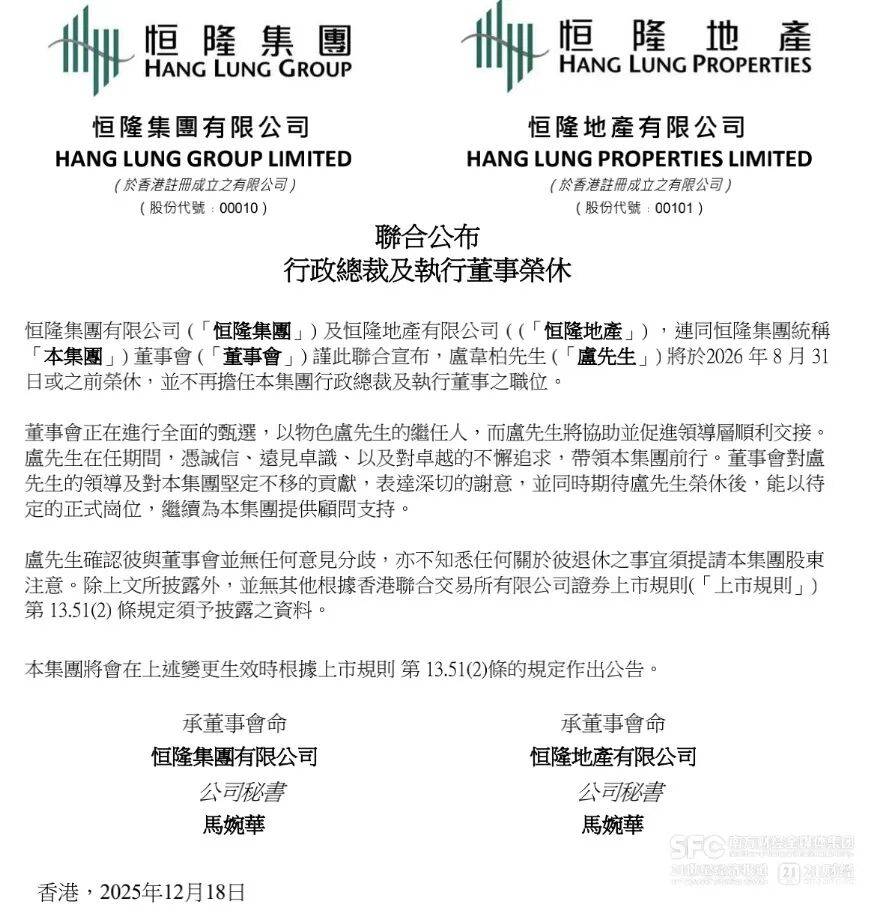
Group 1 - The core announcement is that Weber Lu, the CEO of Hang Lung Group, will retire by August 31, 2026, and the board is currently conducting a search for his successor [1][6] - Lu has been with Hang Lung since May 2018 and previously held significant positions at Procter & Gamble, Coca-Cola, and Citigroup, where he served for 18 years [3] - Lu currently holds 1,128,542 shares of Hang Lung Properties, representing 0.02% of the total issued shares, and 460,000 shares of Hang Lung Group, representing 0.03% of the total issued shares [5] Group 2 - Under the leadership of Chen Wenbo, who took over as chairman in April 2024, the company is transitioning from "heavy asset expansion" to "stock optimization" as part of the "Hang Lung V.3" strategy [6] - Lu expressed gratitude for the support from the board and highlighted the achievements during his tenure, including strengthening the brand and launching significant strategies [6] - The company has faced challenges due to the adjustment in the Chinese real estate market and a decline in luxury consumption, with rental income from mainland properties dropping by 2% to HKD 3.199 billion in the first half of 2025 [7]



——土地市场月度跟踪报告(2025年11月):1-11月百城宅地成交建面同比-15%,成交楼面均价同比+9%-20251222
EBSCN· 2025-12-22 09:57
Investment Rating - The report maintains a rating of "Accumulate" for the real estate sector [5] Core Insights - In the first 11 months of 2025, the transaction area of residential land in 100 cities decreased by 15% year-on-year, while the average transaction floor price increased by 9% year-on-year [1][20] - The top three companies in terms of new land reserve value from January to November 2025 are China Overseas Land & Investment (COLI) with 96.2 billion yuan, China Resources Land with 75.7 billion yuan, and China Merchants Shekou with 75.4 billion yuan [2][89] - The core 30 cities saw a cumulative year-on-year decrease of 5% in residential land transaction area, but a 13% increase in average transaction price [2][3] Summary by Sections Land Supply and Demand - In the first 11 months of 2025, the total supply of land in 100 cities decreased by 11.9% year-on-year, with a total transaction area of 10.68 billion square meters [10] - The supply of residential land in 100 cities for January to November 2025 was 348 million square meters, down 16.5% year-on-year, while the transaction area was 221 million square meters, down 15.1% year-on-year [20][1] Land Transaction Prices - The average transaction floor price for residential land in 100 cities increased by 9.4% year-on-year, reaching 6,295 yuan per square meter [1][55] - In November 2025, the average transaction price for residential land in first-tier cities was 39,283 yuan per square meter, up 29.5% year-on-year [66] Top 50 Real Estate Companies' Land Acquisition - The top 50 real estate companies saw a cumulative year-on-year increase of 22.1% in new land reserve value, totaling 861.8 billion yuan from January to November 2025 [81] - The top three companies in terms of new land reserve area were China Overseas Land & Investment (4.38 million square meters), Poly Developments (3.63 million square meters), and China Merchants Shekou (3.14 million square meters) [89] Core 30 Cities Land Transaction Situation - In November 2025, the core 30 cities recorded a total of 208 residential land transactions, with a total area of 1.529 million square meters, down 14.4% year-on-year [94] - The overall premium rate for land transactions in the core 30 cities was 2.2%, down 4.1 percentage points year-on-year [94] Investment Recommendations - The report suggests focusing on companies with strong brand reputation and sales performance in core cities, recommending Poly Developments, China Merchants Shekou, and China Jinmao [4][117] - It also highlights the potential of companies with rich existing resources and operational brand competitiveness, recommending China Resources Land and Shanghai Lingang [4][117] - The report sees long-term growth potential in property services, recommending companies like China Merchants Jiyu and China Resources Vientiane Life [4][117]





德祥地产完成发行合共1.008亿股认购股份
Zhi Tong Cai Jing· 2025-12-22 09:14
Core Viewpoint - 德祥地产 has successfully completed the conditions outlined in the subscription agreement and has issued a total of 100.8 million new shares at a subscription price of HKD 0.7 per share, effective December 22, 2025 [1] Group 1 - The 100.8 million shares represent approximately 11.11% of the company's total issued shares prior to the completion of the subscription [1] - After the issuance of the new shares, they will account for about 10.00% of the enlarged total issued shares of the company [1]
中国金茂:高管们的千万年薪画上了句号
Xin Lang Cai Jing· 2025-12-17 04:53
Company Performance Overview - In 2017, China Jinmao aimed to expand its presence from 23 cities to 40 cities and increase its signed sales from 50 billion to 200 billion by 2022 [2][19] - The sales revenue for China Jinmao reached 69.3 billion in 2017, marking an 85% year-on-year increase, ranking 29th in the "Top 200 Real Estate Companies in China" by CRIC [2][19] - From 2013 to 2021, the company saw continuous growth in revenue, gross profit, net profit attributable to shareholders, total assets, and total liabilities [3][22] Financial Metrics - Revenue increased from 20.719 billion in 2013 to 90.06 billion in 2021 [4][22] - Gross profit rose from 9.2 billion in 2013 to 16.758 billion in 2021 [5][22] - Total assets grew from 120.843 billion in 2013 to 44.3778 billion in the first half of 2025 [5][22] - Signed sales increased from 16.868 billion in 2013 to a peak of 235.6 billion in 2021 [5][22] Debt and Profitability Concerns - Total liabilities increased from 73.624 billion in 2013 to 32.3012 billion in the first half of 2025 [5][22] - Net profit attributable to shareholders peaked at 6.452 billion in 2019 but turned into a significant loss of 6.897 billion in 2023 [5][22] Executive Compensation Trends - The period from 2018 to 2021 saw high executive compensation, with significant performance bonuses and stock options contributing to overall income [6][30] - For instance, in 2019, CEO Li Congrui earned 18.404 million, with performance bonuses and special bonuses accounting for 73.5% of his total income [29][30] - Post-2021, executive compensation has significantly decreased, reverting to levels seen before 2013, with income dropping from millions to hundreds of thousands [31][32] Leadership Changes - In 2023, several key executives, including CFO Jiang Nan and CEO Li Congrui, resigned, leading to a new leadership team [34]
智通ADR统计 | 12月16日
智通财经网· 2025-12-15 22:43
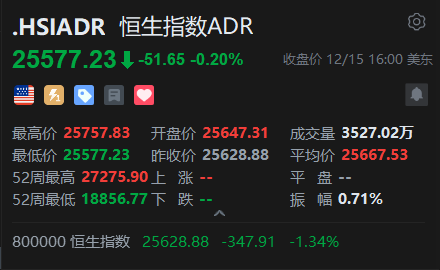
Market Overview - The Hang Seng Index (HSI) closed at 25,577.23, down by 51.65 points or 0.20% from the previous close [1] - The index reached a high of 25,757.83 and a low of 25,577.23 during the trading session, with a trading volume of 35.27 million [1] Major Blue-Chip Stocks Performance - HSBC Holdings closed at HKD 117.167, up by 0.83% compared to the Hong Kong close [2] - Tencent Holdings closed at HKD 600.386, down by 0.43% compared to the Hong Kong close [2] Stock Price Movements - Tencent Holdings (00700) latest price is HKD 603.000, down by HKD 13.000 or 2.11% [3] - Alibaba Group (09988) latest price is HKD 148.600, down by HKD 5.500 or 3.57% [3] - HSBC Holdings (00005) latest price is HKD 116.200, down by HKD 1.100 or 0.94% [3] - AIA Group (01299) latest price is HKD 80.650, up by HKD 1.650 or 2.09% [3] - BYD Company (01211) latest price is HKD 96.000, down by HKD 2.500 or 2.54% [3] - Baidu Group (09888) latest price is HKD 118.700, down by HKD 7.300 or 5.79% [3] - JD.com (09618) latest price is HKD 113.500, down by HKD 2.100 or 1.82% [3]





港股收评:恒生指数涨1.75%,恒生科技指数涨1.87%
Xin Lang Cai Jing· 2025-12-12 08:12
港股收盘,恒生指数涨1.75%,恒生科技指数涨1.87%。港股科技ETF(159751)涨1.42%,恒生港股通 ETF(159318)涨1.67%。板块方面,电气设备、生命科学工具板块涨幅靠前;居家用品、航空货运与 物流板块跌幅靠前。个股方面,中国银河涨9.45%,广发证券涨7.33%,康方生物涨7.33%,农夫山泉涨 7.23%,网易-S涨6.87%,交通银行涨6.57%,中信证券涨6.42%,国泰海通涨5.99%,中国财险涨 5.91%,新鸿基地产涨5.79%,百济神州涨5.64%,华泰证券涨5.63%,科伦博泰生物-B涨5.6%,中国太 保涨5.13%,长实集团涨5.05%,中国人寿涨5.0%,长江基建集团涨4.64%,中国铝业涨4.58%,五矿资 源涨4.55%,中兴通讯涨4.51%,中通快递-W涨4.05%;药明合联跌8.36%,曹操出行跌11.11%;昭衍新 药涨19.41%,狮腾控股涨14.55%。 ...
又一大型理财平台暴雷!涉3家上市公司,金额超200亿,坑惨上万人
Sou Hu Cai Jing· 2025-12-11 13:57
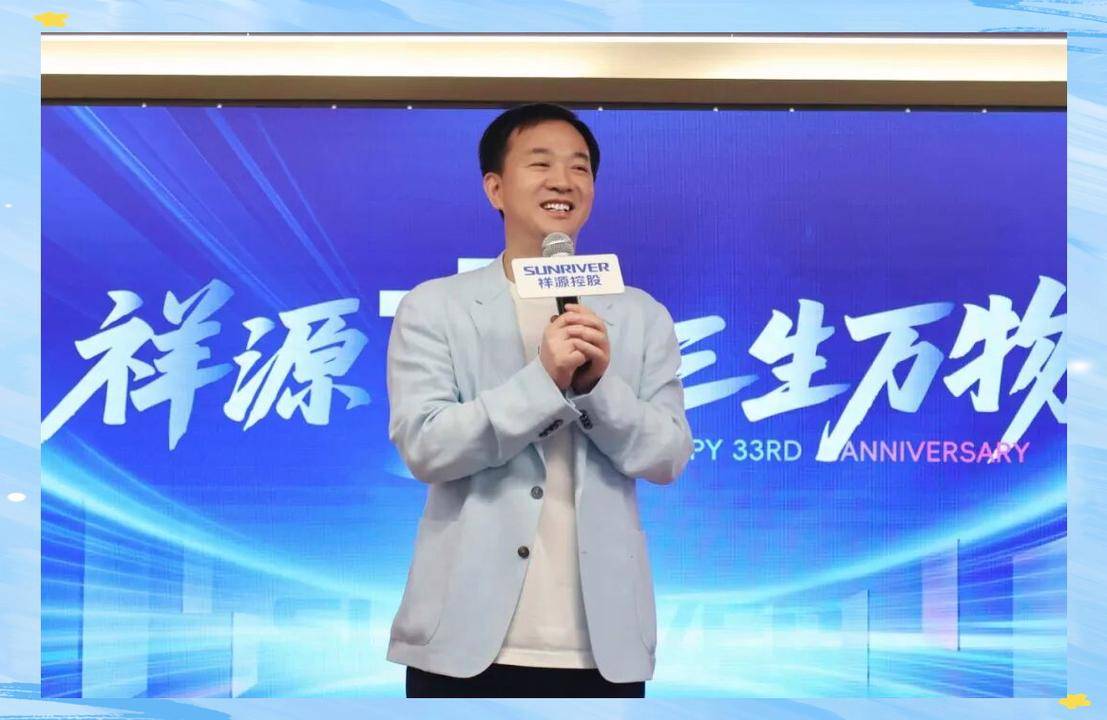
Core Viewpoint - The Zhejiang Financial Center, once a symbol of stability and trust, has faced a severe crisis due to its inability to allow investors to withdraw funds, affecting nearly 10,000 investors and involving over 20 billion in funds, leading to a significant loss of credibility for the center and its parent company, Xiangyuan Group [1][4][14]. Group 1: Company Background - Established in 2013, Zhejiang Financial Center was initially backed by reputable state-owned entities, which contributed to its strong credibility [4]. - The center's low investment threshold and higher-than-bank annual returns attracted many ordinary investors, who were drawn by the perceived safety of its "state-owned background" [4][5]. Group 2: Changes in Ownership and Operations - Since 2019, there has been a significant shift in the ownership structure, with state-owned capital gradually withdrawing, and by 2023, the controlling shareholder became a private entity, Hangzhou Minzhi Investment [5][8]. - The center began promoting products closely tied to Xiangyuan Group, effectively using the platform to finance its own debts under the guise of legitimate investment products [5][9]. Group 3: Regulatory Issues and Investor Impact - In October of the previous year, the Zhejiang Provincial Financial Management Bureau announced the cancellation of the center's financial asset trading qualifications, which was not widely publicized [8][9]. - Despite the regulatory announcement, the platform continued to operate normally, leading investors to mistakenly believe their investments were safe, resulting in further financial entanglement [9][10]. Group 4: Financial Health of Xiangyuan Group - Xiangyuan Group reported assets of 60 billion but liabilities exceeding 40 billion, indicating severe cash flow issues [9]. - The group's aggressive expansion into the tourism sector and real estate has led to financial strain, with many subsidiaries facing overdue commercial bills and being listed as subjects of enforcement [9][10]. Group 5: Official Response and Future Outlook - As of December 8, the Zhejiang Provincial Financial Management Bureau has begun a comprehensive investigation into the financing products associated with the crisis, providing a glimmer of hope for affected investors [10]. - The situation serves as a stark reminder of the risks associated with investments that rely heavily on perceived stability from government affiliations, highlighting the need for thorough due diligence by investors [14][16].

港股收盘 | 恒指收跌0.04% 汇丰控股创新高 中兴通讯重挫13%
Zhi Tong Cai Jing· 2025-12-11 08:47
Group 1: Federal Reserve and Market Reaction - The Federal Reserve lowered interest rates by 25 basis points but maintained its forecast of only one rate cut in 2026 according to the dot plot [1] - Hong Kong stocks opened high but closed lower, with the Hang Seng Index down 0.04% to 25,530.51 points and a total turnover of HKD 182.48 billion [1] - The market is sensitive to external risks, with potential rebounds expected around mid-December and early January [1] Group 2: Blue-Chip Stocks Performance - HSBC Holdings reached a new high, closing up 2.06% at HKD 114, contributing 43.23 points to the Hang Seng Index [2] - Other blue-chip stocks like Hansoh Pharmaceutical and Henderson Land also saw gains, while Alibaba Health and Sands China faced declines [2] Group 3: Sector Performance - Large tech stocks generally declined, with Alibaba down 1.7% and Tencent down 0.25% [3] - The wind power sector remained strong, with Goldwind Technology and Dongfang Electric seeing significant gains [3] - Lithium battery stocks were active, with companies like CATL and Ganfeng Lithium showing positive performance amid rising production costs [4] Group 4: Chip Sector Developments - The U.S. government allowed NVIDIA to export its H200 AI chips to China, which may boost domestic AI development and increase demand for local chips [5] Group 5: Real Estate Sector Trends - Domestic property stocks generally fell, with notable declines in companies like Agile Group and Sunac China [6] - Discussions around mortgage interest subsidy policies have increased, which could stimulate potential homebuyer demand if implemented [6] Group 6: Notable Stock Movements - ZTE Corporation faced a significant drop of 13.08% following compliance investigation news [7] - Red Star Macalline's stock fell 14.39% due to unusual trading activity, despite the company stating that its operations remain normal [8] - Lens Technology experienced fluctuations, closing up 2.05% after announcing a potential acquisition [9] - Asia Financial Holdings surged 80.87% after announcing a voluntary cash offer for shares at a premium [10]

港股评级汇总:中信证券维持快手买入评级
Xin Lang Cai Jing· 2025-12-11 07:20
Group 1 - Citic Securities maintains a "Buy" rating for Kuaishou-W (01024.HK), highlighting the significant upgrade of Kuaishou's AI capabilities, which is expected to drive commercial growth and optimize platform ecology and profit margins [1] - CICC maintains an "Outperform" rating for Hang Lung Properties (00101.HK) with a target price of HKD 9.46, noting the company's strategic expansion in Wuxi, which will increase retail space by 38% and enhance its luxury positioning [1] - Citic Securities maintains a "Buy" rating for Giant Bio (02367.HK) with a target price of HKD 44, despite a downward adjustment in profit forecasts due to sales pressure during the Double Eleven shopping festival [1] Group 2 - Citic Securities maintains a "Buy" rating for Xiaomi Group-W (01810.HK), reporting a significant increase in automotive business revenue, which reached RMB 28.3 billion, a year-on-year growth of 197.9%, marking its first profitable quarter [2] - Citic Securities maintains a "Buy" rating for Kelun-Biotech (06990.HK), emphasizing the company's collaboration with Crescent on ADC and dual antibody development, which includes an upfront payment of USD 80 million and potential milestone payments of up to USD 1.25 billion [3] - Citic Securities maintains a "Buy" rating for Virginie (02199.HK) with a target price of HKD 3.5, reporting a 25.7% year-on-year growth in net profit despite tariff disruptions, driven by strong performance in activewear and new business expansions [4] Group 3 - Tianfeng Securities maintains a "Buy" rating for Jiangnan Buyi (03306.HK), forecasting a revenue and net profit growth of 4.6% and 6.0% respectively for FY25, supported by a growing high-spending membership base [5] - Tianfeng Securities maintains a "Buy" rating for Kelun-Biotech (06990.HK), projecting a narrowing of net losses to a profit of RMB 561 million by 2027, highlighting the potential of its ADC product [6] - Everbright Securities maintains a "Buy" rating for Laopu Gold (06181.HK) with a target price of HKD 804.64, reporting a substantial increase in revenue and net profit for the first half of 2025, driven by the growing market for traditional gold products [7][8]


李嘉诚如何一跃成香港顶级大佬?联手包玉刚大战怡和洋行是关键
Sou Hu Cai Jing· 2025-12-10 15:41
Core Insights - The acquisition battle for Kowloon Warehouse in the late 1970s to early 1980s was pivotal in transforming Li Ka-shing from a second-tier tycoon in Hong Kong to a top-tier business magnate, second only to Pao Yue-kong [1][5] Group 1: Acquisition Strategy - Li Ka-shing targeted Kowloon Warehouse due to its plummeting stock price, with a net asset value of 18 HKD per share but trading at only 13 HKD [1][3] - By September 1978, Li Ka-shing had secretly acquired 18% of Kowloon Warehouse's shares through multiple accounts [3] - The stock price surged to 56 HKD after media exposure of Li's acquisition strategy, attracting attention from other major players, including Pao Yue-kong [3][5] Group 2: Competitive Landscape - Pao Yue-kong, a recognized global billionaire and shipping magnate, also aimed to acquire Kowloon Warehouse amid a shipping crisis triggered by the collapse of the Bretton Woods system and the oil crisis [5][9] - The shipping crisis led to significant financial distress for major shipping companies, including Orient Overseas, which faced over 200 billion HKD in debt [3][5] Group 3: Negotiation and Alliances - Li Ka-shing met with Pao Yue-kong to negotiate the sale of his Kowloon Warehouse shares at 36 HKD each, below the market price, fostering a strategic alliance [5][7] - Pao Yue-kong leveraged his relationship with HSBC to facilitate Li Ka-shing's acquisition of Hutchison Whampoa, which was under financial distress [7] Group 4: Outcomes and Impact - By September 1979, Li Ka-shing successfully acquired 22.4% of Hutchison Whampoa at an advantageous price of 7.1 HKD per share, with a total transaction value of over 600 million HKD [7][9] - The acquisition battle resulted in a significant shift in Hong Kong's business landscape, with Li Ka-shing controlling Hutchison Whampoa and Pao Yue-kong acquiring Kowloon Warehouse, leading to the end of the era dominated by the four major foreign trading houses [9]