
支付行业

Search documents
新国都(300130):2025年中报点评:25Q2单季度营收重回增长,前瞻布局跨境支付
Minsheng Securities· 2025-08-29 13:08
Investment Rating - The report maintains a "Recommended" rating for the company [5]. Core Views - The company reported a revenue of 1.527 billion yuan for H1 2025, a year-on-year decline of 3.17%, and a net profit attributable to shareholders of 275 million yuan, down 38.61% year-on-year [1]. - In Q2 2025, the company achieved a revenue of 826 million yuan, a year-on-year increase of 3.93%, marking the first positive growth in nearly two years [1]. - The payment business is developing steadily, with a focus on exploring cross-border payment opportunities, leading to significant growth in merchant numbers and transaction amounts in the cross-border payment sector [2]. - The company is accelerating its overseas expansion of smart devices, with overseas revenue from electronic payment devices reaching 544 million yuan in H1 2025, a year-on-year increase of 22.02% [3]. - The company is expected to see net profits of 580 million yuan, 689 million yuan, and 805 million yuan for 2025, 2026, and 2027 respectively, with corresponding growth rates of 147.8%, 18.8%, and 16.7% [4]. Summary by Sections Financial Performance - For H1 2025, the company reported a revenue of 1.527 billion yuan, a decline of 3.17% year-on-year, and a net profit of 275 million yuan, down 38.61% year-on-year [1]. - In Q2 2025, the revenue was 826 million yuan, showing a year-on-year growth of 3.93% [1]. - The company maintained good cost control, with sales, management, and R&D expenses changing by -41.9%, -8.2%, and +3.6% respectively in H1 2025 [1]. Business Development - The payment business processed approximately 721.8 billion yuan in transaction volume in H1 2025, remaining stable compared to the previous year, with revenue of 949 million yuan [2]. - The company is enhancing its cross-border payment brand PayKKa, focusing on resource investment, product development, and building banking channels [2]. - The number of merchants and transaction amounts in the cross-border payment business saw significant growth, with Q2 showing a quarter-on-quarter increase of 169% and 272% respectively [2]. Future Outlook - The company is expected to benefit from a recovering offline payment industry in 2025, with projected net profits of 580 million yuan in 2025, 689 million yuan in 2026, and 805 million yuan in 2027 [4]. - The current market capitalization corresponds to a PE ratio of 31, 26, and 23 for 2025, 2026, and 2027 respectively [4].

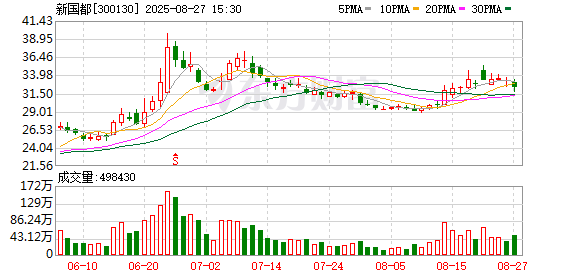
新国都,筹划H股上市
Zhong Guo Zheng Quan Bao· 2025-08-27 08:28
Group 1 - The company plans to issue H-shares and apply for listing on the Hong Kong Stock Exchange to enhance its international capital operation platform and support its global expansion strategy [2] - The company aims to deepen its global strategy, accelerate overseas business development, and improve its global resource allocation and market competitiveness [2] - The company has established a diverse group focused on payment terminal equipment design, research and development, production, sales, and services, providing integrated electronic payment technology services [2] Group 2 - In the first half of 2025, the company achieved operating revenue of 1.527 billion yuan, a year-on-year decrease of 3.17%, and a net profit attributable to shareholders of 275 million yuan, down 38.61% year-on-year [3] - The decline in net profit is primarily due to decreased revenue and gross margin from acquiring and value-added services, influenced by strategies to expand new merchants [3] - The company has established a comprehensive marketing service network globally, selling products in over 100 countries and acquiring multiple important overseas payment licenses [3]

连连数字2025年上半年总收入7.8亿元,净利润15.1亿元
Bei Jing Shang Bao· 2025-08-26 11:28
Core Insights - The core viewpoint of the article highlights the significant financial performance of Lianlian Digital Technology Co., Ltd., with record revenue and profit growth in the first half of 2025 [1] Financial Performance - Total revenue for the period reached 780 million yuan, representing a year-on-year increase of 26.8%, marking a historical high [1] - Net profit amounted to 1.51 billion yuan, showing a remarkable year-on-year growth of 531.9% [1] - The increase in net profit is attributed to a substantial rise in operating profit, which grew by 85% to 63 million yuan, along with nearly 1.6 billion yuan in equity disposal gains [1] Business Operations - In the first half of 2025, the total payment transaction volume for Lianlian Digital's global payment business reached 198.5 billion yuan, reflecting a year-on-year growth of 94% [1] - Total revenue from the global payment business was 470 million yuan, an increase of 27% compared to the previous year [1] - As of June 2025, the cumulative number of clients served by Lianlian Digital exceeded 7.9 million [1] Domestic Payment Business - The total payment transaction volume for the domestic payment business reached 1.87 trillion yuan, representing a year-on-year increase of 27.6% [1] - Total revenue from the domestic payment business was 210 million yuan, showing a year-on-year growth of 24.6% [1]
稳定币的宏观冲击波
Huachuang Securities· 2025-08-20 03:12
Group 1: Macro Impact of Stablecoins - Stablecoins are evolving from mere crypto assets to key financial variables with macroeconomic influence, impacting money supply, credit creation, and the U.S. Treasury market[1] - Full reserve requirements are crucial for preventing net expansion of M2; as long as stablecoins maintain a 1:1 full reserve, they represent structural changes within existing M2 rather than an increase in total money supply[1] - The demand for U.S. Treasury securities, particularly short-term bonds, is significantly bolstered by stablecoins, which have reached a reserve scale of hundreds of billions, positioning them as a potential "new cornerstone" for the Treasury market[7] Group 2: Financial Institutions' Adaptation - Financial institutions are shifting from passive defense to proactive positioning in response to stablecoin impacts; commercial banks are issuing on-chain deposits to mitigate deposit outflows and provide reserve custody services[3] - Asset management companies are seizing opportunities by managing reserve assets for stablecoin issuers, particularly U.S. Treasury securities, as stablecoin reserves reach trillion-dollar levels[3] - Payment companies are leveraging their networks to create closed ecosystems by issuing proprietary stablecoins or integrating third-party stablecoins, aiming to reduce payment costs and enhance transaction efficiency[3] Group 3: Regulatory Landscape - Global jurisdictions are rapidly developing regulatory frameworks for stablecoins, with the U.S. establishing clear licensing and reserve requirements through the GENIUS Act, mandating 1:1 reserves and regular disclosures[2] - Hong Kong and Singapore have implemented detailed regulations for stablecoin reserves and redemption, reflecting a growing trend towards regulatory clarity in the stablecoin space[2] Group 4: Risks and Challenges - The potential shift to a fractional reserve system for stablecoins could lead to significant monetary expansion, posing challenges to monetary sovereignty and financial stability, reminiscent of the Nixon shock that ended the gold standard[6] - Stablecoins may become a "fragile fulcrum" in the U.S. Treasury market, with risks of liquidity mismatches and potential market disruptions during extreme conditions, such as large-scale redemptions[7]
财付通增资至223亿,增幅约46%
Sou Hu Cai Jing· 2025-08-11 03:28
Group 1 - The core point of the article is that Tenpay Payment Technology Co., Ltd. has increased its registered capital from 15.3 billion RMB to 22.3 billion RMB, representing an increase of approximately 46% [1] - The company was established in August 2006 and is legally represented by Zheng Haojian [1] - The business scope of the company includes e-commerce, electronic payment, payment settlement, and the technical development of clearing systems [1] Group 2 - Shareholder information indicates that the company is jointly held by Shenzhen Tencent Computer Systems Co., Ltd. and Shenzhen Century Kaixuan Technology Co., Ltd. [1]
我从身边人发现,AI到底取代了什么工作?
虎嗅APP· 2025-08-06 14:35
Core Viewpoint - The article discusses the impact of AI on job displacement and the broader implications for society, emphasizing the need to understand the real effects of AI beyond the grand narratives often presented in media and corporate discourse [5][6]. Group 1: Job Displacement and AI Impact - In the U.S., layoffs are primarily driven by AI adoption, with companies rapidly replacing human roles with AI technologies [9][10]. - The experience of a researcher at Block highlights that AI can significantly reduce research time, but this also leads to job insecurity as many employees face layoffs shortly after expressing enthusiasm for AI [9]. - In China, layoffs in foreign companies are linked to regulatory changes and data security concerns rather than business downturns, indicating a different rationale for job cuts compared to the U.S. [10][11]. Group 2: AI in Corporate Practices - Companies in the U.S. fintech sector are adopting "no meetings" and "no emails" policies to encourage reliance on AI for communication, creating anxiety among employees about job security [11]. - The article notes that the push for AI in corporate settings often leads to a culture of fear and uncertainty among employees, as they feel their roles are being threatened by technology [11][12]. Group 3: Technology Exhibitions and Reality Check - Attending AI-related technology exhibitions reveals a gap between the hype surrounding AI and its actual capabilities, with many demonstrations failing to deliver on promises [14][15]. - The article critiques the quality of AI applications showcased at these events, suggesting that many companies are still struggling to implement effective AI solutions [15][16]. Group 4: Media Representation of AI - The media often exaggerates the capabilities of AI, focusing on sensational stories rather than providing a nuanced understanding of its limitations and challenges [21][22]. - There is a concern that media narratives may contribute to public anxiety about AI, while failing to accurately represent the industry’s realities [21][22]. Group 5: User Satisfaction and Feedback - Users, particularly in customer service roles, express dissatisfaction with AI implementations, often preferring human interaction over automated responses [28][29]. - The backlash against AI-driven changes, such as the case with Duolingo's AI strategy, illustrates the potential for user revolt against companies that prioritize AI over human experience [29][31]. Group 6: Creative Work and AI Limitations - Creative professionals express skepticism about AI's ability to produce high-quality work, emphasizing the need for human oversight and creativity in artistic endeavors [32][33]. - The article highlights that while AI can assist in creative processes, it often falls short in delivering the nuanced and detailed work that human creators provide [33][34]. Group 7: Academic Perspectives on AI - Scholars are beginning to explore the philosophical and sociological implications of AI, questioning its impact on human identity and labor dynamics [37][38]. - Discussions in academia reflect a growing concern about the societal changes driven by AI, particularly regarding labor distribution and the potential for increased inequality [37][38]. Group 8: Future Outlook and Concerns - The article raises concerns about the long-term implications of AI on job quality and human creativity, suggesting that a reliance on AI could lead to a decline in the quality of work and human engagement [41][42]. - There is a fear that as AI becomes more integrated into various sectors, it may lead to a devaluation of human labor and creativity, resulting in a more alienated workforce [41][42].

支付宝:探路支付促消费新解法
Bei Jing Shang Bao· 2025-08-05 08:56
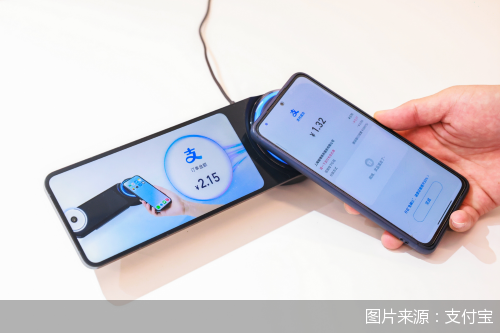
Core Insights - The payment industry in China is undergoing significant innovation, transitioning from traditional cash to advanced methods like NFC, facial recognition, and palm scanning, enhancing convenience and security for consumers [1][3][4] - Ant Group's Vice President, Li Jiajia, emphasizes that payment innovation is crucial for lowering consumption barriers and improving transaction efficiency, ultimately driving consumer demand [1][9] Payment Innovations - Alipay has introduced new payment methods such as "Tap to Pay" and "Look to Pay," which simplify the payment process and cater to various user groups, including the elderly and visually impaired [2][4][12] - The "Tap to Pay" feature allows users to complete transactions without opening the app, while "Look to Pay" integrates with smart glasses, enabling voice-activated payments [2][12] Market Growth and Statistics - The People's Bank of China reported that mobile payment transactions reached 210.98 billion, amounting to 56.37 trillion yuan, a 25-fold increase over the past decade [3] - Non-bank payment institutions processed 13.4 trillion transactions worth 33.168 trillion yuan, reflecting a 570% growth since 2015 [3] User Experience and Accessibility - The average payment time for visually impaired users has decreased from 30 seconds to 5 seconds with "Tap to Pay," indicating a significant improvement in user experience [4] - The number of foreign users utilizing "Tap to Pay" increased fourfold in August 2024, showcasing its growing acceptance among international visitors [4] Technological Advancements - The evolution of payment methods is supported by advancements in communication technology, AI, and IoT, which enhance the efficiency and security of transactions [6][7] - Future trends may include seamless payment experiences through smart devices and the integration of VR and AR technologies for enhanced shopping experiences [6] Security Measures - Balancing convenience and security is critical, with concerns about potential fraud associated with new payment methods [7][8] - Alipay is implementing multi-factor verification and AI-driven security measures to ensure safe transactions [7][8] Industry Collaboration - The development of a new chip for "Tap to Pay" by Fudan Microelectronics and Alipay aims to enhance transaction speed and reliability [8] - The industry is encouraged to collaborate and share technology standards to improve overall service levels [10][11] Future Outlook - Alipay plans to continue exploring digital technologies and innovative payment methods to lower barriers and enhance consumer experiences [11][12] - The integration of payment functions into wearable devices is expected to become a necessity, with predictions of significant growth in the smart wearable market [14]
创新消费力|支付宝:探路支付促消费新解法
Bei Jing Shang Bao· 2025-08-05 08:41
Core Viewpoint - The payment industry in China is undergoing significant innovation, transitioning from traditional methods to advanced technologies like NFC and biometric payments, enhancing consumer experience and driving consumption growth [1][4][10]. Payment Innovation - Alipay has introduced new payment methods such as "Tap to Pay" and "Look to Pay," which simplify the payment process and cater to various user groups, including the elderly and visually impaired [3][5][12]. - The "Tap to Pay" feature allows users to complete transactions without opening the app, significantly reducing the time taken for payment [5][12]. - The "Look to Pay" function, integrated into smart glasses, enables users to make payments through voice commands, enhancing convenience in hands-busy situations [3][13]. Market Impact - The rapid development of mobile payment in China has led to a 25-fold increase in bank mobile payment transactions over the past decade, with non-bank payment institutions processing 1.34 trillion transactions, reflecting a 570% growth since 2015 [5][10]. - Alipay's innovations are seen as crucial for stimulating consumer demand and enhancing the overall payment experience, contributing to high-quality service consumption growth [5][12]. Technological Advancements - The evolution of payment methods is supported by advancements in communication technology, artificial intelligence, and the Internet of Things (IoT), which facilitate seamless payment experiences [6][8]. - The introduction of a new chip developed by Fudan Microelectronics in collaboration with Alipay aims to enhance the speed and reliability of the "Tap to Pay" feature [8][11]. Consumer Experience - Alipay's innovations aim to lower the barriers to payment for various demographics, ensuring that payment processes are not only efficient but also secure, addressing privacy concerns [10][15]. - The average operation time for visually impaired users has decreased from 30 seconds to 5 seconds with the "Tap to Pay" feature, showcasing the impact of these innovations on user experience [5][10]. Industry Collaboration - The payment industry is encouraged to collaborate and share technology standards to enhance service levels across the board, benefiting both consumers and businesses [11][12]. - Alipay is focused on exploring new digital technologies and payment methods to further reduce payment barriers and create new consumption growth opportunities [11][12].
拆解《天才法案》:谁将分食2万亿美元稳定币蛋糕?
Mei Ri Jing Ji Xin Wen· 2025-07-25 14:00
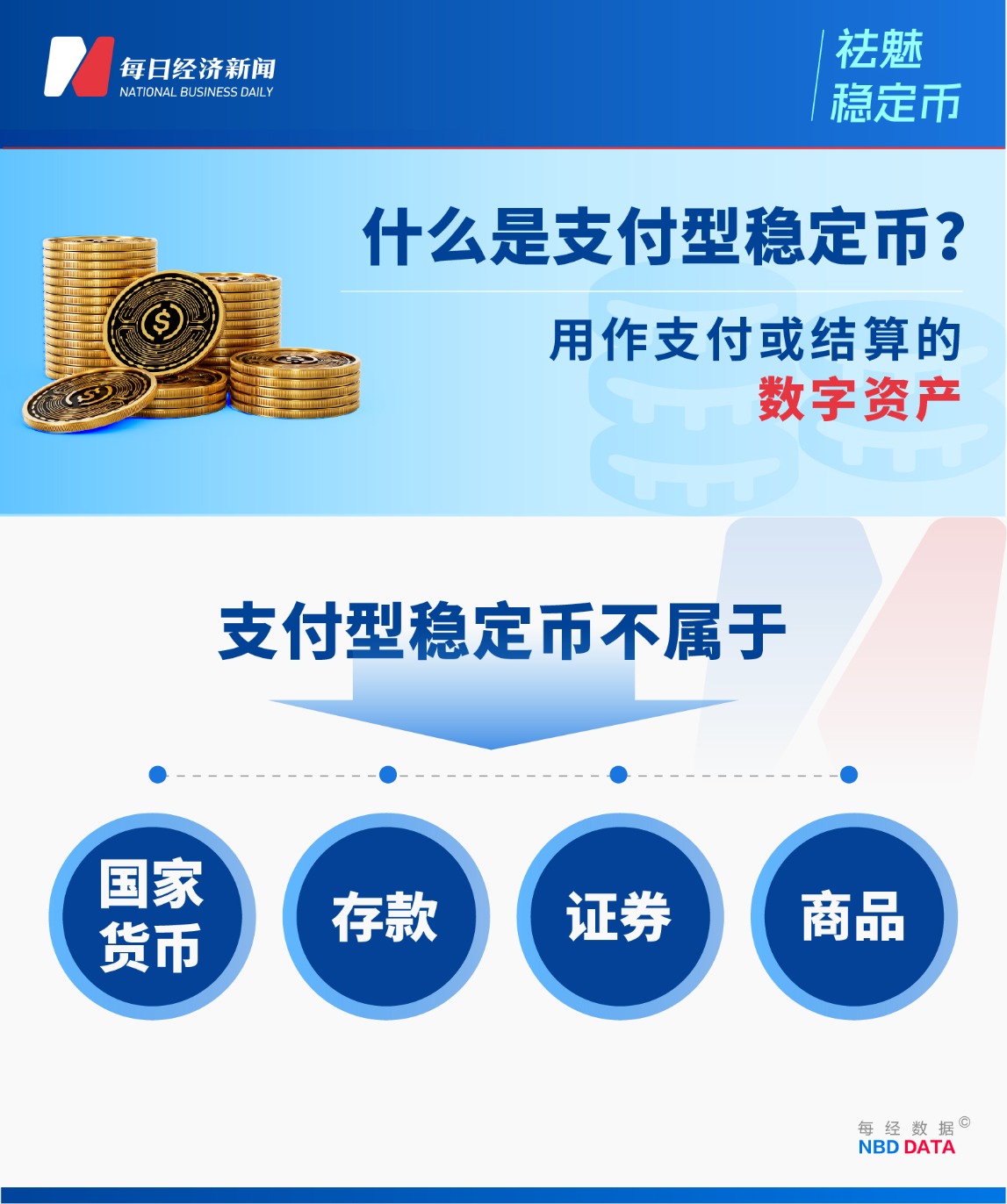
Core Viewpoint - The signing of the "Genius Act" marks the establishment of a clear legal framework for stablecoins in the U.S., ending their previous ambiguous legal status and reshaping the industry landscape [1][4][26] Group 1: Definition and Regulatory Framework - The "Genius Act" defines compliant stablecoins as "payment stablecoins," emphasizing their role as payment or settlement tools rather than investment products [4][5] - This definition excludes stablecoins from being classified as legal tender, bank deposits, financial securities, or commodities, thus simplifying the regulatory path for issuers [4][5] - The act signals that compliant stablecoins will be recognized as legitimate financial payment tools, moving away from being seen as risk assets [4][5] Group 2: Market Dynamics and Participants - The act creates a new power structure where traditional financial institutions, particularly banks, will dominate the issuance of stablecoins [9][10] - Only "insured depository institutions" and "regulated non-bank entities" can issue stablecoins, favoring established banks like JPMorgan, Goldman Sachs, and Bank of America [9][10] - Non-financial giants like Amazon and Meta face significant barriers to entering the stablecoin market, as the act restricts issuance to companies primarily engaged in financial services [12][24] Group 3: Compliance and Cost Implications - The act imposes strict compliance requirements, including a 1:1 reserve mechanism and monthly audits, significantly increasing operational costs for stablecoin issuers [17][18] - The previous practices of leveraging reserves for additional returns will be curtailed, as only high-liquid assets like cash and short-term U.S. Treasury securities can be used [17][18] - Smaller firms may struggle to meet the new compliance standards, leading to a market dominated by larger institutions [13][18] Group 4: Opportunities for Web3 Infrastructure - The new regulatory environment presents significant opportunities for Web3 infrastructure providers, as banks seek to develop their own stablecoins [19][26] - Companies like Alchemy and Fireblocks are positioned to offer essential services to banks, potentially leading to a booming market for Web3 infrastructure, projected to reach $55 billion by 2033 [19][26] Group 5: Future of Existing Stablecoins - Tether's USDT faces compliance challenges under the new act, as it must secure regulatory approval to continue operating in the U.S. market [22][23] - The act mandates that stablecoin issuers must back their tokens with cash and short-term U.S. Treasury securities, which may be difficult for Tether to achieve given its current asset composition [23][24] - Algorithmic stablecoins are temporarily excluded from the regulatory framework, with further research required to assess their risks and potential uses [24][25]
堵住信用卡套现监管漏洞
Jing Ji Ri Bao· 2025-07-23 22:08
Core Insights - The issue of cash withdrawal through POS machines has resurfaced due to a reported loophole in the registration process of a payment institution, allowing individuals to register as merchants using false information and engage in credit card cash withdrawal operations [1] - Despite increasing regulatory scrutiny in the payment industry, the prevalence of cash withdrawal through POS machines persists due to the complex web of interests among payment institutions, agents, individual users, and banks [1] - Credit card cash withdrawal violates cardholder agreements and poses significant risks to banks, including potential losses beyond just loan interest, as well as links to organized crime activities such as money laundering and fraud [1] - The ongoing issue disrupts the normal flow of funds and credit systems in the financial market, contributing to instability in China's financial order [1] - Regulatory bodies have introduced various normative documents targeting the flaws in credit card issuance and usage, achieving notable results, but a more effective collaborative governance mechanism is needed to address the root causes of the problem [1] Regulatory Recommendations - Regulatory authorities should enhance their enforcement capabilities against cash withdrawal behaviors by increasing penalties and raising the cost of violations [2] - There is a need for strengthened industry self-discipline, where payment institutions must improve internal control management systems and ensure compliance with entry thresholds and management practices [2] - Banks should actively utilize financial technology to upgrade risk control systems, dynamically monitoring key indicators for abnormal changes to enhance risk management capabilities in credit card operations [2]