
电子专用材料制造

Search documents
0.2%、0.1%,上涨!从10月份CPI和PPI数据透视经济发展趋势
Yang Shi Wang· 2025-11-09 06:39
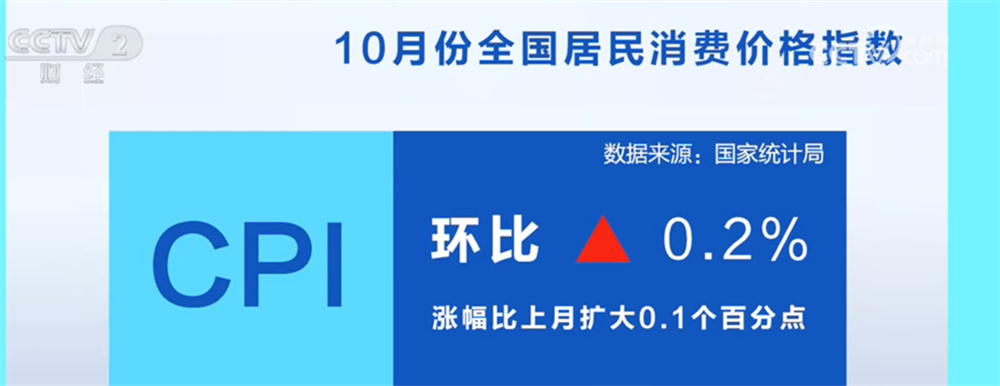
Group 1 - In October, the Consumer Price Index (CPI) increased by 0.2% month-on-month and year-on-year, driven by policies to expand domestic demand and the impact of the National Day and Mid-Autumn Festival holidays [1][3] - The CPI's month-on-month increase of 0.2% represents an expansion of 0.1 percentage points compared to the previous month, with significant price increases in accommodation, air tickets, and travel services due to heightened travel demand during the holidays [3] - The core CPI, excluding food and energy prices, rose by 1.2% year-on-year, marking the highest increase since March 2024 and continuing a trend of six consecutive months of growth [3] Group 2 - The Producer Price Index (PPI) saw a month-on-month increase of 0.1%, marking the first rise of the year, influenced by improved supply-demand relationships in certain domestic industries and the transmission of international commodity prices [6] - Key industries such as photovoltaic equipment manufacturing, battery manufacturing, and automotive manufacturing experienced a narrowing of year-on-year price declines, indicating a positive shift in market conditions [6] - The construction of a modern industrial system and the orderly release of consumption potential have led to price increases in industries such as non-ferrous metal smelting and rolling processing, electronic materials manufacturing, and shipbuilding [6]

10月PPI降幅比9月收窄0.2个百分点,连续第3个月收窄
Bei Ke Cai Jing· 2025-11-09 03:52
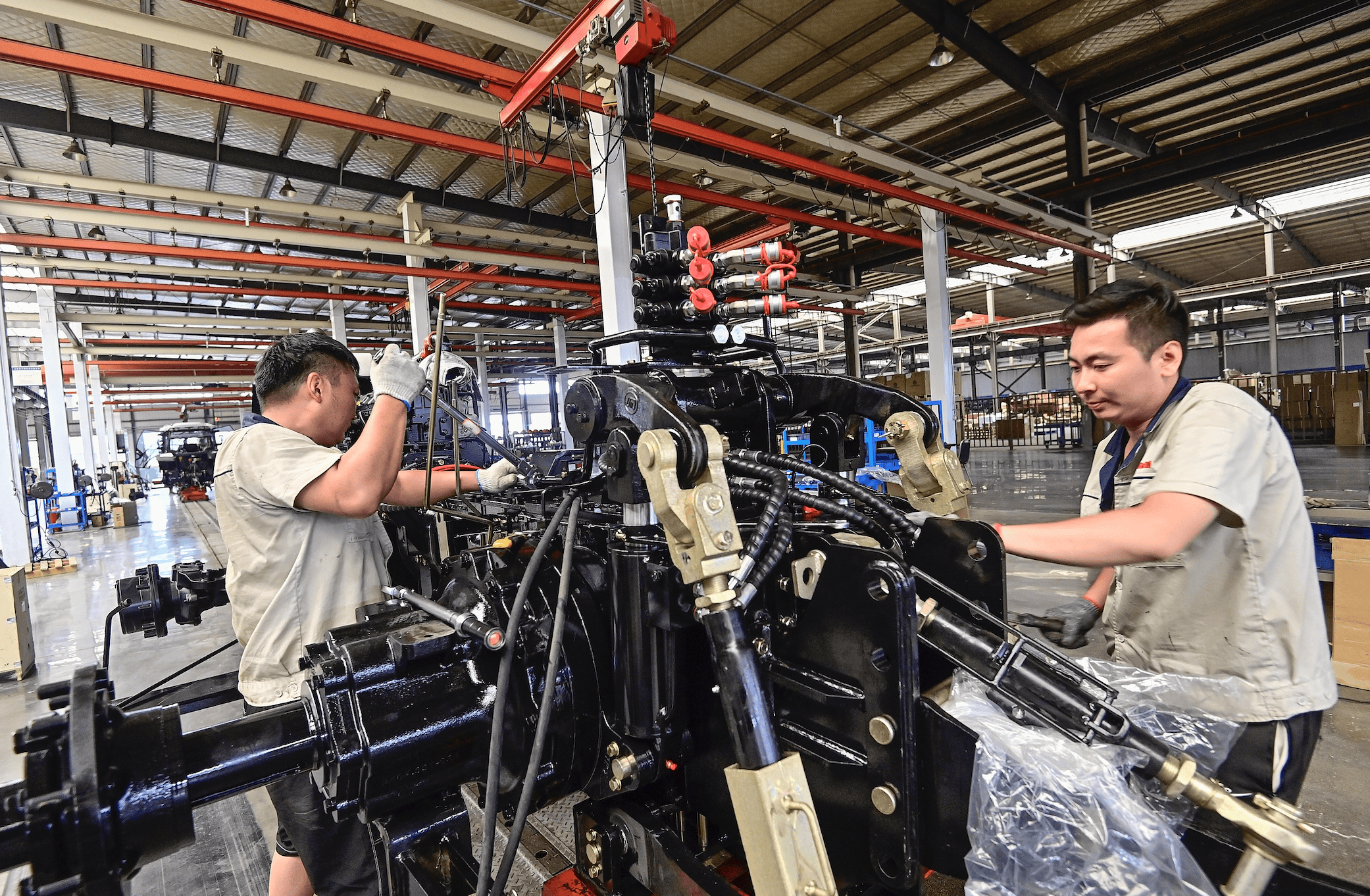
Core Insights - In October, the Producer Price Index (PPI) increased by 0.1% month-on-month, marking the first rise of the year, while the year-on-year decline narrowed to 2.1%, a reduction of 0.2 percentage points from September, continuing a trend of narrowing for three consecutive months [1][2] Group 1: PPI Trends - The narrowing of the PPI decline is attributed to ongoing capacity management in key industries, leading to reduced year-on-year price declines in related sectors [2] - The coal mining and washing industry saw a year-on-year price decline narrowing by 1.2 percentage points due to increased winter stockpiling and electricity demand [2] - The manufacturing sectors, including photovoltaic equipment, battery manufacturing, and automotive manufacturing, experienced year-on-year price declines narrowing by 1.4, 1.3, and 0.7 percentage points respectively [2] Group 2: Price Increases in Specific Industries - The construction of a modern industrial system and the orderly release of consumption potential have driven price increases in several industries [2] - Prices in the non-ferrous metal smelting and rolling processing industry rose by 6.8%, while electronic special materials manufacturing prices increased by 2.3% [2] - Other notable price increases include microwave communication equipment (1.8%), shipbuilding and related equipment (0.9%), and comprehensive utilization of waste resources (0.7%) [2] - Consumer-driven policies have led to significant price increases in specific sectors, such as arts and crafts (18.4%), sports balls (3.3%), nutritional foods (2.1%), and beverages (0.4%) [2]
宏观政策发力叠加产能治理显效,PPI同比降幅连续三个月收窄
Sou Hu Cai Jing· 2025-11-09 02:51
Group 1 - The core point of the article is that the Producer Price Index (PPI) in October decreased by 2.1% year-on-year, but the decline has narrowed compared to the previous month, with a month-on-month increase of 0.1%, marking the first increase this year [1][2] - The narrowing of the year-on-year decline in PPI is attributed to ongoing capacity management in key industries, leading to reduced price declines in related sectors [1] - The increase in prices in certain industries is driven by the accelerated construction of a modern industrial system and the orderly release of consumption potential, with notable price increases in sectors such as non-ferrous metal smelting and processing, which rose by 6.8% year-on-year [2] Group 2 - The article discusses the impact of external factors on PPI, including the effects of tariffs and intensified competition in certain industries, which have contributed to a wider year-on-year decline in PPI earlier in the year [4] - Analysts suggest that while the "anti-involution" policy is expected to improve market competition and support PPI recovery, there are still downward pressures on PPI due to weak consumer confidence and a struggling real estate market [4][5] - The report highlights that M1 money supply growth is a supportive factor for PPI improvement, but challenges remain due to weak investment and consumption willingness among businesses and households [5]
中国10月PPI同比降幅连续第3个月收窄
Ge Long Hui A P P· 2025-11-09 02:18
Core Viewpoint - The Producer Price Index (PPI) has decreased by 2.1% year-on-year, with the decline rate narrowing by 0.2 percentage points compared to the previous month, marking the third consecutive month of narrowing [1] Group 1: Industry Performance - Continuous progress in capacity governance in key industries has led to a reduction in the year-on-year price decline in related sectors [1] - The coal mining and washing industry saw a year-on-year price decline narrowing by 1.2 percentage points due to increased demand for winter storage and electricity [1] - The price declines in photovoltaic equipment and components manufacturing, battery manufacturing, and automotive manufacturing narrowed by 1.4, 1.3, and 0.7 percentage points respectively, reflecting an improvement in market competition and the exit of outdated capacity [1] Group 2: Modern Industrial System and Consumption - The accelerated construction of a modern industrial system and the orderly release of consumption potential have driven price increases in related industries [1] - Prices in the non-ferrous metal smelting and rolling processing industry increased by 6.8%, while electronic special materials manufacturing prices rose by 2.3% [1] - Other notable price increases include microwave communication equipment (1.8%), shipbuilding and related equipment (0.9%), waste resource recycling (0.7%), and aircraft manufacturing (0.5%) [1]
恒坤新材:构筑核心竞争力 力争成为集成电路关键材料领域国际先进企业
Shang Hai Zheng Quan Bao· 2025-11-06 18:46
Core Viewpoint - Xiamen Hengkang New Materials Technology Co., Ltd. is focused on the research and industrial application of key materials for integrated circuits, aiming to break the foreign monopoly in the 12-inch integrated circuit wafer manufacturing sector and enhance domestic supply chain security [6][18]. Company Overview - The company specializes in the research, production, and sales of photolithography materials and precursor materials, being one of the few domestic firms capable of developing and mass-producing key materials for 12-inch integrated circuit wafers [6][7]. - Its products are essential for the manufacturing processes of advanced NAND, DRAM storage chips, and logic chips at 90nm technology nodes and below [7]. Product Development - The company has successfully mass-produced products including SOC, BARC, i-Line photoresists, KrF photoresists, and TEOS precursor materials, with ongoing development of new products like ArF photoresists and SiARC [7][13]. - As of the reporting period, the company has over a hundred products in various stages of research, validation, and mass supply [7]. Financial Performance - The company's main business revenue has shown steady growth, with self-produced product sales revenue increasing from 123.58 million yuan in 2022 to 344.19 million yuan in 2024, reflecting a compound annual growth rate of 66.89% [13][15]. - The gross profit from the main business has also increased, with self-produced products contributing significantly to the overall gross profit [14][15]. R&D Investment - R&D expenses have been consistently increasing, amounting to 42.74 million yuan in 2022 and 88.61 million yuan in 2024, representing 16.17% of the revenue [16]. - The company emphasizes continuous innovation and product development to enhance its market position [21]. Market Position and Strategy - The company aims to fill the gap in high-end materials currently dominated by foreign manufacturers, with a focus on expanding its product line and improving product quality [19][20]. - It plans to leverage its capital market entry to enhance technological development and industrial layout, aiming to become a leading domestic and internationally competitive enterprise in the integrated circuit key materials sector [24][20]. Listing and Fundraising - The company is set to raise funds through its IPO to invest in projects related to advanced materials and precursor materials for integrated circuits, which will enhance its product offerings and competitive edge [29][30]. - The expected market capitalization post-IPO is projected to be no less than 1 billion yuan, meeting the listing standards [26].
德邦科技:第三季度净利润2417.52万元,下降9.58%
Xin Lang Cai Jing· 2025-10-24 09:11
Group 1 - The core viewpoint of the article highlights that Debang Technology reported a revenue of 400 million yuan in the third quarter, representing a year-on-year growth of 24.56% [1] - The net profit for the third quarter was 24.1752 million yuan, showing a decline of 9.58% compared to the previous year [1] - For the first three quarters, the total revenue reached 1.09 billion yuan, which is a year-on-year increase of 39.01% [1] - The net profit for the first three quarters was 69.7487 million yuan, reflecting a year-on-year growth of 15.39% [1]

锐财经丨创新“势能”向经济“动能”不断转化
Ren Min Ri Bao Hai Wai Ban· 2025-10-24 01:15
Core Insights - The Chinese economy shows a steady growth in new momentum and high-quality development, with significant increases in high-tech manufacturing and digital product manufacturing value added in the first three quarters of the year [1][2]. Group 1: High-Tech Manufacturing Growth - The value added of high-tech manufacturing increased by 9.6% year-on-year, with specific sectors like integrated circuit manufacturing and electronic materials growing by 22.4% and 20.5% respectively [2]. - The production of industrial robots, 3D printing equipment, and industrial control computers saw remarkable growth rates of 29.8%, 40.5%, and 98% respectively [2]. Group 2: Traditional Industry Transformation - Traditional industries are actively integrating with "Internet+", "AI+", and "Digital+" initiatives, leading to value added growth of 8.1% in chemical raw materials, 7.6% in chemical fibers, and 6.7% in agricultural products [3]. - The production of high-performance chemical fibers and bio-based chemical fibers increased by 34% and 20.2% respectively, indicating a significant transformation in traditional sectors [3]. Group 3: Investment in Emerging Fields - Significant breakthroughs in technology have been achieved, with double-digit growth in investment in automotive manufacturing, rail, shipping, and aerospace sectors [4]. - The value added of digital product manufacturing rose by 9.7%, while the information transmission and software services sector grew by 11.2% [4]. Group 4: Green Development Initiatives - The manufacturing value added in lithium-ion battery production, shipbuilding, and electric motor manufacturing increased by 29.8%, 22.9%, and 17.1% respectively [7]. - The production of new energy products such as electric vehicles and lithium-ion batteries saw substantial growth, with increases of 29.7% and 46.9% respectively [7].
中国经济顶压前行
2 1 Shi Ji Jing Ji Bao Dao· 2025-10-20 23:05
Economic Overview - The GDP growth for the first three quarters of 2023 is 5.2%, laying a solid foundation for the annual target of around 5% [2][3][10] - The economic performance shows a steady but cautious recovery, with the third quarter GDP growth slowing to 4.8% compared to the previous quarter [2][7] Key Economic Indicators - The total GDP for the first three quarters reached 101.5 trillion yuan, with a year-on-year growth of 5.2% [2] - Industrial production maintained stability, with a 6.2% increase in industrial added value year-on-year, although it slightly decreased from the first half of the year [4] - The service sector's added value grew by 5.4%, indicating overall stability despite a slight decline from the previous half [4] Consumption and Investment Trends - Retail sales of consumer goods increased by 4.5% year-on-year, but the growth rate has slowed compared to the first half of the year [5] - Fixed asset investment (excluding rural households) saw a decline of 0.5%, marking a shift from positive to negative growth [5] - Infrastructure investment grew by 1.1%, while real estate development investment dropped by 13.9%, reflecting ongoing adjustments in the real estate market [5] Trade Performance - The total import and export value increased by 4% year-on-year, with exports growing by 7.1% and imports declining by 0.2% [6] - The resilience of exports is attributed to diversified market strategies and stable supply chains [7] Policy Measures and Future Outlook - Recent policies include the introduction of 500 billion yuan in new policy financial tools aimed at boosting effective investment and addressing local government debt issues [9] - The government emphasizes the need for continued support for economic growth, including potential interest rate cuts and measures to stabilize the real estate market [8][11] - Analysts suggest that achieving the annual GDP growth target of around 5% remains feasible, but there is a need to address the pressures on consumer confidence and investment [11]
冲刺时刻|从5.2%看全年:为何说完成预期目标稳了
Sou Hu Cai Jing· 2025-10-20 09:59
编者按: 四季度是全年经济社会发展 "临门一脚" 的决战决胜期,更是 "十四五" 规划的收官冲刺季。 当前,国际环境复杂多变、不稳定性、不确定性增加。越是风急雨骤,越要从实际出发、从具体入手,抓紧干、务实干、加油干。 做好下一步经济工作关系"十四五"圆满收官、"十五五"良好开局。在前三季度经济数据发布之际,为进一步稳预期、强信心,围绕宏观 政策、经济数据、产业发展、实体经济等核心领域,风口财经推出 "冲刺时刻" 特别策划,为全年目标达成与未来发展蓄力赋能。 同比增长5.2%,这是国家统计局10月20日上午公布的前三季度经济增速。 分季度来看,今年一季度是增长5.4%,二季度增长5.2%,三季度增长4.8%。 如何看待这样的经济增速?全年发展目标能实现吗? 但这些问题都是发展中的问题、转型中的问题,我国经济从来都是在攻坚克难中不断发展壮大的。 其二,前三季度5.2%、第三季度4.8%的增速已是难能可贵。 10月15日,消费者在江苏南京一家农贸市场选购蔬菜。新华社发 1. 三季度经济增速比二季度回落整整0.4个百分点。如何看待这一现象? 有三点问题要讲清楚: 其一,这是外部环境复杂严峻、国内结构调整压力较大等因素 ...

国家统计局:前三季度规模以上高技术制造业增加值同比增长9.6%
Ge Long Hui A P P· 2025-10-20 02:40
Core Insights - The rapid development of new industries and products, along with the expansion of new business models, is highlighted as a key trend in the national economy [1] - The integration of technology and industry is deepening, with more innovative results transitioning from laboratories to production lines, indicating a shift from innovation potential to economic momentum [1] Industry Performance - The added value of high-tech manufacturing industries above designated size increased by 9.6% year-on-year in the first three quarters [1] - Specific sectors such as integrated circuit manufacturing and electronic special materials manufacturing saw added value growth of 22.4% and 20.5% respectively [1] - Production in industrial robots, 3D printing equipment, and industrial control computers and systems grew significantly, with increases of 29.8%, 40.5%, and 98.0% respectively [1] Emerging Consumption Trends - New consumption models such as instant retail, live streaming sales, and social e-commerce are experiencing rapid growth, contributing to a year-on-year increase of 9.8% in online retail sales during the first three quarters [1]