
科技金融

Search documents
三大路径提升金融服务科技创新质效
Zheng Quan Ri Bao· 2025-12-15 16:18
中央经济工作会议于12月10日至11日在北京召开。会议提出,"创新科技金融服务""引导金融机构加力 支持扩大内需、科技创新、中小微企业等重点领域"。 相关部署传递出清晰信号:提升服务科技创新的能力与质效,已然成为2026年金融工作的核心之一。笔 者认为,金融赋能是科技创新的重要支撑。为了提升金融服务科技创新质效,需加快丰富科技金融服务 模式,推进新型金融工具落地与常态化应用。这可以通过体系革新、产品突破、技术赋能三大路径协同 推进。 在股权融资领域,股权投资工具侧重于支持原始创新的"第一公里",为初创科技企业提供关键的启动资 金。对于进入成长期的企业,多层次资本市场与"耐心资本"便开始发挥关键效能。而金融机构在其中发 挥了重要作用,助力科技企业获得稳定的资金支持。 第三,技术赋能,数字手段重塑科技金融服务内核。 中央经济工作会议明确要求,"深化拓展'人工智能+'"。这同样为金融服务"提质升级"指明了方向。数 字技术正成为重塑科技金融服务的内核引擎,驱动服务效率与风险识别能力实现根本性提升。 对于初创期企业,因其"轻资产"特征明显,金融机构积极探索适配的信用贷款模式,并加强与天使投 资、创业投资基金的联动合作, ...
2025科技金融看济南 解码济南科技与金融深度融合的共生之道
Cai Fu Zai Xian· 2025-12-09 10:08
Core Viewpoint - The acceleration of a new round of technological revolution and industrial transformation is reshaping the global economic structure and competitive landscape, with a focus on integrating technology and finance to create new competitive advantages for the country [1]. Group 1: Financial Ecosystem Development - The Jinan Innovation Financial Reform Pilot Zone has developed a unique path over four years by promoting data creditization, capital relay, and systematic governance to support a functioning technology-finance ecosystem [1][2]. - A multi-level data creditization platform, including provincial, municipal, and district levels, aims to transform the innovation potential of tech enterprises into recognizable and priceable credit assets [2][3]. - The "Kairongxin" platform has provided credit support of 16.8 billion yuan to over 3,000 enterprises, addressing the traditional financial institutions' reluctance to invest in tech startups [3][4]. Group 2: Capital Supply Mechanisms - The capital supply is optimized through a risk-sharing mechanism and comprehensive capital support, enhancing the risk-return structure of traditional technology finance [2][9]. - A risk-sharing design includes a loss-sharing mechanism and a government risk compensation fund, significantly reducing financial institutions' concerns about potential losses [9][10]. - The "6+N" fund cluster initiated by the Jinan Municipal Finance Investment Fund Holding Group focuses on hard technology sectors, providing early-stage funding and signaling positive policy support to attract social capital [11][12]. Group 3: Evaluation and Incentive Mechanisms - Jinan has established a comprehensive evaluation and incentive feedback mechanism for technology finance institutions, promoting continuous optimization of the system [18][19]. - The evaluation results of financial institutions' service capabilities directly influence monetary policy tools, creating a positive feedback loop for financial support [19][21]. - The establishment of specialized technology branches and the delegation of approval authority have improved service efficiency and responsiveness to tech enterprises' financing needs [20][21]. Group 4: Systemic Collaboration and Innovation - The Jinan pilot zone emphasizes systemic collaboration through mechanisms like "financial partners" and "innovation brokers," enhancing service delivery and reducing risks in technology transfer [16][17][22]. - The integration of various financial services and platforms has created a dynamic matching system for policies, capital, technology, and services, fostering a supportive environment for tech enterprises [22][23]. - The pilot zone's approach illustrates a comprehensive strategy to address the challenges of integrating technology, finance, and industry, moving beyond simple policy and funding supply [23].
王一鸣:深化京港协同,推进五大领域金融合作
Jing Ji Guan Cha Wang· 2025-12-09 08:36
12月5日,"深化京港协同,赋能金融高水平开放——资产管理行业在'十五五'开放格局下的发展机 遇"金融街论坛系列活动在北京成功举办。 其四,京港两地优势互补提升各自竞争力。北京国家金融管理中心建设可积极借鉴香港金融规则体系以 及国际一流管理经验,加快构建与国际通行规则接轨的制度体系。香港则可借助北京在内地金融市场的 核心地位和金融资产规模优势,继续深化京港金融市场的互联互通,巩固香港国际金融中心地位。 其五,强化京港两地金融监管协同。伴随我国金融市场开放度不断提升,金融风险敞口也会相应增大。 对此,京港两地需进一步健全金融监管协调机制,强化两地金融监管机构的协调联动,完善跨境资金流 动监测,共享金融监管数据,运用人工智能技术健全风险预警和响应机制,防范跨境跨市场风险共振, 共同维护国家金融安全。 据了解,上述活动是在北京市地方金融管理局、北京金融街服务局的指导下,由北京资产管理协会与港 大经管学院华北校友会共同主办。 其一,京港合作发展科技金融。发挥京港两地的科技优势,构建"科技-产业-金融"良性循环。对于香港 来说,京港合作能够提升其科技创新能力,助力香港打造国际创新科技中心;对于北京而言,可依托香 港的国 ...
险资身影频现科技领域!求解“稳健与风险”平衡难题
证券时报· 2025-12-09 00:11
从债到股,从一级市场到二级市场……近年来,保险资金身影越来越多地出现在科技创新领域。保险资金 被赋予"耐心资本"的时代重任,正成为作答"科技金融"大文章的中坚力量。 多位险资人士认为,在经济转型升级、新旧动能转换时期,对于险资这类大体量、长周期资金而言,与经济结 构同步转向,既是行业的内生性需要,也是时代命题。 不过,险资布局科技领域仍面临风险错配、能力短板、体制机制、资本约束等难题。保险资金正在积极探索、 解题过程中。 险资身影频现科技领域 近日,"中国版英伟达" 摩尔线程 登陆科创板,在其IPO前的股东中,除创始团队、社会资本外,保险资金也已 现身。本次发行前,和谐健康保险、险资系私募股权基金公司阳光融汇、中保投资管理的中保投信云算(嘉 兴)股权投资合伙企业(有限合伙),在摩尔线程股东中分列12位、39位和80位。 这是保险资金越来越多地出现在科技创新领域的一个缩影。 颇具代表性的杭州"六小龙"背后也有险资身影。根据证券时报·券商中国记者梳理的信息,现身宇树科技、云 深处科技、强脑科技背后的险资至少有38家。这些险资通过投资参与国资主导基金等方式,成为"六小龙"成员 的二级到四级股东,对新兴科技领域的精准 ...


上海交大上海高级金融学院创院理事长屠光绍:发挥长三角区域优势 打造科技金融协同发展高地
Sou Hu Cai Jing· 2025-12-09 00:08
Core Viewpoint - The transformation from industrial capital to financial capital and now to technological capital is reshaping economic development, with technological capital becoming a significant driving force for both technological and economic advancement [1][3]. Group 1: Capital Accumulation in Technology - Capital is increasingly concentrating in the technology sector, significantly promoting technological development and the emergence of new productive forces [4]. - Investment in technology is becoming a key driver in financial markets, with venture capital flowing into the technology sector. In China, the proportion of venture capital in the technology sector is rising, while in the U.S., it remains high [5]. - By the end of 2024, the market capitalization of the technology sector in A-shares is expected to reach 42.7%, while in U.S. markets, it is projected to be 46.5% [5]. Group 2: Investment Institutions and Financial Tools - The focus of technology financing is shifting from Wall Street to industrial capital, with corporate venture capital and strategic investments from technology leaders reshaping the venture capital landscape [6]. - By 2025, funds led by technology core enterprises are expected to account for 51% of total venture capital, surpassing traditional venture capital for the first time [6]. - The global allocation of insurance funds to technology equity is projected to reach 1.32 trillion yuan, representing 35% of total technology equity financing by 2025 [6]. Group 3: Mergers and Acquisitions - The proportion of mergers and acquisitions in China's technology sector is showing a fluctuating upward trend, reaching 30.4% of total industry mergers by the end of 2024 [6]. - The U.S. continues to dominate the global technology M&A landscape, leading market trends [6]. Group 4: Regional Dynamics - Global technology investment is forming a "three-pole pattern," with capital rapidly concentrating in technology-financially developed regions such as North America, Asia-Pacific, and Europe [7]. - Different economies are developing differentiated technology financing models, with the U.S. excelling in venture capital and the EU focusing on policy-driven financing [7]. Group 5: Empowering Financial Systems - The financial system is undergoing profound changes driven by technology, transitioning from mere technical applications to fundamentally reshaping financial services [8]. - The proportion of technology talent in major financial centers is increasing, reflecting the deepening digital transformation in the financial sector [8]. Group 6: Collaborative Development in the Yangtze River Delta - Anhui, as a key region in the Yangtze River Delta, is encouraged to leverage its regional advantages to foster collaborative development in technology and finance [9]. - Specific recommendations include deepening market reforms to empower technology financial product innovation and enhancing knowledge property financing practices [9][10].
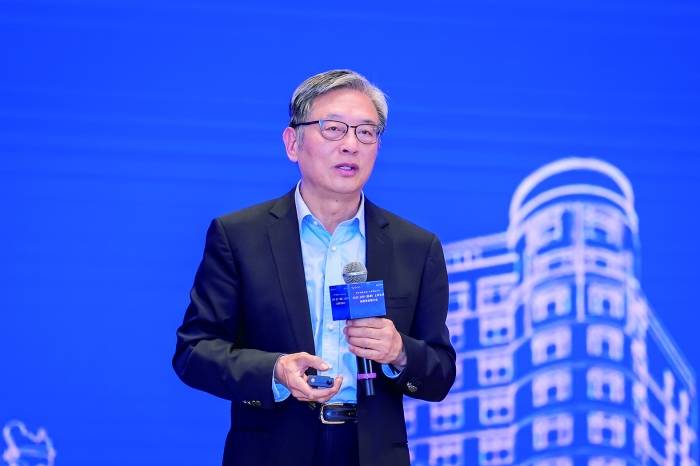
汇聚合力,共谋新篇 大湾区科学论坛科技金融分论坛成功举行
2 1 Shi Ji Jing Ji Bao Dao· 2025-12-07 11:15
Core Viewpoint - The forum emphasizes the importance of integrating technology and finance in the Guangdong-Hong Kong-Macao Greater Bay Area, aiming to establish a world-class innovation hub and enhance collaboration among various stakeholders [1][2]. Group 1: Forum Highlights - The forum, themed "New Quality Bay Area, Financial Synergy," is the first of its kind focusing on technology finance, reflecting the high expectations from Guangdong, Hong Kong, and Macao for deep integration of technology and finance [1]. - Keynote speeches covered topics such as global capital markets supporting technological innovation and the establishment of a diversified technology finance service system [4]. - The forum featured representatives from major financial institutions and experts discussing the role of capital in technological breakthroughs and the increasing pace of innovation in high-tech enterprises [4][5]. Group 2: Strategic Initiatives - Suggestions for promoting technology-finance integration include directing financial resources towards hard technology and early-stage projects, enhancing knowledge sharing, and fostering cross-sector collaboration [1]. - The Guangdong Provincial Science and Technology Department announced the launch of a technology finance digital platform to address data bottlenecks between enterprises and financial institutions, aiming to improve the matching of financial and technological resources [8]. - Multiple cooperation agreements were signed during the forum, including a strategic partnership between Guangdong Yueke Financial Group and Bank of China Guangdong Branch to support technology enterprises with comprehensive financial services [9]. Group 3: Future Industry Focus - A roundtable discussion highlighted future industries such as quantum technology, biomanufacturing, hydrogen energy, nuclear fusion, and embodied intelligence, exploring investment logic and opportunities in the Greater Bay Area [10]. - The forum aimed to provide practical insights for early-stage investments in hard technology, emphasizing the need for a collaborative approach among various stakeholders in the innovation ecosystem [10].
科技金融释放四大红利
Ke Ji Ri Bao· 2025-12-04 01:00
Core Insights - The total issuance of technology innovation bonds in the market has reached approximately 1.5 trillion yuan, with funds accelerating towards technology innovation entities [1] - The establishment of an 800 billion yuan re-lending program for technology innovation and technological transformation by the Ministry of Science and Technology and the People's Bank of China aims to support over 120,000 technology-based SMEs [1] - The implementation of the "Innovation Points System" and specialized guarantee plans has led to positive outcomes in financial support for major national technology tasks and technology-based SMEs [1] Group 1: Technology Financial System Development - The establishment of a "Technology Board" in the bond market is a key focus for building a technology financial system that aligns with technological innovation, aiming to raise long-term, low-interest, and easily accessible bond funds [2] - Shenzhen has taken the lead in responding to the "Technology Board," issuing a total of 1 billion yuan in technology innovation bonds, primarily targeting cutting-edge fields such as artificial intelligence and biomedicine [2] - The "Investment-Insurance Linkage" model by Shenzhen High-tech Investment Group provides comprehensive services including equity, debt, and diversified financial tools to support startups and small enterprises [2] Group 2: Bond Issuance and Financial Products - Guangdong has issued 102 technology innovation bonds with a total issuance scale of 111.4 billion yuan, ranking second nationwide, with most funds directed towards technology innovation-related fields [3] - The bond market's "Technology Board" leverages its market-oriented advantages to continuously introduce specialized innovative products to support financing for technology-based enterprises [3] - A multi-layered and diversified technology financial service system is being developed to better meet the financing needs of technology-based enterprises at different stages [3] Group 3: Financial Support Mechanisms - The establishment of a coordinated mechanism for technology finance has improved the matching and precision of financial support for technology innovation [4] - A comprehensive financial service plan called "Mid-Stage Insurance and Financing" has been launched, providing 100 billion yuan in bank support and insurance guarantees for mid-stage projects over the next three years [4] - The "拨保贷投" mechanism provides full lifecycle funding support for mid-stage projects, covering various funding needs from project inception to maturity [5] Group 4: Innovation Points System - The "Innovation Points System" is being promoted nationwide to optimize evaluation indicators and provide precise profiles for technology-based SMEs [6] - In Handan, the "科创数智贷" product allows companies to secure loans based on their innovation points ranking, demonstrating the effectiveness of the innovation points system [7] - The upgraded "Innovation Points System 2.0" aims to convert a company's innovation potential into quantifiable credit for financial institutions, enhancing the accessibility and efficiency of technology financial services [8] Group 5: Knowledge Value Credit - Hubei has established a knowledge value credit evaluation model, allowing companies to secure financing based solely on intellectual property and talent value [9] - The "Knowledge Value Credit Loan" program has issued a total of 77.4 billion yuan, supporting 14,916 technology-based enterprises, breaking the traditional asset-backed financing model [11] - The establishment of a risk compensation fund and a scientific knowledge value credit evaluation system has enhanced banks' willingness to lend to technology-based enterprises [10][11]


实现科技与金融双向奔赴
Jing Ji Ri Bao· 2025-12-04 00:14
Core Viewpoint - The article emphasizes the importance of integrating financial tools to address the disconnect between technology, industry, and capital, highlighting the need for a robust technology finance system in China to support technological innovation and economic growth [1][2]. Group 1: Current State of Technology Finance - Technology finance in China is characterized by high growth, a full chain approach, and diversification, effectively addressing high-risk areas such as basic research and technology transfer [1]. - The integration of effective markets with proactive government involvement distinguishes China's technology finance model from those of the US and Germany, which rely on private venture capital and stable banking systems, respectively [2]. Group 2: Challenges and Recommendations - Key challenges include the need to enhance the service capabilities of financial institutions, improve mechanisms for early-stage investments, and develop a more comprehensive financial product system [2]. - Recommendations include strengthening the collaboration between financial systems and technology sectors, building a specialized workforce in technology finance, and establishing digital infrastructure for better risk assessment and monitoring [2]. Group 3: Financing Structure and Product Development - There is a call to optimize the financing structure by supporting technology companies with key technological breakthroughs through multi-tiered capital markets and improving the bond market's support for innovation [3]. - Financial institutions are encouraged to create specialized financial products tailored to the lifecycle needs of technology companies and to innovate in technology insurance products to cover the entire chain from research to commercialization [3]. Group 4: Policy Coordination - The establishment of a coordinated mechanism for technology finance is essential, with a focus on enhancing collaboration between technology and financial departments, and supporting regional innovation centers in implementing technology finance policies [3].
祝国平:为发展新质生产力提供长期资金支持
Jing Ji Ri Bao· 2025-12-04 00:14
Group 1 - The core viewpoint emphasizes the need for high-level technological self-reliance and innovation as a foundation for China's modernization, highlighting the importance of long-term capital in fostering new productive forces [1][2][3] - New productive forces are characterized by technological breakthroughs, innovative allocation of production factors, and deep industrial transformation, with a significant increase in total factor productivity as a key indicator [1][2] - The government is actively promoting the development of angel investment, venture capital, and private equity to enhance the role of patient capital in supporting modernization and new productive forces [3] Group 2 - In 2024, China's R&D expenditure reached 36,326.8 billion yuan, with an intensity of 2.69%, consistently exceeding the average level of EU countries [4] - The annual growth rate of R&D expenditure during the first four years of the 14th Five-Year Plan was 10.5%, ranking among the top of major global economies [4] - By mid-2025, loans to technology-based SMEs reached 3.46 trillion yuan, with a year-on-year growth of 22.9%, outpacing other loan categories [4] Group 3 - Despite progress, there remains a mismatch between long-term investment and the needs of new productive forces, with issues such as a preference for short-term investments and uneven capital allocation across sectors [5][6] - Recommendations include optimizing the investment environment, expanding patient capital, and innovating financial products to enhance long-term capital support for technological innovation [5][6] - Specific measures proposed include improving tax incentives for investment in technology transfer and mid-term trials, and encouraging state-owned capital to invest in innovation and strategic emerging industries [6]
科技金融加速科技成果转化
Xin Hua Ri Bao· 2025-12-03 21:40
Core Viewpoint - The transformation of China's technology sector from a "big technology country" to a "strong technology country" is crucial, with technology financial services playing a key role in the conversion of technological achievements into marketable products [1][8]. Group 1: Challenges in Technology Achievement Conversion - The full lifecycle of technology achievement conversion includes multiple stages, facing significant risks, particularly in the early stages where high risks and low collateral create funding bottlenecks [2][8]. - The core contradiction in China's technology achievement conversion is the "high-risk gap" and "ecological chain disconnection," exacerbated by traditional financial tools that avoid early-stage risks, leading to a funding gap known as the "valley of death" [2][8]. Group 2: Government's Role in Financial Support - The government needs to innovate funding mechanisms and establish risk compensation systems to support early-stage projects, such as the "technology loan risk compensation fund" in Zhejiang, which shares early loan default risks with banks [3]. - A shift from "fiscal blood transfusion" to "risk sharing" is necessary, with a focus on long-term support for technology conversion and startup development through a "first investment, then equity" model [3]. Group 3: Investment Strategies and Financial Tools - A "risk-reward" rebalancing system should be established, utilizing tax incentives and subsidies to lower investment costs for social capital, while also implementing risk option contracts to enhance investor confidence [4]. - Innovative financial tools, such as intellectual property pledge financing and technology bills, are being utilized to convert intangible assets into tangible funding, addressing the financing challenges faced by technology enterprises [5][6]. Group 4: Financial Ecosystem Reconstruction - The technology finance ecosystem must evolve from fragmented services to comprehensive coverage, creating a closed-loop network that connects government, industry, academia, and finance [7]. - By establishing dual-track risk-sharing funds at provincial and municipal levels, the government can support high-risk early-stage projects, encouraging active participation from social capital [4][8].