
机场

Search documents
白云机场八千万客流背后:15条跑道撑起大湾区世界级机场群
Nan Fang Du Shi Bao· 2025-12-18 12:31
Core Insights - Guangzhou Baiyun International Airport has officially surpassed an annual passenger throughput of 80 million, joining the global "80 million club" [1][6][15] Group 1: Airport Development and Capacity - The completion of the fifth runway at Baiyun Airport and the third runway at Shenzhen Bao'an Airport has established a world-class airport cluster in the Guangdong-Hong Kong-Macao Greater Bay Area, enhancing regional connectivity and competitiveness [2][9] - Baiyun Airport's new operational structure includes three terminals and five runways, significantly improving its capacity and efficiency for handling high-density flight operations [3][6][7] - The airport has successfully opened or restored nearly 40 international passenger routes this year, expanding its network to over 100 international and regional destinations [7][8] Group 2: Economic and Policy Support - The implementation of a 240-hour visa-free transit policy has effectively attracted international travelers, contributing to a robust recovery in international passenger numbers, which increased by over 19% year-on-year [6][7] - The growth of the Guangdong sports, cultural tourism, and exhibition economies has provided a continuous influx of passengers, further enhancing the airport's role as a hub [7][8] Group 3: Strategic Partnerships - China Southern Airlines, headquartered in Guangzhou, plays a crucial role in supporting Baiyun Airport's hub capabilities, establishing Guangzhou as a primary gateway to Oceania and Southeast Asia [8][15] - The strategic collaboration between Baiyun Airport and China Southern Airlines has led to the development of a "12-hour air traffic circle" connecting Guangzhou with major global economic cities [8] Group 4: Regional Airport Cluster Dynamics - The Greater Bay Area now boasts 15 operational runways, making it one of the regions with the highest airport runway density globally, reflecting a shift towards collaborative and differentiated development among its airports [9][11] - The airports in the Greater Bay Area are forming a multi-layered network, with Hong Kong focusing on international transit, Guangzhou enhancing its Asia-Pacific hub functions, and Shenzhen targeting emerging markets [11][12] Group 5: Future Prospects and Integration - The development of Baiyun Airport and the Greater Bay Area's airport cluster is expected to transform these facilities into high-value industry incubators, attracting high-end industries and services [13][14] - The integration of transportation systems, including high-speed rail and intercity rail, is set to create a comprehensive transport hub, enhancing the efficiency of passenger and cargo flows [12][14]



封关运作首日,美兰机场迎来第一批“一线”零关税、“二线”加工增值免关税货物通关
Bei Jing Shang Bao· 2025-12-18 12:18
Group 1 - Hainan Free Trade Port officially launched its full island closure operation on December 18, marking a new regulatory model of "first line open, second line controlled" at Meilan Airport [1][3] - The first batch of imported goods benefiting from the "zero tariff" policy and exception measures included medical equipment parts from Hong Kong and aircraft parts from the United States, with a total of approximately 6,600 tax items now eligible for zero tariffs, representing 74% of the total [3] - The first batch of goods enjoying the "processing value-added tax exemption" policy successfully departed from Meilan Airport, including chocolate from a local food manufacturing company, utilizing a new intelligent customs clearance process [3]

上海机场免税店生意换招牌
第一财经· 2025-12-18 10:25
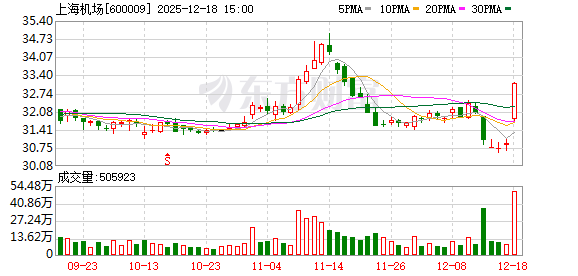
Core Viewpoint - The article discusses the significant changes in the duty-free operations at Shanghai airports, highlighting the transfer of management rights to China Duty Free Group and Dufoor, marking the end of Japan Duty Free's 26-year operation at these airports [3][5]. Summary by Sections Duty-Free Management Transfer - Shanghai Airport announced the signing of a contract on December 17, transferring duty-free management rights to China Duty Free Group and Dufoor, covering multiple terminals at both Pudong and Hongqiao airports [3][5]. - This transfer signifies the first large-scale entry of foreign duty-free operators into China's airport duty-free sector [3]. Contract Details - The management rights are set for 8 years, from January 1, 2026, to December 31, 2033, with a revenue model based on "fixed rent + commission" [5]. - Fixed rents for Pudong T1 and T2 are 3141 RMB/㎡/month and 3090 RMB/㎡/month, respectively, with commission rates ranging from 8% to 24% [5]. - The new contract introduces an increase in operational area by 1564 square meters and expands product categories to include mobile phones, drones, baby products, health foods, and more [5]. Changes in Revenue Model - The revenue model for Shanghai Airport has shifted from a minimum guarantee based on sales to a fixed rent plus commission structure, which is expected to enhance revenue stability [5][6]. - The airport will also establish joint ventures with the new operators, allowing it to earn both rental income and a share of operational profits [6]. Competitive Landscape - The competitive landscape for duty-free operations is evolving, with a notable reduction in commission rates to support operators in increasing sales [6]. - Japan Duty Free's exit from the Shanghai airport market is attributed to a lack of support from its major shareholder, China Duty Free Group, which now directly competes for these contracts [7][8]. Market Reactions - Following the announcement, Shanghai Airport's stock price rose over 7%, while China Duty Free's stock fell more than 4% [10].

运营商和结算方式全变了,上海机场免税店生意“换血”
Di Yi Cai Jing· 2025-12-18 09:53
Core Viewpoint - The competitive landscape of duty-free projects at major Chinese airports is being reshaped with the new round of duty-free store operations bidding at Beijing Capital Airport and the recent changes at Shanghai airports [1][2]. Group 1: Shanghai Airport Duty-Free Store Changes - Shanghai Airport announced a contract with China Duty Free Group and Dufry for the operation of duty-free stores, marking a significant shift as foreign operators enter the Chinese airport duty-free market [2]. - The new contract allows for an 8-year operation period from January 1, 2026, to December 31, 2033, with a revenue model based on "fixed rent + commission" [3]. - The fixed rents for the duty-free stores at Shanghai Pudong Airport T1 and T2 are set at 3,141 RMB/m²/month and 3,090 RMB/m²/month, respectively, with commission rates ranging from 8% to 24% [3]. Group 2: Changes in Product Offerings and Revenue Model - The new duty-free contract includes an increase in operational area by 1,564 square meters and the addition of new product categories such as mobile phones, drones, and health products [3]. - The revenue model for Shanghai Airport has shifted from a higher commission structure to a fixed rent plus commission model, which is expected to benefit both the airport and the operators [4]. Group 3: Implications for Market Competition - The exit of Sunrise Duty Free from the Shanghai Airport duty-free operations is attributed to a lack of support from its major shareholder, China Duty Free Group, which is now directly competing for the contracts [5]. - The bidding for duty-free operations at Beijing Capital Airport has also commenced, with a submission deadline of December 19, 2023, indicating a potential shift in operational dynamics similar to those at Shanghai Airport [6]. - Following the announcement, Shanghai Airport's stock price increased by over 7%, while China Duty Free's stock fell by more than 4%, reflecting market reactions to the changes [6].

研报掘金丨中金:维持上海机场“跑赢行业”评级 新免税合约落地 期待未来销售表现
Ge Long Hui· 2025-12-18 07:54
Core Viewpoint - The report from CICC highlights Shanghai Airport's recent announcement regarding the signing of a duty-free store project operating rights transfer contract, indicating a positive outlook for future sales performance [1] Group 1: Duty-Free Business Development - Shanghai Airport announced that Du Furui won the bid for operating rights at Pudong T1+S1, while China Duty Free Group won the bid for Pudong T2+S2 and Hongqiao, with an operating period from early 2026 to the end of 2033 [1] - The company plans to establish a joint venture with the winning duty-free operator, holding a 49% stake in the new entity [1] - Rental terms are generally in line with market expectations, suggesting a stable revenue stream from the duty-free business [1] Group 2: Financial Forecasts - The company maintains its profit forecast for 2025 at 2.26 billion yuan, while raising the 2026 profit forecast by 3% to 2.82 billion yuan, primarily due to the unexpected joint venture with the duty-free operator [1] - The investment income forecast has been slightly adjusted upwards as a result of the joint venture [1] Group 3: Asset Disposal and Target Price - The announcement on November 21 regarding the recovery of state-owned land use rights and facility compensation is expected to bring one-time asset disposal gains, warranting attention on the progress of this transaction [1] - The target price remains unchanged at 34.5 yuan, corresponding to 38 times the 2025 P/E and 30 times the 2026 P/E, indicating a 12% upside potential from the current stock price [1] - The rating of "outperforming the industry" is maintained [1]
上海机场:公司聚焦资源开发、价值创造
Zheng Quan Ri Bao· 2025-12-18 07:48
Core Viewpoint - Shanghai Airport aims to enhance profitability through continuous innovation and development, focusing on expanding non-aviation business areas and optimizing operational models [2] Group 1 - The company plans to leverage its hub platform's traffic, scale, and brand advantages to increase commercial resource development [2] - There is a commitment to improving the quality of commercial offerings and identifying new consumer growth points [2] - The goal is to create a better travel consumption experience for passengers [2]
上海机场免税业务“变天”:八年合同大洗牌,中免、杜福睿“分治”浦东虹桥
Yang Zi Wan Bao Wang· 2025-12-18 07:47
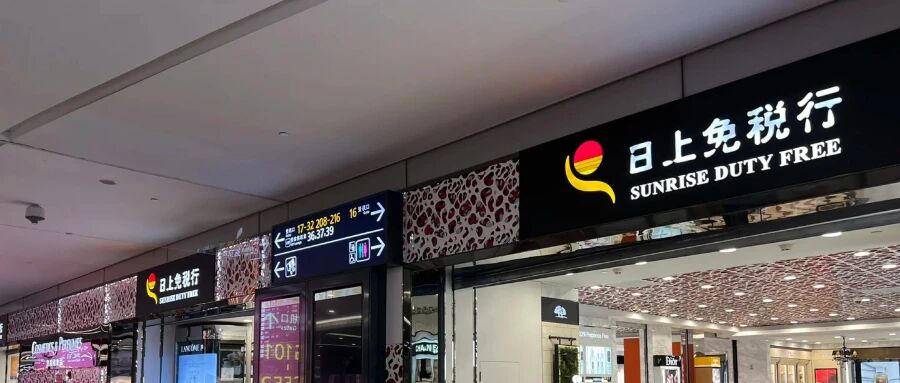
Core Viewpoint - The ownership of the duty-free business at Shanghai Airport has been officially transferred to Dufry and China Duty Free Group, marking a significant shift in the airport's duty-free landscape after over 20 years of operation by Dayong Shanghai [1][3]. Group 1: Contractual Changes - Shanghai Airport has signed contracts with Dufry and China Duty Free Group for an 8-year term, from January 1, 2026, to December 31, 2033 [1]. - Dufry will operate the duty-free shops in the international areas of Terminal 1 and the S1 satellite hall at Pudong International Airport, while China Duty Free Group will manage Terminal 2 and the S2 satellite hall at Pudong, as well as Terminal 1 at Hongqiao International Airport [4]. Group 2: Financial Structure and Revenue Model - The contracts feature different term structures: Dufry's contract follows a "3+5 years" model, while China Duty Free Group's contract is structured as "5+3 years," both with performance assessment mechanisms [6]. - Shanghai Airport will invest up to 98 million yuan to establish joint ventures with both Dufry and China Duty Free Group, holding 49% stakes in each [7]. - The revenue model has shifted from a "minimum guarantee" to a "fixed rent + sales commission" structure, with specific monthly fixed rents set for different areas [10]. Group 3: Changes in Commission Rates - The sales commission rates have been significantly reduced, with new rates for Pudong Airport ranging from 8% to 24% and for Hongqiao Airport from 8% to 22%, compared to the previous range of 18% to 36% [11]. - The total operating area for duty-free shops has increased under the new contracts, with a requirement to introduce new product categories such as mobile phones and mini-drones [11]. Group 4: Regulatory Attention - The Shanghai Stock Exchange has issued an inquiry regarding the substantial decrease in both rental prices and sales commissions compared to the previous agreements, seeking clarification on the rationale and implications for future performance [11]. - The company anticipates that the new contracts will positively impact revenue from 2026 to 2033, reflecting a strategic shift towards a collaborative revenue-sharing model in response to intensified competition in the industry [11].
广州白云国际机场年旅客量首超8000万人次
Nan Fang Ri Bao Wang Luo Ban· 2025-12-18 07:39
Core Insights - Guangzhou Baiyun International Airport has achieved a historic milestone by surpassing 80 million annual passenger throughput by December 17, 2025, with over 16.6 million international passengers, officially joining the global "80 million passenger club" [1][2] - The significant increase in passenger flow is attributed to hardware upgrades, including the opening of Terminal 3 and the operation of the fourth and fifth runways, enhancing the airport's operational capacity and layout [1] - The growth in passenger numbers reflects the collaborative development of the sports, cultural tourism, and exhibition economy in the Guangdong-Hong Kong-Macao Greater Bay Area [1] Operational Performance - Baiyun Airport's core operational metrics, including flight takeoffs and landings, international business, and cargo transport, have shown strong growth, with international business surging over 19% year-on-year, accounting for over 20% of total passengers [2] - The airport has been a key player in the Greater Bay Area, facilitating the opening, enhancement, and restoration of nearly 40 international passenger routes this year, including new destinations such as Almaty, Madrid, and Vancouver [2] - Baiyun Airport's international and regional destinations have exceeded 100, marking a significant expansion in its global connectivity [2] Future Outlook - Standing at the new milestone of 80 million passengers, Baiyun Airport aims to enhance its role as a vital global gateway and accelerate the construction of a world-class hub airport, contributing to Guangdong's leadership in advancing China's modernization [2]
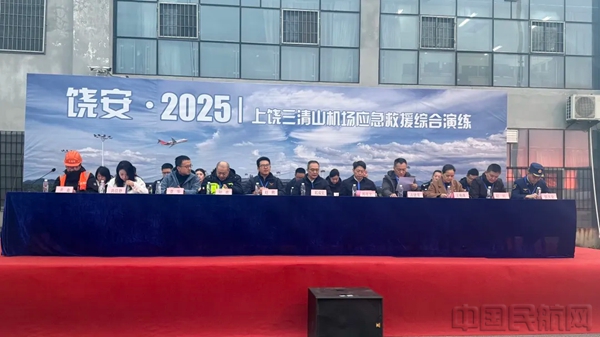
民航江西监管局督导上饶机场应急救援综合演练
Zhong Guo Min Hang Wang· 2025-12-18 06:21
Core Viewpoint - The recent emergency rescue drill at Shangrao Sanqingshan Airport aims to enhance the airport's and rescue units' collaborative response capabilities to aviation emergencies, reflecting the rapid growth in flight volume in recent years [1][3]. Group 1: Drill Overview - The drill was based on a scenario involving drone interference, incorporating real-world risk factors such as aircraft damage and unauthorized personnel intrusion [3]. - The Civil Aviation Administration of Jiangxi Province formed a supervisory team to oversee the drill, ensuring compliance with regulations and evaluating the effectiveness of emergency plans and operational skills [1][3]. Group 2: Performance Evaluation - The participating units demonstrated clear division of labor and efficient collaboration, validating the scientific and operational feasibility of the emergency response plans [3]. - A post-drill review meeting was held to analyze the drill process and provide targeted improvement suggestions, emphasizing the need for enhanced emergency management leadership and systematic summarization of drill experiences [6]. Group 3: Future Actions - The Jiangxi regulatory authority will follow up on the supervisory team's recommendations to ensure Shangrao Sanqingshan Airport addresses identified issues and optimizes its operations, thereby continuously improving emergency response capabilities [6].
“双十二”电商促销热潮,交通运输ETF(159666)上涨0.7%,上海机场涨超6%
Mei Ri Jing Ji Xin Wen· 2025-12-18 06:16
Group 1 - The core viewpoint of the article highlights the positive performance of the transportation sector, particularly during the "Double Twelve" e-commerce promotion, which has driven strong demand in the logistics and airline sectors [1] - The Transportation ETF (159666) saw a 0.7% increase, with significant gains in stocks such as Shanghai Airport (over 6%) and Shentong Express (over 2%) [1] - The inflow of over 10 million yuan into the Transportation ETF over the past 20 days indicates strong investor interest in the sector [1] Group 2 - The domestic outbound cargo volume of China Southern Airlines Logistics in the East China region exceeded 1,000 tons from December 8 to 15, reflecting robust consumer demand [1] - Huayuan Securities believes that the e-commerce express delivery industry remains resilient, with rising express delivery prices due to "anti-involution," which enhances corporate profit elasticity [1] - The Transportation ETF (159666) and its linked funds are the only ETFs tracking the CSI All-Share Transportation Index, covering logistics, railways, highways, shipping ports, and airports, thus providing a comprehensive view of the A-share transportation sector [1]


