
石油开采

Search documents
上市公司全年纳税近4万亿元,前10名是这几家→
第一财经· 2025-11-15 12:46
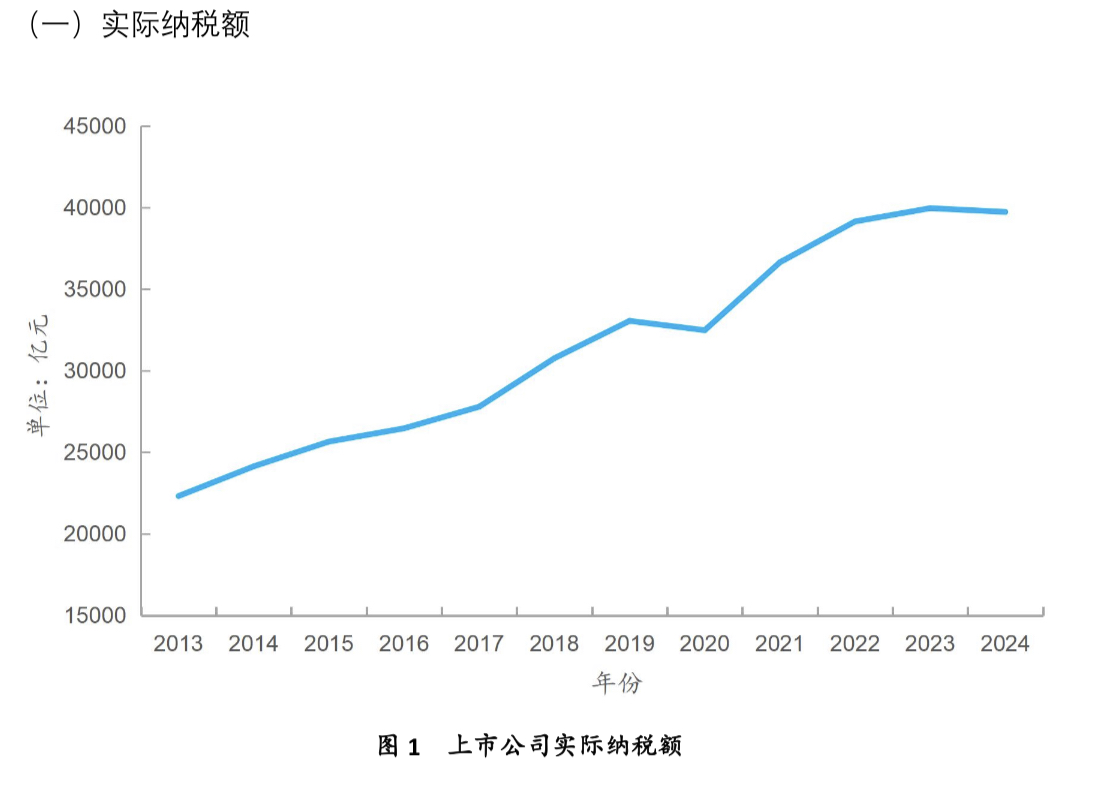
Core Insights - The report reveals that in 2024, 5,091 listed companies in China contributed approximately 39,727 billion yuan in actual tax payments, remaining stable compared to 2023, accounting for about 22.7% of the national tax revenue [3][4]. Group 1: Tax Contributions and Distribution - The top 100 listed companies contributed around 73% of the total tax payments, indicating a significant concentration of tax contributions among a small number of firms [5]. - Major contributors include China National Petroleum (3,961 billion yuan) and Sinopec (3,313 billion yuan), with several banks and other companies also exceeding 1,000 billion yuan in tax payments [5]. - The average tax payment per listed company was 7.8 million yuan, with a median of 0.53 million yuan [6]. Group 2: Industry Contributions - The mining, financial, and manufacturing sectors accounted for nearly 77% of the total tax contributions from listed companies, with mining alone contributing about 1 trillion yuan [8]. - The manufacturing sector saw the highest growth in tax contributions, increasing by approximately 22.6 billion yuan, while the real estate sector experienced the largest decline at around -28% [12]. Group 3: Ownership Structure and Tax Burden - State-owned enterprises represented about 30% of listed companies but contributed nearly 80% of the total tax payments, highlighting the dominance of state-owned firms in tax contributions [12]. - The average tax burden for listed companies has decreased over the years, with the tax payment per 100 yuan of revenue dropping to approximately 5.6 yuan in 2024 [13]. - The mining and financial sectors had the highest tax payment per 100 yuan of revenue at around 12 yuan, while the manufacturing sector had a lower tax burden of about 4 yuan [14].






上市公司贡献全国两成多税收,采矿、金融、制造行业贡献最大
Sou Hu Cai Jing· 2025-11-15 11:22
Core Insights - The report from Southwest University of Finance and Economics reveals the tax contributions of listed companies in China for 2024, indicating a total actual tax payment of approximately 39,727 billion yuan, which remains stable compared to 2023 [1] Group 1: Tax Contributions - A total of 5,091 listed companies contributed an actual tax amount of about 39,727 billion yuan in 2024, accounting for approximately 22.7% of the national tax revenue [1] - The top 100 listed companies contributed around 73% of the total actual tax payments made by all listed companies [1] Group 2: Industry Contributions - The industries with the highest tax contributions are concentrated in mining, finance, and manufacturing [1] - China National Petroleum Corporation and Sinopec ranked first and second in actual tax payments, contributing 3,961 billion yuan and 3,313 billion yuan, respectively [1] - Major banks such as Industrial and Commercial Bank of China, China Construction Bank, Agricultural Bank of China, and Bank of China each contributed over 1,000 billion yuan, ranking third to seventh [1] - Kweichow Moutai, China State Construction Engineering, and China Mobile each contributed over 500 billion yuan, ranking eighth to tenth [1]
上市公司贡献全国两成多税收,平均综合税负约5.6%
Di Yi Cai Jing· 2025-11-15 10:16
Core Insights - The report reveals that in 2024, 5,091 listed companies in China contributed approximately 39,727 billion yuan in actual tax payments, remaining stable compared to 2023, accounting for about 22.7% of the national tax revenue [1][2] Group 1: Tax Contributions and Distribution - The top 100 listed companies contributed around 73% of the total tax payments, indicating a significant concentration of tax contributions among a small percentage of companies [3] - Major contributors include China National Petroleum (3,961 billion yuan) and Sinopec (3,313 billion yuan), followed by major banks and companies like Agricultural Bank of China and China Mobile, each exceeding 1,000 billion yuan in tax payments [3] - The average tax payment per listed company was 7.8 million yuan, with a median of 0.53 million yuan [4] Group 2: Industry Contributions - The mining, financial, and manufacturing sectors accounted for nearly 77% of the total tax contributions from listed companies, with the mining sector alone contributing about 1 trillion yuan [4][9] - The manufacturing sector saw the highest growth in tax contributions, increasing by approximately 226 million yuan, while the real estate sector experienced the largest decline at -28% [9] Group 3: Ownership Structure and Tax Burden - State-owned enterprises represented about 30% of listed companies but contributed nearly 80% of the total tax payments, highlighting the dominance of state-owned firms in tax contributions [9] - The average tax burden for listed companies has decreased to approximately 5.6% in 2024, down from 8.9 yuan per 100 yuan of revenue in 2015, reflecting the impact of tax reduction policies [10] - The mining and financial sectors had the highest tax burden per 100 yuan of revenue, at around 12 yuan, while the manufacturing sector had a lower burden of about 4 yuan [10] Group 4: Emerging Sectors - Companies related to digital currency and digital government concepts had relatively low tax contributions, indicating potential for growth in tax contributions from these sectors [11]
伊拉克首口永置式光纤井完工
人民网-国际频道 原创稿· 2025-11-15 02:53
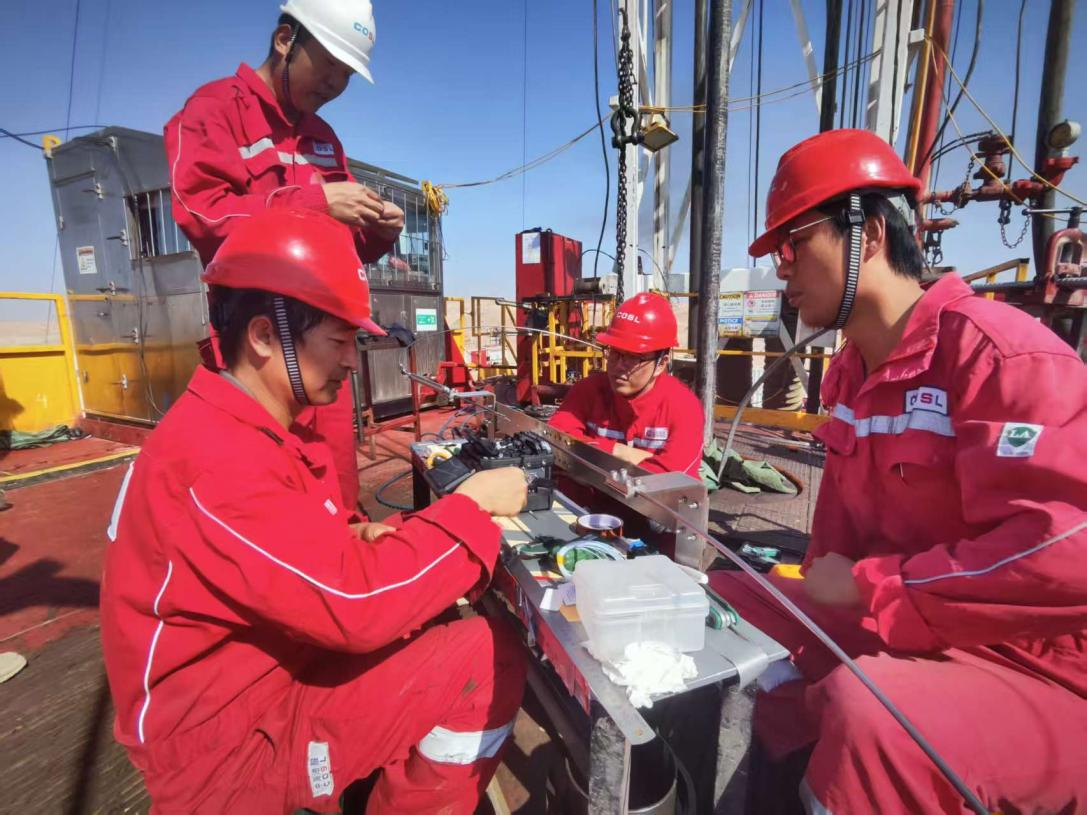
Core Insights - The first permanent fiber optic well in Iraq has been successfully completed, located in the Maysan oil field led by China National Offshore Oil Corporation (CNOOC) [1] - This technology allows real-time monitoring of temperature, pressure, and production contributions, enhancing oil field management and production optimization [1] - The implementation of this technology is part of CNOOC's broader efforts to advance digitalization and improve oil field efficiency [1] Group 1 - The fiber optic well was installed to a depth of 5,000 meters, enabling the detection of fluctuations in temperature, heat, and pressure in real-time [1] - Previously, oil wells required regular shutdowns for measurements, resulting in production losses and increased costs, with each maintenance operation costing approximately $500,000 [1] - The project signifies a new advancement in the development of the Maysan oil field and demonstrates the company's technical strength and management capabilities in line with international oil and gas industry best practices [1] Group 2 - The manager of the joint operating agency for the Maysan oil field highlighted the well's ability to provide precise information for scientific management and production optimization [1] - CNOOC Iraq has also led and promoted a series of new technologies and processes over the past year to address bottlenecks in stable production [1] - These initiatives are aimed at enhancing the quality and efficiency of oil production in the field [1]

阳光油砂(02012)公布前三季度业绩 权益持有人应占净亏损1098.9万加元 同比收窄67.32%
智通财经网· 2025-11-14 10:16
Group 1 - The core point of the article is that Sunshine Oilsands (02012) reported a total revenue and other income of CAD 13.002 million for the first three quarters of 2025, representing a year-on-year decrease of 22.95% [1] - The net loss attributable to equity holders narrowed to CAD 10.989 million, a year-on-year improvement of 67.32% [1] - The loss per share was reported at CAD 0.03 [1]
阳光油砂公布前三季度业绩 权益持有人应占净亏损1098.9万加元 同比收窄67.32%
Zhi Tong Cai Jing· 2025-11-14 10:13
Core Insights - Sunshine Oilsands (02012) reported a total revenue and other income of CAD 13.002 million for the first three quarters of 2025, representing a year-on-year decrease of 22.95% [1] - The net loss attributable to equity holders narrowed to CAD 10.989 million, a reduction of 67.32% compared to the previous year [1] - The loss per share was CAD 0.03 [1]
阳光油砂(02012.HK)第三季度净利润约为70万加元 同比扭亏为盈
Ge Long Hui· 2025-11-14 10:11
Core Viewpoint - Sunshine Oilsands (02012.HK) reported a significant decline in oil sales revenue for the nine months ending September 30, 2025, primarily due to equipment maintenance at West Ells, resulting in a drop from 26.3 million CAD to 0 CAD [1] Financial Performance Summary - For the nine months ending September 30, 2025, oil sales revenue (net of royalties) decreased to 0 CAD from 26.3 million CAD for the same period in 2024 [1] - The net operating loss for the three months ending September 30, 2025, was 7.1 million CAD, compared to a net operating loss of 0.5 million CAD in the same period of 2024 [1] - The net cash flow from operations for the three months ending September 30, 2025, showed a loss of 1.1 million CAD, slightly worse than the net loss of 1.0 million CAD in the same period of 2024 [1] - The company reported a net profit attributable to shareholders of approximately 0.7 million CAD for the third quarter of 2025, compared to a net loss of 0.5 million CAD in the third quarter of 2024 [1]
沈采厂外委转自营创效逾175万
Zhong Guo Hua Gong Bao· 2025-11-14 02:27
Core Viewpoint - The Liaohe Oilfield Shenyang Oil Production Plant is focusing on transforming outsourced operations to in-house management as a primary strategy for improving efficiency and quality by 2025, having already reduced outsourcing costs by 1.752 million yuan [1] Group 1: Management and Strategy - The plant has established a comprehensive management system from top-level design to on-site execution, with each project led by a designated manager to ensure clear responsibilities and effective progress [1] - The implementation of a "Five Ones" work mechanism ensures that each project has a dedicated manager, team, and blueprint, facilitating accountability and strong execution [1] Group 2: Employee Incentives and Performance - The plant links in-house efficiency gains to employee performance, distributing a total of 230,000 yuan in special rewards for in-house projects, which has stimulated internal motivation and led to the conversion of eight outsourced services to in-house operations [1] Group 3: Technical Innovation and Efficiency - The plant leverages the expertise of technical personnel to create a self-repair list covering six types of services, which has led to over 700 key equipment repairs, generating a total efficiency gain of 3.16 million yuan [1] - The plant balances focus on major equipment repairs with the management of routine minor repairs, completing 396 minor repair projects and reducing outsourced labor by 1,782 hours, saving 396,000 yuan in labor costs [1]
港股13日涨0.56% 收报27073.03点
Xin Hua Wang· 2025-11-13 10:10
Market Overview - The Hang Seng Index rose by 150.3 points, an increase of 0.56%, closing at 27,073.03 points with a total turnover of HKD 270.67 billion [1] - The National Enterprises Index increased by 60.07 points, closing at 9,599.06 points, a rise of 0.63% [1] - The Hang Seng Tech Index gained 47.31 points, closing at 5,981.3 points, reflecting a growth of 0.8% [1] Blue-Chip Stocks - Tencent Holdings decreased by 0.15%, closing at HKD 656 [1] - Hong Kong Exchanges and Clearing fell by 0.18%, closing at HKD 436.6 [1] - China Mobile dropped by 1.13%, closing at HKD 87.85 [1] - HSBC Holdings increased by 0.7%, closing at HKD 114.3 [1] Local Hong Kong Stocks - Cheung Kong Holdings declined by 0.14%, closing at HKD 41.34 [1] - Sun Hung Kai Properties fell by 1.06%, closing at HKD 102.7 [1] - Henderson Land Development rose by 1.59%, closing at HKD 30.64 [1] Chinese Financial Stocks - Bank of China increased by 0.85%, closing at HKD 4.75 [1] - China Construction Bank rose by 0.24%, closing at HKD 8.42 [1] - Industrial and Commercial Bank of China decreased by 0.15%, closing at HKD 6.57 [1] - Ping An Insurance gained 1.08%, closing at HKD 60.95 [1] - China Life Insurance rose by 2.39%, closing at HKD 28.3 [1] Oil and Petrochemical Stocks - China Petroleum & Chemical Corporation fell by 0.67%, closing at HKD 4.44 [1] - PetroChina decreased by 1.21%, closing at HKD 8.96 [1] - CNOOC dropped by 2.01%, closing at HKD 22.48 [1]
恒生指数开盘跌0.53%,阿里巴巴跌近2%,腾讯控股跌超1%
Mei Ri Jing Ji Xin Wen· 2025-11-13 02:09
Core Viewpoint - The Hong Kong stock market is experiencing a short-term adjustment but remains in an upward trend, supported by positive industry news and the anticipated influx of global capital following the Federal Reserve's interest rate cuts [1]. Group 1: Market Performance - On November 13, the Hang Seng Index opened down 0.53%, the Hang Seng Tech Index fell 0.82%, and the Hang Seng China Enterprises Index decreased by 0.5% [1]. - Oil stocks led the decline, with China National Offshore Oil Corporation dropping over 2% [1]. - Major tech stocks showed weak performance, with Alibaba-W down nearly 2% and Tencent Holdings falling over 1% [1]. - In contrast, Ctrip Group-S rose by 0.96%, Xpeng Motors-W increased by 0.48%, and BYD Electronics gained 0.23% [1]. Group 2: Future Outlook - Despite the current adjustments, the Hong Kong stock market is expected to continue rising, particularly benefiting from the tech growth sector [1]. - The primary driving force behind the current upward momentum in the Hong Kong market is positive news from the industry, with a focus on sectors experiencing growth [1]. - Dongwu Securities indicates that as China's AI progress accelerates, leading tech stocks in Hong Kong still have room for recovery, maintaining a positive outlook on AI technology [1].
