美妆

Search documents
国货实力圈粉,“潮”动力势能强劲
Ren Min Wang· 2025-12-10 08:11
Group 1 - The core viewpoint is that domestic brands in China are reshaping the consumer market landscape by occupying prominent positions across various sectors, including smart home appliances, beauty products, and new energy vehicles [1][2] - By the first three quarters of 2025, China's exports of holiday goods, dolls, and animal-shaped toys exceeded 50 billion yuan, reaching over 200 countries and regions globally [1] - The rise of domestic brands reflects a significant transformation in consumer psychology and market environment, moving from being a secondary option to a primary choice for consumers [1][3] Group 2 - In the first ten months of this year, China's cumulative exports of new energy vehicles surpassed 2 million units, with brands like BYD and NIO excelling in core technologies such as battery management and intelligent driving [2] - Cultural confidence is a key driver of the rise of domestic brands, allowing for a creative transformation that resonates emotionally across different age groups and regions [2] - The integration of traditional cultural elements into modern products, such as the Palace Museum's creative products and Li Ning's sportswear, showcases the blend of culture and innovation [2] Group 3 - The ability of domestic brands to quickly adapt to market dynamics and meet upgraded consumer demands is supported by a resilient supply chain backed by a complete industrial system in China [3] - China's industrial system includes 41 major industrial categories, enabling full control from design to manufacturing, which enhances competitiveness in global markets [3] - Domestic brands have achieved a balance between quality and price, offering products that exceed consumer expectations in emotional value, thus upgrading overall product value [3]


二线城市将难见韩妆雪花秀
Xin Lang Cai Jing· 2025-12-10 08:04
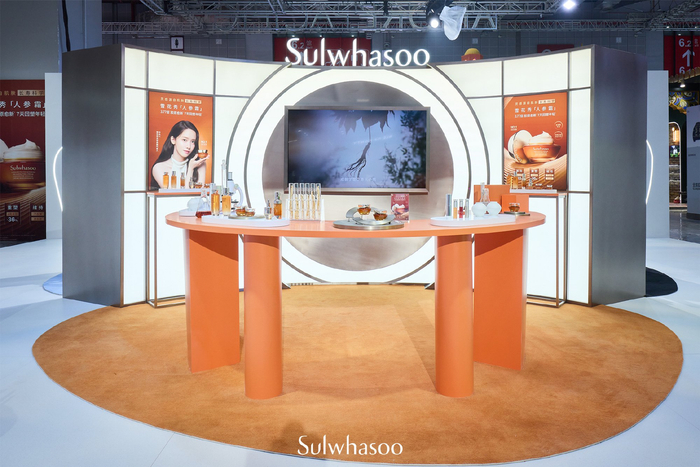
Core Viewpoint - The recent rumors regarding Sulwhasoo's large-scale store closures and potential exit from the Chinese market have been denied by its parent company, Amorepacific China, which emphasizes that China remains a crucial strategic market for the brand [1] Group 1: Store Closures and Market Presence - Amorepacific China has confirmed that approximately 30 stores are expected to close in China, primarily in second-tier cities, aligning with data from their official website and review platforms [1] - Currently, Sulwhasoo has around 180 stores in the Chinese market, but there has been a noticeable reduction in store numbers, particularly in cities like Changsha and Nanning [1] - In first-tier cities like Shanghai, Sulwhasoo has also reduced its store presence, with a notable closure of a 14-year-old store in a major department store [1] Group 2: Strategic Adjustments - Amorepacific has stated that the adjustments in its channels are not a retreat but rather a restructuring focused on inventory reduction, cutting inefficient channels, and enhancing the presence of e-commerce [3] - The company reported an 8.5% year-on-year revenue growth in the Greater China region for Q3 2025, with its revenue share in the group rising to 10.4% [3] - Despite this growth, the revenue share is still recovering from a peak of 18.5% in Q4 2023, indicating ongoing challenges in the market [4] Group 3: Market Trends and Competition - The overall Korean beauty market in China is experiencing a downturn, with Sulwhasoo's market share in the skincare segment declining significantly since its peak in 2021 [8] - Local brands have begun to dominate the Chinese beauty market, surpassing international brands for the first time in 2023, as consumers shift towards established domestic brands due to price sensitivity and changing preferences [5] - The competitive landscape has shifted, with local mid-range brands gaining traction and directly competing with international brands, including Sulwhasoo [5] Group 4: Product Strategy and Innovation - Sulwhasoo's strategy has evolved to focus on "stabilizing online presence, reducing offline channels, and deepening high-end offerings," with an emphasis on its ginseng product line [8] - The brand's online business has seen growth due to low base effects from previous inventory reductions, while offline channels continue to contract [8] - There is a noted lack of local innovation and adaptation in Sulwhasoo's product offerings compared to competitors like L'Oréal and Estée Lauder, which have established local R&D centers and tailored products for Chinese consumers [9]

以“中国美”引领青年创意风潮 传奇今生x第17届大广赛收官
Zhong Guo Jing Ji Wang· 2025-12-10 02:59
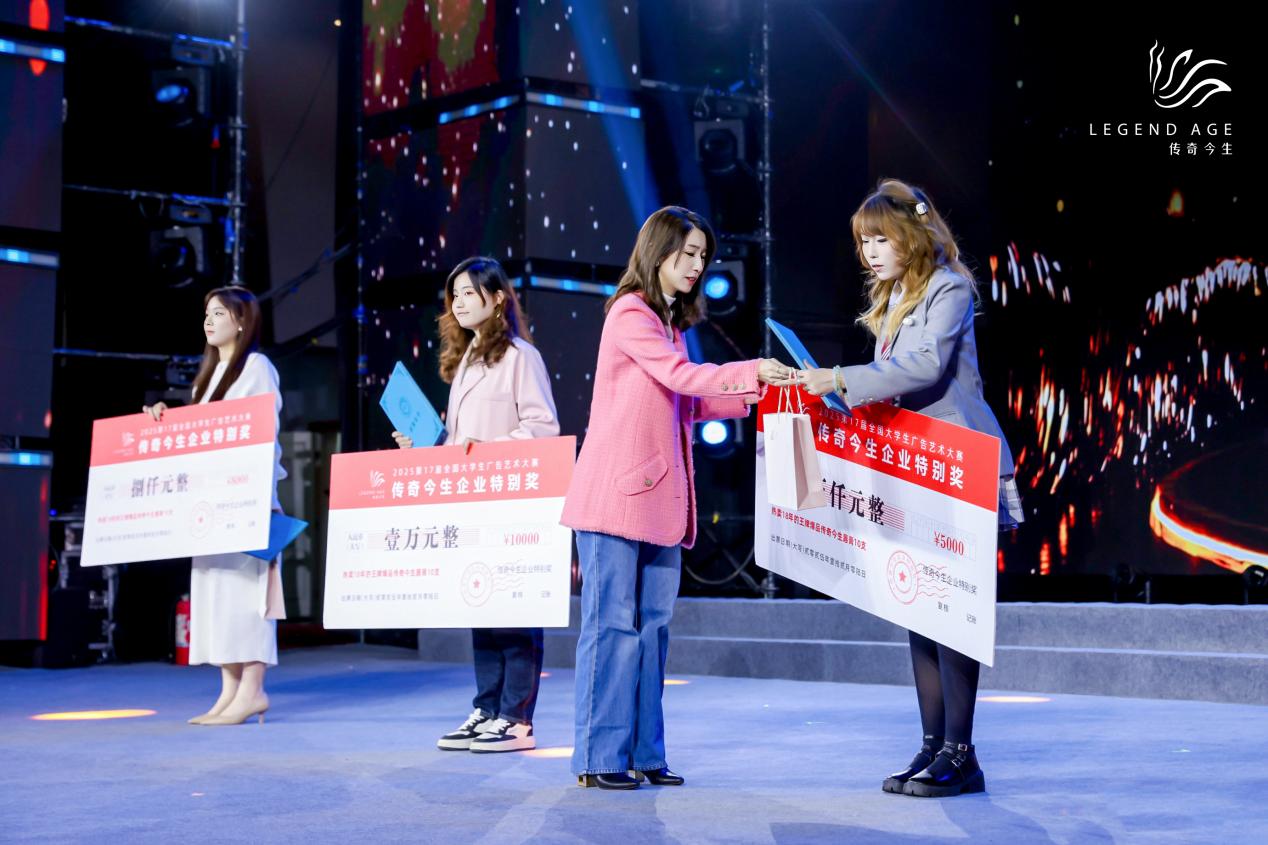
Core Viewpoint - The 17th National College Student Advertising Art Competition (Daguang Competition) showcased the creativity of students in response to the theme "Let the World See Chinese Beauty," with significant participation from the domestic beauty brand Legend Jinsheng [3][7]. Group 1: Event Overview - The Daguang Competition culminated in a ceremony held in Beijing on December 6, where numerous awards were presented to outstanding student teams [1]. - Legend Jinsheng, as a long-term player in the domestic beauty sector and a partner in this year's competition, received the title of "Advertising Art Education Reform Support Unit" from the organizing committee [4][6]. Group 2: Participation and Impact - The competition attracted tens of thousands of submissions across various formats, including graphic advertising, video, planning proposals, animation, interaction, broadcasting, UI, and copywriting, reflecting the deep emotional connection of the younger generation to the brand [3]. - Over 270 entries won national awards, with 16 entries receiving the "Special Award" from the Daguang Competition and Legend Jinsheng [3]. Group 3: Future Engagement - Legend Jinsheng initiated a nationwide campus tour starting in March 2025, engaging with students at over ten universities, including Guangzhou University and Renmin University of China, to share brand insights and product experiences [9]. - The CEO of Legend Jinsheng emphasized the importance of genuine dialogue with youth, believing that this engagement will illuminate the path for Chinese brands to reach a global audience [7][9].
今年超50个美妆品牌成“弃子”
3 6 Ke· 2025-12-10 00:24
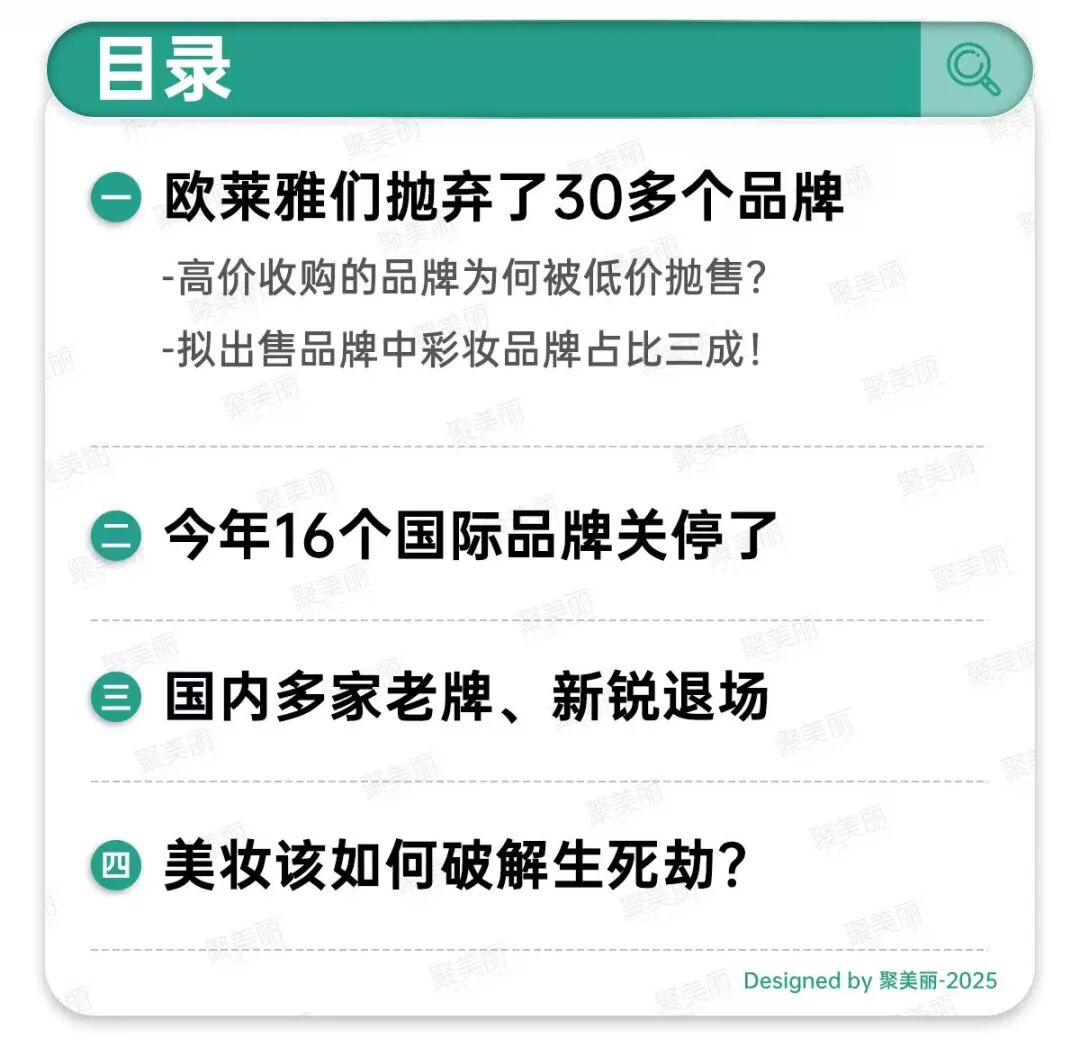
Core Insights - The cosmetics industry is experiencing a significant downturn, with many brands being sold or shut down rather than achieving sales success during promotional events [1][22] - Over 50 beauty brands have been categorized as "abandoned" this year, with notable examples including L'Oréal, Estée Lauder, and Unilever [1][5] - The trend indicates a shift from large-scale brand coverage to a focus on optimizing brand portfolios among international beauty giants [8][13] Brand Sales and Closures - International beauty giants have sold over 30 brands this year, including Unilever's sale of the high-end skincare brand CeraVe and Kering's sale of its beauty division to L'Oréal for €4 billion (approximately ¥331.96 billion) [3][5] - The majority of these "abandoned" brands were acquired at high valuations between 2014 and 2020, with some, like Avon, being sold for $3.7 billion (approximately ¥263.45 billion) after struggling to perform [6][7] - In 2025 alone, 16 international brands have been shut down due to operational difficulties and strategic misalignment, with L'Oréal closing three brands [14][18] Reasons for Brand Abandonment - The primary reasons for brand sales include the need for international beauty companies to streamline operations and focus on profitable segments, as seen with Unilever's efforts to make CeraVe profitable [7][18] - Many brands are facing challenges such as declining performance, increased marketing costs, and the inability to adapt to market demands, leading to closures [21][27] - The trend of brand closures is not limited to international brands; domestic brands are also facing similar pressures, with eight brands shutting down in 2025 due to strategic adjustments and profit pressures [23][26] Market Trends and Future Outlook - The industry is witnessing a shift towards strategic restructuring and value rediscovery rather than mere expansion, indicating a potential ongoing consolidation phase [13][32] - The focus is now on leveraging technology and innovation to create competitive advantages, with companies encouraged to find niche markets and enhance product offerings [31][32] - The ongoing challenges suggest that the beauty industry will continue to experience a wave of brand eliminations, with survival dependent on strategic adaptability and resource management [22][32]



欧莱雅的进击
Xin Lang Cai Jing· 2025-12-09 15:50
Core Viewpoint - L'Oréal is actively expanding its market presence through acquisitions and investments, particularly in the medical aesthetics sector, in response to slowing growth in its core business [1][9]. Group 1: Acquisition and Investment Strategy - L'Oréal has acquired an additional 10% stake in Galderma, increasing its ownership to 20%, following an initial investment in 2024 [2]. - The acquisition aligns with L'Oréal's strategy to enhance its presence in the medical aesthetics market, which includes products like injectables and skincare treatments [2][3]. - L'Oréal's CEO emphasized the importance of the aesthetics business as a key extension of its core beauty operations, indicating a strong commitment to this market [2]. Group 2: Market Context and Performance - L'Oréal's sales for the first three quarters of the year reached €32.8 billion, reflecting a growth rate of approximately 1.2%, a significant decline from the previous year's 6% [9]. - The company reported a sales decline of 1.1% in the North Asia market for the first half of 2025, highlighting challenges in this key region [9]. - Overall, L'Oréal's growth has slowed, with a projected annual sales increase of only 5.1% for 2024, compared to much higher growth rates in previous years [9]. Group 3: Broader Market Trends - L'Oréal is not only focusing on the medical aesthetics sector but is also building a comprehensive beauty ecosystem that includes luxury, mass-market, skincare, and haircare products [5]. - The company has established a long-term strategic partnership with Kering Group, involving a €4 billion acquisition of several luxury beauty brands [6]. - Recent investments in domestic beauty brands, such as a stake in Naturals and LAN, indicate L'Oréal's strategy to tap into the growing potential of the Chinese beauty market [6].
MISTINE蜜丝婷攻下Nature级全球智能AI抗光损模型
Huan Qiu Wang Zi Xun· 2025-12-09 09:24
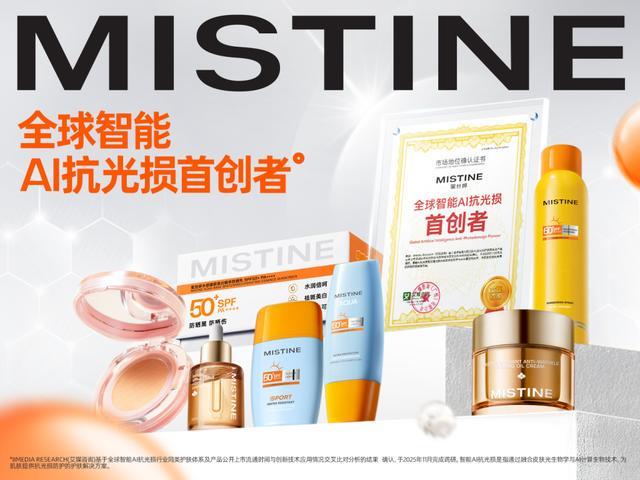
来源:环球网 摘要:作为源自泰国的37年国际美妆品牌,MISTINE蜜丝婷已连续四年在中国防晒护肤品市场占据领 先份额。通过多位技术人员联合研发体系构建科技壁垒,成为热带专研全场景抗光损专家。品牌旗下防 晒及底彩产品稳居多榜TOP1,并凭借与著名的瓦谢尔团队联合开发的Scope DTI-AI人工智能靶点筛选 模型(发表于《Nature Communications》),成为全球实现AI抗光损技术产业化的美妆品牌。 关键词:MISTINE蜜丝婷;Scope DTI-AI;抗光损;热带科学专研美妆;智能AI大模型;Nature Communications 案例正文: 2025年,MISTINE蜜丝婷以"全球智能AI抗光损首创者"的权威认证,将其核心科研成果——Scope DTI- AI人工智能靶点筛选模型系统性应用于美妆研发,成为科技创新方向的代表性实践。 其核心成果于2025年正式发表于国际顶级学术期刊《Nature Communications》,该刊作为JCR Q1期刊 (影响因子15.7),以不足10%的年录用率为行业高标准科研成果设置的准入门槛,亦标志着美妆行业 迈入"AI驱动的系统化研发"时代。 S ...
14起项目,食品饮料依旧是11月投融资市场主角
3 6 Ke· 2025-12-09 07:53
Core Insights - In November 2025, 14 new consumer-related projects completed financing, totaling approximately 900 million RMB, with notable projects including "LAN" and "Thunderbird Innovation" not disclosing specific amounts [1] - The financing landscape includes 7 food and beverage projects, 3 in smart technology, and single projects in new retail, apparel, beauty, and pet sectors [1] Group 1: Food and Beverage Sector - The food sector saw 5 completed financings, with "Xianbing Sister" and "Houxishi" being restaurant chains, while "Maisen" is a professional sports nutrition brand under Mengniu Group, and "Ruiyun Cold Chain" and "Jiajixian" are backend supply chain companies [1] - Mengniu Group announced its entry into the professional sports nutrition market in February 2023, launching the "Maisen" brand, which has been recognized for its performance and market presence [2] Group 2: Supply Chain Innovations - "Ruiyun Cold Chain," established in 2020, focuses on enhancing cold chain logistics efficiency through digitalization and has established a cross-border cold chain network in Southeast Asia and Hong Kong [3] - "Jiajixian," founded in 2019, specializes in AI-driven fresh supply chain services, ensuring product freshness and quality through comprehensive monitoring from source to consumer [3] Group 3: Coffee and Beverage Brands - "Xinyue NEAVES" and "Bixing Coffee" have completed financing, with Bixing Coffee's recent round being particularly noteworthy as it marks its fourth financing amidst a competitive market [4][5] - Bixing Coffee has expanded its franchise model, surpassing 500 signed stores nationwide since opening its first store in Suzhou in 2022 [4] Group 4: Beauty and Personal Care - "LAN," a clean beauty brand, received minority investment from L'Oréal's Shanghai Meici Fang Investment Co., marking L'Oréal's first investment in a local skincare brand [7] - "LAN" has achieved significant sales success, leading the market in facial oil sales for two consecutive years, with its products entering the "billion club" [7] Group 5: Market Challenges and Trends - The bankruptcy of POLYVOLY Technology highlights the challenges faced by brands that rapidly scaled without sustainable foundations, indicating a shift away from the era of quick brand creation through capital and traffic [8] - In the pet sector, Yunnan Hezhong Lian Investment completed a 12 million RMB angel round financing, while "Paiteshengxian," a pet fresh food venture, announced the closure of all offline stores due to unsatisfactory performance [8][9]
筑强根基锚定新质生产力,福瑞达生物面向“十五五”开启新章
Zhong Guo Jing Ji Wang· 2025-12-09 07:03
Core Insights - The global beauty industry is undergoing significant changes, with international giants maintaining dominance in the high-end market while emerging Chinese brands leverage local consumer insights and technological advancements to reshape the competitive landscape [1] - China's beauty industry has surpassed a market size of 1 trillion yuan for two consecutive years, with domestic brands accounting for over 55% of the market share, indicating a golden era for the industry [1] Industry Trends - The "14th Five-Year Plan" emphasizes the transition from rapid growth to high-quality development, with a focus on research and development as a key driver for companies [2] - The beauty industry is expected to see increased competition based on ecosystem advantages and policy benefits, with a strong emphasis on technological innovation and sustainable practices [7][8] Company Strategy - Furuida Biotech has established a strong foundation in the beauty industry over 40 years, focusing on a "medicine-cosmetics dual-source" research approach and a comprehensive industry chain layout [3] - The company plans to deepen its core technology research, particularly in the development of Chinese plant resources, aligning with national goals for high-quality development [5] Research and Development - Furuida's R&D investment for 2024 is projected to be 199 million yuan, a 20.05% increase year-on-year, with R&D expenditure accounting for 4.99% of revenue, surpassing the average of 3.2% for leading companies at the end of the "14th Five-Year Plan" [3] - The company has established a robust R&D innovation system covering new technologies, raw materials, and applications, which is difficult for competitors to replicate in the short term [4] Brand Development - Furuida's "5+N" brand strategy has shown success, with brands like Yilian and Aier Doctor demonstrating the value of technology-driven branding [6] - Future brand upgrades will focus on differentiation, youthfulness, and premium positioning, responding to consumer demand and consumption upgrades [6] Sustainability and Collaboration - The company is committed to sustainable practices, from raw material sourcing to low-carbon production processes, aligning with national green development goals [6] - Furuida aims to enhance collaboration within the industry ecosystem, leveraging its position as a key player in the Northern Beauty Valley industrial cluster [7] Future Outlook - The beauty industry is expected to evolve into a competition of ecosystems, with Furuida focusing on building a health skin microbiome database and establishing efficacy testing standards based on local population data [7] - The company is positioned to capitalize on policy changes that encourage innovation and global competitiveness, aiming to transform policy benefits into growth momentum [8]

名媛名妆被申请破产审查,线下美妆店遭遇生存挑战
Xi Niu Cai Jing· 2025-12-08 09:53
公开资料显示,名媛名妆是由董爱民、葛荷琴夫妇2001年创立于浙江台州,在发展过程中发现了浙江消费者对国际一线知名美妆品牌的需求以及高端美妆店 供给不足的问题,开始向高端连锁美妆店转型,并致力于成为"中国版丝芙兰"。 名媛名妆曾有过一段较快的发展经历,高峰时期在浙江各大高端购物中心拥有超过30家直营店,销售额也已突破亿元大关。 天眼查还显示,今年下半年以来,名媛名妆新增了四条被执行信息,被执行金额合计超过2000万元。 | 序号 | 案号 | 被执行人 | 执行标的(元) ۾ | | | --- | --- | --- | --- | --- | | 1 | (2025)浙0304执10015号 | 台州名媛名妆化妆品有限公司 | 64,900.00 | 温州 | | ଧ | (2025)浙1002执6770号 | 台州名媛名妆化妆品有限公司 | 632,817.00 | 台州 | | 3 | (2025)浙1002执6383号 | 台州名媛名妆化妆品有限公司 | 6,586,561.00 | 台州市 | | ব | (2025)浙1002执5066号 | 台州名媛名妆化妆品有限公司 | 15,821,994. ...
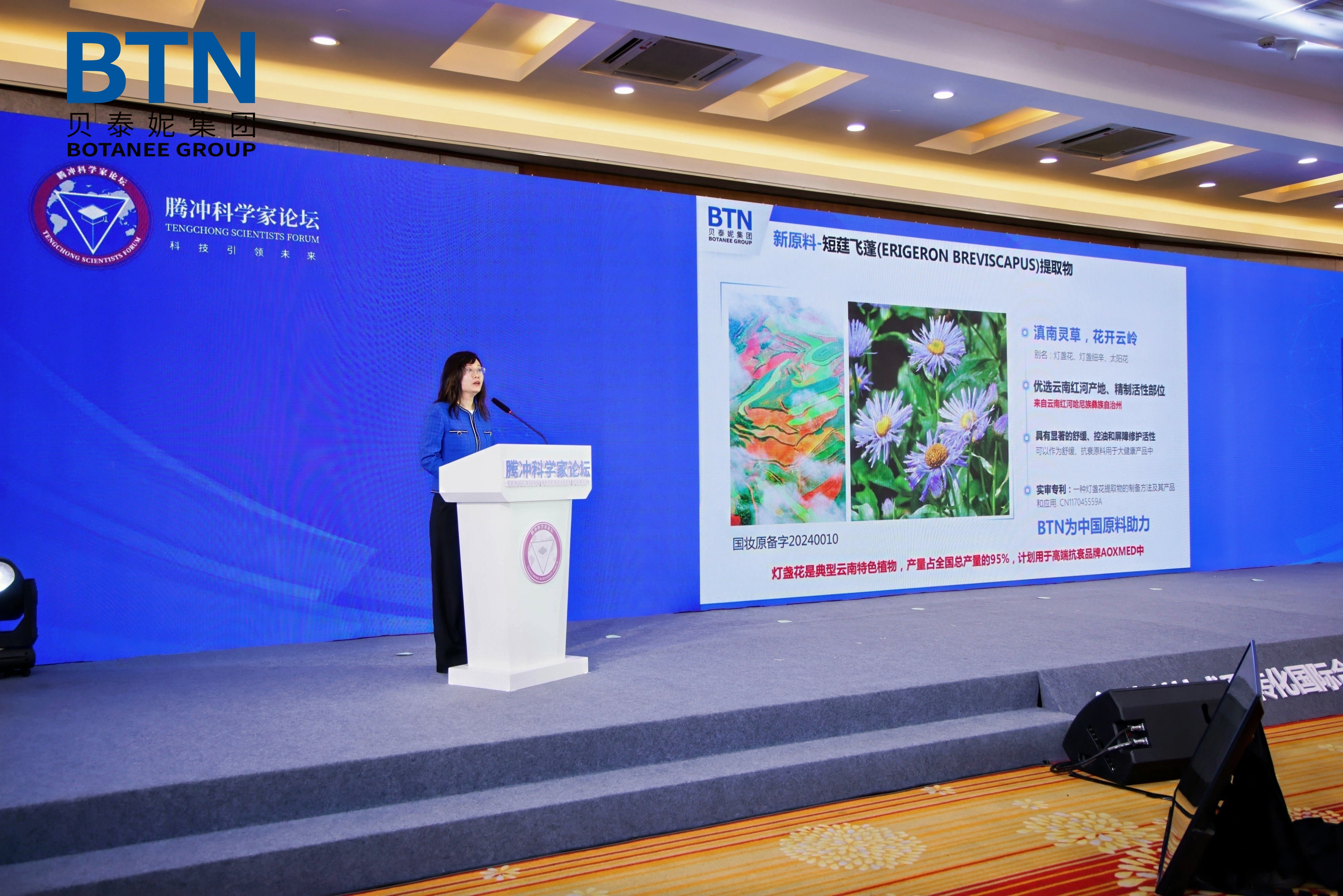
深耕云南植物宝库 贝泰妮以创新赋能全球美妆
Xin Hua Cai Jing· 2025-12-08 08:21
Core Insights - The "South Asia Southeast Asia International Intellectual Property Innovation Cooperation Seminar" was held during the "Tengchong Scientist Forum," where Dr. Qu Liping from Yunnan Betaini Biotechnology Group shared insights on the innovative development and industrialization practices of Yunnan's unique plant resources [1][5]. Group 1: Plant Resource Development - Yunnan, known as the "Kingdom of Plants," possesses 63% of China's higher plant resources, with nearly 19,000 species having potential biological activity, providing a strong foundation for the development of beauty, food, and pharmaceutical products [5]. - Betaini has established a systematic plant raw material research and development system by screening over 2,000 unique plants from texts like "Yunnan Natural Medicine Atlas" and research institutions, focusing on soothing anti-inflammatory and barrier repair effects [5]. - The company has successfully registered 17 new plant raw materials, with 3 included in the international cosmetics ingredient directory, highlighting the international recognition of Chinese raw material innovation [5]. Group 2: Product Application and Market Impact - Seven of the new raw materials have been applied in products under brands like Winona and Aikeman, covering core efficacy areas such as soothing, moisturizing, and anti-aging [5]. - The core ingredient, Qingci fruit, has been deeply developed into oil, flavonoids, and polysaccharides, with the polysaccharide used in Winona's second-generation soothing and moisturizing cream, achieving sales exceeding 1 billion yuan [5]. - The flavonoid from Qingci fruit is set to empower Winona's Silver Core Cream, which will be launched in April 2025, continuing to lead the plant skincare trend [5]. Group 3: Research and Development Infrastructure - Betaini has established the Yunnan Characteristic Plant Extraction Laboratory, focusing on the research and development of functional cosmetics, functional foods, and pharmaceuticals, providing comprehensive services from top-level design to commercialization [14]. - The laboratory has obtained dual qualifications from CMA and CNAS, offering professional testing services for raw materials and products, thus becoming a significant force in promoting the standardization of Yunnan's plant industry [14]. Group 4: Sustainable Development Initiatives - Betaini adheres to sustainable development principles, creating a virtuous ecosystem of "resource protection - research and development innovation - industrial transformation" [18]. - The company collaborates with local planting bases and communities to build raw material bases, forming a full-chain traceability system from germplasm resource research to breeding optimization [18]. - Betaini has received ESG ratings of "AAA" from Huazheng and "AA" from Wind, and was included in the top 100 list of A-share companies for outstanding ESG performance in 2025 [19].