茶叶

Search documents
重塑行业价值 “高端普洱黄金标准”在穗发布
Sou Hu Cai Jing· 2025-07-30 03:38
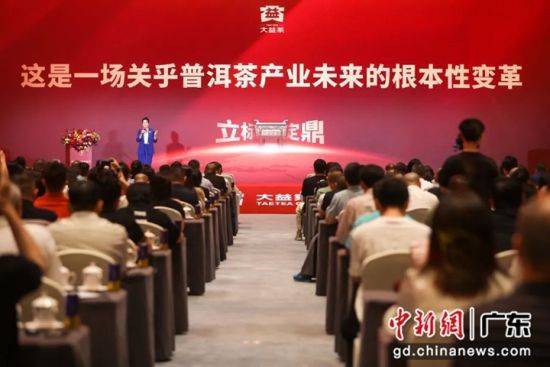
Group 1 - The core viewpoint of the news is that Da Yi Group has launched a "High-end Pu-erh Golden Standard" to reshape the value of the Pu-erh tea industry and build a new ecological system for the industry [2] - The "High-end Pu-erh Golden Standard" includes four components: Craft Code, Year Contract, Ecological Choice, and Heritage Scale, which aim to ensure quality, traceability, sustainability, and cultural resonance [2] - Da Yi Group plans to establish a "Pu-erh Tea Year Value Research Institute" in collaboration with authoritative institutions to enhance scientific foundations and industry credibility [2] Group 2 - The Pu-erh tea industry is experiencing unprecedented development opportunities due to consumption upgrades and global tea culture exchanges, but it also faces challenges such as quality standardization and market regulation [3] - The industry needs to focus on "healthy ecology" and unite to protect its foundational values [3] - Current developments in the Pu-erh tea industry require brand upgrades, integration of the supply chain, and standardized management to ensure quality stability and enhance cultural value [5]

通讯丨路通茶香远——一条公路拉动肯尼亚“绿色黄金”
Xin Hua Wang· 2025-07-30 02:57
茶叶关乎肯尼亚数百万人的生计。肯尼亚茶叶产量丰富,品质优良,是当之无愧的"绿色黄金"。根据肯 尼亚茶叶产业绩效报告的数据,2024年,肯尼亚茶叶总收入达2152.1亿肯尼亚先令(1美元约合129肯尼 亚先令),其中出口收入为1816.9亿肯尼亚先令。 肯尼亚统计局数据显示,凯里乔郡、博梅特郡和楠迪郡贡献了该国近一半的茶叶产量。过去,每逢雨 季,土路泥泞不堪,40公里路程货车要颠簸3至6小时。货车司机穆兰比回忆道,有时候车轮陷在泥里, 茶叶进水导致发霉,茶农们眼看着心血付诸东流。落后的基础设施,像一道枷锁,困住了这片"绿色黄 金"的出路。 2015年6月,转机来临。中企承建的C22公路项目正式动工。这条南北大动脉将肯尼亚两大主干道相 连,穿越核心茶产区,直抵内罗毕内陆集装箱港。对于当地居民而言,工程清单上的一列数字远不如一 个事实震撼——土路即将变成平整的沥青大道。 新华社内罗毕7月30日电 通讯|路通茶香远——一条公路拉动肯尼亚"绿色黄金" 新华社记者许嘉桐 李卓群 在肯尼亚西部基苏木市远郊,雨水浸润着连绵起伏的茶园。无人机掠过天际,镜头下的翠绿茶垄如波浪 般向地平线延伸,采茶人的身影在晨曦中若隐若现,空气中 ...
梦龙拟投资生产线;迅销旗下GU关中国首店;保乐力加韩国任命CEO
Sou Hu Cai Jing· 2025-07-29 17:35
Investment Dynamics - Menglong plans to invest several million dollars in its ice cream factory in Heppenheim, Germany, to establish new production lines, cold storage, and energy infrastructure [3] - The Heppenheim production line is expected to be established in 2024, with an annual output exceeding 2 billion units, primarily targeting the German market and some European countries [3] Financial Activities - Lancang Ancient Tea announced a placement of 24 million H-shares at HKD 2.46 per share, representing a discount of 16.61% from the closing price on July 25, aiming to raise approximately HKD 59 million for operational funding [6] - The placement shares account for 16% of the enlarged total share capital, with net proceeds estimated at around HKD 58.04 million [6] Strategic Partnerships - ADM has signed an exclusive agreement with Asahi Group, allowing Asahi to leverage ADM's extensive global network and R&D centers to expand its lactic acid bacteria ingredient business [9] Mergers and Acquisitions - Fuling Pickle is actively pursuing the acquisition of a 51% stake in Sichuan Weizimei Food Technology Co., Ltd., through a combination of share issuance and cash payment [12] - This acquisition is expected to enable Weizimei to quickly access advantageous resources and open up a second growth market through the extensive C-end distribution network of the listed company [12] Market Adjustments - Fast fashion brand GU, under Japan's Fast Retailing Group, confirmed the closure of its flagship store in Shanghai on August 24, 2025, as part of a strategic adjustment in the Chinese market [17] - The store, opened in 2013, was seen as a key entry point into the Chinese market, and its closure indicates a shift in operational strategy rather than an exit from the market [18] Financial Performance - Laopugold (HK: 6181) reported expected revenue of approximately RMB 12 billion to 12.5 billion for the first half of 2025, representing a year-on-year growth of about 241% to 255% [20] - The net profit is projected to be around RMB 2.23 billion to 2.28 billion, reflecting a year-on-year increase of approximately 279% to 288% [20] Technological Innovations - Unilever has launched the "AI for Science" innovation platform, developed by its Chinese R&D team, aimed at optimizing scientific research and product development through artificial intelligence [22] - This initiative highlights Unilever's exploration in AI technology application and provides new momentum for digital upgrades in the fast-moving consumer goods sector [22] Policy Developments - The national childcare subsidy scheme will be implemented starting January 1, 2025, providing annual subsidies of RMB 3,600 per child for those under three years old [23] - This initiative is part of a broader set of policies aimed at creating a more supportive environment for childbirth and child-rearing in the country [24] Leadership Changes - Pernod Ricard Korea has appointed Fadil Tasgin as the new CEO, effective September 1, with a background in various leadership roles within the company [27] - Tasgin is expected to lead the development of Pernod Ricard Korea by focusing on the tastes and needs of Korean consumers [27]



长沙出口茶叶2.3万吨 占全省出口量超八成
Chang Sha Wan Bao· 2025-07-29 02:15
Core Insights - Hunan Province's tea exports reached 28,000 tons in the first half of 2025, marking a 33.6% increase year-on-year, with a total export value of 540 million yuan, up 30.4%, both achieving historical highs for the same period [1][2] Group 1: Export Performance - Private enterprises accounted for over 90% of tea exports, with 26,000 tons exported, a 34.3% increase, representing 93.7% of Hunan's total tea export volume [1] - State-owned enterprises exported 1,297.5 tons, a growth of 28%, with a value of 22.5 million yuan, up 11.9% [1] - Foreign-invested enterprises exported 463.7 tons, increasing by 13.3%, with a value of 12.99 million yuan, growing by 31.2% [1] Group 2: Regional Contributions - Changsha City led tea exports with 23,000 tons, a 31.5% increase, accounting for 83.1% of the province's total, with a value of 450 million yuan, up 25.2% [2] - Other cities like Yiyang and Xiangtan also showed significant growth, with Yiyang exporting 3,088.3 tons (up 44.5%) and Xiangtan 864.6 tons (up 24%) [2] Group 3: Key Export Markets - Major export destinations included Morocco, Russia, and Libya, with exports to Morocco reaching 5,062.4 tons (up 76.1%) and a value of 100 million yuan (up 98.1%) [2] - Exports to Russia totaled 4,706.4 tons, while Libya saw a remarkable increase of 193% in volume, reaching 2,637.1 tons [2] Group 4: Product Breakdown - Green tea dominated exports with 24,000 tons, a 36.4% increase, representing 86.6% of total tea exports, valued at 450 million yuan, up 30.7% [2] - Black tea exports were 3,729.1 tons, increasing by 17.5%, valued at 85.657 million yuan, up 28.9% [2]
日照|茶产业“小散弱”咋破?“双社双链”给出答案——1000余“小舢板”组成联合舰队
Da Zhong Ri Bao· 2025-07-29 00:51
Core Viewpoint - The introduction of the "Double Cooperative Double Chain" model in Jufeng Town has significantly improved the tea industry by addressing issues of fragmentation, quality control, and market access for tea farmers and processing enterprises [1][2][5]. Group 1: Industry Challenges and Solutions - The tea industry in Jufeng Town faced challenges of being "small, scattered, and weak," with individual farmers lacking bargaining power and scientific management [1][2]. - The "Double Cooperative Double Chain" model integrates resources by connecting tea farmers, cooperatives, and processing enterprises, allowing for better management and quality control [2][4]. Group 2: Benefits to Farmers - Farmers participating in the cooperative model receive higher prices for their tea leaves, with prices exceeding market rates by over 10% [2]. - The cooperative provides free agricultural inputs and expert guidance, reducing the burden on farmers and increasing their income by an estimated 2,000 to 3,000 yuan per acre annually [2][3]. Group 3: Advantages for Processing Enterprises - Processing enterprises benefit from guaranteed quality raw materials through agreements with the cooperative, allowing them to take on larger orders and attract more customers [3][4]. - The establishment of a quality safety net, including AI monitoring and regular inspections, ensures compliance with agricultural standards, enhancing the reliability of the supply chain [4][5]. Group 4: Future Prospects and Goals - The cooperative aims to achieve a production target of 500,000 jin of dry tea through order sales, promoting collective economic growth and sustainability [5]. - Plans are in place to expand the area of managed tea gardens, pushing for a transformation towards large-scale, standardized, and branded tea production in the region [5].
普洱巨头推百元新品!大益茶“亲民”背后,高端茶叶集体转身
Nan Fang Du Shi Bao· 2025-07-28 09:28
Core Viewpoint - The Pu'er tea industry is facing unprecedented challenges due to economic downturns and cautious consumer behavior, prompting major brands like Da Yi Tea to shift their strategies towards more accessible products for ordinary consumers [1][2][6]. Group 1: Market Dynamics - Da Yi Tea launched a new product line, "Da Yi Legend 1975," with prices not exceeding 1000 yuan, aiming to shift focus from 20% of collectors to 80% of regular consumers [1][2]. - The high-end tea market is experiencing a decline, with issues such as counterfeit products and a loss of consumer trust affecting the industry's value system [2][12]. - The overall market for Pu'er tea in China is projected to grow from 9.4 billion yuan in 2016 to 27.8 billion yuan by 2025, driven by health trends and increased tea consumption [9]. Group 2: Strategic Shifts - Da Yi Tea's new strategy emphasizes drinking value and daily consumption over investment and scarcity, targeting a broader consumer base [6][17]. - Other high-end tea brands, such as Xiao Guan Tea, are also pivoting towards affordable product lines to adapt to changing market conditions [13][14]. - The shift towards more accessible pricing reflects a broader industry trend where high-end brands are moving from luxury positioning to everyday consumer products [17][18]. Group 3: Consumer Trends - The demand for healthy beverages is rising, with policies promoting health-conscious choices, positioning Pu'er tea favorably in the market [15]. - New tea drink brands are capturing the younger demographic with trendy, convenient options, posing a challenge to traditional tea companies [14][15]. - The high-end tea market is being redefined, focusing on real consumer experiences and brand engagement rather than solely on premium pricing and scarcity narratives [18].
好茶鉴定有了硬指标!“高端普洱黄金标准”发布,「大益传奇1975」首发登场
Sou Hu Cai Jing· 2025-07-27 09:38
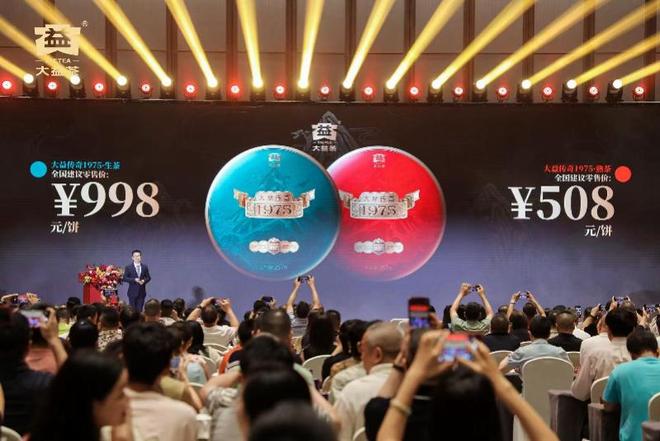
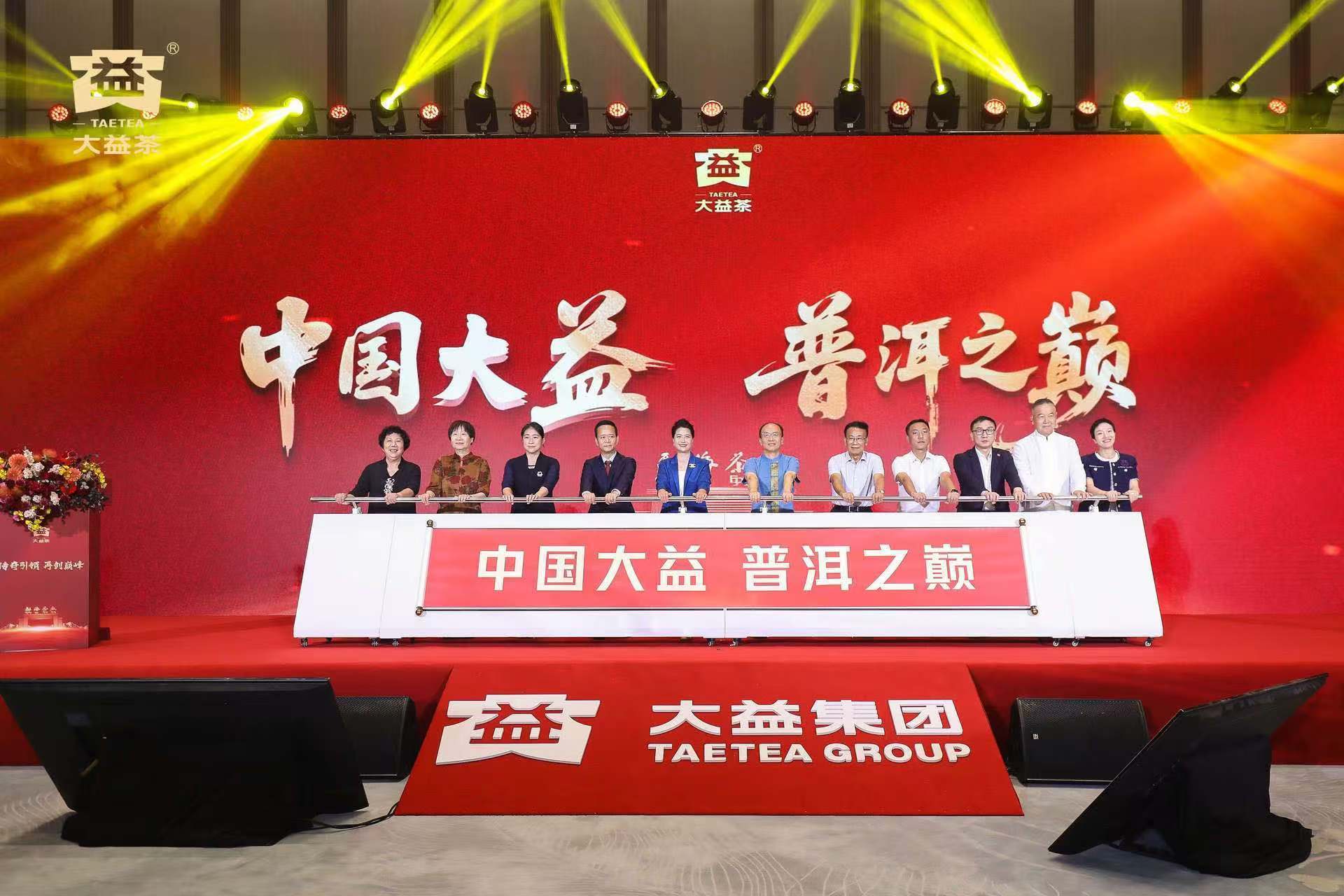
Core Viewpoint - Dali Group officially launched its global brand upgrade strategy, marking a comprehensive strategic layout to lead the Pu'er tea industry towards a new era of transformation and ecological co-construction [1][3]. Group 1: Brand Strategy and Industry Leadership - Dali Group's chairman, Zhang Yafeng, emphasized the mission upgrade of Dali, aiming to lead the industry with the release of the "High-end Pu'er Golden Standard" to reshape industry value and initiate a "Golden Era" for Pu'er tea [3][8]. - The "High-end Pu'er Golden Standard" includes quantifiable craftsmanship, traceable time value, sustainable ecological choices, and cultural assets, aiming to establish a measurable value benchmark for the industry [5][8]. - Dali Group plans to establish the "Pu'er Tea Year Value Research Institute" to solidify the scientific foundation of the "Year Contract" and enhance industry credibility [5][11]. Group 2: Product Launch and Market Positioning - The strategic new product "Dali Legend 1975" was unveiled, showcasing its advantages in terms of year, raw materials, craftsmanship, and culture, positioning it as a benchmark for high-end Pu'er tea [3][12]. - "Dali Legend 1975" utilizes 15-year aged raw materials for raw tea and 10-year aged materials for ripe tea, highlighting the brand's strength in using aged materials [11][12]. - The product is designed to meet diverse consumer needs, ensuring it is enjoyable upon release and continues to improve with age, catering to both new and seasoned tea drinkers [12][13]. Group 3: Industry Collaboration and Future Outlook - Dali Group is committed to collaborating with partners to navigate the complex market environment and usher in a "Golden Era" for Pu'er tea [13][16]. - The strategic upgrade is seen as a pivotal moment for the industry, with Dali Group aiming to set standards and lead development, ensuring the value of each cup of Dali Pu'er tea is clear and recognized by a broader audience [8][16]. - The company plans to invest continuously in promoting the new value and charm of Pu'er tea on a global stage, marking the beginning of a new chapter for the industry [16].
小小茶农趣研学
Jing Ji Ri Bao· 2025-07-26 22:27
Core Insights - The article highlights the integration of tea culture and tourism in Haiqing Town, Shandong, through hands-on experiences for students, promoting both education and local industry [1][3]. Group 1: Tea Industry Development - Haiqing Town has approximately 35,000 acres of tea gardens, actively exploring new paths for the integration of tea industry and cultural tourism [3]. - The town aims to transform traditional tea areas into tourist attractions, enhancing the economic value of tea production [3]. Group 2: Educational Initiatives - The "One Day Tea Farmer Experience" program allows students to engage in tea picking, handcrafting tea, and learning about tea culture, fostering a deeper understanding of the tea production process [1][2]. - Over 200 educational activities have been conducted in Haiqing Town, attracting more than 30,000 participants, including students and international visitors [3]. Group 3: Community Engagement - The initiative has created various practical bases for research and learning, including the North Tea Business Street and the Haiqing Tea "Three Industry" Integration Innovation Demonstration Base [3]. - The program emphasizes experiential learning, moving from theoretical knowledge to practical engagement, enriching students' understanding of agriculture and local culture [3].
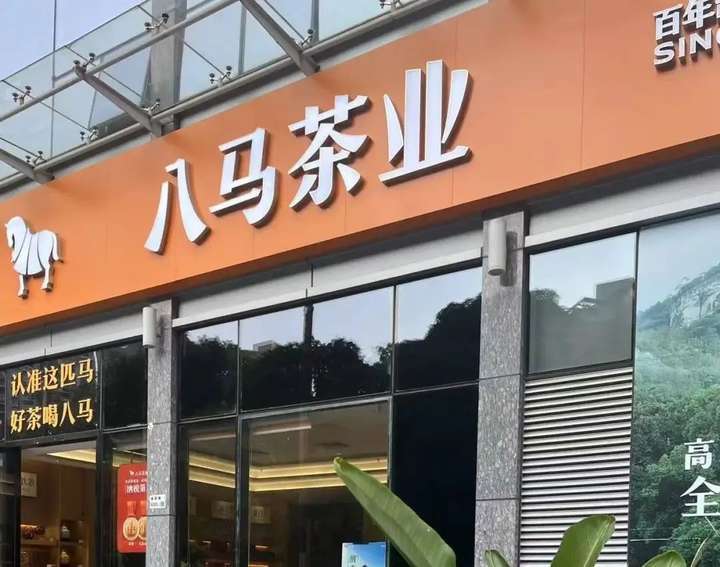
4年3闯IPO,八马茶业港股突围胜算几何?
Sou Hu Cai Jing· 2025-07-25 05:15
Core Viewpoint - The article discusses the challenges and recent progress of Baima Tea Industry in its pursuit of an IPO, highlighting the contrasting attitudes of the capital market towards traditional tea companies versus new tea beverage brands [2][4]. Group 1: IPO Progress and Challenges - Baima Tea Industry has faced multiple setbacks in its IPO attempts, including an automatic expiration of its prospectus due to failure to pass the hearing within six months [4]. - The company has now received approval from the China Securities Regulatory Commission to issue up to 29.13 million overseas ordinary shares and convert 43.99 million unlisted shares for circulation in Hong Kong [2]. - The acceptance of family-owned and franchise-driven traditional consumer goods companies is reportedly higher in the Hong Kong market compared to A-shares, as evidenced by the successful listing of Lincang Ancient Tea [4]. Group 2: Franchise Structure and Financial Performance - As of September 2024, Baima Tea operates 3,498 stores nationwide, with 92.1% being franchise stores, contributing approximately 50% of total revenue [5]. - The revenue from franchise channels for the years 2022 to the first nine months of 2024 was 912 million, 1.073 billion, and 819 million respectively, maintaining a stable contribution to total revenue [5]. - The gross margin for franchise channels was significantly lower at 46% compared to 78.2% for direct sales in the first nine months of 2024 [5]. Group 3: Family Ownership and Governance Issues - The Wang family holds 55.9% of the voting rights, indicating a highly concentrated family ownership structure typical of family businesses [7]. - The management team is predominantly composed of family members, which raises concerns about governance and transparency in decision-making [7][8]. - The family governance model may pose challenges in maintaining operational independence and stability as the company scales and faces increased scrutiny post-IPO [8]. Group 4: Market Position and Industry Dynamics - The capital market shows a stark contrast in preference between traditional tea companies and new tea beverage brands, with only a few tea companies successfully listed [9]. - Baima Tea's market share in the high-end tea market is only 1.7%, significantly lower than leading new tea beverage companies [9]. - The tea industry is characterized by low standardization and a perception that tea is primarily consumed by older generations, which may hinder Baima's appeal to younger consumers [9].
街边几乎没人的茶叶店,到底怎么赚钱?
Sou Hu Cai Jing· 2025-07-25 01:48
Core Viewpoint - The tea industry faces significant challenges related to trust and information asymmetry, which impacts consumer purchasing decisions and brand loyalty [16][17][24]. Group 1: Industry Dynamics - The tea industry is characterized by a long supply chain, where costs accumulate at each stage, leading to high retail prices [9][13]. - Consumers often perceive tea prices as exorbitant due to the layered pricing structure from tea farmers to retailers [8][15]. - The lack of clear differentiation among tea brands creates confusion for consumers, making it difficult for them to choose [16][21]. Group 2: Trust and Consumer Behavior - Trust is a critical factor in the tea business, with consumers often relying on personal relationships rather than brand reputation [24][26]. - The tea shop owner serves as a "trust anchor," providing a sense of reliability and familiarity that encourages repeat business [24][25]. - The tea industry suffers from high "trust costs," where consumers are hesitant to purchase due to perceived risks associated with quality and authenticity [17][50]. Group 3: Product Offering and Strategy - The introduction of "Xiao Dong Tea - Zhu Lan Flower Tea" aims to address trust issues by providing transparency about sourcing and production methods [37][41]. - The product emphasizes quality and traditional methods, appealing to consumers seeking authenticity [41][42]. - The pricing strategy of 98 yuan aims to eliminate unnecessary costs associated with trust and relationships, making it more accessible to consumers [52][53].