
传感器

Search documents
安培龙(301413):动态跟踪:股权激励方案积极,未来业绩增长可期
EBSCN· 2025-08-12 11:35
Investment Rating - The report maintains a "Buy" rating for the company, indicating an expected investment return exceeding the market benchmark by more than 15% over the next 6-12 months [4]. Core Insights - The company has introduced a positive stock incentive plan, which is expected to drive future performance growth. The plan's assessment period spans from 2025 to 2027, with revenue and net profit targets set to grow by at least 25%, 56.25%, and 95.31% respectively over the three years, based on 2024 figures [1][2]. - The revenue and net profit trigger values are also set, with growth rates of at least 20%, 45%, and 76.25% required to achieve an 80% vesting ratio [1]. - The stock incentive plan aims to enhance the motivation and creativity of talented personnel, thereby improving the core team's cohesion and the company's competitive edge [2]. Summary by Sections Revenue and Profit Forecast - The company is projected to achieve revenues of 1,173 million, 1,437 million, and 1,725 million for the years 2025, 2026, and 2027 respectively, reflecting growth rates of 24.76%, 22.47%, and 20.11% [3][8]. - The net profit forecast for the same years is 117 million, 143 million, and 174 million, with growth rates of 41.23%, 22.89%, and 21.66% [3][8]. Valuation Metrics - The current price-to-earnings (P/E) ratios for 2025, 2026, and 2027 are projected to be 76, 62, and 51 respectively, indicating a potential for valuation improvement as performance enhances [2][11]. - The company is recognized as a leader in the domestic sensor market, particularly in the context of replacing imported components in automotive applications [2]. Financial Performance Indicators - The report outlines a projected gross margin of 32.2% for 2025, with a return on equity (ROE) expected to reach 9.03% [10]. - The company's total assets are expected to grow from 2,100 million in 2023 to 3,060 million by 2027, while total liabilities are projected to increase from 952 million to 1,540 million over the same period [9].
光莆股份(300632.SZ):公司传感器类产品已在机器人领域应用
Ge Long Hui· 2025-08-12 07:19
Core Viewpoint - The company Guangpu Co., Ltd. has successfully applied its sensor products in the robotics field [1] Group 1 - The company's sensor products are now utilized in the robotics industry, indicating a diversification of application and potential growth opportunities [1]


拟2.8亿元控股南京神源生,老牌PE九鼎投资跨界机器人
Huan Qiu Lao Hu Cai Jing· 2025-08-12 03:23
Group 1 - The core point of the news is that Jiuding Investment plans to acquire a 53.2897% stake in Nanjing Shenyuan Intelligent Technology for 213 million yuan, marking a significant move into the robotics industry [1] - Jiuding Investment will first purchase 37.7196% of the shares from five original shareholders for 113 million yuan, followed by a capital increase of 100 million yuan to acquire an additional 25% stake, achieving control over Nanjing Shenyuan [1] - Following the announcement, Jiuding Investment's stock price surged to a limit-up of 19.67 yuan per share, raising its total market capitalization to 8.528 billion yuan [1] Group 2 - Nanjing Shenyuan has not yet achieved profitability, with projected revenues of 2.088 million yuan and a net loss of 5.7349 million yuan for 2024, and a revenue of 0.1638 million yuan with a net loss of 2.7954 million yuan for the first four months of 2025 [2] - The market for humanoid robots is rapidly growing, which is expected to significantly increase the demand for six-dimensional force sensors, presenting development opportunities for Nanjing Shenyuan [2] - Jiuding Investment, primarily engaged in private equity investment management and real estate development, has seen a decline in performance due to the exit phase of its existing funds and a downturn in the real estate sector, with a projected net loss of 55 million to 44 million yuan for the first half of 2025 [2]

九鼎投资:2.13亿获南京神源生53.2897%股权
Sou Hu Cai Jing· 2025-08-11 14:16
本文由 AI 算法生成,仅作参考,不涉投资建议,使用风险自担 【8月11日九鼎投资股价涨停,晚间披露2.13亿收购南京神源生53.2897%股权】8月11日,九鼎投资 (600053)股价涨停,成交金额达6.22亿元。当天晚间,九鼎投资披露重磅公告,拟通过收购股权及增资 方式,以2.13亿元获南京神源生智能科技有限公司53.2897%股权,使其成控股子公司并入合并报表。 南京神源生成立于2012年,由戴振东创立,注册资本701万元,总部在江苏南京。其专注六维力传感器 与力测控领域,核心产品为六维力传感器,已获多项专利,运营正常。 8月11日,九鼎投资与戴振东等 签署转股和增资协议。公司拟现金受让多方持有的南京神源生37.7196%股权,交易对价1.13亿元,后续 增资完成后将稀释为28.2897%。 收购股权完成后,公司拟1亿元对南京神源生增资获25%股权。交易完 成后,最终以2.13亿元获其53.2897%股权。 南京神源生上轮融资投后估值2亿,当时六维力传感器应用 于传统工业。随着人形机器人厂商配置该产品,市场空间扩大,本次交易前整体估值提至3亿。 九鼎投 资称,本次交易响应政策,拓展产业布局,切入机器人 ...
九鼎投资(600053.SH):拟通过收购股权及增资方式获得南京神源生53.2897%股权
Ge Long Hui A P P· 2025-08-11 12:15
Group 1 - The company Jiuding Investment (600053.SH) plans to acquire a 53.2897% stake in Nanjing Shenyuan Intelligent Technology Co., Ltd. for a total consideration of RMB 21,315.88 million through equity acquisition and capital increase [1] - The acquisition involves a cash payment of RMB 11,315.88 million for a 37.7196% stake, which will be diluted to 28.2897% after the capital increase, followed by an additional investment of RMB 10,000.00 million to obtain a 25% stake post-increase [1] - Upon completion of the transaction, Nanjing Shenyuan will become a subsidiary of Jiuding Investment and will be included in the consolidated financial statements of the company [1] Group 2 - Nanjing Shenyuan was established in 2012 by Professor Dai Zhendong from Nanjing University of Aeronautics and Astronautics, with a registered capital of RMB 7.01 million and is headquartered in Jiangning District, Nanjing [2] - The company specializes in six-dimensional force sensors and force measurement control, with its core product being the six-dimensional force sensor, and holds 21 invention patents (16 authorized) and 23 utility model patents [2] - Nanjing Shenyuan's technology originates from the Biomimetic Institute of Nanjing University of Aeronautics and Astronautics, and the company aims to enhance R&D investment and market promotion after the transaction to maintain its leading advantage in technology development and industry application [2]
安车检测拟易主矽睿科技或借壳 连亏三年股东减持套现近18亿
Chang Jiang Shang Bao· 2025-08-08 00:07
Core Viewpoint - Anchek Detection (300572.SZ), a leading company in the vehicle inspection sector, is undergoing a change in control, with the new controlling party potentially using this opportunity for a reverse merger to achieve a public listing [1][2][9]. Group 1: Ownership Change - The ownership change will occur in two phases: first, the current controlling shareholder, He Xian Ning, will transfer 6.43% of his shares to Shanghai Xirui Technology Co., Ltd. for 322 million yuan, and delegate voting rights for an additional 13.57% of shares to Xirui Technology [1][8]. - After the completion of the first phase, Xirui Technology will become the new controlling shareholder of Anchek Detection, holding a total of 20% of the voting rights [2][8]. Group 2: Financial Performance - Anchek Detection has faced significant financial challenges, reporting cumulative losses exceeding 300 million yuan from 2022 to 2024, following three consecutive years of losses [3][5]. - The company's revenue has stagnated, with figures of 473 million yuan, 448 million yuan, 462 million yuan, and 448 million yuan from 2021 to 2024, while net profit has drastically declined, with a 94.57% drop in 2021 and continued losses in subsequent years [5][6]. Group 3: Market Reactions and Expectations - The market reacted positively to the ownership change, with Anchek Detection's stock price rising by 11.87% before the trading halt and hitting the daily limit after resuming trading [8][9]. - There is speculation that Xirui Technology may abandon its direct IPO plans and instead pursue a reverse merger with Anchek Detection to achieve a public listing [12]. Group 4: Xirui Technology Overview - Xirui Technology, established in 2012, specializes in high-quality sensor products and has been seeking to go public since 2021, restarting its IPO guidance in 2023 [10][11]. - The company has a diverse product matrix and is involved in various sectors, including smart automotive, advanced manufacturing, and consumer electronics [10].

智能制造装备亮眼表现因何来(延伸阅读)
Ren Min Ri Bao· 2025-08-07 22:18
Group 1: Industry Growth and Performance - In the first half of this year, China's equipment manufacturing industry achieved a year-on-year growth of 10.2%, contributing 3.4 percentage points to the overall industrial growth, acting as a "stabilizer" for industrial development [1] - The intelligent manufacturing equipment sector, including high-end CNC machine tools, industrial robots, and smart logistics, has shown remarkable performance, with industrial robot production increasing by 35.6% year-on-year [1] - The scale of China's intelligent manufacturing equipment industry is expected to exceed 5 trillion yuan this year [1] Group 2: Robotics Market Insights - China has maintained its position as the world's largest industrial robot market for 12 consecutive years, accounting for over half of the global new industrial robot installations in the past three years [2] - The export value of industrial robots from China increased by 61.5% year-on-year in the first half of this year, with over 190,000 effective patents related to robots, representing about two-thirds of the global total [2] - The domestic industrial robot market is projected to surpass 90 billion yuan, with a market share of over 43% globally [2] Group 3: Sensor Market Dynamics - The sensor market in China surpassed 200 billion yuan in the first half of this year, with the industrial automation sector holding the largest share at over 35% [2] - The growth in the industrial sensor market is driven by temperature, pressure, and flow sensors, with the robot vision sensor market reaching 4.756 billion yuan [2] - The rapid development of the new energy vehicle industry has significantly boosted the demand for various sensors, including current, angle, and pressure sensors, with production and sales of new energy vehicles increasing by 41.4% and 40.3% year-on-year, respectively [2] Group 4: Future Outlook - According to the "14th Five-Year" Intelligent Manufacturing Development Plan, by the end of this year, 70% of large-scale manufacturing enterprises are expected to achieve basic digital networking, with over 500 intelligent manufacturing demonstration factories established [3]
帕西尼发布第三代多维触觉传感器GEN3:以顶级触觉,重塑具身感知未来
机器人大讲堂· 2025-08-07 08:25
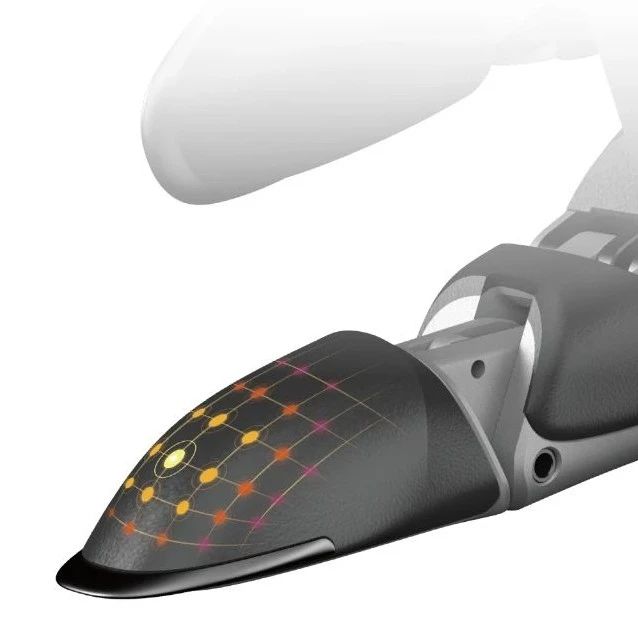
Core Viewpoint - PaXini Tech, a leader in the global tactile perception field, has recently attracted significant industry attention with its new financing round led by JD.com, raising a total of 1 billion RMB in just four months. The company announced its third-generation high-precision multi-dimensional tactile sensor, the PX-6AX-GEN3, which significantly enhances perception performance, durability, and ease of use, aiming to provide a comprehensive sensory solution for embodied intelligent agents [1][12]. Group 1: Technological Advancements - The GEN3 sensor utilizes a pioneering 6D Hall array tactile sensing technology, featuring a self-developed chip and packaging technology, capable of high-frequency precision data collection at millions of times per second. It outputs 15 types of tactile perception information with a remarkable precision of less than 0.5% FS [3][5]. - The sensor's unique algorithms allow for high reliability and rapid mapping of multi-dimensional force distributions, enabling it to recognize minute displacements and external interferences effectively [5][10]. Group 2: Durability and Usability - The GEN3 sensor is designed for industrial-grade durability, achieving an IP68 rating for water and dust resistance, and can withstand up to 10 million uses in extreme temperature conditions [5][9]. - Its user-friendly design allows for immediate use without complex calibration, enabling users to start applications within 20 seconds, thus significantly reducing development time [7][9]. Group 3: Ecosystem Integration - The third-generation tactile sensing technology will be integrated into PaXini's Super EID Factory, enhancing the reliability and consistency of its vast multi-modal data set, OmniSharing DB. This integration aims to create a closed-loop ecosystem for high-precision physical perception, large-scale data, generalized intelligent decision-making, and practical applications across various industries [10][12]. - The GEN3 sensor is set to be unveiled at the 2025 World Robot Conference, marking a significant milestone in tactile perception technology and its application in robotics [12].

又一芯片巨头矽睿科技拟“曲线上市”,买壳细节曝光
Xin Lang Cai Jing· 2025-08-07 04:15
Group 1 - The core viewpoint of the article highlights the increasing popularity of indirect listing methods due to tightened IPO regulations, exemplified by the acquisition of Anchek Detection by Shanghai Xirui Technology [1][2] - The transaction involves a change in control and presents an opportunity for Xirui Technology to enter the capital market [2] - The overall transaction plan includes Xirui Technology acquiring 20% of the voting rights in Anchek Detection through a combination of share purchase and voting rights delegation [3][4] Group 2 - The transaction is structured in two phases: the first phase involves purchasing 6.43% of shares for 322 million yuan at a discount, while the second phase involves the delegation of voting rights for an additional 13.57% [4] - Following the completion of the transaction, the actual controller of Anchek Detection will change to a "no actual controller" status [5] - The discounted price for control transfer is noted as being significantly lower than typical market rates, indicating a shift in market dynamics where companies are willing to sell control at lower prices to adapt to new industry trends [7] Group 3 - The acquisition signifies a shift where the asset itself, rather than the owner, becomes the controlling entity of the listed company [8] - This transaction serves as a case study for other companies looking to acquire shell companies, emphasizing that the goal is often to list assets rather than merely control a company [9] - Xirui Technology, established in 2012, is a leading player in the MEMS sensor field, indicating its strategic importance in sectors like smart automotive and consumer electronics [11] Group 4 - Xirui Technology's previous attempts to initiate an IPO in 2023 faced challenges, making this acquisition a strategic move towards a backdoor listing [12] - The sale of Xirui Technology's subsidiary for 683 million yuan to a listed company indicates ongoing strategic maneuvers within the industry [13] - The challenges of asset injection post-acquisition are highlighted, including potential accounting implications and the risk of being classified as a reverse takeover [15][17]
光大证券晨会速递-20250807
EBSCN· 2025-08-07 03:58
Group 1: Internet Media - Palantir's Q2 revenue exceeded $1 billion for the first time, significantly surpassing expectations, and the company raised its full-year guidance for 2025 [2] - The growth in the AI-driven commercial sector has led to record order increases, indicating strong market sentiment [2] - Long-term growth potential is supported by AI technology iterations and scenario expansions in areas like defense and medical automation [2] Group 2: High-end Manufacturing - Anpei Long is positioned as a leader in domestic sensor replacement, with thermal resistors and pressure sensors gaining traction in international markets [3] - The company plans to enter the robot force sensor market in 2024, which is expected to create a third growth driver [3] - Projected net profits for 2025-2027 are estimated at 120 million, 140 million, and 170 million yuan, with corresponding PE ratios of 72, 58, and 48 times [3] Group 3: Consumer Services - Yum China reported Q2 revenue of $2.8 billion, a year-on-year increase of 4%, with adjusted net profit of $215 million, also up 1% year-on-year [4] - Same-store sales turned positive, and profit margins improved, indicating enhanced operational efficiency [4] - The company has raised its annual store opening guidance for KFC and made progress with WOW stores [4] Group 4: Food and Beverage - Zhongchong Co. achieved a revenue of 2.43 billion yuan in H1 2025, reflecting a year-on-year growth of 24.3%, with net profit increasing by 42.6% to 200 million yuan [5] - The core brand continues to show strong growth, and new products are performing well, contributing to improved gross and net profit margins [5] - Global production capacity is being optimized to mitigate trade policy impacts, with a second production line in Canada set to launch soon [5]