半导体制造

Search documents
燕东微11月26日大宗交易成交232.40万元
Zheng Quan Shi Bao Wang· 2025-11-26 15:10
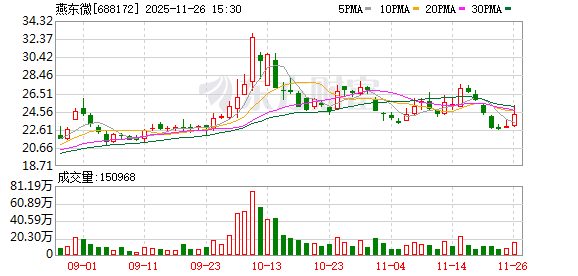
燕东微11月26日大宗交易平台出现一笔成交,成交量10.10万股,成交金额232.40万元,大宗交易成交价 为23.01元,相对今日收盘价折价5.00%。该笔交易的买方营业部为东北证券股份有限公司北京朝阳分公 司,卖方营业部为中信建投证券股份有限公司北京海淀分公司。 证券时报·数据宝统计显示,燕东微今日收盘价为24.22元,上涨5.26%,日换手率为2.58%,成交额为 3.69亿元,全天主力资金净流出634.35万元,近5日该股累计下跌6.05%,近5日资金合计净流出4793.33 万元。 | 成交量 | 成交金额 | 成交价 | 相对当日收盘折 | | | | --- | --- | --- | --- | --- | --- | | (万 | (万元) | 格 | 溢价(%) | 买方营业部 | 卖方营业部 | | 股) | | (元) | | | | | 10.10 | 232.40 | 23.01 | -5.00 | 东北证券股份有限公司 | 中信建投证券股份有限公 | | | | | | 北京朝阳分公司 | 司北京海淀分公司 | (文章来源:证券时报网) 两融数据显示,该股最新融资余额为5.14亿 ...


商务部:敦促荷兰政府尽快提出建设性的解决方案,为企业开展内部协商创造有利条件
Hua Er Jie Jian Wen· 2025-11-26 13:00
Core Points - The meeting between China's Minister of Commerce Wang Wentao and EU Commissioner for Trade and Economic Security Valdis Dombrovskis focused on semiconductor trade issues, particularly concerning ASML [1] - Wang emphasized that the root cause of the current global semiconductor supply chain disruption lies with the Netherlands, and China is committed to maintaining stability in the semiconductor supply chain [1] - The Netherlands has recently announced a suspension of its administrative order, which is seen as a small step towards resolving the issue, but concerns remain regarding improper administrative and judicial interventions affecting companies [1] - There is still significant uncertainty in the global semiconductor supply chain, and China hopes the EU will encourage the Netherlands to propose constructive solutions to facilitate internal negotiations among companies [1]
盈新发展:本次股权收购尚处于意向协议阶段
Sou Hu Cai Jing· 2025-11-26 12:57
Core Viewpoint - The company is responding to investor inquiries regarding the implications of the State Council's recent policy aimed at promoting private investment and its relevance to the acquisition of Changxing Semiconductor [1] Group 1: Policy Context - The State Council issued a significant policy document on November 26, 2025, titled "Several Measures to Further Promote the Development of Private Investment," aimed at stimulating private investment activity [1] - The policy includes provisions for facilitating the listing and financing of technology enterprises and establishing a "green channel" for mergers and acquisitions [1] Group 2: Company Response - The company acknowledges the importance of the new policy and expresses its intention to actively respond and study market policies [1] - The acquisition of Changxing Semiconductor is currently in the intention agreement stage, pending due diligence, audit evaluation, and necessary approval processes [1] - The company commits to timely information disclosure regarding project progress in accordance with legal and regulatory requirements [1]

燕东微:拟用募集资金8亿元置换预先投入募投项目自筹资金
Xin Lang Cai Jing· 2025-11-26 11:35
燕东微公告称,公司于2025年11月26日召开第二届董事会第十九次会议,同意使用2025年度向特定对象 发行A股股票募集资金置换预先投入募投项目的自筹资金8亿元。公司本次向特定对象发行股票实际募 集资金净额为40.05亿元,已于2025年7月18日到账。截至2025年6月30日,公司预先投入募投项目的自 筹资金为8亿元,拟全部置换。该事项获独立董事、审计委员会、会计师事务所和保荐机构同意。 ...
蛇鼠一窝!主动请缨做美国在华耳目?阿斯麦急发声,都是假的
Sou Hu Cai Jing· 2025-11-26 06:29
Core Viewpoint - The news reveals that ASML, a leading photolithography machine company, is allegedly involved in espionage activities in China and has even requested to act as an informant for the U.S. in China, challenging the previously held perception of the company as a neutral entity [1][3][5] Group 1: ASML's Alleged Espionage Activities - ASML is reported to have not only cooperated with U.S. pressures to limit its operations in China but has also actively sought to serve U.S. interests by acting as an informant [3][5] - A new book titled "The Most Important Machine in the World" claims that ASML's involvement as a U.S. informant was voluntary, contradicting the narrative of being coerced by the U.S. [3][5] - ASML's executives have denied these allegations, labeling them as fake news, yet the situation raises questions about the company's true intentions and actions [5][7] Group 2: Implications for the Semiconductor Industry - The controversy surrounding ASML coincides with issues faced by TSMC, including leaks of advanced 2nm technology and the potential loss of core technical data due to a former executive's actions [8] - The U.S. is encouraging increased investment from Taiwan, which could lead to significant shifts in the semiconductor industry landscape [8][10] - The overall situation highlights the fragility of the semiconductor supply chain and the increasing importance of national security in the industry [5][10]


灿芯股份现2笔大宗交易 总成交金额768.12万元
Zheng Quan Shi Bao Wang· 2025-11-25 15:07
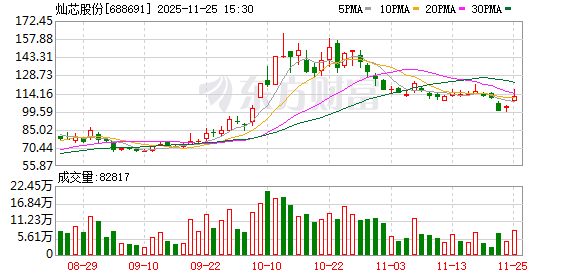
证券时报·数据宝统计显示,灿芯股份今日收盘价为111.40元,上涨7.26%,日换手率为11.59%,成交额 为9.29亿元,全天主力资金净流入1609.54万元,近5日该股累计下跌3.82%,近5日资金合计净流出1.91 亿元。 两融数据显示,该股最新融资余额为5.45亿元,近5日减少8910.76万元,降幅为14.06%。 据天眼查APP显示,灿芯半导体(上海)股份有限公司成立于2008年07月17日,注册资本12000万人民币。 (数据宝) 灿芯股份11月25日大宗交易平台共发生2笔成交,合计成交量7.00万股,成交金额768.12万元。成交价格 均为109.73元,相对今日收盘价折价1.50%。从参与大宗交易营业部来看,机构专用席位共出现在2笔成 交的买方或卖方营业部中,合计成交金额为768.12万元,净买入768.12万元。 进一步统计,近3个月内该股累计发生23笔大宗交易,合计成交金额为3.27亿元。 11月25日灿芯股份大宗交易一览 | 成交量 | 成交金额 | 成交价格 | 相对当日收盘折 | 买方营 | 卖方营业部 | | --- | --- | --- | --- | --- | --- ...
资讯日报:中美元首进行上月会晤以来的首次通话-20251125
Guoxin Securities Hongkong· 2025-11-25 09:13
Market Overview - The Hong Kong stock market showed a significant recovery on November 24, with all three major indices ending a streak of declines[9] - Large tech stocks performed strongly, with Kuaishou rising over 7%, and NetEase and Bilibili increasing over 5%[9] - The Hang Seng Tech Index closed at 5,546, up 2.78% for the day and 24.11% year-to-date[3] Sector Performance - Innovative pharmaceuticals and outsourcing concepts saw notable gains, with companies like Innovent Biologics rising over 6%[9] - Military stocks also performed well, with China Shipbuilding Defense up over 13%[9] - Oil stocks were weak, with China National Offshore Oil Corporation and China Oilfield Services both declining over 1%[9] U.S. Market Insights - On the same day, U.S. markets saw all three major indices close higher, driven by increased bets on a Federal Reserve rate cut[9] - The "Magnificent Seven" tech stocks, including Google and Nvidia, all rose, with Google gaining over 6%[9] - The S&P 500 index is projected to achieve double-digit annual growth according to HSBC strategists[14] Economic Indicators - The Federal Reserve is expected to cut rates in December, with market predictions showing a 70% probability[14] - The U.S. economy's third-quarter GDP report has been delayed due to a government shutdown, affecting economic analysis[14] Investment Trends - The Nasdaq Golden Dragon China Index rose by 2.82%, indicating a positive trend for Chinese concept stocks[13] - Significant inflows into semiconductor stocks were noted, with companies like Broadcom surging 11%[13]


欧盟委员会批准捷克政府对安森美SiC工厂120亿捷克克朗补贴
Sou Hu Cai Jing· 2025-11-25 08:01
Core Points - The European Commission approved a direct funding support of 12 billion Czech koruna (approximately 4.063 billion RMB) for ON Semiconductor's 8-inch vertical integration silicon carbide (SiC) factory project in Roznov, Czech Republic [1] - This factory will be the first of its kind in Europe, with a total investment of 1.64 billion euros (approximately 13.422 billion RMB), and is scheduled to begin commercial operations in 2027, providing critical support for high-efficiency power electronic devices in Europe [1] Group 1 - ON Semiconductor committed to ensuring the project has a broader positive impact on the EU semiconductor value chain [3] - The company will contribute to the development of next-generation 8-inch SiC technology and optimize EU manufacturing processes [3] - ON Semiconductor will prioritize EU high-priority orders during supply shortages as per the European Chips Act [3] Group 2 - The company plans to develop and implement education and skills training programs to expand the pool of qualified technical talent [3]

中天精装:2025年为战略转型重要阶段,纵深布局半导体产业链
Sou Hu Cai Jing· 2025-11-25 01:33
Core Viewpoint - The company is focusing on a strategic transformation towards becoming a semiconductor technology group by 2025, while maintaining its core business in decoration and renovation [1] Group 1: Strategic Transformation - The year 2025 is identified as a crucial phase for the company's strategic transition, aiming to enhance its semiconductor business [1] - The company plans to maintain operational stability in its decoration business while deepening its layout in the semiconductor industry chain [1] Group 2: Semiconductor Business Development - The company is investing in high-quality targets within the semiconductor industry chain, focusing on areas such as ABF substrates, HBM design and manufacturing, and advanced packaging [1] - The development of related subsidiaries in the semiconductor sector is reported to be progressing well [1] Group 3: Operational Efficiency and Financial Health - The company is actively working on improving asset turnover and solidifying its financial foundation before the third quarter of 2025 [1] - Efforts are being made to enhance cash flow quality and operational efficiency through internal control innovations and organizational streamlining [1] Group 4: Investor Relations - The company emphasizes the importance of investor relations management, aiming to communicate operational dynamics and investment value accurately and timely [1] - The commitment to safeguarding investor rights and enhancing their understanding of the company is highlighted [1]

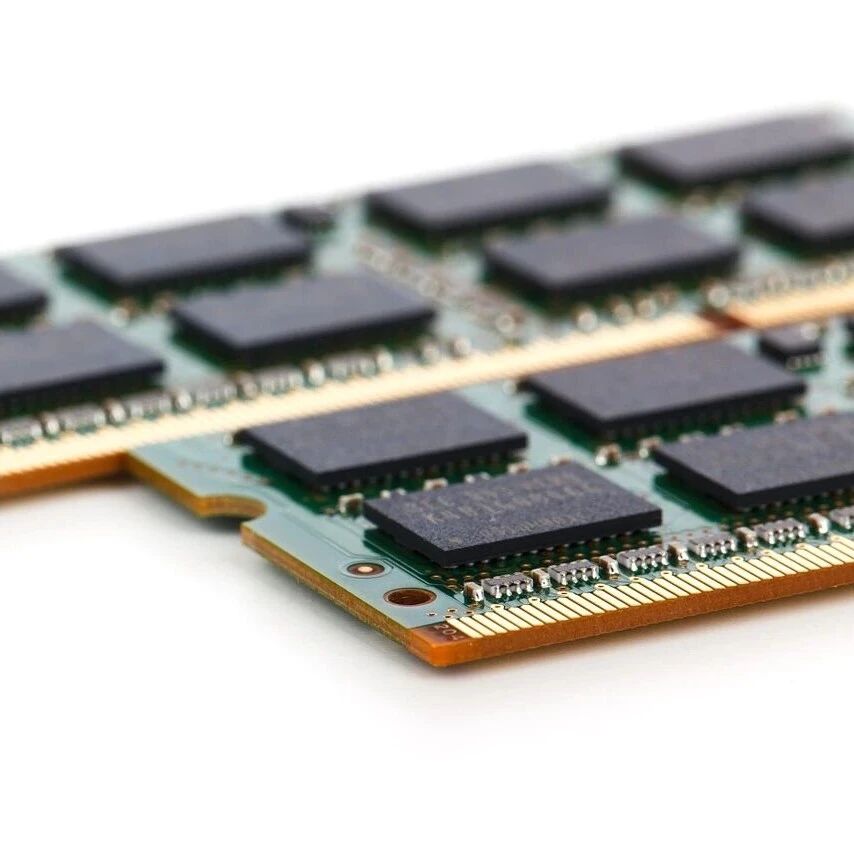
DRAM要搞长期合约了
半导体芯闻· 2025-11-24 10:28
Core Viewpoint - The article discusses the increasing demand for DRAM due to the expansion of AI investments, leading to a shift from short-term contracts to long-term supply agreements, with expectations of price increases until 2026 [1][2]. Group 1: Market Dynamics - The shortage of DRAM is exacerbated by the growing need for AI infrastructure, with companies like OpenAI and Meta announcing multi-billion dollar investments [2]. - The demand for general-purpose DRAM has surged, driven by the establishment of data centers for AI development by major companies and governments [2]. - The DRAM market is transitioning to long-term contracts, with companies willing to pay above-market prices to secure supply for six months or longer [2][3]. Group 2: Supply Chain and Inventory - Major suppliers like Samsung Electronics and SK Hynix are negotiating semi-annual contracts for DRAM supply, with inventory levels rapidly decreasing [3]. - As of Q3 2025, Samsung's semiconductor inventory decreased by 14.6% to 3.404 trillion Korean Won, while SK Hynix's inventory fell by 368.9 billion Korean Won [3]. - The supply negotiations have extended to 2027, with SK Hynix completing all 2026 contracts and moving into 2027 discussions [3]. Group 3: Profitability and Market Outlook - The shift to long-term contracts is expected to enhance profitability for manufacturers like Samsung and SK Hynix, as it allows for better production planning and cost management [4]. - The current market environment is likened to a transition from frequent short-term transactions to long-term strategic partnerships, with buyers willing to pay premiums to ensure supply [5]. - The "super cycle" for DRAM manufacturers is anticipated to last at least until 2027, driven by sustained demand and higher contract prices [4].