网约车

Search documents
股价涨2.6%!英伟达披露与Uber合作开发自动驾驶的细节
美股IPO· 2025-10-23 23:28
Core Viewpoint - Nvidia is collaborating with Uber to utilize diverse driving scenario data collected by Uber to enhance the training of Nvidia's Cosmos World foundational model for autonomous driving technology [1][3][4]. Group 1: Collaboration Details - Nvidia Drive announced the partnership with Uber, focusing on leveraging Uber's extensive real-world driving data to accelerate advancements in autonomous driving [3][4]. - The collaboration aims to achieve three main technical objectives: higher precision in simulation, reduced iteration cycles for model training, and improved stability in rare or extreme scenarios [5][9]. Group 2: Data Advantage - Uber's global operational network provides unique data value for training autonomous driving models, with over 1 billion rides and deliveries conducted monthly [8]. - Uber vehicles operate more frequently in complex situations, such as adverse weather and crowded events, which are less common for private vehicles, thus enhancing the data collection for rare scenarios [8][10]. Group 3: Specific Use Cases - For instance, Uber's airport pickup and drop-off services operate under various weather and lighting conditions, making it challenging to sample these scenarios adequately in other contexts [13]. - The unique environment of airport pickups, characterized by dense traffic and unpredictable pedestrian movements, presents specific challenges that can be effectively captured through Uber's data, including driver performance metrics [14].



曹操出行:开通多个国家和地区境外出行服务,首批覆盖6国10城
Xin Lang Ke Ji· 2025-10-23 08:06
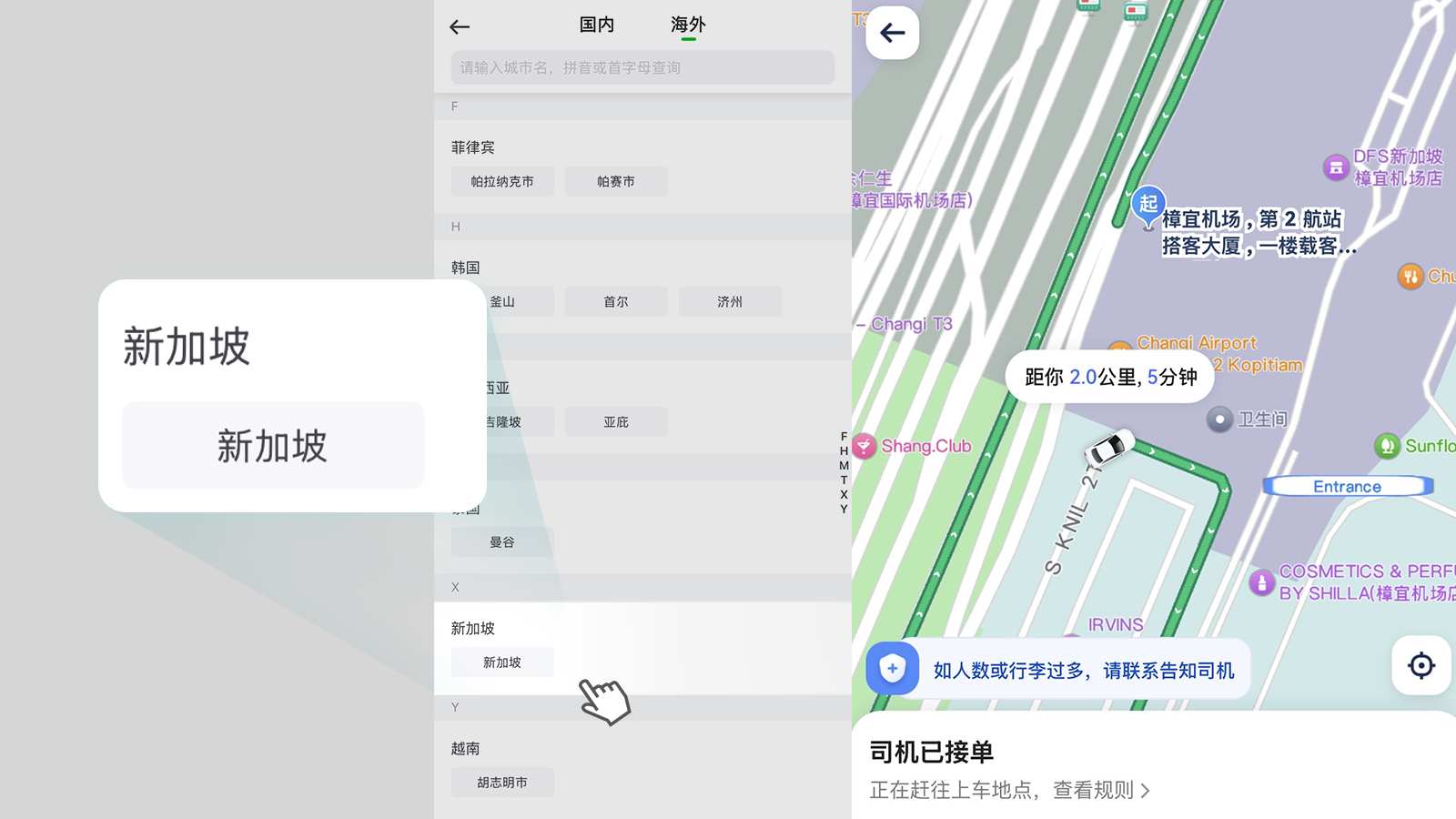
Core Insights - Cao Cao Travel has launched an overseas ride-hailing service covering six countries and ten popular tourist cities, including Hong Kong, Singapore, South Korea, Malaysia, Thailand, the Philippines, and Vietnam [1][2] - The service aims to meet the growing demand for convenient and localized overseas travel services among Chinese tourists, with outbound travel expected to exceed 145 million trips in 2024 [1] - The platform offers a unified Chinese interface, real-time online translation, and supports mobile payments in RMB, eliminating the need for currency exchange [1] Company Overview - Cao Cao Travel operates in 163 cities across China, with an average monthly active user count of 38.1 million and over 37,000 customized vehicles in operation [1] - The overseas service is part of Geely Holding Group's strategic platform for intelligent shared mobility [1] Industry Context - According to ITB CHINA's 2025/26 Travel Trends Report, the number of outbound trips by Chinese residents is projected to continue growing, highlighting the increasing demand for efficient travel solutions [1]
摩根大通:从芯片到汽车:深入探讨高级驾驶辅助系统与无人驾驶出租车的报告
欧米伽未来研究所2025· 2025-10-23 04:26
Core Insights - The report from J.P. Morgan highlights that autonomous driving technology is becoming a decisive trend, with its maturity potentially outpacing the realization of zero-emission goals [2] - The global autonomous driving market is on the brink of explosion, with the penetration rate of high-level autonomous vehicles (Level 3 to Level 5) expected to rise from less than 5% in 2025 to approximately 15% by 2030, and around 45% by 2040 [2][3] Global Market Dynamics - The report outlines a tri-polar structure in the global autonomous driving landscape, focusing on the strategies of major players in China, the U.S., and Europe [4] - China is positioned as a future leader in Level 4/5 autonomous driving, with significant players like Baidu and Pony.ai leading the Robotaxi services [5] - The U.S. market exhibits a dual-track system, with companies like Waymo focusing on Level 4 Robotaxi technology, while Tesla leads in the consumer market with Level 2+ systems [6] - Europe leads in Level 3 consumer systems but lags in Level 4 Robotaxi development due to stringent regulations and public trust issues [7] Technological and Economic Challenges - The report identifies two core obstacles to achieving the autonomous driving vision: the need for technological maturity and a significant reduction in the costs of technology and hardware [3] - J.P. Morgan estimates that a Robotaxi must achieve at least 80% utilization to break even, highlighting the economic challenges in scaling deployment [3][15] Ecosystem and Competitive Landscape - The autonomous driving ecosystem consists of five key layers: OEMs, AV technology and software suppliers, fleet operators, financial stakeholders, and demand platforms [9] - Nvidia is currently the dominant player in the semiconductor space, with its "cloud-to-car" vertical integration providing a competitive edge [10] - Rideshare platforms like Uber and Didi are seen as essential participants in the autonomous driving ecosystem, facilitating demand and supply matching [11] Future Implications for Industries - The rise of autonomous driving will not only transform transportation but also disrupt related industries such as insurance [13] - The insurance industry is expected to shift from retail to commercial models due to the transfer of accident liability from drivers to manufacturers or technology providers [14] - The report warns that insurance companies heavily reliant on traditional retail models may face elimination risks as autonomous vehicle adoption increases [14]

曹操出行驶入境外出行市场 首批覆盖6个国家10座城市
Zheng Quan Shi Bao Wang· 2025-10-23 04:24
Core Insights - The company, Cao Cao Travel, has launched an overseas ride-hailing service covering six countries and ten popular tourist cities, simplifying the travel process for domestic users [1][2] - The demand for convenient and localized overseas travel services is increasing among Chinese tourists, with outbound travel expected to exceed 145 million trips in 2024 [1] Group 1: Service Launch - Cao Cao Travel has introduced an overseas ride-hailing guide, allowing users to switch their location in the app to access services in supported countries [1] - The initial launch includes cities in Singapore, South Korea, Malaysia, Thailand, the Philippines, and Vietnam [1] Group 2: User Experience - The service features a unified Chinese interface, real-time online translation, and supports mobile payments in RMB, eliminating the need for currency exchange [2] - The app aims to enhance the experience for both Chinese tourists and local users by providing familiar services [2] Group 3: Market Position - Cao Cao Travel operates in 163 cities across China with an average monthly active user count of 38.1 million and over 37,000 customized vehicles [2] - The company is positioned as the largest technology ride-hailing platform on the Hong Kong Stock Exchange [2]
曹操出行(02643)驶入境外出行市场 首批6国10城实现境外打车自由
智通财经网· 2025-10-23 04:06
Core Insights - Caocao Travel has launched an overseas ride-hailing service covering six countries and regions, allowing domestic users to use the app without downloading local ride-hailing software [1][6] - The service aims to simplify the overseas travel process for Chinese tourists, addressing common issues such as language barriers and payment incompatibility [6][8] Group 1: Service Overview - The initial rollout includes popular tourist cities in Singapore, South Korea, Malaysia, Thailand, the Philippines, Vietnam, and Hong Kong [1][8] - Users can switch their location in the app to access ride-hailing services in these countries, providing a seamless travel experience [4][6] Group 2: Market Context - According to ITB CHINA's latest report, outbound travel from mainland China is expected to exceed 145 million trips in 2024, indicating a growing demand for convenient and localized overseas travel services [6] - Caocao Travel's service addresses pain points faced by domestic tourists, such as unfamiliarity with local apps and payment methods [6] Group 3: Company Background - Caocao Travel operates in 163 cities across China, with an average monthly active user count of 38.1 million and over 37,000 customized vehicles [6] - The app features a unified Chinese interface, real-time translation, and supports mobile payments in RMB, enhancing the user experience for Chinese tourists abroad [6][8]

曹操出行驶入境外出行市场 首批6国10城实现境外打车自由
Zhi Tong Cai Jing· 2025-10-23 02:57
Core Insights - Caocao Travel has launched an overseas ride-hailing service covering six countries and regions, allowing domestic users to book rides without needing local apps, simplifying the travel process significantly [1][3] Group 1: Service Overview - The service initially covers Singapore, South Korea, Malaysia, Thailand, the Philippines, Vietnam, and Hong Kong, enabling users to switch their location in the Caocao app for seamless ride-hailing [1][4] - Users can access local transportation needs through the app, which intelligently recommends pickup locations based on their position, enhancing the user experience [1] Group 2: Market Context - According to ITB CHINA's report, outbound travel from mainland China is expected to exceed 145 million trips in 2024, indicating a growing demand for convenient and localized overseas travel services [3] - Domestic tourists often face challenges such as language barriers and unfamiliar payment methods when hailing rides abroad, which Caocao's service aims to address [3] Group 3: Company Positioning - Caocao Travel operates in 163 cities across China, with an average monthly active user count of 38.1 million and over 37,000 customized vehicles, making it the largest tech ride-hailing platform on the Hong Kong Stock Exchange [3] - The new overseas service features a unified Chinese interface, real-time translation, and supports RMB mobile payments, catering to domestic user habits and enhancing the overall travel experience [3][4]
平均目标价80港元 曹操出行Robotaxi布局获花旗等头部券商看好
Shang Hai Zheng Quan Bao· 2025-10-22 19:51
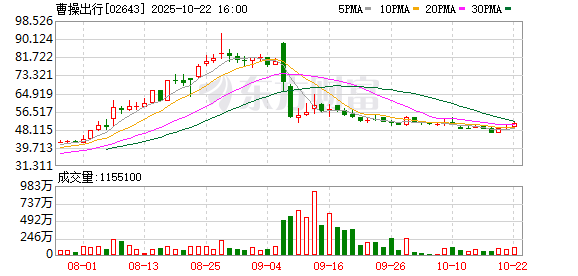
Core Viewpoint - The shared mobility platform Cao Cao Mobility is gaining attention in the capital market due to its clear commercialization path for Robotaxi and improving financial status [2][3] Group 1: Market Performance and Analyst Ratings - Citi has initiated coverage on Cao Cao Mobility with a "Buy" rating and a target price of 70 HKD, highlighting its outstanding performance in the Chinese ride-hailing market, which is growing faster than the industry average [2] - Major domestic brokerages, including Huatai Securities, CICC, and CITIC Securities, have also covered Cao Cao Mobility, all giving "Buy" or "Outperform" ratings [2][3] - As of October 20, 2025, eight analysts covering Cao Cao Mobility have given "Strong Buy" ratings, with target prices averaging close to 80 HKD, indicating strong investor confidence in its long-term value [4] Group 2: Competitive Advantages and Strategic Positioning - Cao Cao Mobility's unique competitive advantage lies in its integrated model of "customized vehicles + intelligent driving + platform," supported by Geely Holding Group, which provides cost advantages from the upstream of the supply chain [3][6] - The Robotaxi business is viewed as a key catalyst for valuation enhancement, with expectations that it will help establish a first-mover advantage in the commercialization of intelligent driving [3][6] - The company has deployed over 37,000 customized vehicles across 31 cities, contributing a Gross Transaction Value (GTV) of 2.5 billion CNY, reflecting a year-on-year growth of 34.7% [5] Group 3: Financial Performance and Cost Efficiency - For the six months ending June 30, 2025, Cao Cao Mobility reported revenues of 9.456 billion CNY, representing a year-on-year increase of 53.5% [5] - The customized vehicle strategy significantly reduces the total cost of ownership (TCO), with an average TCO reduction of 36.4%, bringing it down to approximately 0.5 CNY per kilometer [6] - The network of 133 Geely-authorized maintenance shops has led to a 25% reduction in average maintenance time and a 54% reduction in maintenance costs [6] Group 4: Future Outlook and Industry Trends - The ride-hailing service industry is entering a more attractive development phase, with structural demand increasing and order frequency continuing to rise [7] - As Robotaxi deployment scales up, the synergy between Cao Cao Mobility and Geely is expected to create barriers in cost optimization and service enhancement, suggesting that overall opportunities outweigh threats [7]
大厂出海记:新“App工厂”里的代码与密码
Bei Jing Shang Bao· 2025-10-22 15:38
Core Insights - Chinese tech companies are expanding overseas, focusing on markets in Latin America, Southeast Asia, and other regions with significant growth potential and population advantages, driven by domestic market saturation and competition [5][17] - The approach to internationalization involves not only technology and service exports but also cultural influence, leveraging corporate power for greater impact compared to previous cultural initiatives [5][6] - Companies face challenges in adapting to local markets, including regulatory compliance, cultural differences, and operational logistics, which require thorough market research and localized strategies [11][16] Group 1: Market Expansion - Lalamove and other Chinese tech firms are establishing a presence in various international markets, with Lalamove achieving significant milestones in Brazil and Southeast Asia [1][10] - The ride-hailing and delivery sectors are particularly competitive, with companies like Didi and 99 facing unique challenges in Latin America, where motorcycles are more practical than cars [4][6] - The gaming industry is a major battleground for Chinese firms, with a significant presence in Southeast Asia, where Chinese mobile game developers occupy a large share of the market [7][8] Group 2: Operational Challenges - Companies must navigate complex regulatory environments, with compliance being a primary challenge, especially in regions with stringent data protection laws like the EU [16][17] - The cost of customer acquisition in the gaming sector is rising, with many companies facing increased competition and higher operational costs [8][9] - The need for localization in branding and marketing is critical, as many Chinese tech firms adopt new brands to resonate with local consumers while managing risks [9][11] Group 3: Technological Adaptation - The migration of services to cloud platforms, as seen with Gojek's transition to Tencent Cloud, highlights the importance of technological infrastructure in supporting international operations [5][6] - Companies are encouraged to leverage existing cloud capabilities to avoid redundant investments and streamline their international expansion efforts [15][16] - The integration of AI and other advanced technologies is becoming essential for maintaining competitiveness in global markets, but firms must balance development costs with potential returns [15][16]

优步(UBER.US)加码自动驾驶布局 携手Nebius(NBIS.US)向Avride投资3.75亿美元
Zhi Tong Cai Jing· 2025-10-22 12:53
Group 1 - Uber and Dutch cloud infrastructure company Nebius plan to invest up to $375 million in Nebius's autonomous vehicle subsidiary, Avride, to accelerate the expansion of Avride's autonomous fleet, which is expected to reach 500 vehicles [1] - The investment will support product development and market expansion for Avride, with potential additional investments contingent on achieving specific milestones [1] - This investment marks the first external funding for Avride and is structured as convertible debt, allowing Uber the option to convert the investment into equity in the future [1] Group 2 - Uber's CEO Dara Khosrowshahi stated that the company will continue to invest in the autonomous driving technology ecosystem, betting on a future where human and autonomous driving coexist [2] - Uber has invested or committed funds to several autonomous driving and drone companies, including significant partnerships with companies like Lucid and Nuro, with some deals reaching hundreds of millions of dollars [2] - Since selling its own autonomous driving division in 2020, Uber has established partnerships with over ten autonomous driving companies to compete with firms like Waymo and Tesla, including collaborations with Waymo in certain U.S. markets [2]
太平洋证券:首予曹操出行(02643)“增持”评级 2025半年报营收大增
智通财经网· 2025-10-22 09:27
Core Viewpoint - Pacific Securities has initiated coverage on Cao Cao Mobility (02643) with a "Buy" rating, highlighting the coexistence of autonomous and human-driven ride-hailing services in multiple cities for an extended period, which will provide long-term growth opportunities for the company [1] Financial Performance - For the first half of 2025, Cao Cao Mobility reported total revenue of 9.456 billion RMB, a year-on-year increase of 53.5%, while net profit was a loss of 0.495 billion RMB, reducing losses by 0.272 billion RMB [1] - The non-recurring gains and losses for H1 2025 amounted to 0.141 billion RMB, with a half-year net return on equity (ROE) of 13.14% and a net cash flow from operating activities of 0.325 billion RMB [1] Business Composition - The company's operations are solely in mainland China, primarily consisting of three segments: ride-hailing services (revenue of 8.6 billion RMB, accounting for 91% of total revenue), vehicle sales (7.9% of revenue), and car rentals (1.1% of revenue) [1] - As of June 30, the company operated in 163 cities with a total gross transaction value (GTV) of 11 billion RMB, a year-on-year increase of 53.6%, and processed approximately 380 million ride-hailing orders, up 49% year-on-year [1] Strategic Developments - In February 2025, the company launched its autonomous driving platform "Cao Cao Smart Travel" in Hangzhou and plans to introduce a fully customized smart passenger vehicle by 2026, balancing cost and experience [2] - The company aims to leverage the R&D capabilities of its shareholder Geely Group to quickly launch L4-level autonomous driving customized models, enhancing its competitiveness in the Robotaxi market [2]