国际贸易

Search documents
上交所:浙江省国际贸易集团有限公司债券8月26日上市,代码243562
Sou Hu Cai Jing· 2025-08-25 02:20
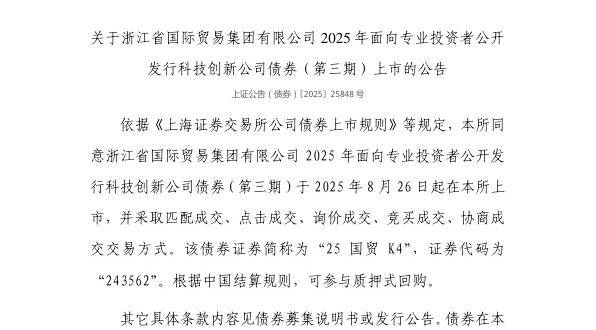
依据《上海证券交易所公司债券上市规则》等规定,上交所同意浙江省国际贸易集团有限公司2025年面 向专业投资者公开发行科技创新公司债券(第三期)于2025年8月26日起在上交所上市,并采取匹配成 交、点击成交、询价成交、竞买成交、协商成交交易方式。该债券证券简称为"25国贸K4",证券代码 为"243562"。根据中国结算规则,可参与质押式回购。 来源:金融界 8月25日,上交所发布关于浙江省国际贸易集团有限公司2025年面向专业投资者公开发行科技创新公司 债券(第三期)上市的公告。 ...

美国发动关税战,中美贸易会谈,有联合声明,民进党玻璃心碎一地
Sou Hu Cai Jing· 2025-08-24 10:09
Core Viewpoint - The recent trade conflict initiated by the U.S. against global partners, particularly Taiwan, has led to significant concessions from the U.S. after China's countermeasures, demonstrating China's resilience and ability to influence global trade dynamics [1][3][8]. Group 1: U.S.-Taiwan Relations - Following the U.S. announcement of a 34% tariff on Taiwan, the Taiwanese government quickly sought to negotiate a "zero tariff" deal in exchange for increased purchases and investments from the U.S. [1] - Taiwan's government has portrayed itself as a key trade partner in negotiations with the U.S., but recent developments have shattered this confidence [1][3]. Group 2: U.S.-China Trade Dynamics - The joint statement from China and the U.S. indicates a return to a 10% tariff status, suggesting that the U.S. did not achieve its objectives in the trade war [3][5]. - China's countermeasures included imposing a 125% tariff on U.S. products, effectively barring them from the Chinese market, which forced the U.S. to retract its additional tariffs announced on April 2 [3][5]. Group 3: Global Trade Implications - China's successful pushback against U.S. tariffs is seen as a model for other trade partners, potentially encouraging them to adopt a firmer stance against U.S. trade policies [5]. - The U.S. stock market has shown noticeable changes following the trade talks, reflecting a shift in investor confidence due to the negotiations between the U.S. and China [5]. Group 4: Internal U.S. Consequences - The trade war has led to rising prices in the U.S., negatively impacting Republican support ahead of the 2026 midterm elections, prompting a shift in U.S. policy [8]. - Taiwan's attempts to appease the U.S. through concessions have backfired, as the U.S. has not provided the expected support, instead exploiting Taiwan's reliance on American backing [8].
法治赋能,“照亮”民企“出海”路
Ren Min Wang· 2025-08-24 01:12
Core Viewpoint - The implementation of the "Private Economy Promotion Law" in China aims to provide a solid legal foundation for the high-quality development of the private economy, with specific judicial measures proposed to support this initiative [1][4]. Group 1: Legal Framework and Judicial Support - The "Private Economy Promotion Law" is the first foundational law specifically targeting the development of the private economy in China, officially taking effect on May 20, 2025 [1]. - The Supreme People's Court has issued guidelines to ensure the law's implementation, focusing on five areas to provide judicial support for the growth of the private economy [1]. - A special column titled "In-depth Implementation of the Private Economy Promotion Law" has been established to showcase effective judicial measures and practices across various courts [1]. Group 2: Case Study and Legal Interpretation - A significant case involved a dispute over an international sales contract between a Spanish company and a Zhejiang company, where the lack of a clear quality standard led to a payment deadlock [1][2]. - The court's ruling emphasized the importance of the "CISG" (United Nations Convention on Contracts for the International Sale of Goods) in interpreting the quality standards, ultimately ruling that the goods met reasonable expectations despite the absence of a specific standard [3]. - This case was recognized as a typical example by the Supreme People's Court, highlighting the court's role in protecting the legal rights of private enterprises [2]. Group 3: Support for Private Enterprises - The Changshan Court has been proactive in establishing a comprehensive legal service system for foreign-related cases, aiming to support over 1,500 foreign trade enterprises in the region [4]. - Initiatives such as "Law-Firm Face-to-Face" activities have been launched to address various legal challenges faced by enterprises in international operations [4][5]. - The court has introduced a "three-diagnosis" service to help foreign enterprises identify legal risks, responding to 185 requests for legal risk diagnosis and providing customized reports [5].
四川四创瑞宇国际贸易有限公司成立 注册资本100万人民币
Sou Hu Cai Jing· 2025-08-23 16:21
Core Viewpoint - Sichuan Sichuang Ruiyu International Trade Co., Ltd. has been established with a registered capital of 1 million RMB, indicating a new player in the automotive and technology sectors [1] Company Summary - The legal representative of the newly established company is Ma Duanming [1] - The company’s registered capital is 1 million RMB [1] - The business scope includes sales of automotive decorative products, wholesale and retail of auto parts, R&D of auto components, and sales of charging piles [1] - Additional activities include sales of new film materials, navigation terminals, smart vehicle-mounted devices, and internet sales (excluding licensed goods) [1] - The company is also involved in technology import and export, goods import and export, domestic and international freight forwarding, packaging services, and customs declaration [1]
通关便利化再升级 天津国际化口岸经济合作中心投入使用
Yang Shi Xin Wen· 2025-08-23 01:58
Core Viewpoint - The Tianjin International Port Economic Cooperation Center has officially commenced operations, focusing on enhancing collaboration between domestic enterprises and countries within the Shanghai Cooperation Organization (SCO) [1] Group 1: Services Offered - The center provides comprehensive services for trade, industrial cooperation, and industry exchanges between China and SCO countries, including customs clearance, customized logistics solutions, and port business connections [1] - A market-oriented comprehensive service hall has been established by country, with the Kazakhstan service hall already assisting local enterprises in exporting goods to China and resolving customs clearance issues [1] Group 2: Future Developments - In addition to the Kazakhstan service hall, a comprehensive service hall for Mongolia has been launched, with plans to introduce additional service halls for China-Russia and China-Cambodia collaborations in the future [1]
上海桔豚国际贸易有限公司成立 注册资本100万人民币
Sou Hu Cai Jing· 2025-08-22 21:30
Group 1 - Shanghai Jutun International Trade Co., Ltd. has been established with a registered capital of 1 million RMB [1] - The legal representative of the company is Weng Xiaoying [1] - The business scope includes wholesale and retail of cosmetics, jewelry manufacturing, and various cultural and artistic services [1] Group 2 - The company is involved in internet sales, advertising production, and digital content creation services [1] - It also engages in organizing cultural and artistic exchange activities and provides exhibition services [1] - The company operates under the principle of conducting business activities independently with its business license, except for projects that require approval [1]
守护消费!2025铁拳行动公布一批典型案例
Zhong Guo Zhi Liang Xin Wen Wang· 2025-08-22 04:45
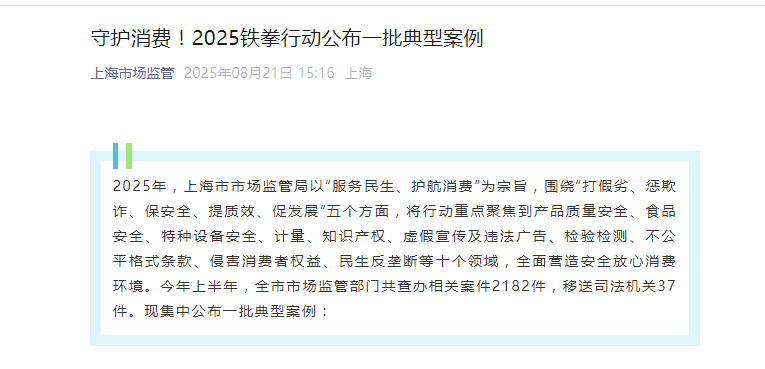
Core Viewpoint - Shanghai Municipal Market Supervision Administration aims to create a safe and trustworthy consumption environment by focusing on five key areas: combating counterfeits, punishing fraud, ensuring safety, improving quality and efficiency, and promoting development [3]. Group 1: Regulatory Actions - In the first half of the year, the market supervision department handled 2,182 related cases and referred 37 cases to judicial authorities [3]. - A case against Shanghai Canyao Tianang Intelligent Technology Co., Ltd. involved false advertising of food products claiming to treat various diseases, leading to administrative penalties [5]. - A case against a children's backpack manufacturer revealed non-compliance with safety standards, with 13 units sold and a total value of 17,801.05 yuan, resulting in penalties [7]. Group 2: Consumer Protection - The enforcement actions target fraudulent practices in the food and health product sectors, particularly those exploiting elderly consumers [5]. - The Shanghai market supervision department emphasizes the importance of product quality for children's items, aiming to enhance safety standards and corporate responsibility [7]. - A case against Huasheng Fujida Elevator Co., Ltd. involved illegal subcontracting of maintenance services, highlighting the need for compliance in elevator safety management [9]. Group 3: Advertising and Marketing Compliance - Shanghai Yimo Health Management Co., Ltd. faced penalties for misleading advertisements claiming health benefits for ordinary food products, violating advertising laws [11]. - The case against Teyichong New Energy (Shanghai) Co., Ltd. involved the use of non-compliant measuring instruments for electric vehicle charging, prompting regulatory scrutiny [12]. - Original Knowledge (Shanghai) Industrial Co., Ltd. was penalized for selling non-food grade materials as food products, emphasizing the need for adherence to food safety regulations [14][15]. Group 4: Intellectual Property Protection - Shanghai Dili Trading Co., Ltd. was investigated for selling counterfeit products, specifically alcoholic beverages, with a total illegal revenue of 200,160 yuan [17]. - The collaboration between judicial and administrative bodies in handling intellectual property cases strengthens the enforcement of trademark rights and consumer protection [17].
遭美加征50%关税 巴西各界:不接受单边制裁,将多元发展
Sou Hu Cai Jing· 2025-08-22 01:10
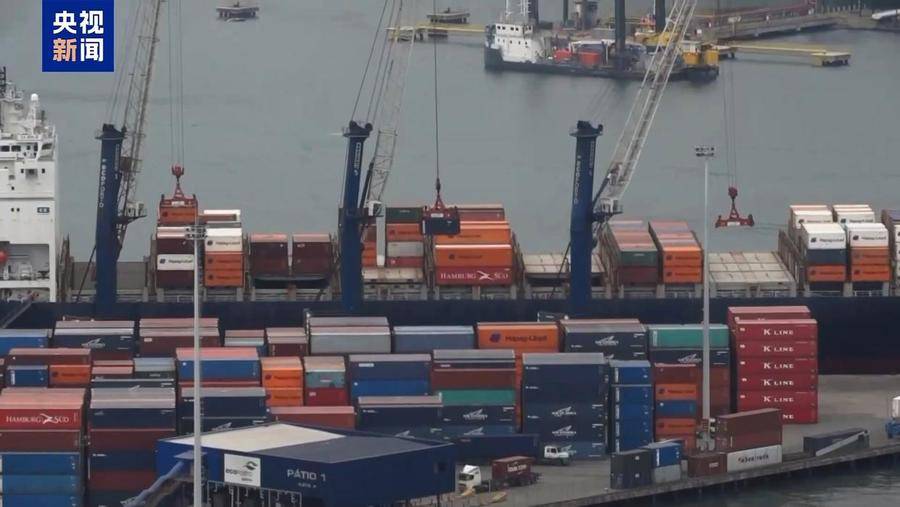
Core Points - The U.S. has increased tariffs on Brazilian goods from 10% to 50%, effective August 6, 2023, as a means of political pressure on Brazil [1][3] - Brazil's government and experts express strong dissatisfaction with the U.S. tariff policy, emphasizing a commitment to diversify trade partnerships and enhance cooperation with Global South countries [1][6] - The tariff measures are seen as politically motivated, intersecting with sensitive judicial and political issues in Brazil [4][6] Group 1 - The U.S. tariffs are being used as a tool for economic and political pressure, particularly related to the legal situation of former President Jair Bolsonaro [3] - Brazil has formally requested consultations with the World Trade Organization, claiming that U.S. measures violate multilateral trade rules [6] - The Brazilian government is actively seeking to diversify its export markets and deepen economic cooperation with Europe and other BRICS nations to reduce reliance on the U.S. market [6][7] Group 2 - The increase in tariffs has led to a temporary oversupply of Brazilian goods that were previously exported to the U.S., while American consumers face rising prices and increased living costs [7] - Economists warn that using trade as a pressure tool undermines global economic stability and erodes diplomatic trust between nations [7]
顶着美国压力,印俄外长谈能源合作
Huan Qiu Shi Bao· 2025-08-21 22:54
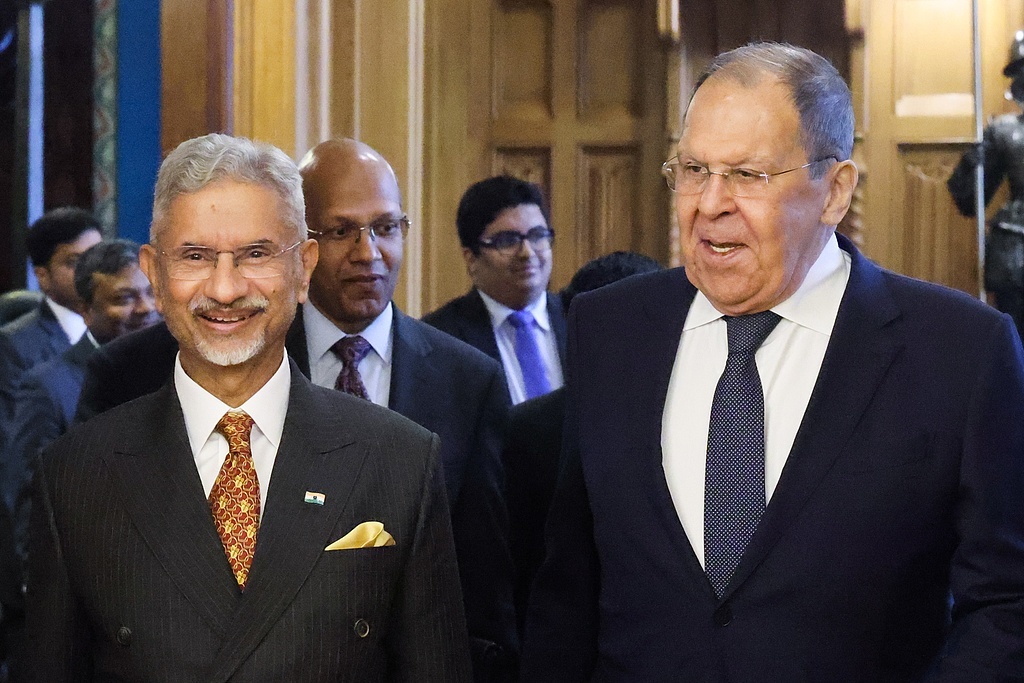
Group 1 - The meeting between Russian Foreign Minister Lavrov and Indian Foreign Minister Jaishankar aims to strengthen the strategic partnership between India and Russia, particularly in the energy sector [1][3] - India plans to increase trade with Russia by approximately 50% over the next five years, reaching around $100 billion, amidst rising tensions in India-US relations [3][4] - India remains committed to purchasing Russian oil based on its national interests, despite pressure from the US, which has imposed tariffs on Indian goods [4] Group 2 - The cooperation in oil and gas between India and Russia has yielded "good results," with intentions to develop joint energy production projects [3] - The defense and military technology cooperation between the two countries is at a high level, indicating a solid foundation for future collaboration [3] - India and the Eurasian Economic Union have initiated negotiations for a free trade agreement to explore new markets and address current trade challenges [4]
巴西告美国!美国欺人太甚?巴西打响反击战,向WTO起诉50%关税!
Sou Hu Cai Jing· 2025-08-21 08:34
Group 1 - Brazil has officially initiated proceedings at the World Trade Organization (WTO) due to the impact of a 50% tariff imposed by the U.S. on 35% of its export products, reflecting a complex international trade environment [1][3] - The Brazilian government, led by Luiz Inácio Lula da Silva, views this action as symbolically significant, demonstrating Brazil's independent stance in international affairs, despite not expecting substantial outcomes [1][3] - The document submitted to the WTO serves as a formal request for consultations with the U.S., aiming for a win-win solution before the establishment of an expert group, emphasizing Brazil's willingness to resolve issues through negotiation [3][6] Group 2 - The Lula administration is implementing a comprehensive emergency strategy to support sectors severely affected by the U.S. tariff increase, particularly focusing on small businesses [6] - Measures include providing credit lines with favorable interest rates to help vulnerable producers, especially those reliant on the U.S. market for exports [6] - For instance, the honey industry in Brazil, which relies on the U.S. market for 80% of its sales, is facing significant challenges due to the tariffs [6]