
商用车

Search documents
商用车加速驶向新能源化
Zheng Quan Ri Bao· 2025-11-12 16:48
Core Insights - The commercial vehicle industry is experiencing a significant shift towards new energy vehicles (NEVs), with a ratio of 2:1 between NEV and fuel vehicles at the recent China International Commercial Vehicle Exhibition [1] - The growth of NEVs in the commercial vehicle sector is driven by systemic policy regulations, market mechanisms, and technological advancements, aligning with China's "dual carbon" goals [2] Group 1: Industry Trends - In the first ten months of this year, commercial vehicle production and sales reached 3.456 million and 3.479 million units, respectively, marking year-on-year increases of 10.9% and 9% [2] - NEV sales in the commercial vehicle sector reached 649,000 units in the same period, reflecting a remarkable year-on-year growth of 60.2% and a market penetration rate of 24.6% [2] - In October alone, NEV sales hit 82,000 units, a 52.4% increase year-on-year, with NEVs accounting for 30.9% of total commercial vehicle sales, surpassing 30% for the second consecutive month [2] Group 2: Company Developments - CIMC Vehicles Group launched the EVRT (pure electric head-mounted train) ecosystem and comprehensive solutions, showcasing advancements in EVRT technology and industry positioning [1] - BYD made its global debut of the pure electric T4 truck at the exhibition, along with showcasing core products in the NEV light truck, heavy truck, and bus sectors, providing solutions for urban logistics and mid-distance transport [1] - FAW Jiefang Group presented five pure electric NEV models, while Dongfeng Commercial Vehicle Company showcased six models across pure electric, hydrogen, hybrid, and intelligent technology routes [1] Group 3: Economic Considerations - The total cost of ownership (TCO) for NEVs is becoming increasingly favorable, with estimates suggesting a potential cost reduction of over 30% over a five-year vehicle usage cycle for a 4.5-ton light truck [3] - The commercial vehicle market prioritizes economic viability, with a shift from policy-driven purchases to economically rational choices as the TCO of NEVs becomes more competitive compared to traditional fuel vehicles [3]
6款整车及7款核心零部件亮相 东风商用车展示新能源全矩阵实力
Yang Shi Wang· 2025-11-12 11:42
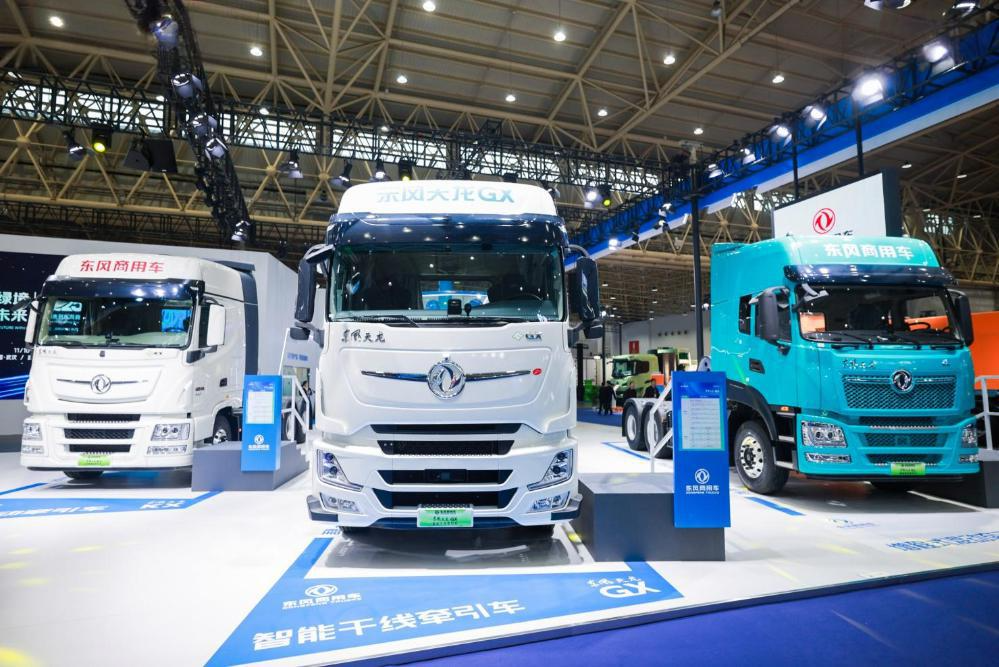
Core Insights - The 2025 China International Commercial Vehicle Show (CCVS) was held in Wuhan from November 10 to 13, showcasing Dongfeng Commercial Vehicle's commitment to green and intelligent technologies with six complete vehicles and seven core components on display [1][2]. Electric and Hydrogen Technologies - Dongfeng's hydrogen fuel cell truck, the Dongfeng Tianlong GX, features a high-efficiency fuel cell system with an efficiency of ≥48%, a refueling time of 20 minutes, and a range of 700 km, meeting EU safety and emission standards [1]. - The Dongfeng Tianlong KL electric truck, developed in collaboration with Huawei, can charge to 80% in under 20 minutes under dual-gun supercharging conditions and has a range of 460 km with a power consumption of only 1.2 kWh per kilometer [1][2]. Hybrid Solutions - The Dongfeng Tianlong KX dual-engine hybrid truck utilizes a gas engine and electric motor system, achieving a fuel-saving rate of 10% in complex mountainous conditions [2]. - The Dongfeng Tianlong KL range-extended hybrid truck supports pure electric start and features energy recovery systems, enhancing energy efficiency while ensuring driver comfort with adjustable seating [2]. Intelligent Driving Features - The Dongfeng Tianlong GX intelligent truck is equipped with L2+ level autonomous driving capabilities, supporting full-speed range intelligent assistance and predictive cruise functions [2]. - The vehicle's "smart brain" consists of self-developed controllers for energy distribution and advanced driving, showcasing Dongfeng's control over core power technologies [2]. Technological Advancements - The seven core technology exhibits highlight Dongfeng's achievements in independent research and development of key components, focusing on a unified multi-energy engine platform aimed at zero-carbon fuel technology [4]. - This platform is designed to comply with National VI emissions standards and is compatible with future regulations, featuring 16 proprietary technologies that lower user acquisition and maintenance costs [4].

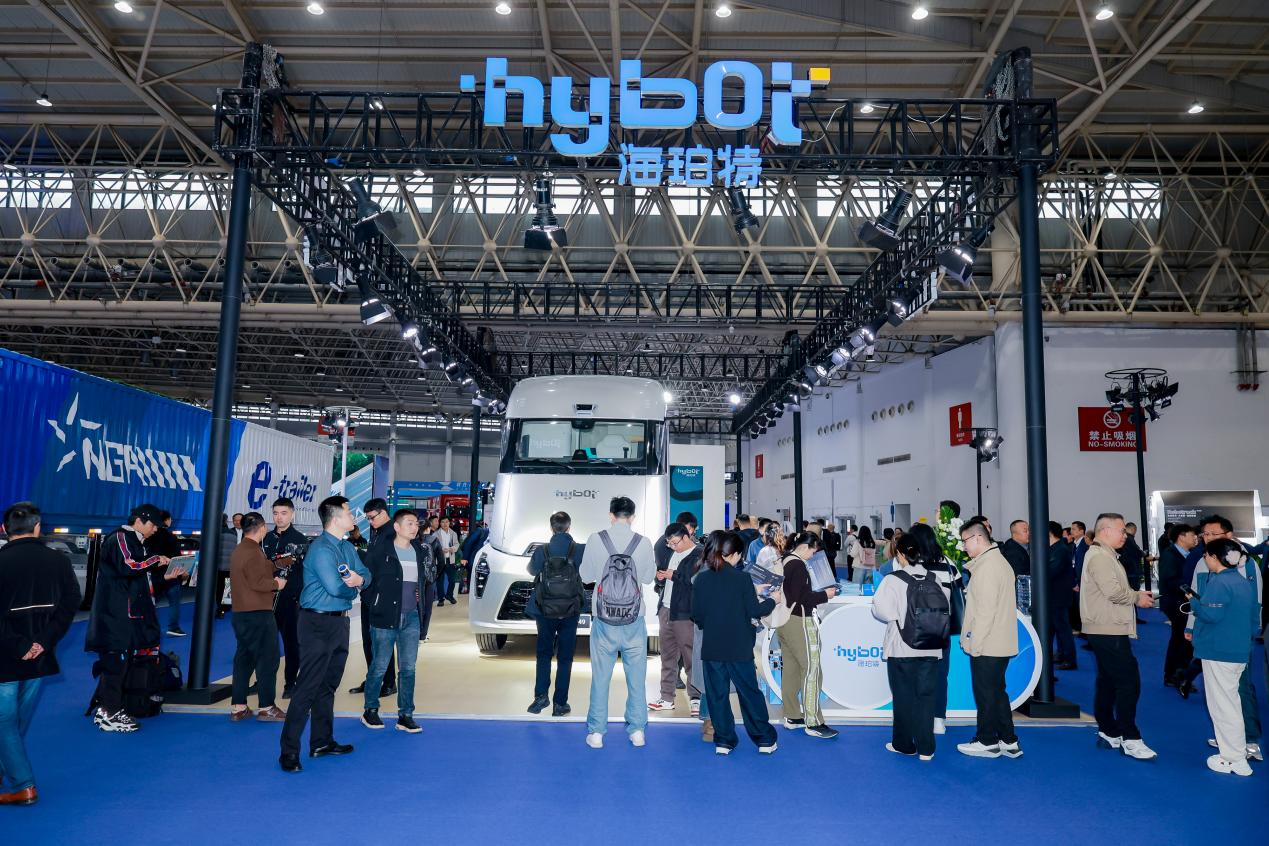
海珀特氢燃料电池重卡H49亮相国际商用车展
Yang Shi Wang· 2025-11-12 11:42
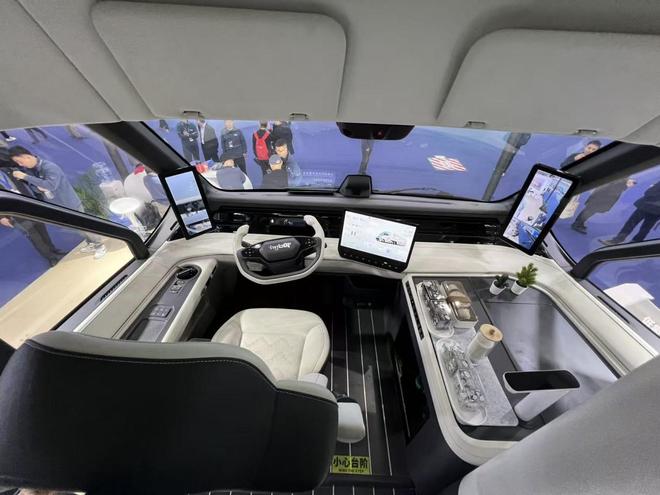
Core Insights - The company showcased its hydrogen fuel cell logistics truck H49 at the 2025 China International Commercial Vehicle Exhibition, highlighting the potential of hydrogen fuel cell technology in the logistics sector [1] Group 1: Vehicle Features - The H49 adopts a forward development model tailored to the characteristics of hydrogen power, focusing on technology integration and performance optimization [3] - It features a hydrogen-electric integrated smart chassis, achieving energy efficiency improvements through deep integration of the powertrain and hydrogen storage system [3] - The truck is equipped with a 300 kW high-power fuel cell system, utilizing an 800V high-voltage architecture and silicon carbide electronic control technology, resulting in a 15% reduction in energy consumption compared to the industry average, with a fuel cell system efficiency exceeding 55% [3] - In practical applications, the truck consumes only 7.1 kg of hydrogen per 100 km when fully loaded at 49 tons, with a gaseous hydrogen range exceeding 1000 km, and it operates stably in extreme conditions such as -30°C, 45°C, and at altitudes of 3500 meters [3] Group 2: Weight and Aerodynamics - The vehicle's weight is controlled to be under 10 tons through deep integration of the powertrain, hydrogen storage system, and chassis, along with innovative use of carbon fiber materials [4] - The ultra-low drag coefficient of 0.35 further reduces energy consumption [4] Group 3: Commercialization and Partnerships - The company is rapidly advancing its commercialization efforts, having completed multiple vehicle deliveries, with products operating stably in cross-province logistics scenarios in regions such as Beijing-Tianjin-Hebei, South China, and Southwest China, serving well-known enterprises like JD Logistics, IKEA, and Coca-Cola [6] - At the exhibition, the company signed a cooperation agreement with Wuhan Future Intelligent Creation to promote the application of new energy vehicles, further validating market recognition of its product strength and commercial value [7]
中国商用车迈向拐点:多元路线竞技、结构重塑、出海格局重构
Guan Cha Zhe Wang· 2025-11-12 09:28
Core Insights - Chinese commercial vehicles are accelerating their global presence and reshaping the global commercial vehicle industry rules [1][47] Group 1: Industry Trends - The 2025 China International Commercial Vehicle Show (CCVS) highlights the industry's shift towards "high-end, intelligent, and green" vehicles, showcasing advancements across the entire commercial vehicle supply chain [3][22] - The number of new energy vehicles (NEVs) at the exhibition has surpassed that of traditional fuel vehicles for the first time, indicating a market-driven transition in the commercial vehicle sector [3][22] - The market is witnessing a diversification of energy sources, with electric, hydrogen, and hybrid vehicles coexisting due to the complex usage scenarios and cost sensitivity of commercial vehicles [4][21] Group 2: Technological Innovations - Major manufacturers like FAW Jiefang, Dongfeng, and BYD are showcasing their electric models, with FAW Jiefang presenting five electric models, including the J6L tractor [8][10] - Dongfeng is introducing Huawei's megawatt supercharging technology to enhance charging efficiency for its heavy-duty trucks [12] - The exhibition features advancements in hybrid systems, such as FAW Jiefang's "H Power Domain" which improves fuel efficiency by 30% [16][28] Group 3: Market Dynamics - In October, the domestic sales of new energy commercial vehicles accounted for 30.9% of total commercial vehicle sales, reflecting a growing market presence [22] - The entry of new players in the NEV sector has spurred technological innovation, with over 20 new electric vehicle manufacturers established since 2020 [22][24] - The demand for electric commercial vehicles in Europe is rising, providing opportunities for Chinese manufacturers to leverage their advantages in the new energy supply chain [39][41] Group 4: Global Expansion Challenges - Despite significant growth in exports, Chinese commercial vehicles face challenges such as technological homogeneity and user concerns regarding support systems [42][44] - The industry is urged to shift from price competition to value competition, focusing on quality and compliance in overseas markets [44][45] - Companies are adopting strategies for global expansion, including localized production and tailored product offerings for different regions [45][47]
【快讯】每日快讯(2025年11月12日)
乘联分会· 2025-11-12 08:53
Domestic News - Beijing has announced the suspension of the vehicle scrapping and renewal subsidy policy effective from November 11, 2025 [6] - Hubei province will also suspend its vehicle scrapping and renewal subsidy policy starting November 13, 2025 [7] - In October, the domestic power battery installation volume reached 84.1 GWh, marking a year-on-year increase of 42.1% [8] - CATL and GAC Group have signed a comprehensive 10-year strategic cooperation agreement focusing on smart chassis and battery swapping technology [9] - BAIC Group plans to start assembling the B30 SUV in South Africa in January 2026 [10] - Tuhu Car Maintenance is collaborating with Huawei to explore automatic car washing through autonomous driving technology [11] - Faurecia and Shunhua New Energy have signed a strategic cooperation agreement to advance the hydrogen energy industry [12] - The 2025 Guangzhou International Auto Show will feature 93 new car debuts and a total of 1,085 vehicles on display [13][14] International News - Global sales of new energy vehicles increased by 26% year-on-year in the first three quarters of 2025, reaching 14.237 million units [16] - Tesla is preparing to expand its Texas Gigafactory to increase production capacity for its humanoid robot, Optimus [17] - BMW's Steyr plant has entered a new phase of electrification, launching a second high-performance motor pre-production line [18] - The inventory of new cars in the U.S. rose to 3.14 million units in November, up from 2.8 million units the previous month [19] Commercial Vehicles - BYD is participating in the 2025 China International Commercial Vehicle Show, showcasing its new electric and hybrid models [21] - IVECO's models, including the Juxing and Deyi, were highlighted at the Wuhan Commercial Vehicle Show [22] - The latest announcement from the Ministry of Industry and Information Technology includes 401 batches of new vehicles, with 262 new energy heavy-duty truck models [23] - The Remote New Energy Commercial Vehicle has been elected as a council member of the New Energy Heavy-Duty Truck Alliance [24]

商用车板块11月12日涨1.62%,江淮汽车领涨,主力资金净流入3.89亿元
Zheng Xing Xing Ye Ri Bao· 2025-11-12 08:42
Core Insights - The commercial vehicle sector saw a rise of 1.62% on November 12, with Jianghuai Automobile leading the gains [1] - The Shanghai Composite Index closed at 4000.14, down 0.07%, while the Shenzhen Component Index closed at 13240.62, down 0.36% [1] Commercial Vehicle Sector Performance - Jianghuai Automobile (600418) closed at 48.76, up 5.63% with a trading volume of 795,300 shares [1] - Yutong Bus (600066) closed at 31.76, up 1.02% with a trading volume of 99,500 shares [1] - King Long Automobile (600686) closed at 60.51, up 0.27% with a trading volume of 167,500 shares [1] - Foton Motor (600166) remained unchanged at 2.92 with a trading volume of 974,000 shares [1] - Zhongtong Bus (000957) closed at 11.44, down 0.26% with a trading volume of 131,300 shares [1] - JMC (000550) closed at 19.47, down 0.31% with a trading volume of 20,000 shares [1] - FAW Jiefang (000800) closed at 7.31, down 0.54% with a trading volume of 197,500 shares [1] - China National Heavy Duty Truck Group (000951) closed at 18.11, down 0.66% with a trading volume of 90,200 shares [1] - Ankai Bus (000868) closed at 5.42, down 0.73% with a trading volume of 146,100 shares [1] - Zhongjun Vehicle (301039) closed at 9.71, down 0.92% with a trading volume of 87,100 shares [1] Fund Flow Analysis - The commercial vehicle sector experienced a net inflow of 389 million yuan from institutional investors, while retail investors saw a net outflow of 144 million yuan [2] - The main funds showed a significant net inflow into Jianghuai Automobile, amounting to 541 million yuan, while retail investors had a net outflow of 243 million yuan [3] - FAW Jiefang had a net inflow of 11.89 million yuan from main funds, with retail investors contributing a net inflow of 6.81 million yuan [3] - Ankai Bus saw a net inflow of 5.85 million yuan from main funds, but a net outflow of 11.61 million yuan from retail investors [3] - Zhongtong Bus had a net outflow of 7.69 million yuan from main funds, while retail investors contributed a net inflow of 393,200 yuan [3]





汽车行业2025年三季报综述:乘用车业绩分化,商用车高景气有望持续
CHINA DRAGON SECURITIES· 2025-11-12 08:16
Investment Rating - The report maintains a "Recommended" investment rating for the automotive industry [2] Core Insights - The automotive sector has shown a significant performance divergence between passenger vehicles and commercial vehicles, with the latter expected to maintain high growth momentum [1][5] - The passenger vehicle segment experienced a revenue increase of 7.4% year-on-year in Q3 2025, while the sales volume grew by 14.4%, indicating a price war impact with an average price decrease of 0.99 million yuan per vehicle [5][37] - The commercial vehicle sector has seen a notable recovery in sales since June 2025, driven by government fiscal improvements and overseas demand, leading to a valuation recovery in the sector [5][15] Summary by Sections Passenger Vehicles - The passenger vehicle market maintained a high level of activity in Q3 2025, with wholesale sales reaching 7.53 million units, a year-on-year increase of 13.7% [23] - The segment's revenue for Q3 2025 was 557.7 billion yuan, with a notable performance difference among manufacturers, driven by new product launches and a shift towards higher-end models [37][44] - The profitability of the passenger vehicle sector showed a decline, with a net profit of 9.49 billion yuan in Q3 2025, down 25.1% year-on-year, primarily due to pressure on leading manufacturers like BYD [41][44] Commercial Vehicles - The commercial vehicle sector, particularly buses and heavy trucks, has shown significant improvement, with Q3 2025 revenues increasing by 30.6% year-on-year for buses and 26.9% for heavy trucks [6][15] - The heavy truck segment's net profit reached 3.84 billion yuan in Q3 2025, reflecting a 55.3% increase year-on-year, supported by favorable government policies and demand recovery [6][15] Auto Parts - The auto parts sector reported a revenue increase of 10.4% year-on-year in Q3 2025, with a net profit growth of 22.6%, indicating effective cost control and efficiency improvements [5][6] - Nearly 80% of auto parts companies achieved revenue growth in Q3 2025, driven by strong demand from the automotive production side [5][6] Investment Recommendations - The report suggests focusing on companies in strong product cycles, such as Great Wall Motors, Seres, and SAIC Motor, as well as key suppliers in the auto parts sector like Joyson Electronics and Desay SV [5][6][7]






近百辆自卸车交付河北 谁家车?
第一商用车网· 2025-11-12 07:13
Core Viewpoint - The collaboration between China National Heavy Duty Truck Group (CNHTC) and Xinda Group marks a significant step towards green and low-carbon development in the steel transportation sector in Tangshan, with the delivery of 80 units of HOWO new energy dump trucks [1][10][19]. Group 1: Product Features - The HOWO new energy dump trucks are designed to meet the "heavy load, high efficiency, and reliability" requirements of engineering transportation, showcasing breakthroughs in power, load capacity, and energy efficiency [4]. - Equipped with a high-power motor and a 600V architecture platform, the trucks can handle complex working conditions in Tangshan, reducing charging time by 15 minutes compared to industry standards, thus alleviating range anxiety for operators [6]. - The trucks feature a reinforced axle, multi-layer thickened frame, and multi-leaf spring suspension system, enhancing their load-bearing capacity and making them suitable for various transportation scenarios, including mineral resources and construction waste [7]. - The energy recovery system boasts a 94.51% efficiency rate, with overall energy consumption as low as 1.21 kWh/km. This translates to annual savings of over 200,000 yuan compared to traditional fuel vehicles, amounting to 1.34 million yuan over a six-year lifecycle, alongside tax exemptions and no urea consumption [8]. Group 2: Strategic Collaboration - The partnership represents a "synchronous resonance" in the new energy heavy truck sector, aiming to create a green upgrade blueprint for Tangshan's logistics industry, injecting green momentum into regional high-quality development [10][13]. - The strategic signing ceremony symbolizes the beginning of a fruitful collaboration, marking a key step towards the large-scale application of new energy transportation vehicles in Tangshan's steel industry [13]. - The successful delivery of the trucks is seen as a new starting point for win-win cooperation between CNHTC and Xinda Group, as well as a significant milestone in the industrialization and scaling of new energy transportation equipment in Tangshan [19]. Group 3: Future Outlook - CNHTC plans to continue focusing on customer needs and collaborate with partners like Xinda Group to further contribute to the sustainable development of the logistics industry in the green commercial vehicle sector [21].

轻客市场现150辆大单!
第一商用车网· 2025-11-12 07:13
Core Viewpoint - The collaboration between SAIC Maxus and the Shanghai Road Transport Industry Association aims to accelerate the transition to new energy logistics vehicles in Shanghai's freight taxi industry, with a strategic order of 150 units, including the first batch of 50 DANA V1 vehicles delivered [1][8]. Group 1: Strategic Collaboration - SAIC Maxus and the Shanghai Road Transport Industry Association signed a strategic cooperation agreement to promote the new energy vehicle upgrade in the freight taxi sector [1][6]. - The partnership is expected to enhance the efficiency and cost-effectiveness of urban logistics through a comprehensive support system provided by Lingju Ecology, which includes "zero threshold, zero burden, and zero commission" services [3][5]. Group 2: Product Features and Performance - The DANA V1 is designed specifically for high-frequency urban logistics scenarios, featuring a CLTC comprehensive range of 405 km and the ability to charge to 80% in just 30 minutes [5]. - The vehicle boasts a low energy consumption of 15.9 kWh per 100 km, high cargo box utilization of 98%, and a low floor design that improves loading efficiency [5]. - DANA V1 is equipped with advanced safety features, including a high-strength cage body, ABS+EBD, and an IP67-rated battery pack, ensuring safety for both passengers and cargo [5]. Group 3: Market Performance - SAIC Maxus has achieved nine consecutive months of sales growth, with a 133% year-on-year increase in October for new energy models and a 184% increase for the DANA family [8]. - The DANA V1 has captured over 25% market share in Hong Kong and ranks first in the electric LCV market in Singapore since August [8].

看重卡技术升级:长测成行业“试金石”
Zhong Guo Qi Che Bao Wang· 2025-11-12 03:05
Core Viewpoint - The commercial vehicle industry is undergoing a transformation towards high reliability, economic efficiency, and comfort, with long-distance real-world testing becoming a core standard for validating product performance [3][4]. Group 1: Long-Distance Testing - Long-distance testing (referred to as "long test") bridges the gap between laboratory data and real-world performance, addressing the industry's challenge of data disconnection [4]. - Long tests simulate various operational environments and complex road conditions, providing direct evidence for technical iterations and exposing potential issues more effectively than traditional testing methods [4][6]. - The increasing scale and intensification of the logistics industry have shifted user demands from merely functional vehicles to those that are fast, economical, comfortable, and safe, with low energy consumption and high reliability becoming key purchasing indicators [4][6]. Group 2: Industry Impact - Leading companies' long test practices are driving technological upgrades within the industry, shifting competition from price wars to value wars, with long test results setting new industry benchmarks [6][10]. - The long test conducted by Dongfeng Liuzhou Motor showcased the company's technical capabilities, covering 5,000 kilometers across diverse climates and terrains, providing critical data for the industry [10][14]. - The performance of the vehicles during the long test, such as the HK gas tractor achieving a fuel consumption of 30 kg per 100 km, demonstrates the effectiveness of integrated systems like the "Dragon Core Power" and "Dragon Energy System" [10][14]. Group 3: User Experience and Comfort - The long test highlighted the vehicles' reliability, achieving zero faults during the journey, which is crucial for addressing industry pain points like vehicle failures and driver fatigue [17]. - Innovations in driver comfort, such as spacious cabins and advanced health features, are transforming commercial vehicles from mere tools into "mobile homes," enhancing the overall driving experience [17][18]. - The positive reception from media and users during the long test indicates a successful combination of high-end configurations and low fuel consumption, reinforcing the brand's market position [18][20]. Group 4: Strategic Significance - Dongfeng Liuzhou Motor's long test practices provide a replicable model for Chinese commercial vehicle companies, emphasizing real-world data, user-centric innovation, and transparent testing as pathways to market success [20]. - This approach aligns with the ongoing "Belt and Road" initiative and the accelerated upgrade of the logistics industry, facilitating the transition of Chinese heavy trucks from "Made in China" to "Intelligent Manufacturing in China" [20].
