零售业

Search documents
重磅数据出炉!10月社零同比增2.9%,规模以上工业增加值同比增4.9%
Ge Long Hui· 2025-11-14 03:35
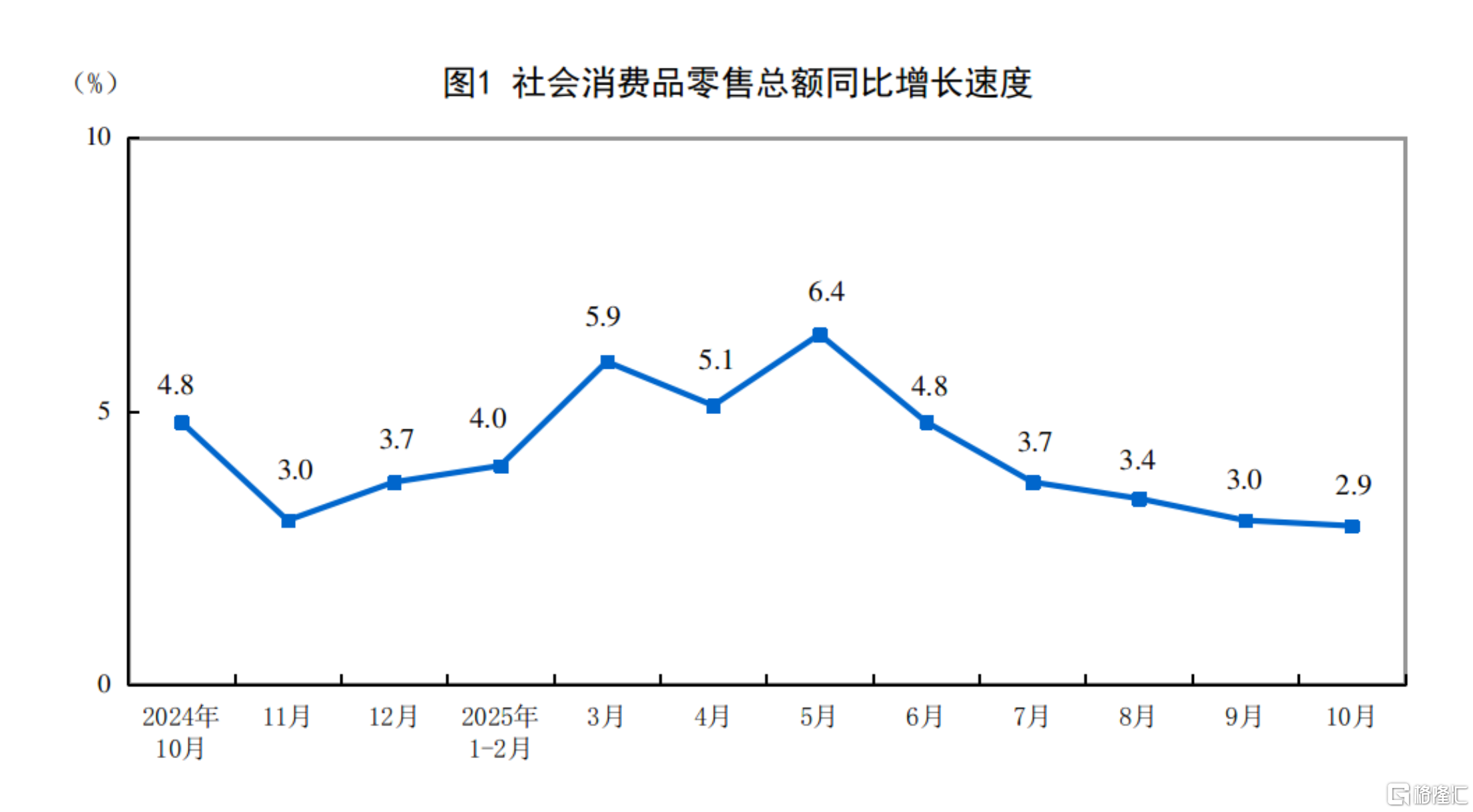
Economic Overview - In October, the total retail sales of consumer goods reached 46,291 billion yuan, a year-on-year increase of 2.9% [2][3][38] - The industrial added value above designated size grew by 4.9% year-on-year in October, with a month-on-month increase of 0.17% [8][36] Retail Sales - Retail sales excluding automobiles amounted to 42,036 billion yuan in October, growing by 4.0% [2][38] - For the first ten months, total retail sales reached 412,169 billion yuan, an increase of 4.3% [2][38] - Online retail sales for the first ten months were 127,916 billion yuan, up 9.6%, with physical goods online sales accounting for 25.2% of total retail sales [7][38] Industrial Production - The industrial added value for the first ten months increased by 6.1% year-on-year [8][36] - In October, the mining industry saw a 4.5% increase, manufacturing grew by 4.9%, and the electricity, heat, gas, and water production and supply industry rose by 5.4% [10][36] - High-tech manufacturing and equipment manufacturing showed strong growth, with increases of 7.2% and 8.0% respectively [36] Fixed Asset Investment - From January to October, fixed asset investment (excluding rural households) totaled 408,914 billion yuan, a year-on-year decrease of 1.7% [20][39] - Manufacturing investment increased by 2.7%, while real estate development investment fell by 14.7% [39][20] Employment and Unemployment - The urban surveyed unemployment rate in October was 5.1%, slightly lower than the previous month [3][41] - The average working hours for employees in enterprises was 48.4 hours per week [41] Price Trends - In October, the Consumer Price Index (CPI) rose by 0.2% year-on-year, reversing a previous decline [42] - The Producer Price Index (PPI) for industrial producers decreased by 2.1% year-on-year, with a narrowing decline compared to the previous month [42] Overall Economic Stability - The national economy showed overall stability in October, with ongoing transformation and upgrading efforts [3][43] - The government aims to expand domestic demand and stabilize employment, enterprises, and market expectations [43]

每日市场观-20251114
Caida Securities· 2025-11-14 03:08
Market Performance - The Shanghai Composite Index reached a new high for the year, with a gain of 0.73%[2] - The ChiNext Index surged over 2.5%, outperforming the Shanghai 50 Index which rose by 0.96%[1] - The market showed a broad upward trend, with significant gains in sectors like lithium batteries, chemicals, energy, and metals[1] Capital Flow - On November 13, net inflows into the Shanghai Stock Exchange were 38.528 billion yuan, while the Shenzhen Stock Exchange saw net inflows of 38.647 billion yuan[3] - The top three sectors for capital inflow were batteries, semiconductors, and energy metals, while the largest outflows were from electricity, state-owned banks, and joint-stock banks[3] Industry Trends - The lithium battery industry is benefiting from rapid growth in the energy storage market and rising raw material prices, attracting significant capital attention[1] - The demand for electricity is expected to rise due to increasing computational power needs driven by artificial intelligence, indicating potential growth in the power industry, including lithium batteries and green energy[1] Investment Strategy - Short-term investors are advised to focus on sector rotation and increase trading frequency while avoiding stocks with rapid price increases[1] - For medium to long-term investors, the emphasis should remain on industry trends, particularly in the domestic technology sector, which still holds substantial growth potential[1] Economic Developments - The Western Land-Sea New Corridor's foreign trade grew by 17.9% year-on-year, with imports and exports reaching 1.35 trillion yuan from January to October[5] - The Ministry of Industry and Information Technology is working on policies to support the development of specialized and innovative small and medium-sized enterprises[4]
三季度净利大增18%,AI“唱主角”,腾讯控股水下拉升!机构:腾讯是AI应用最大的受益者!
Xin Lang Ji Jin· 2025-11-14 02:52
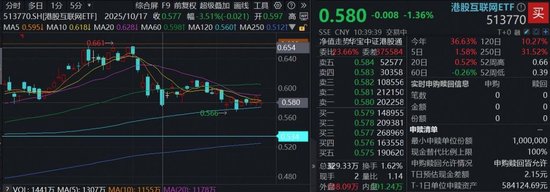
Group 1 - Hong Kong stocks opened lower on November 14, with the Hang Seng Index dropping over 2%, and major tech stocks like Alibaba and Xiaomi falling more than 2% [1] - Tencent Holdings reported a strong Q3 performance with revenue of 192.87 billion yuan, a 15% year-on-year increase, marking the highest quarterly growth in nearly four years [3] - Tencent's operating profit reached 72.57 billion yuan, up 18% year-on-year, exceeding market expectations [3] Group 2 - Tencent's strategic investments in AI are showing results, enhancing ad targeting accuracy and user engagement in gaming, with Q3 R&D spending hitting a record high of 22.82 billion yuan [3] - Alibaba has initiated the "Qianwen" project to develop a personal AI assistant app, indicating a shift towards consumer-facing AI solutions [3] - The competition among internet giants in AI development is intensifying, with expectations for a value reassessment in the context of a rising global AI industry [4] Group 3 - The Hong Kong internet ETF (513770) is heavily weighted towards major players like Alibaba, Tencent, and Xiaomi, with their combined weight exceeding 73% [4] - The Hong Kong internet sector has shown significant resilience this year, outperforming the Hang Seng Tech Index [6] - The valuation of the Hong Kong internet index is relatively low, with a PE ratio of 24.44, below that of the NASDAQ 100 and the ChiNext Index [6]

新华百货:2025年半年度权益分派实施公告
Zheng Quan Ri Bao· 2025-11-13 13:43
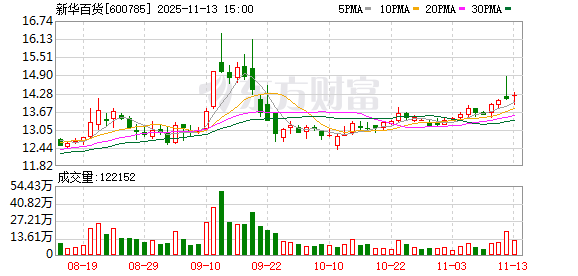
Core Viewpoint - Xinhua Department Store announced a cash dividend distribution plan for the first half of 2025, with a cash dividend of 0.10 yuan per share (tax included) [2] Summary by Relevant Sections - **Dividend Details** - The cash dividend of 0.10 yuan per share will be distributed to A-share holders [2] - The record date for the dividend is set for November 20, 2025, and the ex-dividend date is November 21, 2025 [2]

这些指标不仅事关美国消费者,更关系美国假日经济是否放缓
第一财经· 2025-11-13 13:34
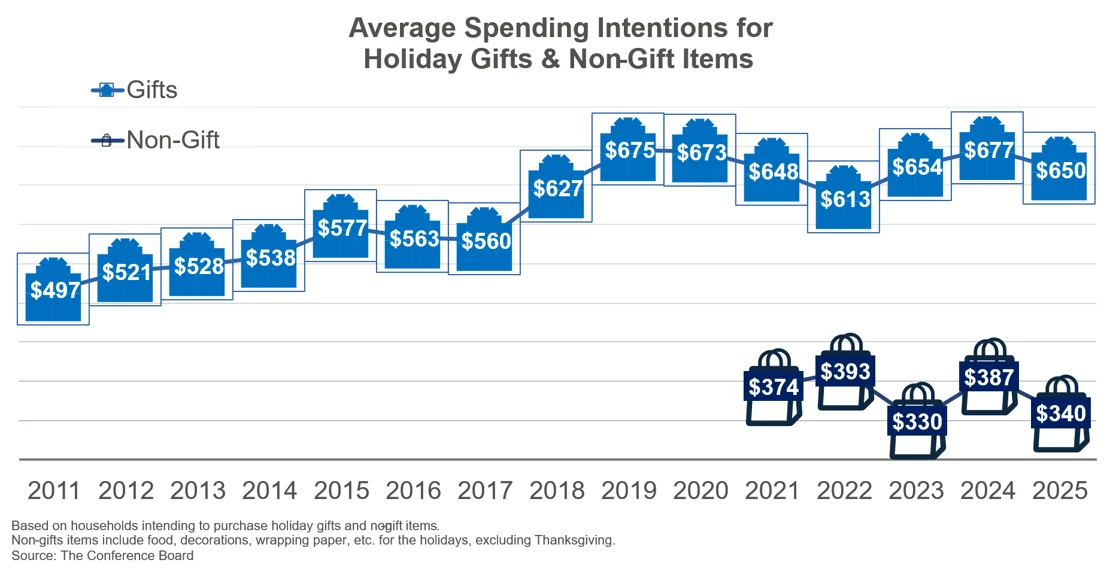
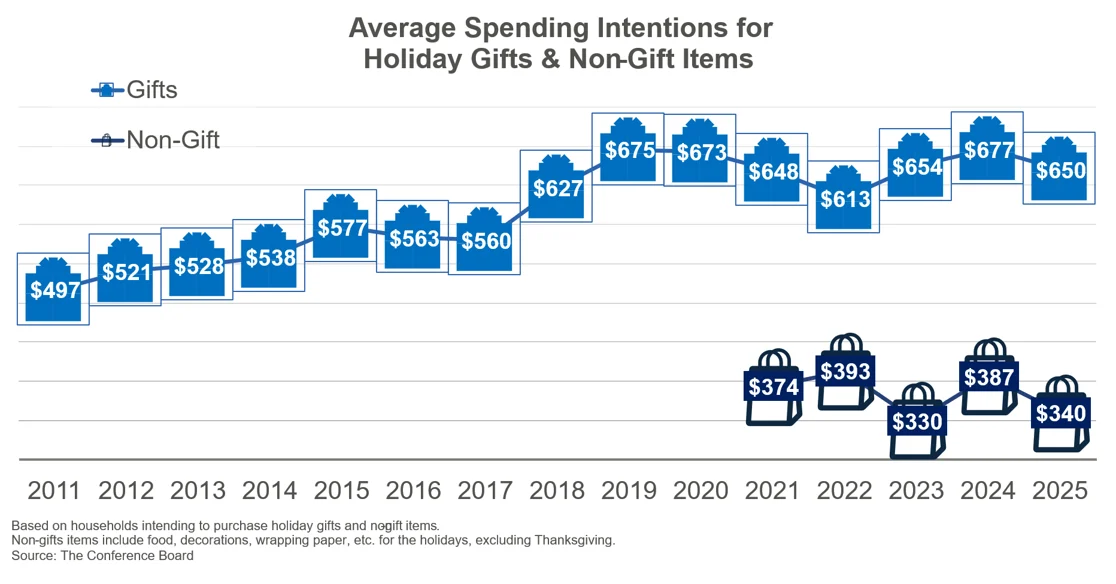
Core Insights - The upcoming holiday consumer outlook in the U.S. is negatively impacted by inflation, labor market slowdown, and tariff factors, with only consumers aged 65 and above planning to increase spending compared to last year [2][3]. Consumer Spending Trends - Consumers aged 35 and below are primarily responsible for the decline in gift spending, while those aged 35-45 and 55-64 are tightening their budgets in non-gift areas [3]. - The average holiday-related spending per consumer is projected to be $990 in 2025, a 6.9% decrease from $1,063 in 2024, and close to the 2023 estimate of $985, but lower than the 2022 ($1,006) and 2021 ($1,022) levels [7]. - Planned spending on gifts is expected to drop to $650, down 3.9% from last year's $677, marking the lowest level since 2022 [7]. - Non-gift spending, including food and decorations, is anticipated to decrease by 12% to $340 [7]. Employment and Retail Dynamics - Retailers and hotel groups are hiring the fewest seasonal employees in over a decade, with a reported 8.4% decrease in holiday job postings and a 12% drop in temporary hotel staff recruitment [3][12]. - The cautious hiring reflects a pessimistic outlook for the holiday shopping season, with consumer confidence at its lowest since June 2022 [14]. - Major retailers like Target and Amazon are planning to hire fewer seasonal workers compared to previous years, indicating a trend of reduced labor demand in the retail sector [15]. Consumer Behavior Changes - Consumers are becoming more pragmatic, favoring essential items over luxury gifts, with only about 5% citing AI and social media recommendations as key factors in their purchasing decisions [7]. - There is an increased interest in purchasing toys, games, and gift cards in 2025, with toys and games expected to become the top category for purchases [7]. - The proportion of consumers planning to buy gifts online remains steady at 43%, with higher income consumers showing a greater inclination towards online shopping [9]. Economic Outlook - Experts indicate that U.S. domestic demand is declining due to inflation and tariff impacts, with a notable shift towards a "K-shaped" economic recovery [11]. - Predictions suggest that holiday sales will grow by only 3.7% to 4.2% this year, lower than the previous year's growth rate of 4.3% [14].

这些指标不仅事关美国消费者,更关系美国假日经济是否放缓
Di Yi Cai Jing· 2025-11-13 12:59
Group 1: Holiday Spending Outlook - The upcoming holiday spending outlook in the U.S. is impacted by inflation, labor market slowdown, and tariff factors, with only consumers aged 65 and above planning to increase spending on gifts and non-gifts compared to last year [1] - The Conference Board survey indicates that younger consumers (under 35) are the primary reason for the decline in gift spending, while consumers aged 35-45 and 55-64 are tightening their budgets in non-gift areas [2][5] - The survey predicts that the average holiday-related spending per consumer in the U.S. will be $990 in 2025, a 6.9% decrease from $1,063 in 2024, and lower than 2022 and 2021 levels [6] Group 2: Consumer Behavior Changes - Consumers are becoming more pragmatic, favoring essential gifts over desired items, with gift spending expected to drop to $650 this year, the lowest since 2022 [6] - The budget for non-gift items, including food and decorations, is expected to decrease by 12% to $340 [6] - There is a notable increase in the intention to purchase toys and games, vacation and travel products, and gift cards in 2025, with toys and games rising to the top of the list [7] Group 3: Employment and Retail Dynamics - Retailers are hiring fewer seasonal employees, with predictions of less than 500,000 temporary hires in the last quarter of 2025, the lowest since 2009 [12] - Major retailers like Walmart and Target are cautious about hiring, reflecting a cautious outlook for the holiday shopping season due to ongoing inflation and economic uncertainty [13] - The Michigan Consumer Sentiment Index has dropped to its lowest level since June 2022, indicating declining consumer confidence [13] Group 4: Economic and Trade Factors - The logistics and trade sectors report that tariffs and inflation are contributing to a decline in domestic demand, with a noted decrease in consumer spending capacity [10] - The retail sector is maintaining low inventory levels due to economic uncertainties and tariff situations, with a "K" shaped recovery trend becoming more apparent [11] - The Oxford Economics survey indicates a one-third probability of the U.S. entering a recession in the next 12 months, with trade policy being a major concern for businesses [15]
这些指标不仅事关美国消费者,更关系美国假日经济是否放缓|全球贸易观察
Di Yi Cai Jing· 2025-11-13 12:38
Group 1: Consumer Spending Trends - Consumers aged 35 and under are the primary reason for the decline in gift spending this year, with older consumers (65+) planning to spend more than last year [1] - The average holiday-related spending per consumer in the U.S. is projected to be $990 in 2025, a decrease of 6.9% from 2024 and close to the 2023 estimate of $985 [4] - Consumers plan to spend an average of $650 on gifts this year, down 3.9% from last year's $677, marking the lowest level since 2022 [4] Group 2: Employment and Retail Dynamics - U.S. employers are expected to hire fewer than 500,000 seasonal workers in the last quarter of 2025, the lowest level since 2009 [7] - Retailers are cautious about the upcoming holiday shopping season, with a significant reduction in seasonal hiring compared to previous years [8] - The Michigan Consumer Sentiment Index has dropped to its lowest level since June 2022, reflecting consumer uncertainty [8] Group 3: Economic Influences - Inflation and a slowing labor market are impacting holiday spending, with a notable decrease in hiring for retail and hospitality sectors [1][4] - The retail sector is experiencing a "K" shaped economic recovery, indicating divergent trends in consumer spending and business performance [6] - Trade policies and tariffs are significant concerns for businesses, with many citing them as major risks to economic stability [10]
直线猛拉5%,阿里AI突传大消息,剑指ChatGPT!百亿港股互联网ETF(513770)水下拉升涨近1%,腾讯三季报来袭
Xin Lang Ji Jin· 2025-11-13 11:31
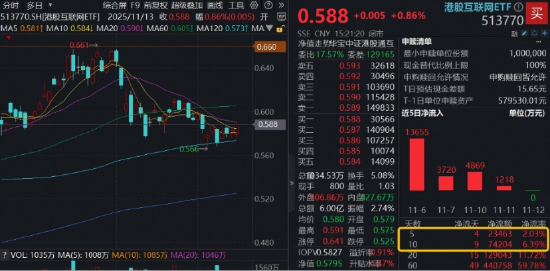
Group 1 - The Hong Kong stock market showed volatility, with the Hang Seng Index recovering to 27,000 points, driven by Alibaba's stock performance, which rose by 3.32% after initially dropping [1][3] - Alibaba has secretly launched the "Qianwen" project, creating a personal AI assistant app to compete with ChatGPT, marking a significant shift towards consumer-facing AI applications [3] - The overall outlook for Hong Kong stocks remains positive, with institutions expecting Tencent's revenue and net profit to grow by 13% in the upcoming earnings report [3][4] Group 2 - Current valuations in the Hong Kong stock market, particularly in the technology sector, are considered low, providing room for further upward movement [4] - The Hong Kong Internet ETF (513770) has seen significant inflows, with 9 out of the last 10 days recording increased investments, totaling 742 million yuan [4] - The Hong Kong Internet sector has shown higher elasticity this year, outperforming the Hang Seng Tech Index, with the China Securities Hong Kong Internet Index up by 40.81% [6] Group 3 - The China Securities Hong Kong Internet Index has a low price-to-earnings ratio of 24.44, significantly lower than the NASDAQ and ChiNext indices, indicating potential for value re-evaluation [6] - The Hong Kong Internet ETF has a current scale exceeding 11.8 billion yuan, with an average daily trading volume of over 600 million yuan, indicating strong liquidity [6] - The ETF is designed to track major internet companies, with Alibaba, Tencent, and Xiaomi being the top three holdings, collectively accounting for over 73% of the index [5]
(粤港澳全运会)小球“转动”大湾区
Zhong Guo Xin Wen Wang· 2025-11-13 05:46
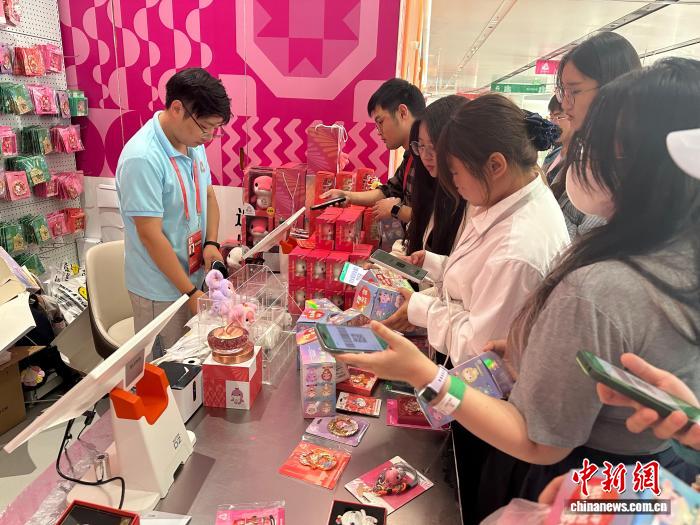
Core Insights - The article highlights the impact of the 15th National Games on the Greater Bay Area, showcasing how small ball sports are fostering cross-border tourism and economic activity [1][4]. Group 1: Event and Audience Engagement - The event has attracted audiences from various regions, with attendees like Huang Jiayi from Macau actively participating in the games and exploring the Greater Bay Area [1]. - The convenience of travel between cities has encouraged spectators to plan detailed itineraries, such as watching badminton in Shenzhen and then traveling to Macau for table tennis [1][4]. Group 2: Economic Impact - The "green channel" for ticket holders has transformed cross-border attendance from a concept into a regular occurrence, promoting the idea of "one ticket, explore the Bay Area" [4]. - The event is expected to draw over 100,000 visitors to Hong Kong, significantly boosting the local economy, particularly in the dining, retail, and hotel sectors [4]. - The integration of sports and tourism has created new consumption scenarios, with merchandise related to the games experiencing high demand, such as plush toys and collectible items [4].
账上41亿现金,200亿销售额却拒上市!胖东来凭什么让全行业学?
Sou Hu Cai Jing· 2025-11-13 02:20
Core Insights - The article highlights the unique approach of Pang Donglai in the retail industry, emphasizing a focus on employee happiness and a rejection of rapid expansion and public listing, which contrasts with the prevailing industry trend of prioritizing scale and growth [2][4][6] Group 1: Financial Performance - As of November 8, 2025, Pang Donglai's annual sales reached 20.035 billion yuan, marking a 3 billion yuan increase from the previous year, achieving a historical high [2] - The company maintains a debt-free status with cash reserves of 4.1 billion yuan and reported nearly 17 billion yuan in sales and over 800 million yuan in profit for 2024, with an average monthly salary for employees exceeding 9,000 yuan [3][4] Group 2: Business Strategy - Pang Donglai's strategy involves a deliberate restraint on sales growth, with a public goal to keep sales under 20 billion yuan in 2025, prioritizing employee well-being and customer satisfaction over rapid expansion [3] - The company operates 13 stores, all located in Henan, focusing on regional depth rather than geographical expansion, which allows for concentrated resource allocation to enhance service quality and employee benefits [4] Group 3: Industry Influence - The operational philosophy of Pang Donglai is influencing other major retailers in China, such as Yonghui and Wumart, to adopt similar practices aimed at improving employee welfare and optimizing store operations [5][6] - The shift in the retail industry is moving from a singular focus on scale and profit to a more diversified value proposition that includes product quality, employee happiness, and customer satisfaction, as exemplified by Pang Donglai's success [6]