装备制造

Search documents
深市并购 质效同行|深市年内重大资产重组超百单 精准锚定产业升级主航道
Zheng Quan Ri Bao Zhi Sheng· 2025-12-22 08:37
记者了解到,接下来,深交所将继续深入落实《关于深化上市公司并购重组市场改革的意见》(以下简 称"并购六条"),积极发挥平台作用,优化监管服务效能,凝聚市场各方合力,加快推动更多重组标杆 性项目落地,进一步支持上市公司通过并购重组做优做强。同时,加大对并购重组内幕交易、利益输送 等违法违规行为的打击力度,切实增强并购重组市场改革成效。 三大趋势勾勒深市并购全景图 今年以来,深市并购重组市场围绕"产业赋能、案例创新、提质增效"形成三大核心趋势,各类并购重组 活动在政策引导与市场需求的双重驱动下有序推进,既展现出规模化重组的作用,也凸显了中小体量并 购的价值。 一是"产业并购"+"新质生产力"双轮驱动态势显著。数据显示,在109单重大资产重组中,产业并购占比 八成,新质生产力标的占比七成,相关标的集中于半导体、信息技术、装备制造等战略性新兴行业,精 准契合产业升级方向。例如,天水华天科技股份有限公司通过收购半导体商华羿微电子股份有限公司 100%股权,顺利切入功率器件领域,进一步优化上市公司产业布局,增强核心竞争力。 二是"标杆案例"+"首单突破"多点涌现,丰富并购重组实践形态,不仅体现在跨界并购、未盈利资产收 购 ...
深市年内重大资产重组超百单 精准锚定产业升级主航道
Zheng Quan Ri Bao Wang· 2025-12-22 08:35
近日,凤形股份(002760)有限公司(以下简称"凤形股份")发布《发行股份购买资产并募集配套资金暨 关联交易预案》,宣布拟通过发行股份的方式,收购广东华鑫金属资源有限公司持有的白银华鑫九和再 生资源有限公司75%股权。至此,凤形股份成为深圳证券交易所市场(以下简称"深市")年内又一例推进 重大资产重组的上市企业。 今年以来,在政策支持与市场需求的双重驱动下,深市并购重组市场正呈现出量质齐升的良好发展态 势。数据显示,2025年以来,截至目前,深市新增披露并购重组1104单,涉及金额合计达5537亿元,分 别同比增长54%和55%;其中,新增披露重大资产重组更是突破百单,同比增长60%。 记者了解到,接下来,深交所将继续深入落实《关于深化上市公司并购重组市场改革的意见》(以下简 称"并购六条"),积极发挥平台作用,优化监管服务效能,凝聚市场各方合力,加快推动更多重组标杆 性项目落地,进一步支持上市公司通过并购重组做优做强。同时,加大对并购重组内幕交易、利益输送 等违法违规行为的打击力度,切实增强并购重组市场改革成效。 三大趋势勾勒深市并购全景图 今年以来,深市并购重组市场围绕"产业赋能、案例创新、提质增效"形 ...
深市重大资产重组同比增长60%,“产业+新质”特征凸显
Di Yi Cai Jing Zi Xun· 2025-12-22 08:32
并购重组作为资本市场核心功能之一,在优化资源配置效率、培育新质生产力发展、推动产业整合升 级、提升上市公司质量和投资价值等方面,发挥着重要的作用。 今年以来,伴随着监管政策持续优化,深市并购重组市场活跃度持续提升,数据显示,2025年以来,深 市新增披露并购重组1104单,金额合计5537亿元,分别同比增长54%和55%;其中,新增披露重大资产 重组更是突破百单,达到109单,同比增长60%。 2024年9月24日,证监会发布《关于深化上市公司并购重组市场改革的意见》(以下简称"并购六 条"),支持上市公司向新质生产力方向转型升级,鼓励加强产业整合,进一步提高监管包容度,提升 重组市场交易效率。 2025年5月16日,证监会修订发布《重大资产重组管理办法》,细化"并购六条"有关改革举措。深交所 同步修订审核规则及配套指南,优化监管审核机制,完善分类监管标准,加强服务引导力度,支持上市 公司依规高效开展并购重组。 在一系列举措推动下,深市并购重组市场"量质齐升",并展现出三大鲜明特征:一是"产业并购"+"新质 生产力"双轮驱动。在109单重大资产重组中,产业并购占比八成,新质生产力标的占比七成,主要集中 在半导 ...
濮阳工业园何以实现制造业倍增?
Zhong Guo Hua Gong Bao· 2025-12-22 04:26
Core Insights - The Puyang Industrial Park has achieved a manufacturing value-added growth rate of over 25% as of November this year, doubling the manufacturing value-added compared to the entire year of 2022, and completing the manufacturing doubling goal a year ahead of schedule [1][4]. Group 1: Strategic Planning and Implementation - The Puyang Industrial Park, one of the first industrial clusters in Henan Province, focuses on chemical, equipment manufacturing, and new functional materials as its leading industries [1]. - Since the launch of the manufacturing doubling action in June 2023, the park has prioritized manufacturing as its "number one project," establishing a comprehensive promotion system centered on "projects, enterprises, innovation, and service" [1][2]. Group 2: Mechanisms and Support - The park has established a "chain leader + special class" mechanism for promotion, implementing tailored services for each enterprise and concentrating policies, resources, and elements towards manufacturing [2]. - The park has secured a total of 2.89 billion yuan in policy funds for enterprises and facilitated 560 million yuan in loans through regular bank-enterprise connection activities [2]. Group 3: Dual-Driven Development - The dual-driven approach of upgrading the industrial chain and technological innovation is crucial for the manufacturing doubling initiative [3]. - The park has optimized its industrial structure, with the proportion of its three main industries adjusted from 30:56:14 in 2022 to 40:43:17 currently, enhancing the share of chemical and new functional materials to 57% [3]. Group 4: Value Addition and Growth - The park has developed a multi-level enterprise cultivation system, focusing on both existing and new projects to enhance manufacturing value-added speed [4]. - Over the past three years, the park has added a total of 7.59 billion yuan in new output value from existing leading enterprises and 3.38 billion yuan from upgrading existing projects [4]. Group 5: Future Outlook - The park aims to establish itself as a first-class specialized chemical park in the province and a nationally recognized one during the 14th Five-Year Plan period, contributing to the modernization of Puyang's manufacturing sector [5].
【好评中国】让自贸试验区结出更多新成果
Xin Lang Cai Jing· 2025-12-22 03:54
Group 1 - The core viewpoint emphasizes the need for Free Trade Zones (FTZs) in China to act as pioneers in reform and development, promoting exploration in broader and deeper areas to achieve more results in reform and opening-up [1] - FTZs have introduced various institutional and policy outcomes this year, including relaxed market access policies, pilot programs for patent-intensive product insurance, and smart telecommunications quarantine models [1] - In the context of global value chain restructuring and rapid digital economy development, FTZs must establish dynamic international rule benchmarking mechanisms to adapt to changes and seize opportunities in higher-level openness [1] Group 2 - FTZs are tasked with promoting high-quality development and constructing a new development pattern, which involves strengthening the resilience of industrial and supply chains to support domestic and international dual circulation [2] - Systematic reforms are necessary to integrate policies, resources, and business processes around key industries, breaking down departmental barriers to form a systematic innovation ecosystem [2] - The establishment of interdisciplinary teams to tackle key technologies has led to significant breakthroughs, such as achieving autonomy in the main bearing of shield machines and advancing the remanufacturing system in the engineering machinery sector [2] Group 3 - FTZs should adjust their regional scope based on industrial development needs to enhance their ability to drive surrounding areas and improve the quality of international circulation [3] - Examples like the Xinjiang FTZ demonstrate the establishment of efficient logistics channels, while the Guangxi FTZ showcases automated container terminals connecting to 571 ports globally [3] - Collectively, the 22 FTZs contribute approximately one-fifth of the national foreign investment and total import-export volume, highlighting their significant role in the economy [3]
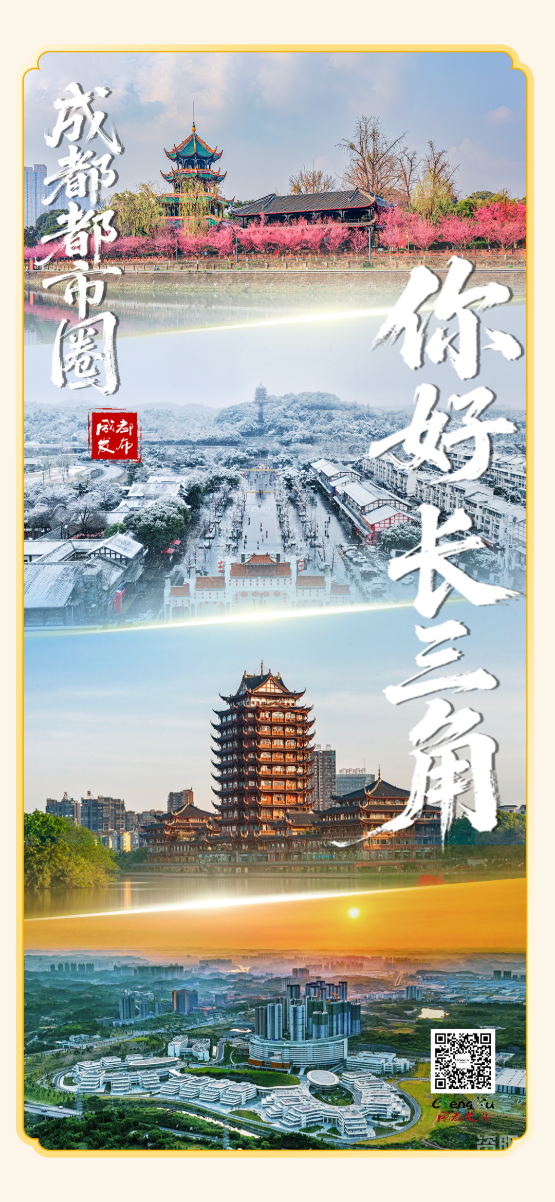
成都都市圈:你好,长三角!
Di Yi Cai Jing· 2025-12-22 03:11
Group 1 - Chengdu Metropolitan Area is the third nationally approved metropolitan area in China and the first in the central and western regions, covering Chengdu, Deyang, Meishan, and Ziyang with a total area of 33,100 square kilometers, making it the most densely populated and economically developed area in Sichuan Province [3] - The high-quality development index of Chengdu Metropolitan Area ranks first among 16 major metropolitan areas in China, indicating a significant level of urban integration [3] - The economic total of Chengdu Metropolitan Area reached 2.98 trillion yuan, accounting for 46.0% of the province's total, with a year-on-year growth of 5.9% [7] Group 2 - Since its initiation in 2020, Chengdu Metropolitan Area has established a "1+1+N" planning system, focusing on spatial layout and industrial collaboration, leading to the formation of three major industrial belts [5] - The area has seen the establishment of 91 national-level technology innovation platforms, an increase of 48 since 2020, and aims to reach 15,413 high-tech enterprises by 2024, up by 8,895 from 2020 [10] - Chengdu has developed 14 industrial parks with a scale of over 100 billion yuan and 26 parks over 50 billion yuan, collaborating with Deyang, Meishan, and Ziyang to build nine key industrial chains [14] Group 3 - Deyang is positioned as a key node in the Chengdu-Chongqing economic circle, recognized as a manufacturing strong city with significant contributions to power equipment and a robust vocational education system [19] - Meishan is actively promoting itself as a historical and cultural city, focusing on strategic emerging industries such as lithium batteries and photovoltaic materials, with industrial scale exceeding 100 billion yuan [24] - Ziyang has recently opened the first cross-city rail transit line in Sichuan, which has transported over 10 million passengers in its first year, fostering the development of aerospace, intelligent manufacturing, and health industries [23] Group 4 - The collaboration between Chengdu Metropolitan Area and the Yangtze River Delta has yielded fruitful results, enhancing industrial linkage and resource flow [27] - The "China Dental Valley" industrial chain in Ziyang has become a leading hub for dental medical devices, showcasing its global competitiveness [28] - The upcoming investment cooperation promotion event in Shanghai aims to deepen policy communication and promote shared development opportunities among the four cities [29][31]

信心,从何而来?——2025四川年终经济观察(上)
Si Chuan Ri Bao· 2025-12-22 00:40
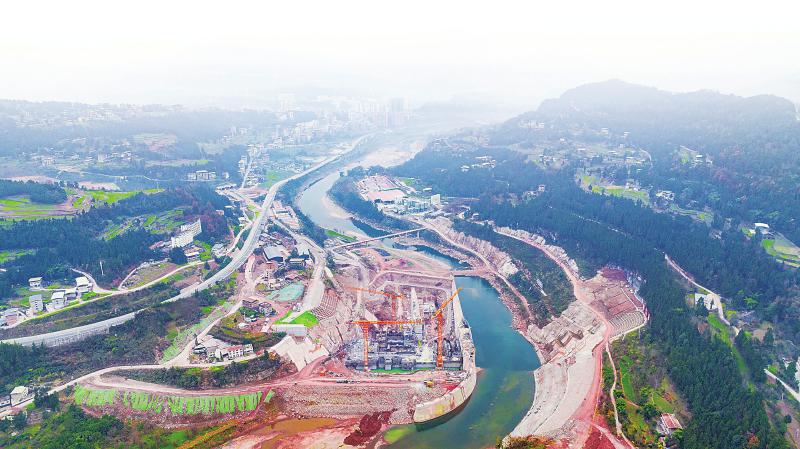
Core Insights - The article emphasizes the confidence in Sichuan's economic development driven by multiple national strategies, including the Western Development and the Chengdu-Chongqing Economic Circle [2][7] - By 2025, Sichuan is expected to showcase strong resilience and vitality in its economy, supported by the collaborative growth of its industrial, agricultural, and service sectors [12] Group 1: Economic Development and Strategy - Sichuan has maintained its position as the largest hydropower province in China for 15 consecutive years, with hydropower installed capacity exceeding 100 million kilowatts [3] - The province's economic growth is underpinned by a robust domestic market, with a projected economic scale exceeding 60 trillion yuan by 2025 [3][14] - The implementation of national strategies has led to the establishment of a modern industrial system in Sichuan, enhancing its competitive advantages [7][12] Group 2: Industrial Growth and Innovation - Sichuan's industrial sector has shown significant performance, with notable achievements in various industries such as electronics, equipment manufacturing, and energy [9][11] - The province is fostering innovation through the establishment of national laboratories and research institutions, contributing to the development of new production capabilities [7] - Key projects and infrastructure developments are being rapidly implemented, with over 320 projects in the Chengdu-Chongqing Economic Circle completing investments of 481 billion yuan, exceeding annual targets [8] Group 3: Agricultural and Service Sector Contributions - The agricultural sector is experiencing a significant expansion, with new crop varieties leading to increased yields and profitability [11][12] - The service sector has contributed 60.2% to the province's economic growth in the first three quarters, highlighting its importance in job creation and tax revenue [12] - Sichuan's consumption market is recovering, with initiatives like the "Shu Li An Yi" brand enhancing the tourism and service industries [12][14] Group 4: Market Potential and Trade - Sichuan is enhancing its position as a market hub, with initiatives to attract international trade and investment, evidenced by a stable performance in foreign trade despite global challenges [15] - The province's strategic location and infrastructure developments are facilitating the establishment of cross-continental supply chains [14][15] - The implementation of consumer policies has led to significant increases in consumption, with over 1.34 million applications for old-for-new consumer goods, driving over 161.6 billion yuan in consumption [14]
在深圳举办招商引资推介会
Xin Lang Cai Jing· 2025-12-21 19:39
Core Viewpoint - The investment promotion conference held by the Ninth Division of Baiyang City in Shenzhen resulted in the signing of 37 projects with a total investment amount of 29.396 billion yuan, covering various sectors such as equipment manufacturing, agricultural product processing, cultural tourism integration, new energy, and cross-border e-commerce [1] Group 1: Investment and Economic Development - A total of 37 projects were signed during the investment promotion conference, amounting to 29.396 billion yuan [1] - The projects span multiple sectors including equipment manufacturing, agricultural product processing, cultural tourism integration, new energy, and cross-border e-commerce [1] Group 2: Regional Advantages and Services - The conference highlighted the geographical advantages and industrial foundation of Baiyang City [1] - A service station for investment promotion in the Guangdong-Hong Kong-Macao Greater Bay Area was officially established, and 13 representatives from business associations were appointed as investment ambassadors [1] Group 3: Commitment to Investors - The Deputy Director of the Commerce Bureau emphasized a commitment to providing optimal services to ensure investors feel secure in their investments [1] - The approach of "no disturbance without business, and responding to all requests" will be maintained to foster a business-friendly environment [1]
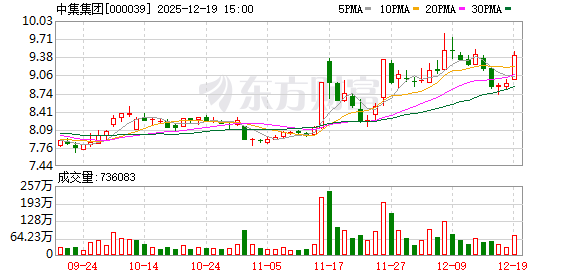
中集集团再斥资近3亿元买房给员工住,单价为1.8万元/平方米
2 1 Shi Ji Jing Ji Bao Dao· 2025-12-21 02:30
Core Viewpoint - CIMC Group is making significant investments in real estate to attract and retain core talent in Dongguan, with a recent announcement of purchasing residential properties for employee housing [2] Group 1: Investment Details - CIMC Group's subsidiary, Shenzhen CIMC Innovation Industrial Development Co., Ltd., plans to purchase 188 residential units for a total of 293 million yuan, primarily for employee accommodation [2] - The properties are located in the Songshan Lake High-tech Industrial Development Zone, Dongguan, with a total construction area of 16,300 square meters and a unit price of 18,000 yuan per square meter [2] Group 2: Previous Transactions - This is not the first time CIMC Group has made such purchases; in June, the company announced a similar transaction for 188 residential units in the same project, with a total area of 9,100.75 square meters and a transfer price of 164 million yuan, also at a unit price of 18,000 yuan per square meter [2]

中国产业经济行业 现状格局与投资规划分析报告2026年版
Sou Hu Cai Jing· 2025-12-20 13:41
Core Insights - The report provides a comprehensive analysis of the current state and future prospects of various industries in China, focusing on investment opportunities and macroeconomic factors influencing these sectors [3][4][5]. Group 1: Macroeconomic Environment - The report discusses the macroeconomic environment for industrial investment in China, including policies, economic growth, and foreign direct investment trends [3][4]. - It highlights the GDP growth forecast for 2025, indicating a positive outlook for economic expansion [3]. - The analysis includes fixed asset investment scale from 2020 to 2025, showing significant growth trends [3][4]. Group 2: Industry-Specific Investment Opportunities - The real estate sector is analyzed for its investment environment, including policy impacts and market conditions, with a focus on urban complexes and tourism real estate as key opportunities [5][6]. - The internet industry is identified as a strategic emerging sector, with investment opportunities in mobile payment and e-commerce [5][6]. - The energy sector is highlighted for its investment potential, particularly in renewable energy resources and processing [6][7]. Group 3: Mergers and Acquisitions - The report outlines the trends in mergers and acquisitions within various industries, noting increased regulatory scrutiny and the rise of private equity as a driving force [4][5]. - It discusses the active merger activities in cultural media and real estate sectors, indicating a dynamic market environment [4][5]. Group 4: Emerging Industries - New energy and new materials industries are emphasized for their growth potential, supported by government policies and increasing market demand [15][16]. - The biotechnology sector is also highlighted, with a focus on investment opportunities arising from policy support and market trends [15][16]. Group 5: Regional Investment Analysis - The report provides a detailed analysis of investment environments across different regions in China, identifying specific opportunities in provinces like Guangdong and Jiangsu [20][21]. - It emphasizes the importance of regional characteristics in shaping investment strategies and opportunities [20][21].