酒店业

Search documents
闽港控股(00181)就租赁福莱喜大酒店的经营权订立经营权租赁协议
智通财经网· 2025-10-21 10:16
Core Viewpoint - The company has entered into a lease agreement for the operation rights of the Fulaixi Hotel, marking a strategic shift from the Xiamen Grand Hotel due to declining financial performance [1] Group 1: Lease Agreement Details - The lease agreement with Fujian Fulu involves the Fulaixi Hotel, effective from January 1, 2026, to December 31, 2030 [1] - The Xiamen Grand Hotel's operating period will end on December 31, 2025, and the company has decided not to extend this period [1] Group 2: Hotel Characteristics - The Fulaixi Hotel, opened in 2023, features modern facilities and offers a high-quality accommodation experience [1] - The hotel includes 276 standard rooms and 52 luxury suites, along with event facilities for gatherings, meetings, and weddings [1] - Its prime location near the beach and scenic areas is expected to attract customers and enhance profitability [1]
县城消费崛起:山姆抢滩超级县,国际酒店品牌布局小县城
Di Yi Cai Jing Zi Xun· 2025-10-21 10:03
Core Insights - The rise of county-level consumption is driven by economic development and improved infrastructure, leading major brands to expand into these markets [1][2][4] - Sam's Club has opened its fourth store in Suzhou, targeting strong economic counties and cities, with a focus on customized and high-quality products [1] - The county market is becoming increasingly vital, with the county and township market accounting for 38.8% of total retail sales in the first three quarters of the year [2] Group 1: Market Expansion - Major brands, including international hotel chains and coffee shops, are entering county markets due to saturation in first and second-tier cities [3][4] - The hotel industry is seeing significant growth in county tourism, with brands like Hilton and Marriott establishing a presence in these areas [3] - Starbucks has expanded to 7,758 stores in China, covering over 1,000 county-level markets, indicating a competitive push into lower-tier cities [3] Group 2: Economic Factors - The county market offers lower property and operational costs compared to urban centers, making it attractive for businesses [4] - Rapid economic growth, urbanization, and rising income levels in counties are contributing to increased consumer spending [4] - Counties serve as crucial points for rural revitalization, enhancing local attractiveness and investment environments through the presence of high-quality brands [4]


性价比不再,安全感缺失:我们为什么抛弃了泰国?
Hu Xiu· 2025-10-21 06:49
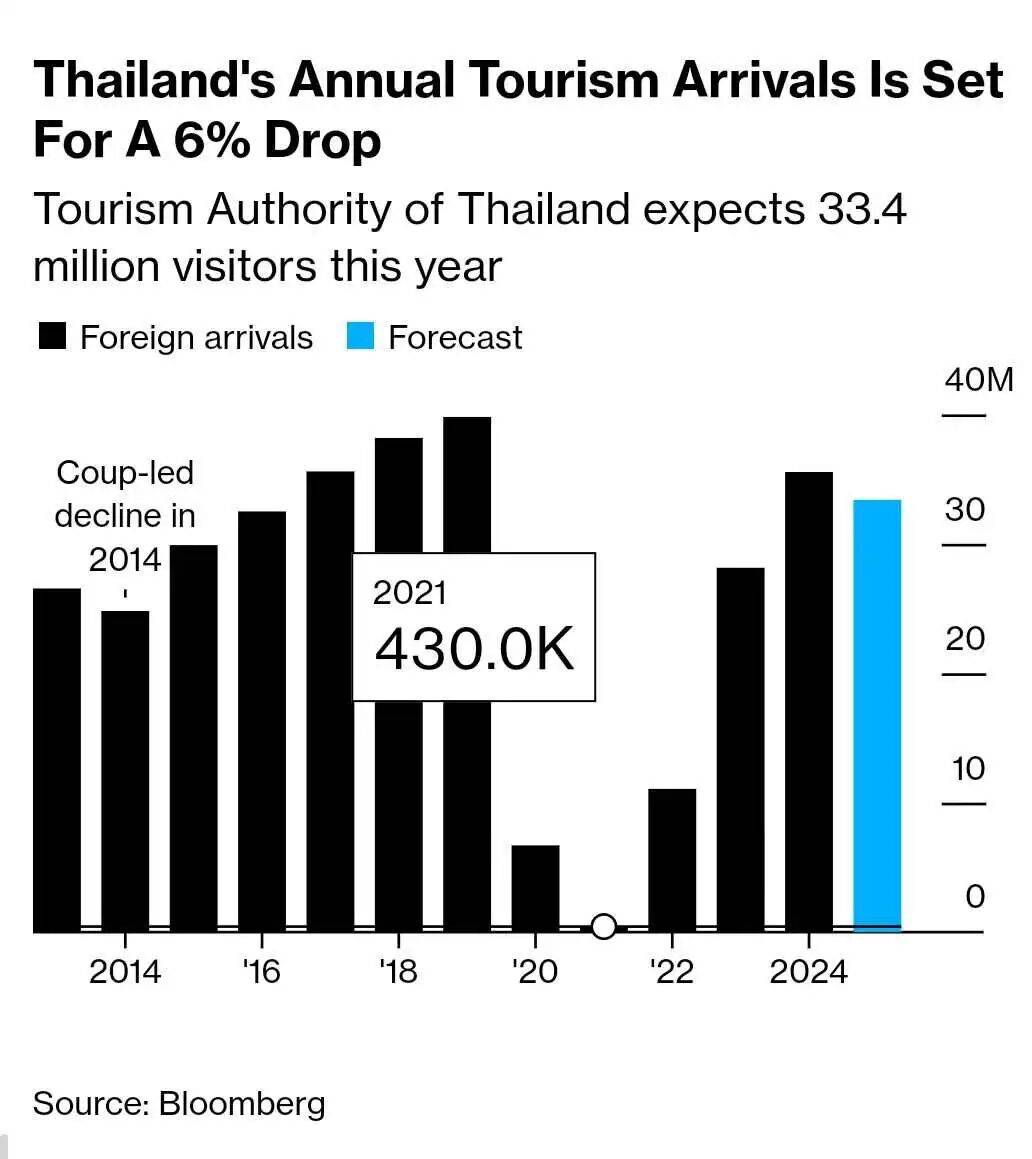
Core Insights - The incident involving a Chinese tourist in Thailand, where a tour guide threatened the tourist to force shopping, has sparked significant online discussion and criticism, highlighting issues within the tourism sector [2][3] - The Thai tourism industry is facing a decline, with a projected drop in total visitors to 33.4 million in 2025, a decrease of nearly 6% from the previous year, marking the first decline in four years [4] - The number of Chinese tourists visiting Thailand has significantly decreased, with only 2.3 million visitors in the first half of the year, down from 3.4 million in the same period last year, representing a one-third drop [5] Industry Impact - The ongoing decline in tourist numbers is severely impacting the local hotel industry, particularly small to medium-sized hotels that rely heavily on Chinese group tourists, with average occupancy rates dropping by about 50% in major cities like Bangkok and Phuket [8][9] - The structural changes in the tourism industry are attributed to shifts in consumer preferences, pricing, exchange rates, and safety experiences, rather than just isolated safety incidents [10][11] - The depreciation of the Chinese yuan against the Thai baht by 3.85% over the past year, coupled with rising airfare, has led many tourists to reconsider the value of traveling to Thailand [12][14] Competitive Landscape - The decline in visitors to Thailand is evident in travel agency bookings, with a reported 30% decrease in orders for trips to Thailand compared to the previous year, particularly affecting island destinations like Phuket and Krabi [18] - Other destinations such as Malaysia and Singapore are increasingly attracting Chinese tourists, with Malaysia seeing a 35.6% increase in Chinese visitors in the first half of the year, nearly matching Thailand's numbers [23] - Japan has also become a more popular destination, with over 5.69 million Chinese tourists visiting Japan in the first seven months of the year, nearly double the number visiting Thailand [21] Government Response - In response to the declining tourist numbers, the Thai government and tourism industry are implementing various measures, including charter flights, discounted tickets, and festive events to attract visitors [26][27] - Starting in November, charter flights from 16 Chinese cities are expected to operate, with a total of approximately 731 flights planned for the fourth quarter of 2025 to the first quarter of 2026 [28] - Thai Airways is expanding its routes to China, aiming to enhance connectivity and attract more tourists, while also addressing the growing number of Thai tourists traveling to China [29][31] Future Outlook - The Thai tourism industry is at a crossroads, needing to redefine its value proposition in a competitive market where it no longer enjoys a dominant position [41][44] - The shift from low-cost group tours to a focus on quality, transparency, and safety reflects a broader change in consumer expectations, necessitating a transformation in the tourism model [42][43] - The potential for recovery exists, particularly in high-end and customized travel segments, but the industry must adapt to new consumer demands and preferences to regain its appeal [44]

富力1.55亿变卖廊坊万达酒店,宁德分店同步出售
Cai Jing Wang· 2025-10-21 02:23
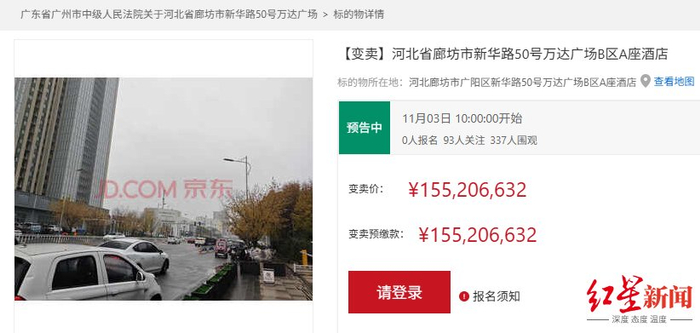
Core Viewpoint - R&F Properties is accelerating the sale of two Wanda hotels to generate cash, with significant price reductions compared to their assessed values [1] Group 1: Sale Details - The R&F Wanda Hotel in Langfang, Hebei, is set to be sold at an opening price of 155 million yuan, which is a reduction of 122 million yuan from its assessed value of 277 million yuan [1] - The auction for the Langfang hotel will begin on November 3, with a bidding period of 60 days and a minimum increment of 776,000 yuan [1] - The R&F Wanda Jiakua Hotel in Ningde, Fujian, will also be sold at the same time [1] Group 2: Background Information - The two hotels being sold are part of a larger portfolio of 77 hotels that R&F Properties acquired from Dalian Wanda in 2017 [1] - As of the end of 2024, R&F Properties still owns 22 self-built hotels according to their financial report [1]
糖酒会闭幕日恰逢“苏超”半决赛,全市重点商圈和商业街区交易金额比前一周同期增长5.4%
Nan Jing Ri Bao· 2025-10-21 02:19
Group 1 - The 113th National Sugar and Wine Fair and the "Su Super" semi-finals in Nanjing have significantly boosted local consumer activity, with a reported increase in visitor numbers to key hospitality and dining establishments by 10.3% compared to the previous week [1] - Popular dining venues in Nanjing are experiencing long queues, and star-rated hotels are fully booked for consecutive days, indicating a strong post-holiday recovery in the local market [1][2] - The combination of business events and sports activities is creating a vibrant consumer landscape, with many visitors enjoying local cuisine and attractions [1][4] Group 2 - The "Su Super" event has led to increased foot traffic in restaurants, with establishments like Xunwei Restaurant and Ma Xiangxing Restaurant reporting high patronage and special promotions tied to the event [2] - Hotels in Nanjing are experiencing a surge in bookings, with some reporting full occupancy for multiple days and significant revenue increases due to the Sugar and Wine Fair [3] - The integration of business, sports, and cultural tourism is emerging as a new driver for consumer growth, with local government and businesses collaborating to enhance visitor experiences [4][5] Group 3 - On October 18, key commercial areas in Nanjing recorded a transaction amount of 780 million yuan, reflecting a 5.4% increase compared to the previous week, driven by the Sugar and Wine Fair and related events [5]
亚朵酒店再陷隐私风波,女子称房间玻璃窗夜间“走光”
Xi Niu Cai Jing· 2025-10-21 02:15
Core Insights - Recent incidents at Atour Hotels have raised significant concerns regarding consumer privacy and safety, highlighting systemic management and service execution issues [2][3] - The hotel chain has faced multiple privacy-related complaints within a short period, indicating a pattern of operational failures [2][3] Group 1: Privacy and Safety Issues - A consumer reported a serious privacy issue with Atour Hotels, where a one-way film on windows allowed outsiders to see inside when lights were on at night [2] - This incident is part of a troubling trend, as it marks the third privacy-related exposure for Atour in just four months [2] - Previous incidents include a guest being confronted by strangers who accessed her room using a key card, and another case involving hospital-branded pillowcases found in a hotel [2][3] Group 2: Management Response and Measures - Atour Hotels acknowledged the systemic issues in management and service standards following the incidents, particularly in the handling of linens and guest security [3] - The company has implemented several corrective measures, including the temporary closure of affected locations and the replacement of all linens [3] - Atour has also announced the establishment of an independent inspection team and a special fund of 10 million yuan for user compensation, although the effectiveness of these measures remains questionable [3]

爱尔兰酒店业豪掷数亿欧元推进绿色转型,全球需求倒逼行业变革
Sou Hu Cai Jing· 2025-10-20 16:20
Core Insights - The Irish hotel industry is experiencing a significant shift towards green investments, with 87% of member hotels planning major sustainability projects in the next year [1][3] - Each hotel is expected to invest an average of €160,000 in environmental upgrades, leading to a potential industry-wide investment of several hundred million euros [1][3] Group 1: Sustainability Initiatives - The focus areas for sustainability include energy-efficient building renovations, renewable energy utilization, and upgrades to LED lighting systems [1] - The industry has identified three main priorities: food waste management, elimination of single-use plastics, and water resource conservation [3] Group 2: Industry Challenges and Opportunities - The rapid development of electric vehicle infrastructure is prompting hotels to actively invest in charging facilities [3] - A study indicates that 75% of global travelers plan to choose more environmentally friendly travel options in the coming year, posing a unique challenge for the Irish tourism sector, which heavily relies on air transport [3] - The industry aims to offset the carbon footprint of air travel through multi-dimensional emission reductions, with an expectation of welcoming over 5 million tourists this year [3]

锦江酒店:公司将通过持续优化管理、提升服务等措施,进一步提升效率和竞争力
Zheng Quan Ri Bao Zhi Sheng· 2025-10-20 13:13
Core Viewpoint - The company anticipates an improvement in business travel demand due to a continuous expansion in China's service sector PMI from June to September 2025, which is expected to enhance operational efficiency and competitiveness through management optimization and service enhancement [1] Group 1 - The service sector PMI in China is projected to show four consecutive months of expansion from June to September 2025, indicating improved business conditions [1] - The company plans to enhance efficiency and competitiveness by continuously optimizing management and improving service quality [1]

锦江酒店:目前跨国业务已具备相关基础能力,并持续评估场景延伸可行性
Zheng Quan Ri Bao Wang· 2025-10-20 12:13
Core Viewpoint - The company is advancing its globalization strategy and has established foundational capabilities for multinational operations, with plans to expand its hotel projects in Southeast Asia over the next five years [1] Group 1: Global Expansion Strategy - The company is collaborating with Malaysia's RIYAZ Group to expand over 180 hotel projects across six Southeast Asian countries within five years [1] - The company has developed a global procurement platform (GPP) that enables the delivery of high-quality hotel-related products from Chinese suppliers to countries in the Asia-Pacific region [1] - The strategy focuses on creating a closed-loop system of "domestic resources + local services" while promoting collaboration in "hotel management + branding + supply chain + platform" for overseas operations [1] Group 2: Innovation and Market Assessment - The company is continuously evaluating the feasibility of extending its business model based on overseas layout progress, local market characteristics, and supply chain maturity [1] - Future plans include a potential listing in Hong Kong to enhance the company's ability to integrate overseas resources [1]
每两天新开业一家酒店,希尔顿集团明年初在华酒店将达1000家
第一财经· 2025-10-20 11:29
Core Insights - Hilton is accelerating its development in the Chinese market, with the opening of its 888th hotel in Shanghai, and is projected to reach 1,000 hotels by early next year [3][4] - The company is focusing on lifestyle hotels and integrating various experiences such as sports, culture, and exhibitions into its offerings [3][4] - The gig economy is seen as a positive trend, with Hilton reporting about 200,000 applicants for gig work in China last year, which can reduce costs by 20% to 30% [4] Group 1: Expansion and Growth - Hilton's hotel count in China has increased from 700 to 888 in just over a year, with a new hotel opening every two days [3] - The company plans to introduce new brands in the Chinese market, particularly in the lifestyle hotel segment [3][4] Group 2: Market Dynamics - Local owners are increasingly entering the hotel management space, as evidenced by Tongcheng Travel's acquisition of Wanda Hotel Management [4][5] - Despite local owners managing some hotels, there will still be a significant portion managed by professional hotel companies, indicating a trend towards specialization [5] Group 3: Industry Challenges - The Chinese hotel industry is entering a phase of stock competition, with key performance indicators closely tied to city levels and hotel grades [5] - The industry faces challenges with low gross operating profit margins, necessitating a focus on revenue enhancement and cost optimization to improve asset value [5]