
智能家居

Search documents
匠心家居股价跌8.02%,银河基金旗下1只基金重仓,持有11.76万股浮亏损失110.69万元
Xin Lang Cai Jing· 2025-08-25 02:48
Group 1 - The core viewpoint of the news is that Jiangxin Home experienced a significant drop in stock price, falling by 8.02% to 107.96 CNY per share, with a total market capitalization of 23.49 billion CNY [1] - Jiangxin Home, established on May 31, 2002, specializes in the research, design, production, and sales of smart electric sofas and beds, with revenue composition being 76.73% from smart electric sofas, 13.56% from smart electric beds, 8.84% from accessories, and 0.86% from other sources [1] Group 2 - From the perspective of fund holdings, one fund under Galaxy Fund has a significant position in Jiangxin Home, with Galaxy Beautiful Mixed A (519664) holding 117,600 shares, accounting for 4.17% of the fund's net value, ranking as the seventh largest holding [2] - The fund Galaxy Beautiful Mixed A (519664) has a total size of 169 million CNY and has achieved a year-to-date return of 17.93%, ranking 3835 out of 8259 in its category [2] Group 3 - The fund managers of Galaxy Beautiful Mixed A are Wang Haihua and Yang Qi, with Wang having a tenure of 11 years and 268 days and a total fund size of 22.9 million CNY, achieving a best return of 113.76% during his tenure [3] - Yang Qi has a tenure of 8 years and 233 days with a total fund size of 52 million CNY, achieving a best return of 66.76% during his tenure [3]
香江集团携“8恒 森环系统”与“全智链生态科技系统”亮相第十一届国际发明展览会
Zhong Zheng Wang· 2025-08-24 08:02
Group 1 - The 11th International Invention Exhibition and the 33rd Guangzhou Expo opened, showcasing the "Xiangjiang No.1 Future Life Technology Innovation" exhibit, which features two globally pioneering technologies: the "8 Hengsen Ring System" and the "All-Smart Chain Ecological Technology System" [1] - Xiangjiang Group's chairman emphasized the role of Chinese tech companies as "breakers" in overcoming technological gaps and as "chain masters" in connecting the entire chain from basic research to application scenarios, enhancing the resilience of the industrial chain through "technological breakthroughs + ecological integration" [1][2] - The "8 Hengsen Ring System" replicates forest microclimates, promoting harmony between people and nature in home settings, while the "All-Smart Chain Ecological Technology System" addresses the long-standing issues of "device islands" and "protocol barriers" in smart home development [2] Group 2 - The "All-Smart Chain Ecological Technology System" collaborates with nearly a hundred international high-end brands, marking a shift from fragmented compatibility to a new stage of "integrated interoperability" across various product categories and protocols [2] - The emphasis on "technological openness + ecological integration" is seen as a key to overcoming global industrial chain restructuring and industry pain points, with a focus on breaking down geographical, industry, and brand boundaries [2][3] - The collaboration among brands is described as a deep co-creation that transcends nationality and brand, enhancing the resilience of the industrial chain and providing a replicable "Xiangjiang solution" for future industrial upgrades in the Guangdong-Hong Kong-Macao Greater Bay Area and the Belt and Road Initiative [3]
中美差距又扩大了?25年第一季度中国GDP跌至美国60%,问题出在哪
Sou Hu Cai Jing· 2025-08-24 00:26
Economic Overview - China's GDP growth rate for the first half of 2025 is 5.4%, significantly higher than the negative growth in the U.S., yet China's GDP share of the U.S. has decreased from a peak of 77% to around 60% [1][5][18] - The total GDP for China is approximately $9.19 trillion, while the U.S. GDP stands at $14.93 trillion, indicating a widening gap [5][28] Statistical Methodology - The U.S. employs a "quarterly annualized rate" method for GDP calculation, which can exaggerate short-term economic fluctuations [7][9] - In contrast, China uses a year-on-year growth rate, which reflects a more stable growth trend [9][11] - If China's data were calculated using the U.S. method, its growth rate would be 4.8%, surpassing the U.S. by 5 percentage points [9][11] Manufacturing and Industry Performance - China's manufacturing value-added is 1.67 times that of the U.S., showcasing a robust manufacturing sector [20] - In the automotive industry, China's annual production reached 30.16 million vehicles, approximately 2.8 times that of the U.S. [20] - China has established a comprehensive automotive industry ecosystem, from steel production to sales networks [22] Trade and Export Dynamics - China's exports of new energy products surged by 28%, with significant contributions from electric vehicles, solar components, and lithium batteries [22][24] - Exports to countries along the Belt and Road Initiative increased by 7.2%, indicating a diversified market strategy [24] Domestic Consumption - China's retail sales exceeded 10 trillion yuan, reflecting strong consumer purchasing power across various sectors [26] - The country's foreign exchange reserves remain above $3.2 trillion, providing economic stability [26] U.S. Economic Challenges - The U.S. GDP for the first quarter of 2025 was approximately 53.23 trillion yuan, with a year-on-year decline of 0.3% [28] - The trade deficit reached a historic high of $162 billion, exacerbated by panic buying due to tariff policy uncertainties [28][30] - The U.S. economy is heavily reliant on consumption and services, leading to a hollowing out of the manufacturing sector [30][32] Policy Implications - The U.S. has resorted to tariffs as a solution to economic issues, which has led to adverse effects on the economy and consumer prices [32][41] - The logistics sector has been severely impacted, with significant declines in cargo volumes at major ports [34][35] - Consumer dissatisfaction is rising due to increased costs from tariffs, leading to public protests [37][39] Conclusion - The contrasting economic trajectories of China and the U.S. highlight the importance of sustainable growth strategies versus short-term statistical manipulations [47][49]


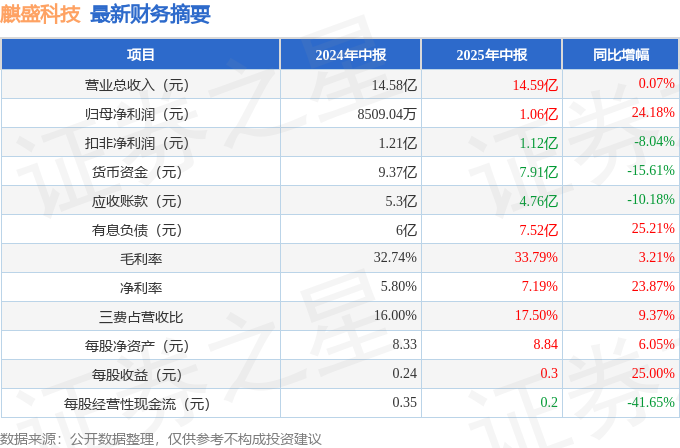
麒盛科技2025年中报简析:营收净利润同比双双增长,盈利能力上升
Zheng Quan Zhi Xing· 2025-08-23 22:58
Core Insights - The company reported a slight increase in total revenue for the first half of 2025, reaching 1.459 billion yuan, a year-on-year growth of 0.07% [1] - The net profit attributable to shareholders increased significantly by 24.18% to 106 million yuan [1] - The company's profitability improved, with a gross margin increase of 2.66% and a net margin increase of 23.87% [1] Financial Performance - Total revenue for Q2 2025 was 673 million yuan, a decrease of 4.22% year-on-year [1] - Q2 net profit attributable to shareholders was 61.18 million yuan, up 52.36% year-on-year [1] - The gross margin for the reporting period was 33.79%, an increase of 3.21% year-on-year, while the net margin was 7.19%, up 23.87% [1] Expense Analysis - Total selling, administrative, and financial expenses amounted to 255 million yuan, accounting for 17.5% of revenue, an increase of 9.37% year-on-year [1] - The company’s cash flow per share decreased by 41.65% to 0.2 yuan [1] Balance Sheet Highlights - Cash and cash equivalents decreased by 15.61% to 1.791 billion yuan [1] - Accounts receivable decreased by 10.18% to 476 million yuan [1] - Interest-bearing debt increased by 25.21% to 752 million yuan [1] Operational Insights - The company’s return on invested capital (ROIC) was 3.92%, indicating weak capital returns [4] - The historical median ROIC since listing is 9.9%, with the worst year being 2022 at 0.63% [4] - The company relies heavily on research and marketing for its performance, necessitating a deeper analysis of these drivers [4] Cash Flow Dynamics - Net cash flow from operating activities decreased by 42.55% due to the completion of a construction project and the return of a guarantee deposit [3] - Financing activities saw a significant increase in cash flow, up 126.71%, attributed to increased bank loans and reduced equity distribution [3]

订单横“扫”全球!已排单到年底!什么这么火
Huan Qiu Wang· 2025-08-22 12:38
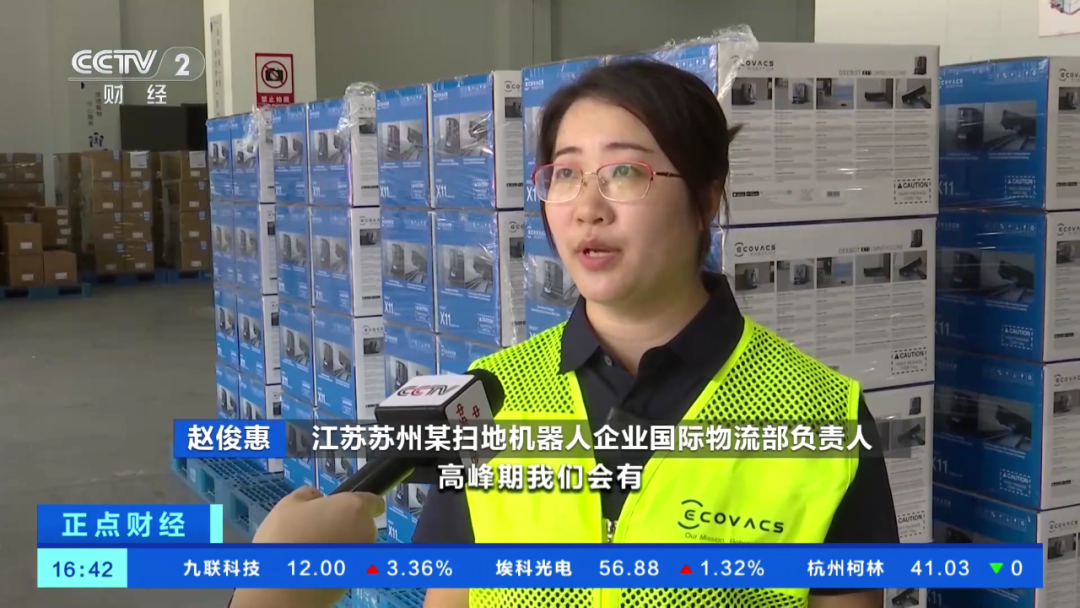
Core Insights - China is a major production base for robotic vacuum cleaners, with a significant increase in export orders this year, particularly during the peak production season [1][3] - The "National Subsidy" policy has stimulated market demand, leading to a notable increase in sales of robotic vacuum cleaners [7][9] Group 1: Export Market Dynamics - A robotic vacuum cleaner company in Suzhou is experiencing a surge in export orders, with an average of 30 containers shipped daily during peak periods [3] - The company has expanded production capacity and introduced automation to meet the growing demand, reducing the average production cycle from 40 days to 30 days [5] - The European market remains a key focus, with exports to this region seeing over 100% growth [5] Group 2: Domestic Market Growth - From January to July, Suzhou exported a total of 55.88 million home appliances, including robotic vacuum cleaners, marking a 4.2% year-on-year increase [7] - Domestic sales of robotic vacuum cleaners reached 10.6 billion yuan from January to July, reflecting a 40% year-on-year growth [9] Group 3: Technological Advancements - The rapid development of AI algorithms and the localization of core components have accelerated the iteration speed of robotic vacuum cleaners [11][13] - Companies are focusing on enhancing cleaning technology, human-machine interaction, and environmental perception to shorten R&D cycles [13][14] - New technologies, such as self-cleaning rollers and advanced sensors, are being integrated into products to improve performance [13][14]
大疆入局扫地机 科沃斯和石头反向出牌
经济观察报· 2025-08-22 08:35
Core Viewpoint - The article contrasts the strategic approaches of two major players in the smart cleaning industry, Ecovacs and Roborock, highlighting Roborock's aggressive market expansion versus Ecovacs' cautious profit-oriented strategy [2][5]. Group 1: Company Performance - As of mid-2025, Roborock's revenue surged approximately 79% to 7.9 billion, narrowing the revenue gap with Ecovacs, which reported mid-term revenue of 8.7 billion [2]. - Roborock's profit declined over 40% year-on-year, with negative operating cash flow of -0.823 billion, marking its worst performance in six years [2][3]. - Ecovacs experienced nearly fivefold growth in operating cash flow year-on-year, with total profit almost double that of Roborock [2]. Group 2: Strategic Approaches - Roborock has been focusing on aggressive market capture, leading to a significant increase in sales expenses, which rose 145% year-on-year to 2.165 billion, while overall operating costs increased by 115% [5]. - In contrast, Ecovacs maintained a more conservative approach, with its R&D and management expenses growing at a rate lower than revenue growth, resulting in a slight increase in overall gross margin to 49.7% [5][6]. - Roborock's shift towards a direct sales model and increased marketing costs have contributed to its declining gross margin, which fell from 53.8% to 44.6% [5][6]. Group 3: Market Dynamics - Roborock's market share surpassed Ecovacs for the first time in 2024, reaching 19.3%, while Ecovacs held 13.6% [6]. - The top five global brands in the vacuum cleaner market saw their combined market share increase from 59.9% to 63.4% within a year, with Chinese brands benefiting from government subsidies [6]. - Investor sentiment appears to favor Roborock's aggressive growth strategy, as evidenced by a 24.5% increase in its stock price following its mid-year report, while Ecovacs' stock price slightly declined [7][8].



广清产业协同发展中心揭牌运营
Nan Fang Ri Bao Wang Luo Ban· 2025-08-22 08:05
Group 1 - The establishment of the Guangqing Industrial Collaborative Development Center and the Qingcheng Huangpu Collaborative Innovation Center aims to promote the low-altitude economy and regional coordinated development through a cross-regional platform [1] - The "Guangqing Integrated Development Front" has been set up in Guangzhou, integrating 22 incubators, agricultural product exhibition platforms, and talent stations to facilitate efficient resource flow [1] - The "reverse enclave" model will leverage Guangzhou's technological advantages and Qingyuan's spatial and cost advantages to create a synergistic effect, enhancing both regions' industrial capabilities [1] Group 2 - The low-altitude economy is at a critical juncture of technological maturity and application explosion, with significant growth expected in drone logistics, urban air traffic, and low-altitude tourism over the next 3-5 years [2] - The Guangqing Industrial Park has developed a "3+2" industrial system, focusing on smart home, automotive parts, new materials, and modern agricultural biotechnology, with a total industrial output value nearing 1200 billion [2] - The automotive parts industry accounts for nearly 30% of the industrial output value in the Guangqing Industrial Park, creating a "2-hour supply chain ecosystem" with major manufacturers [2] Group 3 - The low-altitude economy is recognized as a strategic emerging industry, with plans to support automotive parts companies in transitioning to low-altitude equipment production [3] - The development of applications such as drone logistics and aerial tourism will be driven by the ecological, agricultural, and tourism resources in Qingyuan, forming a dual-driven model of "manufacturing + services" [3]
福州爱购控股递交赴美上市招股书,拟纳斯达克上市
Sou Hu Cai Jing· 2025-08-22 07:49
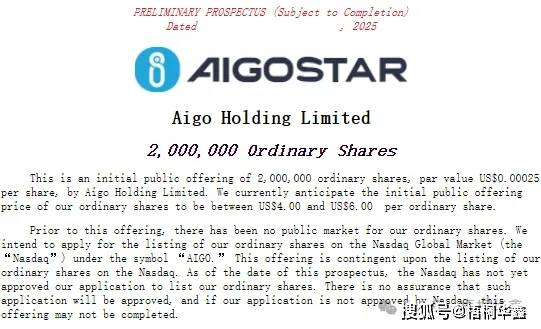
Core Viewpoint - Aigo Holding Limited has filed for an IPO with the SEC, aiming to raise between $8 million and $12 million by offering 2 million ADS at a price range of $4 to $6 per share [1]. Company Overview - Aigo Holding operates through its domestic entity, Fuzhou Patriot Star Optoelectronics Technology Co., Ltd., and has developed a diversified product matrix covering LED lighting, smart home products, small household appliances, and pet supplies [4]. - The core brand, AIGOSTAR, focuses on lighting and smart home solutions, contributing over 30% of the group's sales with more than 6,000 SKUs [4]. - The subsidiary brand, NOBLEZA, specializes in pet supplies and has maintained a compound annual growth rate of over 30% for the past three years, making it the fastest-growing segment [4]. Market Strategy - Aigo Holding has established a strategic network with a focus on Europe, having set up six subsidiaries in countries like Spain and Italy, covering over 20,000 offline stores across more than ten countries [4]. - The company has generated €75 million in sales in 2023 through its "free boutique store upgrade plan" in emerging markets such as Mexico and Ghana, leveraging a model that combines deep offline channel development with online platform expansion [4]. Financial Performance - For the fiscal years ending December 31, 2023 and 2024, the company projects revenues of €151.19 million and €177.78 million, respectively, with corresponding net profits of €5.7 million and €3.69 million [7][8]. - The gross profit for the same periods is expected to be €75.44 million and €85.94 million, while total operating expenses are projected at €72.91 million and €78.94 million [8].
大疆入局扫地机 科沃斯和石头反向出牌
Jing Ji Guan Cha Wang· 2025-08-22 07:37
Core Viewpoint - DJI's entry into the smart cleaning market with its first robot vacuum, ROMO, intensifies competition against existing players like Ecovacs and Roborock, who have adopted contrasting strategies in their market approaches [1] Company Strategies - Ecovacs adopts a cautious expansion strategy focused on profit retention, while Roborock prioritizes revenue growth over profitability to capture market share [1][2] - Roborock's strategy has led to a significant increase in revenue, with a 79% year-on-year growth to 7.9 billion yuan, narrowing the revenue gap with Ecovacs to the lowest level in history [1] Financial Performance - Roborock's profit has declined by over 40%, with negative operating cash flow of -0.823 billion yuan, marking its worst performance in six years [1] - In contrast, Ecovacs' operating cash flow has increased nearly fivefold, with total profit almost double that of Roborock [1] Cost Management - Roborock's sales expenses surged by 145% to 2.165 billion yuan, significantly impacting its profitability, while Ecovacs managed to keep its cost growth below revenue growth [3] - Ecovacs' overall gross margin slightly increased to 49.7%, while Roborock's gross margin fell sharply from 53.8% to 44.6% [3][4] Market Dynamics - Roborock's entry into the floor washing machine market has contributed to its revenue growth but has also diluted its overall gross margin due to lower margins in that segment [4] - In 2024, Roborock's revenue from floor washing machines is expected to grow nearly 100%, while its robot vacuum revenue is projected to increase by about 34% [4] Market Share and Investor Sentiment - Roborock surpassed Ecovacs in global shipments in 2024, achieving a market share of 19.3% in Q1 2025, while Ecovacs held 13.6% [4] - Despite Ecovacs showing positive growth in multiple profit indicators, investors seem to favor Roborock's aggressive growth strategy, as evidenced by a 24.5 yuan increase in its stock price shortly after its earnings report [5]
漫柏集团&TCL跨界融合新探索
Jin Tou Wang· 2025-08-22 07:17
Core Insights - The strategic partnership between Manbo Group and TCL aims to integrate smart technology with community living, creating a new paradigm for intelligent rental living [1][2] - Manbo Group positions itself as a leader in the rental industry, focusing on sustainable community development for urban youth [1][2] Group 1: Strategic Collaboration - The collaboration is founded on a shared vision of "bravery and excellence," with both companies committed to enhancing community living through technology [2] - Manbo Group's president emphasized the goal of creating a nurturing environment for dreams, while TCL aims to transition from a product provider to a life partner [2][3] - The partnership will leverage TCL's comprehensive smart technology products and Manbo's community management expertise to enhance user experience and community warmth [2][3] Group 2: Technological Empowerment - TCL is transitioning from a hardware manufacturer to a comprehensive ecosystem creator, focusing on smart solutions across various sectors [3] - The introduction of a "B2B full-scene solution" will utilize TCL's display technology to create a smart IoT ecosystem, enhancing digital management and operational efficiency in rental properties [3] - The collaboration aims to establish a fully integrated "smart community" that combines community management, efficient services, and data insights [3] Group 3: Human-Centric Approach - Manbo Group has evolved from a housing provider to an ecosystem creator, focusing on the real needs of individuals and sustainable community development [4] - The company aims to expand its community ecosystem by integrating high-quality services and addressing the diverse needs of urban youth [4][6] - The partnership with TCL is expected to enhance the living quality and happiness of residents, aligning with national green development goals [6]
