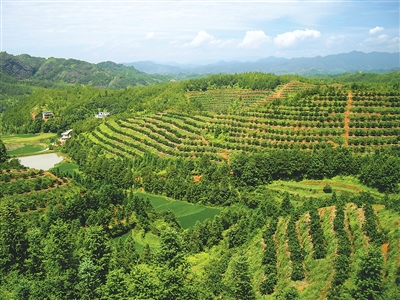
水果种植

Search documents
山海不为远,相知情更浓
Ren Min Ri Bao Hai Wai Ban· 2025-08-20 01:33
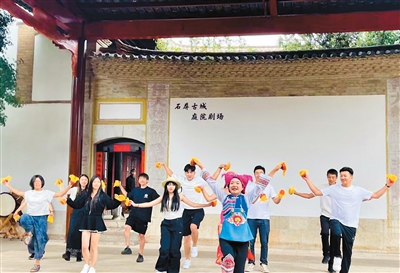
Group 1: Cultural Exchange and Tourism - The event "情牵两岸·滇台同行" involved 25 media representatives from Taiwan visiting Yunnan to experience local culture and development [4][5][6] - The traditional dish "过桥米线" from Mengzi has been recognized as a national intangible cultural heritage, balancing traditional techniques with standardized production [5] - The unique pottery-making techniques of Jianshui and the traditional tofu-making process in Shiping were highlighted as significant cultural experiences for the participants [5][6] Group 2: Agricultural Development - Yunnan is a major blueberry production area, contributing approximately 30% of China's total blueberry output, with a planting area exceeding 1.1 million acres nationwide [7] - Mengzi's blueberry industry has a total output value exceeding 3 billion yuan, benefiting over 20,000 local households through innovative agricultural models [7] - The "622" model for revenue sharing in blueberry farming has been successfully implemented, enhancing local farmers' incomes significantly [7] Group 3: Cultural Heritage and Education - The visit to the Confucian Temple in Jianshui allowed participants to engage with traditional Chinese culture, emphasizing the importance of cultural preservation [8] - The performance of traditional Yi ethnic dances and songs showcased the vibrant living culture, encouraging participants to appreciate and promote cultural exchange [9] - The event aimed to strengthen ties between Taiwan and mainland China, fostering mutual understanding and cultural appreciation among the youth [9]

厄瓜多尔:收获麒麟果
Xin Hua Wang· 2025-08-20 01:13
Core Insights - The article highlights that kiwifruit is originally from South America, with Ecuador being a significant producer and exporter to markets in Europe, America, and Asia, including China [1] Industry Overview - Kiwifruit production is concentrated in Ecuador, which plays a crucial role in the global supply chain for this fruit [1] - The fruit is in demand across various international markets, indicating a strong export potential for Ecuadorian kiwifruit [1]
江西安远打造“赣南脐橙”超级IP 推动脐橙产业融合发展
Zhong Guo Xin Wen Wang· 2025-08-19 19:14
Core Viewpoint - The launch of the animated series "Orange Prince" aims to combine the ecological value and cultural significance of Gannan navel oranges, promoting local economic development [1][3]. Group 1: Project Overview - "Orange Prince" is a large-scale 3D family-friendly animated series consisting of 52 episodes, primarily targeting children and teenagers, integrating the Gannan navel orange industry and local history and culture [3]. - The series is a collaboration between the Anyuan County government and Kungfu Animation Co., Ltd. [3]. Group 2: Economic Impact - Anyuan County is a traditional agricultural area and the core production region for Gannan navel oranges, with approximately 70% of the region's oranges distributed through the China Supply and Marketing Gannan Navel Orange Trading Center [3]. - The county has established itself as the largest distribution center for Gannan navel oranges in China [3]. Group 3: Industry Development - The creation of the "Orange Prince" IP allows for the integration of traditional orange production with cultural industries, while also extending the orange industry into digital and tourism sectors [3]. - Initiatives include the implementation of an IoT project for fruit production and the establishment of a digital service management system for the entire orange industry chain, with 12 smart orchard bases already built [3]. - By the end of 2024, the county plans to create 21 demonstration parks that integrate fruit and tourism, expecting to receive over 50,000 visitors [3]. Group 4: Market Expansion - With the transformation and upgrading of the orange industry in Anyuan County, Gannan navel oranges have penetrated major domestic markets and are also exported to countries such as Russia, Kazakhstan, Singapore, Malaysia, and Indonesia [4].

苹果产业日报-20250819
Rui Da Qi Huo· 2025-08-19 08:58
Report Industry Investment Rating - Not provided Core View of the Report - The old - crop inventory is low with little sales pressure, and transactions are priced according to quality, with the overall shipment speed slowing down. The supply of paper - bag Gala apples in the western region is increasing, and high - quality fruits are sold at high prices. Overall, the low spot inventory strongly supports prices, but as the listing volume of Gala apples gradually increases in the future, it may restrain the price increase rhythm. It is recommended to wait and see for now [2] Summary by Related Catalogs Futures Market - The closing price of the October apple contract is 8150 yuan/ton, a decrease of 80 yuan/ton; the position of the main contract is 83,632 hands, an increase of 475 hands; the number of warehouse receipts is 1200, a decrease of 3533; the net long position of the top 20 futures holders is 0 hands [2] Spot Market - The spot price of apples in Shandong Yantai Qixia (paper - bag 80 and above) is 4 yuan/jin; in Gansu Jingning (paper - bag 75 and above, second - grade fruit farmer's goods) is 2.3 yuan/jin; in Shandong Yiyuan (paper - bag 75 and above) is 4 yuan/jin; in Shaanxi Luochuan (paper - bag 70 and above semi - commodity) is 4 yuan/jin [2] Upstream Situation - The annual national apple output is 5128.51 million tons; the weekly apple wholesale price is 168.34 yuan/kg, a decrease of 0.06 yuan/kg; the weekly average wholesale price of Fuji apples is not given a change value [2] Industry Situation - The national total apple cold - storage inventory is 9.69 million tons, a decrease of 7.38 million tons; the Shandong apple storage capacity ratio is 46.01%, a decrease of 0.03%; the Shaanxi apple storage capacity ratio is 0.02%, no change; the monthly apple export volume is 50,000 tons, an increase of 10,000 tons; the monthly apple export value is 6328.4 million US dollars, a decrease of 212,886 million US dollars; the monthly import value of fresh and dried fruits and nuts is 1742602 million US dollars, a decrease of 212886 million US dollars; the weekly profit of first - and second - grade paper - bag 80 apple storage merchants is 0.4 yuan/jin, a decrease of 0.1 yuan/jin [2] Downstream Situation - The weekly average wholesale price of tangerines is 10.11 yuan/kg, a decrease of 0.14 yuan/kg; the weekly banana wholesale price is 3.58 yuan/kg, a decrease of 0.15 yuan/kg; the weekly watermelon wholesale price is 5.88 yuan/kg, a decrease of 0.04 yuan/kg; the early - morning average daily arrival of trucks at the Guangdong Jiangmen wholesale market is 7.6 vehicles, a decrease of 0.8 vehicles; at the Guangdong Xiaqiao wholesale market is 9.6 vehicles, a decrease of 1.4 vehicles; at the Guangdong Chalong wholesale market is 15 vehicles, a decrease of 1 vehicle [2] Option Market - The implied volatility of at - the - money call options for apples is 18.98%, an increase of 0.39%; the implied volatility of at - the - money put options for apples is 18.98%, an increase of 0.39% [2]
老祖宗看不上的水果,如今成了顶流
Hu Xiu· 2025-08-19 08:08
Core Insights - The article discusses the evolution of fruit consumption in China, highlighting the transition from a luxury item for the elite to a staple in everyday life, driven by advancements in agricultural technology and changes in consumer preferences [1][6]. Historical Context - In ancient China, fruits like jujubes and chestnuts were considered "survival carbohydrates," valued for their high energy content and storability, unlike modern fruits that are more commonly consumed today [2][4]. - Fruits were not a central part of the diet in ancient China due to their perishability and lack of reliable transportation, making them less practical compared to grains and vegetables [4][6]. - The concept of "identity fruits," such as lychees and cherries, emerged as symbols of status among the elite, contrasting with the more utilitarian view of fruits held by the general populace [4][5]. Modern Developments - China has become the world's largest fruit producer, accounting for approximately one-third of global production, with a reported output of 240 million tons in 2023, a 35.5-fold increase since 1978 [8]. - The rise in fruit consumption has led to higher consumer expectations for quality, with a growing demand for "super fruits" that offer health benefits beyond basic nutrition [9][10]. - The article emphasizes that while some super fruits have unique nutritional profiles, their popularity is largely driven by emotional and sensory satisfaction rather than just nutritional superiority [10][11]. Challenges and Opportunities - Despite advancements, there are still challenges in ensuring that high-quality fruits reach consumers, particularly in terms of storage and transportation [13][20]. - The article notes that the gap between breeding high-quality fruits and making them available to consumers remains a significant hurdle for the industry [13][18]. - The future of achieving "fruit freedom," or the ability to access a wide variety of fruits year-round, hinges on improvements in logistics and cold chain technology [20][19]. Consumer Trends - There is a noticeable shift in consumer preferences towards sweeter and more visually appealing fruits, driven by modern breeding techniques that prioritize size and sweetness [39][40]. - The article highlights the importance of understanding the impact of origin on fruit quality and flavor, as different growing conditions can significantly affect the taste [35][36].
合工大学子“三下乡”:从阳山水蜜桃看“归雁经济”路
Zhong Guo Shi Pin Wang· 2025-08-19 04:02
Core Insights - The research team from Hefei University of Technology conducted a field study on the Afu fruit tree planting family farm in Beishan Village, Langxi County, Anhui Province, focusing on how returning entrepreneurs transform their planting experience into a "returning goose economy" and enhance agricultural product value through modern distribution methods [1][3] - The Afu fruit tree farm, established in 2020 by returning entrepreneur Li Yongfu, has successfully developed a peach picking garden that sells its products nationwide, becoming a significant driver for rural revitalization in Beishan Village [1][2] Group 1 - The farm spans 60 acres and employs specific techniques to ensure the quality of the peaches, such as using light yellow fruit bags to protect against pests and sunburn [1] - To maintain freshness, local farmers start harvesting at dawn, ensuring that peaches are packed within two hours of picking, with peak harvest occurring in July and August [1] - The peaches are graded by size, with over half weighing more than 500 grams, and the market price for large peaches reaches 20 yuan each, making them competitive in the fruit market [1] Group 2 - Li Yongfu, aged 58, has over 20 years of experience in peach cultivation and has successfully leveraged online marketing and logistics to expand his customer base, receiving 200-300 orders daily from cities like Shenzhen and Guangzhou [2] - The farm's operational model includes early morning harvesting, sorting, packing by noon, and shipping via cold chain logistics to ensure timely delivery to urban markets [2] - The study highlights the importance of returning talent in rural revitalization, emphasizing that the key to success lies in attracting skilled individuals back to their hometowns to foster local development [3]
诚邀采购商现场面谈!黔东南州特产跨越山海,与您相约佛山
Nan Fang Nong Cun Bao· 2025-08-18 03:05
Core Viewpoint - The article highlights the upcoming promotional event for Guizhou's Qiandongnan Prefecture's blueberries and passion fruits in Foshan, aimed at expanding agricultural market reach and enhancing product value chains in the Guangdong-Hong Kong-Macao Greater Bay Area [47][49]. Group 1: Event Details - The promotional event will take place on August 21, 2025, at the Crowne Plaza Hotel in Foshan, Guangdong [48][51]. - The event will feature major blueberry and passion fruit enterprises from Qiandongnan, along with various other local products such as sour soup hotpot, herbal medicine, and tea [10][11]. - Qiandongnan Prefecture promises full coordination services to ensure smooth cooperation during the event [12]. Group 2: Agricultural Production and Economic Impact - Qiandongnan's passion fruit benefits from a unique climate, with an average of 128 days of cloud cover annually, leading to high sugar content in the fruit, reaching over 18% soluble solids [17][20]. - The area has 20,000 acres dedicated to passion fruit cultivation, with an expected total yield of 20,000 tons and a projected output value exceeding 320 million yuan [28][29]. - The "cooperative + farmer" model has successfully scaled up passion fruit production, significantly contributing to rural revitalization and income stability for thousands of families [32][33]. Group 3: Future Projections - By the end of 2024, Qiandongnan aims to have over 1 million acres of fruit orchards, with total fresh fruit production exceeding 1.3 million tons and a total output value surpassing 9 billion yuan [36][37]. - The region is focusing on integrating agriculture with leisure experiences and enhancing the ecological cycle through combined planting and breeding practices [38][39].

现代科技农业设施激活农业发展“新引擎” 特色产业展现蓬勃发展图景
Yang Shi Wang· 2025-08-18 03:03
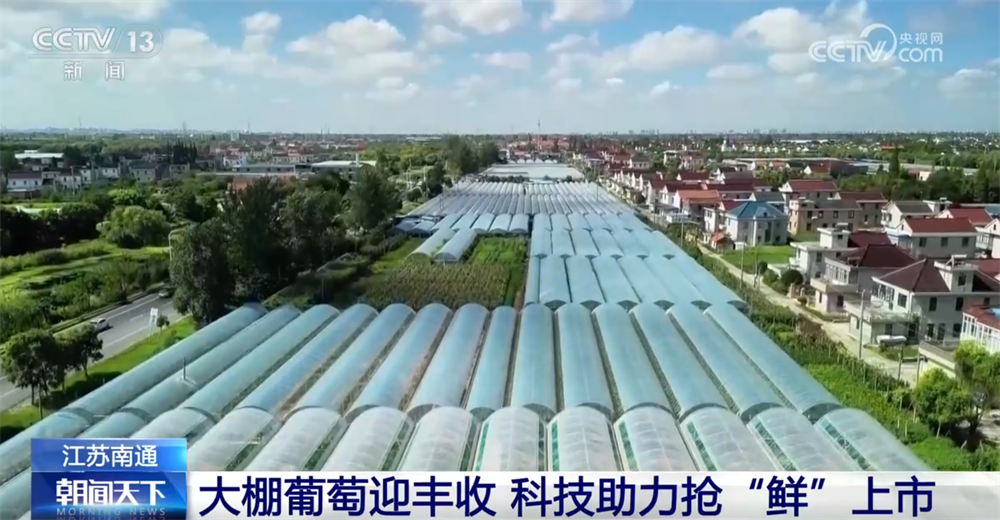
目前,当地的葡萄种植面积达1.3万亩,年产量超2万吨。这些葡萄不仅供应本地市场,还畅销上海、苏州等长三角周边城市。 葡萄种植大户黄辉称:"每亩差不多三四千斤的产量,产值五六万元左右。" 葡萄种植大户曹海忠称:"我们增加了补光灯,通过补光灯能解决一个光合作用的问题。" 种植户通过手机就能掌握各类数据,精准控制棚内空气、土壤的温湿度。而这套自动水肥一体化系统保障了葡萄茁壮成长。 央视网消息:最近一段时间,位于江苏南通通州区的2000多亩大棚葡萄迎来丰收季,在现代科技农业设施的助力下这些葡萄长势良好,目 前正陆续上市。 在南通通州区二甲镇,一座座智慧温室整齐排列。它们不仅能为葡萄生长遮风挡雨,还能精准调控棚内的温度、湿度和光照。 ...
初秋时节各地特色瓜果集中上市 助力果农增产增收
Yang Guang Wang· 2025-08-18 01:24
Group 1 - The fruit harvest season is in full swing across various regions, leading to a diverse selection of fruits available for consumers [1][2] - In Henan's Anyang, apple orchards are thriving with four varieties, including Gala and Ruli, with two already ripe and two more expected to mature in 20 days [1] - In Anhui's Lujiang County, peach orchards are experiencing high demand, with farmers processing and shipping hundreds of boxes daily [2] Group 2 - In Xinjiang's Turpan, grape growers are busy selling fresh grapes nationwide, with 70-80% of their produce sold fresh and the remainder dried into raisins [3] - The local airport in Korla has developed tailored transportation solutions for various fruits, having shipped over 1,000 tons of local specialties like Hami melons and winter jujubes since the start of the harvest season [3] - The peach industry in Meijie Town is boosting local economies, employing around 50 workers and providing annual income increases of 3,000 to 20,000 yuan per person [2]
到了收获的季节,满山都是“黄澄澄”(山水间的财富密码②)
Ren Min Ri Bao Hai Wai Ban· 2025-08-17 23:28
Core Viewpoint - The transformation of barren mountains in Xingguo County, Jiangxi Province, into an ecological navel orange industry base demonstrates effective ecological governance and rural revitalization, benefiting local communities and enhancing environmental sustainability [2][4]. Group 1: Environmental Transformation - Xingguo County faced severe soil erosion and land degradation, with over 1,899 square kilometers affected, accounting for more than half of the county's total area of 3,215 square kilometers [5][6]. - The implementation of the "Mountain Water Project" in 2017 initiated five major ecological construction projects aimed at soil erosion control and land improvement, leading to a significant increase in vegetation coverage from 28.8% to 84.6% [7]. Group 2: Agricultural Development - Liu Yao, a young entrepreneur, successfully transformed barren land into a thriving navel orange orchard, leveraging agricultural knowledge and community support to establish a cooperative that now includes over 1,000 acres of land [6][9]. - The cooperative has provided over 2,000 seedlings to more than 100 local farmers and organized over 20 training sessions on agricultural techniques, contributing to the poverty alleviation of 75 households and improving the livelihoods of over 1,000 individuals [10]. Group 3: Future Plans and Innovations - Liu Yao aims to enhance the brand and market reach of the navel oranges through e-commerce and has successfully obtained export qualifications for the products [11]. - The orchard plans to host various cultural and tourism events, such as music festivals and fruit-picking activities, to further promote rural tourism and community engagement [11].