
居民服务

Search documents
三部门官宣:有奖发票来了!
Sou Hu Cai Jing· 2026-01-01 12:58
Core Viewpoint - The Ministry of Finance, Ministry of Commerce, and State Taxation Administration have jointly issued a notice to launch a pilot program for prize invoices to stimulate consumer demand and enhance consumption vitality [1] Group 1: Pilot Program Details - The pilot program will involve organizing a lottery for consumers who obtain invoices for purchased goods and services [1] - The sectors included in the program are retail, catering, accommodation, cultural arts, entertainment, tourism, sports, and residential services [1] - Trial cities will determine the minimum invoice amount for winning tickets (not less than 100 yuan), the winning ratio, and prize settings [1] Group 2: Prize and Funding Structure - The maximum prize amount for a single invoice will generally not exceed 800 yuan [1] - Central finance will allocate prize funds to trial cities based on tiers: up to 300 million yuan for super-large cities, up to 200 million yuan for large cities, and up to 100 million yuan for other cities [1] - The implementation period for this initiative is set for six months, targeting around 50 trial cities [1]
@居民,记得抽奖!三部门发布通知→
新华网财经· 2026-01-01 08:04
Core Viewpoint - The Ministry of Finance, Ministry of Commerce, and State Taxation Administration announced a pilot program for prize invoices in approximately 50 cities to stimulate consumer demand and unleash consumption potential, with a policy implementation period of six months [1]. Group 1: Pilot Program Details - The pilot program allows individual consumers to participate in a lottery by obtaining invoices for purchases made in retail, catering, accommodation, cultural arts, entertainment, tourism, sports, and residential services, provided the invoice amount exceeds a certain threshold [3]. - The program focuses on stimulating demand by encouraging residents to consume and participate in the lottery after obtaining invoices, covering essential daily consumption scenarios such as shopping, dining out, travel accommodation, cultural and sports activities, and life services [3]. - The pilot cities eligible for application include municipal-level cities and above, such as direct-controlled municipalities, separately planned cities, provincial capitals, and prefecture-level cities [3]. Group 2: Implementation and Funding - The central government will allocate prize funding to the pilot cities based on a tiered arrangement [3]. - Pilot cities are required to develop implementation plans that specify the scope of prize invoices, participation methods, winning rules, prize settings, redemption methods, and reporting of illegal activities, which must be publicly announced [3]. - Consumers are encouraged to pay attention to announcements from pilot cities and actively participate according to the specific requirements of the prize invoice activities [3].


刚刚,利好来了!三部门联合发布
Zhong Guo Ji Jin Bao· 2026-01-01 06:50
来源:新华社、财政部经济建设司 三部门将支持50个左右城市开展有奖发票试点 财政部、商务部、国家税务总局2025年12月31日对外发布通知称,为进一步激发消费需求,释放消费潜 力,三部门将支持50个左右城市开展有奖发票试点工作,政策实施期为6个月。 通知称,试点城市对个人消费者以本人名义向零售、餐饮、住宿、文化艺术、娱乐、旅游、体育、居民 服务业等行业的经营主体购买商品和服务,且取得的票面金额在一定额度以上的发票组织抽奖。 一、政策目标 (一)政策目标。按照党中央、国务院关于大力提振消费的决策部署,支持试点城市结合当地消费形势 及工作基础,探索开展有奖发票活动,进一步提高消费者积极性,激发零售、餐饮、住宿、文化艺术、 娱乐、旅游、体育、居民服务业等领域消费潜力,为巩固拓展经济稳中向好势头提供有力支撑。 (二)支持范围。试点城市申报范围为地市级及以上城市(包括直辖市,计划单列市,各省、自治区省 会或首府城市,地级市、州、盟)。支持50个左右城市开展试点工作,主要向人口基数大、带动作用 强、发展潜力好的城市倾斜,同时兼顾地区间政策平衡。政策实施期为6个月。 财政部、商务部、国家税务总局有关负责人介绍,此次出台的有 ...
财政部、商务部、税务总局联合开展有奖发票试点工作
Xin Lang Cai Jing· 2026-01-01 05:24
来源:财政部 关于开展有奖发票试点工作的通知 财建〔2025〕484号 各省、自治区、直辖市、计划单列市财政厅(局)、商务主管部门、税务局: 为深入贯彻落实党中央、国务院有关决策部署,落实《提振消费专项行动方案》相关要求,进一步激发 消费需求,释放消费潜力,财政部、商务部、税务总局决定开展有奖发票试点工作。现将有关事项通知 如下: 申报材料要行文简洁、逻辑清晰、数据详实、支撑有力,不得印制豪华材料。各地不得委托商务、财 政、税务主管部门及其所属行政、企事业单位和工作人员以任何方式(署名或者不署名)参与项目的实 施方案编制等申报工作,如有违反,一经查实,取消项目申报资格,已经通过竞争性评审入围的取消入 围资格,已经获得相关资金支持的将资金予以收回。 (二)评审确定试点。省级商务、财政、税务主管部门通过竞争性评审的方式择优确定本省份试点城市 推荐名单。各省(自治区)可推荐1个城市参加试点。居民消费支出排名前12名的省、自治区可额外推 荐1个城市,居民消费支出排名前3名的可额外推荐2个城市。直辖市、计划单列市(不占所在省份名 额)单独申报。各省级商务、财政、税务主管部门应于2026年1月9日前将加盖公章的试点城市推 ...
第十三届天下贵州人 年度盛典举行
Xin Lang Cai Jing· 2025-12-31 21:06
Core Insights - The event "The 13th Annual Gathering of Guizhou People" was held to discuss cooperation and development opportunities, with nearly 200 representatives from business associations and enterprises attending [1][2] - The theme of the event was "Integrating New Opportunities, Serving a New Future," focusing on building a modern industrial system in Guiyang and Guian [1] Group 1: Industrial Development - Guiyang and Guian aim to strengthen six major industrial clusters, including a 300 billion-level digital intelligence industry cluster and a 200 billion-level quality mineral processing industry cluster [1] - The plan includes developing 1 billion-level advanced equipment, new energy materials, and specialty light industry clusters, along with a 500 billion-level emerging and future industry cluster [1] Group 2: Service Industry Focus - The region will focus on both productive and life service industries, promoting sectors such as modern logistics, financial services, and cultural tourism [2] - A platform for showcasing and connecting businesses was established during the event, highlighting the commitment to high-quality development in the modern service industry [2]
三部门将支持50个左右城市开展有奖发票试点
Xin Hua Wang· 2025-12-31 12:25
Group 1 - The core idea of the announcement is to stimulate consumer demand and unleash consumption potential by implementing a prize invoice pilot program in approximately 50 cities for a duration of 6 months [1] - The pilot program will allow individual consumers to participate in a lottery by obtaining invoices for purchases made in various sectors such as retail, dining, accommodation, cultural arts, entertainment, tourism, sports, and residential services, provided the invoice amount exceeds a certain threshold [1] - The pilot policy focuses on everyday consumption scenarios closely related to residents' daily lives, including shopping, dining out, travel accommodation, cultural and sports activities, and life services [1] Group 2 - The pilot cities are required to develop implementation plans that specify the scope of the prize invoice program, participation methods, winning rules, prize settings, redemption methods, and reporting of illegal activities, which will be made public [2] - Consumers are encouraged to pay attention to announcements from the pilot cities and actively participate according to the specific requirements of the prize invoice activities [2]
财政部、商务部、税务总局有关负责人就《关于开展有奖发票试点工作的通知》答记者问
Shang Wu Bu Wang Zhan· 2025-12-31 12:02
为贯彻落实党中央、国务院决策部署,充分发挥财政资金引导带动作用,加大直达消费者的普惠政策力 度,进一步激发消费需求,释放消费活力,财政部、商务部、税务总局联合印发《关于开展有奖发票试 点工作的通知》(以下简称《通知》)。近日,财政部、商务部、税务总局有关负责人就《通知》有关情 况回答了记者提问。 一、2025年以来,国家连续出台提振消费、扩大内需政策举措,此次开展有奖发票试点工作的主要背景 是什么? 答:消费是经济增长的重要引擎,是国内大循环的关键环节,是人民对美好生活需要的直接体现,做好 提振消费工作具有重要意义。党中央、国务院高度重视扩消费工作。 2025年以来,随着一系列扩内需、促消费政策措施落地见效,消费市场总体保持平稳发展态势,消费新 亮点新热点不断涌现。2025年1—11月,社会消费品零售总额45.6万亿元,同比增长4.0%,增速比去年 全年加快0.5个百分点;服务零售额同比增长5.4%,继续保持平稳较快增长。2025年前三季度,最终消 费支出对GDP增长的贡献率达53.5%。 为贯彻落实党中央、国务院决策部署,财政部、商务部、税务总局联合开展有奖发票试点工作,通过对 居民消费取得的发票抽奖,激发 ...
2024年上市公司内部控制质量进一步提高
Shang Hai Zheng Quan Bao· 2025-12-25 19:11
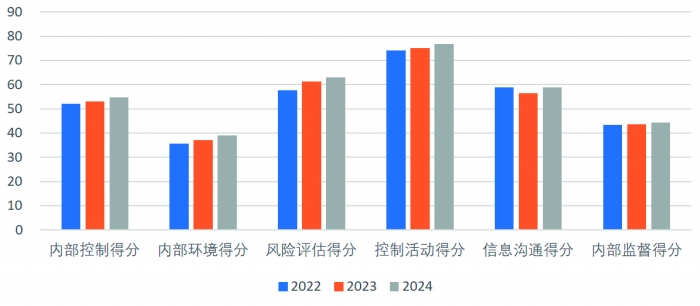
Core Insights - The internal control quality of listed companies in 2024 has improved compared to 2023, with internal environment remaining the weakest aspect that requires further enhancement [4][19] - Companies with financial shared centers, high digital transformation levels, and high-quality new productivity show better internal control levels, while those facing penalties, restatements, or receiving non-standard audit opinions exhibit lower internal control levels [20] Group 1: Overall Internal Control Status - The overall internal control level of listed companies has shown a steady increase from 52.47 in 2022 to 54.75 in 2024 [7] - The distribution of listed companies is concentrated in economically developed regions, with Guangdong, Zhejiang, and Jiangsu having the highest number of listed companies [8] Group 2: Regional Analysis - Internal control index averages vary by region, with Yunnan (58.49), Beijing (56.25), and Hebei (56.60) showing higher scores, while Qinghai (50.42), Hainan (50.33), and Heilongjiang (51.64) are lower [8] - The internal control quality is more balanced in economically developed areas like Beijing, Shanghai, and Guangdong, indicating a mature governance structure [8] Group 3: Industry Analysis - The financial industry maintains a significantly higher internal control quality compared to other sectors, attributed to stringent government regulations [9] - Some service and public sectors have shown notable improvements in internal control levels from 2022 to 2024, while education, construction, and comprehensive industries remain at lower levels [9] Group 4: Financial Shared Services and Digital Transformation - Companies utilizing financial shared services have an internal control index average of 57.76, compared to 54.36 for non-financial shared companies, indicating a clear advantage [10] - Companies with high digital transformation levels have an internal control index average of 55.54, outperforming those with lower levels at 53.98, highlighting the positive impact of digital transformation on internal control quality [11] Group 5: ESG and New Productivity - Companies with high ESG levels have an internal control index that is 4.51 points higher than those with lower ESG levels, particularly in the internal environment dimension [13] - Companies with high new productivity levels demonstrate superior internal control quality across various dimensions compared to those with lower levels [14] Group 6: Penalties and Audit Opinions - Companies that have faced penalties have an internal control index average of 44.45, significantly lower than the 55.06 average of non-penalized companies, with the internal environment being the most affected area [15] - Companies receiving non-standard audit opinions have a notably lower internal control index, with a score of 34.76 in 2024, indicating serious deficiencies in internal control execution [18]
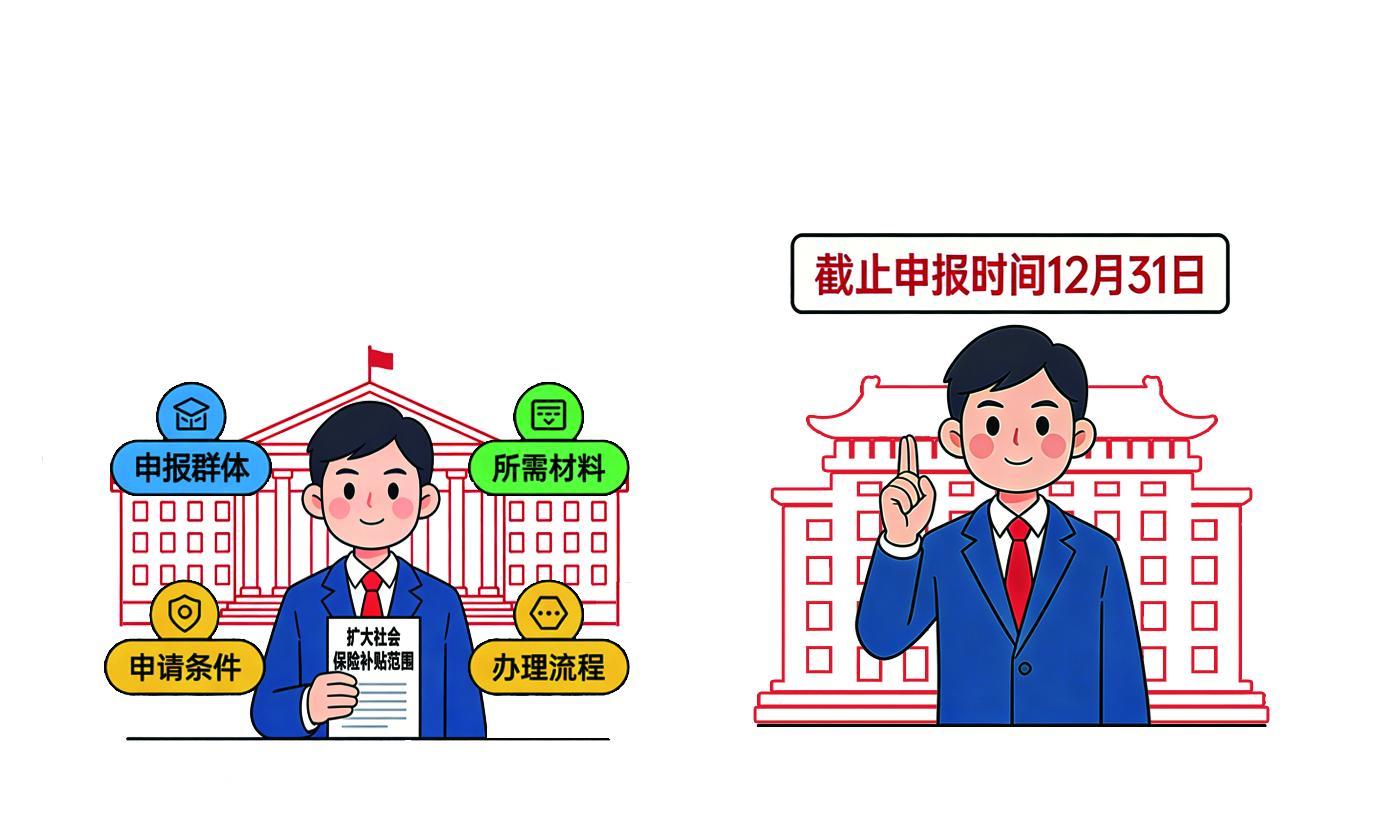
12月31日截止 快来申请重点群体社会保险补贴
Xin Lang Cai Jing· 2025-12-25 17:24
Policy Overview - The Chongqing Human Resources and Social Security Bureau has issued a notification to accelerate the implementation of expanded social insurance subsidy and one-time employment expansion subsidy policies, providing a 25% subsidy on individual social insurance contributions to encourage enterprises to expand employment [2][3] Subsidy Details - The subsidy is targeted at small and medium-sized enterprises in key industries that sign labor contracts for over one year and have made new or continued contributions to basic pension, medical, and unemployment insurance in 2025 [2] - Key industries include manufacturing, information transmission/software and IT services, wholesale and retail, accommodation and catering, leasing and business services, and other services [2] - Key groups eligible for the subsidy include 2025 college graduates, unemployed graduates from 2023 and 2024, individuals registered as unemployed for over six months in 2025, and those monitored for poverty prevention [2] Subsidy Amount - Eligible individuals can receive a monthly subsidy ranging from 115.6 yuan to 577.9 yuan based on their social insurance contribution amounts [2] Application Process - The application deadline for the subsidy is December 31, 2025, with the subsidy period lasting for one year, starting from the month the enterprise makes actual social insurance contributions for the key groups [4] - The subsidy will be disbursed monthly, with the latest payment expected by the end of 2026 [4] Implementation Measures - Chongqing is utilizing big data to establish a dynamic screening mechanism to identify key industries and groups, facilitating a "direct subsidy and quick processing" approach [3] - The policy includes a "one-time certification, subsequent exemption from reporting" system, where enterprises only need to confirm information once, and the system will automatically generate subsidy lists based on monthly insurance data [3] - Local districts are tasked with accurately identifying key groups and ensuring timely insurance contributions and subsidy applications by eligible employees [3][5]
稳中求进、行稳致远的中国宏观经济
2025-12-24 12:57
Summary of Key Points from Conference Call Records Industry Overview - The macroeconomic environment in China for 2025 shows a mix of supply-side strengths and weak domestic demand, with industrial value added expected to grow by 6.0% and retail sales by 4.0%, while fixed asset investment is projected to decline by 2.6% [1][17] - The GDP growth rate for the fourth quarter is anticipated to be 4.4%, leading to an annual GDP growth of 4.9%, slightly below the target of 5% [1][17] - Inflation is expected to be around -1% [1][17] Key Economic Indicators - In November, the total social financing increased by 416.9 billion yuan, driven mainly by corporate bond issuance, while government bond issuance decreased [1][8] - The Consumer Price Index (CPI) rose by 0.7% year-on-year, marking the highest increase of the year, primarily due to rising food prices [1][8] - The Producer Price Index (PPI) fell by 2.2% year-on-year, influenced by a high base from the previous year [1][8] Industrial Performance - In November, industrial production showed a year-on-year increase of 4.8%, with mining, manufacturing, and utilities growing by 6.3%, 4.6%, and 4.3% respectively [2][3] - The manufacturing PMI slightly rebounded to 49.2, indicating a modest recovery in manufacturing activity [11] Investment Trends - Fixed asset investment continued to decline, with a 2.6% year-on-year drop for the first ten months of 2025 [4] - Infrastructure investment saw a slight increase of 0.13%, while real estate investment faced a significant decline of 15.9% [4] Consumer Market Insights - Retail sales in November grew by 1.3% year-on-year, but the growth rate decreased by 1.6 percentage points [5][6] - Online retail sales increased by 9% year-on-year, indicating a shift towards e-commerce [6] Trade Performance - In October, China's total imports and exports reached $549 billion, with exports growing by 5% and imports by 19% [7] - Exports to ASEAN countries surged by 82%, while exports to the U.S. declined by 18% [7] Macroeconomic Challenges - Key challenges include insufficient domestic demand, declining optimism regarding income, and the impact of new consumption policies on prices [14][20] - The government is advised to focus on enhancing traditional industries, expanding effective investment, and improving consumer capacity [15][20] Policy Recommendations - Emphasis on optimizing traditional industries and fostering emerging sectors to enhance industrial quality [15] - Recommendations for fiscal policy include maintaining a reasonable deficit and optimizing expenditure structures to stimulate economic growth [21][40] Future Economic Outlook - The global economic growth rate for 2026 is expected to remain stable at 3.4%, with potential risks from geopolitical tensions and trade uncertainties [18] - The Chinese economy is projected to grow between 4.5% and 5.0% in 2026, with a focus on innovation and deep integration of technology and industry [20][27] Conclusion - The current economic landscape in China reflects a complex interplay of growth opportunities and challenges, necessitating targeted policy interventions to stimulate demand and investment while navigating external uncertainties.