
工业互联网

Search documents
政策密集发力 “工业互联网+AI”融合迈入新阶段
Xin Lang Cai Jing· 2026-01-25 21:22
Group 1 - The integration of AI large models is driving new modes such as platform design, intelligent production, and personalized customization, while open-source AI technologies are lowering the barriers for enterprises to adopt intelligent solutions [1] - For large enterprises, the focus should be on leveraging industrial software to apply AI technologies, while for small and medium-sized enterprises, a "Model as a Service (MaaS)" approach is recommended to reduce the technical challenges of AI adoption [1] - The upgrade of industrial networks is crucial for the deep integration of AI and industry, with a policy goal to promote the transformation of at least 50,000 enterprises by 2028 [1] Group 2 - Future efforts should focus on innovating new industrial networks, building high-quality industrial data sets, and cultivating industrial intelligence, emphasizing real-time, deterministic, and secure network capabilities [2] - The establishment of innovation coalitions in key industries such as automotive and steel is necessary to create valuable industrial data sets and develop a multi-level application system [2] - The development of industrial intelligence should follow a step-by-step approach from device level to enterprise level, enhancing capabilities progressively [2]
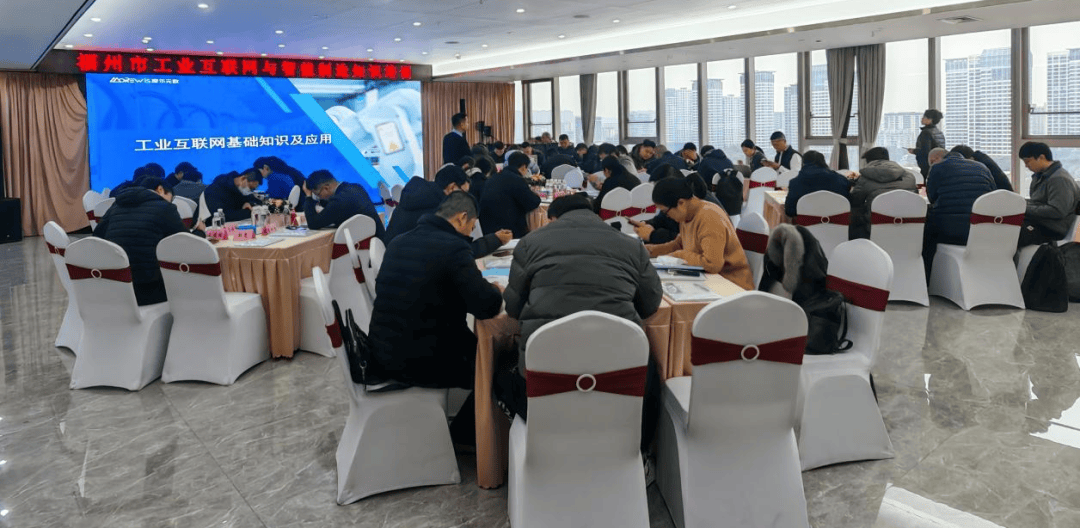
福州市工业互联网与智能制造知识培训成功举办
Sou Hu Cai Jing· 2026-01-25 13:18
Core Insights - The training event focused on industrial internet and smart manufacturing, targeting small and medium-sized enterprises in key industries such as textiles, electronic components, and automotive parts [1] - The innovative "salon workshop" format emphasized interaction, case studies, and practical exercises, moving away from traditional lecture methods [3] Group 1: Training Overview - The training attracted nearly 60 executives, CIOs, and representatives from digital service providers, providing professional guidance for digital transformation [1] - Course content centered on urgent topics like Warehouse Management Systems (WMS) and Manufacturing Execution Systems (MES), with expert insights on core architectures and development trends [3] Group 2: Learning Experience - Participants reported that the training was solid and innovative, helping them build a systematic knowledge framework and acquire practical methodologies for addressing digital transformation challenges [4] - The training included interactive elements such as ice-breaking diagnostics, group discussions, practical exercises, and expert feedback, fostering a lively atmosphere [3] Group 3: Future Initiatives - Fuzhou City plans to continue optimizing training resources and services, focusing on the actual needs of enterprises and conducting more specialized and scenario-based empowerment activities [4] - The goal is to assist small and medium-sized enterprises in enhancing their transformation capabilities and promoting industrial digital upgrades for high-quality economic development [4]

知重负重方为“梁”——2025山东经济社会运行情况解读①
Da Zhong Ri Bao· 2026-01-24 01:03
Core Viewpoint - Shandong Province has achieved a significant milestone by surpassing a GDP of 10 trillion yuan, marking it as the third province in China and the first in the north to reach this level, with a projected GDP growth of 5.5% for 2025, amounting to 10,319.7 billion yuan [1][2][8]. Group 1: Economic Growth and Significance - Shandong's GDP of 10 trillion yuan positions it as a major economic player, comparable to countries like Switzerland and the Netherlands, with an estimated GDP of approximately 1.44 trillion USD based on the 2025 exchange rate [5]. - The province's economic scale has increased its share of the national GDP from 7.19% to 7.36%, demonstrating a consistent upward trend in its economic performance [8]. - Shandong's economic indicators have consistently outperformed national averages during the 14th Five-Year Plan, with GDP growth rates exceeding national figures by up to 0.9 percentage points in recent years [9]. Group 2: Industrial and Service Sector Contributions - The industrial sector in Shandong has shown robust growth, with a year-on-year increase of 7.6% in industrial added value, surpassing the national average by 1.7 percentage points, particularly driven by the equipment manufacturing sector [14]. - The service sector has also contributed significantly, with a 6.1% increase in added value, accounting for 54.1% of the total economic output and contributing 3.2 percentage points to overall economic growth [15]. Group 3: Transformation and Innovation - Shandong's economic transformation is evident in the shift from traditional industries to high-tech sectors, with high-tech industries now accounting for 55.3% of industrial output [16]. - The province has seen the emergence of "invisible champions" in various sectors, such as the production of foie gras and commercial kitchen equipment, showcasing the depth of its county-level economies [16]. - The province's commitment to reform and innovation is highlighted by advancements in port automation and the establishment of a zero-carbon port, reflecting a broader trend of modernization and efficiency in its industrial practices [26].
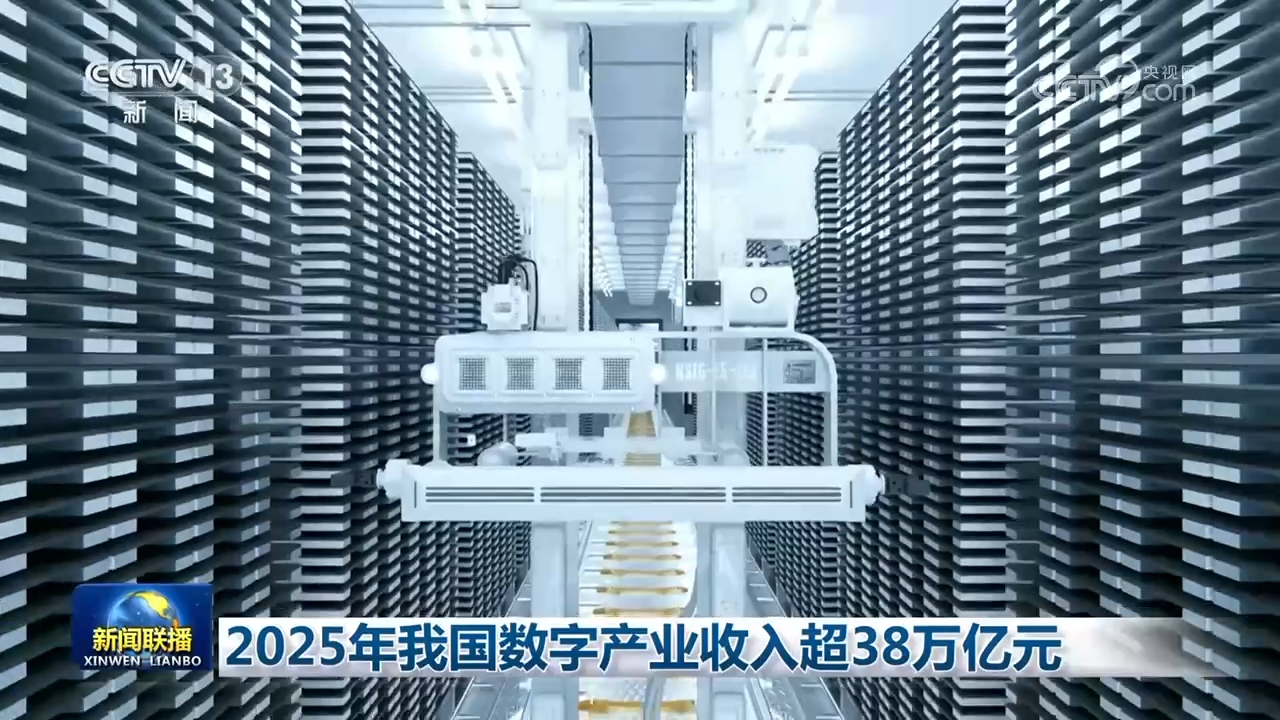
2025年我国数字产业收入超38万亿元
Yang Shi Wang· 2026-01-23 11:58
Core Insights - The digital industry in China is experiencing rapid growth during the "14th Five-Year Plan" period, with projected revenue of approximately 38.3 trillion yuan and profits of 3.1 trillion yuan by the end of 2025, representing cumulative growth of about 39.5% and 48.4% respectively compared to the end of the "13th Five-Year Plan" [1][3]. Group 1 - The scale of the digital industry is expanding, with accelerated innovation capabilities being released. The ecosystem of basic software is continuously improving, and the open-source Harmony operating system has been installed on nearly 1.2 billion devices [3]. - The artificial intelligence industry is thriving, with a diverse range of terminal products such as AI smartphones, AI computers, and AI glasses, driving a new wave of consumer upgrades [3]. Group 2 - The digital industry is increasingly serving as a "connector" for real economy integration. Current industrial internet applications cover all major industrial categories, with 100 high-level 5G factories achieving global leadership, resulting in an average capacity increase of 25%, product quality improvement of 21%, and operational cost reduction of 19% [5]. - Future efforts will focus on accelerating technological innovation and empowering applications, strengthening standard leadership and ecosystem development, and promoting high-quality development of the digital industry [5].
权威发布|人工智能产业亮点纷呈
Ren Min Ri Bao· 2026-01-22 06:21
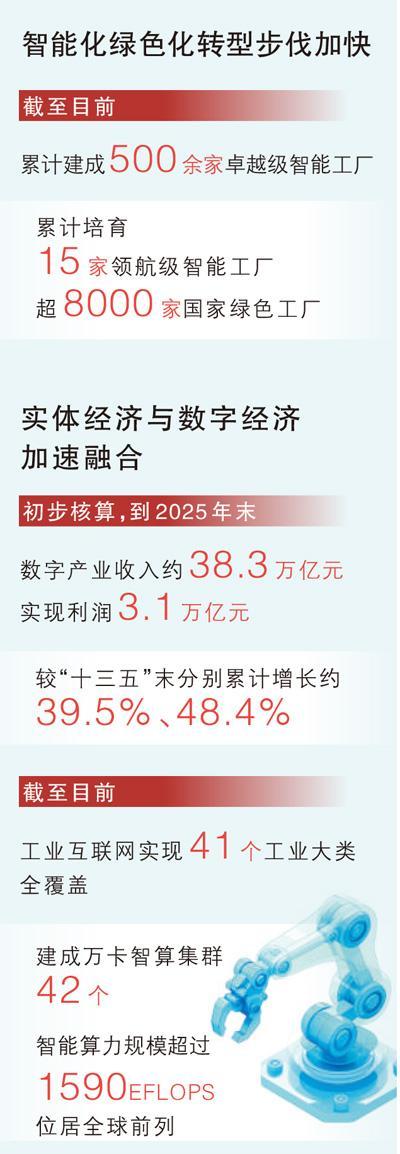
Group 1: Industrial Transformation and Development - The pace of intelligent and green transformation is accelerating, with over 500 exemplary smart factories and 15 leading smart factories established, alongside more than 8,000 national green factories [1][8] - By the end of 2025, the industrial added value of large-scale industries is expected to grow by 5.9% year-on-year, with the manufacturing sector maintaining a stable share of GDP and remaining the largest globally for 16 consecutive years [5] - The integration of new production capabilities is driving high-quality industrial development, with significant advancements in materials and technologies such as perovskite materials, permanent magnet materials, and advanced computing [6][7] Group 2: Digital Economy and Industrial Internet - The digital economy is projected to generate approximately 38.3 trillion yuan in revenue and 3.1 trillion yuan in profit by the end of 2025, reflecting growth rates of 39.5% and 48.4% compared to the end of the 13th Five-Year Plan [11] - The industrial internet has achieved full coverage across 41 industrial categories, with over 1 billion industrial devices connected to key platforms [2][11] - The establishment of 42 intelligent computing clusters and over 483.8 million 5G base stations supports the deep integration of the digital economy with the real economy [11][12] Group 3: Consumer Goods and Market Dynamics - The consumer goods industry is expected to see a 3.7% year-on-year increase in added value by 2025, accounting for 26.1% of all large-scale industries [13] - Efforts to optimize supply and demand have led to the launch of various promotional activities, resulting in the introduction of numerous innovative products across different sectors [13][14] - The brand strategy aims to enhance domestic consumption, with initiatives to promote traditional crafts and create new consumption scenarios [13][14]
工信部:我国已有100家高水平的5G工厂达到全球领先水平
Xin Hua Cai Jing· 2026-01-21 05:29
Core Viewpoint - The Chinese government emphasizes the significant progress in the digital industry and its integration with the real economy, highlighting the achievements made during the "14th Five-Year Plan" period, particularly in digital transformation and innovation capabilities [1][2]. Group 1: Digital Industry Growth - By the end of 2025, China's digital industry revenue is projected to reach approximately 38.3 trillion yuan, with profits expected to be around 3.1 trillion yuan, reflecting cumulative growth of about 39.5% and 48.4% respectively since the end of the "13th Five-Year Plan" [1]. - Major provinces such as Guangdong, Jiangsu, Beijing, and others are expected to contribute over 90% to the national digital industry revenue growth [1]. Group 2: Innovation and New Growth Drivers - The software industry is experiencing rapid innovation, with the open-source Harmony operating system being installed on nearly 1.2 billion devices [2]. - The artificial intelligence sector is thriving, leading to a variety of innovative products and driving a new wave of consumer upgrades [2]. Group 3: Industrial Internet and Digital Transformation - The integration of industrial internet applications has achieved full coverage across major industrial categories, with over 100 million industrial devices connected to key platforms nationwide [2]. - The implementation of smart technologies in core manufacturing processes has resulted in an average capacity increase of 25%, a 21% improvement in product quality, and a 19% reduction in operational costs [2].
工业互联网行业点评:政策密集落地,工业通信企业迎来全链条发展红利
CMS· 2026-01-20 14:32
Investment Rating - The report maintains a "Recommended" rating for the industrial internet sector, indicating a positive outlook for the industry based on favorable fundamentals [4]. Core Insights - The industrial internet sector is experiencing a surge in policy support, which is expected to drive a comprehensive development framework and enhance quality and efficiency in the industry [1][7]. - Key policies include the "Artificial Intelligence + Manufacturing" initiative, which aims to establish 1,000 high-level industrial intelligent entities by 2027, and the "Action Plan for High-Quality Development of Industrial Internet Platforms (2026-2028)," targeting over 450 platforms and 1.2 billion connected industrial devices by 2028 [2][7]. - The report highlights that industrial communication companies are well-positioned to benefit from these policy incentives, leveraging differentiated technologies and scene advantages to support industrial upgrades [1][2]. Summary by Sections Policy Developments - Recent policies have established a framework for integrating AI with industrial internet platforms, focusing on enhancing the quality of industrial internet development and addressing existing challenges such as insufficient differentiation and application depth [7]. - The "Action Plan for AI and Industrial Internet Integration" emphasizes the need for network upgrades in at least 50,000 enterprises, promoting the commercialization of new industrial network technologies [2][7]. Company Highlights - Dongtu Technology is leading the development of international standards and has created a closed-loop ecosystem that aligns with policy directives for new industrial network upgrades, with its TSN and industrial 5G chips recognized in the new industrial network directory [2][8]. - Sanwang Communication focuses on industrial Ethernet and 5G hardware products, with its TSN switches also included in the directory, showcasing its competitive edge in the TSN and Ethernet-APL technology fields [2][8]. - Yinghantong provides cloud-based edge intelligence solutions that enable efficient local data processing and decision-making for industrial enterprises, supporting mainstream AI applications [3].



未知机构:经济座谈会新9位明明中信证券首席经济学家对-20260120
未知机构· 2026-01-20 02:35
Summary of Key Points from the Conference Call Industry and Company Overview - **Securities Industry**: Represented by Mingming, Chief Economist of CITIC Securities, focusing on the non-bank financial sector, particularly brokerage firms [1] - **Financial Education and Research**: Represented by He Jia, Vice Dean and Professor at Nankai University, emphasizing the support of academic research for the multi-financial and fintech sectors [2][3] - **Artificial Intelligence (AI)**: Represented by Yan Junjie, Founder of Minimax, covering software development, IT services, and media applications related to AI [4] - **Electric Power Industry**: Represented by Zhang Zhigang, Chairman of State Grid Corporation, focusing on electricity production and transmission [5] - **Higher Education and Research**: Represented by Gong Qihuang, President of Peking University, highlighting the role of education in nurturing talent and providing cutting-edge research for technology industries [6][7] - **Information and Communication Technology (ICT)**: Represented by Yu Xiaohui, President of the China Academy of Information and Communications Technology, covering communication, computing, and electronics, particularly in 5G, IoT, and smart manufacturing [8] - **Medical Services and Biopharmaceuticals**: Represented by Wang Yongjun, Director of Beijing Tiantan Hospital, focusing on medical services, medical devices, and biomedicine, especially in neurology [9] - **Cultural Media and Performing Arts**: Represented by Zhou Liya, a choreographer and dancer, focusing on the cultural and media sectors, including film and cultural dissemination [10] - **Sports Industry**: Represented by Shi Yuqi, a badminton player, covering sports goods, services, and event operations [11] Core Insights and Arguments - Academic research is crucial for providing theoretical frameworks and talent support to various industries, particularly in finance and technology [2][4][7] - The electric power sector is essential for national infrastructure and energy security, with ongoing developments in production and distribution [5] - The integration of AI into various sectors is expected to drive innovation and efficiency, particularly in software and media applications [4] - The ICT sector is rapidly evolving, with significant advancements in communication technologies like 5G and IoT, which are pivotal for industrial transformation [8] - The healthcare sector, especially in neurology, is seeing advancements in medical services and biopharmaceuticals, indicating growth potential in medical technology [9] Additional Important Content - The emphasis on nurturing talent in technology and research is a recurring theme, indicating a strategic focus on education as a driver for industry growth [6][7] - The diverse representation of industries in the conference highlights the interconnectedness of sectors such as finance, technology, healthcare, and education, suggesting collaborative opportunities for innovation and development [2][4][6][8]
新股消息 | 德风科技二次递表港交所 为中国第五大独立专业AIoT服务提供商
智通财经网· 2026-01-20 01:13
Company Overview - Defeng Technology is a developer of AI-enabled Industrial Internet of Things (AIoT) production optimization software solutions, focusing on enhancing energy efficiency, operational excellence, safety, and sustainability in China's energy, manufacturing, and mixed industries [4] - The company has completed over 500 projects, primarily serving state-owned enterprises, with around 150 clients, including leading firms in the electricity, public utilities, oil and gas, and tobacco sectors [4] - Defeng Technology has established an integrated Delt@AIoT platform that enables rapid development and large-scale deployment of AIoT applications, featuring over 300 software applications applicable across various industries and use cases [4] Financial Performance - For the fiscal year 2023, 2024, the first nine months of 2024, and the first nine months of 2025, the company reported revenues of approximately RMB 442 million, RMB 525 million, RMB 216 million, and RMB 275 million, respectively [6] - The gross profit for the same periods was approximately RMB 105 million, RMB 131 million, RMB 52 million, and RMB 70 million, with corresponding gross profit margins of 23.8%, 24.9%, 24.2%, and 25.3% [7][8] - Operating losses were recorded at RMB 8.16 million, RMB 10.64 million, RMB 35.12 million, and RMB 30.47 million for the respective periods [9] Industry Overview - The Industrial Internet of Things (IIoT) market in China is expected to grow from approximately RMB 9 trillion in 2020 to about RMB 14 trillion by 2024, and is projected to reach around RMB 20 trillion by 2029 [13] - The penetration rate of AI in the IIoT sector is anticipated to rise from about 6.1% in 2020 to approximately 7.8% in 2024, and further to around 11.0% by 2029, indicating a growing integration of AI applications in various industrial processes [16] - The AIoT market in China has seen rapid growth, expanding from approximately RMB 54.1 billion in 2020 to an estimated RMB 111.9 billion by 2024, with projections of reaching about RMB 220.9 billion by 2029 [19]
涉及物联网、机器人、工业互联网和智能制造!浙江出台高级职称改革工作实施方案
Xin Lang Cai Jing· 2026-01-20 00:17
Core Viewpoint - The Zhejiang Provincial Economic and Information Technology Department and the Human Resources and Social Security Department have issued a notice regarding the implementation plan for the reform of senior professional titles in four sectors: Internet of Things, Robotics, Industrial Internet, and Intelligent Manufacturing, aiming to enhance industry management and talent development [1] Group 1: Industry Development - The plan aims to improve the talent cultivation system to support high-quality development in the four targeted industries [1] - It seeks to overcome biases towards academic papers, professional titles, educational qualifications, and awards in the evaluation process [1] Group 2: Talent Management - The initiative focuses on establishing a clear guidance, scientific evaluation, and standardized management for the professional title system [1] - The goal is to create a well-structured and high-quality technical talent team to provide robust talent support for the industries mentioned [1]
