
海洋科研

Search documents
中大6000米级深海无人遥控潜水器在南海完成首次深海试验
Nan Fang Du Shi Bao· 2025-08-24 12:57
Core Insights - The "Haiqin" ROV successfully completed its first deep-sea test, validating its system functions and performance indicators, marking the "Zhongshan University" ship as one of the few in China equipped with a 6000-meter deep-sea ROV [1][3] Group 1 - The "Haiqin" ROV achieved a maximum diving depth of 4140 meters during multiple test dives, confirming the stability and reliability of its technical indicators and system operations [3][5] - Prior to the sea trial, all components of the ROV underwent pressure testing at 6000 meters on land, with the sea trial primarily serving a verification purpose [3][7] - The ROV is designed for deep-sea exploration and is supported by Zhongshan University, with production commissioned to Shanghai Jiao Tong University, enabling precise observation and sample collection for various deep-sea scientific tasks [3][8] Group 2 - The "Zhongshan University" ship is currently the largest and most advanced modern oceanographic research vessel in China, having completed 23 scientific expeditions since its commissioning, with a focus on deep-sea exploration [10]

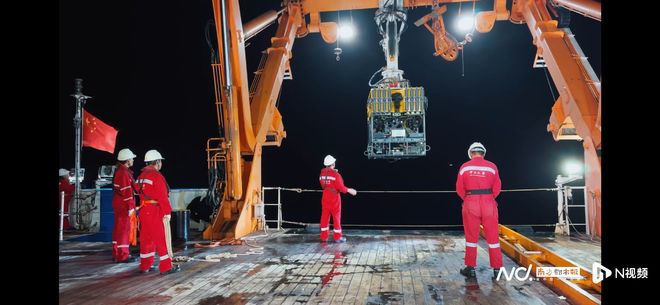
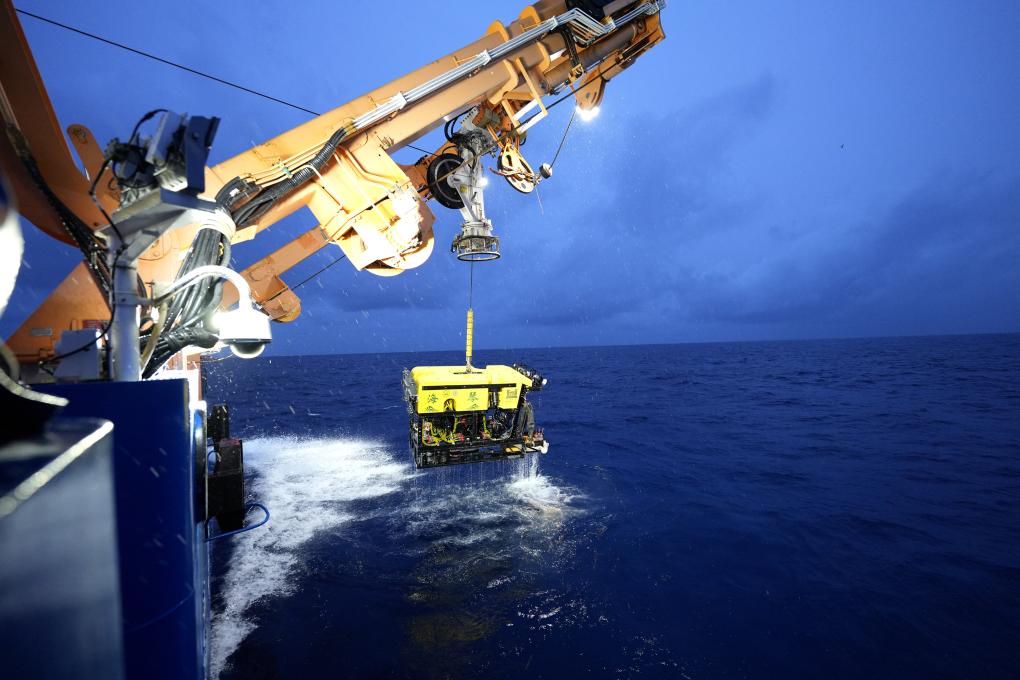
我国自主研制的6000米级深海无人遥控潜水器“海琴”号在南海成功海试
Xin Hua Wang· 2025-08-24 08:45
Core Viewpoint - The successful sea trial of China's self-developed deep-sea remotely operated vehicle (ROV) "Haiqin" marks a significant advancement in deep-sea research capabilities, demonstrating its operational effectiveness at a depth of 4140 meters [1][3]. Group 1: Development and Features - "Haiqin" is developed by the Shanghai Jiao Tong University Underwater Engineering Research Institute and is tailored for the "Zhongshan University" oceanographic research vessel, featuring advanced capabilities such as automatic orientation, hovering, and automatic line-following [2]. - The ROV is equipped with high-definition cameras, multifunctional robotic arms, and detection sensors, enhancing its functionality for scientific exploration [2]. Group 2: Operational Details - The sea trial commenced on August 22, with the "Zhongshan University" vessel arriving at the testing site in the South China Sea, where the ROV was deployed under challenging weather conditions [2]. - During the trial, "Haiqin" successfully collected sediment samples and recorded various marine specimens, including sponges, starfish, sea cucumbers, deep-sea fish, and seabed rocks [5]. Group 3: Team and Collaboration - The sea trial involved a collaborative effort from 89 team members across 19 institutions, including Sun Yat-sen University, Shanghai Jiao Tong University, and the Shenyang Institute of Automation, showcasing a strong interdisciplinary approach [6]. - The operation team and technical team worked closely together, ensuring the ROV's functions and performance met the design specifications, laying the groundwork for future applications [6]. Group 4: Additional Equipment - The trial also featured the first operational full-depth autonomous remote vehicle (ARV) "Haidou No. 1," which conducted scientific applications alongside "Haiqin," providing valuable insights for safe multi-tasking in deep-sea operations [8].
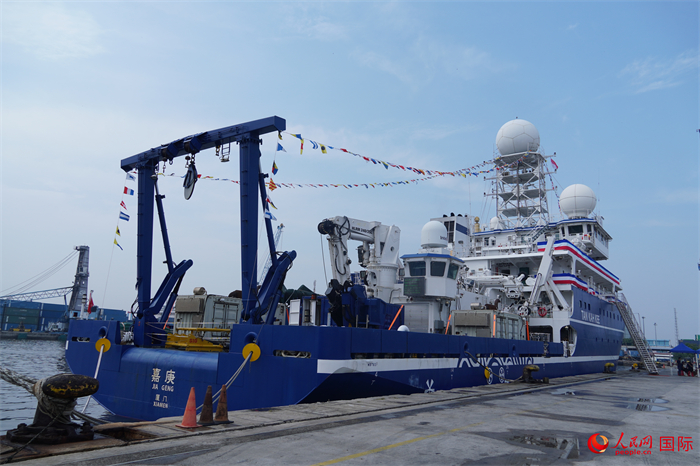
厦门大学“嘉庚”号科考船在雅加达举办公众开放日活动
人民网-国际频道 原创稿· 2025-08-09 04:20
Group 1 - The "Jia Geng" research vessel, equipped with advanced technology, is a significant platform for scientific exploration and one of the few Chinese research vessels visiting Indonesia in recent years [2] - The vessel is part of a collaboration between Xiamen University and Bogor Agricultural University, aiming to deepen exchanges and utilize research outcomes for sustainable economic and social development in both countries [2] - The "Jia Geng" vessel embarked on its journey from Xiamen Port on July 24, marking its first crossing of the equator into the Southern Hemisphere, carrying students and faculty for ocean research training [5] Group 2 - The "Maritime Silk Road Classroom" talent cultivation program initiated by Xiamen University's Department of Earth Sciences aims to expand undergraduate marine practice education into deep oceans, fostering top talents in marine sciences with international perspectives [7] - Since its launch in 2018, the program has successfully held five sessions, completing 13 voyages and attracting over 400 participants from 17 universities across four countries [7] - The sixth session of the program includes participation from over 30 students and faculty from 10 universities, including Xiamen University, Shanghai Jiao Tong University, and Bogor Agricultural University [7]
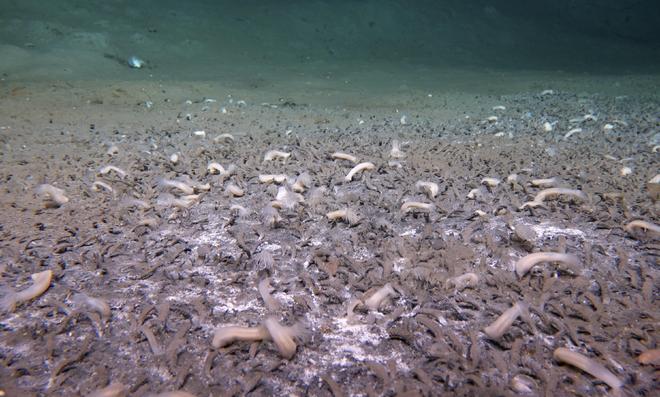
我国科学家发现“吃”硫化氢和甲烷的最深海底生命群落
Xin Hua She· 2025-07-30 15:19
Core Insights - The research led by the Chinese Academy of Sciences has discovered the deepest known chemosynthetic life communities at a depth of 9,533 meters in the ocean, which do not rely on sunlight but instead utilize chemical reactions in geological fluids for energy [1][4]. Group 1: Discovery of Chemosynthetic Life - The "Fendouzhe" manned submersible has successfully identified large-scale chemosynthetic life communities and methane reservoirs at the ocean floor, primarily consisting of deep-sea tube worms and bivalve mollusks that rely on hydrogen sulfide and methane-rich fluids for survival [2][5]. - The discovery challenges the traditional view that abyssal ecosystems are mainly sustained by organic particles and animal remains sinking from the ocean surface, providing a new perspective on the complex mechanisms of deep-sea carbon cycling [4]. Group 2: Implications for Ecosystem and Carbon Cycle - The research not only identifies new species of chemosynthetic life but also suggests that these organisms may significantly influence the structure of abyssal ecosystems and global carbon cycles [5]. - Scientists hypothesize that this phenomenon is not an isolated case, indicating the existence of a "chemosynthetic life corridor" in deep-sea trenches worldwide [5].
中欧蓝色伙伴关系助力全球海洋治理
Ren Min Ri Bao· 2025-07-22 21:50
Core Points - The third United Nations Ocean Conference in Nice, France highlighted the vitality of the China-Europe blue partnership in multilateral cooperation on marine protection, port decarbonization, and digital ocean construction [1] - China and the EU have established a blue partnership to enhance marine governance, sustainable fisheries, and marine economic prosperity, marking the EU's first such partnership with a non-EU country [2] - The collaboration between China and France in marine monitoring has been exemplified by the successful launch of the China-France ocean satellite, which has extended its service period and continues to contribute valuable data for global marine observation [3] Group 1: Marine Environmental Protection Cooperation - The international cooperation platform initiated by the French National Center for Space Studies aims to connect space observation data with marine actions, promoting scientifically-based marine protection and management [2] - The signing of the fourth cooperation memorandum between China's National Marine Environmental Forecasting Center and France's Mercator Ocean International exemplifies 12 years of fruitful collaboration in marine disaster warning and global ocean forecasting technology [3][4] Group 2: Marine Economic Development - China and the EU's trade relationship is robust, with imports and exports reaching 2.82 trillion yuan in the first half of the year, emphasizing the importance of green and low-carbon initiatives in their "blue economy" cooperation [5] - The "Sea Kite" propulsion system developed by the French company "Beyond the Ocean" aims to reduce fuel consumption and carbon emissions, showcasing innovation in the shipping industry [5] - The Piraeus Port in Greece has become a significant node for China-Europe maritime connectivity, enhancing regional logistics efficiency and promoting a green and intelligent transformation of Southern European ports [5][6] Group 3: Sustainable Marine Development - The signing of three cooperation memorandums between Xiamen City in China and Biarritz City in France focuses on establishing mechanisms for blue industry investment and collaboration in sustainable marine sectors [8] - Both China and the EU are committed to multilateralism and actively participate in the formulation of international marine governance rules, addressing challenges such as pollution and sustainable fisheries [9]
世界海事日 鹏城迎盛事 深圳国际海洋创新研究院揭牌
Shen Zhen Shang Bao· 2025-07-12 23:52
Core Viewpoint - The event held on July 11, 2025, marks the establishment of the Shenzhen International Marine Innovation Research Institute, focusing on marine technology and innovation, with strategic partnerships aimed at enhancing marine research and development capabilities in Shenzhen [1][2]. Group 1: Event Overview - The event was co-hosted by the China Ocean Mineral Resources Research and Development Association, Shenzhen Marine Development Bureau, and Shenzhen Qianhai Management Bureau [1]. - A strategic cooperation framework agreement was signed among the three parties to establish the Shenzhen International Marine Innovation Research Institute, which will include "seven centers + two platforms" for deep-sea scientific innovation [1]. - The event featured the unveiling of several key marine projects, including the Shenzhen International Marine Innovation Research Institute and the Indian Ocean International Marine Young Scholars Alliance [1]. Group 2: Technological Innovations - The "Deep Blue Intelligent i3 Voyage" was introduced, showcasing various innovative, integrated, and intelligent unmanned scientific research devices, including smart seawater sampling drones and remote sensing platform drones [2]. - The "Deep Blue Dream 2035" global scientific exploration plan was announced, which is China's first cross-national marine exploration initiative involving public participation [2]. - The research vessel "Xiangyanghong 10" was opened for visits by local middle school students, allowing them to experience marine exploration technology firsthand [2].
千年商都向海行——广东省广州市海洋强市建设综述
Zhong Guo Zi Ran Zi Yuan Bao· 2025-07-10 01:31
Core Insights - Guangzhou is positioning itself as a significant marine city, emphasizing high-quality development in the marine economy and innovation in marine technology [1][2][3] Marine Economy Development - Since the 14th Five-Year Plan, Guangzhou has been advancing its marine economy through spatial planning, innovation, and policy support, aiming to create a modern city with marine characteristics [2][3] - The city has established five development pathways: technology-driven marine development, strong marine industries, open marine economy, ecological marine protection, and cultural marine engagement [2][3] Marine Technology and Research - Guangzhou is enhancing its marine research capabilities with the establishment of national-level marine technology infrastructure and partnerships with various research institutions [4][5] - The city has successfully implemented significant projects, including the "Dream" ocean drilling vessel and the "Snow Dragon" polar research ship, contributing to national marine exploration efforts [4] Industrial Transformation - The city is accelerating the transformation of marine technology into practical applications, supporting incubators and innovation centers to facilitate the commercialization of marine technologies [5][6] - Guangzhou is focusing on four emerging marine industries: shipbuilding, marine electronics, marine pharmaceuticals, and natural gas hydrate development, while also enhancing traditional industries like marine transportation and tourism [6] Global Connectivity - Guangzhou Port ranks as the largest domestic container port in China, with a projected cargo throughput of over 300 million standard containers by 2024, connecting over 100 countries and regions [6][7] - The city is actively promoting international maritime events and collaborations, enhancing its global maritime presence and influence [10][11] Ecological and Cultural Integration - Guangzhou is committed to ecological protection and restoration, successfully completing marine ecological projects that have gained national recognition [9] - The city is also focusing on cultural heritage related to the Maritime Silk Road, promoting tourism and cultural exchanges [10] Future Outlook - Guangzhou aims to become a world-class marine technology innovation center and a hub for global marine cooperation, contributing significantly to the construction of a marine power [11]
强化海洋战略科技力量
Jing Ji Ri Bao· 2025-07-09 01:18
Group 1 - The central government emphasizes enhancing independent innovation capabilities in marine technology to strengthen national marine rights and economic security, fostering new marine industry forms and driving economic growth [1] - China's marine technology innovation has shifted from "catching up" to "leading," with significant breakthroughs in deep-sea exploration and complete autonomy in key technologies [1][2] - Guangdong Province has supported the development of six major marine industries since 2018, launching 315 innovative projects and achieving breakthroughs in 280 key technologies, with 25 filling domestic gaps and 20 being internationally leading [1] Group 2 - National strategic plans and policy documents provide clear guidance and strong motivation for independent innovation in marine technology, with the "14th Five-Year Plan" highlighting the need to accelerate the construction of a modern marine industry system [2] - There are existing challenges in enhancing marine technology innovation capabilities, including a lack of effective collaboration among innovation entities and the need to improve the efficiency of technology transfer [2][3] Group 3 - The government should play a key guiding role by increasing financial investment in marine technology R&D and establishing a national marine technology innovation special fund to support research in key areas [3] - A comprehensive platform for marine technology achievement transformation should be constructed to effectively gather core innovation elements and break down information barriers between technology outcomes and market needs [3] Group 4 - There is a need to enhance the quality of international cooperation in marine economics by actively participating in international marine technology projects and strengthening collaboration with marine technology powerhouses [4] - Domestic marine enterprises and research institutions are encouraged to collaborate with foreign counterparts on major marine technology R&D projects, forming a multi-level marine technology integration innovation pattern [4]
深圳海洋大学、深海科考中心和海洋博物馆统筹布局 深圳三大项目建设有序推进
Shen Zhen Shang Bao· 2025-07-02 17:01
Core Viewpoint - Technological innovation is identified as the fundamental driving force for building a strong marine nation, with Shenzhen actively exploring talent cultivation and introduction in the marine field to seize the high ground of marine technology innovation [1] Group 1: Integrated Project Development - The integrated construction of Shenzhen Ocean University, Deep Sea Scientific Research Center, and Ocean Museum is underway, focusing on shared facilities to maximize the utilization of resources [2] - Shenzhen Ocean University is progressing with its campus construction, with parts of the project starting on July 20, 2023, and expected completion of the main campus by December 2026 [2] - The Ocean Museum aims to showcase cutting-edge marine technology and is expected to start construction by the end of 2025, covering an area of approximately 72,500 square meters [2] Group 2: Deep Sea Research Center - The Deep Sea Scientific Research Center's office building, with a construction area of 15,000 square meters, is included in the first phase of the Ocean University project, expected to be completed by the end of 2026 [3] - The construction of the deep-sea research dock is being advanced, aligning with national deep-sea support base requirements [3] Group 3: Marine Research Platform Initiatives - Shenzhen's marine development plan (2023-2035) emphasizes a multi-layered marine education system and the establishment of a blue vocational alliance in the Greater Bay Area [4] - Policies to promote high-quality marine industry development include talent cultivation and the establishment of key laboratories and innovation centers [4] - An annual budget of up to 20 million yuan is allocated to support the construction of major marine technology innovation platforms and public service platforms for marine drug research [4] Group 4: International Cooperation and Exchange - The China Marine Economy Expo has become a high-end platform for showcasing marine economic achievements and promoting international cooperation, with the 2024 expo covering 95,000 square meters [5] - Shenzhen is actively engaging in international marine governance projects, including two new UN "Ocean Decade" projects aimed at enhancing marine literacy and carbon neutrality [5] - The establishment of the International Mangrove Center in Shenzhen marks a significant step in global coastal wetland governance, with representatives from 18 member countries signing an agreement [5]
解码深海生物宇宙“暗物质” 联合国“海洋十年”DOME大科学计划在沪启动 全球总部设在临港
Jie Fang Ri Bao· 2025-06-21 01:53
Core Insights - The United Nations' DOME (Deep-sea Microbiome and Ecosystem) scientific program has officially launched in Shanghai, marking a significant advancement in China's deep-sea microbiology research from a follower to a leader [1] - DOME aims to integrate global scientific efforts to protect and sustainably utilize ocean resources, involving 27 countries and 42 research institutions [1][2] - The program will utilize advanced research equipment and establish international standards for deep-sea microbiome sampling and data sharing, creating a global open data platform [2][3] Group 1 - The DOME program is headquartered in Lingang, Shanghai, with regional centers across six continents, facilitating efficient collaboration and data sharing [1] - The initiative focuses on systematically investigating deep-sea microbiological resources, identifying unknown species, and constructing a global deep-sea microbiome resource database [1][2] - DOME's implementation is expected to reveal the roles of deep-sea microbiomes in carbon cycling, nutrient transformation, and ecosystem stability, with potential applications in biomedicine and environmental technology [2] Group 2 - DOME is promoting a "capacity-building network" to enhance marine research capabilities in developing countries by providing advanced research equipment for free [3] - Partnerships with industry players like BGI and Ningbo Deep Blue have been established to advance the industrialization of deep-sea microbiology [3] - The initiative aims to leverage the "International Marine Innovation Port" to accelerate the commercialization of marine technologies and develop a billion-level deep-sea economic cluster [3]