
铁路物流

Search documents
山西:产品走出去 资源引进来
Jing Ji Ri Bao· 2025-10-01 07:53
Core Insights - The article highlights the significant progress of Shanxi Province in establishing a robust logistics network through the China-Europe (Asia) freight trains, marking the 1000th train departure and the 110th this year [1][2]. Group 1: Logistics Development - Shanxi has developed a logistics service network with 26 main routes connecting to 48 major cities across 17 countries in Europe and Asia, utilizing multiple departure stations and five border crossings [2][3]. - The establishment of a digital booking platform for the China-Europe freight trains has enhanced customer service by integrating various logistics functions and utilizing big data for route optimization [2]. Group 2: Product Diversification - The range of goods transported by the China-Europe freight trains has expanded from industrial equipment and raw materials to include a variety of consumer products, showcasing Shanxi's local specialties such as pharmaceuticals, ceramics, and walnuts [3]. - The import side has also seen growth, with a variety of foreign luxury goods and products available in the bonded store at Taiyuan South High-speed Railway Station, indicating a two-way trade dynamic [3]. Group 3: Economic Impact - The China-Europe (Asia) freight trains have become a crucial platform for Shanxi, an inland province, to engage in international trade, facilitating the integration into global supply chains and driving industrial upgrades [3].
中欧班列已开行1000列——山西:产品走出去 资源引进来
Jing Ji Ri Bao· 2025-09-30 22:04
Group 1 - The core point of the news is the significant development of the China-Europe (Asia) freight train service from Shanxi, marking the 1000th train departure, which enhances logistics efficiency and connectivity for local products [1][2][3] - Shanxi has established a comprehensive service network for the China-Europe (Asia) freight trains, with 26 main routes connecting to 48 major cities across 17 countries in Asia and Europe [2][3] - The freight train service has evolved to include a wider variety of goods, transitioning from industrial equipment to consumer products, thereby facilitating the export of Shanxi's unique products and the import of foreign goods [3] Group 2 - The logistics optimization efforts include the establishment of a digital booking platform that integrates various logistics functions, improving efficiency and customer service [2] - The continuous improvement of the management and operational service system for the freight trains is expected to enhance Shanxi's integration into global supply chains and promote industrial upgrades [3]
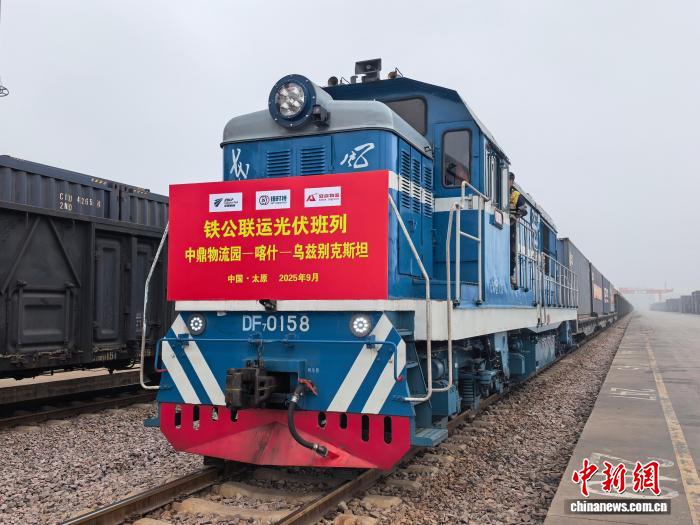
山西开出首趟“中吉乌”铁公联运光伏班列
Zhong Guo Xin Wen Wang· 2025-09-30 18:31
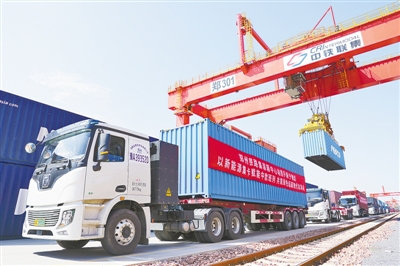
Core Viewpoint - The first photovoltaic train from Shanxi Province has successfully launched, establishing a new international logistics channel for exports to Central Asia through the China-Kyrgyzstan-Uzbekistan multimodal transport corridor [1][3]. Group 1: Logistics and Transportation - The train, loaded with photovoltaic components, departed from the Zhongding Logistics Park and is expected to reach Kashgar in 9 days, after which it will exit through the Irkeshtam port and travel through Kyrgyzstan to reach Andijan, Uzbekistan [1][3]. - Compared to the traditional route via the Horgos port, which covers 4,935 kilometers and takes approximately 15 days, the new route reduces the distance by about 600 kilometers and shortens the transit time by 6 days, resulting in a significant decrease in logistics costs of nearly 1,000 yuan per box [3]. Group 2: Infrastructure Development - The China-Kyrgyzstan-Uzbekistan railway, which is being constructed with China's support, officially commenced construction in July this year. This railway will connect Kashgar in Xinjiang, China, to Andijan in Uzbekistan, and is expected to become the shortest route for transporting goods from China to Europe and the Middle East upon completion [3].

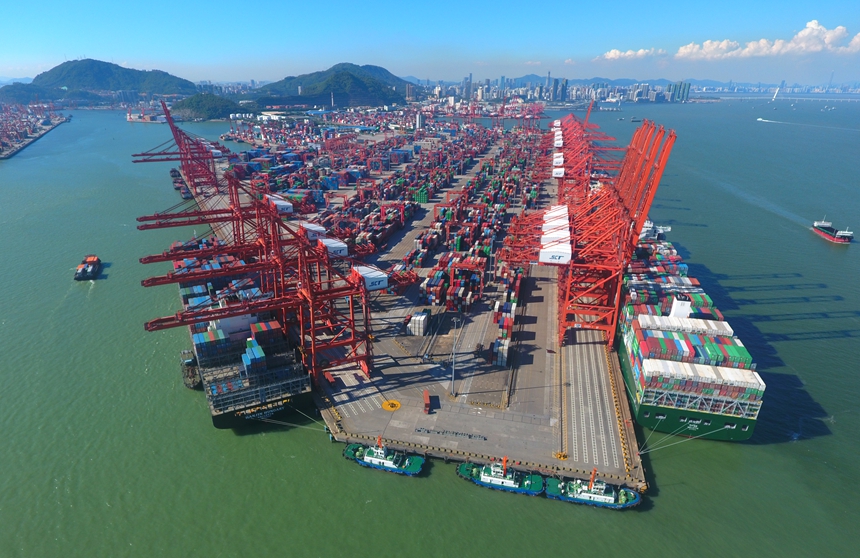
从港口到云端,深圳跑出现代物流“加速度”
Ren Min Wang· 2025-09-25 09:15
Core Insights - Shenzhen's container throughput at the port increased by 7.8% in the first eight months of the year, reaching 23.56 million TEUs [4][2] - The logistics sector in Shenzhen is rapidly evolving, with over 80,000 logistics companies and more than 4,000 supply chain enterprises, making it a key player in global logistics [4][1] - The city is enhancing its logistics capabilities through multi-modal transport, including sea, land, air, and rail, establishing itself as a significant global logistics hub [7][5] Port and Container Growth - Shenzhen's port has established 270 foreign trade container routes covering six continents and twelve major shipping areas, enhancing its role as a key export hub for cross-border e-commerce [4][5] - The port's container throughput for the first eight months of the year was 23.56 million TEUs, with a notable increase in direct shipping routes to South America and the Middle East [4][6] Air Cargo Developments - Shenzhen Airport's cargo throughput reached 132,800 tons in the first eight months, marking a 12.7% increase, with domestic cargo volume leading the nation [6][1] - The airport is expanding its cargo network and infrastructure, establishing stable connections with 63 global cargo destinations [5][6] Efficiency Improvements - The introduction of the "one declaration, one certificate, one vehicle direct" mechanism has improved logistics efficiency, particularly for cross-border e-commerce [9][10] - Reforms in maritime operations have reduced redundant inspections, saving significant time and costs for shipping companies [9][11] Innovative Logistics Solutions - Shenzhen is exploring vertical logistics systems, integrating low-altitude transport with traditional ground transportation to enhance efficiency [13][14] - The city is developing high-standard warehouses and smart logistics facilities to improve logistics efficiency by over 30% [14][1] Future Outlook - The Shenzhen government aims to strengthen innovation in the logistics sector, focusing on low-altitude economy, intelligent networking, and smart logistics to enhance global competitiveness [14][1] - The logistics industry is becoming a vital component of Shenzhen's economic growth, facilitating efficient material flow and connectivity [14][1]
商务早新闻(9月17日)
Sou Hu Cai Jing· 2025-09-16 23:42
Group 1: International Trade Dynamics - A China-Europe freight train loaded with electronic products and daily necessities departed from the Horgos railway port to Georgia, marking the 7,000th train this year, 44 days earlier than last year [1] - Brazil's government announced that Singapore has officially approved the import of Brazilian beef tallow products for industrial use, representing a breakthrough for Brazilian agricultural products in the Southeast Asian market following high tariffs imposed by the U.S. on some Brazilian products [4] Group 2: Economic Indicators and Policies - U.S. President Trump expressed expectations for a significant interest rate cut by the Federal Reserve during its upcoming meeting, which would be the first rate cut since December of the previous year [2] - Nomura economists noted that India's CPI rose only 2.07% year-on-year in August, indicating potential for further decline below 2%, creating room for monetary policy easing [3] Group 3: Domestic Economic Developments - The Ministry of Commerce of China responded to the U.S. request for additional tariffs on China, labeling it as unilateral bullying and economic coercion, and stated that China would take necessary measures to protect its legitimate rights [5] - From January to August, China's national railway transported 2.683 billion tons of goods, with a daily average of 184,000 cars, reflecting a year-on-year growth of 3.5% and 4.3% respectively [6] - The 2025 China Enterprise 500 list was released, showing that the total revenue of the listed companies reached 110.15 trillion yuan, with the entry threshold rising for 23 consecutive years to 47.96 billion yuan [8]

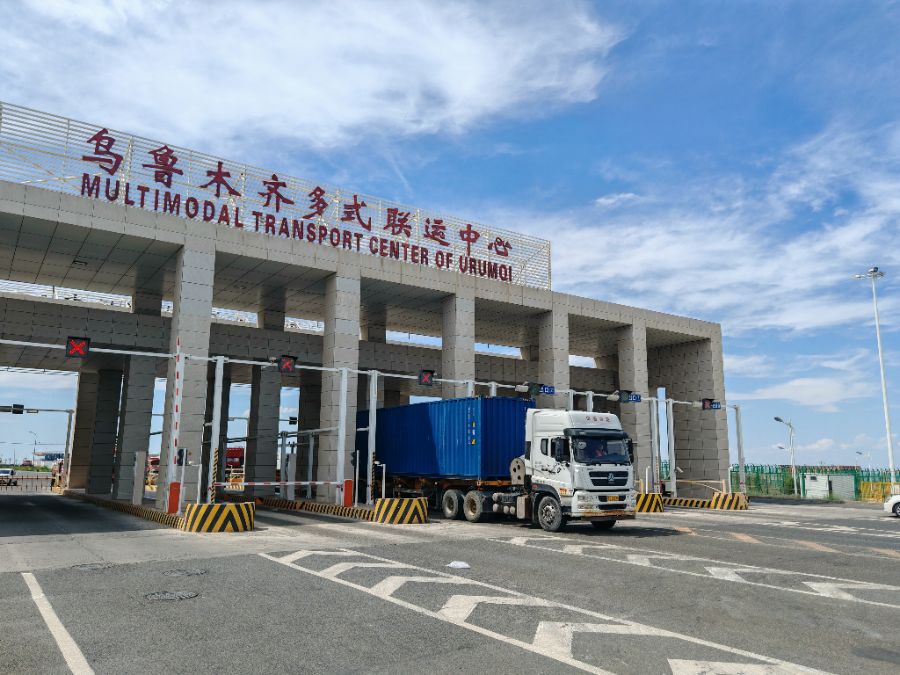
“天山号”班列一线观察:驰骋在亚欧大陆上的“新疆名片”
2 1 Shi Ji Jing Ji Bao Dao· 2025-09-12 04:03
Core Insights - The "Tianshan" train, launched in November 2023, has become a significant symbol of trade between Asia and Europe, facilitating efficient logistics and trade in the region [1][11] - The Urumqi International Land Port Area has transformed from a simple transit point to a comprehensive logistics hub, enhancing trade connections with 19 countries and 26 cities [2][9] Group 1: Trade Expansion - The trade volume of the Urumqi Land Port Area has significantly increased, with the annual trade amount rising from 14 million yuan in 2018 to over 1 billion yuan in 2022, and plans to reach 1.5 billion yuan quarterly for copper imports by 2025 [2] - The "Tianshan" train has operated over 1,146 trips, generating a trade value of approximately 25.703 billion yuan, with a regular schedule of two trips per day [1][2] Group 2: Efficiency Improvements - The logistics process has been revolutionized, reducing the booking time from three days to just five minutes through a new digital platform, enhancing operational efficiency [7] - Customs clearance time has been cut down to six hours, showcasing the effectiveness of the "Railway Fast Pass + Smart Port" model [7] Group 3: Industrial Development - The Urumqi International Land Port Area is shifting from a "transit economy" to a "local production economy," with local industries, such as automotive dismantling and renewable energy assembly, establishing operations in the region [8] - The export of local products like tomato paste is contributing to farmers' income, while the planned import of electrolytic copper aims to support the domestic renewable energy supply chain [8] Group 4: Strategic Positioning - The Urumqi Land Port Area is positioned as a key hub for trade, evolving from a "border area" to a "bridgehead" for opening up to Central Asia, with ongoing efforts to enhance cooperation and efficiency among customs, railways, and government [9][11] - The area is actively seeking to import agricultural products and feed from Central Asia to address domestic shortages, indicating a strategic approach to resource allocation and risk management [9]
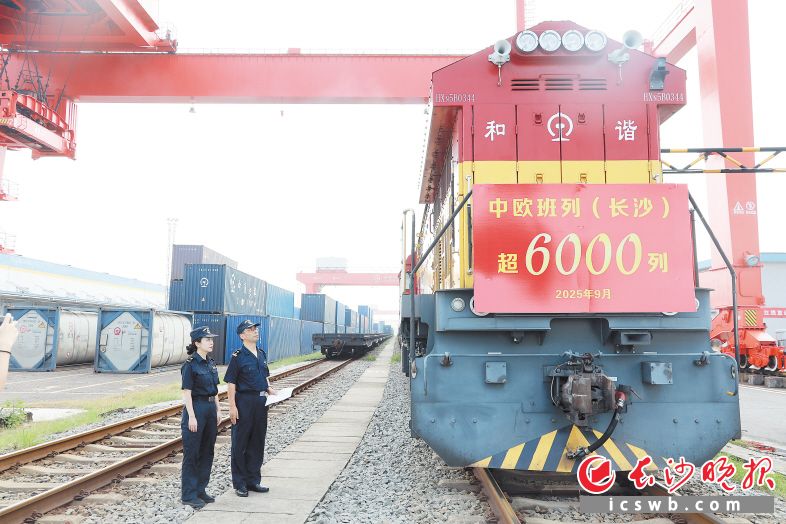
中欧班列(长沙)累计开行超6000列 开行规模稳居全国“第一方阵”
Chang Sha Wan Bao· 2025-09-12 02:22
Core Insights - The China-Europe Railway Express (Changsha) has maintained a leading position in the national logistics network, with a total of 6,247 trains dispatched since its inception in October 2014, transporting over 520,000 TEUs valued at approximately 118.21 billion yuan [2][3] - The railway service has expanded its operational routes to 12 stable lines, covering 30 countries and 100 cities across Europe and Asia, significantly enhancing trade opportunities for enterprises in Hunan province and surrounding areas [3] - The customs authority has implemented measures to improve operational efficiency, such as reducing inspection times for export cargo, which has led to a 15% decrease in overall logistics costs [4] Group 1 - As of September 10, the China-Europe Railway Express (Changsha) has dispatched a total of 6,247 trains, with a cargo value of approximately 118.21 billion yuan [2] - In the first eight months of this year, the railway service recorded 643 train dispatches, with a total cargo value of 10.47 billion yuan, marking significant growth compared to the previous year [2] - The service has evolved from initially transporting daily goods to now including engineering machinery, complete automobiles, and parts, reflecting a diversification in cargo types [3] Group 2 - The railway has been recognized as a "golden channel" connecting Asia and Europe, facilitating trade and contributing to the Belt and Road Initiative [3] - The customs authority has introduced a "pre-inspection before loading" model, significantly reducing the inspection time for export cargo from 4 hours to 30 minutes [4] - The implementation of smart customs initiatives aims to enhance regulatory efficiency and support enterprises in optimizing their export processes [4]
新能源集卡助力 中欧班列(郑州)绿色物流运输
Zheng Zhou Ri Bao· 2025-09-11 01:47
Core Viewpoint - The introduction of new energy trucks at the Zhengzhou Railway Container Center represents a significant step towards green transformation in logistics, enhancing the efficiency and sustainability of the China-Europe Railway Express [1][2]. Group 1: Project Overview - The Zhengzhou Railway Container Center collaborates with various companies to establish a green logistics demonstration project focused on integrating pure electric heavy trucks into the China-Europe Railway Express logistics system [1]. - The project aims to achieve energy conservation and emission reduction throughout the entire logistics chain, contributing to carbon neutrality goals and improving the overall ESG performance of enterprises [1]. Group 2: Benefits of New Energy Trucks - The use of new energy trucks significantly reduces energy consumption compared to traditional fuel vehicles, achieving zero exhaust emissions and promoting low-carbon transportation [1]. - New energy vehicles have lower operating costs and longer maintenance cycles, which help reduce logistics costs for companies while ensuring stable long-term operations [1]. Group 3: Future Plans - The Zhengzhou Railway Container Center plans to further expand the use of new energy vehicles and enhance the construction of green logistics infrastructure, accelerating the transition to a modern, low-carbon railway station [2].
多式联运加速通江达海江都崛起苏中铁路物流新枢纽
Xin Hua Ri Bao· 2025-09-07 23:51
Core Insights - The Jiangdu Railway Logistics Base has become a significant logistics hub in the Suzhong region, enhancing multi-modal transport capabilities and connecting major ports [1][2][3] Group 1: Infrastructure and Investment - The Jiangdu District government invested 680 million yuan to develop the logistics base, which covers an area of approximately 553 acres, making it the largest and highest-standard railway logistics base in the Suzhong and Subei regions [1] - The base has opened five sea-rail intermodal transport channels connecting Shanghai, Ningbo, and Nanjing ports, forming a transportation network known as "three ports and five channels" [1] Group 2: Service Innovations - The base introduced a "single order" service model that simplifies the logistics process by allowing "one-time commission, one container to the end, and one settlement," reducing the complexity of traditional multi-modal transport [2] - The transportation cost for polyester short fibers sent via the "single order" model decreased by over 20% compared to road transport [2] Group 3: Operational Performance - The base has shipped 6,012 standard containers this year, including high-value products like solar panels and automotive components, providing new pathways for local enterprises to integrate into the global supply chain [3] - The base plans to increase the frequency of trains to Shanghai and strengthen cooperation with major ports in Jiangsu province, aiming to become a leading multi-modal transport enterprise in the region [3]
江都崛起苏中铁路物流新枢纽
Xin Hua Ri Bao· 2025-09-07 21:57
Core Insights - The Jiangdu Railway Logistics Base, which began operations in October 2022, is enhancing the logistics landscape in the Suzhong region, with significant government investment and infrastructure development [1][2]. Group 1: Infrastructure and Investment - The Jiangdu District government has invested 680 million yuan to advance the logistics base, which spans approximately 553 acres, making it the largest and highest-standard railway logistics base in the Suzhong and Subei regions [1]. - The base has opened five sea-rail intermodal transport channels connecting major ports, forming a transportation network of "three ports and five channels" [1]. Group 2: Operational Efficiency - The logistics base has implemented a "one order system" service innovation, simplifying the transportation process and reducing costs by over 20% compared to traditional road transport [2]. - The base has established partnerships with major automotive manufacturers, providing comprehensive services that enhance delivery efficiency, with an expected annual dispatch volume of 15,000 vehicles [2]. Group 3: Competitive Advantage - The reduction in logistics costs is improving the competitiveness of regional enterprises, with significant savings on transportation costs for container shipments compared to road and water transport [3]. - The base has already dispatched 6,012 standard containers this year, including high-value products, facilitating local enterprises' integration into the global supply chain [3].