
船舶制造

Search documents
振华重工:公司与广州打捞局签署11.488亿元合同
Xin Lang Cai Jing· 2025-12-26 09:14
Core Viewpoint - The company has signed a contract with Guangzhou Salvage Bureau for the construction of a deep-water crane vessel, amounting to RMB 1.1488 billion, which is expected to positively impact its business development [1] Group 1 - The contract was signed on December 26, 2025, and is categorized as a routine operational contract [1] - The total contract value is RMB 1.1488 billion, indicating a significant business opportunity for the company [1]

韩媒:对台泄露潜艇设计资料,韩国前军官获刑2年半
Huan Qiu Wang· 2025-12-26 08:59
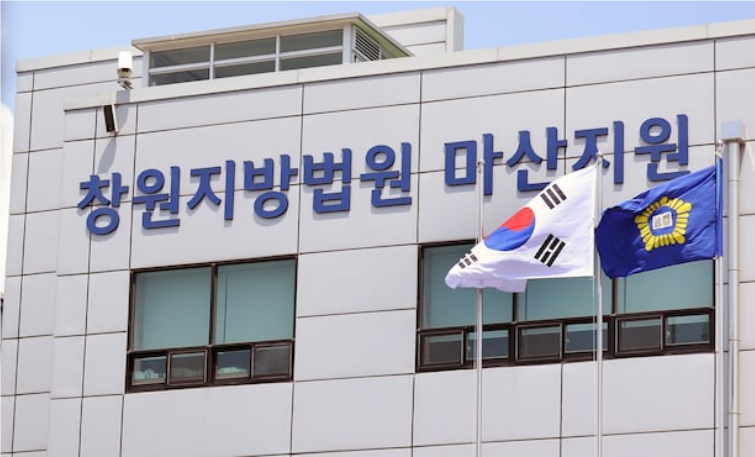
【环球网报道】据韩联社、韩国《朝鲜日报》援引韩国法律界26日消息,因涉嫌在未获韩政府许可的情况 下,将韩国企业大宇造船海洋(现韩华海洋)的潜艇设计资料泄露给台湾地区一家造船厂,韩国一名海军 中校出身、现任防务产业企业代表的涉案人员被判处有期徒刑2年半。 据报道介绍,该涉案人员原为海军中校,其涉嫌于2019年至2020年期间,将包括鱼雷发射管设计图在内的 一批资料非法提供给台湾地区。 韩联社称,昌原地方法院刑事审判第3独任庭日前对此案作出上述判决。法院同时还判处由该涉案人员运营 的军工企业缴纳罚金150亿韩元(约合人民币7275万元),并追缴其违法所得950亿韩元(约合人民币4.6亿 元)。 ...

稳经营、提质效 中央企业推动关键产业向新向优
Ren Min Ri Bao· 2025-12-26 05:45
Core Insights - Central enterprises are expected to play a crucial role in supporting the high-quality development of the economy and improving people's livelihoods, as emphasized by General Secretary Xi Jinping [1] Group 1: Strengthening Scale and Capability - The total assets of central enterprises have exceeded 90 trillion yuan, marking significant growth [2] - Central enterprises have successfully launched various innovative projects, including the world's first commercial supercritical carbon dioxide power generation unit and the largest green hydrogen-ammonia integrated project [2] - Research and development expenditures have surpassed 5 trillion yuan, with an annual investment growth rate in emerging industries exceeding 20% [2] Group 2: Industrial Upgrading and Innovation - Central enterprises are focusing on technological innovation to enhance industrial capabilities, with 438 technology breakthroughs reported this year [3] - The implementation of AI technologies has led to the establishment of over 800 application scenarios and the creation of 1,854 smart factories [3] - Energy efficiency has improved, with energy consumption and carbon emissions per unit of output decreasing by 12.8% and 13.9% respectively during the "14th Five-Year Plan" period [3] Group 3: Strategic Function and Governance - Nine new central enterprises have been established as part of the ongoing reform of state-owned enterprises, with a focus on strategic restructuring [4] - The management levels of central enterprises have been streamlined to a maximum of four tiers, enhancing operational efficiency [5] - The State-owned Assets Supervision and Administration Commission (SASAC) has implemented a more scientific regulatory approach, including a tailored assessment for each enterprise [5]
稳经营、提质效——中央企业推动关键产业向新向优
Ren Min Ri Bao· 2025-12-26 04:43
Core Insights - Central enterprises are expected to enhance their roles in serving the national economic development and improving people's livelihoods, contributing significantly to China's modernization efforts [1] Group 1: Strengthening Scale and Capability - Central enterprises have seen their total assets exceed 90 trillion yuan, with significant advancements in various sectors, including the successful operation of the world's first commercial supercritical carbon dioxide power generation unit and the launch of the largest green hydrogen-ammonia integrated project [2] - The cumulative R&D expenditure of central enterprises has surpassed 5 trillion yuan, with an annual investment growth rate in emerging industries exceeding 20% [2] - The number of technology talents in central enterprises has increased by nearly 50%, enhancing their scale, value creation capabilities, and brand influence [2] Group 2: Industrial Upgrading and Innovation - Central enterprises are focusing on technological innovation to drive industrial transformation, with 438 technology breakthroughs achieved this year [3] - The implementation of the "Artificial Intelligence +" initiative has led to over 800 application scenarios and the establishment of 1,854 smart factories [3] - During the "14th Five-Year Plan" period, energy consumption per unit of output and carbon dioxide emissions per unit of output have decreased by 12.8% and 13.9%, respectively [3] Group 3: Strategic Function and Governance - The establishment of 9 new central enterprises has been completed as part of the deepening reform of state-owned enterprises, with a focus on strategic restructuring [4] - The management levels of central enterprises are now controlled within four tiers, improving management efficiency and transparency [5] - The State-owned Assets Supervision and Administration Commission (SASAC) has implemented a more scientific regulatory approach, including a tailored assessment for each enterprise and the establishment of a national property information database [5]





中国船舶工业股份有限公司 2025年第三次临时股东会决议公告
Zhong Guo Zheng Quan Bao - Zhong Zheng Wang· 2025-12-26 03:48
Meeting Overview - The shareholder meeting was held on December 25, 2025, at the China Shipbuilding Building in Shanghai [1] - The meeting was convened by the board of directors and chaired by Chairman Hu Xianfu, utilizing both on-site and online voting methods [1] Attendance - Out of 11 current directors, 10 attended the meeting, with Director Tao Tao absent due to official duties [2] - The company secretary, Guan Hong, was present at the meeting [3] Agenda and Resolutions - The following proposals were approved during the meeting: 1. Appointment of the auditing firm for the 2025 financial report [4] 2. Approval of the 2026 annual related party transactions [4] 3. Signing of the 2026 Financial Services Agreement with China Ship Financial Co., Ltd. [4] 4. Authorization for subsidiaries to provide guarantees and set limits for 2026 [5] 5. Approval for futures and derivatives trading in 2026 [5] 6. Amendments to the Articles of Association of China Shipbuilding Industry Co., Ltd. [5] 7. Amendments to the fundraising management system of China Shipbuilding Industry Co., Ltd. [5] Voting Details - Proposals 5 and 6 were classified as "special resolutions" requiring a two-thirds majority for approval, while the remaining proposals were "ordinary resolutions" needing a simple majority [4][5] - Related shareholders from China Shipbuilding Industry Group and other associated companies abstained from voting on proposals 2 and 3 due to conflicts of interest [5] Legal Verification - The meeting was witnessed by lawyers from Shanghai Jintiancheng Law Firm, confirming that the procedures and voting conformed to legal regulations and the company's articles of association [6]
一座岛的沉睡与苏醒
远川研究所· 2025-12-26 01:03
Core Viewpoint - The article discusses the transformation of Fuxing Island from an industrial hub to a center for innovation and technology, highlighting its historical significance and future potential as a global creative island and a model for urban development in Shanghai [5][12][22]. Historical Context - Fuxing Island was formed in 1927 through dredging efforts, initially named "Zhoujiazui Island" and later renamed in 1945 to reflect national aspirations for industrial revival [5][6]. - The island was home to the China Shipbuilding Industry, which played a crucial role in modernizing China's shipbuilding capabilities, employing thousands of workers during its peak [7][9]. Industrial Decline - As Shanghai's urban functions evolved, the industrial activities on Fuxing Island diminished, leading to the relocation of factories and a decline in economic activity, leaving the area underutilized [11][12]. Future Vision - By 2025, Fuxing Island is set to become a global creative hub, with initiatives aimed at attracting innovation teams and talent through affordable workspace and living conditions [12][13]. - The launch of the "Global Creative Island" initiative includes policies that provide low-cost office spaces and substantial financial incentives for innovation projects, aiming to create a low-cost, high-innovation ecosystem [13][17]. Technological Advancements - The article highlights the development of advanced technologies, such as the "Yunyu Xingkong" model, which integrates AI capabilities for urban management and planning [15][17]. - Fuxing Island is envisioned as a "smart city" laboratory, with plans to deploy over 100,000 intelligent sensing terminals for real-time monitoring of urban conditions [20][22]. Urban Development - The transformation of Fuxing Island includes the renovation of existing industrial spaces into shared laboratories and innovation centers, promoting a vibrant community for startups and creative enterprises [18][22]. - The island will feature a 7-kilometer waterfront walkway, connecting various recreational and cultural spaces, enhancing the quality of life for residents and visitors [18][20]. Conclusion - Fuxing Island's evolution reflects a broader narrative of urban renewal, where historical industrial sites are repurposed to foster innovation and creativity, positioning Shanghai as a leader in urban development and technology [26][27].

稳经营、提质效 中央企业推动关键产业向新向优(经济新方位)
Ren Min Ri Bao· 2025-12-25 22:27
Core Insights - Central enterprises are expected to enhance their roles in serving the national economic development and improving people's livelihoods, contributing significantly to China's modernization efforts [1] Group 1: Strengthening Scale and Capability - Central enterprises have seen their total assets exceed 90 trillion yuan, with significant advancements in various projects such as the world's first commercial supercritical carbon dioxide power generation unit and the largest green hydrogen-ammonia integrated project [2] - The total R&D expenditure of central enterprises has surpassed 5 trillion yuan, with an annual investment growth rate in emerging industries exceeding 20% [2] - The number of technology talents in central enterprises has increased by nearly 50%, enhancing their scale, value creation capabilities, and brand influence [2] Group 2: Industrial Upgrading and Innovation - Central enterprises are focusing on technological innovation to empower industrial transformation, with 438 technology breakthroughs achieved this year [3] - The implementation of AI technology has led to over 800 application scenarios, and 1,854 smart factories have been established as part of the digital transformation efforts [3] - During the "14th Five-Year Plan" period, energy consumption per unit of output and carbon dioxide emissions per unit of output have decreased by 12.8% and 13.9%, respectively [3] Group 3: Strategic Function and Governance - Nine new central enterprises have been established as part of the ongoing reform of state-owned enterprises, with a focus on optimizing the structure and enhancing strategic functions [4] - The management levels of central enterprises are now controlled within four tiers, improving management efficiency and transparency [5] - The State-owned Assets Supervision and Administration Commission (SASAC) has implemented a more scientific regulatory approach, including a tailored assessment for each enterprise [5]
青岛以场景开放助产业升级
Jing Ji Ri Bao· 2025-12-25 22:04
Group 1 - Qingdao is actively promoting the opening of application scenarios for state-owned enterprises, launching 24 scenarios in the first half of 2024 and an additional 65 digital transformation and AI scenarios this year, covering key areas such as strategic emerging industries, traditional advantageous industries, and public services [1][2] - The initiative has led to the creation of benchmark application demonstration scenarios, resulting in 33 application cases that help enterprises break through technological boundaries [1] - Companies like Guoxin Group and Huadong Group are collaborating with research institutions and technology companies to develop advanced technologies, including AI applications in aquaculture and quantum computing devices [1] Group 2 - The open scenarios identify pain points and opportunities in the industrial chain, guiding innovation and development while attracting investment and talent [2] - Qingdao Beer Smart Industrial Park has gathered 11 supporting enterprises to address supply chain issues for fresh products, ensuring nationwide delivery within 24 hours through a multi-modal transportation network [2] - The Qingdao State-owned Assets Supervision and Administration Commission emphasizes the importance of scenario openness in leading technological innovation, industrial chain development, and investment attraction, focusing on building a modern industrial system [2]
冲刺四季度|首艘甲醇双燃料动力智能VLCC命名交付
Xin Lang Cai Jing· 2025-12-25 21:26
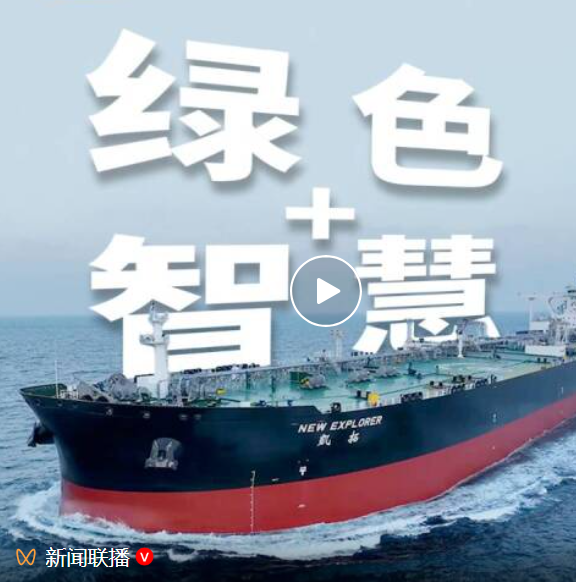
Group 1 - The core achievement is the successful delivery of the world's first methanol dual-fuel intelligent VLCC "Kaituo" four months ahead of schedule, marking a significant milestone in low-carbon development for the shipping industry [2] - The "Kaituo" is the eighth generation VLCC developed by Dalian Shipbuilding, featuring strong navigability, excellent port suitability, low emissions, and smart operation capabilities [4] - The vessel utilizes domestically developed methanol dual-fuel engines and fuel supply systems, achieving up to a 92% reduction in carbon dioxide emissions, a 99% reduction in sulfur oxides (SOx), and a 90% reduction in particulate matter (PM) compared to conventional fuel [4] Group 2 - The ship is equipped with a domestically developed intelligent ship-based platform, intelligent liquid cargo control system, and intelligent engine room operation and maintenance system, enhancing operational economy, safety, and intelligence [6] - The intelligent liquid cargo control system, developed by Dalian Shipbuilding with complete independent intellectual property rights, integrates over ten systems related to crude oil loading and transportation, enabling multi-system collaborative control, intelligent loading and unloading operations, and decision support based on an expert knowledge base [6]

前11月江苏船舶出口超1300亿元
Xin Lang Cai Jing· 2025-12-25 17:23
Core Insights - Jiangsu's shipbuilding industry is experiencing significant growth, with exports reaching 130.59 billion yuan in the first 11 months, a year-on-year increase of 37% [1] - The region is focusing on high-end, intelligent, and green transformation to strengthen its position in the international market [1] Group 1: Jiangsu Shipbuilding Industry - Jiangsu's shipbuilding and marine engineering equipment industry is a key area of strength, with major shipyards having orders booked until 2027-2029 [1] - The export value of shipbuilding from Zhenjiang reached 2.68 billion yuan, a remarkable increase of 154.2% year-on-year [1] - Jiangsu Dajin Heavy Industry Co., Ltd. reported an export value exceeding 1 billion yuan, with significant growth compared to the previous year [1] Group 2: Taizhou Shipbuilding Sector - Taizhou's Sifeng Ship Engineering Co., Ltd. has delivered over 100 vessels and holds more than one-third of the global market share for 10,000-ton multi-purpose heavy-lift ships [2] - The company has successfully delivered dual-fuel container ships that utilize high-pressure natural gas and diesel, enhancing environmental and safety performance [2] - The order volume for Taizhou's shipbuilding has more than doubled compared to the previous year, with plans to deliver 16 vessels this year [2] Group 3: Jingjiang Shipbuilding Base - Jingjiang is recognized as the largest private shipbuilding base in China, with production schedules extending to 2029-2030 [3] - The export value of newly built ships from Jingjiang reached 33.47 billion yuan, reflecting a year-on-year growth of 6.8% [3] - The local customs authority is actively facilitating the shipbuilding process by providing policy guidance and improving inspection efficiency [3]