
超市零售

Search documents
沃尔玛:Q3营收1795亿美元 2026财年销售预期下调
Sou Hu Cai Jing· 2025-11-20 14:24
本文由 AI算法生成,仅作参考,不涉投资建议,使用风险自担 【沃尔玛三季度营收增长,2026财年净销售增长预期下调】11月20日消息,沃尔玛第三季度营收达1795 亿美元,同比增长5.8%,高于预期的1774.3亿美元;调整后每股收益0.62美元,也超出预期的0.60美 元。 同时,沃尔玛公司将2026财年净销售增长预期调至4.8%-5.1%,按不变汇率计算,较之前3.75%至 4.75%的预期有所下调。 受此影响,沃尔玛盘前短线拉升后回落,现跌近2%。 ...

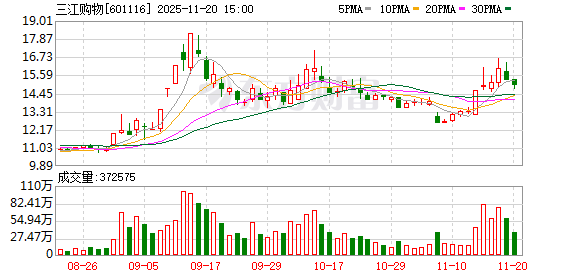
三江购物(601116)披露收到非住宅房屋征收货币补偿资金进展公告,11月20日股价下跌1.97%
Sou Hu Cai Jing· 2025-11-20 14:24
Core Points - The stock of Sanjiang Shopping (601116) closed at 14.96 yuan on November 20, 2025, down 1.97% from the previous trading day, with a total market capitalization of 8.193 billion yuan [1] - The company signed a compensation agreement for non-residential property with the Ningbo Zhenhai District Xiepu Town Housing Demolition Office, with a total compensation amount of 78,681,062 yuan [1] - The company received the first 50% of the compensation amounting to 39,340,531 yuan in May 2025 and completed the relocation by October 20, 2025, receiving the remaining compensation and relocation bonus on November 19, 2025 [1] - All compensation funds and bonuses have been received, and the company expects a positive impact on its financial indicators for 2025 [1] Financial Performance - The stock opened at 15.3 yuan, reached a high of 15.35 yuan, and a low of 14.67 yuan on the same day, with a trading volume of 5.56 billion yuan and a turnover rate of 6.8% [1] - The total compensation received from the demolition agreement is expected to positively influence the company's financial metrics for the year 2025 [1] Recent Announcements - The company has made a recent announcement regarding the progress of receiving monetary compensation for non-residential property demolition [2]

福州“胖永辉”+1 永辉闽侯第二家“胖改店”来了
Sou Hu Cai Jing· 2025-11-20 13:22
Core Insights - Yonghui Supermarket's Fuzhou Minhou University Town store is set to reopen on November 22 after a comprehensive renovation, aligning with local policies aimed at commercial upgrades and consumer potential release [1][20] - The store's transformation reflects a strategic focus on quality enhancement and consumer experience, particularly in the context of the "Fat Yonghui" model [20] Store Renovation Details - The renovated store covers nearly 3,700 square meters and is the second "Fat Yonghui" store in Minhou, featuring 9,574 SKUs with a product replacement rate of 40.7% [3] - The store's product structure has reached 80% of that of the popular brand "Fat Donglai," with 10.7% of products being imported and nearly 4,500 items from first and second-tier brands [3] Sales Performance and Consumer Engagement - The success of the renovation model is evidenced by the Yonghui Tanshishan store, which saw overall sales increase by nearly 470%, driven by popular ready-to-eat items [5] - The fresh food section underwent significant changes, with a product planning of around 900 items and a replacement rate of 56%, emphasizing the "quality at a reasonable price" strategy [5] Product Offerings and Local Integration - The vegetable section incorporates local culinary culture, introducing unique ingredients for soup, showcasing regional care [7] - The bakery and ready-to-eat food offerings increased from 5% to 25%, enhancing the shopping experience with a variety of freshly prepared items [7] Service Enhancements - The store has introduced various customer services, including free cooking for certain products and a range of convenience facilities [12] - A focus on freshness management is evident, with strict policies on product turnover and traceability [14] Employee Welfare and Training - Post-renovation, the store's staff increased from 122 to 162, with significant salary improvements and enhanced employee facilities [16] - Yonghui has been recognized as a training base for retail industry talent, reflecting its commitment to employee development [18] Future Outlook - The reopening of the Minhou University Town store represents a significant quality transformation, setting a new benchmark for retail market upgrades in the region [20] - Yonghui aims to continue its focus on high-quality retail, superior service, and differentiated product development to better meet consumer needs [20]


三江购物:关于收到非住宅房屋征收货币补偿资金的进展公告
Zheng Quan Ri Bao· 2025-11-20 13:09
Core Viewpoint - Sanjiang Shopping announced the completion of house relocation and demolition verification as of October 20, 2025, and has received compensation funds totaling 39,340,531.00 yuan and a relocation reward of 2,823,191.00 yuan on November 19, 2025 [2] Group 1 - The company completed the relocation and demolition verification process [2] - The remaining 50% of the compensation funds amounting to 39,340,531.00 yuan were transferred to the company's account [2] - The company also received a signing relocation reward of 2,823,191.00 yuan [2]
北京第五家山姆门店明日将在昌平区开业
Bei Jing Shang Bao· 2025-11-20 12:19
据悉,目前昌平区共有28家商业综合体,总建筑面积达225万平方米。昌平区商业布局以"盒子"商业为 主,占比82.1%,同时也有八达岭奥莱、首开LONG街、龙域西区三家街区商业和北京超极合生汇、玖 耀里、小站公园、首开LONG街四家非标商业,形成了多元化的商业格局。 昌平区商务局副局长景山表示,山姆会员店的入驻,填补了昌平区新零售商业版图,有效补充了未来城 东部商业供给,更是助力昌平区营造国际化消费环境的步伐。作为国际知名品牌,山姆将与其他商业体 形成良性互补,构建昌平"集中式商业"与"社区便民空间"并重的发展格局,打造"国际范"和"烟火气"共 融的消费新场景,提供更丰富、更高品质的消费选择,进一步满足市民游客的多元化需求。 北京商报讯(记者 张茜琦)11月20日,北京商报记者从昌平区获悉,山姆会员商店北京昌平店将于11 月21日正式开业,这也是山姆在北京的第五家门店。据悉,山姆昌平店共五层,地下三层、地上两层, 共1150个车位。除引入全球潮流商品外,还有多款烘焙商品在昌平店首次亮相。山姆还与多家昌平本地 优质企业建立合作,打造了20余款优质商品。 ...
沃尔玛第三季度营收为1795亿美元,第三季度美国可比销售额增长4.5%,第三季度调整后每股收益为0.62美元
Hua Er Jie Jian Wen· 2025-11-20 12:02
风险提示及免责条款 市场有风险,投资需谨慎。本文不构成个人投资建议,也未考虑到个别用户特殊的投资目标、财务状况或需要。用户应考虑本文中的任何 意见、观点或结论是否符合其特定状况。据此投资,责任自负。 沃尔玛第三季度营收为1795亿美元,第三季度美国可比销售额增长4.5%,第三季度调整后每股收益为 0.62美元。 ...
沃尔玛第三季度美国同店销售额增长4.5%,而路孚特IBES预估为增长3.8% 。
Xin Lang Cai Jing· 2025-11-20 11:59
沃尔玛第三季度美国同店销售额增长4.5%,而路孚特IBES预估为增长3.8% 。 来源:滚动播报 ...
天虹股份(002419) - 2025年11月20日投资者关系活动记录表
2025-11-20 09:26
Group 1: Company Strategy and Development - The company is committed to transforming and upgrading traditional retail, focusing on digital product empowerment and creating a dual-driven high-quality development model through industrial digitalization and digital industrialization [2] - In 2024, the company plans to innovate and upgrade its supermarket operations, launching nine lifestyle theme pavilions and a full-warehouse fulfillment center, with the first SP@CE3.0 located in Shenzhen [2] - The company has standardized modifications in 6 stores and made partial adjustments in 18 stores to enhance operational efficiency [2] Group 2: Financial Performance and Market Management - The company emphasizes the importance of investor returns and has established a "Market Value Management System" to enhance its value and communication with investors [3][4] - The company aims to strengthen its core business to improve operational performance and achieve better recognition in the capital market [5] - The average market capitalization of the company is considered reasonable at 2.5 to 3 billion [5] Group 3: Compliance and Risk Management - The company has not received any notification regarding the reduction of shares by its major shareholder, and it maintains a robust internal control and risk management system [4][5] - There are no indications of fund transfers or major shareholder fund occupation, ensuring compliance and protection of shareholder rights [5] Group 4: Data Management and Accounting - The company is monitoring policies related to the accounting treatment of enterprise data resources and is considering recognizing data resources as assets in line with its business model and digital development [3]

平谷迎首店 物美“学习胖东来自主调改”本周北京4店齐开
Bei Jing Shang Bao· 2025-11-20 06:59
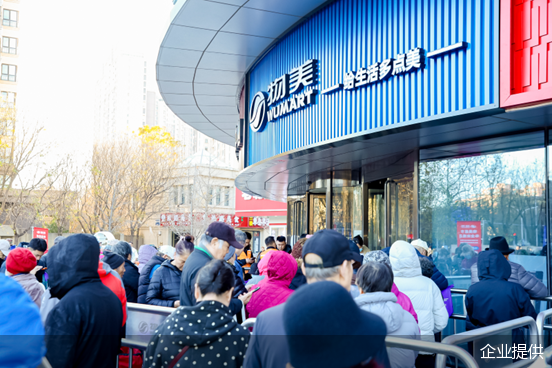
Core Insights - Wumart Supermarket has opened four new "Learning Fat Donglai" stores in Beijing, marking the first implementation of its AI-driven new retail strategy in the northeastern suburbs of Beijing [1] Group 1: Store Openings and Locations - The newly opened stores are located in residential areas, which are expected to complement the surrounding community businesses [3] - The stores include the Xinjingping store in Pinggu District, Huaye Rose store in Tongzhou District, and Fengti Shidai store in Fengtai District, with the Mukexiyuan store set to open on November 21 [1][3] Group 2: Product Offering and Strategy - The new stores have introduced a product mix where 70% of the items are new, closely aligning with the product structure of Fat Donglai, which is at 80% [3] - The focus is on high-frequency repurchase categories such as cooked food, baked goods, and fresh produce, with a special emphasis on winter storage vegetables to cater to northern consumers' seasonal habits [3] Group 3: Technology and Service Enhancements - The stores utilize multi-point AI technology for comprehensive management of fresh product quality, implementing mechanisms like "daily clearance" for fresh items and time-based discounts for cut fruits [5] - New services include professional aquatic slaughtering and poultry pre-processing, along with amenities such as free tea, drinking water, microwaves, ice, blood pressure monitors, and pet storage [6] Group 4: Performance Metrics - After the renovation of the first "New Wumart" store, daily offline sales increased by over 2.5 times, and daily transaction frequency rose by nearly 1.5 times [6] - Overall, the daily sales and customer traffic of all "New Wumart" stores have seen an increase ranging from 50% to 300% compared to pre-renovation levels [6]
通州卜蜂莲花变身“莲花荟” 将于12月25日入市
Bei Jing Shang Bao· 2025-11-20 06:58
Core Viewpoint - Beijing Bubang Lianhua has announced the reopening of its upgraded Tongzhou store as "Lianhua Hui" on December 25, featuring a new concept that integrates shopping, dining, entertainment, and services [1] Group 1: Store Features - The new Lianhua Hui spans approximately 18,300 square meters, designed to create a "neighborhood living space" and a "culinary landmark" [1] - The store includes five core segments: boutique retail, food court, cultural entertainment, children's playground, and lifestyle services [1] Group 2: Brand and Product Strategy - Multiple first-store brands will be introduced in Tongzhou, enhancing the shopping experience [1] - The core supermarket, Bubang Lianhua, has planned to offer 10,742 product items, incorporating more first-tier brands and specialty selected products, achieving an 80% overlap in product structure with the competitor, Pang Donglai [1]