农产品贸易

Search documents
日本拟增加进口美国玉米
日经中文网· 2025-04-27 03:19
美国是日本最大的玉米进口来源国。2024年,美国产玉米占日本玉米进口总量的近8成,主要被 用作饲料。 除了饲料用玉米之外,日本还要增加将玉米加工成燃料的"生物乙醇"的进口。日本政府认为,扩 大美国玉米和大豆的进口可以作为日美谈判的有效筹码…… 在对美关税谈判中,日本政府内部开始提出扩大美国产玉米进口的方案。有方案提出,除了饲料 用玉米之外,日本还要增加将玉米加工成燃料的"生物乙醇"的进口。在中美对立导致美国对华出 口减少的情况下,日本意在代替中国增加进口,从而促使美国做出让步。 虽然美国也向中国出口玉米,但作为对美国征收高关税的报复性措施,中国一直在减少进口美国 农产品。 版权声明:日本经济新闻社版权所有,未经授权不得转载或部分复制,违者必究。 日经中文网 https://cn.nikkei.com 生物乙醇的主要进口来源国是美国和巴西。美国正在大力出口以玉米为原料的生物乙醇,美国贸 易代表办公室(USTR)的报告也要求日本增加生物乙醇的使用。 美国中西部的玉米田(2016年) 日本政府认为,扩大美国玉米和大豆的进口可以作为日美谈判的有效筹码。自民党干事长森山裕 也于4月25日对这一观点表示同意。 生物乙醇可 ...
中国市场的“确定性”收获更多信任 多家外资龙头在上海布局新项目
Shang Hai Zheng Quan Bao· 2025-04-20 18:53
Group 1 - L'Oréal China held a strategic communication meeting in Shanghai, highlighting its focus on long-term investment and local supply chain development [2] - In 2024, Shanghai is set to recognize 60 new multinational company regional headquarters and 30 foreign R&D centers, with nearly 6,000 new foreign enterprises established and actual foreign investment exceeding $17.6 billion [2] - The local government has introduced 14 measures to enhance the investment environment, focusing on improving foreign investment services and legal frameworks [2] Group 2 - BASF announced a 500 million RMB investment to expand its Cellasto factory in Shanghai, aimed at supporting the electric vehicle market, with a projected capacity increase of nearly 70% by 2027 [3] - Bayer's investment of $31.42 million in Nivea (Shanghai) is directed towards local formula development, smart production line upgrades, and precise marketing strategies [4] - Otis is expanding its global R&D center in Shanghai, focusing on elevator equipment and digital technology innovations, emphasizing a "for China, in China" strategy [4] Group 3 - Multinational companies are increasingly localizing their supply chains, with Mahle reporting a 90% localization rate in China and plans to increase it by an additional 5% [5] - L'Oréal plans to enhance investments in R&D, supply chain optimization, and talent development in China, with new operational centers being established [5] Group 4 - The Chinese market is viewed as a source of "certainty" amidst global uncertainties, with its position as the second-largest consumer goods market driving growth potential [6] - The elevator market in China is experiencing significant growth, with a current ownership of 10 million units, and a focus on modernization and digitalization to meet urban renewal needs [7] - Companies are leveraging Shanghai's favorable policies and services to launch innovative products, with several brands choosing Shanghai as their global launch site [8]


东盟观察丨全球经贸格局遭史无前例冲击,中国元首东南亚之行释放什么信号?
2 1 Shi Ji Jing Ji Bao Dao· 2025-04-20 01:38
21世纪经济报道记者郑青亭北京报道 在国际局势风云变幻之际,中国元首的东南亚之行吸引了全球目光。4月14日至18日,中国国家主席习 近平对越南、马来西亚、柬埔寨进行国事访问。这是今年中国元首出访的开篇之作,也是中央周边工作 会议召开后面向周边的首访。 "在当前国际形势下,本次出访对推动中国同越南、马来西亚、柬埔寨以及中国—东盟关系整体发展, 维护亚太地区秩序和国际秩序有着重大意义。"4月17日,北京大学区域与国别研究院副院长、中国东南 亚研究会副会长翟崑在接受21世纪经济报道记者专访时说,此次访问不仅将为应对全球变局提供"中国 策",为亚太地区稳定注入"强心剂",还将为中国—东盟合作增添"新动能"。 据央视报道,进入新时代以来,习近平主席12次年度首次出访,有7次选择到访周边国家。周边,在大 国外交版图中的重要性可见一斑。在翟崑看来,本次出访既反映了中国推动周边外交主动权和执行力, 也凸显东南亚作为中国周边外交优先方向的重要性。 翟崑进一步分析道,在世界新的动荡变革期,构建周边命运共同体具有两方面重要意义:从现实层面 看,这是破解大国崛起过程中陆海双重地缘压力的有效路径;从价值层面看,周边命运共同体是构建人 ...
已致超3000人死亡!边贸商人亲述缅甸地震后经济余震
21世纪经济报道· 2025-04-02 15:31
Core Viewpoint - The recent 7.9 magnitude earthquake in Myanmar has caused significant destruction, with over 3,000 reported deaths and extensive damage to infrastructure, highlighting the country's vulnerability to seismic activity and the need for international aid and long-term capacity building for disaster response [1][2][13][14]. Group 1: Impact on Trade and Economy - The earthquake has disrupted trade between China and Myanmar, particularly affecting the import of timber, agricultural products, and minerals due to damaged infrastructure [3][22]. - Despite the immediate impact, bilateral trade is expected to stabilize over time due to the strategic cooperation between the two countries [3][22]. - The earthquake's aftermath poses significant challenges for Myanmar's economic recovery, particularly in agricultural regions crucial for rice and bean production, with potential delays in exports [22][23]. Group 2: International Aid and Response - China has rapidly mobilized rescue teams, with approximately 400 personnel involved in relief efforts, successfully rescuing survivors within the critical 72-hour window post-earthquake [16][18]. - The involvement of various Chinese rescue teams and organizations demonstrates a coordinated international response to the disaster, addressing immediate humanitarian needs [16][18]. - The challenges faced in the rescue operations are compounded by Myanmar's limited infrastructure and ongoing political instability, which hinder effective disaster management [14][15]. Group 3: Infrastructure and Recovery Challenges - The earthquake has caused extensive damage to roads, communication networks, and medical facilities, complicating rescue and recovery efforts [15][21]. - The need for substantial reconstruction funding may exacerbate the already fragile economic situation in Myanmar, deterring foreign investment due to increased risks [22][21]. - Companies operating in Myanmar, such as New Hope Group, have reported minimal impact on their overall quarterly performance, indicating resilience in their operations despite localized disruptions [17][18].
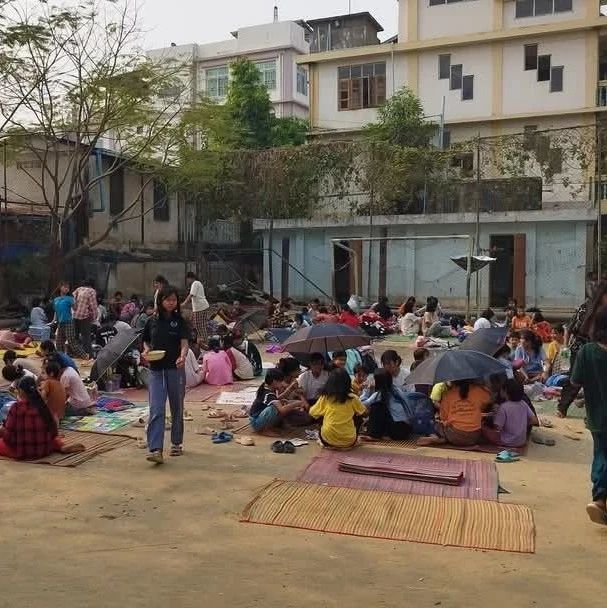
已致2886死4639伤!边贸商人口述缅甸地震后经济余震:农矿产品出口或延误
2 1 Shi Ji Jing Ji Bao Dao· 2025-04-02 12:21
Group 1: Earthquake Impact - A 7.9 magnitude earthquake struck Myanmar on March 28, resulting in 2,886 deaths, 4,639 injuries, and 373 missing persons, with the most severe damage in regions like Sagaing, Mandalay, Naypyidaw, and Bago [1][8] - The earthquake's epicenter was located at a depth of 30 kilometers, with a rupture zone of 400 kilometers, indicating significant destructive potential [8][9] - The earthquake has led to extensive infrastructure damage, which may delay exports of agricultural products and minerals, posing long-term economic challenges for Myanmar [12][14] Group 2: International Aid and Response - China has mobilized rescue teams, with the Yunnan rescue team being the first international team to arrive within 18 hours post-earthquake, successfully rescuing trapped individuals [2][9] - Approximately 400 Chinese experts and rescue personnel are currently involved in the relief efforts, with various Chinese organizations providing support and coordination for rescue operations [9][10] - The international community's assistance is deemed necessary for immediate relief, but long-term capacity building is essential for Myanmar to enhance its disaster response capabilities [2][12] Group 3: Economic Implications - The earthquake's impact on infrastructure is expected to increase reconstruction costs, further straining Myanmar's already fragile economy due to ongoing political instability [12][14] - Despite the earthquake, some companies, like New Hope Group, reported minimal impact on their operations, with a quick recovery in certain areas [10] - The earthquake has caused disruptions in trade, particularly affecting the agricultural sector, which is crucial for Myanmar's economy, but the overall impact on border trade is considered manageable [12][14]

线上研讨会|全球天气展望与美国农民春季播种意向
Refinitiv路孚特· 2025-04-01 09:06
Core Viewpoint - The article discusses the upcoming webinar focused on the summer weather outlook in the Americas and Asia, and its potential impact on crops, including updates on U.S. spring planting activities and South American late-season progress [1]. Group 1: Webinar Details - The webinar will cover topics such as the South American seasonal review, early outlook for U.S. spring planting weather, U.S. planting and production outlook, ENSO (El Niño-Southern Oscillation) and its global impacts, and summer weather in Asia [4]. - The event is scheduled for April 16, 2025, at 09:00 AM Beijing time and will be conducted in English [4]. Group 2: Company Offerings - LSEG provides market insights, data management solutions, and seamless trading execution capabilities to enhance competitiveness in commodity trading [7]. - The company emphasizes the importance of obtaining accurate information at the right time and format for successful commodity trading, utilizing structured data from various sources [9]. - LSEG offers tools, fundamentals, forecasts, alternative data, and the latest news to help clients excel in the competitive landscape of commodity trading [10]. Group 3: Commodity Trading Solutions - LSEG's energy trading solutions cover a global ecosystem of oil, gas, electricity, coal, and carbon assets, supported by exclusive partnerships and redistribution agreements with major research firms [12]. - The company has developed a comprehensive data and analysis framework for metal trading, leveraging machine learning and AI to predict market trends [13]. - LSEG's agricultural trading solutions utilize robust fundamental data, alternative data, weather tracking, and satellite imagery to forecast market price trends [15].

美关税霸凌遭全球反噬:对等关税或成“回旋镖”,美国农业陷“自伤”困局
2 1 Shi Ji Jing Ji Bao Dao· 2025-03-19 05:21
Core Viewpoint - The U.S. tariff policy, initiated by President Trump, is seen as a form of trade bullying that disrupts the global free trade system and may lead to increased prices for U.S. consumers and producers, ultimately harming the U.S. agricultural sector [1][4]. Tariff Implementation and Impact - The U.S. will begin imposing reciprocal tariffs on April 2, affecting agricultural products, as part of a broader strategy to reduce trade deficits and encourage domestic manufacturing [1][2]. - The tariffs include a 10% increase on specific products from certain countries and a 25% increase on steel and aluminum imports, with significant implications for U.S. competitiveness [3][4]. Agricultural Sector Effects - The U.S. is the largest exporter of agricultural products, with China, Canada, and Mexico being key markets, accounting for 48.9% of U.S. agricultural exports in 2024 [6][8]. - Tariffs on U.S. agricultural products are expected to increase food costs domestically and reduce export opportunities, particularly in meat and dairy sectors [5][6][9]. Global Trade Dynamics - Other countries, including China and Canada, have implemented retaliatory tariffs, which could create opportunities for other agricultural exporters like Brazil and Argentina [5][6]. - The impact of tariffs on U.S. agricultural exports is expected to be significant, with potential declines in market share for U.S. farmers [10][11]. Political and Economic Implications - The agricultural community, a crucial voter base for Trump, is expressing concerns over the long-term effects of tariffs on their livelihoods and market access [10][11]. - There is speculation about potential government subsidies to support affected farmers, similar to previous aid programs, but the feasibility of such measures is uncertain given the current fiscal deficit [11].
东方集团:股票被实施退市风险警示 3月17日停牌
Zheng Quan Shi Bao Wang· 2025-03-16 11:21
Core Viewpoint - Dongfang Group announced a risk warning for delisting and will be suspended from trading on March 17, 2023, with its A-share renamed to *ST Dongfang due to regulatory issues [1] Summary by Relevant Sections - **Regulatory Actions** - The company received an administrative penalty notice from the China Securities Regulatory Commission (CSRC) on March 16, 2025, indicating serious violations [1] - The CSRC found that the company engaged in fraudulent activities by artificially increasing business links and fabricating business chains [1] - **Financial Misreporting** - The fraudulent activities led to false records in the annual reports from 2020 to 2023 [1]

Sadot (SDOT) - 2024 Q4 - Earnings Call Transcript
2025-03-12 17:33
Financial Data and Key Metrics Changes - For Q4 2024, the company generated consolidated revenue of $216.2 million, achieving net income of $0.7 million and EBITDA of $2.2 million [9][10] - For the full year ended December 31, 2024, consolidated revenue was $700.9 million, with net income of $4 million and EBITDA of $8.9 million, representing substantial improvements from 2023 [10][20] - Q4 net income improved by $2.6 million and EBITDA improved by $4.3 million compared to Q4 2023 [11] - Full year net income improved by $11.8 million and EBITDA improved by $15.1 million compared to 2023 [11] Business Line Data and Key Metrics Changes - The company completed 75 trade-related transactions in Q4 across 20 different countries and 144 transactions for the full year across 33 countries [19] - SG&A expenses were reduced by $1.3 million to $9 million in Q4, mainly due to reclassifying certain expenses to discontinued operations [21] Market Data and Key Metrics Changes - The company had a cash balance of $1.8 million and a working capital surplus of $20.5 million [22] - The mark-to-market gain on derivative transactions contributed approximately $5.1 million in income for Q4 and $17.1 million for the year [23] Company Strategy and Development Direction - The company aims to drive operational efficiencies, strengthen investor relations, expand into new markets, diversify its commodity portfolio, and pursue strategic growth initiatives [28][29] - The CEO emphasized the opportunity to grow within the nearly $2 trillion global agri commodities market [17][30] Management's Comments on Operating Environment and Future Outlook - Management believes positive changes are occurring across the business and remains focused on advancing core agri commodity operations [24][30] - The CEO noted that the current tariff situation between the U.S. and Canada is not expected to materially affect operations [25][26] Other Important Information - The company is in the process of divesting its restaurant business, which is a top priority to focus on the global food supply chain [36] - The company is evaluating its current IR and PR strategy to enhance awareness and communication with investors [48] Q&A Session Summary Question: Update on the sale of the restaurants - The restaurant sale process is moving forward, with multiple parties in advanced stages of negotiations [36] Question: Impact of tariffs on Sadot - Most trades are initiated outside the U.S. and are not subject to recent U.S. trade tariffs, making tariffs a non-material event [38] Question: Changes in board and executive management - Recent changes align with the company's focus on the global agri commodities supply chain and bring in industry-specific experts [40] Question: Enhancing IR and PR efforts - Plans include more frequent announcements, non-deal roadshows, and evaluating the current IR and PR strategy [46][48] Question: Next steps for Sadot and market focus - The company will strengthen its presence in Brazil and Argentina while expanding into growing consumption markets like MENA and Asia [52] Question: Growing in a competitive market - The CEO sees opportunities due to the company's size, team, and global presence, focusing on streamlining operations [54]
加征100%关税,菜粕全线涨停后的一些设想
对冲研投· 2025-03-10 11:40
Core Viewpoint - On March 8, China announced a 100% tariff on canola oil and meal imported from Canada, leading to a surge in domestic canola meal prices. The overall supply of canola and meal in China for 2024 is expected to be substantial, but the recent tariff may impact the trade flow of canola products from Canada and other countries [3][5]. Group 1: Tariff Announcement and Immediate Impact - The State Council's announcement on March 8 included a 100% tariff on specific Canadian imports, including canola oil and meal, marking an unprecedented move in trade relations [5][4]. - Following the tariff announcement, all contracts for canola meal saw a price limit increase on March 10, indicating a strong market reaction [5][3]. Group 2: Historical Context and Trade Dynamics - The article reviews the history of trade tensions between China and Canada, noting that Canada’s canola seed import ban was lifted in May 2022 after three years of restrictions. However, the anti-dumping investigation initiated in September 2024 has yet to yield a ruling [5][8]. - Canada is the largest producer and exporter of canola globally, with China being its primary buyer, accounting for approximately 74% of Canadian canola exports in 2023 [8][9]. Group 3: Supply and Demand Forecasts - The latest forecasts from the AAFC predict a 5% decrease in canola planting area for the 2025/26 season, with a projected yield of 2.08 tons per hectare, leading to an estimated production of 17.5 million tons, a 2% decrease year-on-year [8]. - Canadian canola exports are expected to drop by 27% to 5.5 million tons, while domestic crushing is projected to increase by 4% to 12 million tons, indicating a shift in domestic demand dynamics [8]. Group 4: Alternative Supply Sources - The article discusses potential alternative sources for canola imports, highlighting Australia as the second-largest net exporter of canola, primarily exporting to Europe and some Asian markets [11]. - Russia is identified as a significant supplier of canola to China, with a notable portion of its canola oil exports directed towards the Chinese market [12]. - Ukraine and the EU are also mentioned as potential sources, with Ukraine being the third-largest net exporter and the EU facing a significant import gap despite being a major producer [13][14]. Group 5: Domestic Production Considerations - The article suggests that domestic canola seed crushing could potentially replace imported canola meal, although the current domestic supply primarily consists of non-delivery products [15]. - The narrowing price gap between soybean and canola meal may lead to reduced usage of canola meal in feed if Sino-Canadian relations continue to deteriorate [17].