
运动服饰

Search documents
运动品牌两重天 赛道细分已明显
Qi Lu Wan Bao· 2025-09-30 05:23
Group 1: Industry Performance - Traditional sports brands are facing declining performance, with many closing stores due to ongoing pressure on sales and profitability [1][2] - Puma announced a global workforce reduction of 500 employees and plans to close unprofitable stores, reporting a 2% decline in global revenue to €1.942 billion for the second quarter of fiscal year 2025 [1] - Nike's revenue in Greater China fell by 13% to $6.586 billion, equivalent to a decrease of approximately ¥7 billion compared to the previous fiscal year [2] Group 2: Emerging Trends - Specialized and outdoor brands are gaining popularity, with companies like Descente and Anta reporting significant growth in retail sales, with Descente's sales increasing by 60%-65% [3][4] - The running shoe segment has become a key focus for many brands, with Adidas and Salomon seeing revenue growth driven by innovative products [5] Group 3: Consumer Behavior - Consumers are shifting from brand loyalty to prioritizing product functionality and value, with over 75% of respondents in a recent survey indicating price as the primary factor in purchasing decisions [8] - The demand for "precise fit" and functional aesthetics is driving consumers to invest in higher-quality products, as seen in the popularity of Lululemon's yoga pants [7] Group 4: Retail Strategy - Brands are transitioning from traditional retail models to experiential stores, focusing on creating immersive shopping experiences rather than merely selling products [6] - The trend of opening larger, experience-driven stores is becoming prevalent, with brands like Anta and 361° adopting concepts that enhance customer engagement and interaction [6]
运动品牌“冰火两重天”:传统巨头承压,专业赛道崛起
Qi Lu Wan Bao Wang· 2025-09-29 13:39
Core Insights - Traditional sports brands are facing performance pressure, while specialized segments are experiencing growth as consumers prioritize product functionality and practicality over brand premium [1][2][3] Group 1: Performance of Traditional Brands - Puma is closing stores, including a location in Jinan's Mixc Mall, due to ongoing performance challenges, with a global revenue decline of 2% to €1.942 billion in the second quarter of FY2025 [2] - The overall revenue for brands under Tabo Sports, including Converse and Vans, has decreased by 9.9% [2] - Nike's revenue in Greater China fell by 13% to $6.586 billion, equating to a loss of approximately ¥7 billion compared to the previous fiscal year [3] Group 2: Growth in Specialized Segments - Brands like Descente and KOLON are thriving, with Descente's ski series experiencing a retail sales surge of 60%-65% [4] - Salomon's parent company, Amer Sports, reported a 23% revenue increase in Q1 2025, with Greater China revenue up 43% [5] - Lululemon's global net revenue grew by 7% to $2.5 billion in Q2 2025, with a 25% increase in domestic revenue [4][5] Group 3: Shift in Consumer Preferences - Consumers are moving from "general sports" to "precision sports," emphasizing the importance of technical barriers and scene adaptability [5] - The trend is shifting towards high-experience "super stores" that focus on lifestyle and immersive experiences rather than just selling products [6][7] - Over 75% of consumers prioritize price over brand loyalty when making purchasing decisions, indicating a significant shift in consumer behavior [8]
FILA要跟lululemon正面打了
Xin Lang Cai Jing· 2025-09-28 13:11
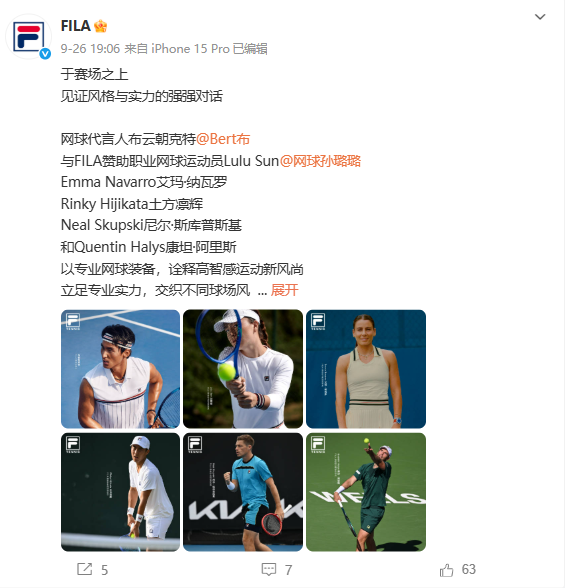
Group 1 - The article highlights the growing popularity of tennis as a fashionable sport, with brands like FILA capitalizing on this trend by deepening their association with tennis and enhancing their product offerings [3][4][6] - FILA has renewed its sponsorship of the China Open and appointed Chinese tennis player Bu Yunchaokete as its first tennis ambassador, indicating a strategic move to strengthen its brand presence in the tennis market [1][5] - The demand for tennis apparel and equipment has surged, with significant year-on-year growth reported in sales, such as a 216% increase in tennis clothing sales in 2024 [6][7] Group 2 - FILA's revenue reached 14.18 billion yuan in the first half of 2025, marking a historical high, although the growth rate has slowed compared to previous years [10][12] - The brand's operating profit margin decreased by 0.9 percentage points to 27.7%, and gross margin fell by 2.2 percentage points to 68%, attributed to increased costs from product enhancements and strategic changes [12][13] - FILA is focusing on high-end sports markets like tennis and golf to maintain its competitive edge, while facing increasing competition from both established and emerging brands in the athletic apparel sector [14][15]

告别“全民通吃”,运动品牌如何穿越分化周期?
华尔街见闻· 2025-09-27 03:56
Core Viewpoint - The article discusses the rapid changes in the Chinese sports consumption market, highlighting the paradox of growing demand alongside increasing differentiation among consumer groups. Brands must find their niche to survive in this competitive landscape [1][2]. Market Dynamics - The sports consumption market in China is experiencing significant fluctuations, with trends rising and falling quickly. For instance, camping and trail running have seen brief periods of popularity [2]. - The overall market size is expanding, with the sports consumption market expected to reach approximately 1.5 trillion yuan in 2023 and grow to 2.8 trillion yuan by 2025. Online consumption in outdoor sports has surpassed 300 billion yuan, with over 200 million participants [2][3]. Consumer Segmentation - The market is increasingly stratified, with one segment of consumers focused on low prices and immediate gratification, while another segment views sports equipment as an extension of their lifestyle and identity [3][4]. - Brands targeting elite consumers face unique challenges due to the limited size of this demographic and their strong emphasis on perceived value and cultural significance associated with sports [4][6]. Brand Strategy - Descente is highlighted as a brand that understands the differentiated market landscape. Instead of pursuing mass visibility, it focuses on a structured approach to engage with its target audience through high-density touchpoints in their daily lives [8][9]. - The brand's store locations are strategically chosen in areas with high concentrations of affluent consumers, emphasizing alignment with their daily routines rather than sheer foot traffic [9][11]. Product and Service Integration - Descente's product strategy is not about catering to everyone but rather serving those who know exactly what they want. The brand has established a connection with elite sports lifestyles through specialized offerings in skiing, triathlons, and golf [12][14]. - The brand enhances its presence through membership services and events, creating a deeper integration into consumers' lives by being present throughout their sports journey [18][20]. Long-term Relationship Building - Descente's approach emphasizes long-term relationships with consumers, focusing on consistent engagement through training camps, events, and professional partnerships in high-level competitions [20][22]. - The brand's commitment to quality service and attention to detail, such as offering equipment care and temperature matching guidance, builds trust among elite consumers who expect high standards [22][24]. Conclusion - The article concludes that in a fragmented sports consumption market, the key to success lies not in speed but in understanding and embedding oneself into the established lifestyles of target consumers. Descente exemplifies this approach by fostering sustainable trust rather than chasing fleeting trends [26][27].

从松弛栖居到潮流疗愈,成都商业推动生活消费多元革新
Sou Hu Cai Jing· 2025-09-26 15:01
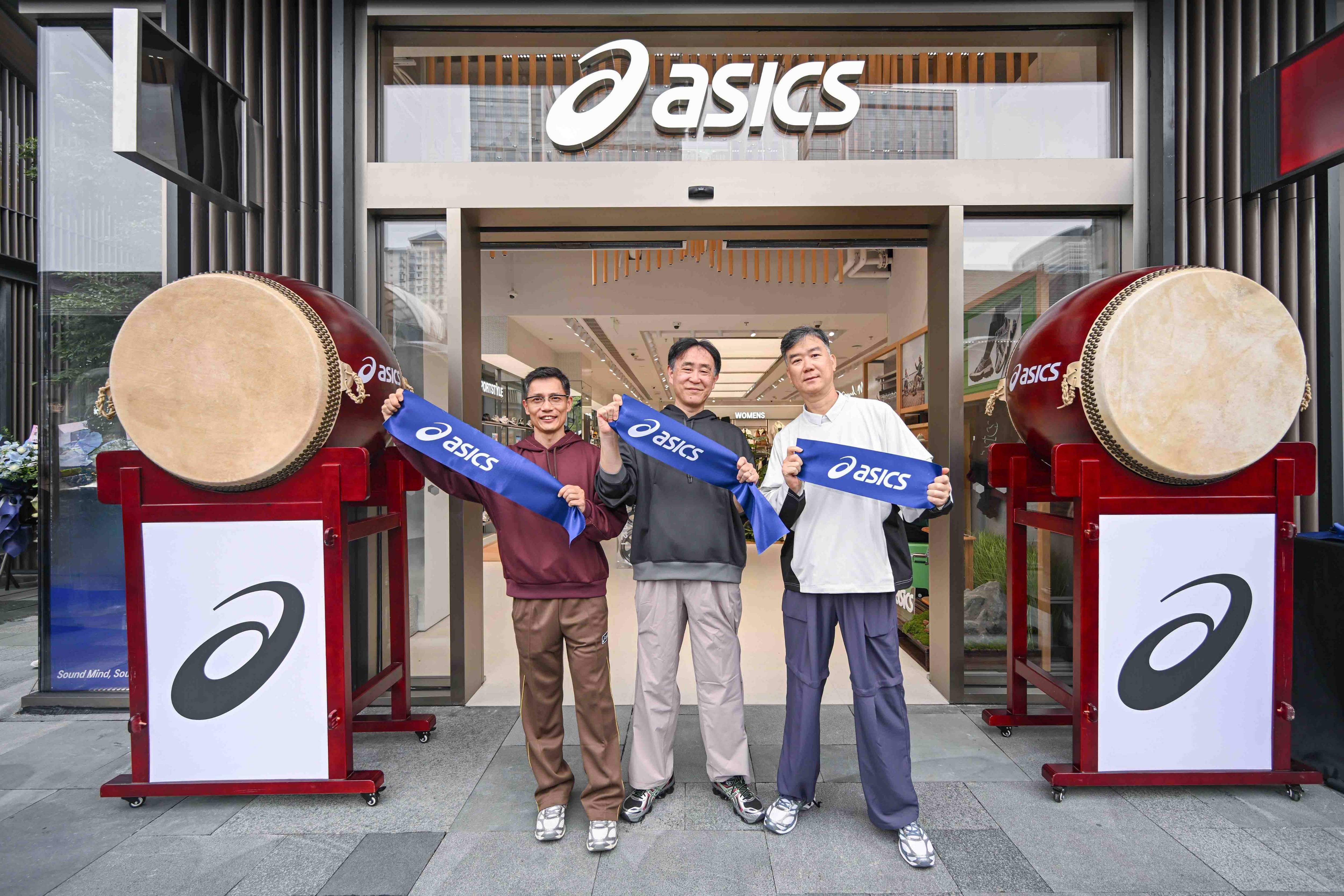
Group 1: Core Business Developments - Chengdu's commercial landscape is evolving with diverse scenarios that express lifestyle changes, including the launch of Jiuxi Lane and new store openings by ASICS and effortless [1][21] - ASICS opened a new city image store in Chengdu's Taikoo Li, featuring a product matrix that combines sports and fashion, and launched a limited edition of the GEL-KAYANO 12.1 shoe [2][6] - The effortless brand opened its first store in Southwest China, "Chuanxi Station," in Chengdu's MixC, focusing on personal care and emotional healing experiences [9][18] Group 2: Strategic Initiatives and Market Positioning - Jiuxi Lane C-PARK APM aims to redefine the relaxed lifestyle destination in Chengdu, targeting high-net-worth populations and focusing on lifestyle enthusiasts and new middle-class families [21][23] - The project emphasizes three thematic open spaces: "Yueyu," "Weiyu," and "Qiyu," integrating slow living concepts and regular events like camping film festivals and music festivals to enhance consumer engagement [23] - ASICS collaborated with local artists to create window art installations that reflect the brand's philosophy, promoting resilience and self-discovery among the youth [6][18]
纺织服装行业2025年中报总结:品牌端波动中复苏,制造端景气走弱
Shenwan Hongyuan Securities· 2025-09-26 02:42
Investment Rating - The report maintains a "Positive" investment rating for the textile and apparel industry, highlighting the resilience of the sports segment amidst fluctuating demand [2]. Core Insights - Domestic demand is recovering amidst fluctuations, while external demand is weakening. Retail sales in the textile and apparel sector showed a year-on-year growth of 2.9% to 940 billion yuan from January to August 2025, with a recovery trend noted in August [3][12]. - The sportswear segment demonstrates strong demand resilience, with leading brands like Anta and Li Ning outperforming expectations in the first half of 2025 [3][24]. - The textile manufacturing sector is facing challenges due to geopolitical tensions and rising costs, but certain segments, such as non-woven fabric, remain robust [4][5]. Summary by Sections 1. Industry Overview - Domestic retail sales in the textile sector grew by 4.6% year-on-year to 32.4 trillion yuan in the first eight months of 2025, with apparel sales increasing by 2.9% [3][12]. - External demand weakened, with textile exports declining by 5.0% year-on-year to 26.54 billion USD in August 2025, driven by reduced "export grabbing" and order shifts [3][16]. 2. Hong Kong Sports Segment - The sports segment in Hong Kong showed strong performance in H1 2025, with Anta's revenue increasing by 14% to 38.54 billion yuan and Li Ning's revenue growing by 3% to 14.82 billion yuan [3][24]. - The segment's resilience is attributed to effective inventory and discount management strategies [24]. 3. Textile Manufacturing - The midstream manufacturing sector reported stable order intake, with leading companies like Shenzhou International achieving a revenue growth of 15% in H1 2025 [3][4]. - The upstream textile sector faced challenges due to cautious ordering and weak expectations, with companies like Weixing and Xin'ao reporting revenue declines [3][5]. 4. Men's and Women's Apparel - Men's apparel showed stable revenue performance, but profit margins were pressured due to increased marketing and expansion costs [3][21]. - Women's apparel revenue stabilized, with notable performance from brands like Ge Li Si, which saw a 4% increase in comparable revenue [3][21]. 5. Children's Apparel - The children's apparel segment faced pressure on profits due to increased investment, despite stable revenue growth of 3% for brands like Semir and Jiama [3][21]. 6. Home Textiles - The home textiles sector experienced overall performance pressure due to the domestic consumption environment, with companies like Luolai and Mercury reporting mixed results [3][21]. 7. Investment Analysis - The report suggests that consumer promotion policies are expected to boost brand demand, with a focus on selecting resilient segments within the textile industry [3][4]. Recommended stocks include Anta, Li Ning, and Shenzhou International among others [3][4].
LULU Downgrade, KMX Earnings Slide, SBUX Layoffs
Youtube· 2025-09-25 14:01
CarMax - CarMax's stock has dropped approximately 20% following disappointing earnings results, missing both revenue and earnings expectations [2][3] - The company reported earnings of 64 cents per share, significantly below the expected $1.09, with revenue falling short at $6.6 billion compared to the anticipated over $7 billion [3][4] - Same-store sales declined by 6.3%, while analysts were expecting at least 1% growth, indicating a challenging market environment for the used car retailer [4][5] - The CEO described the second quarter as "challenging" and announced plans to cut costs by $150 million over the next 18 months [5] Starbucks - Starbucks is undergoing a billion-dollar restructuring plan, which includes cutting hundreds of non-retail jobs and closing underperforming stores [6][7] - The company aims to improve sales through various initiatives, including the closure of stores focused solely on mobile ordering and pickup, which were deemed overly transactional [8][10] - Workers affected by the job cuts will be notified soon, following a previous decision to eliminate over a thousand jobs earlier this year [9] Lululemon - Lululemon has faced multiple downgrades, with analysts expressing concerns over a challenging competitive environment and tariff risks, particularly related to their exposure in Vietnam [11][13] - The stock has fallen more than 50% year-to-date, with recent downgrades indicating a lack of confidence in the company's performance [12][14] - Despite the challenges, there is a potential opportunity with the Amex Platinum card offering a $300 credit for Lululemon, which may attract affluent customers [15]



一场烟花,凭什么炸掉安踏百亿市值?
虎嗅APP· 2025-09-25 13:39
Core Viewpoint - The article discusses the impact of Arc'teryx's fireworks event on its parent company Amer Sports and its major shareholder Anta Group, highlighting the failures in environmental governance and corporate governance that led to a significant drop in stock prices for both companies [2][4][5]. Summary by Sections Company Governance - The fireworks event caused a nearly 5% drop in Amer Sports' stock price and a 7.28% drop in Anta's stock price, resulting in a market value loss of nearly 10 billion [2]. - The incident reflects a disconnect between Amer Sports' brand image of sustainability and its actual practices, potentially affecting consumer purchasing intentions and leading to a significant decline in stock prices [4][5]. Financial Performance - Anta's financial performance is heavily reliant on Amer Sports, which has become a crucial profit driver since Anta acquired a 57.95% stake in Amer Sports for €4.6 billion in 2019 [5]. - In 2024, Anta reported a revenue of 70.83 billion, a year-on-year increase of 13.6%, and a net profit margin increase to 22% from 16.4% the previous year [5]. - However, excluding profits from Amer Sports, Anta's net profit attributable to shareholders was only 11.73 billion, a modest increase of 7.1% [5]. Consumer Trust - The fireworks incident has led to calls for boycotts and returns, undermining Amer Sports' market foundation in China, which is its largest growth engine [5][6]. - The event highlights a broader issue of governance gaps in international operations, as the lack of a unified crisis communication mechanism between regional teams and the parent company has eroded investor trust [6]. ESG and Greenwashing - The article discusses the concept of "greenwashing," where companies create a facade of environmental responsibility without genuine action [7][9]. - Despite Amer Sports' claims of assessing its environmental impact, the fireworks event suggests a failure to evaluate the environmental damage and public backlash adequately [10]. - Anta has made strides in ESG governance, achieving an MSCI ESG rating upgrade from "BB" to "A," but the recent incident raises questions about the effectiveness of these efforts [9][10]. Recommendations for Improvement - To regain consumer trust, companies must align their actions with their stated values, ensuring that environmental considerations are integrated into decision-making processes [11][12]. - Engaging with environmental NGOs, expanding ESG risk assessments, and fostering consumer dialogue are suggested strategies for improving governance and restoring trust [12].

一场烟花,凭什么炸掉安踏百亿市值?
Hu Xiu· 2025-09-25 13:14
Core Viewpoint - The incident involving Arc'teryx's fireworks display has significantly impacted its parent company Amer Sports and its major shareholder Anta Group, leading to a notable decline in stock prices and market value, raising concerns about environmental governance and corporate responsibility [1][2][3]. Group 1: Financial Impact - Amer Sports' stock price dropped approximately 5% following the incident, while Anta Group's stock fell by as much as 7.28%, resulting in a market value loss of nearly 10 billion yuan [1]. - Anta's financial performance is heavily reliant on Amer Sports, which has become a crucial profit driver for the group, contributing significantly to its overall revenue and profit margins [4][3]. - In 2024, Anta reported a revenue of 70.83 billion yuan, a year-on-year increase of 13.6%, with a net profit margin rising to 22% from 16.4% the previous year [4]. Group 2: Brand Trust and Consumer Sentiment - The fireworks incident has led to a collapse of consumer trust, as Arc'teryx has long been perceived as a premium outdoor brand committed to sustainability, and this event contradicts its core values [2][5]. - Social media backlash has prompted calls for boycotts and returns, threatening Arc'teryx's market position in China, which is a key growth engine for Amer Sports [4][5]. - The incident highlights a disconnect between the brand's proclaimed values and its actions, potentially undermining consumer loyalty and the high-price model [4][11]. Group 3: Governance and ESG Concerns - The incident reveals significant governance gaps in the international operations of the company, particularly in crisis communication and internal management [5][6]. - There is a lack of consistent messaging and accountability between the brand's domestic and international teams, which can erode investor confidence [5][6]. - The concept of "greenwashing" is raised, indicating that the company's marketing efforts may not align with actual environmental practices, leading to skepticism about its sustainability claims [6][7]. Group 4: Recommendations for Recovery - To regain consumer and investor trust, the company should engage with environmental NGOs, enhance ESG risk assessments, and actively seek consumer feedback [9][10]. - Transparency and alignment of actions with stated values are crucial for rebuilding trust, as consumers increasingly prioritize brands that reflect their own values [11][10].

ANTA SPORTS(2020.HK):THE UPS AND DOWNS FROM ARC’TERYX
Ge Long Hui· 2025-09-24 19:22
Core Viewpoint - The recent controversy surrounding Arc'teryx's marketing campaign in Tibet has raised concerns about Anta's group-wide sales, although the impact is expected to be limited compared to past incidents involving foreign brands [1][2]. Group Sales Impact - The fireworks display by Arc'teryx on September 19, 2025, led to public backlash and an investigation, resulting in share price declines of 2.2% for Anta and 5.8% for Amer Sports on September 22, 2025 [1]. - While there may be weaker sales for Anta brands in 4Q25, particularly during the Golden Week and Double-11 campaigns, the overall impact is anticipated to be manageable and significantly less severe than the 15-20% year-over-year declines experienced by Nike and Adidas in 2021 due to the Xinjiang cotton controversy [2]. Earnings and Revenue Projections - The direct impact on Anta's earnings is expected to be limited, with the backlash primarily affecting Arc'teryx, which contributed 41% of Amer Sports' revenue in 2Q25, with Greater China accounting for 33% of Amer's total revenue [2]. - Amer Sports raised its 3Q25 revenue guidance from a year-over-year growth of 20% to the high-20% range, driven by strong performance across all brands globally [2]. Sector-Wide Concerns - The more pressing issue for Anta is the overall weak consumer sentiment in the sector, as indicated by national retail sales figures from July to August 2025 [3]. - Increased marketing costs are expected post-incident, but these are considered manageable [3]. Competitive Landscape - The market in 4Q25 is projected to remain competitive, potentially affecting sales and margins for sportswear brands. However, Anta is expected to outperform competitors due to its multi-brand strategy, with brands like Fila recovering and Descente and Kolon attracting affluent customers [4]. Valuation Adjustments - Anta's FY25-26E EPS has been lowered by 1% due to anticipated sales weakening, but the impact is deemed manageable [4]. - The target price has been adjusted to HK$113.5, based on a 20x 2026E P/E, which corresponds to a 22.7x 2025E P/E. This presents a potential accumulation opportunity for investors, with expectations of future buybacks funded by Anta's cash reserves [5].