
保险业

Search documents
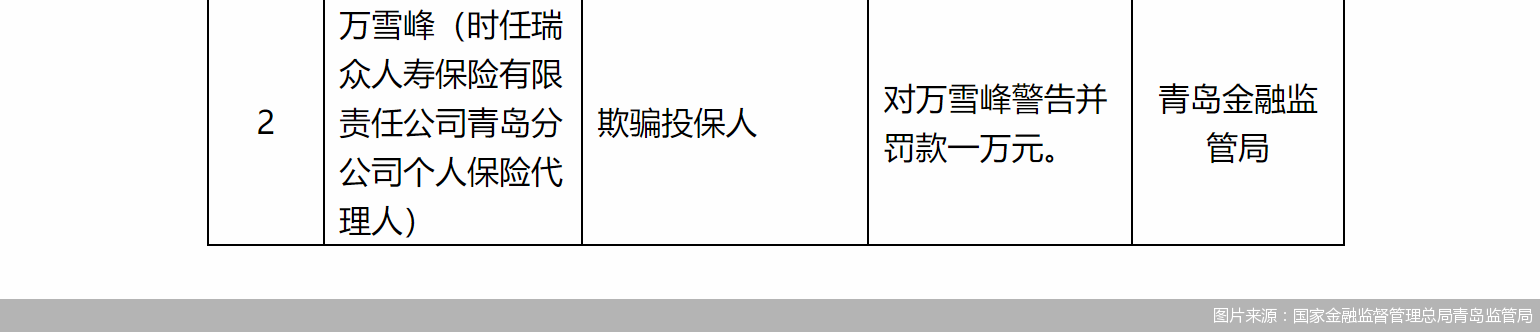
欺骗投保人,瑞众人寿一保险代理人被罚款
Bei Jing Shang Bao· 2025-12-11 10:25
北京商报讯(记者 李秀梅)12月11日,国家金融监督管理总局青岛监管局发布行政处罚信息显示,因欺骗投保人,时任瑞众人寿保险有限责任公司青岛分 公司个人保险代理人万雪峰被警告并罚款1万元。 ...

光大永明人寿巨亏之后迎来新掌门,精算老将张晨松能否打赢“翻身仗”
Feng Huang Wang Cai Jing· 2025-12-11 10:24
Group 1 - The new chairman of Everbright Sun Life, Zhang Chensong, has been approved by the regulatory authority, marking a significant leadership change in the company [1][4] - Zhang, a seasoned actuary with 26 years of experience, has rapidly ascended from general manager to chairman in just over a year [6][19] - Everbright Sun Life has faced continuous losses since 2022, with a total loss of 35.77 billion yuan from 2022 to 2024, including a record loss of over 1.7 billion yuan in 2024 [8][19] Group 2 - The company achieved a premium income of 19.473 billion yuan in 2023, marking a record high, but has struggled with high surrender rates, which reached 2.813 billion yuan in 2022 and 1.468 billion yuan in 2023 [8][9] - The high surrender rates are attributed to several products with over 50% surrender rates, primarily from the bank insurance channel, which has led to significant premium loss [9][19] - In 2024, the company implemented a "three reductions" strategy to cut costs and improve efficiency, including the closure of multiple branches and a reduction in agents [18] Group 3 - Despite a challenging environment, the company showed signs of recovery in early 2025, reporting a profit of 352 million yuan in Q1, although it faced a loss of 740 million yuan in Q2 [18] - The company's risk assessment rating improved to AA class for two consecutive quarters in 2025, indicating a stabilization in its financial health [18] - Zhang's focus will be on optimizing product structure and reducing reliance on the bank insurance channel to drive sustainable growth [19]

A股尾盘突发,多支权重股异动,特高压概念活跃
Zheng Quan Shi Bao· 2025-12-11 09:58
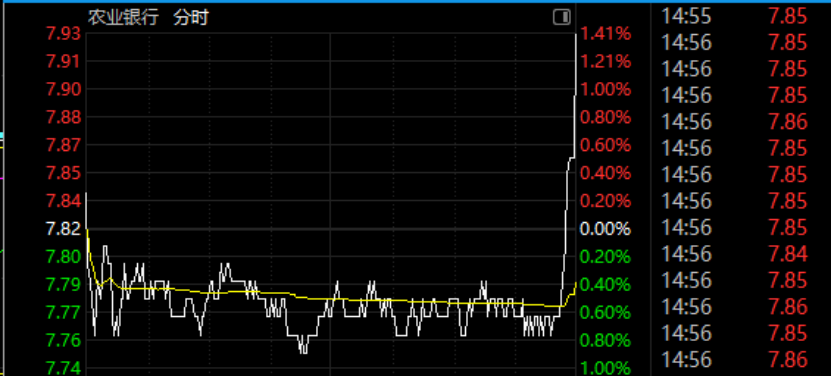
Market Overview - A-shares experienced a mixed performance with major indices declining, while the North Stock 50 Index surged over 6% at one point, closing up 3.84% [1][7] - The Shanghai Composite Index fell 0.7% to 3873.32 points, with the Shenzhen Component and ChiNext Index down 1.27% and 1.41% respectively [1] - Total trading volume in the Shanghai, Shenzhen, and North exchanges reached 188.55 billion yuan, an increase of 9.37 billion yuan from the previous day [1] Sector Performance - Consumer sectors such as retail, food and beverage, and liquor saw significant declines, with companies like Anji Food and Haixin Food hitting the daily limit down [1] - Several heavyweight stocks, including Agricultural Bank of China, Bank of China, Industrial and Commercial Bank of China, China Petroleum, Kweichow Moutai, and China Life, experienced a sudden rally during the closing auction [4] Notable Stocks - New stocks showed resilience, with Moer Thread surging 28% to surpass 900 yuan, reaching a market capitalization of over 440 billion yuan [1] - The high-voltage concept stocks were active, with Tongguang Cable, Zhongchao Holdings, and Hualing Cable hitting the daily limit up [10][11] North Stock 50 Index Adjustments - The North Stock 50 Index will undergo regular adjustments effective December 15, including new sample stocks such as Five New Tunnel Equipment, Better Ray, and Airosoft [9] High-Voltage Sector Insights - The high-voltage sector saw strong performance, with Tongguang Cable hitting a 20% limit up, and other companies like Zhongchao Holdings and Hualing Cable also reaching their daily limits [11] - According to CITIC Securities, the power equipment industry is expected to benefit from both domestic demand and external demand opportunities during the 14th Five-Year Plan period, with an estimated investment of approximately 3.8 trillion yuan in grid infrastructure from 2026 to 2030 [12]
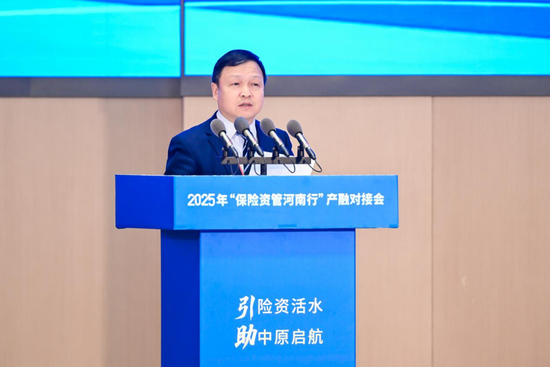
河南金融监管局向恒:险资长线优势要与河南长远规划紧密结合
Xin Lang Cai Jing· 2025-12-11 08:40
Core Viewpoint - Henan is at a critical stage of development, providing favorable opportunities and broad space for insurance funds and financial assets [1][5]. Financial Market Development - In recent years, Henan's financial market has maintained a stable and healthy development trend, with the insurance industry playing a significant role in high-quality development during the 14th Five-Year Plan period, achieving a total asset of 838 billion yuan, crossing four trillion yuan platforms in five years [3][7]. - A number of key insurance products related to national economy and people's livelihood have expanded and improved in quality, leading the nation [3][7]. Insurance Fund Investment - As of the end of October, Henan has introduced over 1 trillion yuan in insurance funds, with investment methods becoming increasingly diverse, including private equity funds, stocks, equity, and real estate [3][7]. - Investment areas are expanding from traditional coal and chemical industries and infrastructure to emerging industries, providing long-term stable funding support for major projects and key industries in Henan [3][7]. Health and Aging Initiatives - The insurance industry is actively participating in the construction of a healthy Henan through initiatives like "insurance + health" and "insurance + elderly care," with total planned investments exceeding 5 billion yuan, effectively driving the development of upstream and downstream supporting industries [3][7]. Strategic Development - Henan has transformed from a traditional agricultural province to a new industrial province, modern transportation hub, and an inland open highland over the past decade [4][8]. - The leadership has invited investment institutions to deepen cooperation and support financing and intelligence, aiming to align the long-term advantages of insurance funds with Henan's development plans for mutual benefit [4][8].
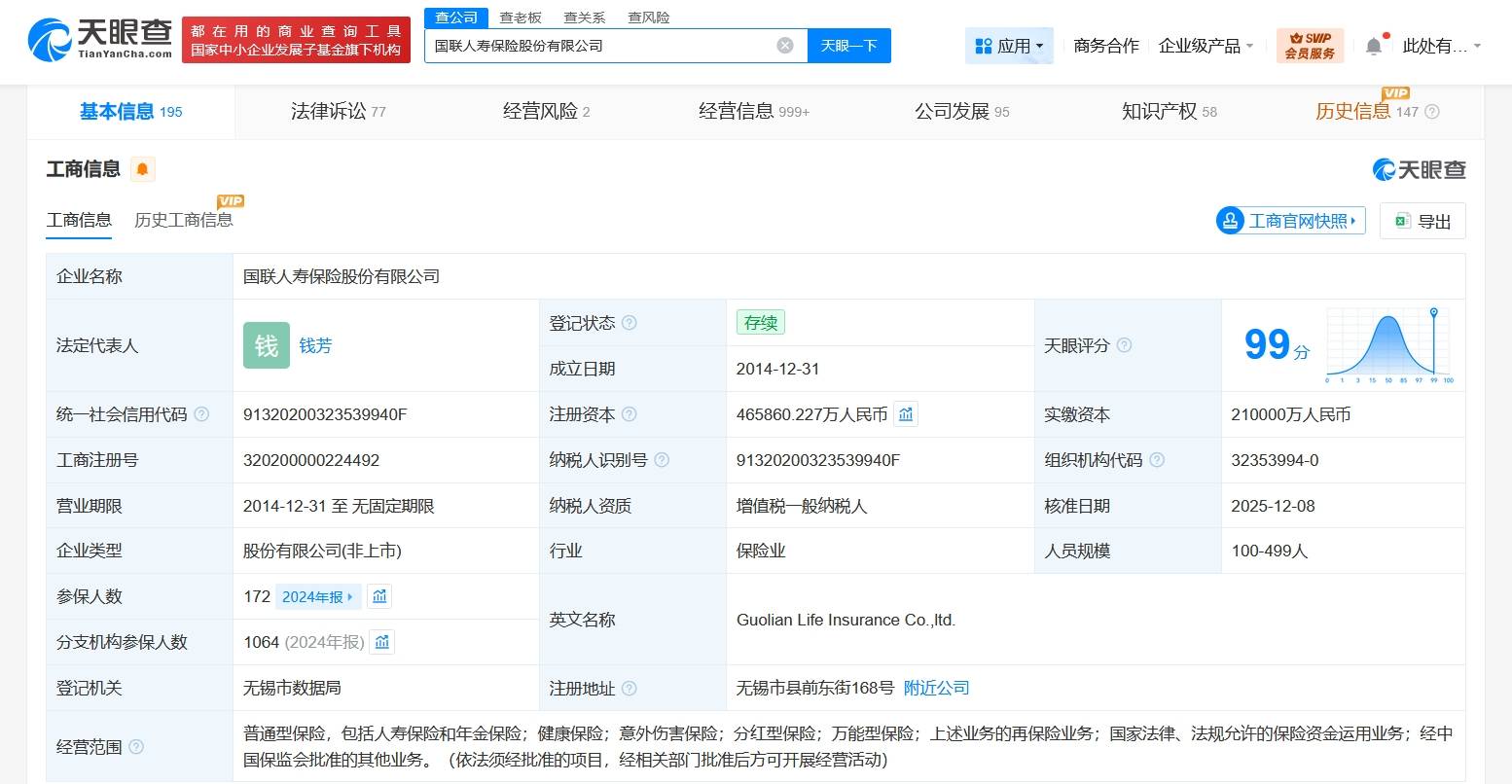
国联人寿增资至46.6亿元
Sou Hu Cai Jing· 2025-12-11 06:34
Core Insights - Guolian Life Insurance Co., Ltd. has increased its registered capital from 2.1 billion RMB to approximately 4.66 billion RMB, representing an increase of about 122% [1][3][4] - The company has undergone changes in its legal representative and several senior management positions [1][3] Company Information - Guolian Life Insurance was established in December 2014 and operates in various insurance sectors including life insurance, annuity insurance, health insurance, accident insurance, dividend insurance, and universal insurance [1][2] - The company is jointly owned by Wuxi Guolian Development (Group) Co., Ltd., Wuxi Lingshan Cultural Tourism Group Co., Ltd., and Wuxi Transportation Industry Group Co., Ltd. among others [1][4] Shareholder Information - The major shareholders include Wuxi Guolian Development (Group) Co., Ltd. with a 33.33% stake, Wuxi Lingshan Cultural Tourism Group Co., Ltd. with 15.71%, and Wuxi Transportation Industry Group Co., Ltd. with 13.33% [4]
瑞众人寿举牌青岛啤酒,持股比例达到5%
Jin Rong Jie· 2025-12-11 02:45
Core Viewpoint - 瑞众人寿保险增持青岛啤酒股份,显示出对该公司的信心和未来增长潜力 [1] Group 1: Shareholding Activity - 瑞众人寿保险于12月5日增持青岛啤酒股份20万股,每股作价53.2070港元,总金额为1064.14万港元 [1] - 增持后,瑞众人寿保险的最新持股数目约为3276.4万股,持股比例达到5.00% [1]
固收-2026年机构行为:方寸之间,起舞翩跹
2025-12-11 02:16
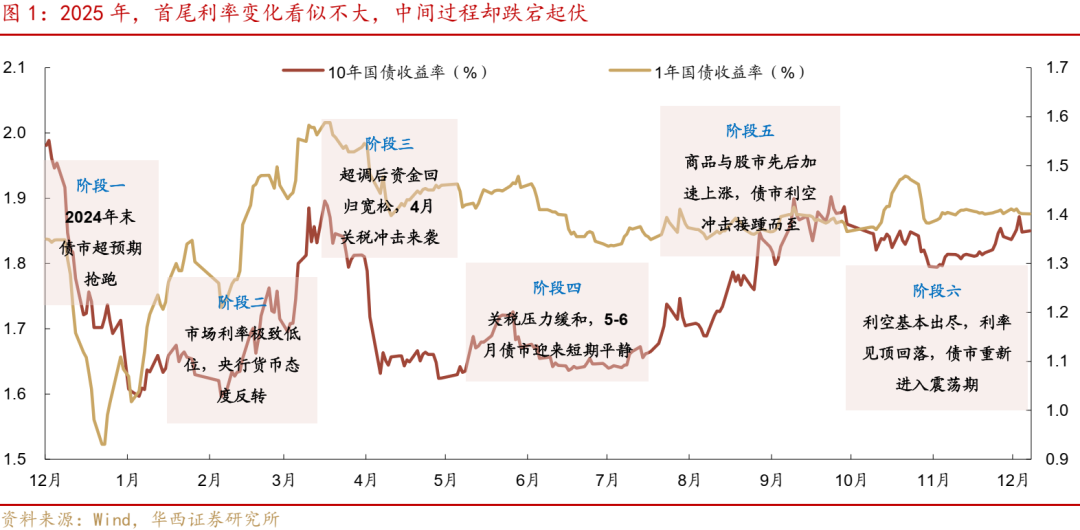
Summary of Conference Call Notes Industry Overview - The notes primarily discuss the bond market and the behavior of various financial institutions in 2025 and projections for 2026, focusing on the fixed income sector and insurance industry [1][2][3][5][6]. Key Points Bond Market Dynamics - In 2025, the total new bond investment reached 7 trillion, double the highest value in previous years, but did not significantly impact secondary market interest rates due to large banks primarily purchasing short-term government bonds to balance duration [1][3]. - Agricultural commercial banks faced regulatory constraints and a shift back to core lending activities, resulting in historically low growth rates in financial investments [1][3]. - Insurance companies showed a preference for equity assets over bonds, with new equity investments exceeding 900 billion, while bond investments were less than 300 billion. They maintained some allocation to long-term local government bonds but were reluctant to invest in government bonds, quickly selling off long-term bonds during interest rate declines [1][3][6]. - Fund leverage remained stable, but duration levels fluctuated significantly, with a cautious approach in the latter half of the year leading to substantial sell-offs of long-term bonds [1][4]. Projections for 2026 - The market is expected to see an increase in the proportion of rights products, with fixed income plus products likely to expand. Non-policy financial bonds may attract capital inflows, while policy-driven financial products may weaken [1][5]. - The insurance industry is projected to weaken further in 2026, with high dividend stocks becoming more attractive as they help mitigate duration mismatch issues. The demand for long-term government bonds is expected to decrease as the supply has already filled the duration gap [6][7]. - Regulatory changes are anticipated to impact operational strategies and asset allocation across various institutions, necessitating enhanced active management capabilities [5][10]. Risks and Market Changes - The bond market is expected to experience low volatility in the coming year, with net financing speeds for long-term government bonds remaining high. The large holdings by institutions could lead to significant impacts on the financial system if interest rates fluctuate [2][8][9]. - The central bank is expected to implement more precise controls to prevent systemic risks, with large banks playing a stabilizing role in the market [2][9]. Regulatory Impacts - Upcoming regulations, including fund fee reforms and new accounting standards for insurance companies, are expected to influence market behavior. Institutions may shift towards ETFs or similar products for liquidity management and focus more on long-term active management [10][11]. - The overall impact of new accounting standards on the insurance sector is expected to be limited, as many companies have already adapted to these changes [11]. Additional Important Insights - The insurance sector's capacity for equity asset allocation remains significant, with potential for an additional 3.7 trillion in equity investments, indicating a strong policy signal rather than strict constraints [7]. - The anticipated stability in traditional life insurance premium income is expected to persist, with no strong demand for bond purchases due to the lack of attractive investment opportunities [6][11].
2026债市,或比预期好一点
Xin Lang Cai Jing· 2025-12-10 13:52
Group 1 - The core viewpoint of the articles indicates that the bond market in 2025 is expected to face significant challenges, transitioning from a "bullish long, bearish short" to a "bullish short, bearish long" market, making it increasingly difficult to generate returns [1][38] - Key variables affecting the bond market include "expansive fiscal policy," "stable monetary policy," "strong risk appetite," "strict regulation," and "weak reality," which are expected to shape the market dynamics in 2026 [1][38] - The fiscal deficit for 2025 is projected to increase by 2.9 trillion yuan compared to 2024, reaching a historical high since 2021, with a total deficit of 5.66 trillion yuan [1][39] Group 2 - The "expansive fiscal policy" is likely to continue into 2026, with a projected broad fiscal deficit of 15.1 to 15.9 trillion yuan, although the contribution to economic growth may be more stable than in 2025 [2][50] - The monetary policy in 2025 acted more as a supporting role, with expectations for 2026 to potentially see a shift towards a more expansive monetary policy, which could exceed market expectations [3][55] - Regulatory measures in 2025 have led to stricter behaviors among institutions, impacting the bond market, with asset management institutions likely to maintain lower bond allocation ratios [4][56] Group 3 - The macroeconomic indicators have shown marginal weakening since early 2025, but have not significantly influenced asset pricing, as the bond market has been more closely tied to equity market performance [5][38] - The bond market is expected to experience a "slow start, fast finish" rhythm in 2026, with potential for significant movements in the second and third quarters as monetary policy evolves [6][38] - The overall sentiment in the bond market is anticipated to remain cautious, with the need to monitor macroeconomic events that could trigger changes in monetary policy [6][55]
长城人寿举牌新天绿能涉违规,被出具警示函
Guo Ji Jin Rong Bao· 2025-12-10 13:18
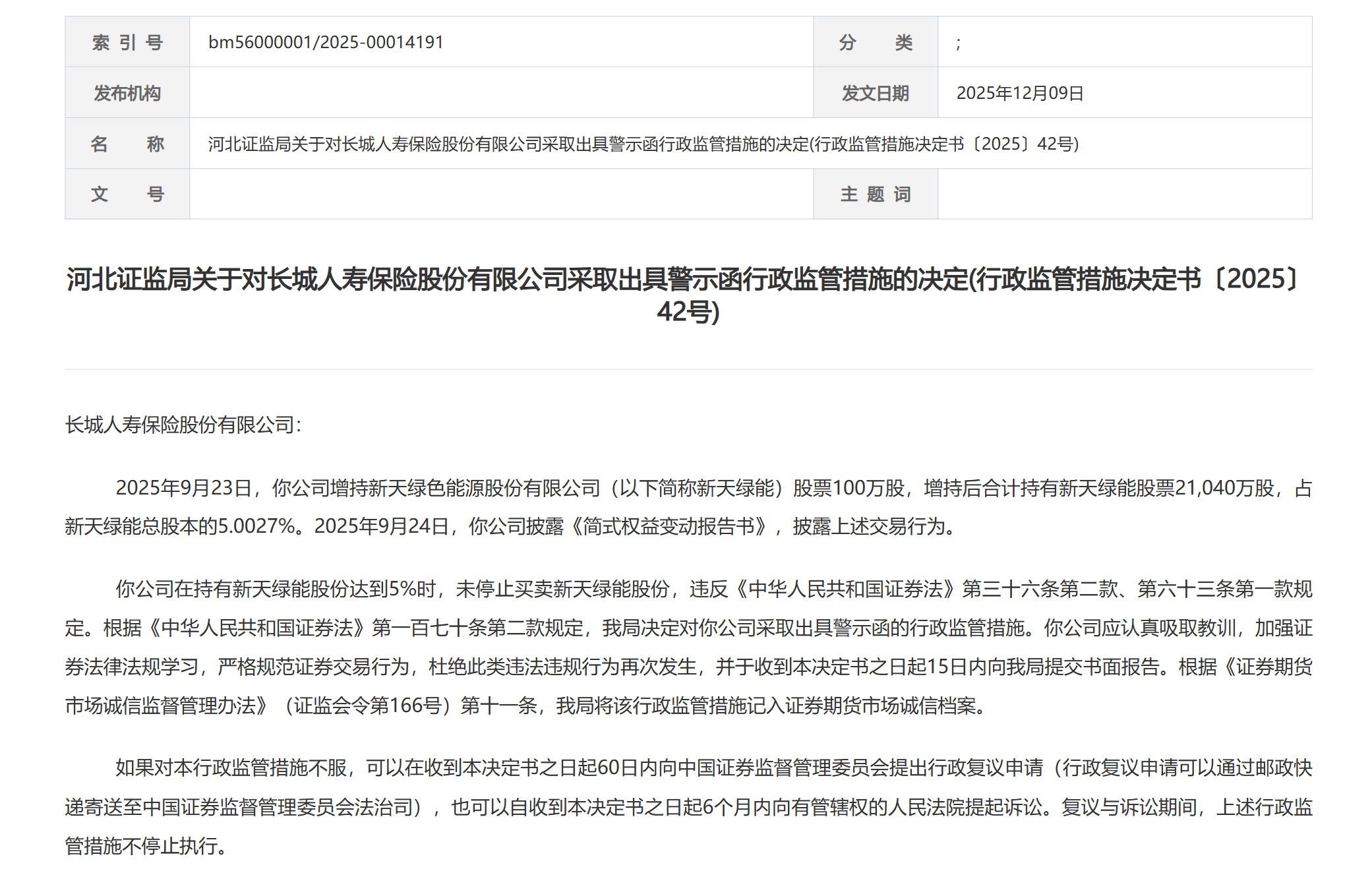
9月23日,长城人寿增持新天绿色能源股份有限公司(下称"新天绿能")股票100万股,增持后合计持有新天绿能股票2.104亿股,占新天绿能总股本的 5.0027%。9月24日,长城人寿披露《简式权益变动报告书》,披露上述交易行为。 险企举牌"大户"收警示函! 12月9日,河北证监局披露行政监管措施决定书,决定对长城人寿保险股份有限公司(下称"长城人寿")采取出具警示函的行政监管措施。 | 索 引 号 | bm56000001/2025-00014191 | | --- | --- | | 发布机构 | | | 称 ਆ | 河北证监局关于对长城人寿保险股份有限公司采取出具警示函行政监管 | | 文 粤 | | 河北证监局要求,长城人寿应认真吸取教训,加强证券法律法规学习,严格规范证券交易行为,杜绝此类违法违规行为再次发生。根据《证券期货市场 诚信监督管理办法》第十一条,河北证监局将该行政监管措施记入证券期货市场诚信档案。 长城人寿是经原中国保监会批准成立的全国性人寿保险公司,于2005年9月20日正式成立,公司总部设于北京,注册资本金68.39亿元,总资产规模超 1600亿元,主要业务范围包括人寿保险、健康保险、 ...

瑞众人寿保险增持青岛啤酒股份20万股 每股作价约53.21港元
Zhi Tong Cai Jing· 2025-12-10 11:17
Group 1 - The core point of the article is that 瑞众人寿保险 has increased its stake in 青岛啤酒 by purchasing 200,000 shares at a price of 53.2070 HKD per share, totaling 10.6414 million HKD [1] - After the purchase, 瑞众人寿保险's total holdings in 青岛啤酒 amount to approximately 32.764 million shares, representing a 5.00% ownership stake [1]