
包装

Search documents
全球铝罐需求强劲 鲍尔包装(BALL.US)Q2业绩超预期并上调全年利润指引
智通财经网· 2025-08-05 13:06
Core Viewpoint - Ball Corporation reported better-than-expected Q2 earnings driven by strong demand for aluminum cans in North America and Europe, and raised its annual profit guidance [1] Group 1: Financial Performance - Q2 revenue increased by 7.8% to $3.34 billion, surpassing market expectations of $3.12 billion [1] - Adjusted earnings per share were $0.90, exceeding the anticipated $0.87 [1] - Global shipments of aluminum packaging products grew by 4.1%, up from 2.6% in the previous three months [1] Group 2: Market Demand - Increased demand from packaged food companies is attributed to consumers opting for canned foods and beverages amid high inflation [1] - Beverage packaging sales in North and Central America rose from $1.47 billion to $1.61 billion year-over-year [1] Group 3: Future Outlook - The company expects comparable earnings to grow by 12% to 15% by 2025, an increase from the previous forecast of 11% to 14% [1] Group 4: Cost Management - Tariffs on steel and aluminum have raised input costs for companies like Ball [2] - The company believes the direct impact of announced tariffs is manageable and is working closely with customers to mitigate the effects of aluminum price fluctuations [2] - The CEO indicated that the company is strictly controlling costs in light of potential geopolitical uncertainties and market volatility in the second half of the year [2]

财说丨40倍市盈率幻象下,华源控股失速的营收与化工罐困局
Xin Lang Cai Jing· 2025-08-04 23:41
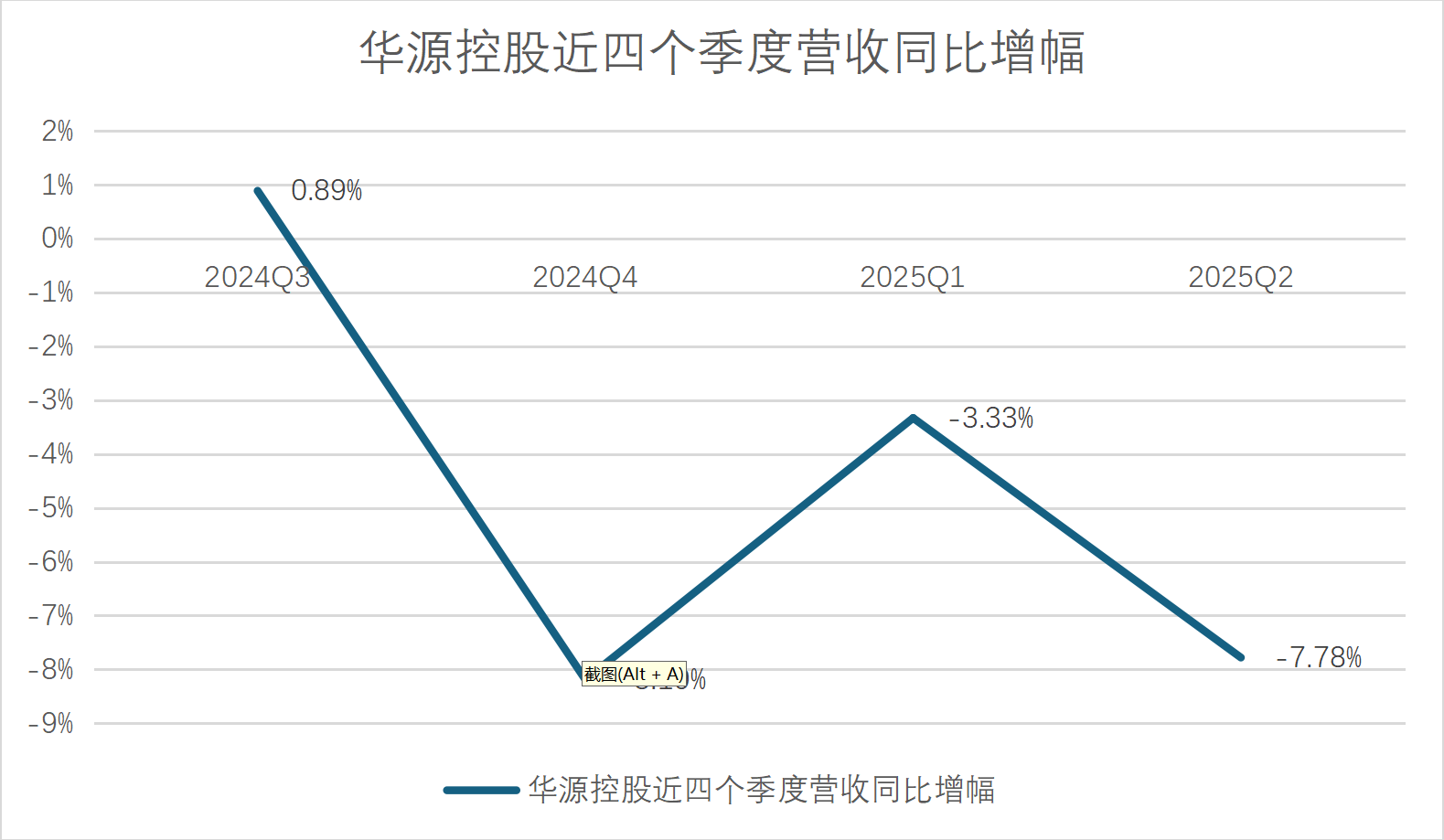
Core Viewpoint - Huayuan Holdings is experiencing a significant decline in revenue while maintaining a seemingly inflated net profit, raising concerns about the sustainability of its financial performance and business model [1][3][10] Revenue and Profit Analysis - In the first half of 2025, Huayuan Holdings reported revenue of 1.162 billion yuan, a year-on-year decline of 5.68%, with Q2 revenue at 600 million yuan, down 7.78%, marking the worst quarterly performance in nearly three years [1] - Despite the revenue drop, net profit increased to 48.5 million yuan, up 15.15% year-on-year, primarily due to cost-cutting measures rather than core business growth [3] - Total expenses decreased by 20.23 million yuan, a reduction of 16%, with significant cuts in sales, management, and financial expenses [3] Business Model and Structural Issues - Huayuan Holdings is heavily reliant on low-margin chemical packaging, with 56% of its revenue coming from products with a gross margin of only 13.59% [4] - The company has a high dependency on its top five clients, which account for 59.81% of revenue, with one major client contributing 28.59% [4] - The net profit margin for 2024 is projected at only 2.8%, significantly below the industry average [4] Market Conditions and Cash Flow Concerns - The construction industry, which is a key market for Huayuan's chemical packaging, is facing challenges, with new construction area down 11.2% in 2024, leading to reduced demand for chemical cans [5] - The operating cash flow to net profit ratio has dropped from 33.12 in 2022 to 2.98 in 2024, indicating potential liquidity issues [5] Accounts Receivable and Inventory Risks - Accounts receivable surged to 683 million yuan, a 37.7% increase from the end of 2024, representing 58.8% of the first half revenue [7] - Inventory reached 376 million yuan, a 10% increase, with ongoing risks of inventory devaluation due to declining prices in the chemical can market [7] Failed Expansion and Governance Issues - Huayuan's attempts to diversify into the battery precision components sector have not yielded significant results, with revenue from this segment only 930.8 thousand yuan in 2024 [8] - Governance issues have arisen, with undisclosed related-party transactions exceeding 20% of net profit, raising concerns about internal controls [9] Valuation Concerns - The company's current price-to-earnings ratio stands at 40, significantly higher than industry peers, which average around 16 [10][12] - The overall growth engine for Huayuan Holdings appears to be stalled, with challenges in both existing and new business lines [12]


奥瑞金全球布局再落两子 “中国包装”名片走进东南亚、中亚
Xin Lang Cai Jing· 2025-08-03 04:12
Core Viewpoint - The restructuring of global supply chains is advancing, with "Made in China" evolving into a new global presence, exemplified by Aokijins' investment in production bases in Thailand and Kazakhstan totaling 4.42 billion and 6.47 billion yuan respectively [1][2]. Group 1: Company Expansion - Aokijin has established multiple production bases in countries such as Australia, New Zealand, and Canada, reflecting a broader trend among domestic industry leaders to accelerate overseas capacity deployment [2]. - The new production line in Thailand is expected to have an annual capacity of 700 million cans, while the Kazakhstan facility is projected to produce 900 million cans annually [4][5]. - The strategic choice of locations for these overseas projects is aimed at expanding Aokijin's market presence in Southeast Asia and Central Asia, enhancing its international competitiveness and brand influence [6][12]. Group 2: Market Dynamics - The beverage market in Thailand is growing at an annual rate of over 6%, making it a key economic hub in Southeast Asia, while Almaty in Kazakhstan is recognized as a major center for the global fruit and vegetable juice industry [5][6]. - Aokijin's clients, including well-known domestic brands, are increasingly focusing on expanding their operations in Southeast Asia, positioning the region as a critical demand center [5][6]. Group 3: Operational Strategy - Aokijin plans to relocate some domestic production equipment to overseas factories to reduce cash investment and improve the utilization rate of domestic production bases [7][8]. - The company aims to leverage its complete domestic industrial chain to support its international operations, providing localized services to global brands [6][10]. Group 4: Industry Context - The domestic packaging industry has faced challenges, with stagnant growth and low profitability since peak production levels in 2013 and 2016, leading to increased competition and "involution" within the sector [9][10]. - Aokijin's overseas capacity expansion is expected to optimize the competitive landscape in the domestic market and enhance profitability, while also driving more vigorous global circulation in the fast-moving consumer goods market [12]. Group 5: Future Outlook - Aokijin's commitment to innovation and sustainability is reflected in its ongoing development of new materials and technologies, with 174 effective patents obtained as of 2024 [11]. - The establishment of new production bases will increase Aokijin's total overseas capacity to over 9 billion cans per year, further solidifying its role in the global packaging industry [12].

全球绿色贸易政策趋严,中国供应链如何加速适应?
第一财经· 2025-08-01 07:33
Core Viewpoint - The article discusses the acceleration of global supply chain low-carbon transformation driven by green trade policies such as the EU Carbon Border Adjustment Mechanism (CBAM) and new battery regulations, highlighting the increasing adaptability of Chinese SMEs as key participants in building a green supply chain [3][4]. Group 1: Regulatory Environment - The EU's major ESG-related regulations include the Corporate Sustainability Reporting Directive (CSRD), CBAM, and product-related regulations, which impose mandatory sustainability reporting requirements on companies [3][4]. - Approximately 70% of Chinese companies disclose information on resource and pollutant emissions, but there is a notable lack of transparency in supply chain and value chain disclosures [3][4]. Group 2: Challenges and Opportunities - The regulations create a fair competitive environment, and if Chinese companies can actively respond and innovate in packaging, logistics, and product design, compliance can be transformed into a competitive advantage [5][6]. - The demand for sustainable products, particularly in public procurement for hospitals and schools, emphasizes the importance of quality sustainability information and ESG data in enhancing competitiveness when selling to EU companies [6][7]. Group 3: Supply Chain Dynamics - Leading companies must engage suppliers in international certifications and sustainability assessments, while also providing training and sharing opportunities to promote global evaluation participation [6][7]. - The green transformation of supply chains is heavily influenced by leading enterprises' requirements, particularly in industries like automotive, chemicals, and textiles [7][8]. Group 4: Market Trends - A notable example is the Chinese smart packaging technology platform, which has achieved significant growth and recognition in the capital market by addressing the demand for refined, green, and intelligent supply chain solutions [8][9]. - The company has established deep collaborations with hundreds of industry leaders and brand clients, promoting the adoption of circular packaging solutions among thousands of upstream and downstream suppliers [9].

【行业深度】洞察2025:中国包装行业竞争格局(附竞争梯队、企业竞争力评价等)
Qian Zhan Wang· 2025-07-31 06:08
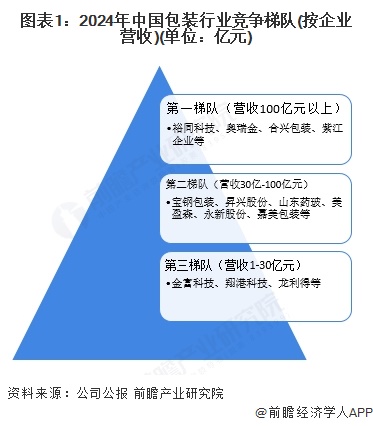
Group 1: Industry Overview - The Chinese packaging industry can be divided into three competitive tiers based on revenue: the first tier includes companies like Yutong Technology, Aorikin, and Hexing Packaging with revenues over 10 billion yuan; the second tier includes Baosteel Packaging, Shengxing Co., and Shandong Pharmaceutical Glass with revenues between 3 billion and 10 billion yuan; the third tier consists of companies like Jinfutec, Xianggang Technology, and Longlide with revenues below 3 billion yuan [1][6] - The industry is characterized by a fragmented market structure, with many small-scale companies lacking innovation capabilities, leading to disordered competition in the low-end market [6][13] - The market concentration in the packaging industry is low, with the top 10 companies (CR10) holding less than 5% market share, indicating a need for further consolidation [6][13] Group 2: Market Segmentation - The packaging industry in China is segmented into glass packaging, paper packaging, plastic packaging, and metal packaging, with leading companies in each category: Shandong Pharmaceutical Glass and Zhengchuan Co. for glass; Wanshun New Materials and Shanying International for paper; Tongchan Lixing and Hongyu Packaging for plastic; and Shengxing Packaging and Jiamei Packaging for metal [4][9] Group 3: Competitive Landscape - The competitive landscape shows that leading companies like Shandong Pharmaceutical Glass and Zhengchuan Co. have extensive business layouts covering regions such as North America, Europe, Japan, and Southeast Asia [8][9] - The majority of packaging companies focus on specific materials, with Shandong Pharmaceutical Glass leading in medicinal glass, while companies like Dashing and Wanshun New Materials dominate the paper packaging sector [10][11] - The industry is experiencing a strong demand growth driven by the increasing consumption of food and beverages, which indirectly boosts the demand for packaging products [14]


紫江企业股价微跌0.16% 公司公告无逾期担保情况
Jin Rong Jie· 2025-07-30 18:29
Group 1 - As of July 30, 2025, the stock price of Zijiang Enterprise closed at 6.39 yuan, down by 0.01 yuan, representing a decline of 0.16% from the previous trading day [1] - The trading volume on that day was 170,990 hands, with a total transaction amount of 1.09 billion yuan [1] - Zijiang Enterprise is primarily engaged in the research, development, production, and sales of packaging materials, covering various fields such as plastic and metal packaging [1] Group 2 - The company's products are widely used in industries such as food and beverage, as well as daily chemical products [1] - On the evening of July 30, Zijiang Enterprise announced that it does not provide guarantees for its controlling shareholders and actual controllers or their affiliates, and there are no overdue guarantee situations [1]

Smurfit WestRock plc(SW) - 2025 Q2 - Earnings Call Transcript
2025-07-30 12:30
Financial Data and Key Metrics Changes - The company reported adjusted EBITDA of $1,213 million with an adjusted EBITDA margin of 15.3% for the second quarter [5][15] - Net sales exceeded $7,900 million, showing mid-single-digit growth in adjusted EBITDA compared to the same period last year [15][16] - Strong adjusted free cash flow of $387 million was noted, reflecting improved financial performance [15] Business Line Data and Key Metrics Changes - North America segment achieved net sales of $4,800 million with adjusted EBITDA of $752 million and an adjusted EBITDA margin of 15.8%, showing significant margin improvement due to higher selling prices and operational efficiencies [16][18] - EMEA and APAC segment reported net sales of $2,800 million with adjusted EBITDA of $372 million and an adjusted EBITDA margin of 13.4%, despite a challenging market [19] - Latin America segment delivered net sales of $505 million with an outstanding adjusted EBITDA margin of over 23%, indicating strong demand growth in certain countries [20] Market Data and Key Metrics Changes - North American box volumes decreased by 4.5% on a same-day basis, aligning with the company's value-over-volume strategy [18] - EMEA and APAC faced headwinds from energy and labor costs, with flat corrugated box volumes on a same-day basis [19] - Latin America showed a nascent improvement in demand, particularly in Argentina, Colombia, and Chile, despite a 1.9% decline in box volumes [20] Company Strategy and Development Direction - The company is focused on optimizing its operations and has identified at least $400 million in synergies from the integration of Smurfit Kappa and WestRock [7][23] - A disciplined investment approach is being maintained, with $1 billion already invested in system improvements [12] - The company aims to be the go-to innovative sustainable packaging partner, emphasizing value, quality, and service [26] Management's Comments on Operating Environment and Future Outlook - Management expressed confidence in the North American business, noting significant improvements and a strong operational focus [25] - The European market is expected to recover, with management believing they are close to a low point despite current pricing challenges [25][39] - Latin America is viewed as a high-growth potential region, with ongoing pricing initiatives to offset negative currency impacts [20][26] Other Important Information - Fitch upgraded the company's long-term debt rating to BBB+ with a stable outlook, reflecting confidence in its business quality and long-term prospects [6][22] - The company declared a quarterly dividend of $0.04 per share, demonstrating confidence in its cash-generative ability [21] Q&A Session Summary Question: Details on loss-making contracts in North America - Management indicated that approximately 40% of plants have moved from loss to profit, with ongoing efforts to improve profitability [32][34] Question: Current status of loss-making contracts - About 60% of loss-making contracts remain, with expectations that many will transition to profitability over the next year [37][38] Question: Impact of tariffs and consumer confidence - Management noted that tariffs have been largely absorbed by consumers, with no significant changes expected in import/export flows [49][51] Question: Future demand expectations - Management anticipates a seasonal pickup in demand but is not baking in significant improvements for the second half of the year [72][73] Question: Clarification on volume assumptions - The company expects flat volumes in the second half compared to the first half, with no significant deterioration anticipated [90]
美盈森投资成立商贸新公司
Zheng Quan Shi Bao Wang· 2025-07-30 01:30
人民财讯7月30日电,企查查APP显示,近日,习水美泰商贸有限公司成立,法定代表人为刘兰芳,经 营范围包含:纸制品销售;包装材料及制品销售;日用木制品销售;木制容器销售等。企查查股权穿透 显示,该公司由美盈森旗下贵州省习水县美盈森科技有限公司全资持股。 转自:证券时报 ...

包装纸企再发涨价函,第三批国补资金下达
Huafu Securities· 2025-07-27 11:41
Investment Rating - The report maintains an "Outperform" rating for the light industry sector [3] Core Views - The packaging paper industry has announced price increases, with major companies like Nine Dragons Paper and Jiangxi Lee & Man Paper Manufacturing planning to raise prices by 30 CNY/ton starting August 1 [2][4] - The report highlights the potential recovery in the smart phone market, with expectations of improved sales in the second half of the year due to new product launches and government subsidies [6][12] - The report emphasizes the positive performance of the light industry sector, which outperformed the market with a 1.84% increase in the industry index compared to a 1.69% increase in the CSI 300 index [12] Summary by Sections 1. Home Furnishing - As of July 16, 2025, 280 million people have applied for the old-for-new consumer goods subsidy, driving sales over 1.6 trillion CNY [4] - The third batch of 690 billion CNY in special government bonds for consumer goods is being distributed, which is expected to benefit leading home furnishing companies [4][6] 2. Paper and Packaging - As of July 25, 2025, prices for various paper types have shown mixed trends, with double glue paper at 5012.5 CNY/ton (down 87.5 CNY), and corrugated paper at 2513.75 CNY/ton (down 1.25 CNY) [4][6] - The report suggests focusing on companies with integrated forest-pulp-paper operations and those with strong domestic sales expectations [4][6] 3. Light Consumer Goods - The report notes that the new product from the brand "Jieting" achieved top sales during the 618 shopping festival, indicating strong market demand [6] - Recommendations include companies in the oral care sector and those benefiting from the newborn policy [6] 4. Export Chain - Vietnam's exports in June reached 39.5 billion USD, showing a year-on-year increase of 16.4% [6] - Companies with overseas production capacity are expected to maintain order advantages [6] 5. New Tobacco Products - The report highlights the U.S. FDA's crackdown on illegal e-cigarettes, which may benefit compliant companies [6] - The introduction of HNB products by international tobacco leaders is expected to boost sales in new regions [6] 6. Textile and Apparel - The textile and apparel sector has shown resilience, with companies like Jiejia and Wanlima making significant progress in their respective markets [6][12] - The report suggests focusing on companies with international production capabilities and strong brand partnerships [6]
裕同科技: 第五届监事会第九次会议决议公告
Zheng Quan Zhi Xing· 2025-07-25 16:25
Group 1 - The company held its ninth meeting of the fifth supervisory board on July 25, 2025, with all three supervisors participating and voting [1] - The meeting was chaired by the supervisor board chairwoman, and the resolutions made were deemed legal and valid [1] - The board unanimously approved the proposal with 3 votes in favor, 0 against, and 0 abstentions [1] Group 2 - The company plans to cancel 10,000,053 shares from its repurchase account, reducing its registered capital from 930,513,553 yuan to 920,513,500 yuan [2] - Following the cancellation, the total number of shares will decrease from 930,513,553 to 920,513,500 [2] - The board confirmed that the cancellation complies with relevant laws and regulations and will not adversely affect the company's operations or financial status [2]
