
核能

Search documents
能源列国志:法国:摘要Abstract
Zhong Xin Qi Huo· 2025-09-15 12:32
Report Summary 1. Investment Rating No investment rating for the industry is provided in the report. 2. Core Viewpoints France is a developed industrial country with a strong industrial base in sectors such as steel, automotive, and construction, as well as leading industries in aerospace, nuclear energy, and ocean development. It is also a major agricultural producer and exporter in the EU. However, France has limited natural resources and relies heavily on imports for energy and industrial raw materials. The country's energy mix is dominated by nuclear power, and it has been actively involved in international trade and investment [1][2][10]. 3. Summary by Section 3.1 National Overview - **Geographical Location**: France, the largest country in the EU by area, is located in Western Europe, with a hexagonal mainland bordering multiple countries and facing four major seas. It has diverse climates, including temperate maritime, Mediterranean, and continental [7]. - **Economic Overview**: In 2024, France's GDP was €2.91 trillion, with a 1.1% year - on - year increase and an inflation rate of 1.3%. The industrial value - added was €3565 billion, and the agricultural value - added was €380 billion. It is highly dependent on imports for minerals and energy, with nuclear power accounting for about 65% of electricity in 2024. It has a high - welfare system and is an attractive destination for foreign investment [10][11][12]. - **Historical and Political Situation**: France has a long history, with the current Fifth Republic established in 1958. The president has significant powers, and the country has a bicameral parliament. There are multiple political parties with different policy stances [14][15][16]. 3.2 Oil and Other Liquids - As of January 1, 2023, France's proven oil reserves were 83 million barrels. It banned oil and gas production and exploration until 2040, leading to a continuous decline in production. In 2022, its oil consumption was 1.5 million barrels per day, showing a downward trend since 2003 - 2004. Worker strikes in refineries have caused shortages of petroleum products [20][22]. 3.3 Natural Gas - As of January 1, 2023, France's proven natural gas reserves were 590 Bcf. It has almost no dry natural gas production and depends entirely on imports. In 2022, consumption decreased due to high winter temperatures and the Russia - Ukraine conflict. GRTgaz and EDF play important roles in gas distribution and supply [24]. 3.4 Coal - France has no proven coal reserves and does not produce coal, relying entirely on imports. Due to the European energy crisis in 2022, two coal - fired power plants were temporarily restarted and their operation was extended to 2024 [28]. 3.5 Electricity - In 2021, France had a power generation of 530 TWh, an installed capacity of 142 GW, and was one of the largest power - surplus countries. Nuclear power accounted for 68% of electricity generation, with an installed capacity of 61 GW, second only to the US. The Flamanville EPR nuclear reactor started operation in 2024. EDF and its subsidiaries dominate the power market [30][33]. 3.6 Energy Trade - **Oil and Other Liquids**: In 2022, France imported over 822,000 barrels per day of oil and other liquids, reversing a downward trend since 2017. Its oil product exports have been declining since 2011. It mainly imports from European neighbors and Russia, and refinery strikes have increased its dependence on imports [34][36]. - **Natural Gas**: In 2021, France imported 1.6 Tcf and exported 188.9 Bcf of natural gas. In 2022, gas flow increased by 32% due to a 203% surge in LNG imports. It mainly imports from Norway and has started re - exporting to neighboring countries [38]. - **Electricity**: In 2021, France was the world's largest net power exporter, with exports mainly going to Switzerland, the UK, Italy, and Spain [41].


推动经济增长的不是AI,而是信仰
Hu Xiu· 2025-09-15 12:24
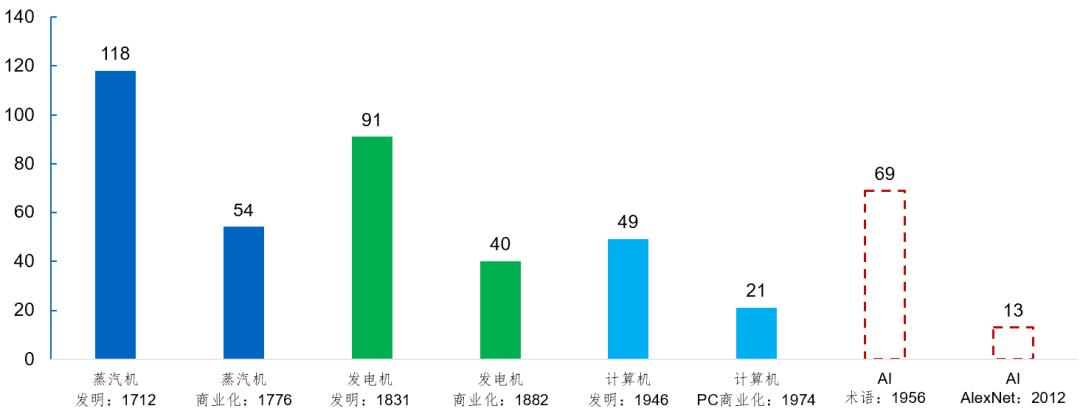
Core Insights - AI is recognized as a new general-purpose technology (GPT) that has the potential to drive economic growth, but it requires significant time to impact productivity meaningfully [1][4][5] - Despite the ongoing AI revolution, productivity growth has not accelerated significantly, with the EU's hourly labor productivity declining by 0.6% in 2023 and only expected to grow by 0.4% in 2024 [4][5] - The adoption rate of AI in enterprises remains low, with the EU's average at 13.5% and the US at 9.2%, indicating that AI has not yet permeated traditional industries that need productivity improvements [8][10] - Investment in AI is increasing, with major tech companies allocating a significant portion of their revenue to capital expenditures, which is contributing to GDP growth despite low profitability in AI model firms [10][14] - The belief in AI's potential is driving economic growth more than the actual productivity gains from AI at this stage [18] Group 1: AI as a General-Purpose Technology - AI is characterized by continuous improvement, broad applicability, and complementary innovations, similar to historical GPTs like the steam engine and computer [1][4] - Historical data shows that it took decades for previous GPTs to significantly enhance productivity after their invention and commercialization [1][3] Group 2: Current Productivity Trends - The average labor productivity growth in the US since 2020 is 1.8%, below the long-term average of 2.2%, with future projections for AI's contribution to productivity growth being modest [5][4] - The EU's productivity growth from 1995 to 2019 averaged 1%, contrasting sharply with current projections [4] Group 3: AI Adoption Rates - AI adoption rates vary widely, with the EU ranging from 3.1% to 27.6% and the US at 9.2%, indicating that enterprise applications of AI are still in early stages [8][10] - The shift in value from chips and data to model providers is noted, but traditional industries have yet to see significant improvements in productivity [10] Group 4: Investment Trends - Major internet companies in the US and China are significantly increasing their capital expenditures, with the US companies averaging 27.4% of revenue and Chinese BAT averaging 12.5% [10][12] - AI data center spending is projected to contribute more to GDP growth than consumer spending for the first time, highlighting the shift in investment focus [14][17] Group 5: Future Perspectives on AI and Fusion Energy - The belief in AI's transformative potential is compared to historical expectations surrounding nuclear energy, with significant investments being made in both fields [18][19] - Nuclear fusion companies have raised substantial funding, indicating a growing interest in alternative energy solutions alongside AI advancements [25][26]

英美欲联手打造"核能黄金时代",加速“去俄化”
Di Yi Cai Jing· 2025-09-15 11:02
Group 1 - The core point of the news is the signing of the "Atlantic Advanced Nuclear Partnership" agreement between the UK and the US, aimed at accelerating the construction of new nuclear power plants and reducing the average licensing period from three to four years to two years [1][3] - The partnership is expected to create job opportunities, reduce household energy costs, and enhance energy security for both countries [1][3] - The UK government estimates that the transactions related to this nuclear cooperation will exceed £50 billion [3] Group 2 - Several American nuclear companies, including X-Energy and Holtec, will collaborate with UK firms to build small modular reactors (SMRs) and develop data centers powered by these reactors [3][4] - The UK government aims to eliminate its reliance on Russian nuclear materials by the end of 2028, with a specific agreement to supply high-assay low-enriched uranium (HALEU) for advanced reactors [4] - The global competition for nuclear fuel is expected to change as the UK and US work to reduce dependence on Russian supplies, with Kazakhstan and Canada being significant uranium resource countries [4] Group 3 - Potential agreements during Trump's visit include investments from major US financial companies totaling over £1.25 billion, which are expected to create 1,800 jobs in the UK [5] - Nvidia is anticipated to announce an investment in the UK's largest data center, with collaboration from OpenAI and Blackstone Group, highlighting the integration of energy, technology, and artificial intelligence [5] - Discussions around a waiver for Scottish whisky exports to the US, currently facing a 10% tariff, are also expected to be a topic of interest [5]

AI信仰正在推动经济增长
3 6 Ke· 2025-09-15 09:38
Group 1: Productivity Lag Effect - AI is a new general-purpose technology (GPT) that requires time to significantly impact productivity, similar to historical technologies like the steam engine and computers [1][3] - The productivity growth in the EU decreased by 0.6% in 2023 and is expected to grow by only 0.4% in 2024, which is below the average of 1% from 1995 to 2019 [3][5] - The average productivity growth in the US since 2020 is 1.8%, which is lower than the long-term average of 2.2% [3][5] - Future productivity growth from AI is projected to be only 0.4%-0.9% over the next decade, with total factor productivity improvement not exceeding 0.66% [3][5] Group 2: AI Investment Driving GDP Growth - Despite many AI model companies not being profitable, they are increasing investments, with the average capital expenditure of the four major US internet companies reaching 27.4% of their revenue in Q2 2024 [7][9] - Capital expenditures of these companies are expected to reach $245 billion in 2024 and $354 billion in 2025, significantly increasing their share of GDP [9][11] - AI data center spending is contributing more to GDP growth than consumer spending for the first time, indicating a shift in investment priorities [11][15] Group 3: AI Belief Illuminating the Future - The historical context of high expectations for technologies, such as nuclear energy, parallels current sentiments towards AI and nuclear fusion [15][16] - Investment in nuclear fusion has reached $9.766 billion, with significant backing from major tech companies and government initiatives [21][22] - The contrasting attitudes towards nuclear fusion highlight the ongoing debate about the feasibility and timeline of emerging technologies like AI and fusion energy [22][23]
【新华社】“夸父”再上新!聚变堆遥操作系统测试平台研制成功
Xin Hua She· 2025-09-15 09:14
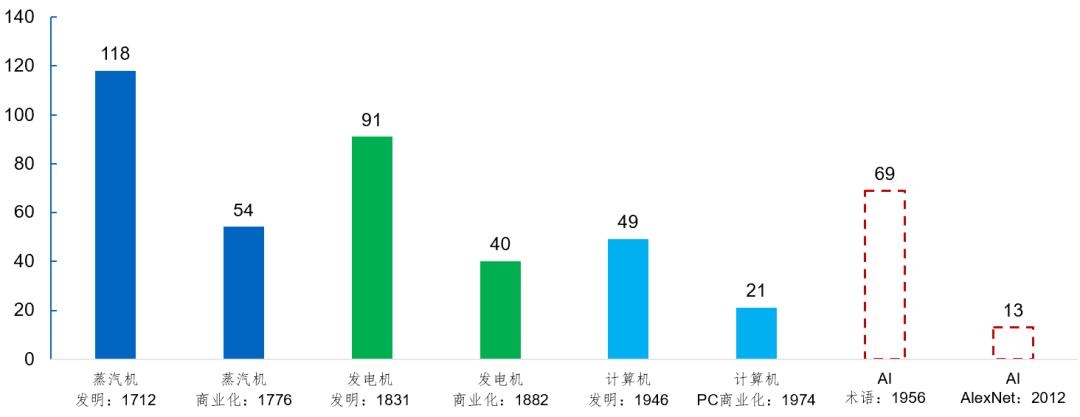
Core Insights - The remote operation system testing platform "KuaFu" (CRAFT) for fusion reactor key systems has passed expert testing and acceptance, showcasing advanced capabilities in remote maintenance for fusion reactors [1][2] Group 1: Technical Achievements - The system includes a maintenance robot with a load capacity of 60 tons and precision in circumferential transport of ±3.1 mm and vertical lifting of ±3.8 mm [1] - A heavy-duty robotic arm can handle loads of 2.5 tons with an end-effector repeatability of ±0.01 mm, making it one of the leading remote operation systems in the fusion field [1] - The platform addresses the technical bottleneck of high-precision maintenance of large components in extreme conditions, such as high thermal loads and strong magnetic fields [1][2] Group 2: Project Significance - The successful development of the remote operation system signifies a breakthrough in overcoming technical barriers, achieving domestic autonomy and control [2] - The technology developed can not only support the next generation of fusion devices but also has potential applications in nuclear power maintenance, aerospace, heavy machinery, and emergency rescue [2]
“夸父”再上新!聚变堆遥操作系统测试平台研制成功
Xin Hua She· 2025-09-15 09:00
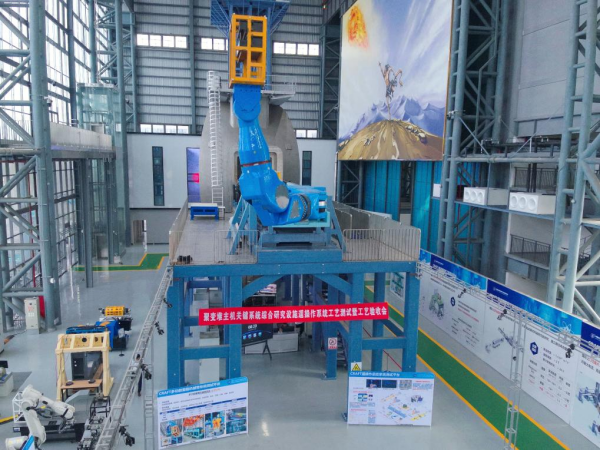
Core Insights - The remote operation system testing platform "KuaFu" (CRAFT) has successfully passed expert evaluation, marking a significant advancement in fusion reactor maintenance technology [1][2] - The system features a maintenance robot with a load capacity of 60 tons and high precision in both horizontal and vertical operations, making it a leading solution in the fusion field [1] - The successful development of this platform addresses the technical challenges of maintaining core components in extreme environments, enhancing the operational efficiency of fusion reactors [2] Group 1 - The remote operation system includes a heavy-duty robotic arm capable of handling loads up to 2.5 tons with a positioning accuracy of ±0.01 mm, showcasing its advanced capabilities [1] - The platform aims to facilitate remote maintenance of fusion reactor components that are subject to high thermal loads, strong magnetic fields, and neutron irradiation [1][2] - The project team has made breakthroughs in materials, structure, perception, control, and reliability, enabling high-precision maintenance in extreme conditions [2] Group 2 - The successful testing of the remote operation system signifies a breakthrough in domestic autonomous control technology for fusion reactors [2] - The technology developed can also be applied to other fields such as nuclear power maintenance, aerospace, heavy machinery, and emergency rescue operations [2]
聚变堆遥操作系统测试平台研制成功
Ke Ji Ri Bao· 2025-09-15 06:31
Core Insights - The successful testing and acceptance of the remote operation system testing platform for the CRAFT project marks a significant breakthrough in China's fusion reactor core maintenance technology [1][3][5] Group 1: Technical Achievements - The remote operation system includes a maintenance robot with a load capacity of 60 tons and precision of ±3.1 mm in horizontal transport and ±3.8 mm in vertical lifting, making it a leading system in the fusion field [1][3] - The heavy-duty robotic arm can handle loads of 2.5 tons with a repeat positioning accuracy of ±0.01 mm, showcasing its high precision capabilities [1][3] - The project team has overcome technical challenges related to maintaining core components under extreme conditions, achieving a balance between complex robot structures and the high reliability and precision required for fusion reactor maintenance [3][5] Group 2: Future Applications and Impact - The technology developed can support domestic and international next-generation fusion devices, including BEST, CFEDR, and ITER, providing remote operation technology validation and system support [5] - The remote operation system has high industrialization potential and social value, with applications extending to nuclear power maintenance, aerospace, heavy machinery, and emergency rescue [5] - The CRAFT facility, located in Hefei, Anhui Province, is set to be completed by the end of 2025 and aims to be the most advanced comprehensive research platform in the international fusion field [5]
我国著名核物理学家徐洪杰因病逝世
Di Yi Cai Jing· 2025-09-15 04:51
Core Points - The announcement of the passing of Xu Hongjie, a renowned nuclear physicist and synchrotron radiation physicist in China, who died on September 14, 2025, at the age of 70 [1] - Xu Hongjie was a pioneer in thorium-based molten salt reactor advanced nuclear energy systems [1] - He held significant positions including General Manager of the Shanghai Synchrotron Radiation Facility and Chairman of Shanghai United Sunway Energy Technology Co., Ltd. [1]
国产化自主可控 聚变堆遥操作系统测试平台研制成功
Yang Shi Xin Wen· 2025-09-15 02:56
Core Insights - The remote operation system testing platform, one of the 19 subsystems of the key system comprehensive research facility for fusion reactor, has passed expert group testing and acceptance as of September 15 [1] - This platform represents the highest international level of comprehensive parameters in the fusion field [1] - The construction of the remote operation system aims to address the technical bottleneck of high-precision inspection and maintenance of large components in strong radiation and confined spaces, providing an engineering verification platform for the stable operation and commercialization of future fusion reactors [1] Industry Implications - The successful development of the platform signifies a breakthrough in technical barriers and the realization of domestically produced and controllable technology [1] - The related technology will not only provide remote operation technology verification and system support for next-generation nuclear fusion devices domestically and internationally but also expand applications to nuclear power maintenance, heavy machinery, and emergency rescue fields [1]
开启“核能黄金时代”,美英签署多项协议,美国核能企业大举进军英国
Hua Er Jie Jian Wen· 2025-09-15 01:35
Group 1 - The core point of the news is the announcement of a series of nuclear energy cooperation agreements between the US and the UK, which are expected to reshape the energy landscape across the Atlantic [1][2] - These agreements are set to be signed during President Trump's state visit to the UK from September 17 to 19, highlighting the importance of maintaining communication between the two governments [1] - UK Prime Minister Starmer stated that these commitments will lead the UK into a "golden age of nuclear energy," helping to lower household energy bills and create thousands of jobs in the short term [1] Group 2 - The agreements focus on expanding cooperation and simplifying the process for companies to build new nuclear power plants, with small modular reactors (SMRs) being a key focus [2] - US company X-energy plans to collaborate with UK Centrica to build up to 12 SMRs in Hartlepool, aiming to create a 6 GW power cluster across the UK [2] - The collaboration aims to eliminate dependence on Russian nuclear materials by the end of 2028, as Russia is currently the only producer of commercial high-assay low-enriched uranium (HALEU) [2]