
水产养殖

Search documents
大湖股份拟将全称变更为“大湖健康产业股份有限公司”
Zhi Tong Cai Jing· 2025-10-10 09:59
Core Viewpoint - The company, Dahu Co., Ltd. (600257.SH), plans to change its name to "Dahu Health Industry Co., Ltd." to better align with its strategic focus on integrating health product resources and developing the health care industry [1] Business Development - The name change reflects the company's shift away from traditional aquaculture, as its large-scale farming resources have been reduced to two lakes and two reservoirs, leading to a significant decrease in revenue from aquaculture [1] - The company has divested from loss-making assets such as seed breeding and live turtle operations, contributing to the decline in revenue from its aquaculture segment [1] Revenue Structure - The revenue contribution from the company's main business segments has undergone a structural change, with the projected revenue share for 2024 ranked from highest to lowest as follows: medical, aquatic product processing, large-scale aquaculture, and liquor [1] - The sales contribution from the large-scale aquaculture segment (including live fish and crabs, excluding live turtles) is only 14.72%, with live fish sales accounting for just 7.14% of total sales, indicating that this segment is no longer a primary revenue source for the company [1]

10年吸引投资逾2亿美元,南非看好海洋经济潜力
Xin Hua Cai Jing· 2025-10-10 06:35
Core Insights - The ocean economy is a vital engine for South Africa's economic growth and job creation, having attracted over $200 million in investment over the past decade and expected to contribute nearly $10 billion to the GDP by 2035 [1][2] - The South African government has initiated the "Operation Phakisa" plan to unlock the potential of the ocean economy, significantly boosting the aquaculture sector and creating over 600,000 jobs by 2035 [1][2] Investment and Economic Contribution - The ocean economy is projected to contribute 166 billion Rand (approximately $9.68 billion) to South Africa's GDP by 2035 [1] - Over the past decade, the ocean economy sector has attracted more than 4 billion Rand (approximately $234 million) in investments, with government funding drawing substantial private capital [1] Key Areas of Development - Four critical areas identified for achieving ocean economy goals include aquaculture, fisheries, coastal tourism, and marine conservation [1] - Initiatives such as the establishment of Marine Protected Areas and Marine Spatial Planning aim to balance economic activities with ecological protection [2] Employment and Community Engagement - The ocean economy is seen as a renewable source of employment, income, and economic resilience, with a commitment to benefit all South Africans [2] - The "Fishing for Freedom" initiative aims to revitalize fishing ports and create new jobs in fish processing, shipbuilding, and tourism [2]
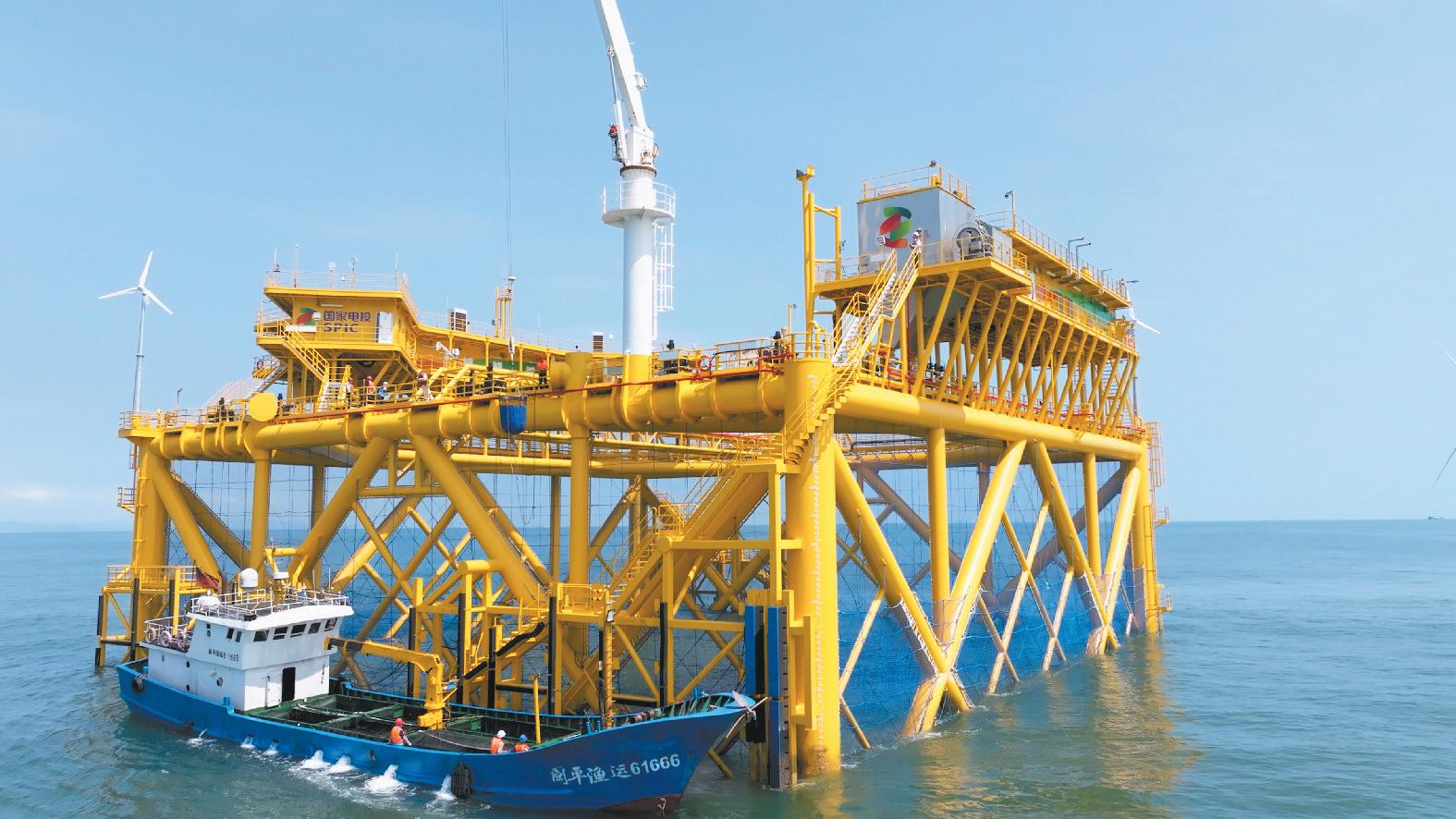
海上家国情丨“龙宫号”迎来首批“住户”章红鱼
Zhong Guo Zi Ran Zi Yuan Bao· 2025-10-10 05:55
Core Insights - The "Longgong" marine ranch project by State Power Investment Corporation in Guangdong has successfully introduced the first batch of red snapper fry, marking a significant milestone in marine aquaculture [1] Company Summary - The red snapper, weighing around 1.5 pounds, is a core species for the "Longgong" project, with a cultivation cycle that allows for a stable growth to 8-12 pounds of sashimi-grade fish [1] - The project emphasizes standardized inputs and refined cultivation techniques, ensuring both growth efficiency and product quality [1] Industry Summary - Red snapper exhibits excellent adaptability to deep-sea ecosystems and possesses high economic value, with strong and stable demand in both domestic and international markets [1] - The successful completion and operation of the "Longgong" project validate the engineering quality and safety, contributing to the development of a robust marine economy in Jieyang and supporting Guangdong's goal of becoming a "marine granary" [1]

【环球财经】10年吸引投资逾2亿美元 南非看好海洋经济潜力
Xin Hua Cai Jing· 2025-10-09 22:48
Core Insights - The South African ocean economy is a significant driver of economic growth and employment, attracting over $200 million in investments over the past decade and expected to contribute nearly $10 billion to the GDP by 2035 [1][2] Group 1: Economic Contribution - The ocean economy is projected to contribute 166 billion rand (approximately $9.68 billion) to South Africa's GDP by 2035, creating over 600,000 jobs [1] - Key sectors for achieving this goal include aquaculture, fisheries, coastal tourism, and marine conservation [1] Group 2: Government Initiatives - The South African government launched the "Operation Phakisa" initiative in 2014 to unlock the potential of the ocean economy, significantly boosting the aquaculture sector [1] - Over the past decade, the ocean economy has attracted more than 4 billion rand (approximately $234 million) in investments, with government funding drawing substantial private capital [1] Group 3: Environmental and Community Engagement - Various measures are being implemented to advance the ocean economy, such as establishing Marine Protected Areas to enhance biodiversity and promote coastal tourism activities like diving and whale watching [2] - The "Marine Spatial Planning" initiative aims to balance economic activities with ecological protection, maximizing benefits [2] - The "Fishing for Freedom" initiative is revitalizing fishing ports and creating new jobs in fish processing, shipbuilding, and tourism [2]
不再为阳澄湖“作嫁衣” 微山湖大闸蟹北上南下
经济观察报· 2025-10-09 13:01
Core Viewpoint - The article discusses the efforts of a company in Shandong, specifically the Hongzhuang Bay brand, to establish itself as a competitive player in the Chinese crab market, traditionally dominated by Yangcheng Lake crabs, by leveraging e-commerce and innovative marketing strategies [2][7][29]. Group 1: Market Positioning and Strategy - The company aims to position "Weishan Lake crabs" as a quality brand alongside "Yangcheng Lake" crabs, focusing on the unique advantages of the Weishan Lake region, such as superior water quality and climate conditions that enhance crab quality [5][6]. - In 2024, the company launched a flagship store on short video platforms and introduced a loss-leading product strategy, selling 10 two-tael female crabs for 99 yuan, resulting in significant initial losses but ultimately achieving a high repurchase rate of 25% [7][9]. Group 2: Operational Challenges and Solutions - The company faced initial operational challenges, including a lack of infrastructure and logistics, but overcame these by partnering with SF Express to reduce logistics costs to levels comparable to southern regions [19][20]. - A key operational strategy involved implementing a "true weight" model to ensure transparency in product weight, which helped build consumer trust and minimize negative feedback related to weight discrepancies [13][21]. Group 3: Multi-Platform Strategy - The company expanded its sales strategy to include multiple e-commerce platforms, optimizing product offerings based on platform characteristics, which allowed for efficient inventory management and maximized sales potential [15][17]. - The company has successfully penetrated markets in Guangdong, Shanghai, Jiangsu, and Zhejiang, demonstrating its ability to compete in regions traditionally dominated by southern crab brands [17][29]. Group 4: Talent Acquisition and Retention - The company has faced challenges in attracting and retaining talent due to its remote location, but has implemented higher salary offerings and a flexible work environment to appeal to younger workers [26][27]. - Efforts to create a supportive work culture include providing amenities and organizing social activities to enhance employee satisfaction and retention [26][27]. Group 5: Industry Development and Future Goals - The company aims to not only establish itself as a leading e-commerce player but also to foster the overall development of the Weishan Lake crab industry by supporting local farmers and creating a regional brand identity [28][29]. - Initiatives include collaborating with local government to establish a trading market for Weishan Lake crabs and promoting the brand through geographical indicators, which are crucial for building a competitive market presence [29].
不再为阳澄湖“作嫁衣” 微山湖大闸蟹北上南下
Jing Ji Guan Cha Wang· 2025-10-09 12:23
Core Insights - The article discusses the transformation of the Weishan Lake hairy crab industry, focusing on the efforts of the Han Zhuang Bay brand to establish itself as a competitor to the Yangcheng Lake brand, which has long dominated the market [2][5][22]. Industry Overview - The Weishan Lake area is recognized as the largest freshwater lake in northern China, benefiting from excellent water quality and a favorable climate for crab farming [4]. - Historically, Weishan Lake crabs were sold to southern markets under other brands, limiting local brand recognition [3][4]. Brand Strategy - In 2024, Han Zhuang Bay launched an e-commerce strategy, including a flagship store on short video platforms, to build brand awareness and consumer trust [6][8]. - The brand adopted a "loss leader" strategy by selling crabs at a significant discount to attract customers, resulting in a high repurchase rate of 25% [8][10]. Operational Challenges - The initial phase of the e-commerce venture faced logistical challenges, with operations starting from makeshift tents and limited infrastructure [9][19]. - The brand implemented a "true weight" model to address consumer concerns about product weight discrepancies, ensuring transparency in the weighing process during live broadcasts [11]. Multi-Platform Strategy - Han Zhuang Bay expanded its sales channels to six major e-commerce platforms, optimizing inventory management and reducing waste through coordinated promotions [12][13]. - The brand's entry into Pinduoduo was particularly successful, with lower return rates and effective customer service processes [14][19]. Logistics and Talent Management - Logistics costs have been reduced to competitive levels through partnerships with logistics companies, enabling efficient distribution [16][19]. - Attracting and retaining talent in a remote area has been challenging, leading the brand to offer higher salaries and improved working conditions to employees [20][21]. Community and Industry Development - The brand aims to uplift the entire Weishan Lake crab industry by sharing resources and knowledge with local farmers, promoting a collaborative ecosystem [22][23]. - Efforts are underway to establish a local trading market and enhance brand recognition through geographical indicators [23].
国联水产9月30日获融资买入928.69万元,融资余额2.47亿元
Xin Lang Cai Jing· 2025-10-09 01:21
Group 1 - The core viewpoint of the news highlights the financial performance and trading activities of Guolian Aquatic Products, indicating a decline in revenue and net profit for the first half of 2025 [2] - As of September 30, Guolian Aquatic Products experienced a financing net buy of -12.89 million yuan, with a total financing and securities balance of 247 million yuan, which is 6.02% of its market capitalization [1] - The company primarily engages in the production and sale of shrimp and tilapia seedlings, aquatic feed, and processed seafood, with 97.65% of its revenue coming from aquatic food products [1] Group 2 - As of June 30, the number of shareholders for Guolian Aquatic Products decreased by 3.98% to 56,800, while the average circulating shares per person increased by 4.14% to 19,461 shares [2] - For the first half of 2025, Guolian Aquatic Products reported an operating income of 1.651 billion yuan, a year-on-year decrease of 18.36%, and a net profit attributable to shareholders of -540 million yuan, a significant decline of 3180.50% [2] - The company has not distributed any dividends in the past three years, with a total payout of 81.25 million yuan since its A-share listing [3]

寒露 秋风起,舌尖上的“蟹经济”有多香?
2 1 Shi Ji Jing Ji Bao Dao· 2025-10-08 22:45
Core Viewpoint - The Chinese crab market is experiencing significant growth, driven by increasing consumer demand for quality and standards, with a projected consumption of over 200 million tons and a market size of approximately $17.4 billion in 2024 [3][6]. Group 1: Market Trends - The consumption of crabs in China is expected to exceed 200 million tons in 2024, with a market value of $17.4 billion [3]. - The trend towards brand standardization and high-end products is evident, particularly with the Yangcheng Lake hairy crabs, which have achieved national geographical indication protection and established industry standards [6]. - The sales of hairy crabs are projected to grow by 214% year-on-year in 2024 [6]. Group 2: Import Dynamics - China is not only a major producer of crabs but also a significant importer, with crab imports reaching 133,000 tons valued at $2.1 billion in 2024 [8]. - The import of crabs from Russia has seen substantial growth, with the import value increasing from $430 million in 2020 to $1.23 billion in 2024, reflecting an annual growth rate of 29.8% [8][11]. - Live crabs dominate the import market, accounting for approximately 90% of the total import value, indicating a strong consumer preference for freshness [11]. Group 3: Industry Upgrades - The domestic crab industry is undergoing expansion and modernization, with annual crab catch exceeding 600,000 tons from 2019 to 2023 [12]. - Technological advancements in crab farming, such as the use of drones and IoT for monitoring and controlling farming conditions, are enhancing production efficiency [12]. - Innovative crab farming practices are emerging in non-traditional regions, leveraging local resources to create unique crab brands [12]. Group 4: Logistics and Distribution - Logistics companies are enhancing their capabilities to ensure rapid delivery of crabs to consumers, utilizing temperature-controlled transport and real-time tracking technologies [12].

阳澄湖大闸蟹何以领“鲜”
Su Zhou Ri Bao· 2025-10-08 22:41
Core Insights - The article highlights the thriving crab industry in Baicheng Town, Kunshan, particularly focusing on the Yangcheng Lake hairy crabs, which have become a significant contributor to local economic growth and rural revitalization [1][2]. Group 1: Industry Overview - Baicheng Town has over 3,700 households engaged in the hairy crab industry, generating annual sales exceeding 4 billion yuan [1]. - The industry benefits from advanced practices in crab seed cultivation, ecological farming, and intelligent monitoring, enhancing the quality and yield of the crabs [1][2]. - The establishment of the Yangcheng Lake Crab Industry Research Institute and other research centers aims to innovate and upgrade the crab industry, positioning it as a "crab silicon valley" [2]. Group 2: Market Dynamics - Two companies have recently obtained export qualifications, preparing to expand into overseas markets [3]. - Eighty percent of pre-sale orders for hairy crabs have already been secured before the official harvest season [4]. - The annual sales volume for the cooperative reached over 20 million yuan last year, with expectations for significant growth this year [5]. Group 3: Employment and Economic Impact - The cooperative provides over 150 job opportunities for local farmers, with peak sales periods employing more than 200 workers [6]. - Members of the cooperative can expect an average income increase of 30,000 yuan due to the thriving crab business [6]. Group 4: Brand and Cultural Integration - The integration of cultural tourism with the crab industry is enhancing brand recognition and consumer engagement, transforming visitor experiences into economic benefits [7][8]. - Various events and activities are planned to attract tourists, combining culinary experiences with cultural and recreational activities [8].
山东东方海洋科技股份有限公司公布公司章程,全方位规范公司运作
Xin Lang Cai Jing· 2025-10-08 08:55
Core Points - Shandong Oriental Ocean Technology Co., Ltd. published its articles of association in September 2025, detailing regulations on company organization, shareholder and management rights and obligations, laying a solid institutional foundation for stable development [1][2] - The company was established through a founding method and registered with the Shandong Provincial Administration for Industry and Commerce, with a registered capital of 1,958.9465 million RMB, and was listed on the Shenzhen Stock Exchange on November 28, 2006 [1] - The company operates in various fields including marine aquaculture, food processing, aquatic technology research and promotion, import and export business, freight forwarding, warehousing leasing, and biopharmaceutical research and production [1] Governance Structure - The articles of association specify the issuance, increase, decrease, repurchase, and transfer of shares, with a total of 1,958,946,500 shares, all of which are RMB ordinary shares, adhering to principles of openness, fairness, and justice [1] - The shareholders' meeting is the power institution, responsible for electing directors, reviewing profit distribution plans, and deciding on major company matters, while the board of directors, consisting of nine members, is responsible for operational decisions and management [1] - The company has established a party organization, clarifying its structure and responsibilities, playing a political core role in the company's development [1] Financial Accounting System - The company is required to prepare and disclose annual and interim reports, distribute profits according to regulations, and allocate statutory and discretionary reserves, with a profit distribution policy that emphasizes investor returns while balancing shareholder interests and company development [2] - The publication of the articles of association will help standardize company operations, protect the legitimate rights and interests of shareholders, employees, and creditors, and provide a solid institutional guarantee for long-term development [2]
